Skip to content
What run flat tyres actually are
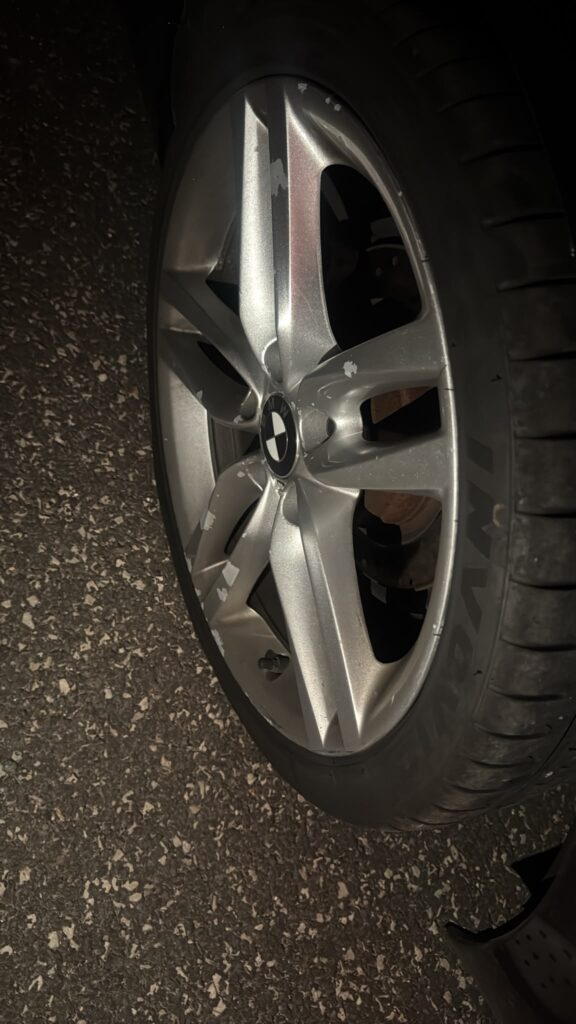
When people hear the word “run flat” for the first time, they usually picture a tyre that keeps working normally even with zero air inside. That is not quite accurate. Run flat technology, as fitted as standard on some BMW and Mini models, relies on a heavily reinforced sidewall. That sidewall is built stiff enough to carry the weight of the vehicle even after the tyre has lost all internal pressure. The car does not collapse fully onto the rim, it keeps rolling on the reinforced flank instead.
The catch is that this extended driving is strictly limited. Most manufacturers quote a maximum distance of around 80 kilometres at a maximum speed of 80 km/h once pressure loss has occurred. After that, the sidewall structure is usually damaged beyond repair, because the internal friction has generated extreme heat. The tyre needs replacing, repair is rarely a sensible option at that point.
It is also worth noting that run flat tyres do not replace a new tyre. They buy time to reach a workshop or a safe location in a controlled way, without having to stop on the hard shoulder. That is exactly what makes the technology attractive for passenger cars, especially ones that no longer carry a spare wheel in the boot.
This logic works reasonably well for a 1.5 tonne compact car. For a loaded truck with a gross weight of 40 tonnes, the maths look completely different, and that is what this article is really about.
Why run flat is practically absent from heavy trucks
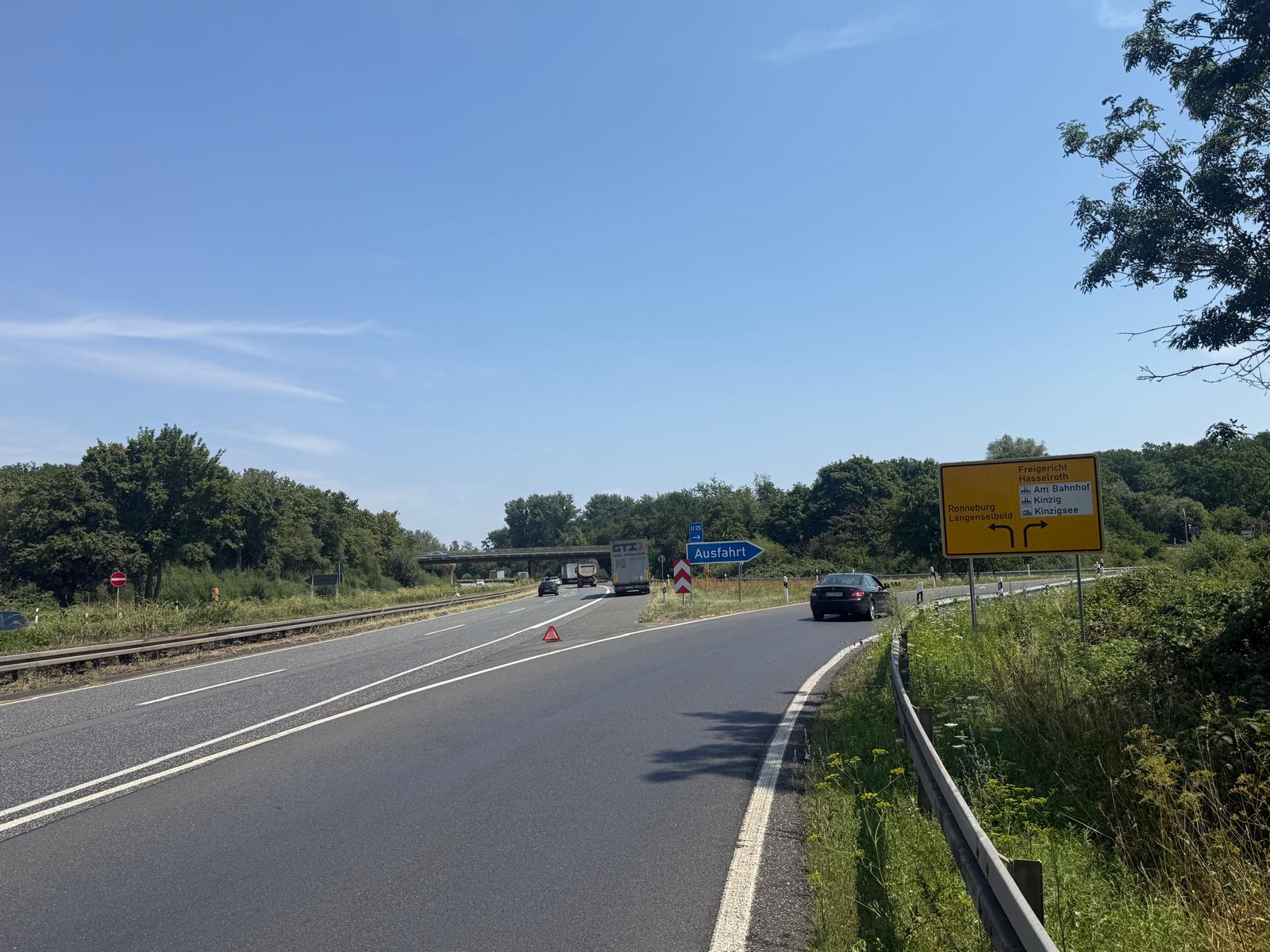
Anyone searching online for “run flat tyres for trucks” or “run flat truck tyre 22.5” will quickly notice something: there is no established product from a major manufacturer carrying that label for heavy commercial vehicle tyres. We checked this directly on the manufacturer sites of Continental and Michelin while researching this article. Both sites offer extensive sections for truck and bus tyres, with dedicated product lines, technical downloads and advice for fleet customers. A run flat technology in the sense of “keep driving without air pressure for several kilometres”, the way it is marketed for passenger cars, simply does not appear there for the standard 22.5 inch truck tyre range.
That is not a coincidence, and it is not a gap in the market waiting to be filled. There are solid physical and economic reasons why this concept never caught on in heavy commercial vehicles.
The first reason is axle load. A tractor unit with a 40 tonne gross weight spreads that weight across a fairly small number of tyres relative to its size. A single drive axle can carry more than 10 tonnes, split across four tyres in dual configuration. On a passenger car, each tyre might carry 400 to 500 kilograms. On a loaded truck, it is several tonnes per tyre. A sidewall reinforced enough to carry that load over a meaningful distance with zero internal pressure would have to be massively over-built. That would make the tyre extremely heavy and expensive, and a heavier tyre means higher fuel consumption on every single kilometre the truck drives, for its entire working life, not just during a breakdown.
The second reason lies in the construction of the tyre carcass itself. Truck tyres are almost always radial tyres with a steel belt and a carcass designed for a long service life and for retreading. Many fleets retread their truck tyres once or even twice before the carcass is finally scrapped. A run flat design with a massively reinforced but heavily stressed sidewall would put that retreading capability at risk. The sidewall is already known across the commercial tyre industry as the most sensitive area when it comes to retreading. A system that puts additional thermal and mechanical stress precisely on that area, exactly when it gets used in an emergency, would work against the entire economic logic of the truck tyre business.
The third reason is simple road practice. A passenger car with run flat tyres will, at most, carefully continue to the nearest workshop or drive home after a pressure loss. A 40 tonne truck with a flat on a drive axle cannot simply keep going at speed anyway, for stability reasons alone. Dual tyre setups on drive and trailer axles also mean that if one tyre in a pair fails, the partner tyre carries the load for a short while in practice, often working longer (though not recommended) than any dedicated run flat solution ever could, with no extra weight and no extra technology required.
What actually exists instead: real partial solutions
Even though true run flat technology does not exist for heavy trucks, there are technologies that aim in a similar direction, just through different means.
Reinforced sidewalls for construction and special application tyres
For construction vehicles, dump trucks and some off road applications, manufacturers use tyres with a noticeably reinforced sidewall, sometimes marketed as “reinforced” or built with a special carcass construction. These are primarily designed to resist cuts and punctures from sharp rubble, not to provide notlauf capability after a complete pressure loss. The effect is greater resistance to the puncture itself, not the ability to keep driving afterwards.
Beadlock and internal support ring systems for military and off road vehicles
In military and heavy off road applications, so called beadlock systems or internal support rings exist, which stop the tyre from sliding completely off the rim after a pressure loss and allow limited continued driving at very reduced speed. This is technically closer to “real” run flat than anything available in civilian long haul trucking. For a regular articulated lorry on the motorway, though, it is neither available nor practical, these systems are built for low speed off road use, not for 80 km/h on a motorway.
Spare wheel concepts
For smaller commercial vehicles up to 3.5 tonnes, a classic spare wheel or a compact emergency wheel is still sometimes found. For heavy trucks from 7.5 tonnes upward, this is practically unheard of due to space and weight constraints. A 22.5 inch wheel with tyre easily weighs 80 to 100 kilograms, carrying a spare would cost payload capacity, and changing it in an emergency without hydraulic tools would barely be feasible.
TPMS: the technology that actually matters for trucks
Flip the question around and ask what fleets actually use today to prevent tyre failures, or at least catch them early, and the answer is almost always TPMS, the Tyre Pressure Monitoring System.
TPMS continuously measures pressure (and often temperature) in every individual tyre and alerts the driver to deviations, sometimes reporting directly to a fleet management centre via telematics. The logic is straightforward: most tyre failures on long haul routes do not appear suddenly out of nowhere, they build up over hours or days. A small foreign object leads to a slow, creeping pressure loss that goes unnoticed until the tyre overheats and, in the worst case, blows out on the motorway.
A system that raises the alarm at small deviations gives the driver a chance to pull into a service station or a safe hard shoulder in time, before a minor issue turns into a full tyre blowout. We cover why correct pressure matters so much, and how to check it properly, in detail in our article on truck tyre pressure.
The conceptual difference between TPMS and run flat is important: run flat tries to soften the consequences of a pressure loss that has already happened. TPMS tries to make the pressure loss visible early enough that it never escalates into a real breakdown in the first place. For a long haul truck, which is economically dependent on every kilogram of saved weight, the preventive solution is clearly more sensible than a reactive run flat construction that, for this vehicle class, does not even exist.
The economics: what a hypothetical run flat solution would cost versus what the real alternative costs
Even without a real product on the market, it is worth doing the maths, to understand why the industry never went in this direction.
A standard 22.5 inch premium brand truck tyre costs somewhere between roughly 250 and 500 euros per unit, depending on axle position and tread pattern. A hypothetical run flat version, given the massively reinforced carcass required, would realistically add somewhere between 30 and 60 percent to that price, similar to the premium run flat tyres command over standard tyres of comparable size on passenger cars. On a tractor and trailer combination with 10 to 12 tyres, that would add up to a noticeable extra cost at every tyre replacement cycle, and this is a vehicle class that on average covers 100,000 to 150,000 kilometres a year and replaces tyres accordingly often.
On top of that comes the ongoing fuel penalty from the extra weight of a reinforced tyre, over the working life of a long haul vehicle, that alone could easily exceed the extra tyre cost. And finally there is the loss of retreading capability, which for fleets that rely on retreading to cut costs, would be a further economic downside.
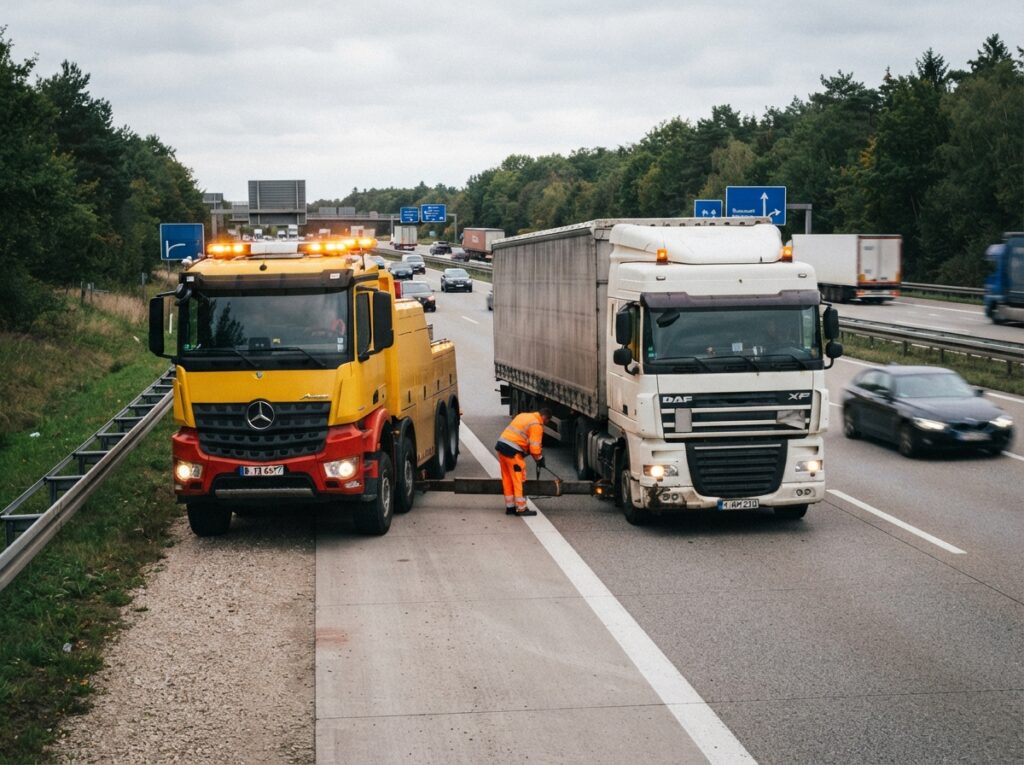
On the other side of the ledger is the real alternative: a mobile tyre service that reaches the vehicle within 30 to 60 minutes of a breakdown. A tyre change or repair on the hard shoulder, depending on complexity, time of day and tyre size, costs a fraction of what a several hundred euro per tyre surcharge, applied across an entire fleet, would add up to. Anyone curious about what a truck towing service costs by comparison, for the cases where no mobile service was reachable in time, will find figures in our article on truck towing costs.
In short, the combination of TPMS for prevention and a well reachable mobile tyre service for fast reaction is economically more sensible for a long haul truck than a hypothetical run flat construction that, for good reasons, simply does not exist on the market.
A closer look at the physics behind the problem
To understand why engineers chose a different path for commercial tyres than for passenger car tyres, it helps to look at the raw numbers. A passenger car tyre in a typical run flat size carries a load of maybe 400 to 600 kilograms in daily use. If pressure fails completely, the sidewall has to support that load, on a contact patch limited by the vehicle’s own weight to begin with. The sidewall can be reinforced relatively moderately to achieve that, without the tyre becoming impractically heavy.
For a truck tyre in size 315/70 R22.5 or 385/65 R22.5, as fitted on most articulated lorries, the rated load per tyre often sits between 3 and 5 tonnes depending on the version, combined into 6 to 10 tonnes per axle side in dual configuration. A sidewall meant to carry that load with zero pressure would require a stiffness that current carcass materials can barely achieve economically, without multiplying the weight of the tyre many times over. Engineers often refer to the ratio between payload and the tyre’s own weight, and it is exactly this ratio that a run flat design would worsen to a degree the long haul industry could not accept.
Then there is heat build up. A tyre rolling without pressure generates significant internal friction heat through sidewall flex. On a light passenger car tyre, which only needs to cover a short distance at reduced speed, this heat is still manageable. On a truck tyre, already thermally stressed under full load for hours at a time in normal operation, an added emergency phase would raise the risk of catastrophic failure rather than prevent it. That is exactly why commercial vehicle specialists tend to argue that a pure prevention strategy makes more sense than trying to engineer around the failure itself.
How the situation differs from country to country
Another point that often gets overlooked: requirements for truck tyres differ noticeably between countries and use cases, even though the general absence of run flat solutions for heavy vehicles is the same everywhere.
In Germany, the road traffic licensing regulation sets clear requirements for tread depth, condition and seasonal equipment on commercial tyres, as laid out directly in the StVZO text. A Polish, Czech or Dutch driver crossing Germany with an articulated lorry has to follow the same rules as a German colleague, regardless of where the vehicle is registered. In practice, this often causes confusion for international drivers coming from countries with different rules, who do not immediately know who to call in a breakdown on a German motorway.
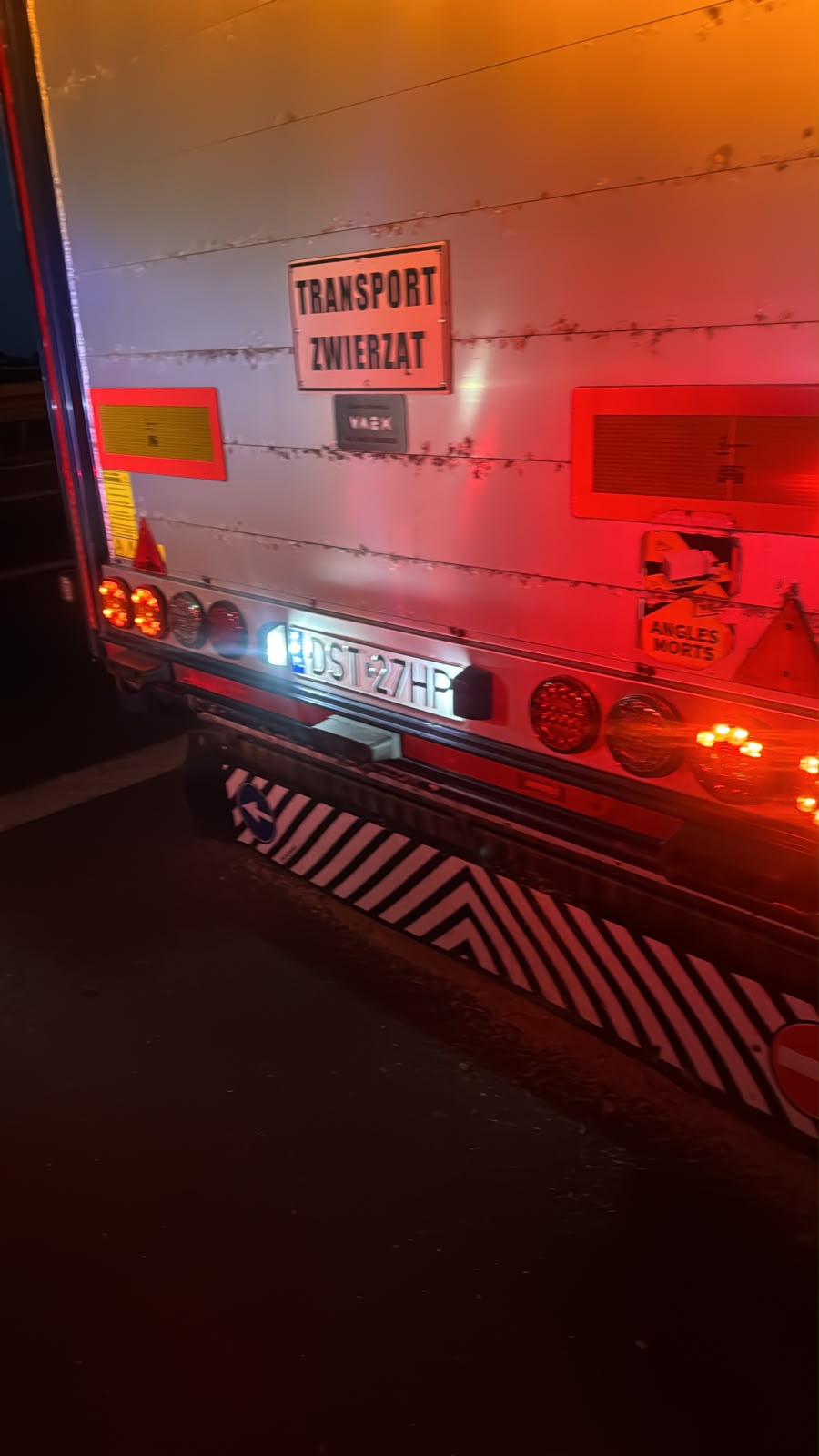
That is exactly why LKWHelp24 operates in multiple languages. A Polish driver stranded at night on the A2 with a blown tyre does not need to first search for an English speaking workshop or wait for an interpreter. Communication over WhatsApp works in their own language, saving valuable minutes in an emergency, exactly when stress and time pressure are already high.
The role of driving behaviour in avoiding tyre damage
Beyond equipment and technology, driving style itself plays a large role in whether a tyre ever ends up in a critical situation. Excessive speed through corners with heavy load creates lateral forces that fatigue the carcass over years of use. Frequent hard braking, especially on downhill sections without engine braking, causes localised overheating of the tread that weakens the tyre structure from the inside, without being visible from the outside right away.
Driving on incorrect pressure for extended periods is also one of the most common causes of a sudden blowout. Too little pressure causes stronger sidewall flex on every rotation, which in turn generates heat that builds up over hours until the tyre fails structurally. Too much pressure, on the other hand, makes the tyre more sensitive to impacts and potholes, because the cushioning effect of the air column is reduced. Both extremes can be significantly reduced through regular checks and a working TPMS, which is why we cover this topic in detail again in our article on truck tyre pressure.
Practical points worth knowing before a tyre fails
A few smaller details make a real difference once a tyre actually fails on the road. Knowing the exact tyre size and load index of the vehicle in advance saves time when calling for help, since the service provider can bring the right tyre straight away instead of guessing. How to read that information off the sidewall is explained in our article on truck tyre labelling, load index and DOT markings.
It also helps to have at least a rough idea of how the wheel change itself works, so the driver can assist the technician and understand what is happening. We cover the full procedure step by step in our article on emergency wheel change on a truck.
Seasonal tyre choice matters too. A good share of winter breakdowns trace back to worn or simply wrong tyres for the conditions, not to any exotic technical failure. The legal requirements in Germany are summarised in our article on winter tyres for trucks in Germany.
What fleet managers can take away from the run flat debate
For dispatchers and fleet managers who regularly have to calculate downtime, the real lesson from this topic is not “unfortunately there is no miracle solution”, it is a clear prioritisation of resources. Instead of investing budget in a technology that does not even exist for this vehicle class, it makes more sense to invest in three concrete building blocks.
The first building block is fleet wide TPMS coverage, combined with a clear internal rule for how fast a warning has to be acted on. A system that produces data nobody consistently reviews does very little in practice.
The second building block is a reliable network of mobile tyre services along the fleet’s main routes, with saved contacts that can be reached immediately in an emergency, without having to search online first. We describe how to find such a service nearby in detail in our article on emergency tyre service near me.
The third building block is clean documentation of tyre lifespan per vehicle, so tyres get replaced preventively before they reach a critical state, instead of only reacting once a tyre has already failed. A look at reliable suppliers and maintenance partners helps here, as we describe in our article on truck tyre wholesalers and mobile tyre service.
Why LKWHelp24 focuses on fast response instead of a myth
At LKWHelp24 we regularly get requests from drivers and dispatchers asking about “run flat for trucks”, usually right after a bad experience with a tyre failure in the middle of the night. We tell them honestly: this product, in the form known from passenger cars, practically does not exist for heavy commercial vehicles, for the technical and economic reasons described above.
What we offer instead is a realistic answer to the same underlying need, getting back on the road quickly when a tyre fails. Our mobile tyre service covers vehicles from 7.5 tonnes upward, works around the clock every day of the week, and is reachable via WhatsApp at +49 160 5753826, in German, English, Polish and Russian. Instead of relying on an expensive, heavy and practically unavailable run flat technology, we make sure as little time as possible passes between a breakdown and getting back on the road, wherever in Germany the articulated lorry happens to be standing.
Frequently asked questions
Can I buy run flat tyres for trucks over 7.5 tonnes? No. No major tyre manufacturer offers run flat technology, in the passenger car sense, for the standard 22.5 inch truck and trailer tyre range. What does exist are reinforced sidewalls against cuts and punctures, plus beadlock systems on specialist vehicles, but no regular “keep driving without air for kilometres” solution for long haul trucking.
Why is run flat used on passenger cars but not on trucks? On a passenger car, the ratio of vehicle weight to tyre area is far more favourable, and the manufacturer can accept a weight compromise on the tyre without a drastic fuel penalty. On a 40 tonne articulated lorry, the sidewall reinforcement required would be so massive that weight, cost and fuel consumption would no longer be in any reasonable proportion to the benefit.
What can I do instead to avoid tyre failures? A working TPMS, regular visual checks at every stop, and choosing the right summer and winter tyres are the most effective measures. Details on pressure control are in our article on truck tyre pressure.
How fast can I expect help after a tyre failure? At LKWHelp24, typical response time is 30 to 60 minutes, depending on location and traffic. The fastest way to reach us is via WhatsApp at +49 160 5753826.
Is a reinforced sidewall still worth it for construction vehicles? Yes, for vehicles that spend a lot of time on unpaved ground with sharp debris, a reinforced carcass can reduce the number of punctures. That is protection against the puncture itself though, not a run flat technology afterwards.
What if I break down abroad while driving through Germany? LKWHelp24 operates in German, English, Polish and Russian, reachable via WhatsApp regardless of which language the driver speaks. The number +49 160 5753826 works the same way for all four languages.