Skip to content
 Short version: the drive axle of a car transporter needs a tyre with the right load rating and a drive axle marking, not the cheapest tyre in the correct size. The load index has to carry the axle weight with margin to spare, otherwise the casing works at its limit every day and eventually lets go at 85 km/h in the right hand lane.
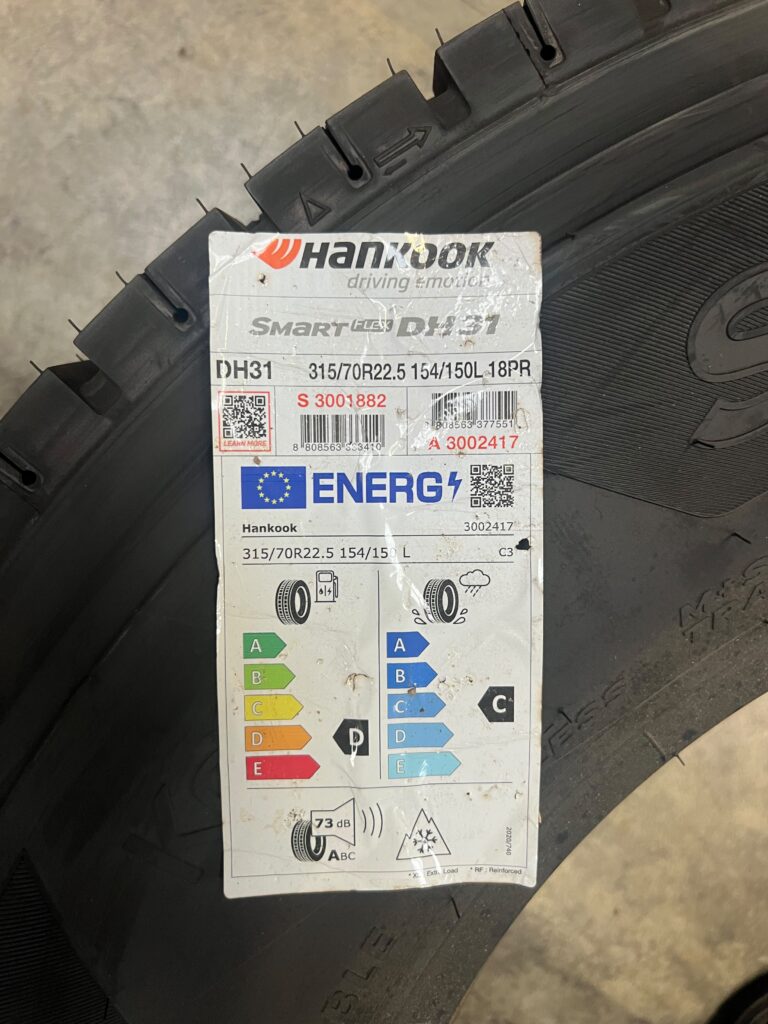
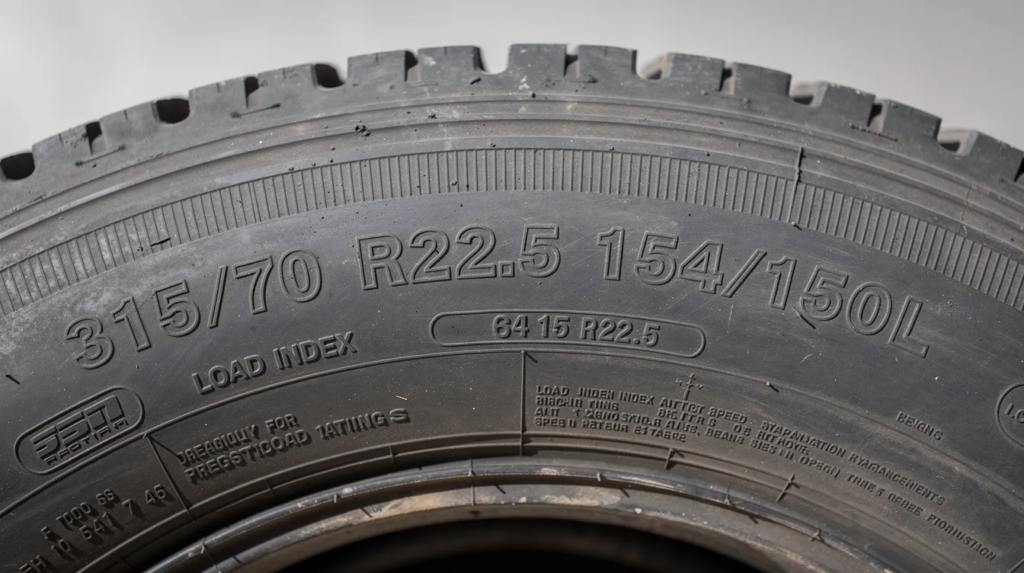
The photo is from one of our jobs. Everything that matters is printed on that label, and most drivers walk past those numbers every single day.
What the sidewall actually says, line by line
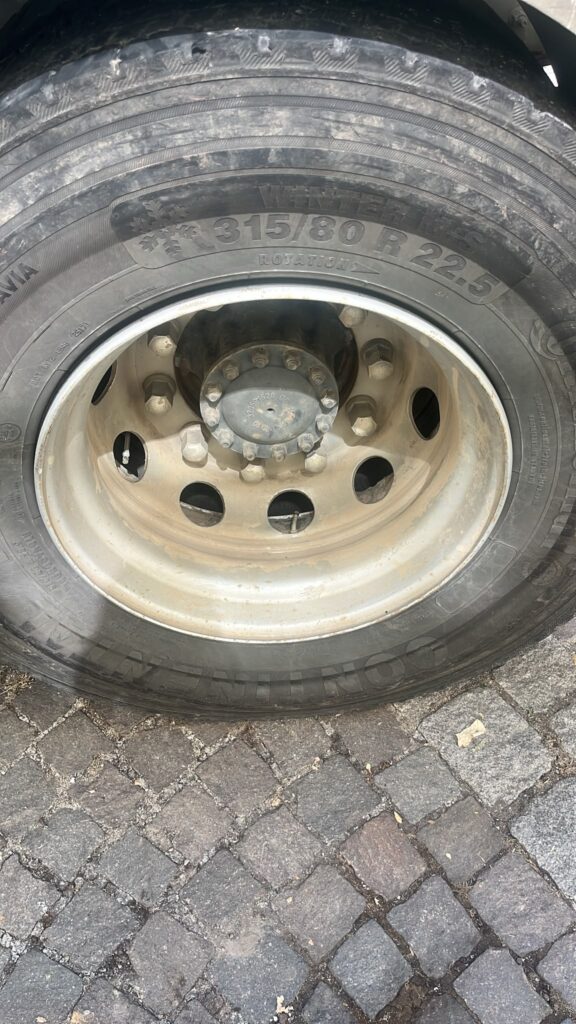
315/70 R22.5 is the size: 315 millimetres wide, sidewall height 70 percent of the width, radial construction, 22.5 inch rim. After that comes the interesting part.
154/150 L is two load indices and a speed index. The 154 applies to single mounting and means 3,750 kg per tyre. The 150 applies to dual mounting and means 3,350 kg per tyre. There are two numbers because a tyre in a dual set is allowed to carry less: the pair heats each other up and never splits the load evenly. The L at the end permits 120 km/h.
18PR is the casing strength class, commonly called the ply rating. The higher it is, the tougher the casing. DH31 is the model name, and the D in it stands for Drive. That letter is exactly what is missing on the tyres that most often arrive at our workshop in shreds.
Why a car transporter in particular punishes the drive axle
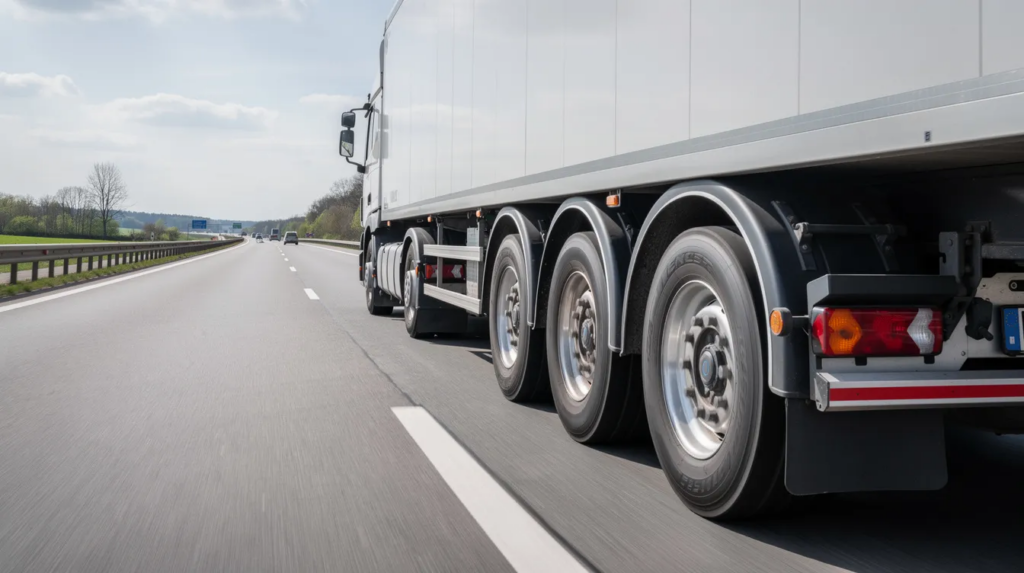
A car transporter is an odd one out among tractor units. The load sits high, the ramps and hydraulics weigh a lot on their own, and the payload spreads differently than a curtainsider full of pallets. The drive axle regularly ends up at maximum, and in Germany and the EU that maximum is 11.5 tonnes.
Then there is work no long haul truck ever does. During loading and unloading the unit manoeuvres at walking pace for minutes, turns the wheel almost on the spot, climbs ramps and rolls back down. Every one of those movements twists the sidewall while there is no airflow to cool it. The casing is working hard and nobody hears a thing.
The third factor is height. To stay under the permitted 4.00 metres, a car transporter saves every centimetre it can, which is why many run on smaller wheels than a standard tractor unit. A smaller tyre holds less air and keeps less in reserve at the same load. Save on the load index on top of that and there is no margin left at all.
How to check in two minutes whether the tyre is enough
The arithmetic is simple. The drive axle carries up to 11,500 kg spread across four tyres in dual mounting. Divide 11,500 by four and you get 2,875 kg per tyre. A tyre with load index 150 carries 3,350 kg in a dual set, so there is margin. A tyre with load index 146 carries 3,000 kg, which passes on paper but leaves you nothing in hand.
That margin is the whole point. Load never sits evenly: it shifts outward in a bend, forward under braking, and hammers in bursts on broken tarmac. Enough on paper and will hold are not the same statement. Working out the index your vehicle actually needs is covered properly in our article on the load index for truck tyres.
What really tears a tyre apart
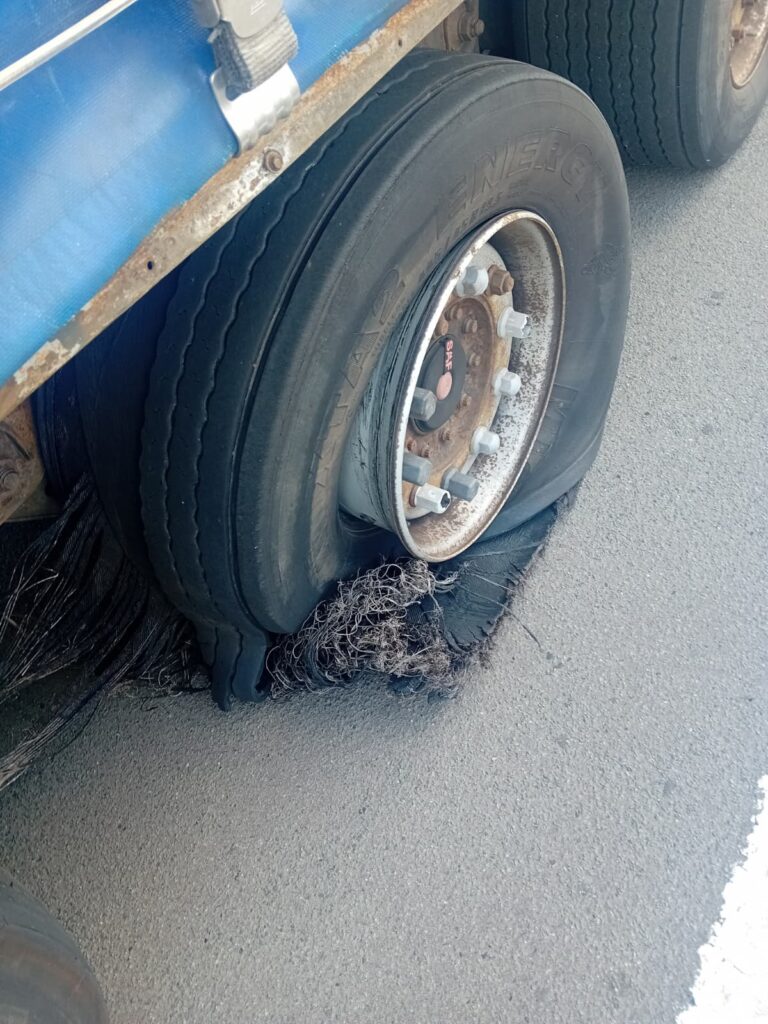
This is what a casing looks like once it gives up. The rubber is gone and the steel cord is lying open. Until that moment the tyre looked ordinary from the outside.
A tyre very rarely bursts because of one single event. Usually it is pressure. A tyre running twenty percent low flexes harder, the sidewall folds further with every rotation, and the temperature inside climbs. In a dual set the driver does not even notice: the neighbour holds the wheel in shape while the flat one hauls double the load.
The second classic is the inner tyre of a dual set. Almost nobody checks it, because it is hard to see and harder to reach. That is the one that dies first, and when it comes apart it often takes air lines and the mudguard with it.
What to look for when buying
A D or the word Drive in the model name. Drive axle tyres have a chunky, often directional tread that delivers traction. A steer tyre fitted to the drive axle wears out faster than the price difference was ever worth.
A load index with margin rather than one scraping the limit. Two points more rarely costs much and gives something back at every pothole.
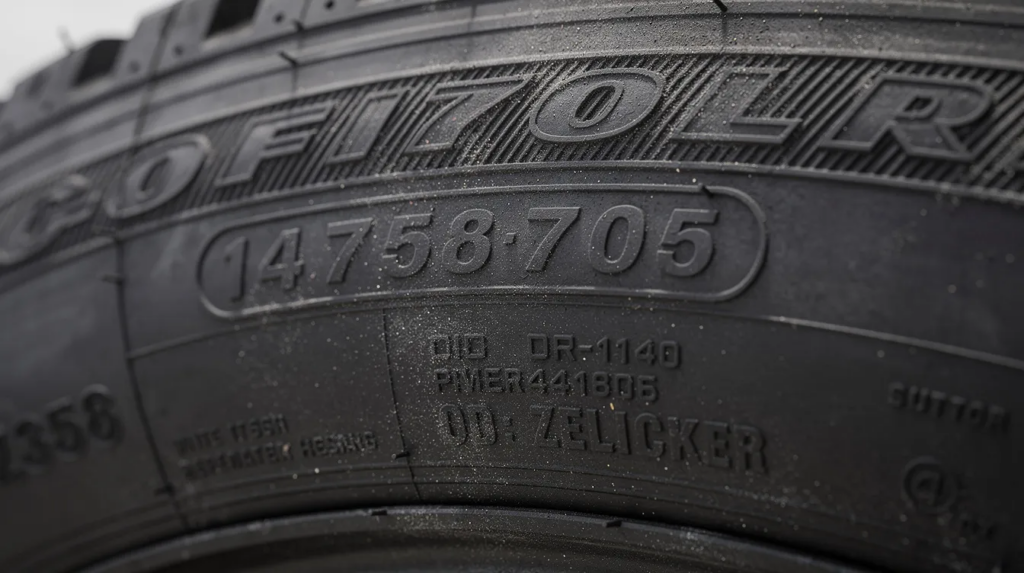
The 3PMSF snowflake. For trucks over 3.5 tonnes, tyres carrying that symbol are required on the drive and steering axles in winter conditions. An M+S marking on its own no longer covers it.
The DOT code, meaning the age. A tyre that sat in a warehouse for three years is new but not fresh. On clearance deals those four digits deserve a careful look.
Pressure is the cheapest insurance you can buy
Check it cold once a week, all four drive axle tyres individually, inner ones included. Cold means before setting off or after at least two hours parked, because a warm tyre reads up to half a bar high and sells you a pressure it does not have.
If one tyre in a dual set keeps losing air, that is not a quirk, it is a message. A slow leak comes from a nail, a leaking valve or a damaged rim shoulder. All three get more expensive with every day you leave them.
If it happens on the road
Make yourself visible first, then make the call. Hazard lights, high visibility vest, warning triangle at a proper distance, and on the motorway your place is behind the barrier, not beside the vehicle. Do not limp to the next exit on the rim: the rim will be scrap afterwards, and a new one costs more than any waiting time.
Then call us. We come to the vehicle with the tyre and the tools, change it on the spot and you carry on. How the mobile truck tyre service works and what it costs is on the service page. If more than the tyre is broken, towing or the mobile truck workshop takes over.
What we see on the jobs
Almost every blowout we are called to has a backstory. Weeks of low pressure, a weak tyre on the wrong axle, an inner dual nobody has touched since the last inspection. The bang on the motorway is only the end of a chain that started a long time earlier.
If you are unsure which tyre belongs on your drive axle, ask before you buy. A phone call is cheaper than a callout. The number and messengers are on our contacts page, and the line is open around the clock.