Skip to content
Since 1 October 2024, reports about an alleged “all-season tyre ban” in Germany have been circulating. The reality is less dramatic, but still has real consequences: it’s not all-season tyres as such that are banned, but certain tyres without the right symbol. This article explains the exact legal situation, the differences between the markings, and what truck drivers and fleet operators need to pay attention to now.
Key facts (quick overview)
- A general ban on all-season tyres is not planned in Germany. Since 1 October 2024, only tyres with a plain M+S marking and no snowflake symbol are banned in wintry road conditions.
- Since 1 October 2024, only tyres with the Alpine symbol (mountain with a snowflake, also known as the 3PMSF marking) count as winter-suitable in snow, ice and slush. All-season tyres carrying this symbol remain fully permitted.
- Plain M+S tyres without the snowflake symbol may no longer be driven in wintry conditions, regardless of remaining tread depth.
- The rule applies to all vehicles in Germany; trucks and commercial vehicles from 7.5t are subject to additional requirements, such as mandatory winter tyres on the drive axle.
- Anyone who breaches the winter tyre requirement risks a fine of at least €60, a point in Flensburg, and problems with insurance cover.
Introduction: is there an all-season tyre ban in 2024?
The terms “all-season tyres” and “all-year tyres” describe the same product: tyres that stay fitted all year round and are meant to be driven in both summer and winter. They are not two different categories. Whether the tyre sidewall says “Allseason”, “4Season” or “All-weather” is legally irrelevant. What matters exclusively is the marking.
The reason media outlets and forums still talk about an “all-season tyre ban 2024” has a concrete cause: on 30 September 2024, the transition period ended for older M+S tyres that were manufactured before 1 January 2018 and don’t carry the Alpine symbol. Germany has a situational winter tyre requirement in wintry conditions, set out in Section 2(3a) of the German Road Traffic Regulations (StVO). This requirement is now tied exclusively to the snowflake symbol.
So all-year tyres with the Alpine symbol remain permitted. If you’ve bought new all-season tyres in recent years that carry the snowflake symbol, you don’t need to change anything. Only using tyres in wintry road conditions without the symbol is banned.
LKWHelp24 works exclusively with trucks and commercial vehicles from 7.5 tonnes. We’re not the right contact for cars, vans under 7.5t or motorhomes; car drivers with breakdown questions should contact ADAC or a regular car breakdown service. However, the basic legal rules on winter tyres apply to all vehicles, including heavy commercial vehicles.
Legal basis: the winter tyre requirement in Germany
Germany’s winter tyre requirement is situational and depends on road conditions. There’s no fixed period such as “October to April”. Instead, the requirement kicks in whenever there’s black ice, snow-covered roads, slush, ice, or frost glaze.
The legal basis is Section 2(3a) StVO. This results in the following rules:
- All wheels of a vehicle must be fitted with tyres that meet the requirements of Section 36(4) StVZO in wintry conditions. Since October 2024 that means: tyres with the Alpine symbol.
- For cars, a breach risks a fine of at least €60 and a point in Flensburg. The fine rises to €80 if other road users are obstructed, €100 if they’re endangered, and €120 in the event of an accident.
- Stricter rules apply to trucks and buses (classes N2, N3, M2, M3): winter tyres must be fitted at least on the drive axles. Fines can be higher, and if an accident happens with the wrong tyres, comprehensive insurance cover can be reduced.
The requirement for winter-suitable tyres is therefore no longer tied to the M+S marking, but exclusively to the Alpine symbol.
Snowflake symbol vs. M+S: what’s banned since 2024?
This section clarifies the two markings and their legal meaning since the cut-off date.
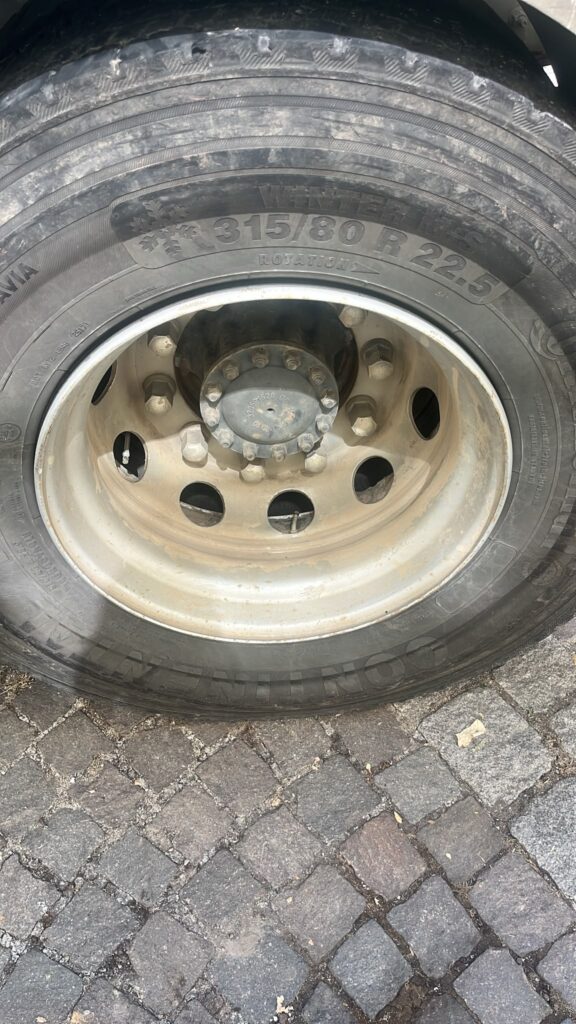
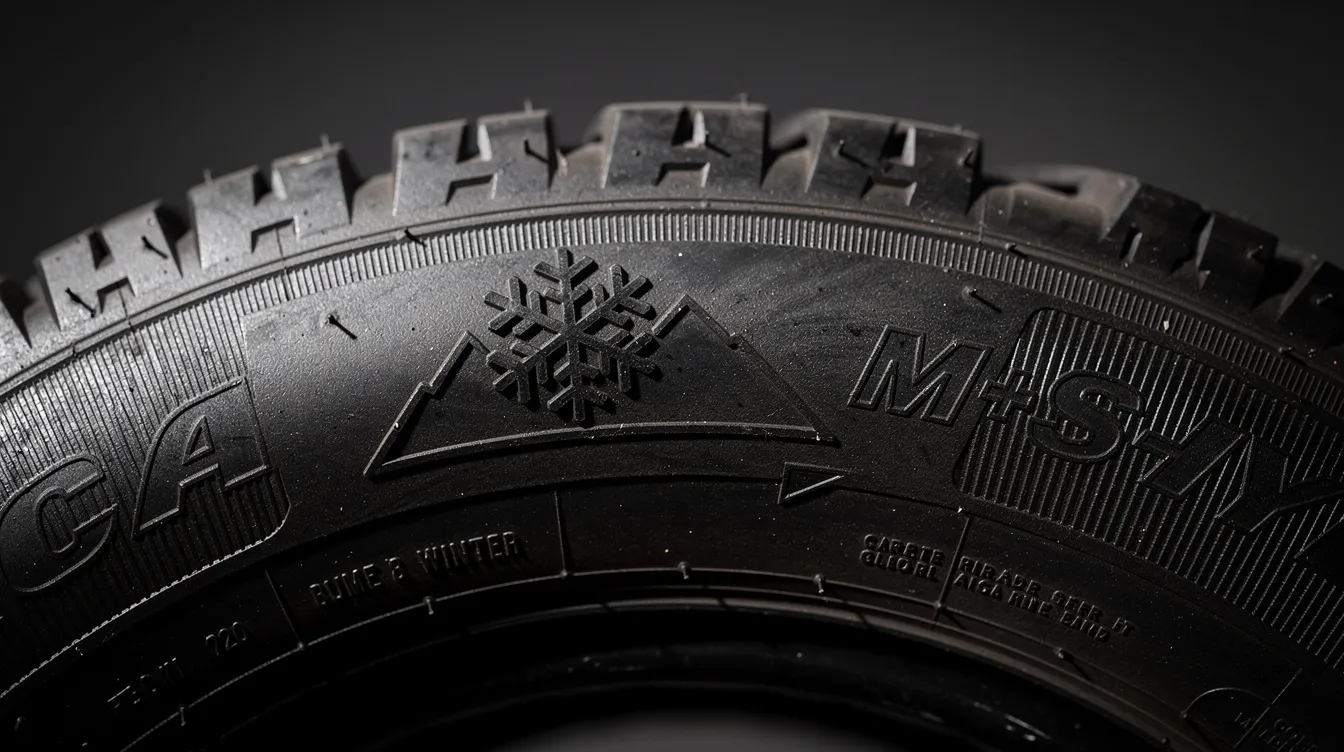
- The snowflake symbol (Alpine symbol, 3PMSF marking) shows a three-peak mountain with a snowflake. It’s a pictogram visible on the tyre sidewall. Tyres carrying this symbol have passed a standardised test procedure for snow traction. The Alpine symbol indicates a winter-suitable tyre and is the only legally recognised marking for the winter tyre requirement.
- The M+S marking stands for “mud and snow”. Until 2017, it was enough to define a tyre as winter-suitable. However, there was no uniform test procedure behind it — any manufacturer could print the marking freely.
- Since 1 January 2018, all newly manufactured winter and all-year tyres must carry the Alpine symbol to count as winter-suitable.
- Tyres without the Alpine symbol that were manufactured before 31 December 2017 and carried only the M+S marking were still allowed to be used in wintry conditions until 30 September 2024. This transition period has now expired.
- From 1 October 2024, tyres with only the M+S marking are banned in snow, ice or slush. This applies even if there’s still enough tread depth left.
- Tyres with only the M+S marking are no longer winter-suitable. Anyone caught with such tyres in winter pays a fine of at least €60, gets a point in Flensburg, and risks having insurance payouts reduced or refused in the event of a claim.

Which all-season tyres are still allowed from 2024/2025?
For drivers who have bought new all-year tyres with the snowflake symbol in recent years, effectively nothing changes from 2024. Tyres with the Alpine symbol may be driven in all weather conditions. The rule of thumb: if there’s a snowflake on the tyre, driving in snow and ice is allowed.
Specifically:
- Allowed in winter: all-season tyres with the Alpine symbol (3PMSF), even if M+S is also printed on them. This combination of both markings is common on most modern all-year tyres.
- Not allowed as winter tyres: tyres with only the M+S marking and no snowflake symbol. Such tyres may still be used in dry, non-wintry conditions, but count as summer tyres in ice and snow.
- The label on the sidewall (“Allseason”, “4Season”, “All-weather”) has no legal weight. Only the Alpine symbol counts.
Recommendation: before winter 2024/2025, check whether your tyres carry the snowflake symbol. At the same time, check the tread depth, since even a tyre with the Alpine symbol becomes a safety risk once it’s worn down.
M+S tyres, S tyres & co: what do the markings mean?
The labels on the tyre sidewall confuse a lot of drivers. Here’s a definition of the most important terms:
- M+S / M S tyres: the historic term “mud and snow” was used for decades to signal a certain winter suitability. Today, the M+S marking alone is no longer proof of winter suitability. It can still be printed on a tyre, but without the Alpine symbol it doesn’t meet the winter tyre requirement.
- Summer tyres: tyres without any winter marking at all (neither M+S nor snowflake). Banned in wintry road conditions.
- Alpine symbol / 3PMSF: tyres with this symbol have passed a mandatory EU test for snow traction. The symbol is a three-peak mountain with a snowflake on the tyre sidewall. It forms the legal basis for the winter tyre requirement in Germany.
- The difference in practice: an “all-season tyre with M+S and snowflake” on the sidewall meets all requirements. An “all-season tyre with only M+S” and no Alpine symbol is not permitted in ice, snow and black ice.
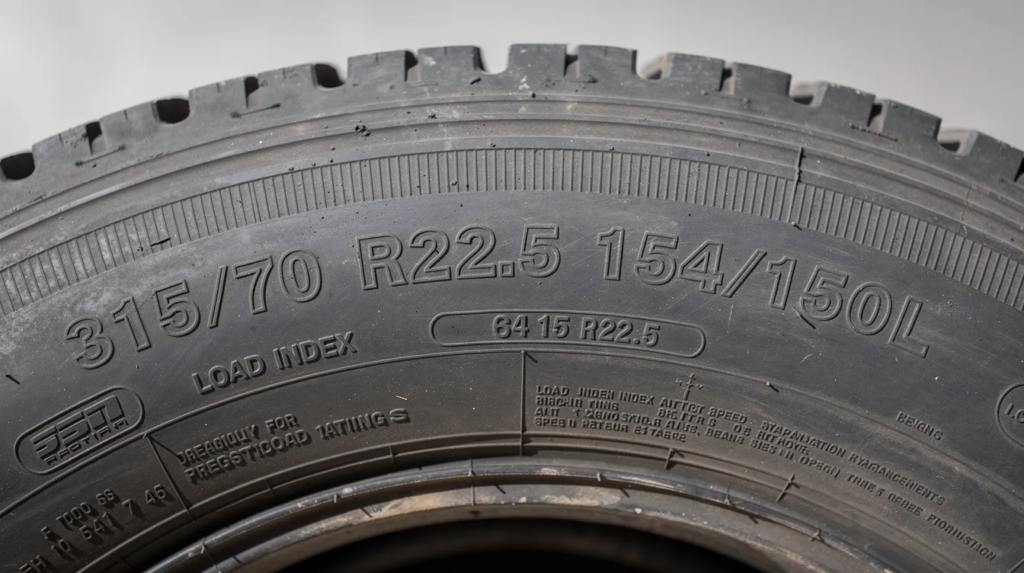
Besides the type of marking, the load index and speed index also need to match the vehicle. Wrong indices lead to their own fines and problems with registration or insurance.
All-season or winter tyres – which makes sense?
All-season tyres are a compromise. Depending on the area of use, annual mileage and climate, this compromise can be enough — or fall short.
Advantages of all-season tyres:
- No twice-yearly tyre change, no storage needed
- All-season tyres save on the cost of seasonal tyre changes
- Practical for drivers in low-snow regions with mild winters
- Less organisational effort for fleets with many vehicles
Disadvantages of all-season tyres:
- Tests show longer braking distances for all-season tyres compared to specialised winter tyres, especially on snow and ice
- All-season tyres don’t perform optimally in extreme weather such as deep snow or heavy snowfall in mountainous terrain
- Higher wear in summer compared to dedicated summer tyres
- Sometimes higher rolling resistance and therefore fuel consumption
For high-mileage drivers, commuters in snowy regions, and vehicles carrying heavy loads (heavy trucks from 7.5t), dedicated winter and summer tyres are the better solution. For car drivers doing city journeys in a mild climate, all-year tyres with the snowflake symbol can be an alternative. LKWHelp24 doesn’t serve cars; for car-specific questions, please contact ADAC or a regular breakdown service.
Tyre age, DOT number and tread depth: when do tyres need to come off?
Even a tyre with the Alpine symbol loses performance over time. The rubber compound hardens, and wet grip and winter traction decrease. Three factors determine when a tyre needs to be replaced:
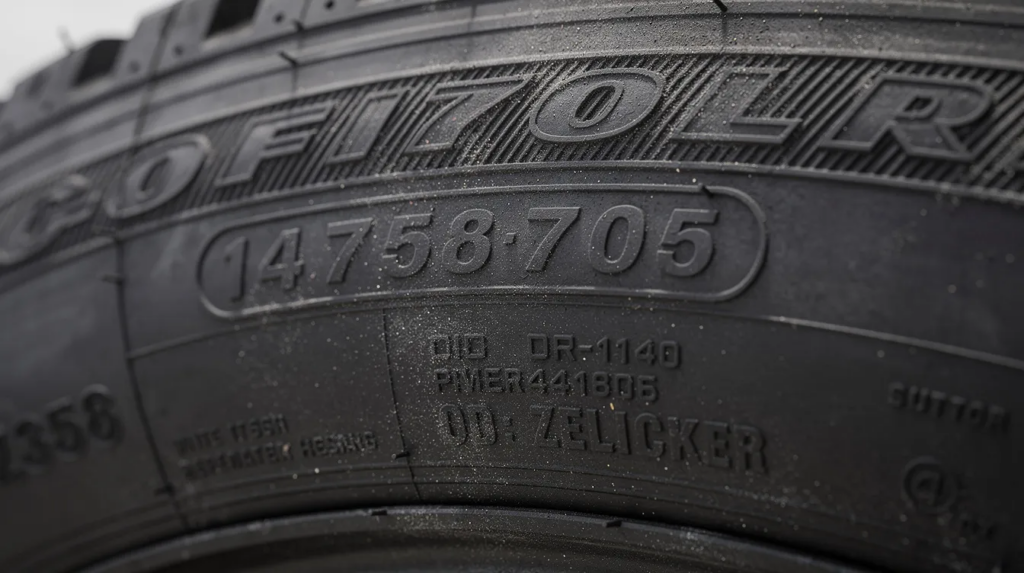
- DOT number: there’s a four-digit number in an oval field on the tyre sidewall. Example: “2523” means manufactured in calendar week 25 of 2023. This lets you determine the exact age of any tyre.
- Tread depth: the legal minimum tread depth for tyres is 1.6 mm. In practice, experts recommend at least 4 mm for winter and all-season tyres, because below that value, traction on snow and ice drops sharply.
- Tyre age: many experts recommend replacement after 6 to 8 years at the latest, even if there’s still tread left. Cracking and material fatigue turn older tyres into a safety risk.
Old M+S tyres without a snowflake are doubly problematic since 2024: they neither meet the legal requirements for wintry conditions, nor offer the safety that a modern tyre with tested winter suitability provides.
Forwarders and fleet operators should proactively check their truck tyres to avoid downtime, fines and breakdowns on the motorway.
Special case: trucks and commercial vehicles – all-season tyres, obligations and breakdown risks
This section is aimed at operators of trucks and commercial vehicles from 7.5t.
Specific rules apply to heavy commercial vehicles in wintry conditions: winter tyres must be fitted at least on the drive axle. Truck tyres from R17.5 have their own product lines as winter, summer or all-season tyres. The symbols (Alpine, M+S) must be checked in exactly the same way as for car tyres.
The consequences of wrong or old all-season tyres hit truck operators harder than car drivers:
- A longer braking distance at 40 tonnes gross weight can be the difference between a near miss and a total loss
- Higher risk of tyre blowouts in low temperatures, road salt and slush
- Motorway closures caused by stranded trucks, affecting the whole traffic flow
- High costs for recovery and towing
Recommendation for fleet managers: before every winter season, have the tread, sidewall, tread depth (at least 4 mm), Alpine symbol and DOT number of all tyres documented. A written winter tyre strategy protects against unpleasant surprises during checks and insurance claims.

Stranded with the wrong tyres – how LKWHelp24 helps in an emergency
You’re stuck with your truck on the motorway in the snow, the tyre is damaged, or an inspector finds that your tyres aren’t winter-suitable. The clock is ticking, and every hour of downtime costs money.
LKWHelp24 is a mobile truck tyre service that works exclusively with trucks and commercial vehicles from 7.5 tonnes. No cars, no vans under 7.5t, no motorhomes.
Our services at a glance:
- Mobile truck tyre service: on-site tyre changes, including all-season or winter tyres from R17.5
- Truck breakdown assistance: air/brake problems, electrics, jump starts
- Truck towing service and recovery
- Mobile workshop for smaller repairs directly at the roadside
Specific facts:
- Coverage area: all of Germany, 24/7, 365 days a year
- Typical arrival time: 30 to 60 minutes
- Fixed price from €290, truck tyres from R17.5 from €315, night/weekend/public holiday call-outs from €549
- Price agreed before the technician sets off, no hidden costs
- Contact: WhatsApp (preferred) or phone on +49 160 575 3826, email info@lkwhelp24.com
- Languages: German, English, Polish, Russian
Here’s how a typical call-out works: a call or WhatsApp message with your location (e.g. motorway, kilometre marker, rest area). We confirm the tyre dimension and availability, check whether a winter-suitable tyre with the snowflake symbol is needed, arrive at the agreed fixed price, fit the tyre on site and minimise your downtime.
All-season tyres abroad: Austria, Switzerland, Italy & co
If you operate truck fleets internationally, you need to know the rules of each country. The following overview doesn’t replace checking the current legal situation before setting off.
Austria: in Austria, winter tyres are mandatory between 1 November and 15 April. All-season tyres with M+S and the Alpine symbol are recognised. The minimum tread depth for radial tyres is 4 mm.
Switzerland: Switzerland has no legal winter tyre requirement. However, drivers are required to adapt their vehicle to the weather conditions. Anyone who has an accident on snow or ice while running summer tyres shares liability. All-year tyres with the snowflake symbol are therefore strongly recommended.
Italy: a regional winter tyre requirement applies in mountain regions and on certain motorway sections. In summer (16 May to 14 October), winter and all-year tyres must have a speed index that matches at least the value entered in the vehicle registration document.
For truck fleets operating internationally, a consistent strategy using all-season or winter tyres with the Alpine symbol is the safest way to avoid problems at borders and during checks.
FAQ on all-season tyres, the ban and truck breakdown help
Are all-season tyres being completely banned in Germany?
There’s no general ban on all-season tyres in Germany. Since 1 October 2024, only tyres with a plain M+S marking and no snowflake symbol are no longer permitted as winter tyres in wintry road conditions. All-season tyres carrying the Alpine symbol remain fully permitted and meet the winter tyre requirement.
What does M+S without the snowflake symbol actually mean for me?
Since the transition period ended, tyres with the old M+S marking and no snowflake may only be driven in non-wintry conditions. In ice, snow and black ice, such tyres are treated as summer tyres. Breaching the winter tyre requirement can cost €60, plus a point in Flensburg. Practical tip: at your next tyre check, look specifically for the Alpine symbol, and upgrade in good time if it’s missing.
How do I know if my all-season tyres are still legal?
The key information is on the tyre sidewall. The label “Allseason” or “All-weather” alone isn’t enough. Check whether the snowflake symbol (three-peak mountain with a snowflake) is present. Read the DOT number to determine the age, and measure the tread depth with a gauge or a 1-euro coin (the gold rim is about 3 mm wide). If you’re unsure, for commercial vehicles from 7.5t a mobile truck tyre service like LKWHelp24 can help.
Does LKWHelp24 also help cars with the wrong all-season tyres?
LKWHelp24 works exclusively with trucks, tractor units, semi-trailers, buses and other commercial vehicles from 7.5 tonnes. We’re not the right contact for cars, vans, motorhomes and vehicles under 7.5t. Car drivers should contact ADAC or a regular car breakdown service. Specialising in heavy commercial vehicles lets us offer response times of 30 to 60 minutes and strong expertise in truck tyres.
What do I do if a tyre bursts on my truck in winter?
Secure the vehicle: hazard lights on, set up the warning triangle (at least 100 m back on the motorway), put on a hi-vis vest, step behind the crash barrier. If other road users are endangered, inform the police or the motorway maintenance authority. Then contact LKWHelp24 via WhatsApp or phone on +49 160 575 3826, and give us your location (motorway, kilometre marker, rest area) and tyre details. We’re usually on site within 30 to 60 minutes, fit the matching truck tyres from R17.5 (including winter-suitable models with the snowflake symbol) and get you back on the road quickly.
If your truck has a tyre puncture right now, read our guide on mobile truck tyre service, or find an emergency tyre service near you directly.