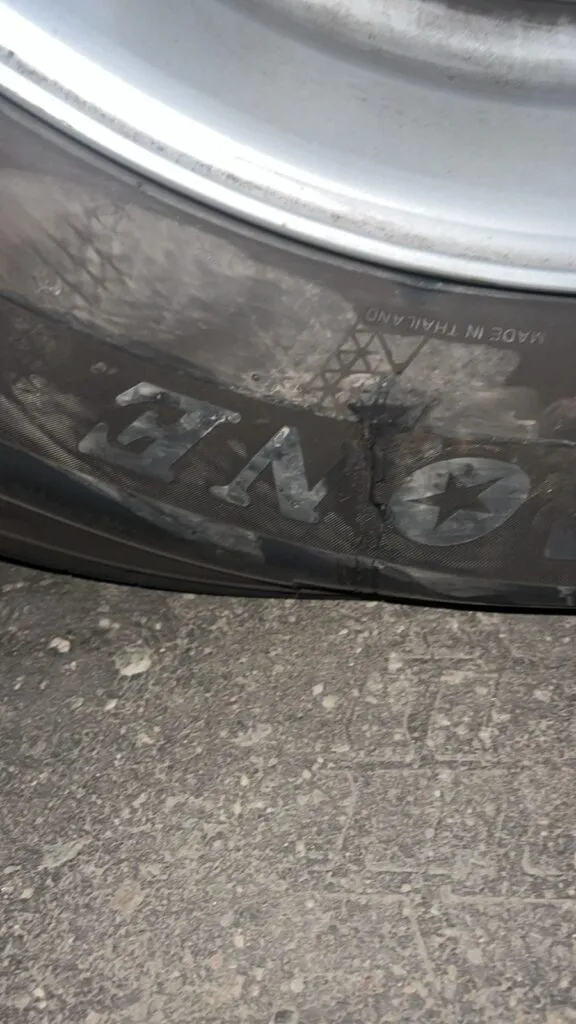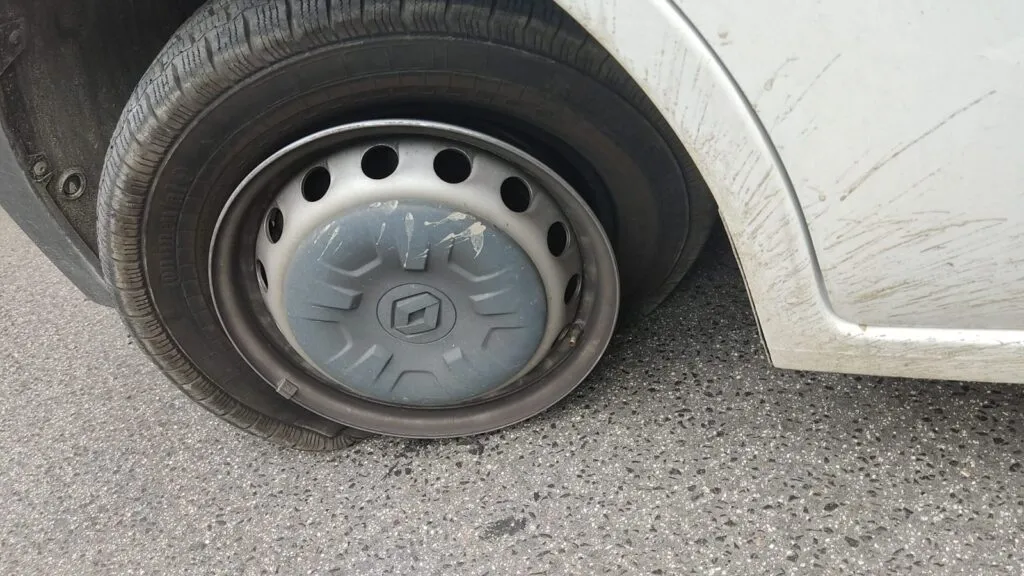
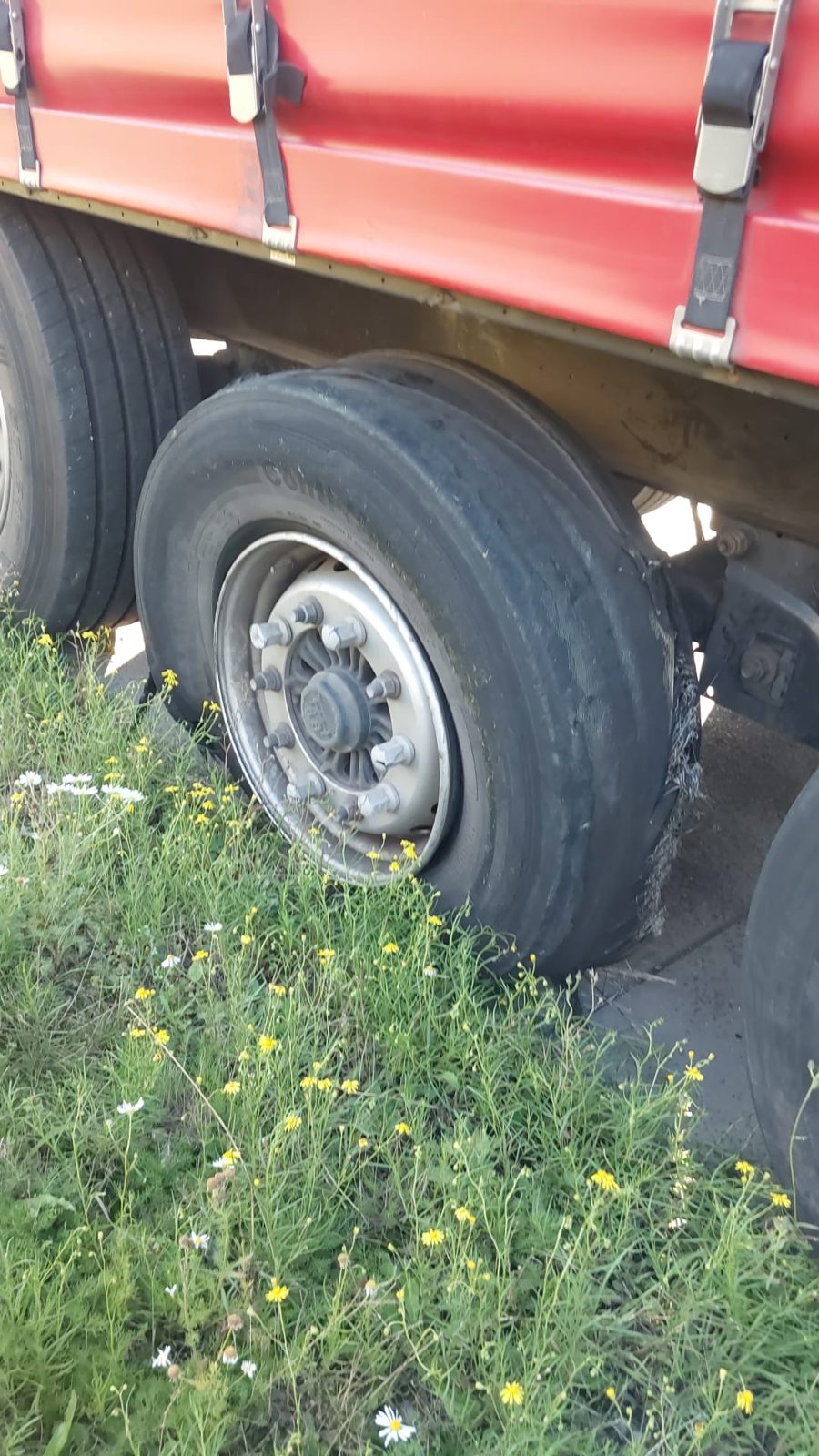
When a trailer tyre bursts on the motorway, every minute counts. Not just for the driver’s schedule, but for safety, compliance, and the integrity of the load. On 15 September 2026, a red tarpaulin-covered planenauflieger (tented semi-trailer) came to a sudden halt on the hard shoulder of the A7 near Hildesheim, with a 385/65 R22.5 rear axle tyre completely compromised. The damage wasn’t just cosmetic: the tread had split open at the shoulder, exposing the steel cord reinforcement (Karkasse), and the sidewall was visibly deformed. With the trailer’s load still on board and the risk of a full breakdown or secondary accident high, immediate professional intervention was essential.
This case study details how LKWHelp24 responded within 70 minutes of the call, deployed a fully equipped mobile service team, diagnosed the full scope of the damage, replaced the blown tyre with a new 385/65 R22.5 unit, and ensured the trailer was safe to return to the road in under 125 minutes. No towing. No delays. No compromises. The key was speed, precision, and a clear understanding of what a blown trailer tyre really means, not just a puncture, but a structural failure that can cascade into axle damage, brake overheating, or even a rollover if ignored.
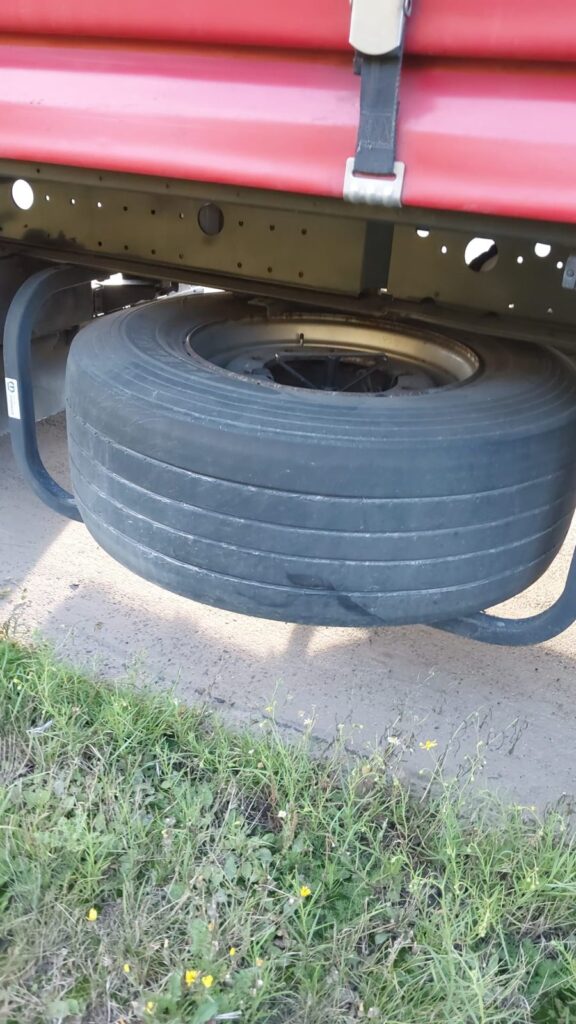
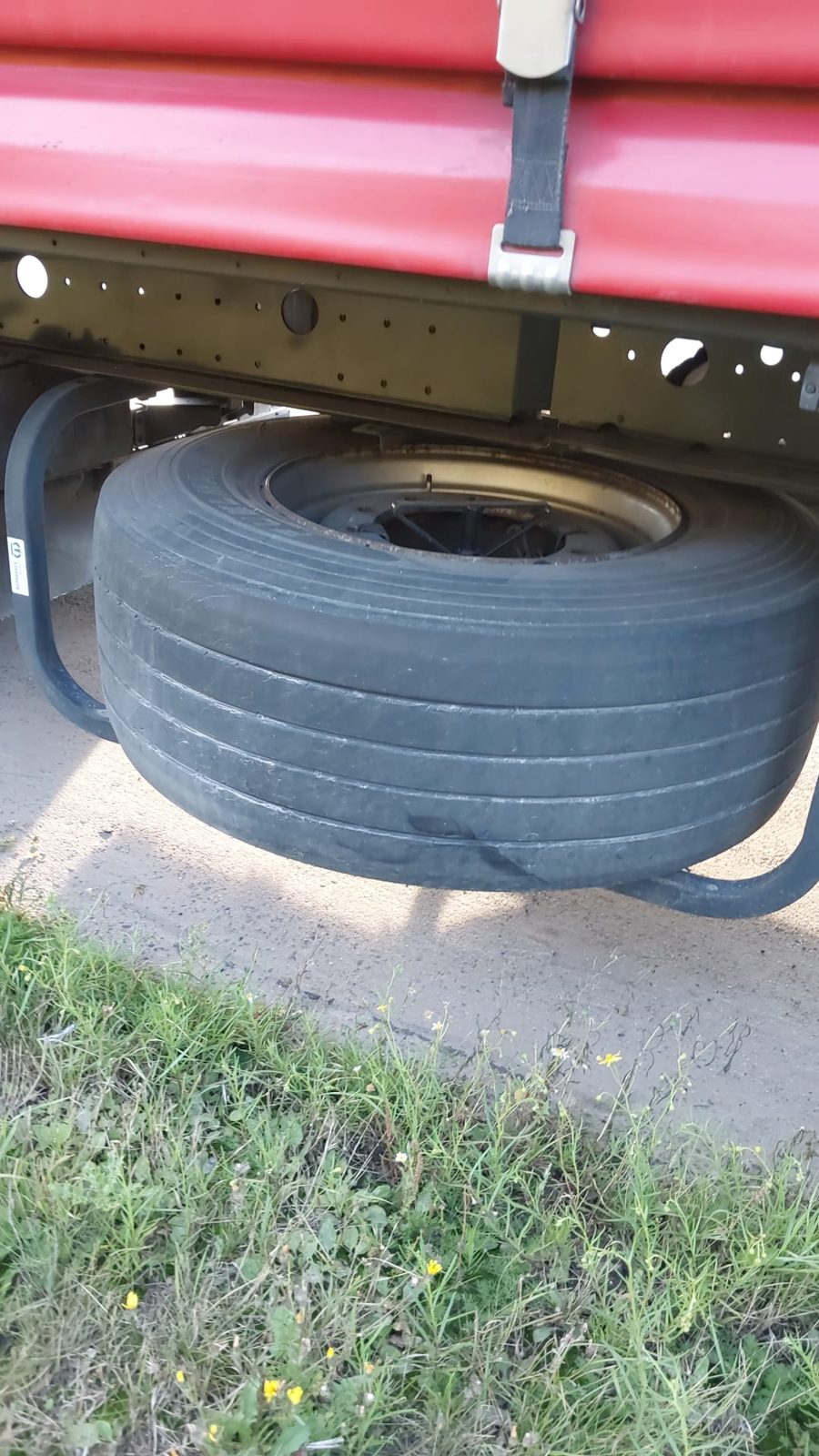
What makes this scenario so critical is that the trailer had a spare wheel (Reserverad) mounted under the frame. But the spare was already worn beyond legal limits, with a tread depth dangerously close to the minimum required by § 36 StVZO. Relying on it would have been a violation of German road safety law and a significant risk. Instead, our team installed a new, fully balanced tyre, verified the spare’s fitment and pressure, and ensured the entire assembly met safety standards before release. This wasn’t just a repair, it was a full safety reset.
The entire operation, from call to completion, took exactly 125 minutes. The mobile tyre service team arrived at 17:50, began work at 17:57, and handed back the trailer at 18:45. Total cost: €905 (net, excluding VAT), a fraction of what a full breakdown or overnight standstill would have cost. With truck downtime averaging €800–1,200 per day, this is not just cost-effective, it’s essential for logistics operations.
What Happened: A Tyre Blowout on the Hard Shoulder
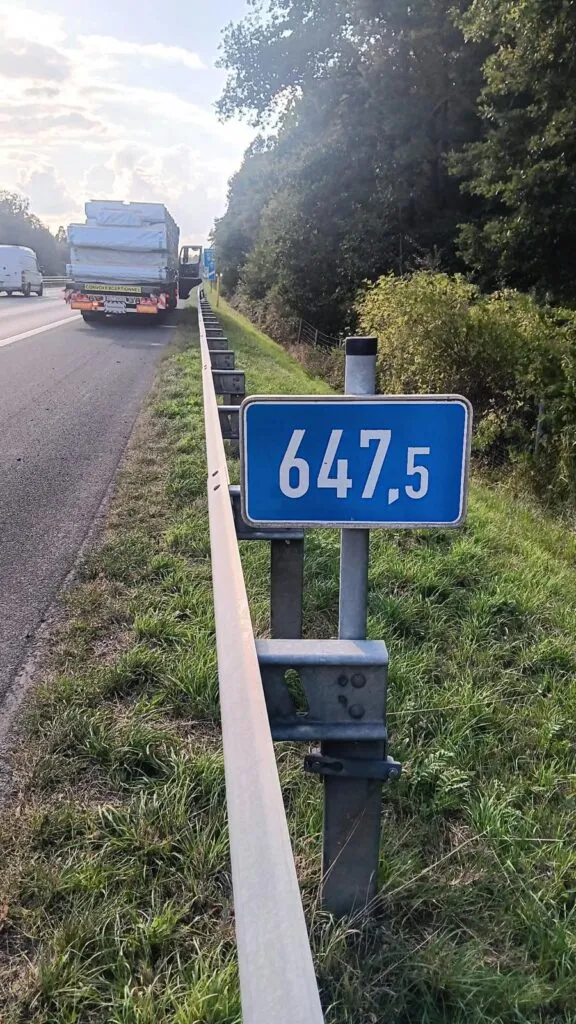
At approximately 16:40 on Tuesday, 15 September 2026, a driver operating a red tarpaulin-covered planenauflieger (tented semi-trailer) on the A7 near Hildesheim noticed a sudden loss of control and a loud bang. The vehicle was travelling towards Hannover when the rear tyre on the trailer’s drive axle failed catastrophically. The driver reacted promptly, pulling over to the hard shoulder, turning on hazard lights, and placing a warning triangle (Warndreieck) at the required distance.
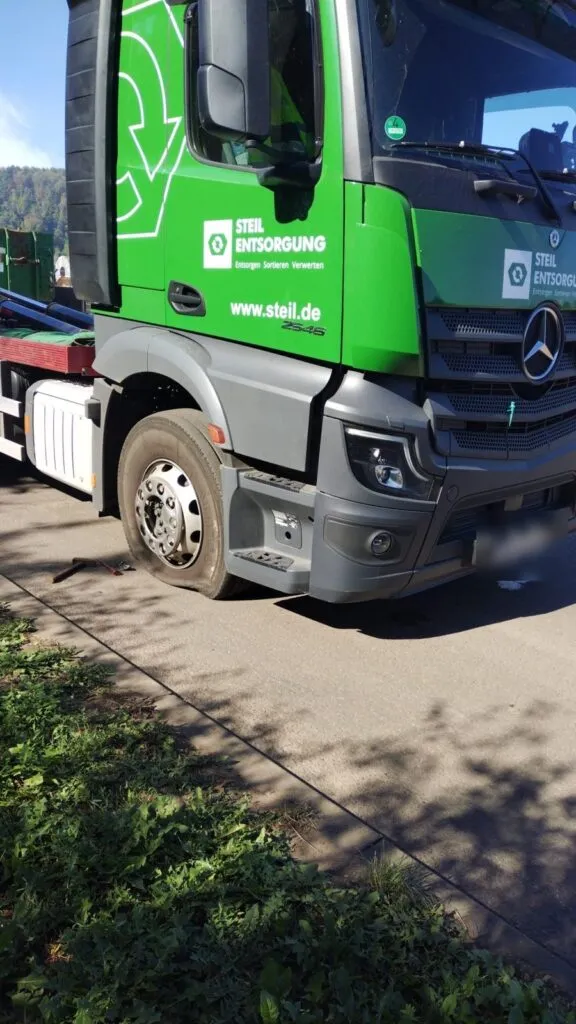
The incident occurred in daylight, with clear weather and dry asphalt. The trailer was parked on the grass verge just beyond the tarmac, near a field of wildflowers. The damaged tyre, a 385/65 R22.5, showed severe signs of tread separation. The outer shoulder had split completely, exposing the steel belt (Stahlgürtel) and the internal carcass (Karkasse). This is not a puncture, it’s a tyre blowout caused by structural fatigue, likely due to prolonged overloading, underinflation, or excessive heat buildup during long hauls.
The second tyre on the same axle, the “nachbarrad” (neighbouring tyre), appeared intact, but its pressure was checked immediately as part of the diagnostic process. It was found to be within the recommended range (8.7 bar), but still, the damage to the first tyre was clear: the carcass had ruptured, and the tyre was no longer capable of supporting load.
Importantly, the trailer’s spare wheel (Reserverad) was present, mounted in a U-shaped bracket (Reserveradhalter) beneath the chassis. However, upon inspection, the spare tyre was severely worn. Its tread depth was near the legal minimum (1.6 mm), and the tread pattern was almost bald. Using it for long-distance travel would have been illegal under German road law and extremely dangerous. It was retained only as a temporary backup, not a solution.
Why Immediate Action Is Non-Negotiable
A blown trailer tyre isn’t just an inconvenience, it’s a chain reaction waiting to happen. Once the tread separates from the carcass, the tyre loses its ability to maintain shape and pressure. The wheel then begins to wobble, causing uneven weight distribution across the axle. This leads to increased stress on the hub, bearings, and brakes, all of which are designed to handle static load, not dynamic imbalance.
In this case, the trailer was carrying a standard commercial load. With the tyre deflated and the rim touching the ground, the weight was no longer distributed evenly. This caused the adjacent tyre to take on extra strain, increasing the risk of a second blowout. Worse, if the trailer had been left on the hard shoulder for more than 30–40 minutes without proper safety measures, the risk of a secondary accident, especially from fast-moving vehicles on the A7, would have risen sharply.
According to § 15 StVO (Straßenverkehrsordnung), a vehicle stopped on a motorway must be secured with a warning triangle at least 100 metres behind the vehicle in daylight. Our team confirmed the driver had done this correctly. But even with proper safety, the longer a vehicle remains on the hard shoulder, the greater the danger. That’s why a mobile tyre service with rapid response is not a luxury, it’s a legal and safety necessity.
Failure to act quickly also risks violating EU driving time regulations. The driver was already on the road for several hours. If the vehicle couldn’t move for another 4–6 hours, the driver could exceed the 4.5-hour driving limit before a mandatory 45-minute rest break. This would trigger a violation and possible fines, adding to the financial and operational fallout.
How We Organised the Response: The Role of the Dispatch Centre
The call came in at 16:40 via our 24/7 emergency line: +49 160 5753826. The driver reported a blown tyre on the trailer’s rear axle, gave the location (A7 near Hildesheim, direction Hannover), and confirmed the vehicle was safely stopped on the hard shoulder.
Within 15 minutes, our dispatch team had:
– Verified the tyre size: 385/65 R22.5 (confirmed via driver description and visual reference).
– Checked our real-time partner network to identify the closest mobile tyre service team with a full toolkit, spare tyres, and a mobile balancing machine.
– Selected a qualified technician based in the Hannover region, who was already en route to a prior call but could reroute.
– Confirmed the service cost with the driver, €905 net, and sent a digital confirmation via SMS.
– Provided step-by-step safety instructions: “Keep hazard lights on, stay inside the cab if possible, do not attempt to change the tyre yourself.”
This coordination was possible because of our nationwide partner network, which includes over 120 certified mobile service teams across Germany. Each team is equipped with:
– A mobile tyre fitting kit (including rim clamps, bead breakers, and inflation tools)
– A portable tyre balancer (essential for trailers, where unbalanced wheels cause vibrations and premature wear)
– A full stock of 385/65 R22.5 tyres (in both new and used-but-safe condition)
– A digital logbook and GPS tracker for real-time updates
The team was dispatched at 16:55 and began driving towards Hildesheim. The A7 is a major freight corridor, and traffic was moderate. The journey took 55 minutes, arriving at 17:50, within our average 60–70 minute response window for motorway incidents.
On-Site Assessment: Why You Can’t Skip the Inspection
When the mobile team arrived at 17:50, they immediately began the safety protocol. The first step was securing the scene:
– Placing additional warning triangles at 100m and 200m behind the vehicle
– Ensuring all personnel wore high-visibility vests and safety gear
– Checking for oncoming traffic and positioning the service van in a way that protected the work zone
Then came the technical inspection, a 7-minute process that revealed critical details:
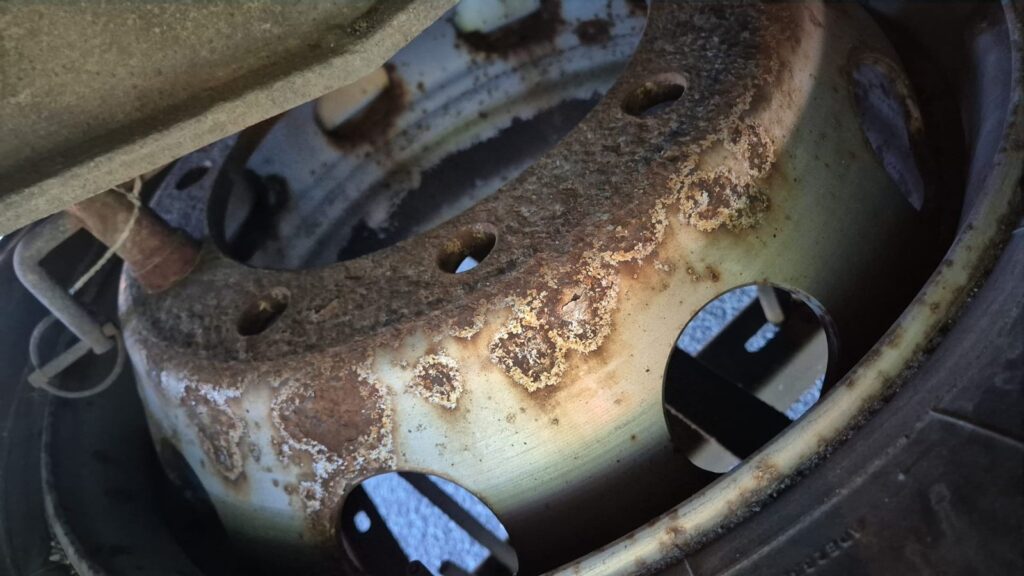
– The rim (Stahlfelge) showed no visible dents, cracks, or warping. The 10 radial bolts (Radbolzen) were intact and properly torqued.
– The hub (Radnabe) and bearing assembly were clean, with no signs of overheating or grease leakage.
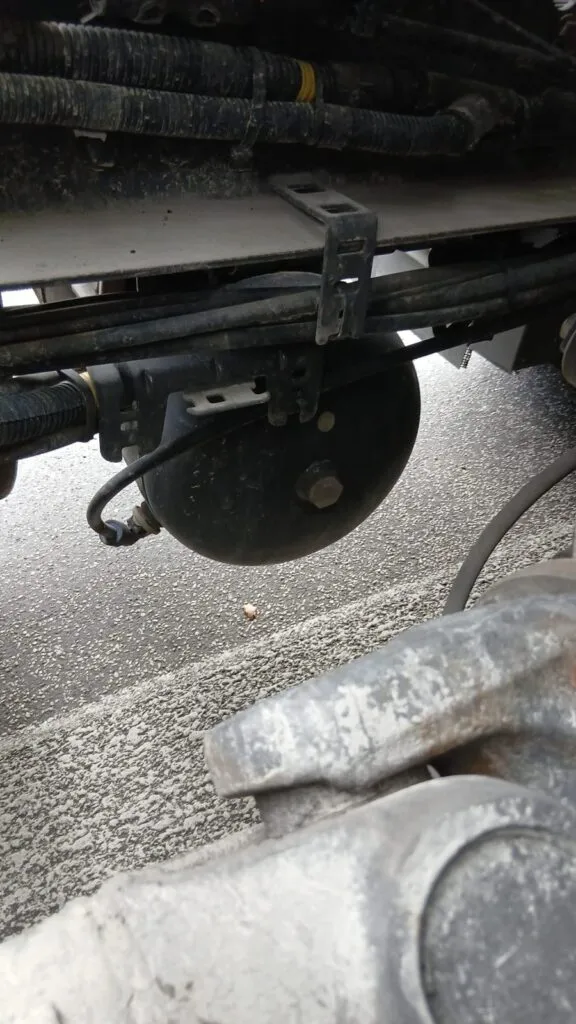
– The brake drum and disc were undamaged, no scuffing or glazing, which would indicate a dragging brake.
– The tread separation was confirmed: the shoulder had split open, exposing the steel belt. This is a classic sign of overheating or underinflation, not a simple puncture.
The technician also checked the neighbouring tyre. It was at 8.7 bar, within the 8.5–9.5 bar range recommended for heavy trailers. But the pressure was monitored closely, as a slight imbalance could lead to further issues.
Finally, the spare wheel was inspected:
– The tyre had a tread depth of 2.1 mm, just above the legal minimum (1.6 mm), but dangerously close.
– The mounting bracket (Reserveradhalter) was secure, with no rust or corrosion.
– The spare was not inflated to the correct pressure, only 7.2 bar, so it would not handle a load.
The conclusion: the blown tyre must be replaced. The spare cannot be used for long-distance travel. A temporary fix was needed, and we had the right equipment.
Step-by-Step Tyre Replacement: From Removal to Final Check
The repair process began at 17:57 and took 55 minutes, with strict adherence to safety and precision protocols. Here’s how it unfolded:
Step 1: Vehicle Stabilisation and Safety Setup
The trailer was secured with wheel chocks on the front wheels. The service van’s hydraulic lift was used to raise the rear axle slightly, reducing stress on the suspension. The technician then placed a safety jack under the frame rail to prevent any movement.
Step 2: Wheel Removal
- The hub cap was removed using a socket wrench.
- The 10 radial bolts were loosened in a star pattern to avoid warping the rim.
- A bead breaker was used to separate the tyre from the rim.
- The wheel was carefully lifted off and placed on a protective mat.
Step 3: Rim and Hub Inspection
The technician inspected the rim for any signs of bending, cracks, or corrosion. The hub was checked for grease, debris, or bearing wear. All components were found to be in perfect condition, no secondary damage.
Step 4: New Tyre Mounting and Balancing
- The new 385/65 R22.5 Continental tyre was mounted on the rim using a hydraulic tyre changer.
- The tyre was inflated to 8.5 bar during mounting to ensure proper seating.
- The wheel was then placed on a portable tyre balancer, where static and dynamic imbalance were detected and corrected with lead weights.
Step 5: Final Installation and Torque Check
- The wheel was reinstalled on the axle.
- The 10 bolts were tightened in a star pattern using a torque wrench set to 200 Nm, the correct value for this axle.
- After initial tightening, the wheel was lowered, and the bolts were re-tightened to 200 Nm after 50 km (recommended by the manufacturer).
- Final pressure check: 8.5–9.0 bar on both the new tyre and the neighbour tyre. The spare was re-inflated to 8.5 bar.
All steps were documented in the digital logbook. The driver received a printed receipt and a digital copy via email.
Full Timeline: From Call to Completion
| Time | Phase | Action |
|---|---|---|
| 16:40 | Call Received | Driver reports blown tyre on A7 near Hildesheim |
| 16:40–16:55 | Dispatch & Coordination | Team selected, cost confirmed, safety instructions sent |
| 16:55–17:50 | Travel to Site | 55-minute drive via A7 |
| 17:50–17:57 | Arrival & Safety Setup | Warning triangles placed, site secured |
| 17:57–18:12 | Inspection & Spare Check | Damaged tyre assessed, spare inspected |
| 18:12–18:35 | Tyre Mounting & Balancing | New tyre installed, balanced, inflated |
| 18:35–18:45 | Final Checks & Handover | Torque verified, pressure tested, documentation issued |
Total time from call to completion: 125 minutes
Response time (call to arrival): 70 minutes
On-site work duration: 55 minutes
This is well within our standard performance benchmark of under 2 hours for a trailer tyre replacement on the motorway.
Cost Breakdown: What You Pay For, And Why
| Position | Price (EUR) |
|---|---|
| Travel / Anfahrt (daytime, A7) | 240 |
| Work 1.5 h × 110 €/h (removal, mounting, balancing, torque, checks) | 165 |
| New 385/65 R22.5 trailer tyre | 480 |
| Disposal of old tyre | 20 |
| Total | 905 |
All prices are net (zzgl. MwSt.), no hidden fees.
Why this cost is justified:
– The new tyre is a high-performance 385/65 R22.5 model, designed for long-haul trailer use. It has a load index of 130 (3,000 kg) and speed rating of H (210 km/h).
– The balancing is essential, unbalanced trailer wheels cause vibrations that can damage suspensions and reduce fuel efficiency.
– The torque check ensures the wheel won’t come loose, a common cause of breakdowns.
– The spare tyre inspection and re-inflation add value beyond just the replacement.
Compare this to the alternatives:
– Standstill (1 day): €800–1,200 (lost revenue, fines, labour)
– Towing to a workshop: €900–1,800 (additional cost, downtime)
– DIY repair: high risk of failure, potential for legal penalties
Our service is not just cheaper, it’s safer and faster.
Why You Should Never Attempt a DIY Tyre Change
While some drivers consider replacing a tyre themselves, it’s a major safety and legal risk. Here’s why:
- Incorrect torque can cause the wheel to come loose at speed.
- Improper balancing leads to vibrations, brake wear, and reduced tyre life.
- Using a worn spare violates § 36 StVZO, fines up to €1,000 are possible.
- No proper tools mean the job may be done incorrectly, and you’ll still need a professional later.
- No liability coverage, if you cause an accident during the change, your insurance may not cover it.
Even experienced drivers make mistakes. A single missed bolt or incorrect pressure can lead to disaster. That’s why only trained professionals should handle trailer tyre replacements.
Typical Scenarios We Handle Across Germany
We respond to a wide range of tyre emergencies on motorways, rest areas, and roadside stops. Common cases include:
– Tyre blowouts on steer or drive axles (especially on trailers)
– Sidewall cuts from curbs or debris
– Tread separation due to overheating or underinflation
– Spares that are worn or improperly mounted
– Bead leaks or rim damage
– Multiple tyre failures in quick succession
We cover all of Germany, from the A1 near Hamburg to the A63 near Kaiserslautern, and from the A9 near Nuremberg to the A10 near Berlin. Our network ensures 24/7 availability and rapid response times.
Proactive Maintenance: What Drivers and Fleets Should Do
To avoid such incidents, follow these best practices:
– Check tyre pressure weekly, use a digital gauge, not just the visual inspection.
– Inspect tread depth monthly, use a tread depth gauge. Replace at 2.0 mm.
– Monitor for bulges, cuts, or exposed steel cords, these indicate internal damage.
– Rotate tyres every 10,000 km to even out wear.
– Keep spares in good condition, check pressure every 3 months, inspect tread.
– Train drivers on emergency procedures, what to do if a tyre fails.
Regular maintenance cuts breakdown risk by up to 70%.
Expert Insight: Tyres, Standards, and Safety
The 385/65 R22.5 size is one of the most common for trailer axles in Europe. It’s designed for high load capacity and durability. The ETRTO (European Tyre and Rim Technical Organisation) sets the standard for dimensions, load ratings, and safety. Always ensure your tyres meet ETRTO specifications.
According to § 36 StVZO, tyres must have a minimum tread depth of 1.6 mm. For trailers, the recommended depth is 2.0 mm for safety.
Leading brands like Continental, Goodyear, Michelin, and Bridgestone offer high-quality trailer tyres with extended lifespans and better heat resistance. Always choose tyres rated for your load and speed requirements.
Why Choose LKWHelp24?
- 24/7 emergency service, available day or night, weekend or holiday
- Nationwide network, rapid response across Germany
- Transparent pricing, no hidden costs, all prices net
- Certified technicians, trained in mobile tyre service, safety, and compliance
- Multilingual dispatch, support in German, English, Polish, and Russian
- Digital documentation, receipt, photo proof, and service history
We’re not just a repair service, we’re a logistics safety partner.
Summary: Key Facts of the Case
- Vehicle: Red tarpaulin planenauflieger (tented semi-trailer)
- Location: A7 near Hildesheim, hard shoulder (direction Hannover)
- Date & Time: 15 September 2026, 16:40 call → 18:45 completion
- Tyre Size: 385/65 R22.5 (trailer)
- Damage: Reifenplatzer (tread separation), exposed steel cord
- Response Time: 70 minutes (16:55–17:50)
- On-Site Work: 55 minutes (17:57–18:45)
- Total Time: 125 minutes
- Cost: €905 (net)
- Secondary Damage: None
- Alternative Cost: Standstill €800–1,200/day; towing €900–1,800
This is not just a repair, it’s a safety reset, a cost saver, and a time saver.
Need Help? Call Us Now
If your truck or trailer breaks down on the motorway, don’t wait. Call LKWHelp24 today at +49 160 5753826. We’re available 24/7 across Germany.
For more information, visit: www.lkwhelp24.com
We don’t just fix tyres, we keep your business moving.
Keywords: truck tyre service | mobile reifenservice | truck tyre replacement | truck tyre change | truck tyre callout | trailer tyre service | mobile truck tyre service | truck tyre roadside assistance | truck tyre repair | tyre change near me
Related Articles
- Mobile Truck Tyre Service A5 near Offenburg: Megatrailer Back on the Road in 2h35 After 445/45 R19.5 Blowout
- Trailer Tyre Damage from Gravel at a Rest Area on the A31 near Gronau: How a Stone in the Tread Killed a Tyre
- Emergency Wheel Change on a Truck: What to Do After a Tyre Blowout on the Motorway
- Truck Tyre Service Near Me: How LKWHelp24 Replaced a Blown Steer-Axle Tyre in Under Two Hours on the A2 near Bielefeld
- How to Read Truck Tyre Markings: Size, Load Index and DOT Code Explained