Skip to content
The Phone Call That Decides Everything: Fix It Here or Tow It Away
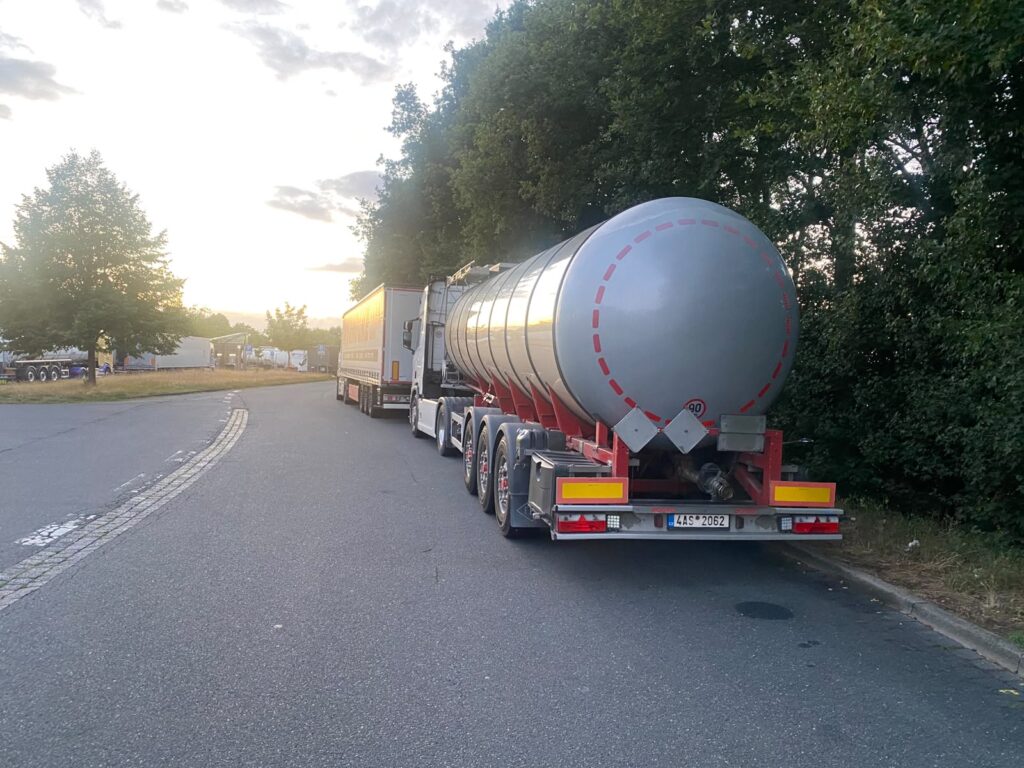
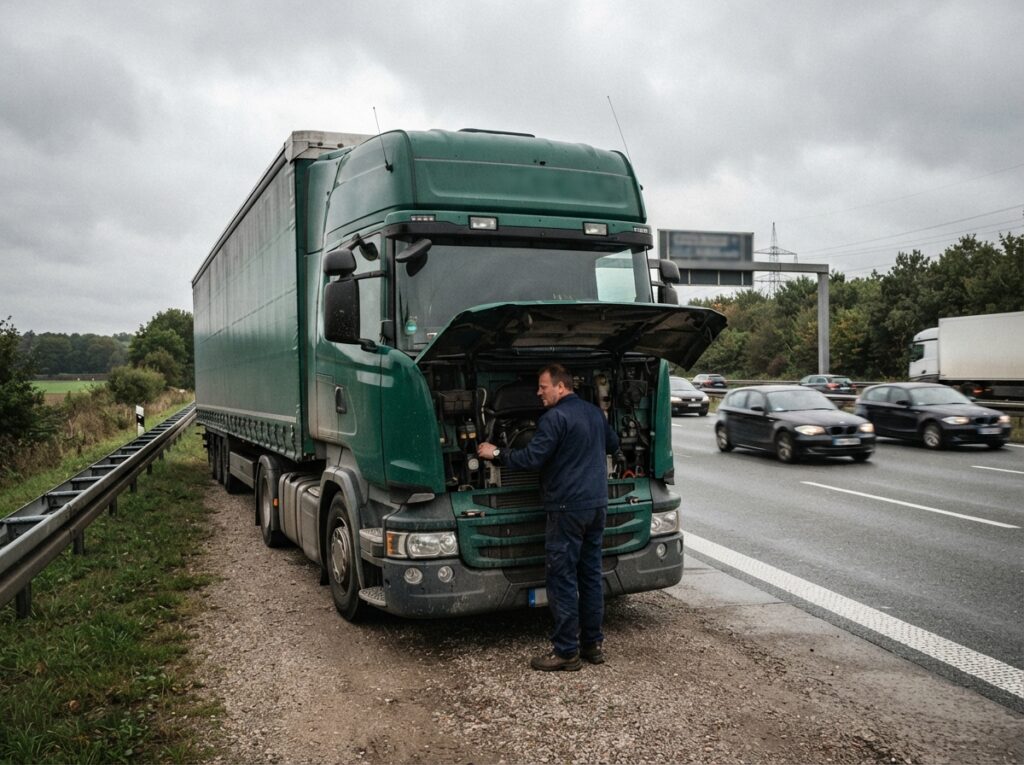
A truck driver pulls onto the hard shoulder of a German motorway, hazard lights blinking, and the vehicle simply will not move another meter. The first question that comes up is rarely “what broke.” It is “am I getting a technician with a toolbox or a flatbed tow truck.” That decision gets made on the phone or over WhatsApp, often within minutes, and it shapes nearly everything that follows: the wait, the cost, and the moment the cargo starts moving again.
LKWHelp24 handles exactly these calls every day, across Germany, around the clock, for vehicles from 7.5 tonnes upward. Hundreds of jobs later, a clear pattern has emerged. A large share of breakdowns can be fixed right at the roadside, no workshop, no crane, no hours-long standstill. Another share absolutely needs a hall, a lift, or specialized diagnostic gear, and any attempt to force that on the shoulder just wastes time and makes the situation more dangerous.
This article explains what mobile technicians actually repair on site, what always has to go to a workshop, how the dispatcher makes that call over the phone, what tools ride along in the service vehicle, and why the final bill often turns out cheaper than drivers expect. Anyone who has ever searched for a tire breakdown service nearby knows the uncertainty that comes with a breakdown. This text is meant to clear that up with concrete, checkable facts.
What Mobile Technicians Can Actually Fix on the Spot
### Tire Failures and Wheel Changes
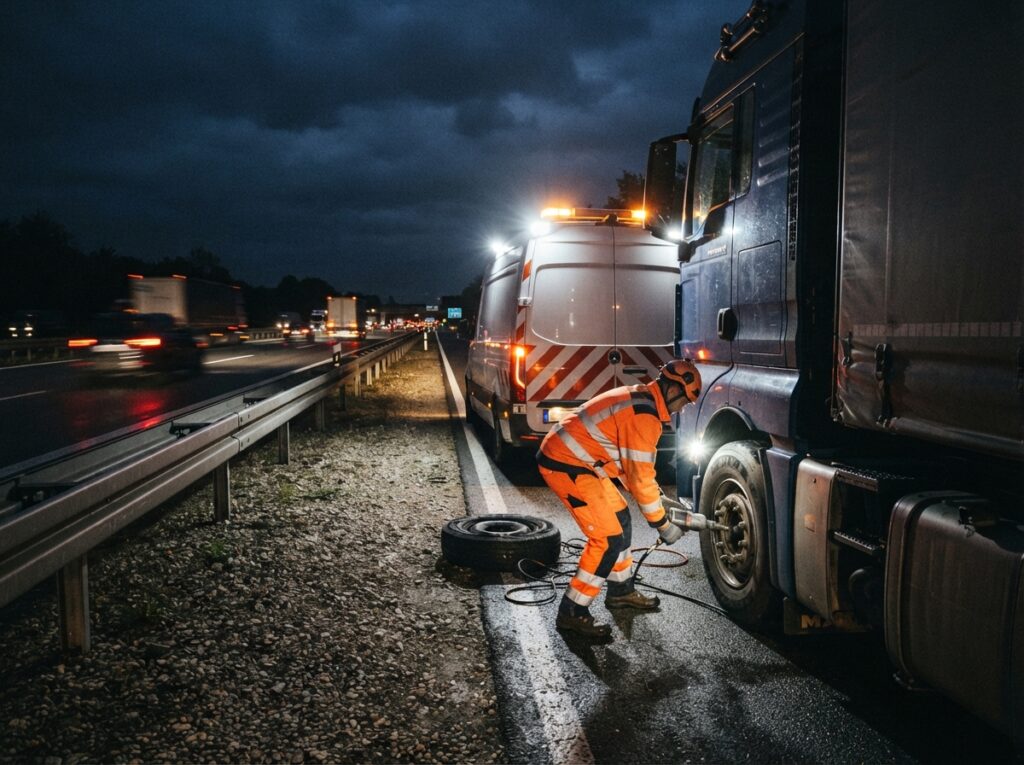
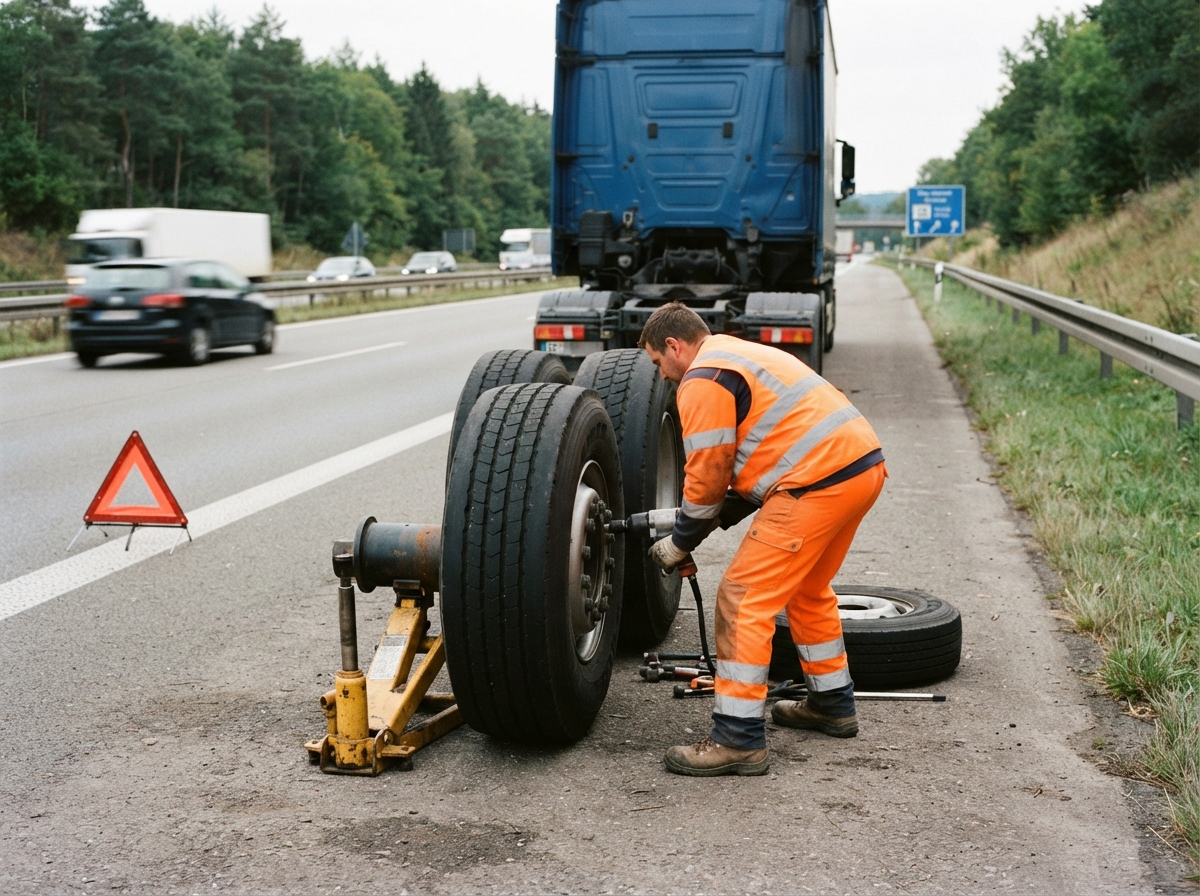
The tire is by far the most common reason a truck ends up stuck on the motorway. A blowout, a nail in the tread, a valve failure, or a belt that gave way from heat costs the driver forward progress, but not necessarily hours. A mobile team carries replacement tires in the common sizes for tractor units and trailers, swaps the wheel, checks tire pressure across the whole vehicle, and torques the lug nuts to spec. On dual-wheel drive axles, a single wheel often needs replacing while its twin keeps carrying load.
There is an important difference between a straightforward swap and an actual tread repair. Minor tread damage on certain tire types can be patched from the inside with a mushroom plug, but only if the tire can be dismounted and the damage does not reach the sidewall. That almost never happens on the shoulder itself, since there is no safe surface and no time for it. Instead, the damaged wheel gets swapped, and the tire travels along to the workshop or tire dealer for a proper look. A full walkthrough of how such a job runs in practice, from securing the scene to the finished wheel change, is available in the guide on emergency wheel changes for trucks.
### Starter Trouble and Dead Batteries
A truck that will not start at a rest stop in the morning is one of the most common calls a dispatcher gets. The cause is almost always one of three usual suspects: a deeply discharged starter battery, a failed starter motor, or corroded battery terminals causing a loose connection. A mobile technician carries a diagnostic tool that reads battery charge and cranking performance, plus a jump-start unit with enough capacity for a commercial vehicle engine. If the reading shows a drained but otherwise healthy battery, the truck gets started, charged, and sent on its way, often within 20 to 30 minutes.
If the battery has reached the end of its service life, it gets replaced right there. Truck batteries are heavy and often installed in pairs or even sets of four, but that is no reason to wait for a tow truck. An experienced technician can swap two battery blocks in a matter of minutes. The starter motor itself is trickier. A starter with a burned-out solenoid or worn brushes can occasionally be swapped with a carried replacement part, but on many modern engines the access is so tight that removal needs a lift or a pit. The vehicle’s design ultimately dictates how much can be done roadside.
### Fuses, Basic Wiring, and Cable Breaks
Electrical faults are an underrated cause of breakdowns. A blown fuse can knock out turn signals, brake lights, the ABS warning light, or even the entire dashboard illumination, and with good reason the truck should not continue in that state. A mobile technician checks the fuse box with a multimeter, replaces blown fuses with the correct amperage, and confirms whether a short circuit caused the failure before the new fuse gets a chance to blow again.
Cable breaks at accessible points, such as the trailer connector, lights, or engine bay connectors, can be fixed with crimping tools, replacement wire, and heat-shrink tubing. Swapping failed bulbs, turn signal relays, or entire tail light units is also standard work. What does not happen on the shoulder is tracing faults through the tangled wiring harnesses of modern trucks when there is no wiring diagram and no time for systematic testing. Those cases get diagnosed as far as conditions allow and then handed off to the workshop with clear notes.
### Sensors and Simple Control Unit Faults
Modern trucks run on a web of sensors: wheel speed sensors for ABS and ESP, temperature sensors, air suspension pressure sensors, oxygen sensors. When one of these fails, a warning light usually comes on even though the truck is still perfectly drivable. A mobile diagnostic tool reads the fault code and identifies the affected sensor. If the sensor sits somewhere accessible, like an ABS sensor at the wheel hub, it gets swapped on the spot and the fault memory is cleared.
Not every sensor replacement counts as a field repair, though. If the sensor sits deep inside the gearbox or engine block, or needs recalibration through stationary software, the job stops at diagnosis and the actual repair moves to a workshop. The upside of mobile diagnostics is that the driver already knows which part is missing before arrival, and the workshop can prepare in advance, which saves standing time later.
### Belts and Drive Belts for Auxiliary Components
A snapped V-belt typically knocks out the alternator and power steering, sometimes the water pump too, depending on the layout. The truck does not necessarily become immobile right away, but it absolutely should not keep moving, since the battery drains and the engine can overheat. A mobile technician carries common belt sizes, replaces the belt, and checks the tensioner pulley and belt tension. Given good access, this repair often takes under an hour.
Things get harder when the belt failure traces back to a bad tensioner, a seized auxiliary component, or damage to the pulley seat. A straight belt swap will not fix that, and the vehicle needs a closer look in a workshop.
### Exhaust Clamps, Brackets, and Loose Fittings
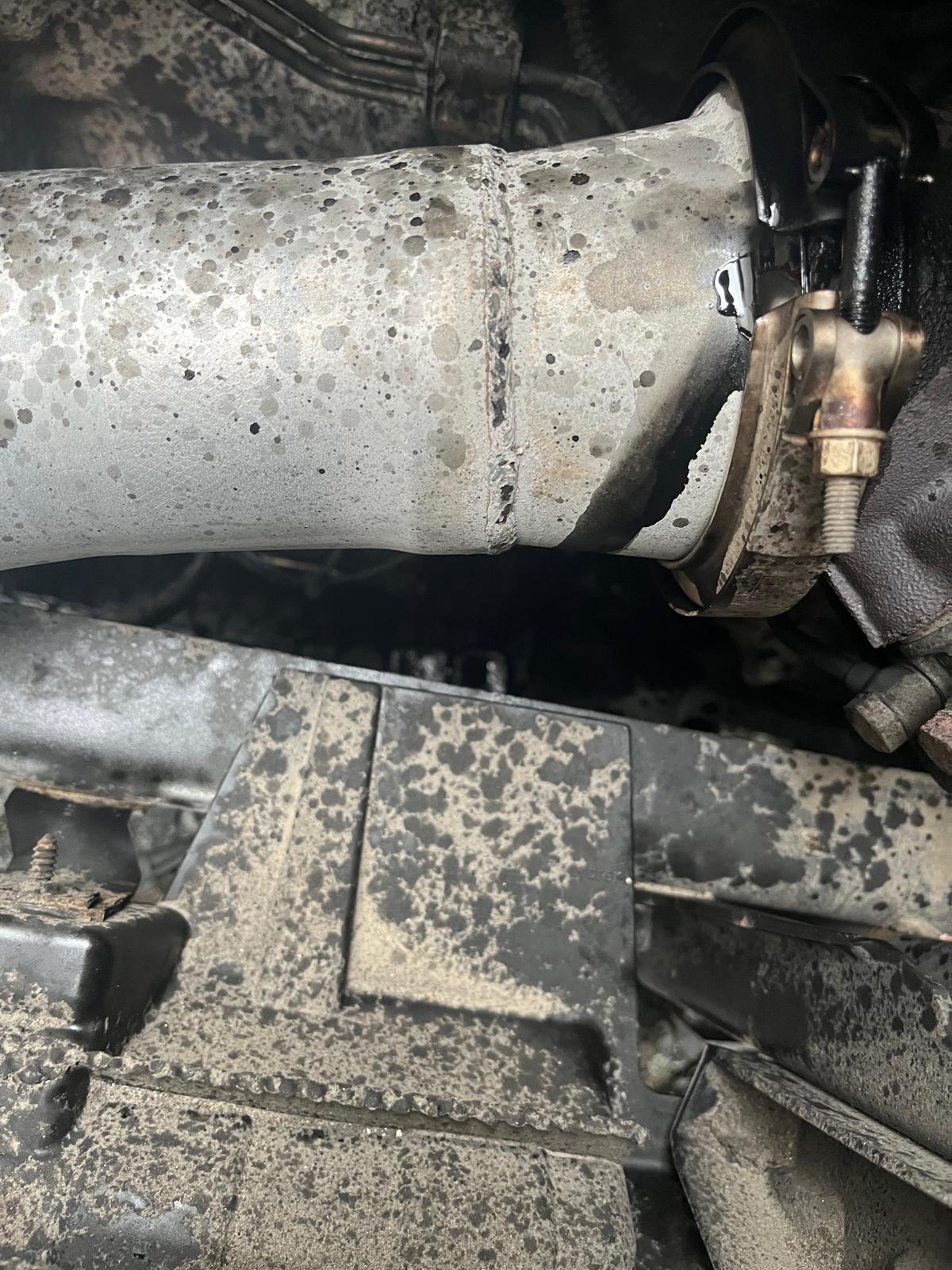
A rusted-through or torn exhaust bracket, a loosened clamp, or a dangling heat shield are annoying but usually fixable with hand tools. A technician carries clamps in various diameters, heat-resistant bands, and replacement brackets, secures the loose part, and prevents it from tearing off completely or falling onto the road during onward travel. The same goes for loose fenders, running boards, or mudflap brackets. These are technically simple repairs but safety-critical ones, since a part falling off on the motorway can endanger other road users.
### Minor Repairs to the Air Brake System
The air brake system on a modern truck is complex, but certain faults are accessible and fixable with mobile tools. A leaking coupling head, a torn air line, or a failed hose at the trailer connection can often be replaced right on site, since these components sit outside the frame and are reachable with standard tools. A technician listens for the air leak, pinpoints it with leak detection spray, and replaces the affected part from a stock of lines, couplings, and seals carried in the service vehicle.
What does not happen here is intervention inside the ABS control valve, the brake force regulator, or the trailer control valves buried inside the system. Those components need test benches and specialized diagnostic software. Attempting a fix without that equipment would not just be ineffective, it could be outright dangerous, since braking performance could no longer be reliably verified.
What Never Gets Fixed on the Shoulder
### Engine Damage
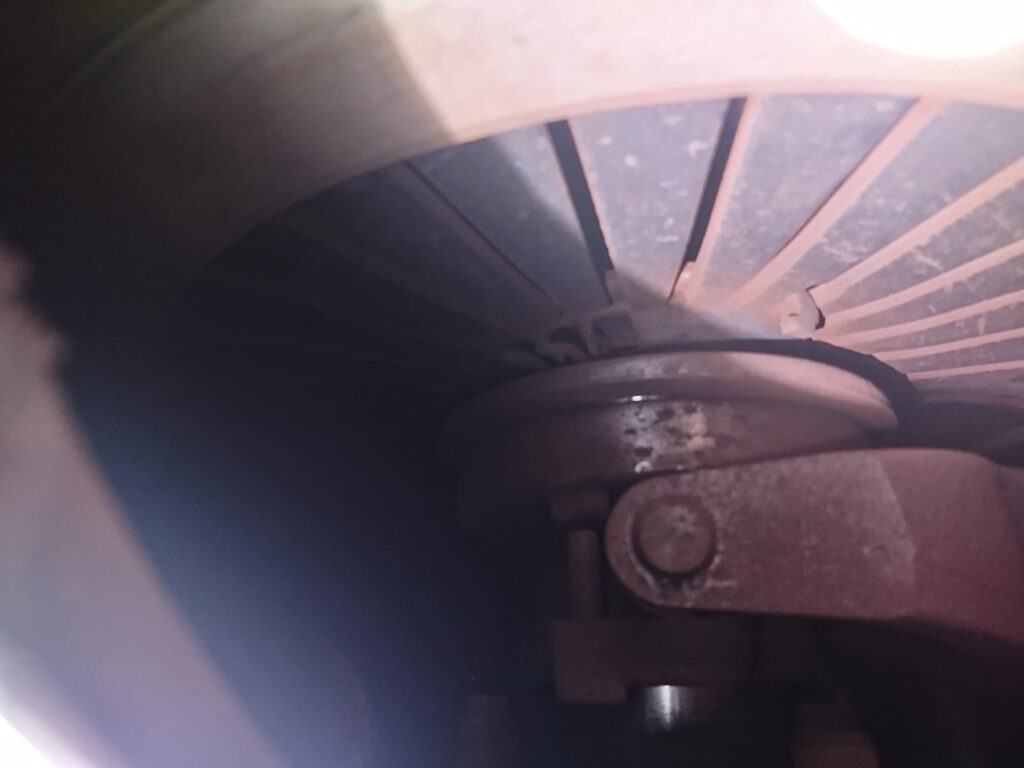
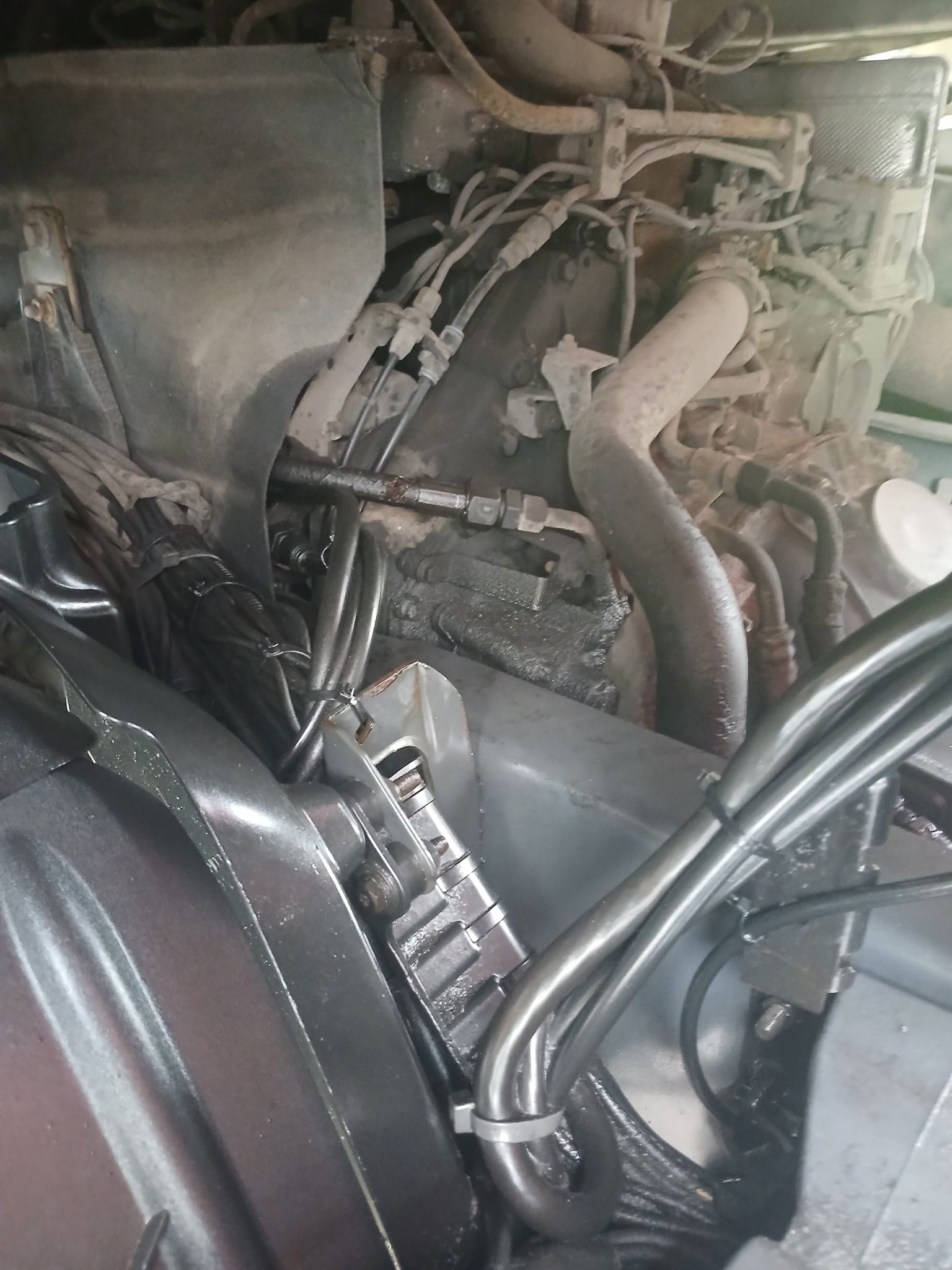
A seized piston, a bearing failure, a cracked engine block, or a blown head gasket are cases that can only be handled in a workshop. These repairs require draining and containing fluids, removing heavy components, usually a lift or a pit, and precision tools for torque specs measured in single-digit newton meters. Engine failure on the motorway practically always means diagnosis on site, followed by a tow to a workshop or, in some cases, to the carrier’s own depot.
### Gearbox Failures
A truck that will not shift, a clutch that slips, or a rattling noise from the transmission can rarely be fixed roadside. Gearboxes are heavy, their removal needs specialized lifting gear, and the fault often sits inside the housing where nothing is visible from outside. A technician can at most check the fluid level and repair obvious external damage like a torn clutch line. Everything else is a workshop matter.
### Serious Axle Damage
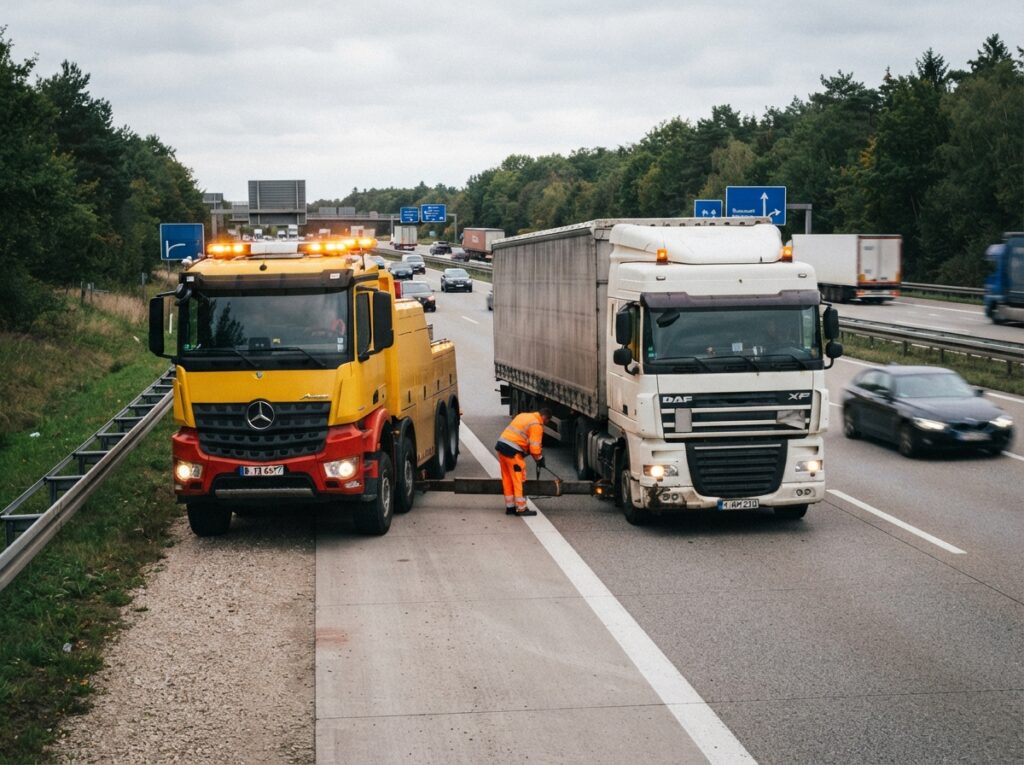
A broken axle, an axle bent from a hard impact, or major bearing failure on a drive axle usually mean the vehicle should not be moved under its own power at all. These situations almost always end in a recovery, frequently with crane equipment, especially if the vehicle sits sideways or the axle is jammed. A real-world example shows what that can look like: a case involving truck models and roadside assistance from 7.5 tonnes upward involved a vehicle with a broken front axle that could only be cleared through a full recovery. A roadside repair was never on the table.
### Complex Control Unit and ECU Problems
Modern truck engines run on several interconnected control units, from the engine control unit to the transmission and brake control units. When one of these fails completely, especially if it throws contradictory or no fault codes at all, a basic diagnostic tool is not enough. These faults often need manufacturer-specific software, stable power during diagnosis, and sometimes recoding of the control unit itself, which is only possible in a properly equipped workshop. A mobile technician can narrow down the fault and hand the driver and workshop a first assessment, but that is the limit.
### Frame and Body Damage After Accidents
A bent frame, a crushed cab, or a damaged fifth wheel coupling after an impact are jobs for a body shop, not a roadside service. The priority here is a safe recovery of the vehicle from the accident site, which usually flows directly into towing. For anyone wanting to understand what to keep in mind when towing a truck, that overview covers the key points from load securing to police notification.
How the Dispatcher Decides Over the Phone
First contact with LKWHelp24 usually happens over WhatsApp or phone, reachable around the clock at +49 160 5753826. The dispatcher asks pointed questions that already set the direction before anyone leaves for the scene. How old is the vehicle, which warning lights are on, can the truck still move under its own power, are there unusual noises, when exactly did the problem start. These questions sound simple but carry a surprising amount of information.
A driver reporting that the engine just died and will not restart, while every dashboard indicator still works fine, points more toward a fuel or electronics issue than a mechanical total failure. A driver describing a loud bang followed by the vehicle pulling to one side clearly points to tire damage, possibly with fender damage on top. A driver mentioning a metallic grinding noise from the gearbox area while the truck refuses to shift signals to the dispatcher right away that a tow truck makes more sense than a technician with a toolbox.
The dispatcher also asks about location, the traffic situation, whether the vehicle sits on the shoulder, in a construction zone, or in the middle of a live lane, and whether hazard lights and a warning triangle are already in place. These details affect not just safety but also which team gets sent with what equipment. When in doubt, LKWHelp24 defaults to sending a technician for an on-site assessment first, since a quick check is often cheaper and faster than prematurely booking a tow truck that turns out not to be needed. If the on-site check reveals that a repair is not possible, the job switches seamlessly to towing without the driver having to wait a second time.
Tools and Parts Carried in the Service Vehicle
A mobile truck repair vehicle is essentially a small rolling workshop. Standard kit includes a compressor for tire pressure work and pneumatic tools, a hydraulic jack rated for tractor units, axle stands, a torque wrench for correct lug nut tightening, and a stock of replacement tires in common sizes. Add to that a diagnostic tool for reading fault codes from engine, transmission, and brake control units, a multimeter, high-capacity jump-start units, and a stock of replacement batteries.
Smaller items include fuses in every common amperage rating, V-belts and ribbed belts in standard sizes, clamps and brackets for exhaust systems, heat-resistant tape, wiring, crimping tools, heat-shrink tubing, and seals and coupling heads for the air brake system. The kit is rounded out with tools for accessing the engine bay and chassis, lighting for night jobs, and extra safety gear like additional warning triangles and hi-vis vests. This equipment explains why such a large share of breakdowns actually get resolved on the first visit, without needing a second vehicle or a workshop at all.
Why a Roadside Fix Makes Better Economic Sense
From a cost perspective, the difference is often significant. A roadside repair with LKWHelp24 starts at 290 euros during the day and 429 euros in the evening, at night, or on weekends, as a base call-out fee for the mobile visit, plus the actual repair work and parts. Towing, on the other hand, adds extra costs: the trip to the workshop, frequently a storage fee, the wait for an open workshop slot, and not uncommonly days where the vehicle and cargo sit idle. Anyone wanting a realistic sense of the numbers involved can check the detailed breakdown of truck towing costs.
The economic advantage of a roadside fix is not just the direct price comparison, though. It is mostly the time saved. A carrier calculates standing time in euros per hour, and a stranded truck with perishable cargo or a fixed delivery window often loses more money to the delay itself than to the actual repair invoice. A tire swap finished in 45 minutes, instead of waiting three hours for a tow truck and then still needing a workshop slot, often makes the real difference in the total bill.
Safety for Technicians and Drivers on the Motorway Shoulder
Working on the shoulder of a motorway is one of the most dangerous jobs in road transport. Vehicles often pass just meters away at speeds over 100 km/h, and plenty of drivers pay limited attention to stranded vehicles. That is why fixed rules apply to every job. The warning triangle gets placed at a safe distance, considerably farther back for trucks than for cars, because the following traffic needs a longer braking distance. Hazard lights stay on for the entire duration of the repair.
Technicians wear high-visibility vests, work on the side of the vehicle facing away from traffic whenever possible, and avoid standing between their own service vehicle and the live lanes. The driver, if the situation allows, should also leave the vehicle and wait behind the crash barrier rather than staying in the cab or standing near the roadway. Additional lighting comes into play during dusk or night jobs, so the scene is visible to approaching traffic well in advance. The legal framework for behavior during a breakdown or accident on German roads is laid out in the road traffic regulations, available in full in the StVO text. The Federal Highway Research Institute regularly publishes studies on the safety of work zones within traffic areas, and the Federal Office for Goods Transport monitors compliance with technical and legal requirements for commercial vehicles.
These safety rules are not bureaucratic padding. They exist because of decades of experience with accidents involving stranded vehicles. A technician who skips proper protection under time pressure or out of convenience risks not just their own safety but that of the driver and passing traffic as well.
Frequently Asked Questions
Can every tire failure be fixed on site, or does it always mean a brand-new tire?
Most tire failures on the motorway get resolved through a wheel change, not a tread repair. Patching is possible in principle, but it requires dismounting the tire and damage that does not reach the sidewall. The roadside rarely offers the right conditions for that, so the wheel gets swapped and the damaged tire travels along for a proper check later.
How long does a typical roadside repair with LKWHelp24 take?
It depends heavily on the fault. A simple wheel change or battery swap is often done within 30 to 60 minutes. More complex jobs, like a belt replacement with tensioner inspection, can take up to two hours. The technician gives an accurate estimate after the initial on-site assessment.
How does the dispatcher know a repair is possible over the phone without seeing the vehicle?
Targeted questions about symptoms, noises, warning lights, and vehicle behavior allow a first assessment based on years of experience with similar cases. When there is any doubt, a technician gets sent out for an on-site diagnosis first, rather than booking a tow truck prematurely.
What happens if it turns out on site that a repair is not possible after all?
The job switches seamlessly to recovery or towing. The technician on site coordinates directly with dispatch, so there is no second phone call and no additional waiting time for the driver.
Does the mobile repair service cover trailers and semi-trailers too, or only the tractor unit?
The service covers the entire rig. Tire damage, electrical faults in trailer lighting, leaking air lines, or loose brackets on the trailer get handled just like problems on the tractor unit itself.
From what vehicle weight does LKWHelp24 operate, and in which languages is the service available?
LKWHelp24’s mobile repair and breakdown service is built for vehicles from 7.5 tonnes upward, from distribution trucks to full articulated rigs. Communication runs in German, English, Polish, and Russian, so international drivers get quick, straightforward help too. Contact runs around the clock via WhatsApp and phone at +49 160 5753826, with more details available at lkwhelp24.com.
Conclusion
The line between what can be fixed at the roadside and what has to go to a workshop is not arbitrary. It follows the physics of the vehicle itself: anything reachable from outside, workable with mobile tools, and free of the need for a lift or precision diagnostics deep inside the drivetrain can usually be handled on site. Tires, batteries, fuses, belts, loose fittings, and many air brake issues fall into that category. Engines, gearboxes, serious axle damage, and deep control unit faults do not.
The real advantage of an experienced mobile service like LKWHelp24 lies in judging that line realistically over the phone, without leaving a driver waiting for a technician who ends up calling for a recovery anyway, and without booking a tow truck prematurely when a simple repair would do. That judgment, paired with a well-equipped mobile workshop and trained staff, is often what separates a short delay from a completely lost day.