Skip to content
Quick summary: On 9 July, the driver of an articulated lorry reported a hissing sound from the air brake system at a service area on the A45 near Wetzlar, Hesse. The tractor unit was building up pressure too slowly, losing it again at standstill, and the parking brake locked automatically. From the first call to confirmed departure took 2 hours 30 minutes; the repair itself took 65 minutes. Net cost: 620 euros.
A lorry that stops running because of an air leak is not an ordinary breakdown. The air brake system on a heavy goods vehicle works on a principle many drivers only fully grasp when it fails them: compressed air holds the brake open, not closed. When pressure drops, a spring inside the spring brake chamber pulls the brake shut automatically. That is not a fault, it is a deliberate safety design, but it also means a vehicle with a leaking system simply cannot move, no matter how urgent the delivery.
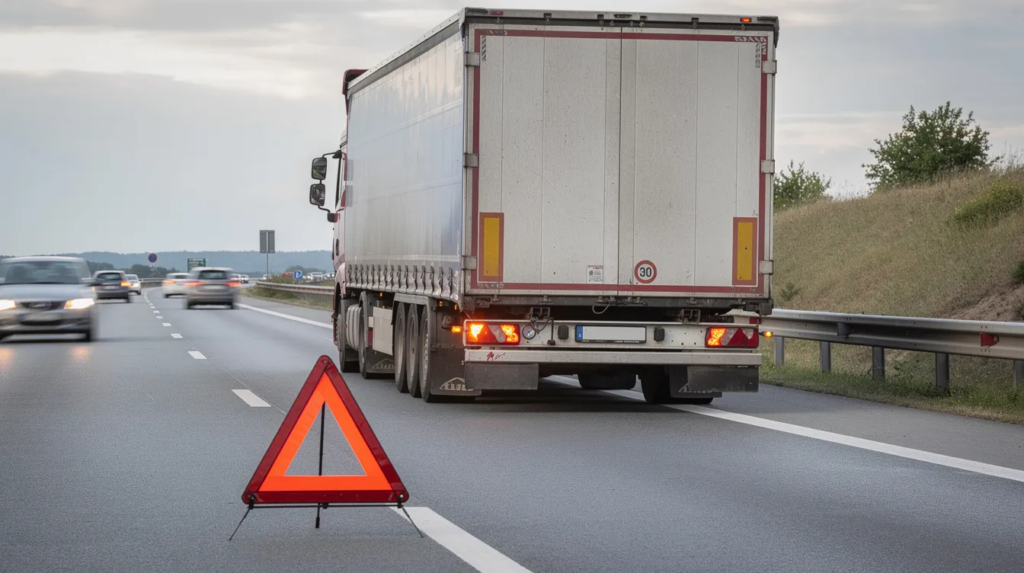
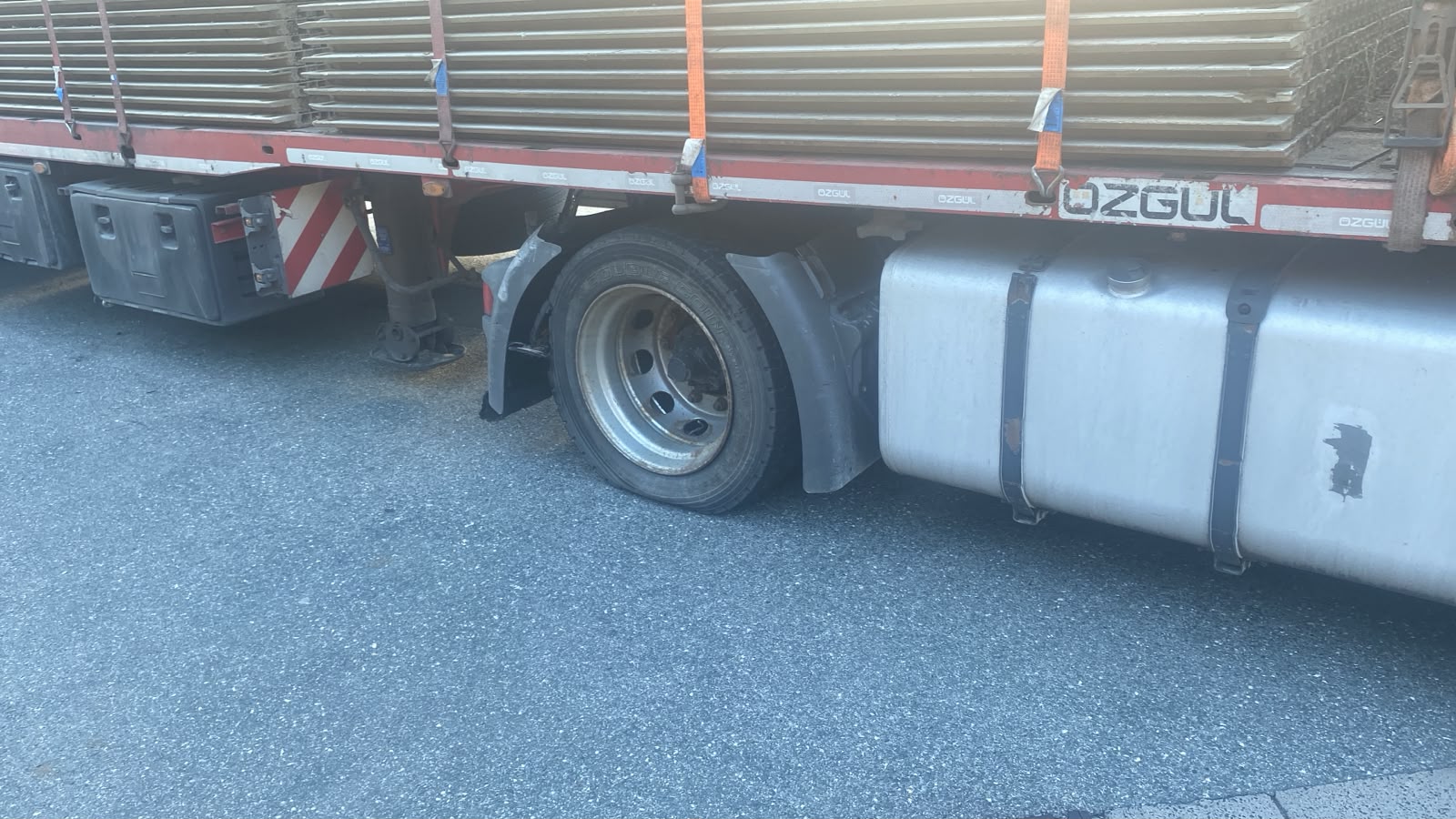
That is exactly what happened on the afternoon of 9 July at a service area on the A45 near Wetzlar. The driver of an articulated lorry noticed the pressure was building up unusually slowly after starting the engine. When the unit was parked, a clear hissing noise was audible, the gauges showed pressure dropping, and shortly afterwards the parking brake engaged on its own. The tractor and trailer were roadworthy in every other respect, but they could not move.
What went wrong at the service area near Wetzlar?
The articulated lorry was losing compressed air from the brake system, could not maintain sufficient operating pressure, and was locked in place by the automatic parking brake. The vehicle stood at a service area directly on the A45 near Wetzlar, Hesse, during daytime hours on 9 July.
The driver had parked the unit shortly before and, on trying to pull away again, found the pressure was not building in the usual time. A hissing sound was clearly audible with the engine off, a classic sign of a leaking connector, a cracked plastic line, or a faulty valve somewhere in the pneumatic circuit. Because modern heavy goods vehicles apply the brakes automatically when pressure falls, the unit could not be driven. This is particularly noticeable on articulated combinations, since both the tractor and the trailer run separate air circuits, and a leak can sit at either end or at the connection between them.
How was help organised?
The driver called our emergency line, dispatch located the position at the service area, and the nearest available technician from our partner network was assigned. The process:
- Take the call, ask about vehicle type and symptoms (hissing, slow pressure build-up, parking brake engaged).
- Confirm the exact location via A45 marker post and service area name.
- Assign a technician from the partner network database with pneumatic system experience.
- Advise the driver to set hazard lights and a warning triangle, even with the vehicle safely parked off the carriageway.
- Communicate ETA to driver and haulier, update status throughout.
Dispatch took 15 minutes, and travel to the service area took 50 minutes. For a stationary vehicle on solid ground that is a realistic window; on a live hard shoulder, extra safety measures would usually add time.
Why an air system fault cannot be ignored
An articulated lorry with a leaking brake system should not continue its journey, even if the driver feels “there’s still enough air for a few more kilometres.” Heavy goods vehicles typically run at an operating pressure of 8.5 to 9.5 bar. If the reserve drops below a critical threshold, the system automatically switches to a safety mode and locks the wheels via the spring brake actuators.
The risk is not limited to standing still. A system already losing air at rest carries an even higher leak risk once moving, since vibration increases chafing on hoses and loosens fittings under load. If pressure keeps falling while driving, in the worst case there may not be enough reserve for a full emergency stop. That is the core reason why “it only lost a bit of air” is never treated as trivial in workshop practice; it calls for immediate inspection.
How is an air system leak repaired?
Technicians search for the leak systematically, from the most likely cause to the least likely, replace the faulty part, and re-check pressure build-up before releasing the vehicle. In five steps:
- Visual check and securing the site: the vehicle is further secured at the service area, the engine started, and the compressor run while watching the gauges.
- Acoustic tracing: with the compressor running and the engine off, every connector, hose, and coupling is listened to; hissing points to the general area.
- Soap solution test: suspect fittings, couplings, and the trailer connectors (often called “gladhands”) are coated in soap solution; bubbles pinpoint the exact spot.
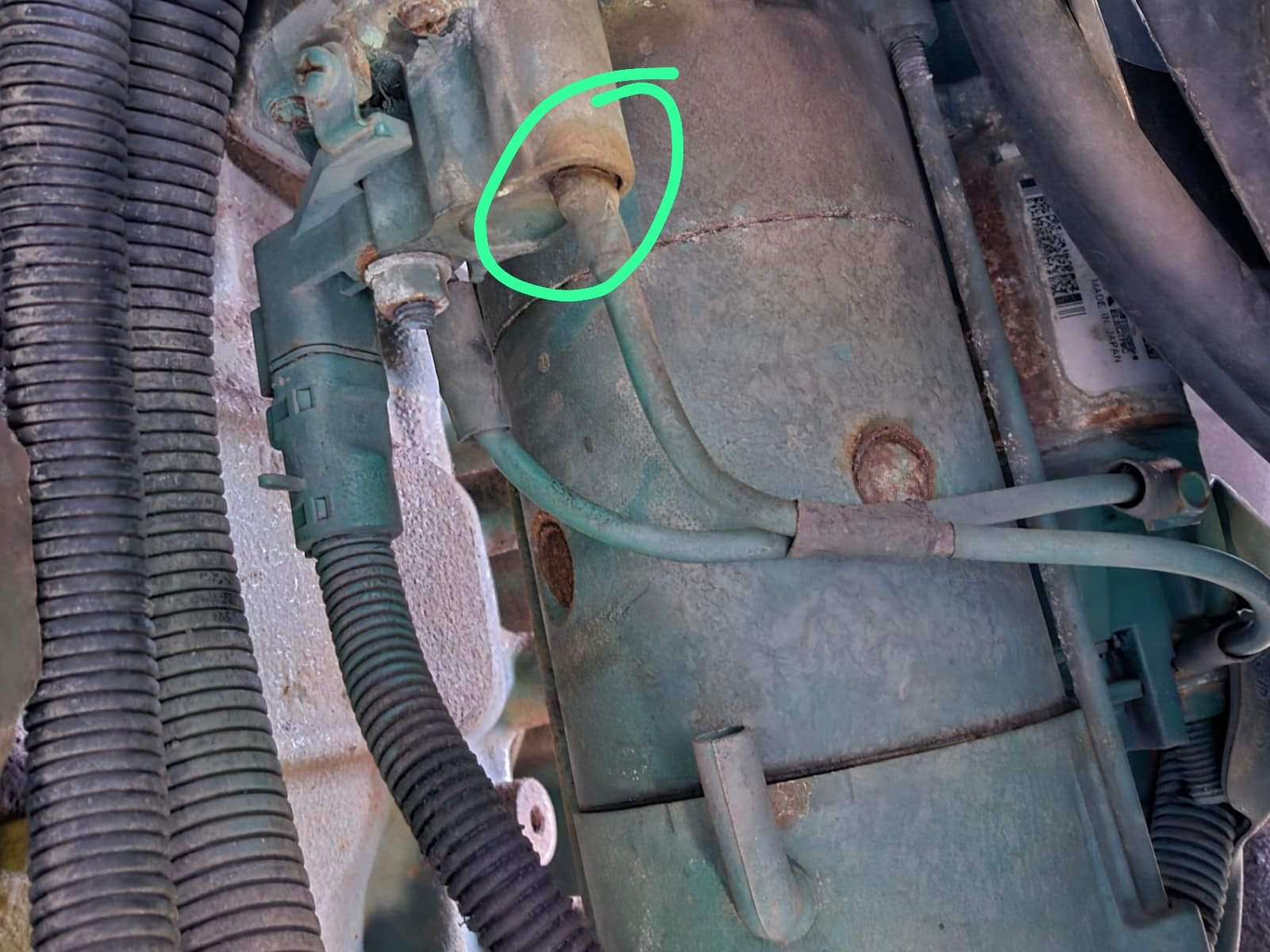
- Replacing the faulty component: depending on findings, cracked plastic lines, leaking fittings, or a damaged connector are replaced; in this case, lines and fittings on the tractor unit.
- Function test with a pressure drop check: after replacement, pressure is rebuilt, the engine switched off, and the pressure drop rate is monitored over several minutes to confirm it stays within tolerance.
On this job, the cause was ageing, vibration-cracked lines and a leaking fitting on the tractor unit, one of the most common failure points, since plastic lines constantly flex with chassis movement.
Full timeline
| Time | Phase | Action |
|---|---|---|
| 11:40 | Emergency call | Driver reports hissing and locked parking brake |
| 11:40–11:55 | Dispatch | Location confirmed, technician assigned (15 min) |
| 11:55–12:45 | Travel | Drive to the service area on the A45 near Wetzlar (50 min) |
| 12:45–13:05 | Diagnosis | Acoustic tracing and soap solution test (20 min) |
| 13:05–14:10 | Repair | Lines/fittings replaced, pressure drop check (65 min) |
| 14:10 | Complete | Vehicle cleared to continue |
Total time from call to departure: 2 hours 30 minutes.
What did the call-out cost?
| Item | Price (EUR, net) |
|---|---|
| Call-out fee | 220 |
| Air system diagnosis | 140 |
| Repair labour (65 min) | 165 |
| Materials (lines, fittings, seals) | 95 |
| Total | 620 |
All amounts are net, plus VAT. Pricing for an air system repair scales mainly with scope: a single cracked hose can be replaced in minutes, while a failed compressor or damaged trailer coupling head pushes both parts and labour up significantly. For comparison, a lorry standing idle typically costs a haulier 800 to 1200 euros per day depending on cargo and contract terms, so the 620 euros spent here pays for itself almost immediately against a full day off the road or a recovery to the nearest workshop.
Why this repair needs a professional
Attempting to fix an air leak alone, or driving on regardless, carries several unnecessary risks:
- Without gauge experience, the leak rate is easy to underestimate, and pressure can fall faster than expected once moving.
- Improvised repairs to plastic lines often do not hold under full operating pressure and fail again, usually at the worst possible moment.
- Working on the brake system without a proper pressure drop check afterwards falls short of due diligence and can complicate insurance claims after an incident.
- Driving on with a low air reserve risks not having enough pressure available for full braking force in an emergency stop.
Typical air-system call-outs across Germany
Air system leaks are among the most common breakdown causes for articulated lorries, often alongside other symptoms:
- Cracked plastic lines from vibration, chafing against the chassis, or material ageing.
- Leaking brake chamber diaphragms, usually identified by localised hissing right at the axle.
- Faulty trailer coupling heads (gladhands) between tractor and trailer, often from worn seal rings.
- Failed or overloaded air dryer, letting condensate rather than dry air into the system.
- Worn compressors that build pressure too slowly and also introduce oil into the system.
The A45 near Wetzlar as an operating area
The stretch of the A45 around Wetzlar is one of the busier north-south corridors in Hesse, carrying a high share of heavy goods traffic between the Rhine-Main region and the Siegerland area. On routes like this, with dense traffic and frequent gradients, pneumatic wear tends to show up earlier than on flat motorway sections, because frequent braking and pulling away puts extra load on both the compressor and the brake system. For our partner network, this makes the region an area of steady demand for exactly this kind of technical assistance, which in turn keeps response times as short as in this case.
Service areas along the A45 generally offer enough solid ground for a safe repair, unlike the hard shoulder itself, where technicians must also set out warning cones and keep an eye on passing traffic. The fact that this particular unit reached a service area before the parking brake fully engaged made the whole call-out noticeably simpler and faster.
The air dryer: the underrated cause of many problems
Moisture in the air system is one of the most common causes of recurring faults, particularly in winter. Condensate collects in the air tanks when the dryer is not serviced regularly or the cartridge is worn out. In freezing conditions this condensate turns to ice inside the lines and blocks valves, a reason many drivers experience their lorry “simply refusing to move” on cold winter mornings.
Regular maintenance should therefore include draining condensate from the tanks and replacing the dryer cartridge according to the manufacturer’s schedule. In regions with harsh winters, a dedicated antifreeze additive for air systems is also dosed in small quantities. Skipping this maintenance risks more than downtime: moisture and carried-over compressor oil attack rubber diaphragms and seals, shortening their lifespan considerably.
Recognising compressor wear before it fails
An ageing compressor usually gives warning signs before failing outright. Typical indicators include a noticeably slower pressure build-up after starting the engine, oily residue at the tank drain valves, or an unusual running noise. Oil in the air system is particularly damaging, as it swells rubber components like diaphragms and seals and impairs their function, meaning a compressor fault ignored for too long often triggers further repairs down the line.
What gets fixed roadside, and what needs a workshop?
Not every air system fault requires a trip back to base. On site, technicians can usually repair:
- cracked or perished plastic lines and hoses,
- leaking fittings and connectors,
- damaged trailer coupling heads.
A workshop visit is generally needed for:
- a fully failed or heavily worn compressor,
- a faulty trailer control valve,
- a complete air dryer replacement after system-wide contamination.
Why “just top up and keep driving” is not an option
Some drivers are tempted to keep driving with a small leak, stopping repeatedly to top up pressure. That is not an acceptable approach from a safety standpoint: the air reserve in the tanks is the buffer for an emergency stop. If that reserve keeps falling during the journey, full braking force may not be available at the critical moment. That is exactly why the automatic parking brake engaging under critical pressure loss is not a fault; it is a protective function that stops a vehicle without adequate braking reserve from setting off at all.
Prevention: how fleets avoid air system breakdowns
Most pneumatic failures can be avoided with simple, regular maintenance:
- Drain condensate from all air tanks regularly, especially before winter.
- Replace the air dryer cartridge on the manufacturer’s schedule, not only after it fails.
- Check plastic lines for chafing and cracking at every inspection.
- Have the pressure drop rate documented at the annual test and at every service.
- Inspect trailer coupling heads and their seal rings routinely whenever trailers are swapped.
Fleets that build these checks into their maintenance schedules noticeably reduce unplanned downtime. According to ADAC, air and brake system faults are consistently among the recorded breakdown causes for commercial vehicles in Germany.
Tyres, brakes, and air systems: the fleet picture
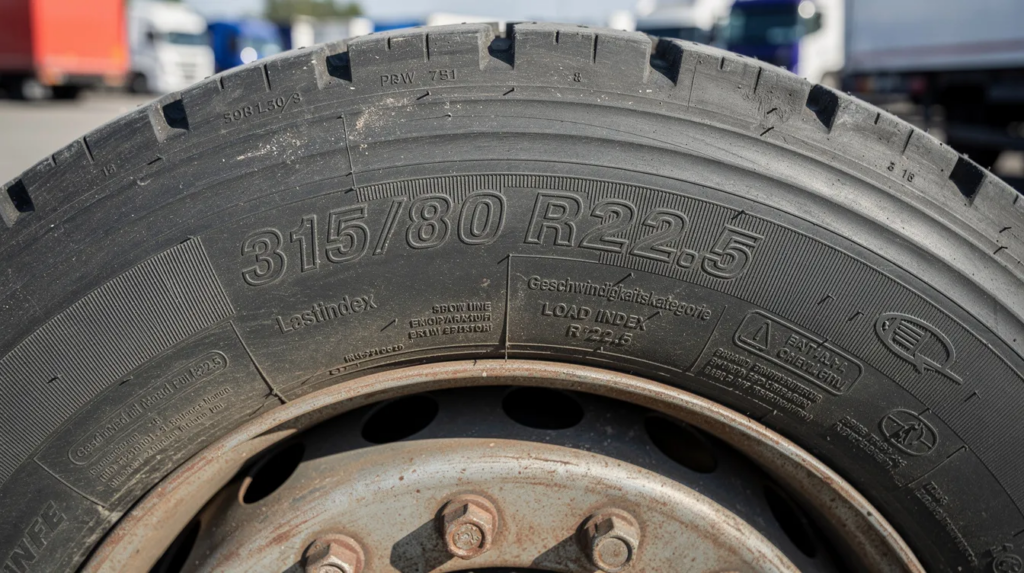
An articulated lorry is a system where components affect each other. An overloaded trailer places more strain not only on tyres such as 315/80 R22.5 on the drive axle or 385/65 R22.5 on the trailer, but also increases the demand for braking power, and therefore for an intact air reserve. Manufacturers such as Michelin, Continental, Goodyear, and Bridgestone recommend checking tyre pressure, tread depth, and the brake system on the same maintenance cycle rather than in isolation. Brake system manufacturers such as Knorr-Bremse design their components specifically for this interplay between spring chamber, diaphragm, and control valves, which is why air system repairs are best carried out with original or equivalent parts.
Frequently asked questions about a truck air system fault
How much does an air system leak repair cost on a truck?
A typical repair involving lines and fittings costs 500 to 700 euros net, including call-out, diagnosis, and labour. Larger faults on the compressor or dryer cost more, since both parts and labour increase.
How long does a roadside air system repair take?
The repair itself usually takes 45 to 90 minutes, depending on how many leaks are found. Including diagnosis and travel, total time from call to departure is typically 1.5 to 3 hours.
Why does a truck brake automatically when it loses air?
Because compressed air holds the brake open, and a spring inside the spring brake chamber closes it automatically when pressure drops. This is a deliberate safety design, not a malfunction, and it prevents a vehicle from driving without adequate braking reserve.
Can you keep driving with a small air leak?
No. Even a small leak can grow under vibration and load while driving, and the air reserve needed for an emergency stop must not be put at risk. At the first sign of a leak, the vehicle should be parked safely and inspected.
How often should the air dryer be serviced?
Condensate should be drained regularly, ideally weekly under heavy use. The dryer cartridge is replaced according to the manufacturer’s schedule, usually as part of the annual inspection.
Who pays for a roadside repair like this?
That depends on the contract between the haulier, the vehicle owner, and the insurer. The mobile breakdown service invoices the repair transparently with fixed line items regardless, so internal cost allocation stays straightforward.
How can you tell a compressor is about to fail?
Slower pressure build-up after starting, oily residue when draining the tanks, and an unusual running noise are the most common early warnings. Reporting these signs at the next inspection usually avoids a full failure on the road.
Summary
- Vehicle: articulated lorry with trailer
- Location: service area on the A45 near Wetzlar, Hesse
- Date: 9 July, daytime
- Problem: air system leak, automatic parking brake engaged
- Response time: 15 minutes dispatch, 50 minutes travel
- Repair time: 65 minutes
- Total duration: 2 hours 30 minutes
- Cost: 620 euros net
- Secondary damage: none, unit continued its journey safely
Why choose LKWHelp24
We are reachable 24 hours a day, 7 days a week, across the whole of Germany, backed by a vetted partner network of regionally available technicians. Our dispatch team works multilingually, since a large share of drivers on German motorways are travelling internationally. Pricing is transparent and communicated before any repair begins, with no hidden line items.
Is your vehicle stuck with an air system fault, a locked parking brake, or another technical breakdown? Call us on +49 160 5753826 or visit www.lkwhelp24.com, available around the clock, anywhere in Germany.
Keywords: mobile truck breakdown service | truck air brake repair | articulated lorry parking brake locked | truck compressor fault | truck air dryer maintenance | breakdown assistance A45 Wetzlar | air system leak HGV
Related articles
- Truck Breakdown Assistance in Germany – 24/7 Emergency Service
- Towing Services: Truck Recovery in Winter
- Case Study: Trailer Towing with Brake Disc Damage in Münster
- Truck Tire Service Near Me: 24/7 Mobile Truck Tire Service in Germany
- Truck Tire Service Near Me
Other services: Mobile Truck Service · Truck Workshop · Towing Service · Contacts