Skip to content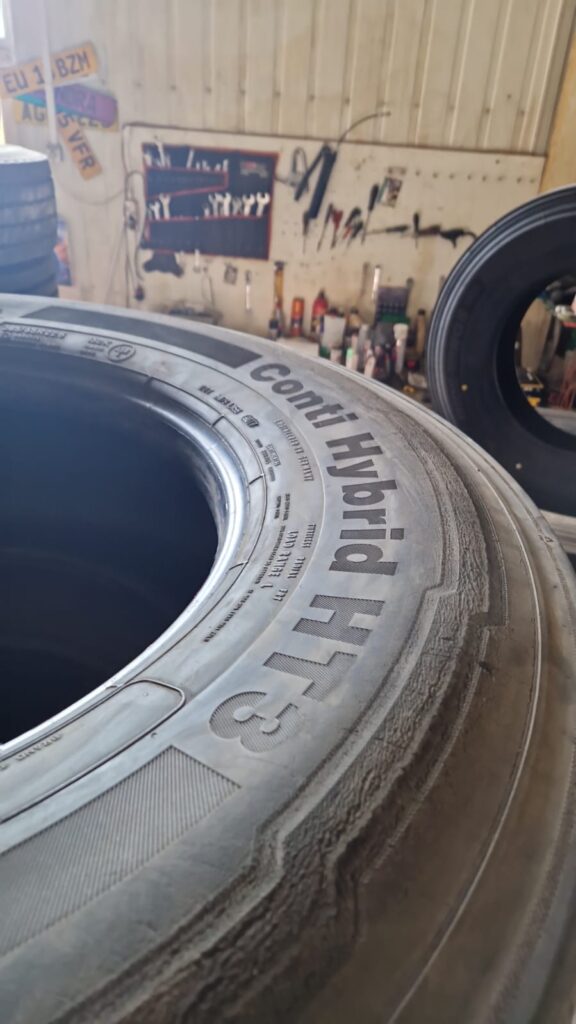
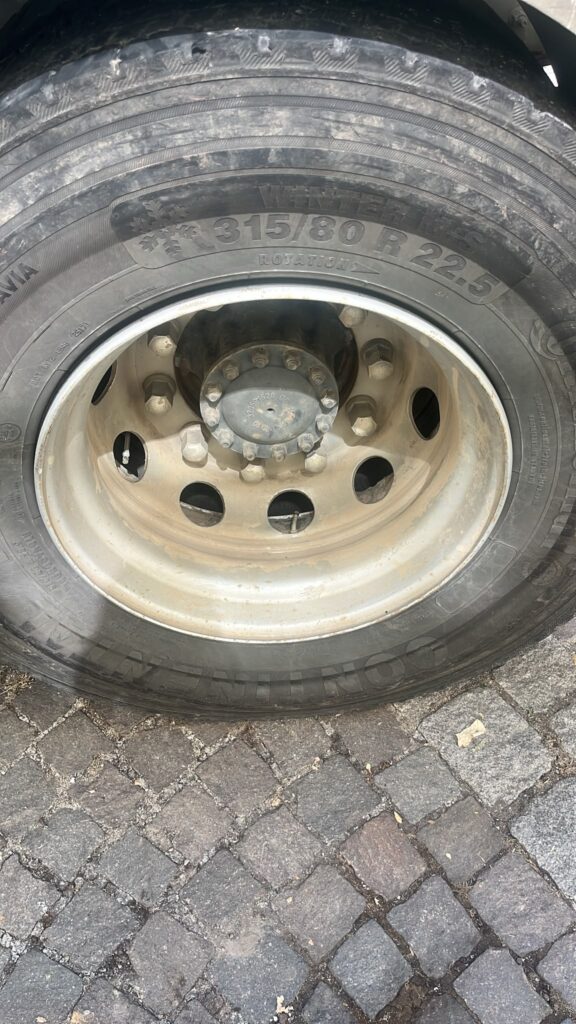
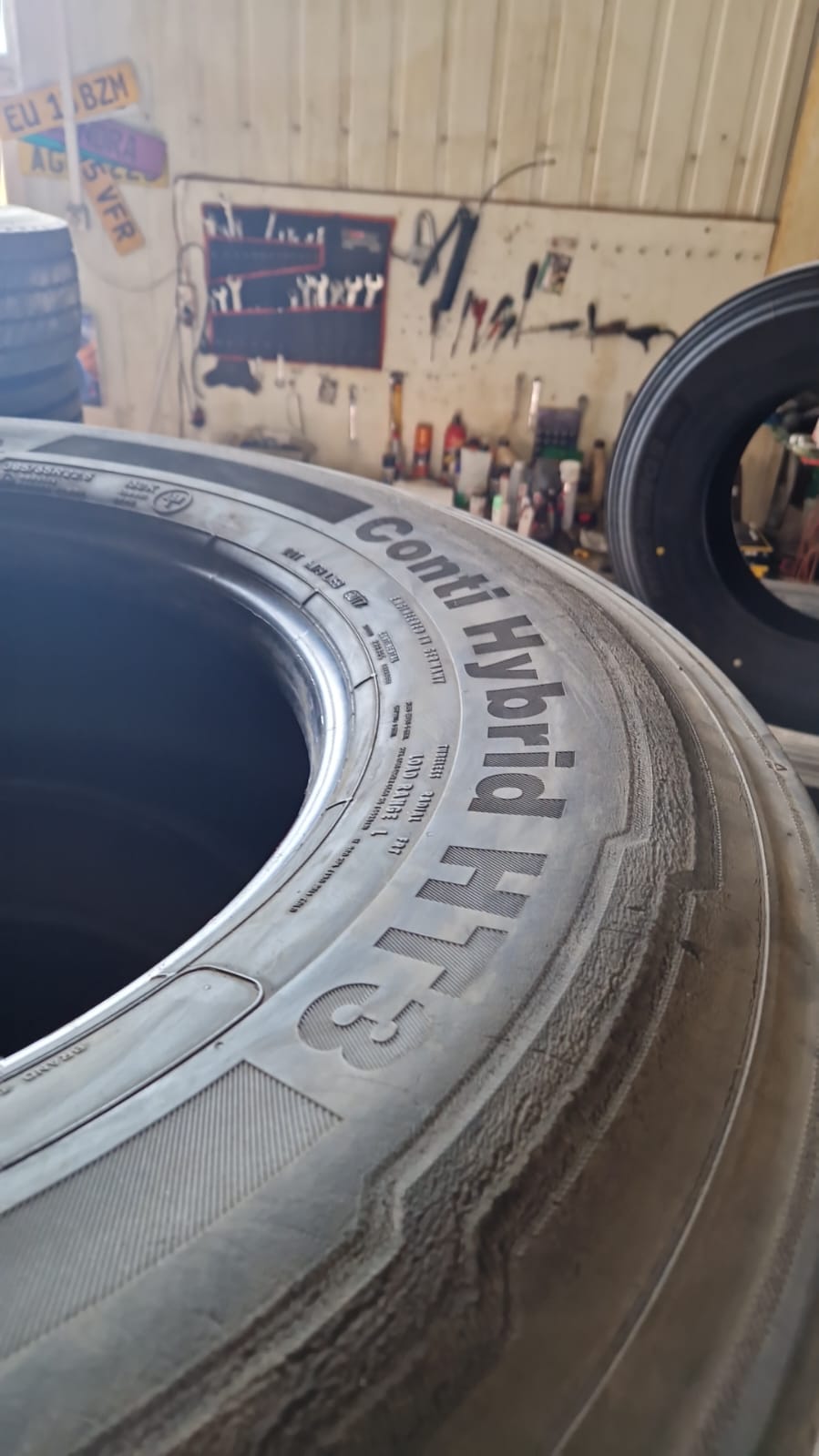
A full set of six truck tyres does not go on the way a car tyre does. On 18 March, in our own workshop near Essen in the Ruhr area, we swapped a complete set of 315/80 R22.5 wheels — steer axle and drive axle — for a tractor unit. New Continental Conti Hybrid HT3 tyres, mounted, balanced, and torqued to the book. Total time on the ramp: three hours. Total cost, net: 3,690 euros.
This is not a breakdown story. Nobody was stranded on the hard shoulder. The vehicle was booked in, the job was planned, and every step followed a fixed sequence because a truck wheel assembly weighs 70 to 120 kilograms and runs at pressures up to 9.5 bar. Get the sequence wrong and the consequences are not cosmetic — they show up as vibration, uneven wear, or in the worst case a bead failure during inflation.
Why a Truck Wheel Is Not Mounted Like a Car Wheel
A truck tyre runs at roughly double the pressure of a car tyre and carries a bead stiff enough to resist an axle load many times heavier. That combination rules out hand tools and light-duty changers.
Car tyres typically sit at 2.2 to 2.8 bar. A truck tyre on the steer axle of a tractor unit runs at 9.0 bar, and the drive axle sits at 8.5 bar on this job. The bead — the reinforced edge that locks onto the rim — is built from steel cord wound tight enough to survive that pressure for years of motorway running. Breaking that bead loose from the rim needs several tonnes of force, which is why a heavy-duty tyre changer with a hydraulic bead breaker is standard equipment in any workshop doing this kind of work, not an optional extra.
A complete wheel assembly for this class of vehicle — rim plus mounted tyre — weighs between 70 and 120 kilograms depending on the tyre profile and rim material. No technician lifts that by hand more than once. A shop lift or a wheel dolly moves the wheel from the vehicle to the changer and back, which is also why this kind of job belongs in a workshop bay rather than on a jack at the roadside whenever the schedule allows it.
The Safety Cage During Inflation
A truck tyre is always inflated inside a safety cage, and that single step is what separates workshop tyre work from a DIY job. The cage exists because a bead or rim failure during inflation releases enough stored energy to injure or kill anyone standing in the wrong place.
Air at 8.5 to 9.5 bar inside a casing this size stores a significant amount of energy. If the bead has not seated evenly, or if a rim has a hairline crack invisible to the eye, the failure happens suddenly and violently during the final stage of inflation — not gradually. Industry bodies such as DEKRA routinely flag improper inflation as one of the more serious causes of workshop injury in commercial tyre service, which is exactly why the cage rule is non-negotiable in any shop that does this work properly.
The wheel goes into the cage, the technician steps clear, and inflation is monitored from outside the enclosure until the tyre reaches working pressure. It adds a couple of minutes to the process. Skipping it is the kind of shortcut that only ever goes wrong once.
Seating the Bead: Paste, the Reference Line, and Why Never Soap
The bead has to seat evenly around the entire rim, and the tool for that job is dedicated tyre mounting paste — never soap, never oil. Oil-based lubricants degrade rubber compounds over time, softening the bead area and shortening the tyre’s working life from the inside out. Soap dries out and flakes, leaving patches where the bead can shift slightly under load.
Mounting paste keeps its lubricating property just long enough for the tyre to slide onto the rim and seat, then it stays inert. Every rim edge gets a thin, even coat before mounting.
Once the tyre is on, the technician checks the reference line — a raised ring moulded into the sidewall near the bead — runs at an equal distance from the rim edge all the way around. If that line sits closer to the rim on one side than the other, the bead has not seated evenly, and the tyre goes back to be reseated before it goes anywhere near the balancer.
A misaligned bead is one of the most common causes of vibration that owners bring back to a workshop weeks later, convinced the balancing was done poorly. Often the balancing was fine — the bead simply was not seated straight in the first place, and no amount of rebalancing fixes that.
Balancing Truck Wheels: Static, Dynamic, and Beads
Yes, truck wheels need balancing, and the steer axle needs it most. An unbalanced steer wheel transmits vibration straight through the steering column, which drivers feel within minutes on the motorway and which accelerates wear on components that are expensive to replace.
There are two balancing methods in practical use. Static balancing corrects weight distribution around the axle only and suits drive and trailer axles where steering feedback is not a factor. Dynamic balancing corrects weight in two planes at once and is the standard for steer axle wheels, where even a small imbalance is felt directly by the driver.
Correction happens with knock-on weights clipped to the rim flange, or with adhesive stick-on weights fixed to the inner rim face. Knock-on weights survive rough roads better; stick-on weights suit rims where a flange clip will not seat properly. Some fleets use balancing beads sealed inside the tyre instead of external weights — they self-adjust as the tyre wears, which is an advantage on long-haul tyres, but they cost more per tyre and are harder to verify without breaking the tyre down again to check. For this job we used external weights on all six wheels, which is the more common choice for a standard fleet tyre change.
Each of the six wheels went onto the balancer individually. That is not optional — balancing a wheel assembly as a matched pair or guessing from one reading does not work, because rim runout and tyre construction vary slightly from wheel to wheel even within the same batch.
What Correct Balancing Actually Gives You
Correct balancing reduces vibration, which in turn slows wear on the hub bearings and steering linkage and makes the cab noticeably quieter for the driver over a long shift. None of that shows up as a single dramatic failure — it shows up as component life measured in tens of thousands of kilometres.
A wheel spinning at motorway speed with even a small imbalance applies a cyclical force to everything downstream of it: the hub bearing, the steering knuckle, the track rod ends. That force is small on any single rotation and enormous over a year of daily driving. Fleet workshops that skip balancing on a “it’s just a truck tyre, it’ll be fine” basis tend to see bearing replacements come round faster and drivers complaining of cab vibration on long runs.
There is also a simple comfort argument that fleet managers sometimes undervalue: a driver doing nine or ten hours behind the wheel notices vibration long before it becomes a mechanical problem, and a smoother ride measurably reduces fatigue on long shifts.
The Valve: Replaced Every Time, and Why Dual Wheels Corrode
A new valve goes in with every tyre change, full stop. Valves are cheap and the failure mode of an old one — a slow leak that only shows up as a pressure warning hundreds of kilometres later — is expensive to diagnose on the road compared with the few euros a new valve costs in the shop.
Rubber and metal valve components age even when the tyre itself is in good condition, and the constant flex from tyre rotation accelerates that ageing far faster than it would on a stationary component. On twin or dual wheel setups, the inner valve typically extends outward through an extender so pressure can be checked without removing the outer wheel — and that extender is the part that corrodes fastest, sitting exposed between the two tyres where road spray and salt collect. A corroded extender that looks fine from the outside can still leak air slowly at the seal, which is exactly the kind of fault a routine tyre change catches before it becomes a roadside problem.
Rotation Direction and Tread Pattern by Axle Position
Steer, drive and trailer tyres use different tread patterns because each axle does a different job, and fitting the wrong pattern in the wrong position compromises grip exactly where it matters most.
Steer axle tread is designed around water dispersal and directional stability — it needs to channel water away fast and resist the steering forces the front axle absorbs on every corner. Drive axle tread prioritises traction, with a more aggressive block pattern that bites under acceleration and load, particularly under a laden trailer. Trailer axle tread sits between the two, optimised for low rolling resistance and even wear rather than for either steering feedback or driving force, since trailer wheels are neither steered nor driven.
Mounting a drive-pattern tyre on the steer axle, or vice versa, is a mistake that will not show up on a visual check but shows up immediately in handling — extended stopping distances in the wet on the wrong steer tyre, or reduced traction under load on the wrong drive tyre. On this job all six positions received the correct axle-specific Continental Conti Hybrid HT3 tyre matched to its intended position.
Post-Mount Checks: Torque, Re-Torque, and Cold Pressure
Every wheel nut on this job was torqued to 630 Nm in a star pattern, and the fleet operator was told to re-torque after 50 kilometres. That second check is not a formality — new wheels settle slightly onto the hub face as the metal beds in under the first few kilometres of real load, and a nut that reads correctly on day one can read a few Nm lower after the first drive. Star-pattern tightening — working across the hub rather than round it — pulls the wheel onto the hub face evenly and avoids the slight warping that tightening in a simple circle can cause.
Pressure was set cold, before the wheels went back on the road: 9.0 bar on the steer axle, 8.5 bar on the drive axle. Pressure checked after driving reads higher because the tyre has warmed up, so setting it cold and checking it cold afterward is the only way to get a reliable number. Tread depth and general tyre condition are checked against the requirements of § 36 StVZO, the German road traffic licensing regulation that sets the minimum legal tread depth for commercial vehicles.
The Full Timeline: 18 March, Workshop Near Essen
| Time | Phase | Action |
|---|---|---|
| 08:00 | Check-in | Vehicle enters the workshop, job logged |
| 08:15 | Visual inspection | Tyre condition, tread depth, rims checked |
| 08:30 | Removal | Wheel nuts loosened, wheels taken off |
| 09:00 | Tyre change | Old tyres broken down from the rims, new ones mounted (mounting paste, seating line checked) |
| 09:45 | Balancing | Each wheel balanced individually on the balancer |
| 10:15 | Mounting | Wheels remounted, nuts torqued star-pattern to 630 Nm |
| 10:35 | Valves | New valves fitted, pressure set (9.0 bar steer / 8.5 bar drive) |
| 10:50 | Final check | Visual check, test drive, documentation |
| 11:00 | Done | Vehicle handed back |
Total time from check-in to handover: three hours. Nothing in that sequence was rushed — a full six-wheel set with individual balancing on each wheel simply takes this long when it is done properly.
What the Job Cost
| Item | Price (EUR, net) |
|---|---|
| 6× truck tyres 315/80 R22.5 (Continental Conti Hybrid HT3) | 3,240 |
| Mounting & balancing (6 wheels) | 270 |
| 6× new valves | 72 |
| Old tyre disposal (6 units) | 108 |
| TOTAL (net, plus VAT) | 3,690 |
The tyres themselves are the overwhelming majority of the bill — labour, valves and disposal together come to 450 euros across all six wheels, or 75 euros per wheel. That labour cost buys individual balancing, correct torque with a documented re-torque instruction, and a technician working in a properly equipped bay rather than on a verge.
Planned Workshop Work Versus an Emergency Roadside Callout
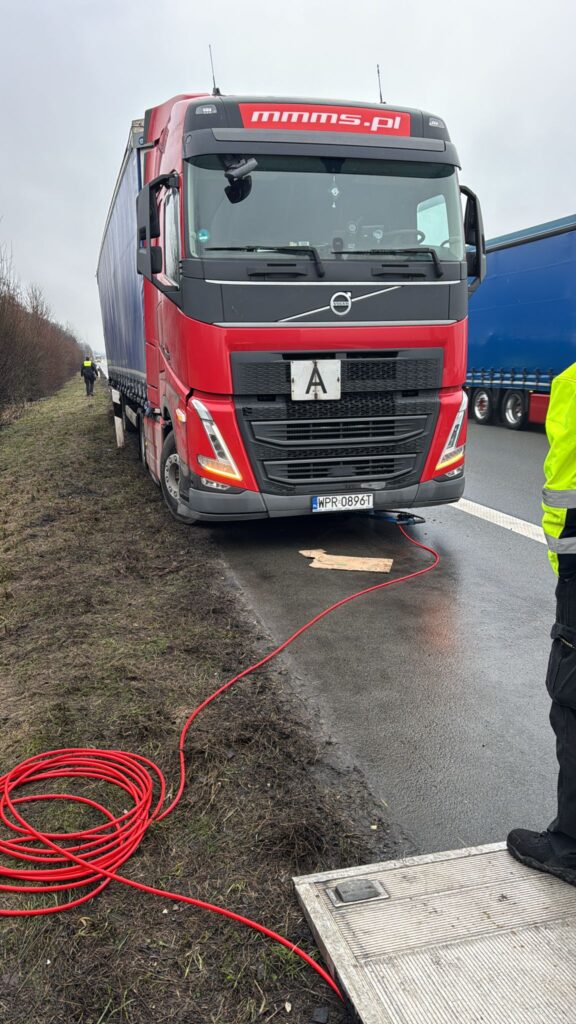
The same six-wheel job done as an emergency roadside repair instead of a planned workshop booking would cost noticeably more, and the gap is not small. A roadside call-out fee alone runs 180 to 320 euros before any labour starts. Roadside labour is billed at 90 to 140 euros per hour rather than shop-rate pricing, and a technician working from a service van does not have a lift, a balancer, or a safety cage on site — some of what was done in three hours in the workshop simply cannot be done to the same standard at the roadside.
Then there is the cost that dwarfs both of those: downtime. A laden truck sitting idle while a set of six tyres gets sorted on the hard shoulder loses 800 to 1,200 euros a day in lost operating time, and that figure does not include any cargo delay penalties the operator might owe further down the chain. Planning the job into a workshop slot on a quiet Wednesday avoids that entire category of cost. The tyres themselves cost the same wherever they get fitted — the saving comes from doing it before something fails, not after.
Why This Kind of Work Needs a Professional Shop, Not a DIY Approach
Attempting a full truck wheel change without the right equipment carries real risk, and it is worth being specific about where that risk sits.
- Breaking a bead loose without a hydraulic bead breaker risks damaging the rim or the tyre casing.
- Inflating a truck tyre outside a safety cage risks serious injury if the bead has not seated correctly.
- Using soap or oil instead of proper mounting paste degrades the rubber and shortens tyre life.
- Skipping individual balancing on each wheel leaves steer-axle vibration that wears bearings and steering components faster.
- Under-torquing or over-torquing wheel nuts by hand without a calibrated tool risks a wheel coming loose at speed.
None of these are exotic failure modes. They are the everyday reasons a fleet workshop keeps a heavy-duty changer, a cage, a calibrated torque wrench and a trained technician on hand rather than relying on general-purpose tools built for cars.
Typical Situations We Handle Across Germany
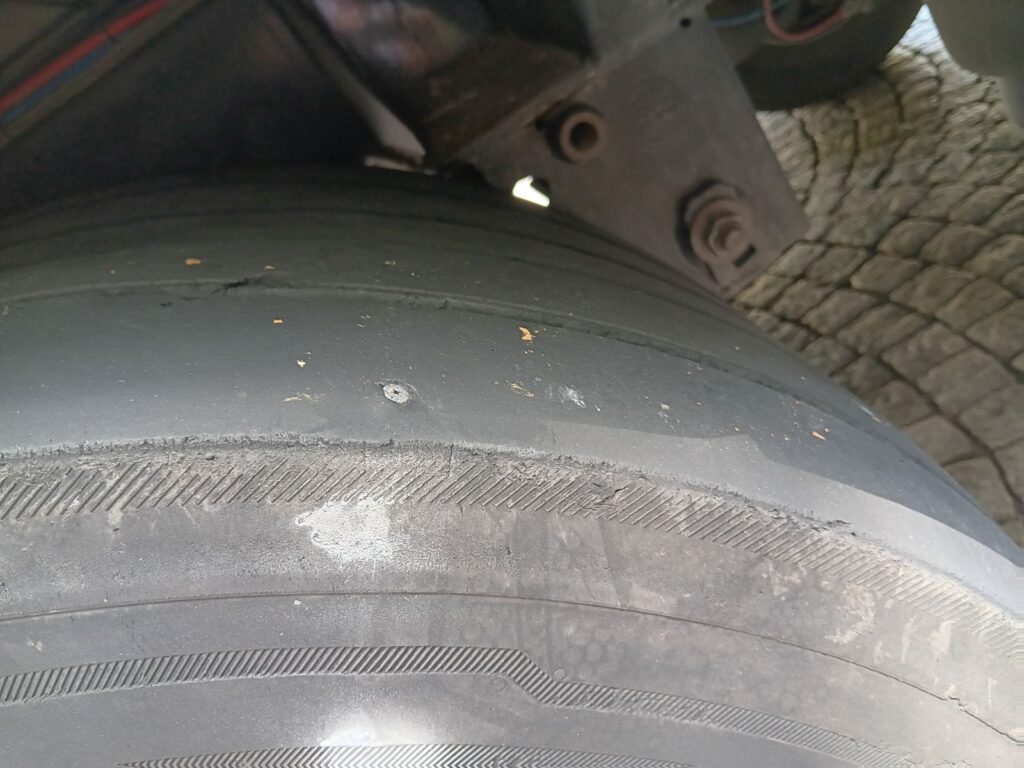
Not every job we do is a planned workshop booking like this one. We also respond to tyre blowouts on the motorway, steer-axle failures that leave a driver unable to continue safely, and trailer tyre damage discovered during a routine stop. For fleets that want to avoid those emergencies altogether, scheduled workshop visits like this March booking are the more predictable and cheaper route. Both services run from the same truck workshop near Essen and connect into our wider truck tyre service network across the Ruhr area and beyond.
Prevention: What Fleets and Drivers Can Do
Regular tread depth checks and a fixed re-torque schedule after any wheel work catch most problems before they become expensive. A driver who checks tread depth and pressure weekly, rather than only noticing a problem visually, spots uneven wear early enough to correct it with an alignment check instead of a full tyre replacement.
Keep a simple log of when each set was mounted and when it was last balanced. Fleets that track this by vehicle, rather than relying on memory, tend to catch drive-axle wear patterns before they force an unplanned roadside change. Booking a full set change into a quiet period, as with this March job, is consistently cheaper and lower-risk than waiting for a tyre to fail on the road.
Truck Tyres, Fleet Maintenance, and What Matters Beyond This Job
Tyre choice for a fleet vehicle is not just about price per unit — casing quality, tread compound, and axle-specific design all affect total cost per kilometre over the tyre’s working life. Manufacturers such as Continental and Michelin publish load and speed rating tables that fleet managers should cross-check against actual axle loads rather than relying on the tyre size alone.
Winter conditions add a further layer: tread compound and pattern requirements change with temperature, and a set mounted for summer running is not automatically suitable once the season turns. We cover the legal and practical detail of that separately in our piece on winter tyres for HGVs in Germany.
Load index also matters more than most fleet buyers assume, since underrating a tyre for its actual axle load accelerates wear regardless of tread pattern or brand — we go into the detail of matching load index to axle weight in our load index guide for truck and commercial vehicle tyres.
Why Fleets Choose Us for This Kind of Work
We run a workshop equipped for full truck wheel sets — heavy-duty changer, safety cage, individual wheel balancer, calibrated torque tools — and the same team also covers 24/7 roadside response across Germany when something fails away from the shop. Both sides of the operation run through the same dispatch, which means a fleet that books planned work with us also has a direct line for emergencies, with no separate account to set up. Our team speaks with drivers and fleet managers in German, English, Polish and Russian, which matters on jobs involving international hauliers passing through the Ruhr area.
Summary
A planned set change is a different job from an emergency roadside repair, and the numbers make that difference concrete.
- Job: 6 truck wheels, tyre 315/80 R22.5, Continental Conti Hybrid HT3
- Location: our workshop near Essen, Ruhrgebiet
- Date: 18 March
- Total time: 3 hours, check-in to handover
- Wheel nut torque: 630 Nm, star pattern, re-torque after 50 km
- Pressure: 9.0 bar steer axle, 8.5 bar drive axle
- Total cost: 3,690 EUR net, plus VAT
- Cost avoided: an equivalent roadside repair would add a 180-320 EUR call-out fee, 90-140 EUR/hour roadside labour, and up to 800-1,200 EUR/day in truck downtime — none of which applies to a workshop slot booked in advance
FAQ
How often should a truck’s tyres be rebalanced?
Rebalance whenever a new tyre is mounted, and check balance again if you notice new vibration, since a wheel that was balanced correctly at mounting can shift out of balance after hitting a kerb or pothole hard enough to move a weight.
Why does a truck tyre need a safety cage to inflate, but a car tyre doesn’t?
Truck tyres run at up to 9.5 bar with a much larger air volume than a car tyre, so a bead or rim failure during inflation releases far more stored energy. The cage contains that energy if something goes wrong, which is why it is standard practice in any properly equipped commercial tyre workshop.
Can I use dish soap instead of mounting paste to fit a truck tyre?
No. Soap dries out unevenly and offers no lasting protection, and any oil-based product degrades the rubber compound over time. Dedicated mounting paste is formulated to lubricate during fitting without harming the tyre afterward.
What torque should truck wheel nuts be set to, and does it need rechecking?
This job used 630 Nm in a star pattern, which is typical for this wheel and hub configuration — always follow the vehicle manufacturer’s specified torque. Re-torque after 50 km is standard practice, since new wheels settle slightly onto the hub during the first kilometres of driving.
Is balancing worth the extra cost on drive and trailer axles, not just steer?
Yes, though the steer axle benefits most because imbalance there transmits straight through the steering. Drive and trailer axle imbalance still accelerates bearing wear and uneven tread wear over time, so all six wheels were balanced individually on this job rather than only the front two.
How much does a full set of six truck tyres cost when done as planned workshop work?
This job, including tyres, mounting, balancing, valves and disposal, came to 3,690 EUR net. The tyres account for the large majority of that figure; labour, valves and disposal together came to 450 EUR across all six wheels.
Get in Touch
Planning a fleet tyre change, or dealing with a tyre problem right now on the road? Call +49 160 5753826 or visit www.lkwhelp24.com — 24/7, across Germany. Our workshop near Essen handles planned truck wheel sets like this one, and our mobile teams cover roadside towing, mobile tyre service, and full truck workshop repairs. Reach us directly through our contact page.
Keywords: truck tyre mounting Essen | truck wheel balancing | Continental Conti Hybrid HT3 | 315/80 R22.5 tyre change | truck workshop Ruhrgebiet | wheel nut torque 630 Nm | steer axle tyre pressure | dynamic wheel balancing HGV | tyre bead seating | § 36 StVZO tread depth
Related Articles
- Winter Tyres for HGVs in Germany – Legal Requirements, Safety & Service
- Load Index for Truck and Commercial Vehicle Tyres
- Truck Workshop – Reliable Service for Commercial Vehicles
- Professional Truck Tyre Service – Reliable Solutions for Fleets
- Truck Workshop – Inspection, Maintenance and Repair for Commercial Vehicles