Skip to content
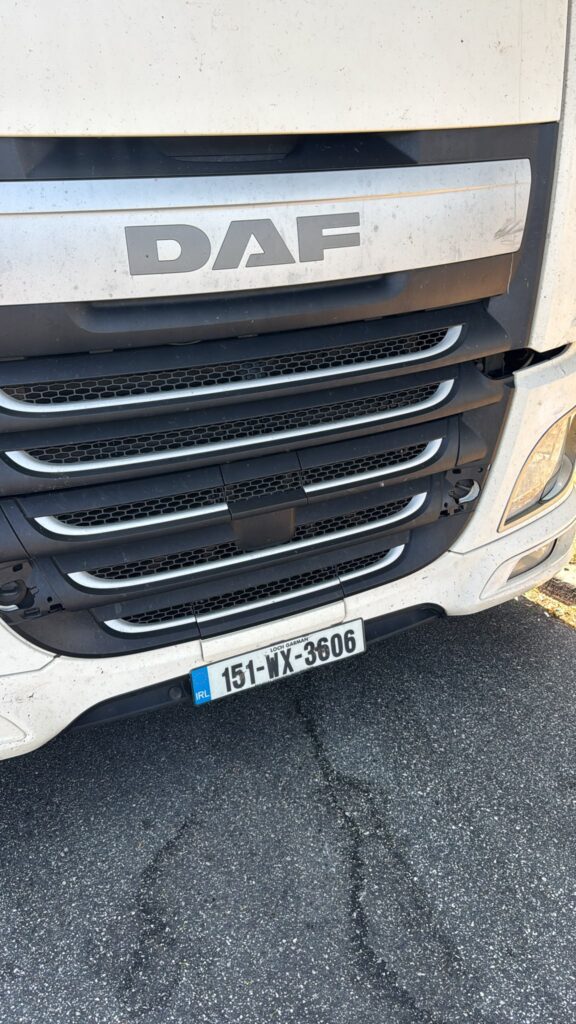
TL;DR: On 29 July 2026, at a consignee’s yard in an industrial area near Hannover, a high-pressure hose burst on a DAF tractor unit coupled to a tipper semi-trailer while the tipping body was being raised. The body was left half-lifted, hydraulic fluid pooling underneath. Our partner crew mechanically secured the body, replaced the hose with a crimped fitting on site, and had the lorry back in service within 2 hours 15 minutes. Cost: €645 net.
A hydraulic leak on a tipper is a fundamentally different animal from an engine oil smear or a dripping coolant line. Pressure inside a tipping-body ram sits between 200 and 350 bar, so a hairline split in a hose sends fluid out as a blade-thin, high-energy jet that can pierce skin and tissue without the entry point ever looking dramatic. That mismatch between appearance and severity is exactly what makes the situation dangerous.
The second hazard concerns the body itself. A half-raised tipper bed is held up by oil pressure, not by a mechanical lock. If pressure drops further, the body comes down uncommanded. Anyone underneath at that moment risks crush injuries that can be fatal. This case study documents what actually happened on 29 July — the timeline, the invoice, and the technical reasons why this is never a DIY job.
What happened near Hannover on 29 July?
A DAF tractor unit with a tipper semi-trailer was unloading at a consignee’s yard in an industrial area near Hannover, not on the motorway. While the driver raised the tipping body, a high-pressure hose on the tipping hydraulics split.
The body stopped roughly halfway through its lift as oil pressure in the ram collapsed. A visible pool of hydraulic fluid formed under the lorry. The driver killed the engine, left the tipper lever untouched, and kept everyone clear of the raised body — exactly the right call. It was daytime, dry weather, and the yard access briefly bottlenecked for other vehicles.
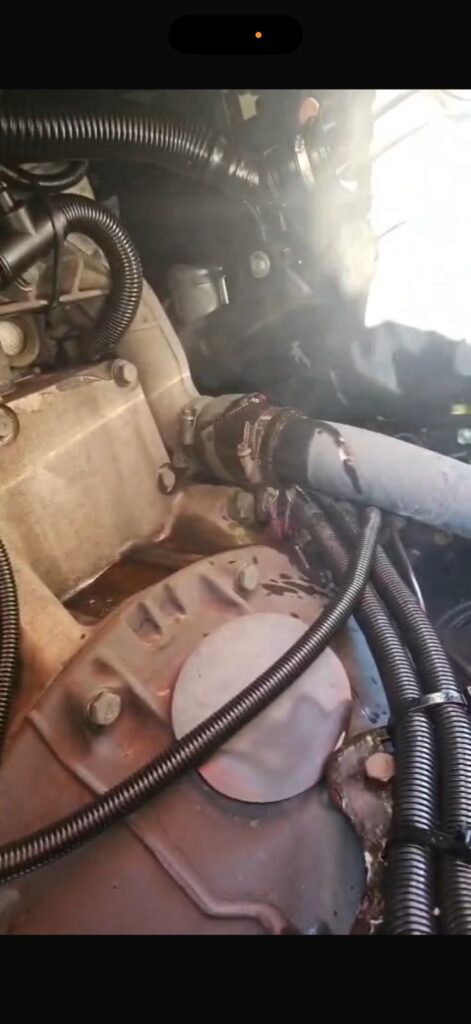
Tipping hydraulics on semi-trailers typically run a telescopic ram fed by a separate high-pressure circuit powered off the tractor’s power take-off. The hose that failed sat at a point where it flexes sharply during the lift — a classic weak spot on ageing or poorly routed lines.
Why is hydraulic fluid more dangerous than engine oil or coolant?
Hydraulic fluid runs at 200 to 350 bar and, when a hose fails, exits as a fine, high-energy jet — unlike engine oil or coolant, which leak at low or no pressure. That jet can inject fluid under the skin (a so-called injection injury) without the entry wound looking like anything serious.
That mismatch is the real danger: people underestimate the injury because it looks like a small scratch. In reality the fluid spreads through the tissue, triggers inflammation and tissue damage, and needs surgical treatment within hours, or the outcome can be permanent damage up to loss of a limb.
That’s why workshop practice has one hard rule: a suspected hydraulic leak is never traced with a bare hand. Technicians run a piece of card or cardboard along the suspect line while the system is under pressure. A fine oil trace on the card pinpoints the leak without exposing anyone’s hand to the jet. Anyone who notices oil on their skin near a suspected high-pressure leak should see a doctor immediately, even if the mark looks trivial, and specifically flag the possibility of a high-pressure injection injury. Fleet safety bulletins from bodies such as the ADAC cover this hazard for commercial vehicle operators.
Why must nobody stand under a raised tipper body?
A raised tipper body must never be treated as safe without mechanical support, because it is held up solely by oil pressure in the ram. If that pressure drops — through a burst hose, a leaking valve, or simply the oil cooling — the body descends, often abruptly and without warning.
This is fundamentally different from a lifting platform with a mechanical ratchet lock. Hydraulics hold a load temporarily, not permanently. Professional crews therefore secure any raised body with a mechanical prop or suitable stand before anyone steps into the danger zone at all.
With a loaded body there’s a second factor: tipping stability. A half-raised, partially emptied body shifts the whole rig’s centre of gravity upward and sideways, especially if the load slides off unevenly. On uneven or slightly sloped ground, that raises the risk of the entire trailer tipping over — one of the most severe accident types in tipping operations.
What should a driver do immediately after a hydraulic leak on a tipper?
With a hydraulic leak on a tipper body: stop the engine, leave the lever alone, keep clear, and move bystanders away. These four steps prevent most of the follow-on damage.
In detail:
- Release the tipping control immediately and disengage the power take-off — no further pressing, no attempt to “just quickly” lower the body.
- Kill the engine so the hydraulic circuit isn’t put under further load.
- Put on a hi-vis vest, cordon off the area under and beside the body, and call colleagues or bystanders back.
- Never try to move the body by shaking, driving off, or forcing it — that can fully detach the damaged hose and accelerate the pressure loss.
- With a loaded body, don’t move the lorry until the load and body are secured, since tipping risk increases with any vehicle movement.
- Contact a specialist crew and describe the location, vehicle type, and visible oil leak precisely.
The driver on 29 July did exactly this: engine off, lever untouched, kept clear. That kept the secondary damage limited to the fluid spill.
How was the callout organised?
The call came through our 24/7 control centre, which passed the case straight to the partner crew covering the Hannover region. Roughly 15 minutes elapsed from the call to dispatch, during which the centre confirmed vehicle type, visible symptoms, and the exact yard address.
- Phone triage: type of leak, condition of the body, site accessibility.
- Dispatch of the nearest crew carrying a hydraulic hose range and a mobile crimping station.
- Notified the consignee about the expected access delay.
- Drove out with equipment for pressure relief, mechanical propping, and hose crimping.
Because this was a private yard rather than a motorway, there was no live-traffic protection to set up — instead the crew had to briefly coordinate access for other lorries on site.
What does the recovery crew do on site?
Work on site follows a fixed sequence that prioritises safety over speed.
Step 1 — Release pressure: Residual pressure in the system is bled off in a controlled way so the damaged line no longer poses a risk.
Step 2 — Prop the body mechanically: Only then is the half-raised body fixed with a mechanical support. From this point the body no longer depends on oil pressure.
Step 3 — Locate the leak: Using cardboard, never a hand, the exact split in the high-pressure hose is pinpointed.
Step 4 — Replace the hose: The damaged section is cut out, a new high-pressure hose is made up, and crimped on site with a mobile press — workshop standard, not improvisation.
Step 5 — Top up fluid and test the circuit: After the swap, hydraulic fluid is topped up, the system bled, and checked under controlled pressure for further leaks before the prop is removed.
Step 6 — Clean the ground: Spilled oil is covered with absorbent granules and disposed of properly, so no environmental contamination is left on the yard.
Timeline of the callout
| Time | Phase | Action |
|---|---|---|
| 0 min | Emergency call | Driver reports hydraulic leak and half-raised body |
| 0–15 min | Dispatch | Control centre confirms details, alerts Hannover partner crew |
| 15–70 min | Drive to site | Crew heads to the yard, equipment prepared |
| 70–80 min | Pressure relief & propping | Residual pressure released, body mechanically supported |
| 80–115 min | Hose replacement | High-pressure hose cut, crimped, fitted |
| 115–130 min | Refill & test | Hydraulic fluid topped up, circuit tested for leaks |
| 130–135 min | Wrap-up | Ground cleaned with absorbent, lorry released |
Total time: 2 hours 15 minutes from the call to the lorry being cleared.
What does a hydraulic hose repair on a tipper cost?
The callout came to €645 net in total, made up of the callout fee, labour, the replacement part, and clean-up.
| Item | Price (EUR, net) |
|---|---|
| Callout fee | €220 |
| Labour (1.5 hrs at €120) | €180 |
| High-pressure hose with crimped fitting | €165 |
| Hydraulic fluid (top-up) | €45 |
| Absorbent granules & disposal | €35 |
| Total | €645 |
All prices are net, plus VAT. The exact figure depends on hose length, the volume of fluid needed, and drive distance. For comparison, a tractor unit standing idle at a consignee’s yard often costs between €800 and €1,200 per day, depending on the haulage contract and utilisation — the fast on-site repair was clearly the cheaper option compared with rescheduling the delivery.
Why shouldn’t anyone attempt a hydraulic leak repair themselves?
A hydraulic leak on a tipper looks simple at first glance — a hose, a split, swap it out. In practice, a DIY attempt carries several serious risks:
- Injury risk from the high-pressure jet: Without knowing the pressure in the circuit, even touching the line can cause an injection injury.
- No mechanical backup: Untrained hands often keep trusting oil pressure instead of propping the body mechanically — a sudden descent can be fatal.
- Wrong hose type or bad crimp: High-pressure hoses must match the pressure rating and fitting type; a poor crimp connection often fails at the next load cycle, usually somewhere worse than the original spot.
- Contaminated system: Dirt introduced during an improvised swap accelerates wear on the pump and valves throughout the circuit.
- Environmental liability: Spilled hydraulic fluid on paved or unpaved ground counts as a water-hazardous substance; without proper containment and disposal, fines and clean-up costs can follow.
These are the reasons specialist crews always work hydraulic failures with full protective gear, a defined sequence, and tested replacement parts, rather than improvised fixes with tape or jubilee clips.
What typically causes a hydraulic hose to burst?
High-pressure hoses rarely fail without warning signs beforehand. The most common causes in practice:
- Material ageing: The rubber or polymer jacket becomes brittle, and fine cracks form invisibly under the outer layer first.
- Chafing: Hoses rubbing against chassis members or brackets lose their outer skin over months until the pressure-bearing braid is exposed.
- Sharp bends: Poorly routed lines kink hard at full lift; that point concentrates stress on every tipping cycle.
- Overpressure while “breaking free” a load: If cargo sticks in the body from frost, damp, or adhesion, system pressure often climbs past the rated limit while trying to shift it.
- Skipped maintenance: If visual inspection of hoses is left out at service intervals, early damage stays hidden until the hose fails in operation.
In this case, the timing — during a routine lift while unloading, not during a sudden impact — points to age-related or chafing-related weakening at a bend point.
What happens if a tipper overturns while unloading?
A tipper semi-trailer overturning during unloading is one of the most severe accident types in the commercial vehicle sector, and it’s closely linked to hydraulic problems even though that outcome was avoided here. Typical triggers:
- Uneven ground: Even a few degrees of slope shifts the centre of gravity significantly once the body is raised.
- Load sticking to one side: If bulk cargo lets go suddenly and unevenly, the whole trailer can tip sideways.
- Wind on a raised body: An empty, fully raised tipper body presents a large surface area to crosswind.
- Tipping on unsuitable ground: Soft or yielding ground lets one side of the vehicle sink while the body is already raised.
The basic rule in haulage practice is therefore: only tip on ground that’s demonstrably level and load-bearing, with the parking brake engaged and after a visual check of the surroundings. If the surface is in doubt, the driver should abort the tip and check with dispatch or the consignee rather than take the risk.
What environmental rules apply to spilled hydraulic fluid?
Hydraulic fluid counts as a water-hazardous substance under German environmental law. If it reaches unpaved ground or a drain, the party responsible must report and clear it up without delay. On paved yard surfaces — as in this case — the pool is covered with absorbent granules, collected, and disposed of as hazardous waste through licensed channels, in line with technical vehicle standards enforced by inspection bodies such as DEKRA.
For haulage operators, that means in practice: an oil spill without proper clean-up can trigger fines and, for larger volumes or contact with watercourses, significant remediation costs. The €35 for absorbent granules and disposal in this case is therefore a standard line item in any credible on-site hydraulic repair, not an optional extra.
What other situations does the recovery crew get called out for?
Beyond hydraulic damage on tipper trailers, our partner network covers a broad range of technical emergencies on lorries, tractor units, and commercial vehicles:
- Tyre blowouts and rim damage on the motorway and on private yards.
- Engine failures and gearbox breakdowns followed by towing to the nearest specialist workshop.
- Electrical and CAN-bus faults that immobilise a vehicle entirely.
- Coolant and fuel leaks from various causes.
- Trailer and semi-trailer damage, such as brake system or air suspension failures.
Each of these calls for a different diagnosis, but the same underlying approach: secure first, repair second, never improvise.
How can fleets prevent hydraulic damage on tipper trailers?
Prevention is far cheaper than an emergency callout to a customer’s yard:
- Visual inspection at every service: Check hoses for cracks, bulging, and chafing, not just for visible dampness.
- Age-based replacement: Renew high-pressure hoses on a schedule set by the manufacturer regardless of visible condition, typically every four to six years.
- Clean hydraulic tank: Contaminated fluid accelerates wear on seals and pumps throughout the circuit.
- Check fluid level regularly: A dropping level with no visible leak can indicate an early micro-leak.
- Never force a tip: With stuck or frozen cargo, allow time to thaw or loosen the load rather than exceeding system pressure.
- Driver training: Drivers should know to release the lever immediately on any leak and never step under the body without a mechanical prop.
These steps cut breakdown risk noticeably and reduce repair costs at the same time, since planned hose replacement at a truck service centre is cheaper than an emergency callout on someone else’s yard.
Tyres, maintenance, and the bigger picture for fleets
Hydraulic failures are only one part of a tractor unit’s technical reliability. Tyre condition on both the tractor and trailer matters just as much: tyre pressure, tread depth, and carcass condition directly affect stopping distance, fuel consumption, and downtime. Manufacturers such as Michelin, Continental, Goodyear, and Bridgestone all run tyre programmes for tractor units and trailers with different priorities around mileage, rolling resistance, and traction.
A well-run fleet ties tyre checks, hydraulic maintenance, and general inspection into one shared service rhythm. Combining hose inspections with a tyre check that’s due anyway saves downtime and catches early damage sooner. For acute problems on the road, mobile tyre service remains a distinct but closely related part of the same emergency network.
Why work with a professional partner for technical emergencies?
Our network is reachable around the clock, 365 days a year, for emergencies affecting lorries, tractor units, and commercial vehicles. The multilingual control centre takes calls in German, English, Polish, and other languages — an advantage when international drivers are involved.
Pricing is communicated transparently before work begins, with no hidden surcharges added afterwards. The partner crew on site carries mobile crimping stations for hydraulic hoses, absorbent material for environmental spills, and the tools needed for mechanical propping — equipment an average fleet neither carries nor should carry, since it’s rarely needed but decisive when it is.
Frequently asked questions
How much does repairing a burst hydraulic hose on a lorry cost?
In the documented case the total came to €645 net, including the callout fee, labour, hose with crimped fitting, fluid top-up, and disposal of spilled oil. The figure can vary with hose length and drive distance.
How long does an on-site high-pressure hose replacement take?
In this callout the repair itself, from pressure relief to release, took around 65 minutes. Total time including the drive to site was 2 hours 15 minutes.
Can you stand under a raised tipper body while the engine is running?
No. The body may only be entered or worked under once it’s mechanically propped. Oil pressure alone is never considered adequate support.
Who pays for hydraulic damage at a consignee’s yard?
That depends on the freight contract and the fleet operator’s insurance. The callout itself is invoiced immediately regardless, usually to the haulage company or the vehicle’s registered keeper.
How do you spot a hydraulic leak before the hose fully bursts?
Typical warning signs include a dropping fluid level with no visible stain, damp patches along the line, or a faint hissing sound during tipping. A visual check with cardboard, never a hand, confirms the suspicion safely.
Is a hydraulic failure more dangerous than a tyre blowout?
Both deserve to be taken seriously, but differently: a tyre blowout produces a sudden mechanical shock, while a hydraulic leak produces a high-pressure jet that can pierce skin. Both situations call for an immediate stop and a specialist crew.
Summary
- Vehicle: DAF tractor unit with tipper semi-trailer
- Location: Consignee’s yard near Hannover, not a motorway callout
- Date: 29 July 2026, daytime
- Cause: Burst high-pressure hose on the tipping hydraulics while raising the body
- Response time: 15 minutes to dispatch, 55 minutes to arrival on site
- Total time: 2 hours 15 minutes from call to release
- Cost: €645 net
- Secondary damage: Limited to the fluid spill, properly removed with absorbent material; no injuries thanks to correct driver behaviour
Get help now
A hydraulic leak on a tipper allows no delay, but also no improvised repair. Call us on +49 160 5753826 — our control centre dispatches a specialist crew near you immediately. More on our services at www.lkwhelp24.com. Around the clock, across Germany.
Keywords: hydraulic leak lorry | tipper hydraulic hose | high-pressure hose repair | tipper semi-trailer breakdown | mobile truck emergency service Hannover | on-site hydraulic repair | DAF tractor unit breakdown