Skip to content
TL;DR: On 26 July, a Polish articulated truck (MAN TGX with refrigerated trailer) hit an obstacle on the A30 near Bad Bentheim, close to the Dutch border, damaging the front end and a drive-axle wheel and leaving the vehicle undriveable. LKW Help 24’s multilingual dispatch answered at 09:10, had a recovery vehicle with sufficient load capacity on site by 10:15, and had the tractor unit loaded and delivered to a suitable workshop by 11:55 — total time from call to workshop arrival: 2 hours 45 minutes.
Peak summer holiday traffic on the A30 does not pause for anybody, and a loaded articulated truck behaves nothing like the ordinary passenger cars most drivers picture when they hear breakdown. This is a case study in truck recovery Germany operators rarely publish in this much detail. The story below walks through what happened on the hard shoulder that Sunday morning, how the recovery was organised, what determined the price, and why the details matter for any haulier or driver running heavy vehicles through Germany this summer.
Truck breakdowns involving refrigerated cargo sit in their own category of urgency. The tractor unit gross weight, axle loads and tyre specification make the recovery itself demanding, and every extra minute on the hard shoulder risks the cold chain on a loaded trailer. Add a Polish-registered vehicle, a driver more comfortable in Polish than German, and a busy cross-border route towards the Dutch coast, and a routine front-end knock becomes a logistics problem with cargo, deadlines and a fleet schedule attached to it.
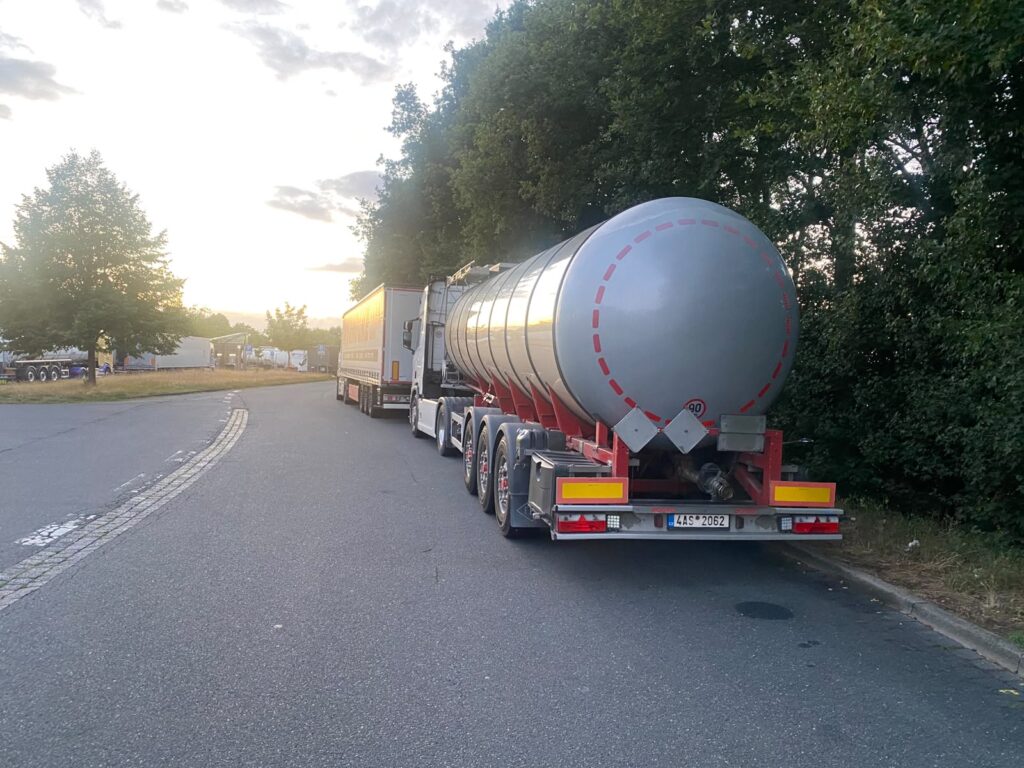
The emergency on the A30
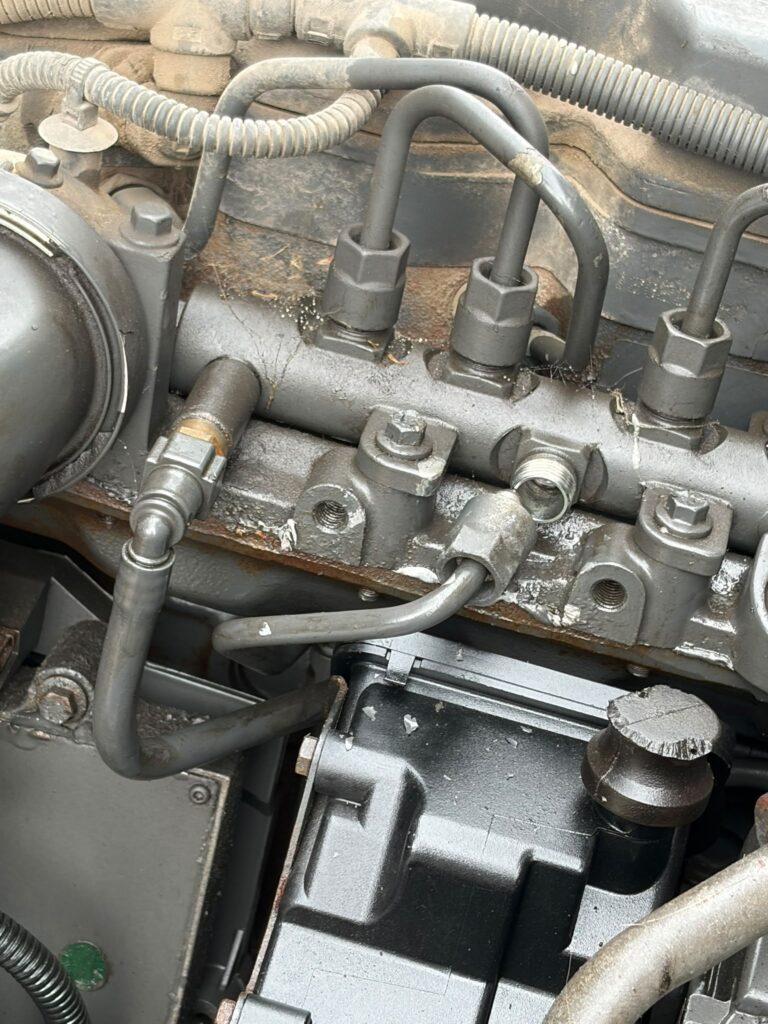
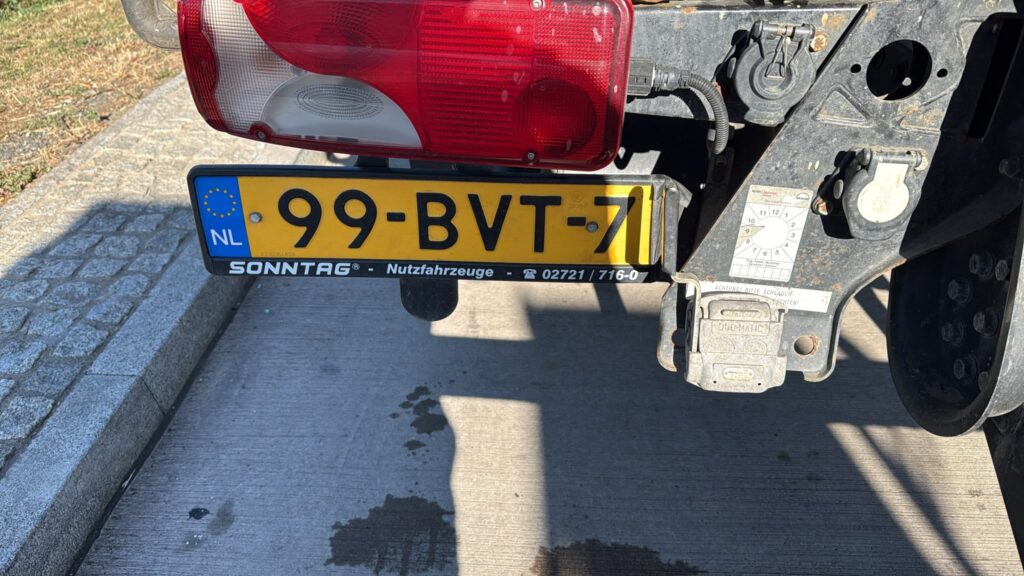
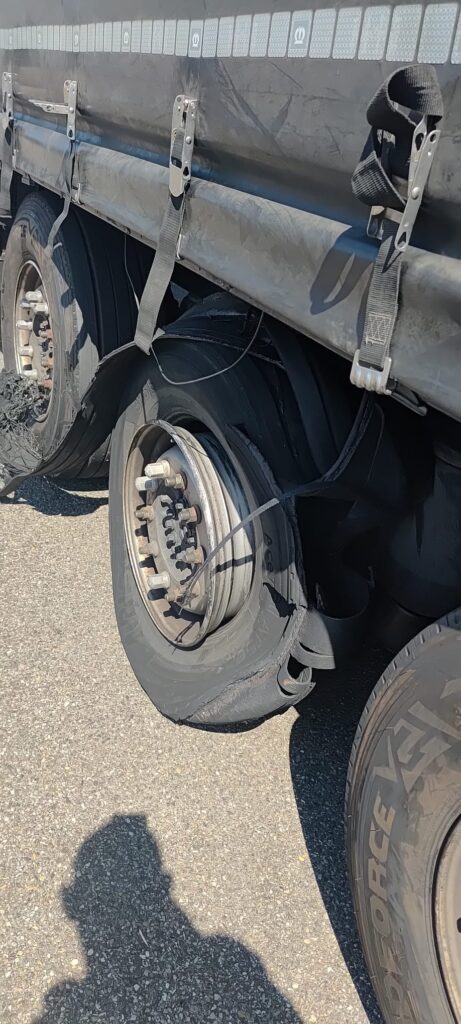
A loaded MAN TGX tractor unit with a refrigerated trailer struck an obstacle on the carriageway and suffered front-end and drive-axle wheel damage that made it impossible to continue. The vehicle was driven by a Polish professional driver heading towards a customer in the Netherlands on the A30, a route that carries a steady stream of northern European freight traffic every July and August. Built to carry a gross combination weight well over 7.5 tonnes and fitted with truck-type tyres, this was never going to be a job for a standard car recovery truck.
The impact bent the front bodywork of the tractor unit and damaged a drive-axle wheel badly enough that the vehicle could not be driven even a short distance to a layby. Sunday morning, warm weather, holiday traffic building on the approach to the border — the kind of scene that turns a fifteen-minute delay into a genuine hazard if nobody manages the site properly. The driver, on his own admission, had the haulier’s emergency number saved but had never needed it on this route before.
That saved number turned out to be the right instinct. A loaded articulated truck stranded on a live motorway is not simply vehicle down — with a refrigerated trailer attached, it is a cold-chain clock running against a driver who does not know the region.
How the assistance was organised
Recovery for an articulated truck over 7.5 tonnes starts with dispatch that understands heavy-vehicle logistics from the first call. LKW Help 24 coordinates this through a network built specifically for trucks and commercial vehicles across Germany:
- Multilingual emergency dispatch – the driver’s call, routed through the haulier’s emergency line, was picked up in a language he understood, removing the single biggest source of delay and confusion in cross-border breakdowns.
- Location triangulation – confirming the exact carriageway, direction and kilometre marker on the A30 near Bad Bentheim within minutes, essential when a caller doesn’t know German road signage.
- Vehicle-matched recovery unit – dispatching a unit rated for commercial vehicles over 7.5 t, since an ordinary car tow truck simply cannot lift or transport a tractor unit of this weight safely.
- Regional partner workshop network – identifying a workshop with an entry height and width suited to an articulated truck, not just any towing service drop-off point.
- Cargo coordination – confirming with the haulier whether the refrigerated load needed transhipment or could stay secured in the trailer during recovery.
This is the operational backbone LKW Help 24 runs 24 hours a day: a dispatcher who can speak to a driver in his own language, and a fleet built for the weight class actually involved, not a generic car-breakdown response.
Why the site couldn’t just be left as-is
A damaged, immobile tractor unit on a live motorway carriageway is a hazard that compounds by the minute. The vehicle’s sheer bulk reduces the effective width of the hard shoulder and forces passing traffic to shift lanes on a road already busy with holiday convoys.
The technical detail matters here. The drive axle ran on 315/80 R22.5 tyres and the trailer on 385/65 R22.5, both typically operating at 8.5–9.5 bar, roughly three to four times the pressure of a car tyre, and a front impact severe enough to bend bodywork can also deform or crack the rim. A cracked or deformed rim under that pressure is not something to drive on, even at walking pace — the risk of a sudden blowout, with the rim edge cutting the tyre carcass, rises sharply. That is one reason the on-site team’s first job was securing the area properly, not simply hooking up and pulling away.
German law is unambiguous about what happens on a live carriageway with a stranded vehicle. Under §15 StVO, a broken-down vehicle must be moved out of the traffic flow wherever possible and marked with a warning triangle; where towing or recovery is required, the operation itself must not create a fresh hazard for other road users. That is exactly why the recovery crew’s second action, after checking the driver, was placing a warning beacon and cones well back from the vehicle.
Step-by-step recovery process
Recovering an articulated truck of this class follows a sequence that differs meaningfully from a car breakdown, precisely because of the weight and the rim risk described above.
- Secure the scene – warning beacon, cones and hazard lighting placed to protect both the driver and the recovery crew from passing traffic on the A30.
- Assess driver and vehicle – confirm nobody was hurt, check the extent of the front-end and wheel damage, and decide whether the vehicle could be nudged clear of the running lane at all.
- Cargo check – confirm with the haulier whether the refrigerated load could remain in the trailer during recovery without breaking the cold chain.
- Load securing and loading – winch the tractor unit onto the recovery vehicle using straps rated for its actual gross weight, not estimates.
- Transport to a suitable workshop – drive to a facility with the entry height and bay width to actually accept a vehicle this size, roughly 45 km from the incident site.
Each step took longer than the equivalent car-recovery task would, and that is by design. Rushing the axle-load check on a fully loaded semi-trailer is how loads shift mid-transport.
Full timeline
| Time | Phase | Action |
|---|---|---|
| 09:10 | Emergency call | Driver calls via the haulier’s emergency line, routed to LKW Help 24’s multilingual dispatch |
| 09:10–09:25 (15 min) | Dispatch | Location confirmed as A30/Bad Bentheim, recovery vehicle with sufficient load capacity for vehicles over 7.5 t alerted |
| 09:25–10:15 (50 min) | Drive to scene | Journey to the incident site |
| 10:15–10:35 (20 min) | On-site assessment | Securing the scene, checking vehicle and driver, confirming cargo status with the haulier |
| 10:35–11:20 (45 min) | Preparation & loading | Axle-load check, load securing, loading the tractor unit |
| 11:20–11:55 (35 min) | Transport | Drive to a workshop with suitable entry height/width |
Response time to arrival on site was 65 minutes from the initial call, well within LKW Help 24’s usual 30–60 minute window, and total elapsed time from call to workshop arrival was 2 hours 45 minutes (165 minutes). For a route as busy as the A30 towards the Dutch border in late July, that is a tight result given the size of the recovery unit needed.
Cost breakdown
LKW Help 24 confirms a fixed price by phone before the recovery vehicle even leaves the yard, so there are no surprises on the invoice. A daytime call-out starts from €290, and a night, Sunday or public-holiday call-out starts from €549. Where a tyre from size R17.5 upward also needs replacing, tyre pricing starts from €315. The final price depends on distance, the complexity of the recovery and time of day, and it is always confirmed before work begins.
Several factors drive the final figure: the size and specialised load capacity of the recovery vehicle, the distance travelled to reach the A30 site, the labour involved in a proper axle-load check rather than a blind winch-and-go, and the transport leg to a workshop actually capable of accepting the vehicle’s dimensions.
It’s worth comparing this against what a stranded haulage tractor unit costs a fleet in pure downtime — driver hours, delayed cargo, penalty clauses, and, in this case, a cold chain running against the clock. A recovery that gets the vehicle to a proper workshop bay in under three hours, rather than leaving the driver waiting for a mismatched tow truck to be sourced, is worth more than the invoice total suggests.
Why you need a professional, not a DIY fix
Attempting to move a damaged articulated truck without the right equipment carries risks that go well beyond a scraped bumper.
- Rim failure under pressure – driving even a short distance on a cracked or deformed rim at 8.5–9.5 bar risks a sudden blowout that can throw the vehicle off line.
- Underrated tow equipment – a standard car recovery hook or strap is not rated for this gross weight and can snap or fail mid-manoeuvre.
- Legal exposure – moving a vehicle in a way that endangers other road users breaches §15 StVO and can complicate any insurance claim.
- Hidden structural damage – a front-end impact severe enough to disable the vehicle can also have affected the steering axle, and driving it further without inspection risks a total loss of control.
- Cargo risk – without proper securing, a refrigerated trailer’s load can shift or the cold chain can break during an improvised move.
Typical call-outs for trucks and articulated vehicles across Germany
Truck-related breakdown assistance covers a broader range of situations than most drivers expect before their first cross-border run.
- Front or side-impact collisions with obstacles, kerbs or narrow bridge structures.
- Tyre blowouts on 315/80 R22.5 and 385/65 R22.5 sizes, caused by age-related cracking rather than tread wear.
- Wheel hub or wheel bolt failure after long periods of inactivity followed by sudden motorway mileage.
- Overheating or mechanical breakdowns on long autobahn stretches during summer heat.
- Vehicles becoming stuck or grounded at unsuitable depot access roads or narrow loading yards.
Prevention: what hauliers and drivers should check before a trip
Most of the risk in this case study is preventable with a few checks before setting off, particularly around tyres and documentation.
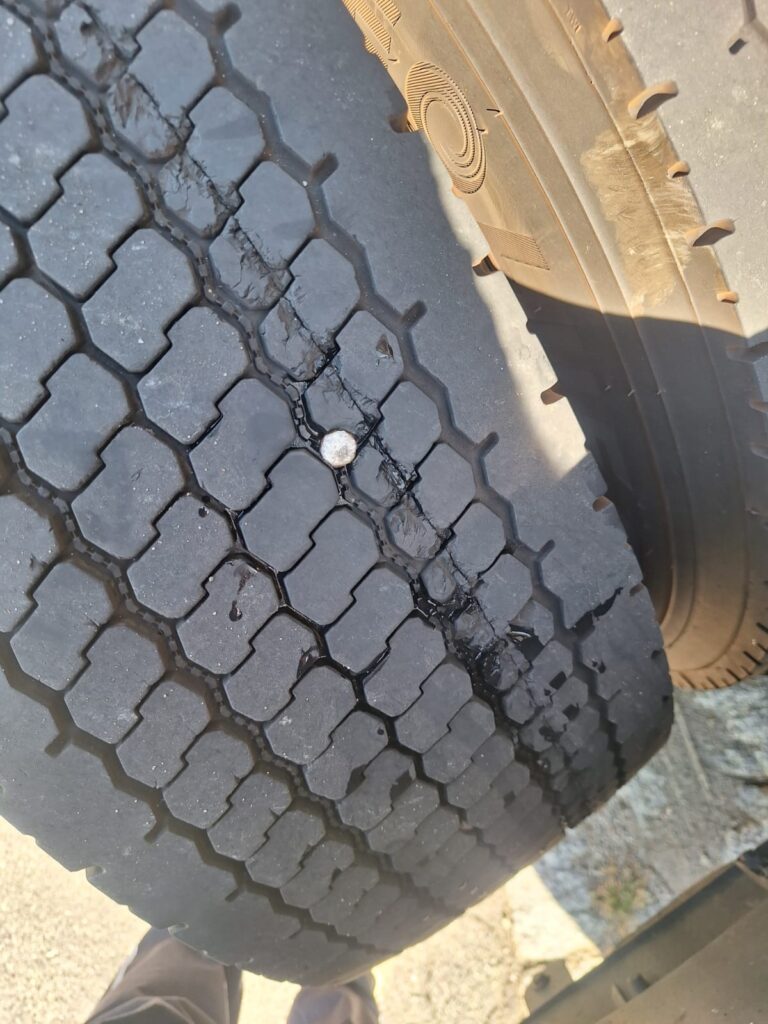
A trailer that sits parked for days between loads ages its tyres differently from one in near-constant use. That inactivity is exactly what ages a tyre from the inside: the rubber compound and the internal carcass degrade with UV exposure, ozone and simple time, developing fine cracks in the sidewall and, in worse cases, internal deformation that isn’t visible from the outside at all. Tread depth can look perfectly legal while the tyre underneath is already unsafe.
That is why the age-over-mileage rule matters even for commercial fleets. Manufacturers generally recommend replacement well before tread wears out on vehicles that spend long stretches parked, because a tyre that never gets driven never gets the chance to wear out safely before it perishes.
Before any cross-border trip:
- Check the tyre date code (the four digits stamped on the sidewall) and replace anything over six years old, even with plenty of tread remaining.
- Verify tread depth meets the legal minimum under §36 StVZO, which sets the requirements for tyre condition on German roads.
- Carry a hi-vis vest and warning triangle in an accessible place, not buried under cargo documents — both are compulsory equipment in Germany.
- Photograph the tractor unit, trailer, tyres and any existing damage before departure, so an insurance claim has a clear baseline.
- Save the haulier’s emergency number somewhere that doesn’t depend on a working phone signal, such as a printed card in the cab.
If in doubt, get behind the crash barrier and away from the live carriageway before doing anything else, and call for help rather than attempting a roadside fix on a vehicle this size.
Truck tyres: the extended picture
Understanding tyre behaviour on heavy vehicles is worth a section of its own, because it explains almost everything that went wrong in this case. A tractor unit’s steering axle typically carries different load and pressure requirements from the drive axle, and getting that balance wrong accelerates wear on whichever tyre is under-inflated. Fitting the wrong tyre size, or mismatching brands and constructions across an axle, can also affect handling under braking — precisely the moment when an obstacle in the road needs a clean, predictable response.
Reputable brands such as Michelin, Continental, Goodyear and Bridgestone all produce dedicated ranges for drive and trailer axles built around this exact use case, with compounds formulated to resist cracking during periods of yard storage rather than purely to maximise tread life. A mobile tyre service call-out can check tyre pressure, tread depth, sidewall condition and wheel balancing on 315/80 R22.5 and 385/65 R22.5 fitments before a fault becomes a roadside emergency, and can carry out fitting, torque checks on wheel bolts, and wheel hub inspection at a layby rather than forcing a limp to the nearest garage.
Fleet operators running articulated lorries, semi-trailers and tractor units already build tyre-age checks into scheduled maintenance because downtime is measured in lost cargo revenue. A short annual inspection, ideally before the busy summer season, closes that gap for a fraction of the cost of a roadside recovery.
Why choose LKW Help 24
LKW Help 24 runs a 24/7 emergency service across Germany built around heavy vehicles from the ground up. Multilingual dispatch (DE/EN/PL/RU) means a Polish, British or Russian-speaking driver gets understood on the first call, not the third. A vetted regional partner network of recovery units and workshops means the vehicle sent to a stranded tractor unit is actually rated to lift one, and the workshop it’s delivered to actually has a bay tall enough to take it. Pricing is confirmed as a fixed price before the vehicle leaves the yard, so hauliers know the cost before work begins.
Frequently asked questions
How much does truck recovery on the motorway cost in Germany?
A daytime call-out starts from €290, night, Sunday and public-holiday call-outs from €549, and tyre replacement from R17.5 upward starts from €315. The exact total depends on distance, vehicle size and site conditions, and is confirmed as a fixed price before dispatch.
How long does a truck recovery call-out take?
In this case, response time to arrival on site was 65 minutes, with the full process from call to workshop delivery taking 2 hours 45 minutes. LKW Help 24’s typical response window is 30 to 60 minutes; times vary with location and traffic.
Does insurance cover truck recovery in Germany?
Most commercial vehicle and cargo insurance policies include recovery and towing, but coverage limits vary by provider. Always check the policy’s terms before travelling, and keep photo documentation of the damage.
What should I do immediately after a truck breakdown on a German motorway?
Get behind the crash barrier, put on a hi-vis vest, place the warning triangle, and call your haulier’s emergency line or emergency services if there’s danger. Do not attempt to move the vehicle yourself if a tyre or rim is damaged.
Can any workshop repair an articulated truck after a front-end collision?
No. Many workshops cannot accept articulated trucks due to entry height, bay width or lift capacity limits. LKW Help 24’s dispatch identifies a suitably sized regional partner workshop as part of the recovery plan, not as an afterthought.
Why are truck tyres replaced by age rather than tread wear alone?
Trailers and tractor units can stand parked for extended periods, so the rubber ages and cracks before the tread wears down. Most manufacturers recommend replacement around six years from the date code, regardless of remaining tread depth.
Summary
A Polish articulated truck, a MAN TGX with refrigerated trailer, gross weight over 7.5 t, suffered front-end and drive-axle wheel damage on the A30 near Bad Bentheim on 26 July after hitting an obstacle. Response time to arrival on site was 65 minutes; total time from call to workshop delivery was 2 hours 45 minutes. Pricing followed LKW Help 24’s fixed-price model, confirmed before dispatch. No secondary damage was recorded once the vehicle was correctly secured and loaded, and the driver was unhurt throughout the recovery.
Need truck recovery in Germany right now?
Call or WhatsApp +49 160 5753826 for 24/7 emergency assistance across Germany, or visit www.lkwhelp24.com to reach the multilingual (DE/EN/PL/RU) dispatch team. For technical breakdowns on the road, our mobile truck service can often resolve issues on site without a full recovery.
Keywords: truck recovery Germany | articulated truck breakdown assistance | truck recovery A30 | 24/7 breakdown service Germany | heavy vehicle towing | tyre 315/80 R22.5 385/65 R22.5 | axle load check | multilingual breakdown dispatch | motorway recovery Germany
Related articles
- Truck Recovery in Winter: Towing Services Across Germany
- 24/7 Truck Tyre Service Across Germany
- Entruck Towing on the A3: A Case Study
- Learn more about our towing service
More on this: our tyre service page, our towing service.