Skip to content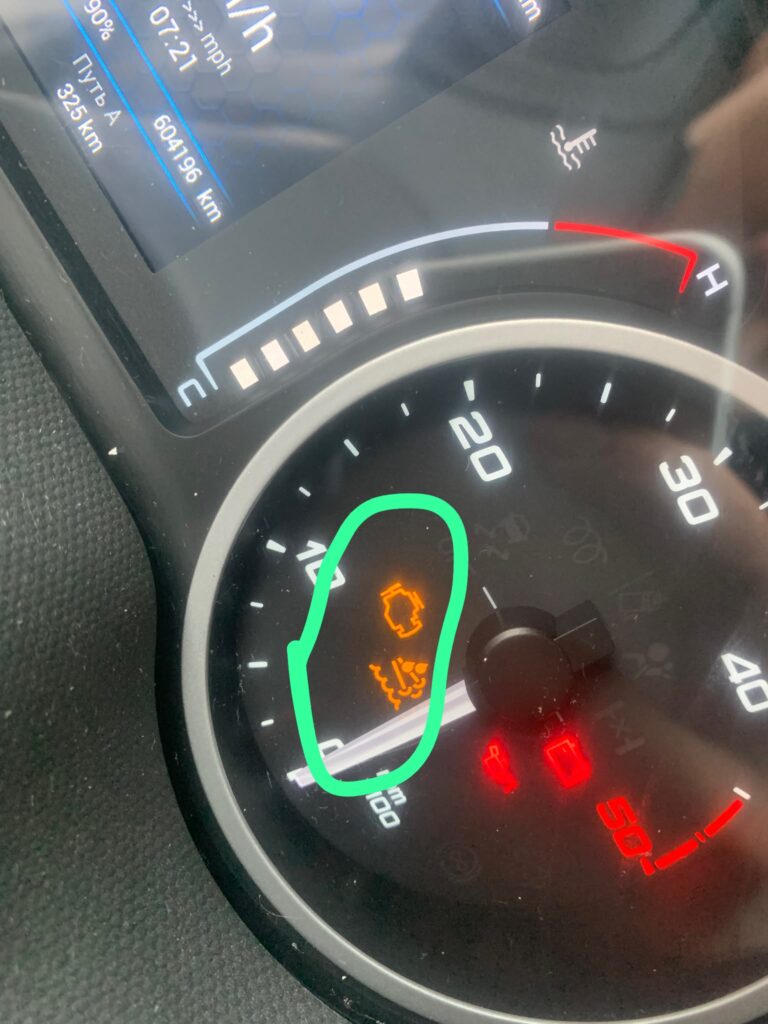
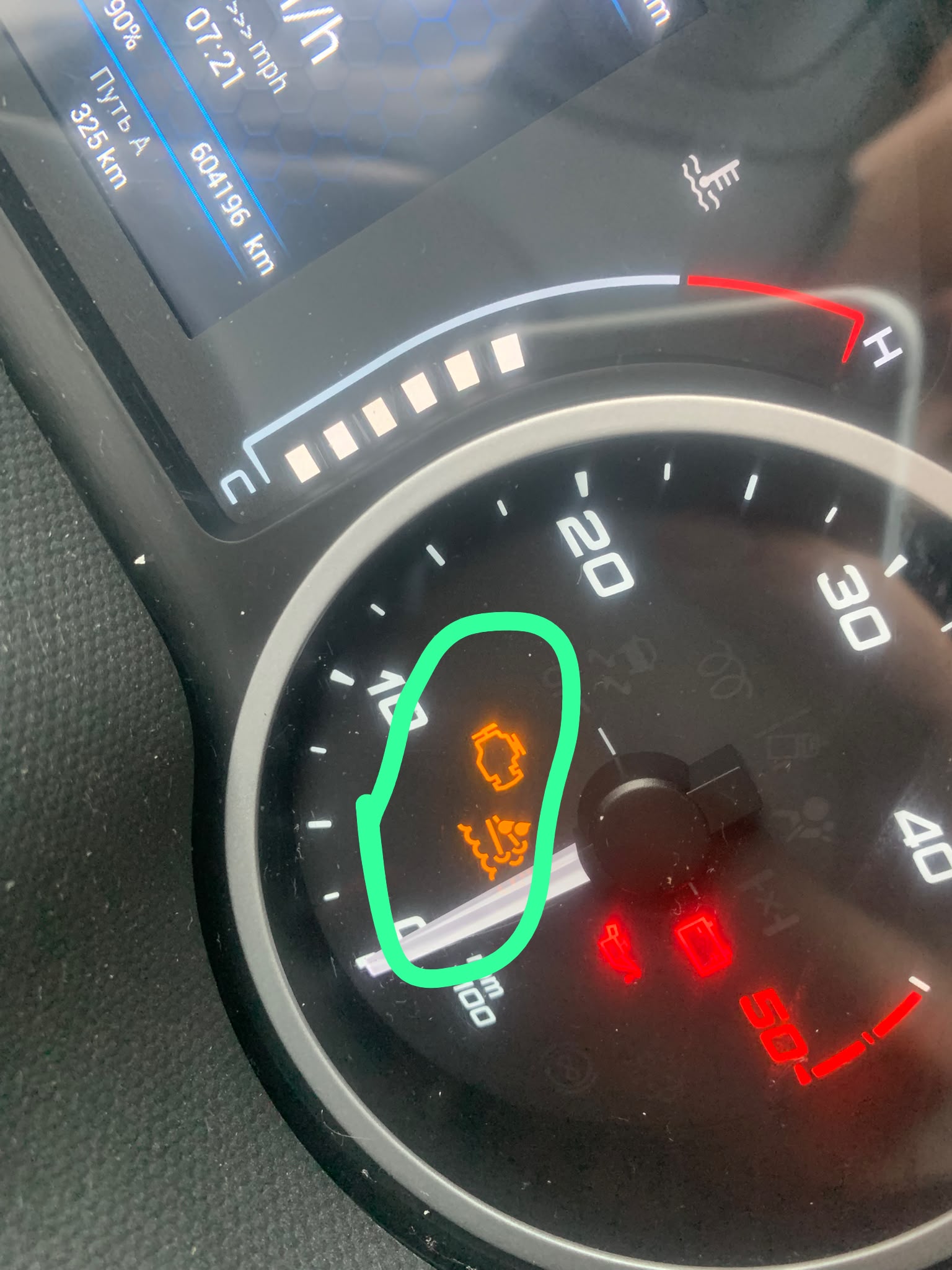
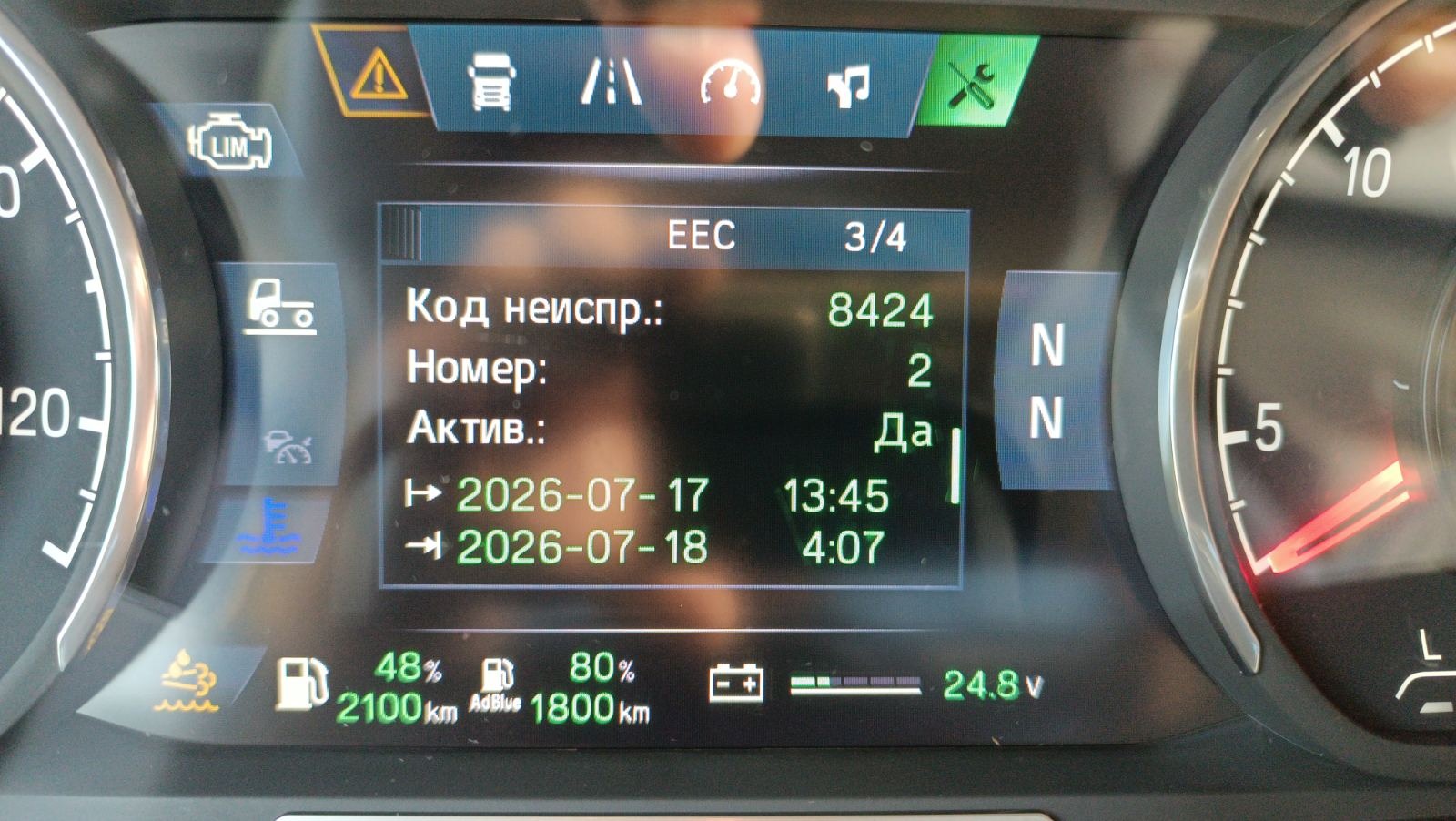
When EEC and EMS warnings light up together on the dash and the engine cuts its own power without warning, that’s not a random electronics glitch. The exhaust after-treatment system has flagged a fault, and by law the engine has to enter limp mode, regardless of how urgently the load is expected at its destination.
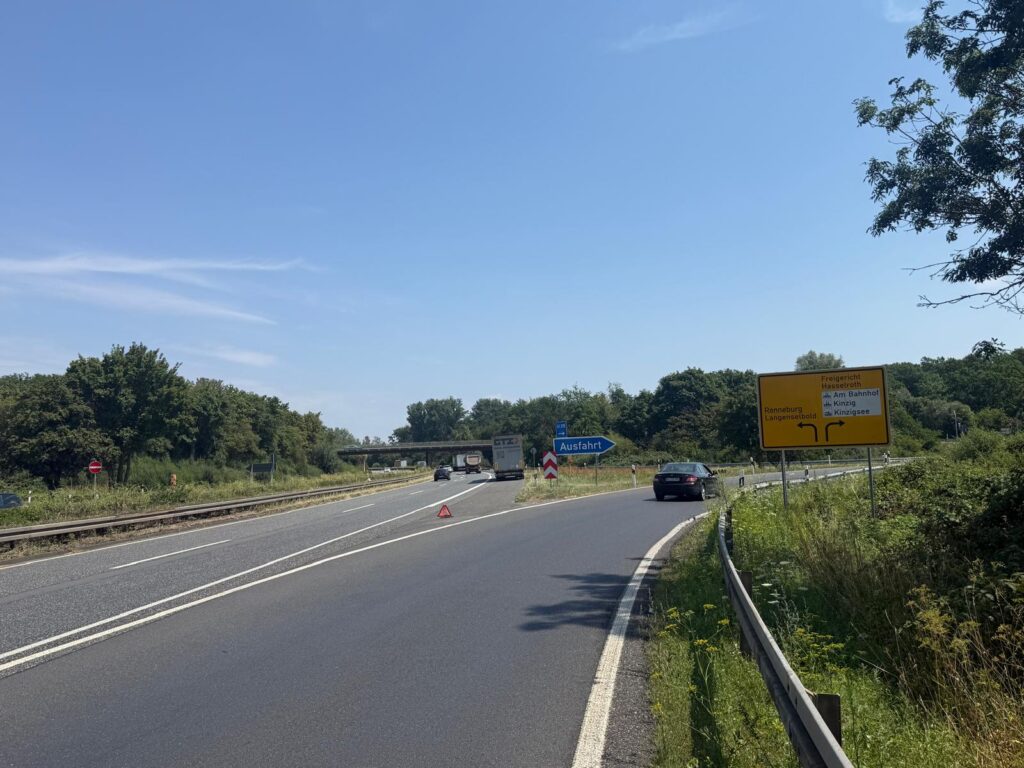
That’s exactly what happened on 20 July on the A31 near Lingen, heading towards Emden. A torn hose in the AdBlue circuit of a semi-truck triggered a cascade of fault codes, power dropped away, and the driver had to pull into the nearest Autohof. What followed is a good illustration of how a technical fault gets solved when there’s also a language barrier in the mix, from the first warning light to the successful test drive.
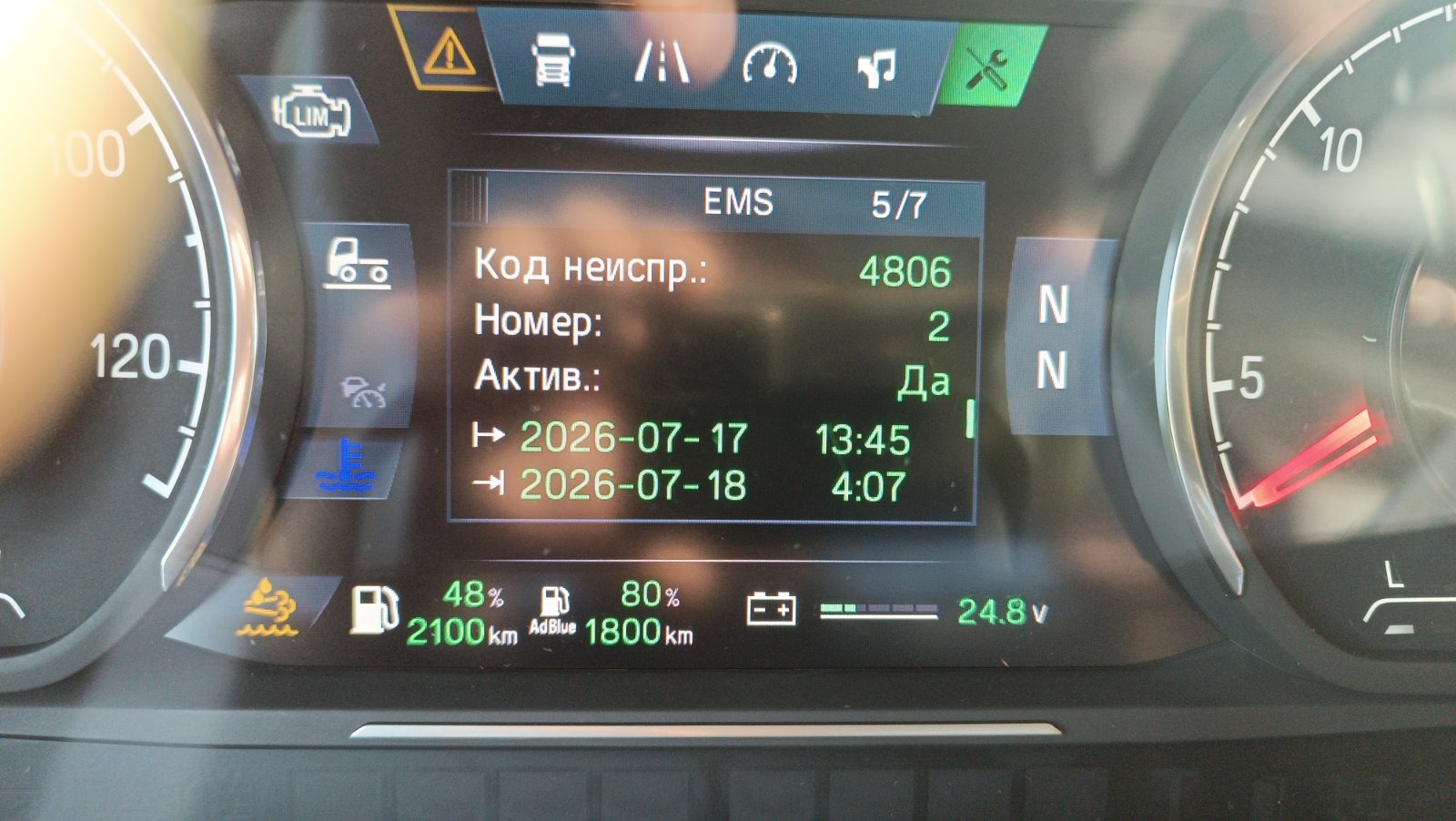
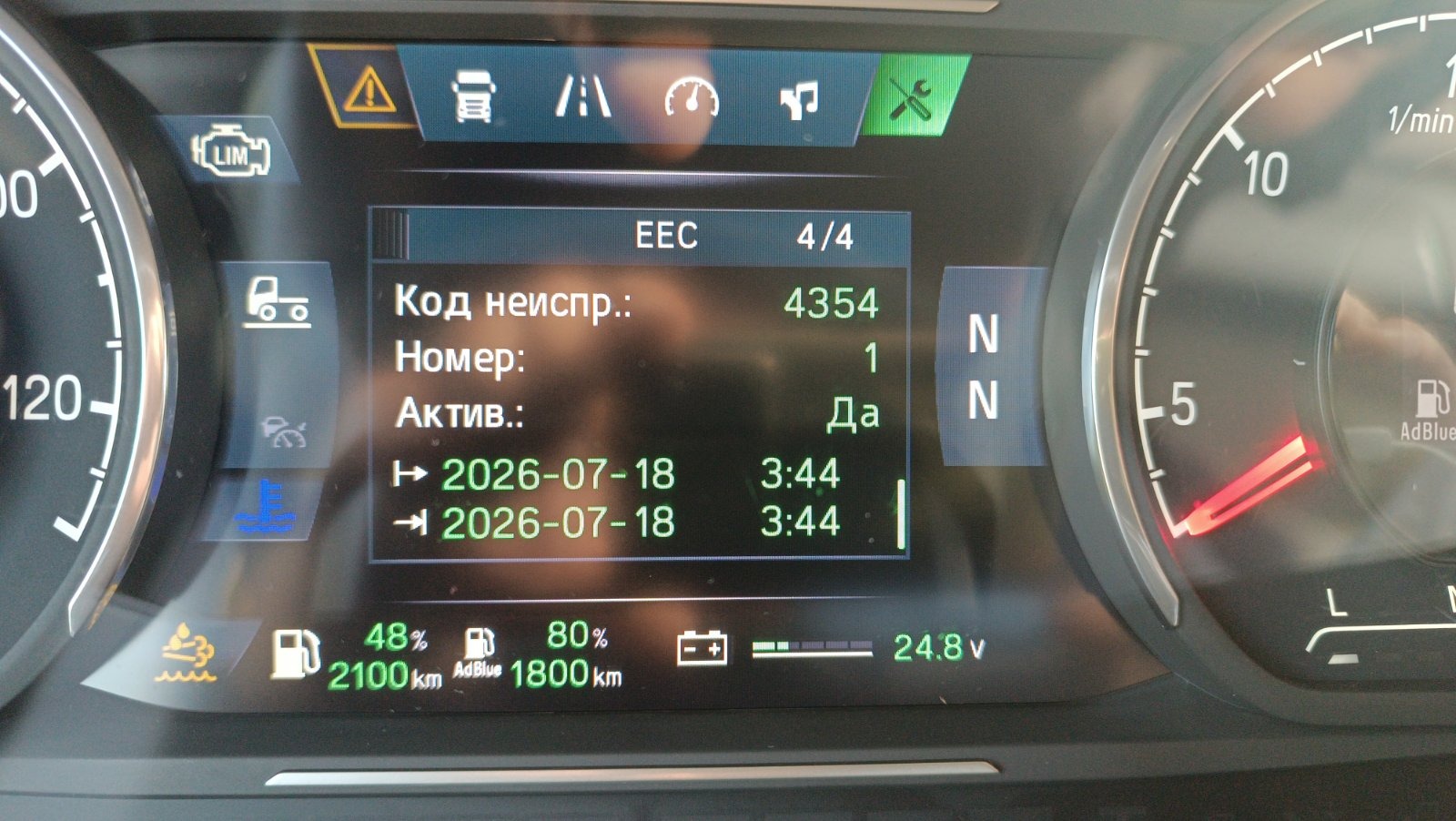
What makes this case worth reading is that the dashboard display on this particular truck showed everything in an Eastern European language, not German. The driver of a foreign carrier wasn’t just dealing with a mechanical fault; he was also facing the question of how to explain the problem at a German service area at all.
The emergency on the A31
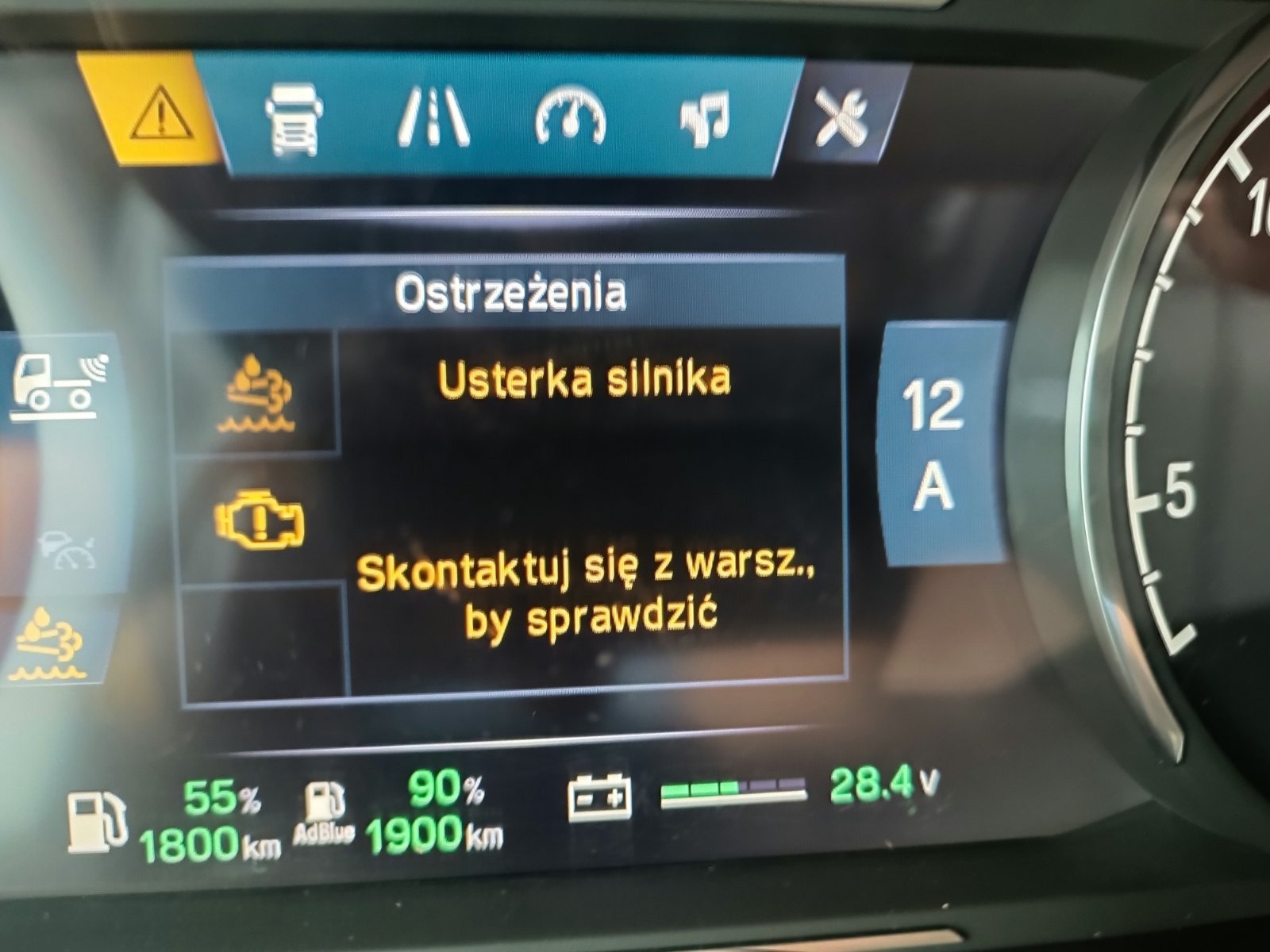
At 07:34 the EEC and EMS codes appeared on the dashboard at the same time. The engine immediately cut fuel delivery, and the tractor unit noticeably lost pulling power on an incline. The driver just about made it to the nearest Autohof on the A31 before Lingen and parked away from the fuel pumps so as not to block the rest of the yard.
Fault codes mean little to a driver without a scanner, and a dashboard message suggesting a visit to a workshop isn’t much help when you don’t know which workshop along the motorway can even deal with it. Add to that the language barrier: the messages on the display were in the driver’s own language, while the signage and staff around him spoke German.
This is where a multilingual dispatch service earns its keep twice over. First, it takes the pressure off a driver who can’t explain what’s wrong. Second, it speeds up the actual diagnosis, because a dispatcher who speaks the driver’s language can quickly establish which codes are showing, whether there’s a smell or smoke, and pass that on to the mobile crew before they even arrive.
The weather that day was dry, around 23 degrees, no rain, which in practice makes a real difference to work under the bonnet. In the rain or below freezing, both the diagnostics and the hose replacement would have taken noticeably longer, and tracing the fault would have been slower too.
How the assistance was arranged
The call to our mobile truck service followed a standard sequence for this kind of fault:
- 07:41 – the driver calls the multilingual dispatch centre and describes the symptoms in his own language through an operator who speaks it.
- 07:52 – the dispatcher sends out the nearest available crew, gives the driver an estimated arrival time, and specifically asks him not to try clearing the fault himself.
- 08:47 – the crew arrives on site, a 55-minute drive from base.
- First, the technician plugs a scanner into the diagnostic port to get an exact picture rather than guessing from external symptoms.
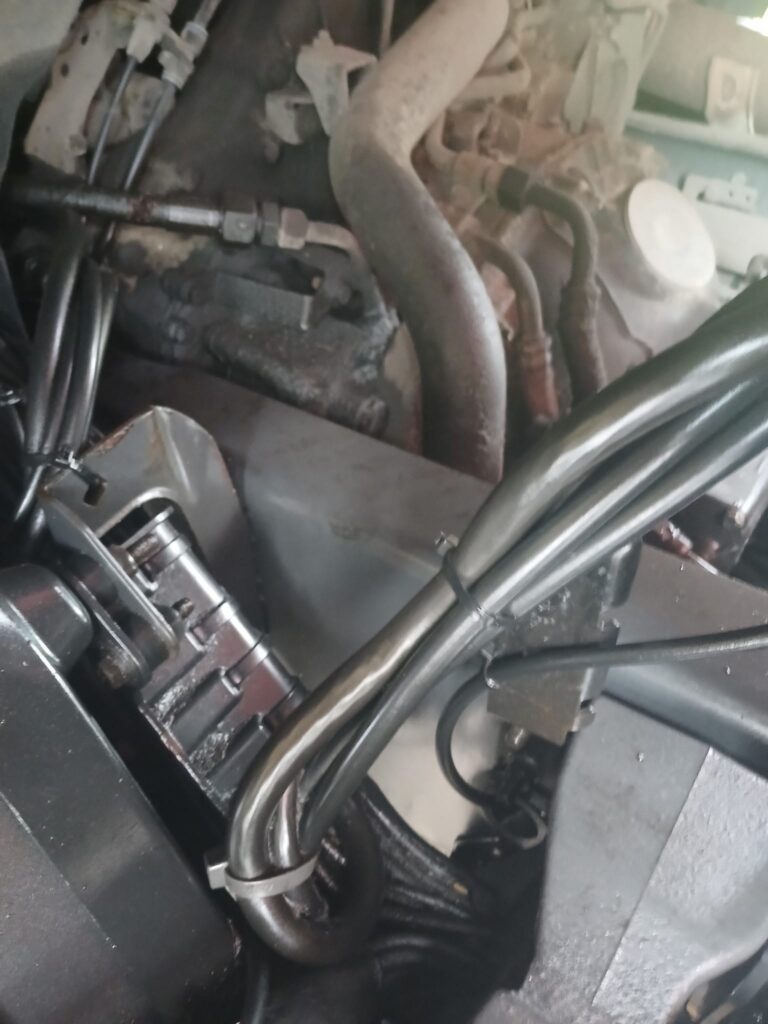
- At the same time, the technician does a visual check of the engine bay: leaks, torn hoses, signs of urea crystallisation.
While the diagnostics were running, the driver mentioned he’d already seen a low-pressure warning on the AdBlue circuit the day before, but had put it down to a weak dashboard battery and hadn’t thought much of it. That’s a familiar pattern: early SCR warnings are easy to mistake for something minor if you don’t know what to look for.
The situation on site: why driving on wasn’t an option
The SCR system, Selective Catalytic Reduction, is compulsory on every modern Euro 6 lorry. It doses AdBlue, a urea solution, into the exhaust tract ahead of the catalyst, where the reagent reacts with nitrogen oxides (NOx) and converts them into harmless nitrogen and water vapour. Without this process, a truck simply cannot meet the legal emissions limits it’s required to hit.
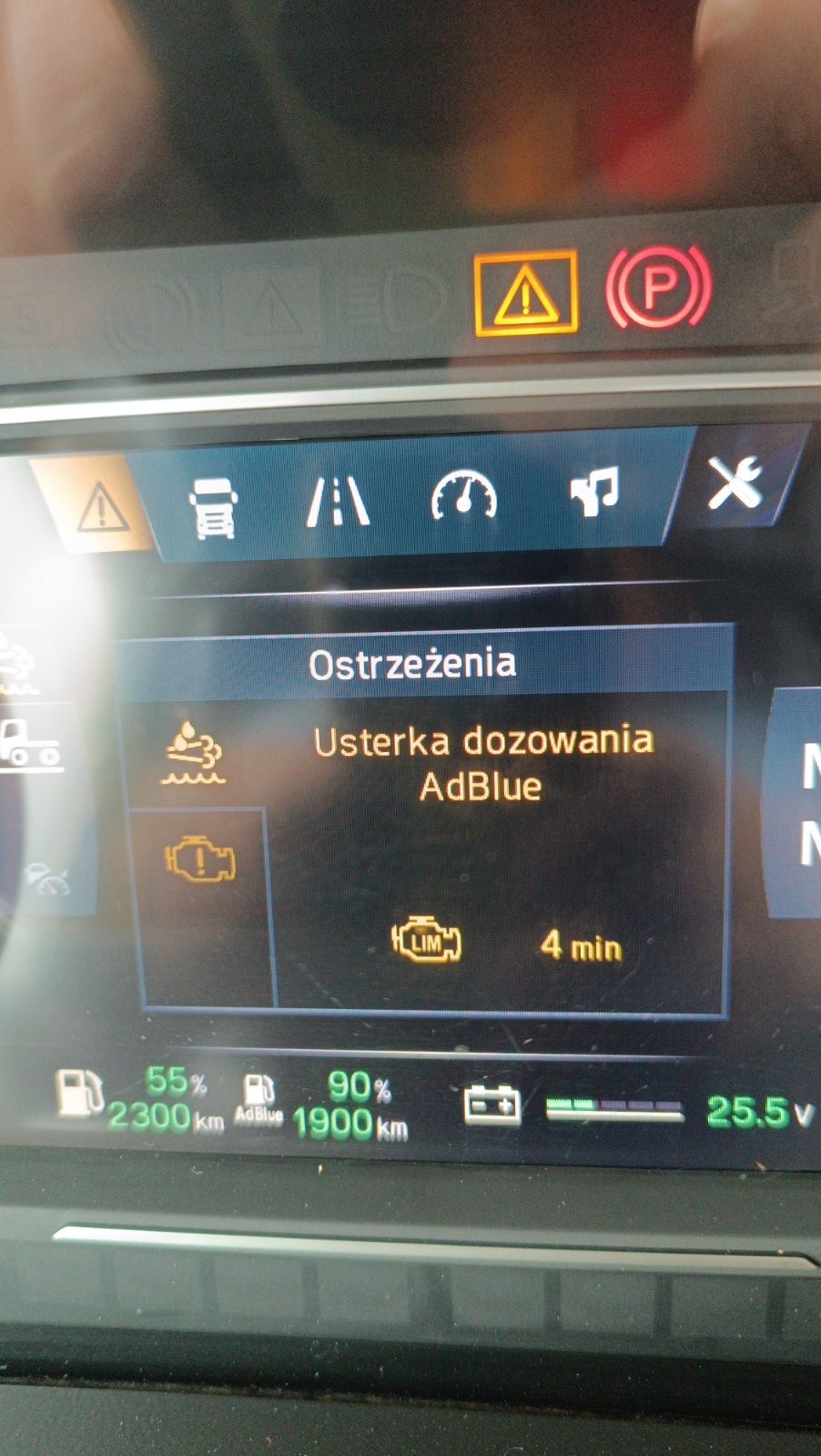
That’s why, when there’s a dosing fault, the engine control unit doesn’t just throw a warning light; it forces power down to roughly 20 km/h. This isn’t a mechanical breakdown in the usual sense. It’s a direct legal requirement: the law bans a truck from operating if it can’t clean its own exhaust properly, and the electronics enforce that automatically. More on the technical requirements for commercial vehicles can be found via the Straßenverkehrs-Zulassungs-Ordnung.
Typical causes of an SCR failure go well beyond simply running out of AdBlue:
- a torn or cracked hose in the reagent supply circuit, which is what happened here;
- urea crystallising in the lines or the dosing nozzle after long periods of standing or with contaminated AdBlue;
- failure of the dosing module’s pump;
- a fault in the NOx sensor, which tells the control unit the actual composition of the exhaust gas;
- AdBlue freezing in winter below −11°C, if the tank and lines aren’t sufficiently warmed by the standard heating system.
Diagnostics at 09:10 pulled several active codes across the DCSXA, EEC and EMS control units at once, a typical picture when a torn hose drops the pressure across the whole circuit and several sensors flag it simultaneously. By 10:34 the diagnosis was confirmed: an AdBlue dosing error with an accompanying engine malfunction message.
The temptation to just clear the fault with a scanner and press on to the delivery point is strong for a lot of drivers, but it’s a direct route into trouble. Tampering with the emissions after-treatment system counts as manipulating emissions control, which carries fines and, in repeat cases, can lead to the vehicle’s operating permit being revoked. On top of that, the truck simply won’t pass its next MOT-equivalent inspection if the control unit’s history shows signs of a bypassed SCR system.
The repair, step by step
Step 1: Reading the codes. The scanner is plugged into the OBD port, and the technician records every active and stored code, cross-referencing them against when the fault first appeared.
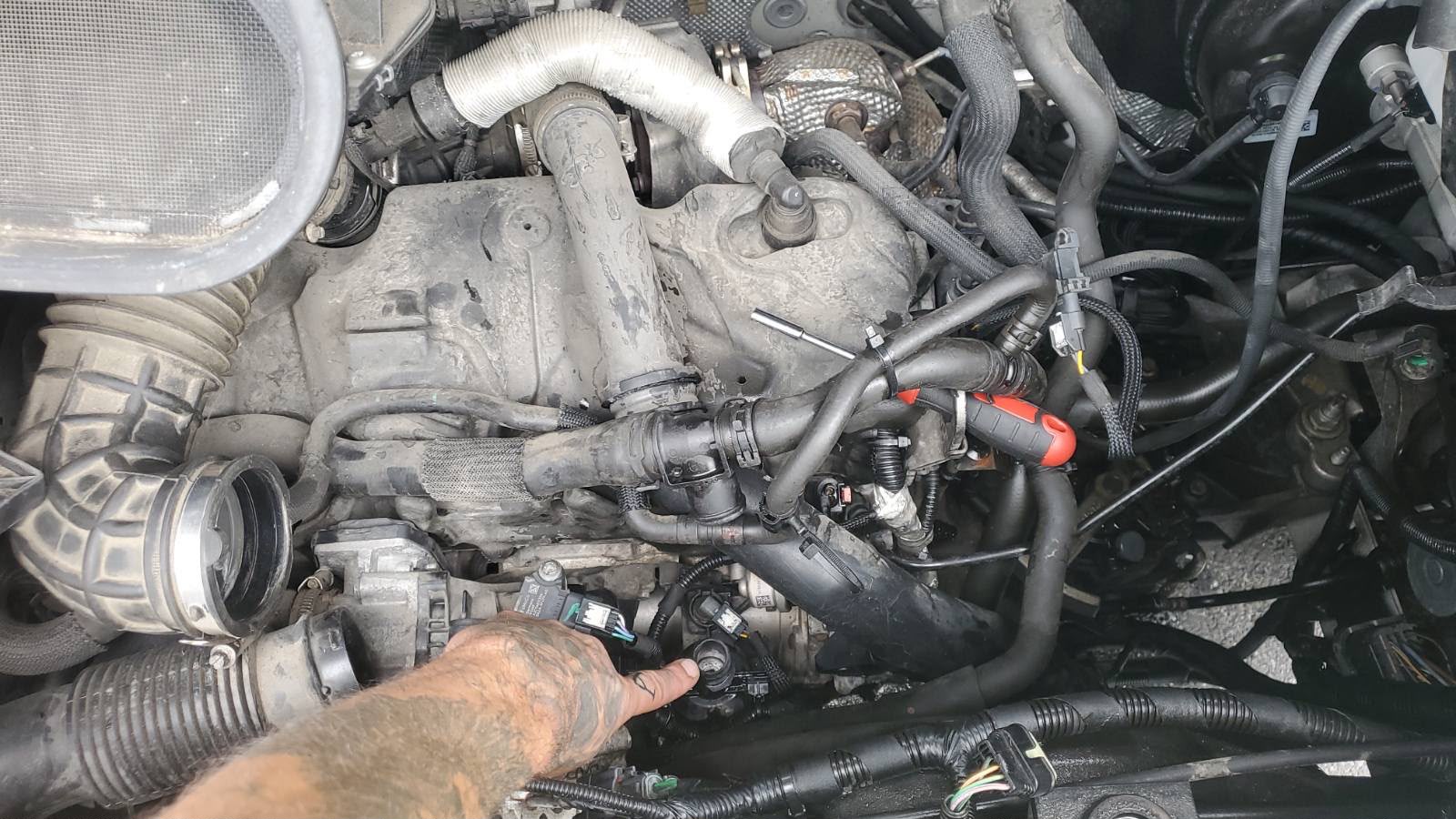
Step 2: Visual inspection of the AdBlue circuit. Every hose from the tank to the dosing nozzle gets checked, especially around the clamps and joints, where cracks most often show up because of vibration and temperature swings.
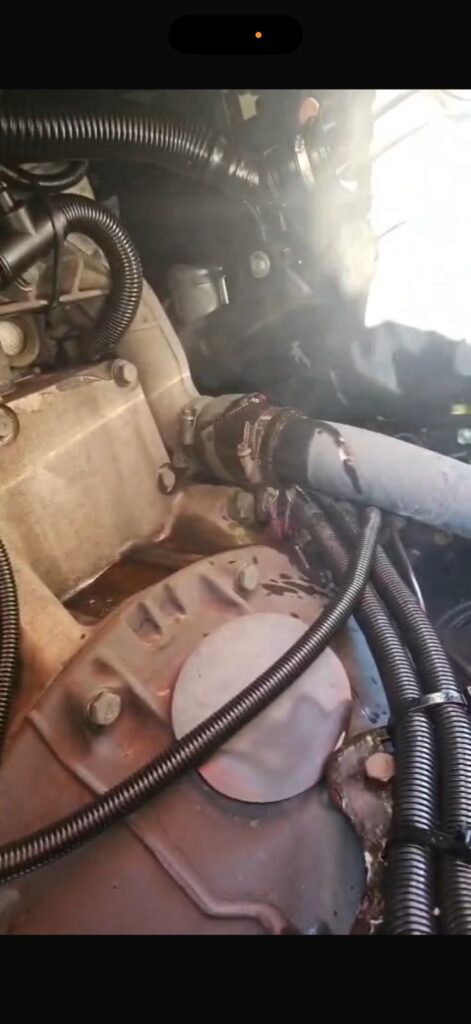
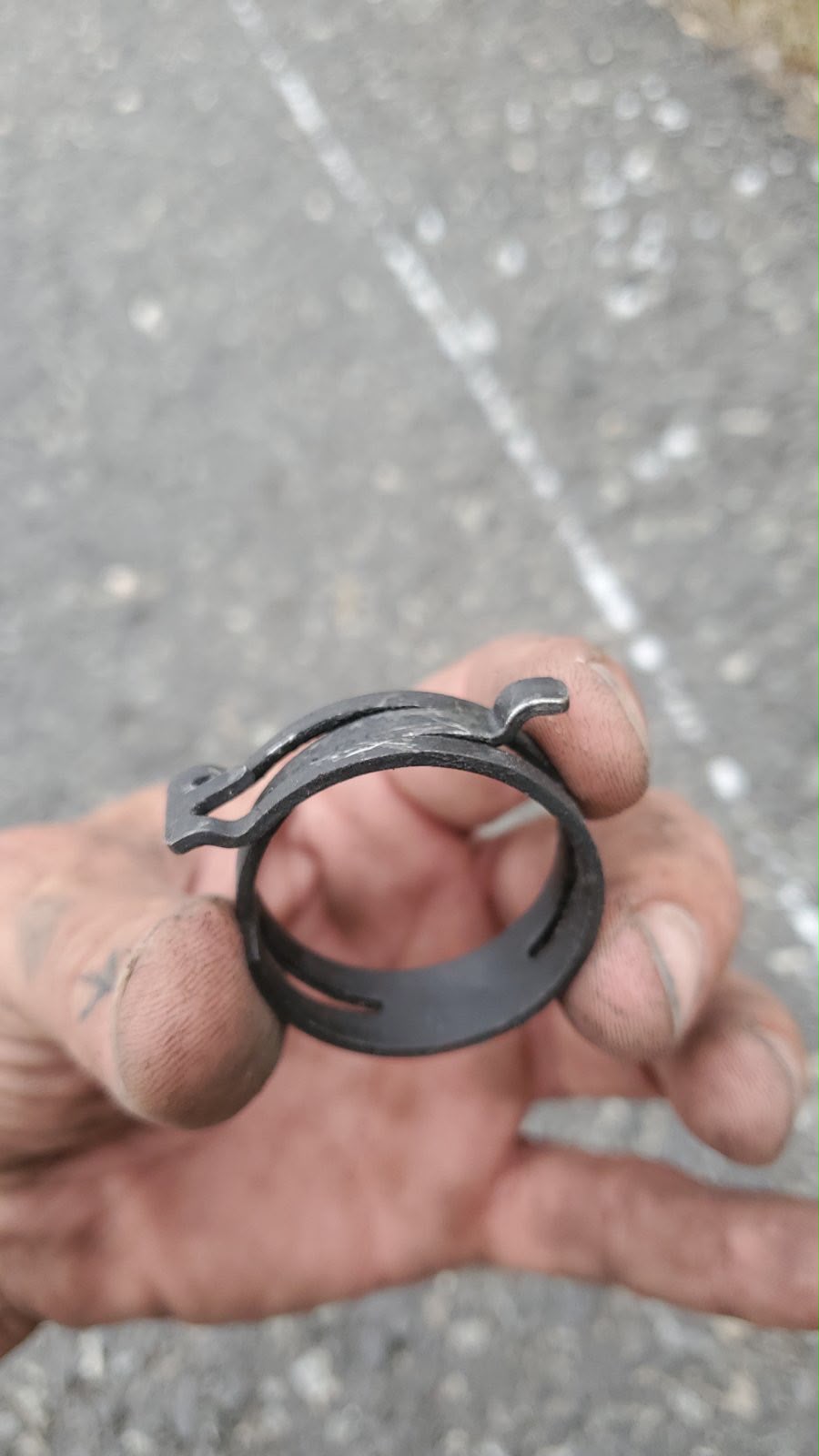
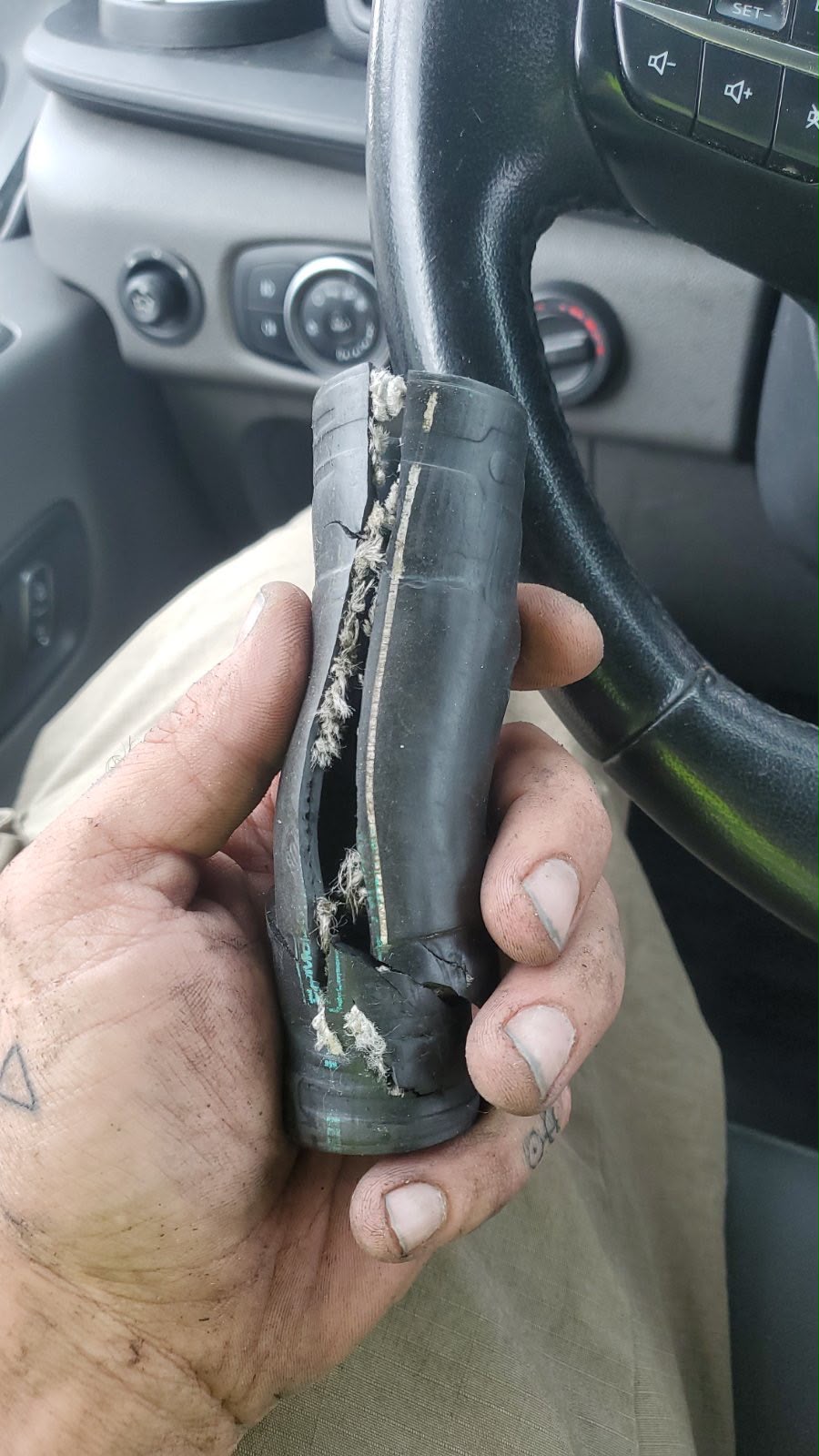
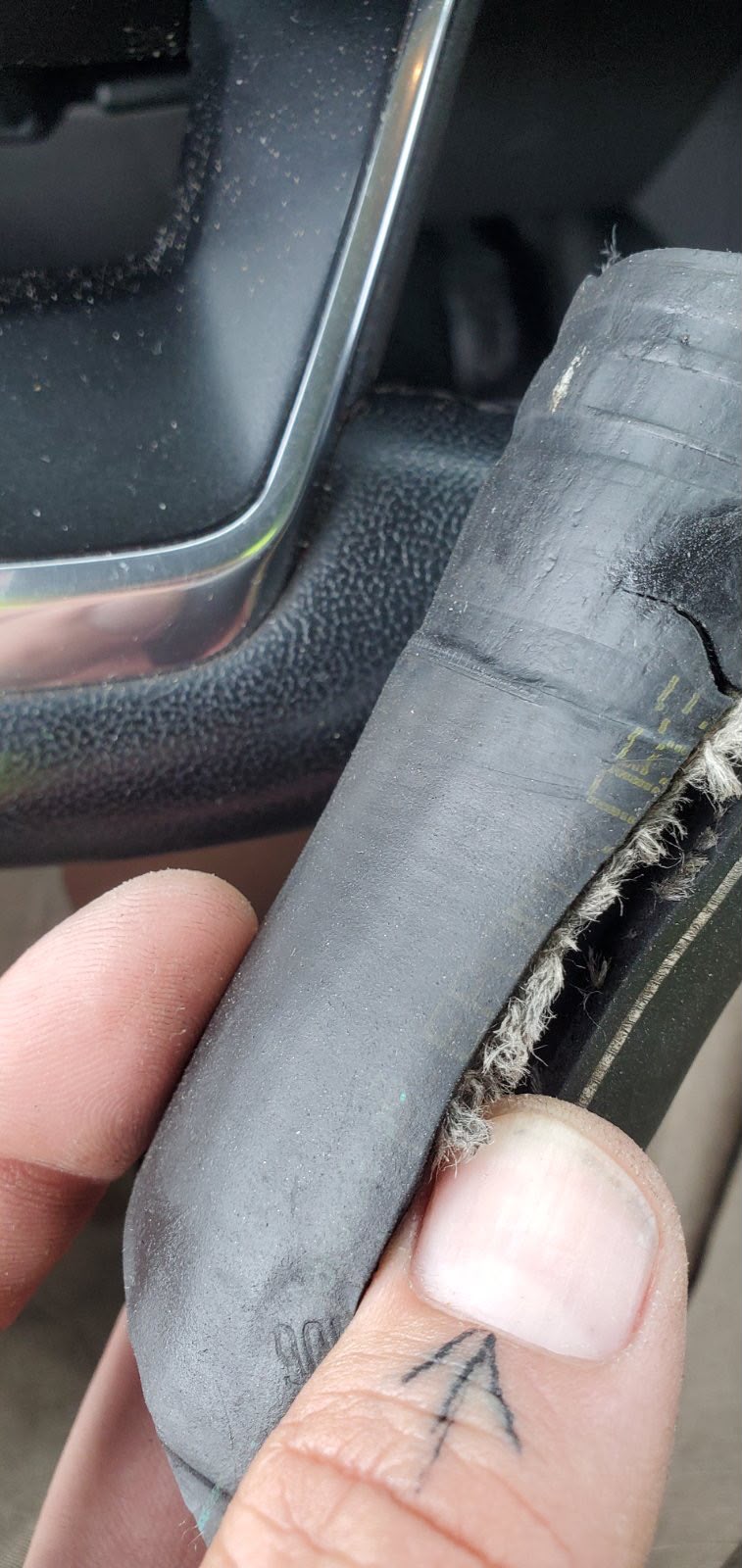
Step 3: Locating the damage. A torn rubber hose is found, cracked along the whole seam, a classic wear pattern rather than damage from an outside object.
Step 4: Replacing the hose and clamp. The old section comes out, a new length of hose of the right diameter goes in, secured with a new clamp torqued correctly so the joint doesn’t fail again out on the road.
Step 5: Topping up AdBlue and a test run. Once the hose is replaced, the level in the AdBlue tank is checked and topped up, the fault is cleared through the scanner’s standard procedure, and the engine is started and run at idle so the control unit can reassess the pressure in the circuit and lift the power restriction.
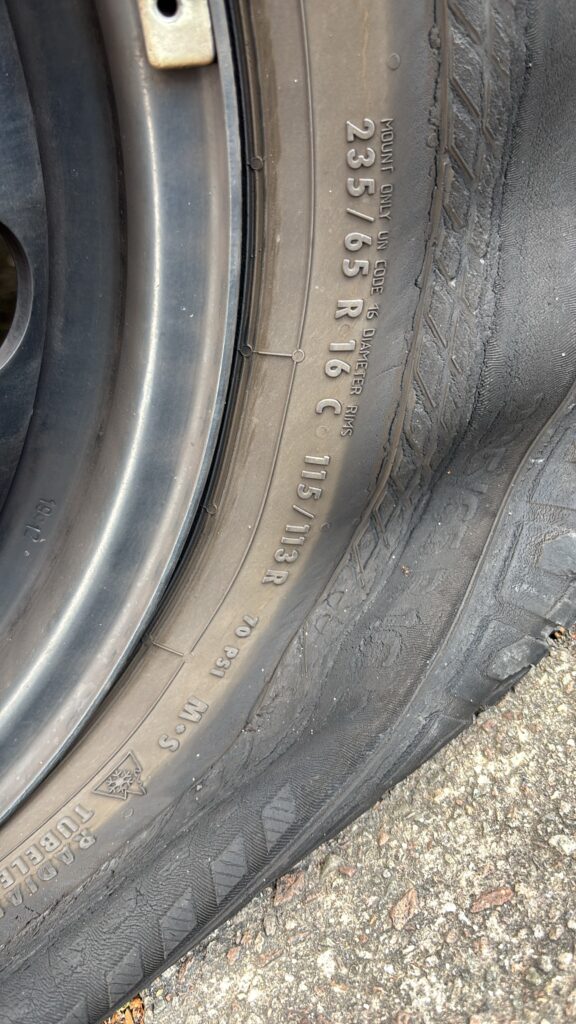
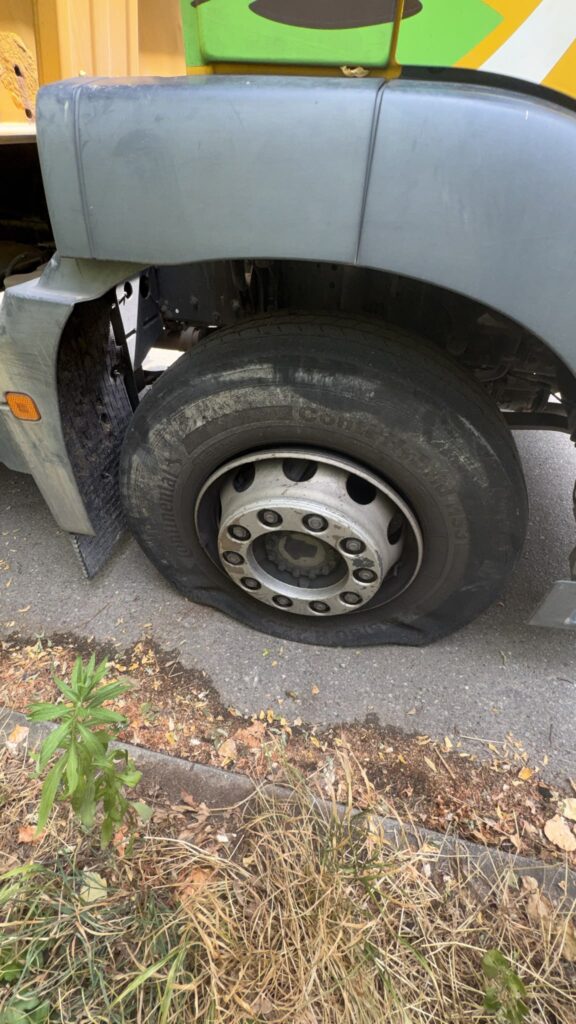
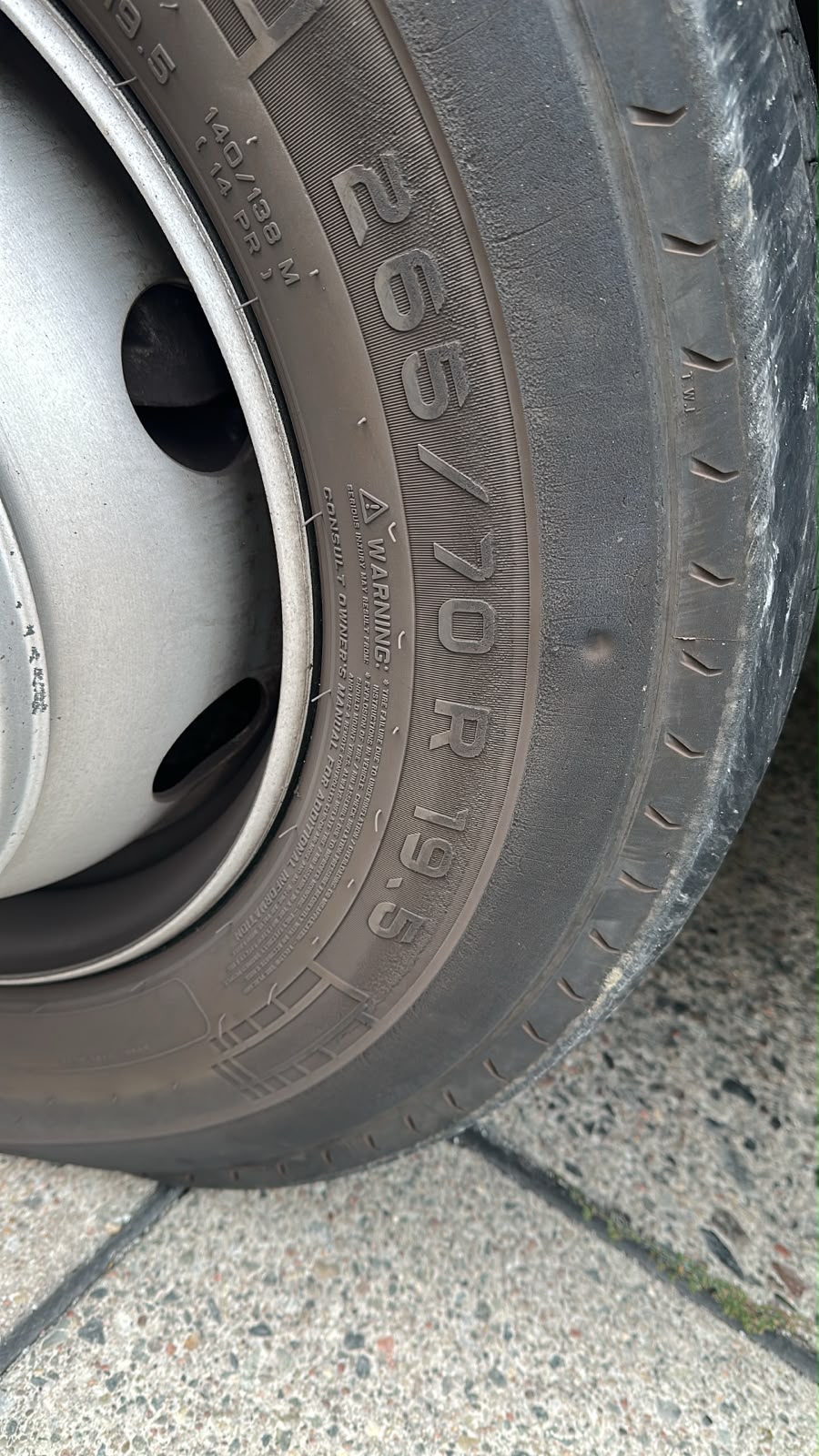
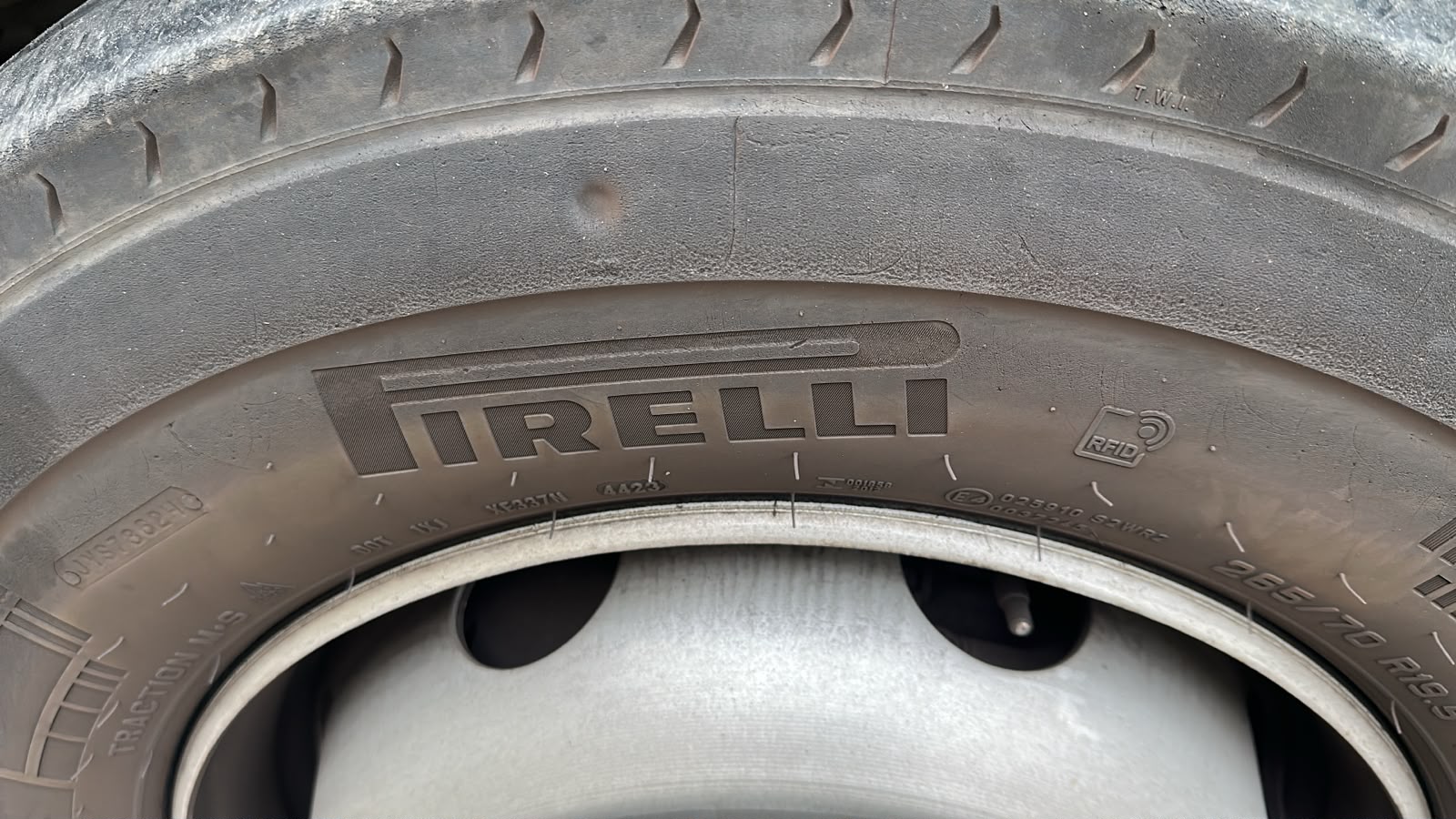
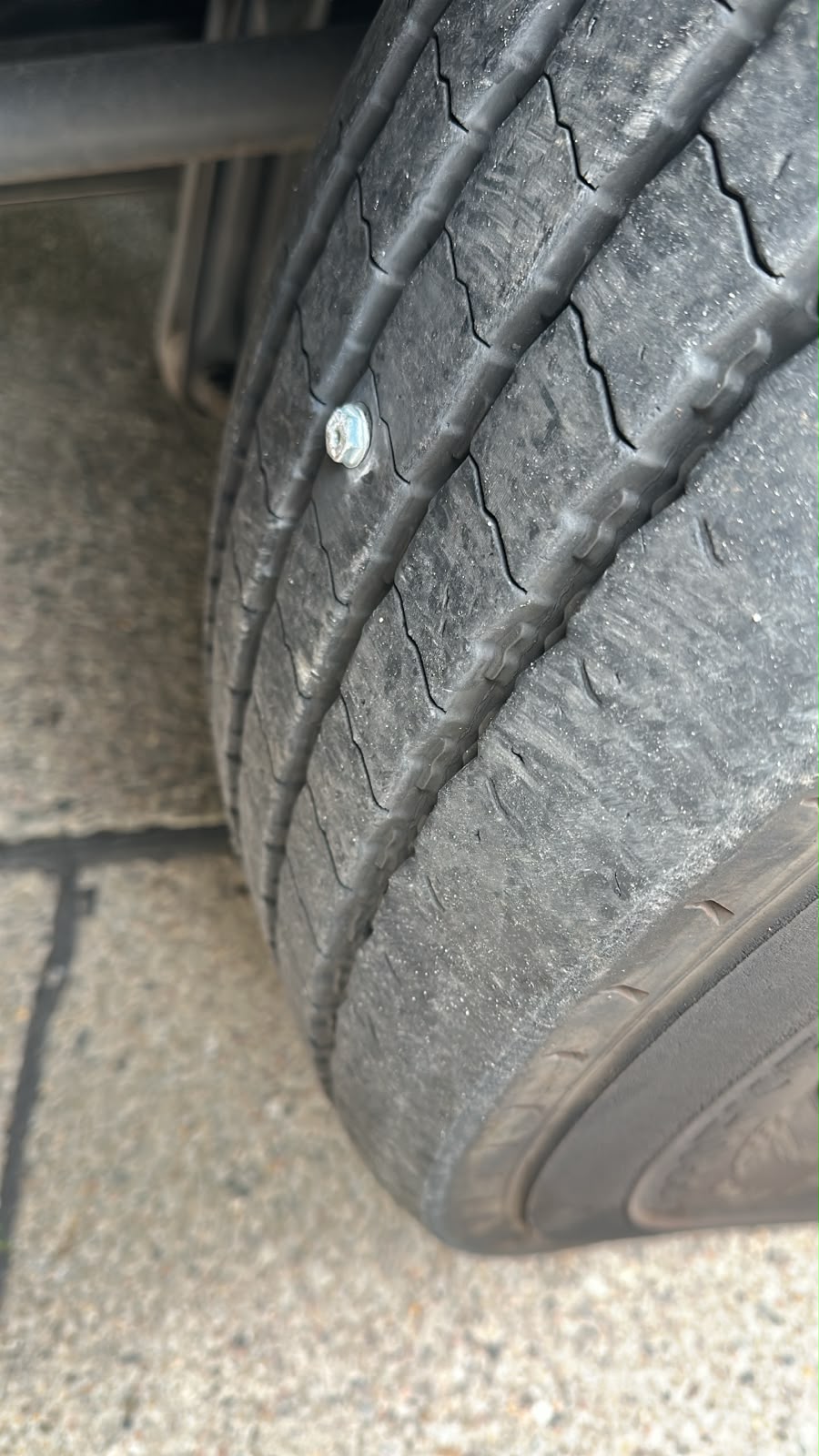
While waiting on parts, the technician also checked the 265/70R19.5 tyre on the steer axle at 10:38, a routine check on any callout so the truck doesn’t head back out with a second problem waiting to happen.
The full timeline
| Time | Phase | Action |
|---|---|---|
| 07:34 | Fault | EEC/EMS code on the dash, engine enters limp mode, driver reaches the Autohof on the A31 |
| 07:41 | Call | Contact made with the multilingual dispatch centre |
| 07:52 | Dispatch | Nearest available crew sent out |
| 08:47 | Arrival | Crew on site (55-minute drive) |
| 09:10 | Diagnostics | Scanner reads DCSXA/EEC/EMS codes |
| 10:34 | Confirmation | AdBlue dosing error, engine malfunction |
| 10:38 | Extra check | Tyre inspection, 265/70R19.5 |
| 11:00–18:00 | Waiting | Sourcing and delivery of the hose and clamp |
| 18:27 | Done | Hose replaced, AdBlue topped up, test drive successful |
From the first warning light to a fully roadworthy truck, the total came to 10 hours 53 minutes. Of that, the actual repair work took about 2.5 hours; most of the time went on sourcing the part, since the specific hose isn’t part of the standard kit every crew carries and had to be brought out from stock.
The cost of the repair
| Item | Price (EUR) |
|---|---|
| Callout fee | 220 |
| Diagnostics (engine/electrical scanner) | 150 |
| Labour (2.5 h at €110/h) | 275 |
| AdBlue hose + clamp (part) | 85 |
| AdBlue top-up | 40 |
| TOTAL | 770 |
All figures are net, plus VAT. The final figure of €770 isn’t just parts and labour: engine and electrical diagnostics get their own line item, because reading and interpreting the codes properly takes time, not just plugging in a scanner and glancing at a screen.
For comparison, a loaded lorry standing idle on the road costs the carrier somewhere between €800 and €1,200 a day on average, once lost revenue, late-delivery penalties and an unhappy client are factored in. That alone makes a same-day repair, even with a wait for parts, considerably cheaper than towing to a workshop and a multi-day stand-down.
Why an AdBlue/SCR fault needs a professional
- Trying to bypass the fault through software or physically disconnecting a sensor breaches emissions law and carries serious fines.
- Fitting the wrong hose or an unsuitable clamp can lead to another failure within a few hundred kilometres, and the whole diagnostic process starts again.
- Without a scanner it’s impossible to reliably tell whether you’re dealing with a torn hose, a failed pump or a faulty NOx sensor, and the repair cost differs sharply between them.
- Misreading the fault codes risks replacing a perfectly good part while the actual cause goes untouched.
Typical AdBlue/SCR callouts we handle
Callouts like this happen regularly across Germany: hoses tearing from vibration and ageing rubber, urea crystallising after long idle periods, dosing pumps failing at around 400,000 to 500,000 km, and AdBlue freezing in unheated sections of the network in winter. A separate category is general electronics failure, where a single control unit fault pulls false codes across the whole CAN bus and makes diagnosis without a scanner effectively impossible.
Prevention: what drivers and fleets should check
Every quarter it’s worth checking the condition of the hoses in the AdBlue circuit visually, since rubber ages and cracks regardless of mileage. Use only certified AdBlue to ISO 22241, because low-quality reagent speeds up crystallisation in the dosing nozzle. In winter, fill the tank ahead of time and avoid leaving the truck standing in freezing conditions without heating for long periods. And most importantly, at the first warning on the dashboard, even before power drops, it’s worth scheduling diagnostics rather than waiting for a full failure.
Fleets do well to keep a log for each tractor unit recording the last inspection date of the AdBlue circuit and the replacement of key rubber components. Hoses rarely fail out of nowhere; the rubber usually loses elasticity first, develops fine cracks, and only then splits under pressure. A fleet manager who can see a vehicle’s service history can schedule a hose replacement ahead of time, during planned maintenance, rather than risk a failure on the motorway with a load on board.
There’s a human factor too. Drivers, particularly on long international runs, often delay reporting weak signals from the system, a low-pressure warning, a light that flickers briefly, putting it down to a temporary electronics glitch. In this case, the driver admitted he’d seen a similar warning the day before. A clear conversation with the fleet about reporting any SCR warning immediately saves considerably more than the prevention itself costs.
AdBlue and SCR: extended technical background
The SCR system became mandatory with the introduction of the Euro 6 standard and today sits on virtually every tractor unit from major manufacturers such as MAN, Scania, Volvo, DAF and Mercedes-Benz Trucks. The principle is the same across all of them: urea solution is dosed through a nozzle into the exhaust tract ahead of the SCR catalyst, where heat breaks it down into ammonia, which then reacts with the nitrogen oxides.
Dosing module components come partly from specialist automotive electronics manufacturers such as Bosch, whose pressure sensors and dosing pumps equip a significant share of the European truck fleet. Pressure in the AdBlue circuit is normally kept within a narrow range, and even a small tear in a hose drops it below the threshold at which the control unit decides the system isn’t functioning.
AdBlue consumption on a modern tractor unit runs at roughly 4 to 6 percent of diesel consumption, meaning a full diesel tank corresponds to around 15 to 25 litres of reagent. Under heavy use, the AdBlue tank has to be topped up between service intervals, and that’s usually the moment when early signs of a developing problem are easiest to spot: residue, a change in the fluid’s colour, an unusual smell.
It’s worth distinguishing planned maintenance from an emergency. Replacing hoses on schedule under the manufacturer’s guidelines is pure prevention. A tear on the motorway, as in this case, is already a failure requiring immediate action, because continuing to run with power capped at 20 km/h simply isn’t feasible on a fast road and creates a hazard for everyone else on it.
It’s also worth mentioning the role of NOx sensors in this system. There are usually two: one before the SCR catalyst and one after it, and the control unit compares the two readings to check whether the reduction reaction is actually happening as it should. If the sensor after the catalyst starts reporting incorrect values, the system can conclude dosing isn’t working even when the hoses and pump are fine. That’s why a visual inspection alone isn’t enough; the fault code points you in a direction, but confirming the cause needs a systematic check of pressure, sensor readings and the physical condition of the lines.
Why choose us
The service operates 24/7 across Germany, with a multilingual dispatch centre that removes the language barrier at exactly the moment it matters most, in a stressful roadside situation. A network of vetted partners means the nearest available crew can be sent out without lengthy back-and-forth, and the full cost breakdown is agreed with the carrier before work starts, with no surprises at the end.
Frequently asked questions
How much does an AdBlue/SCR repair cost on the motorway? In this case the total came to €770 net, including the callout, diagnostics, labour and part. The exact price depends on the cause: a hose replacement costs less than replacing a dosing pump or a NOx sensor.
How long do diagnostics and repair take? The diagnostics and hose replacement themselves took about 2.5 hours of active work. The total time from call to a roadworthy truck can stretch out if the required part isn’t part of the crew’s standard kit and has to be delivered from stock, as happened here.
Can you just clear the fault with a scanner and keep driving? No. That counts as manipulating the emissions control system, which is illegal, and it doesn’t fix the underlying cause; the failure will recur within hours, and you’re still left with the risk of a fine and a failed inspection.
What do you do if AdBlue freezes in winter? Wait for the standard tank and line heating to thaw the reagent, or call out a mobile workshop for diagnostics if the fault doesn’t clear on its own once it’s thawed.
Who pays for a roadside repair like this? Usually the carrier settles the cost directly against the agreed breakdown; where fleet insurance is in place, the cost can often be reclaimed through the policy.
Does the dispatch centre operate in languages other than German? Yes, and that multilingual support is exactly what allows symptoms to be understood quickly and accurately from a driver of any nationality, which directly speeds up the whole assistance process.
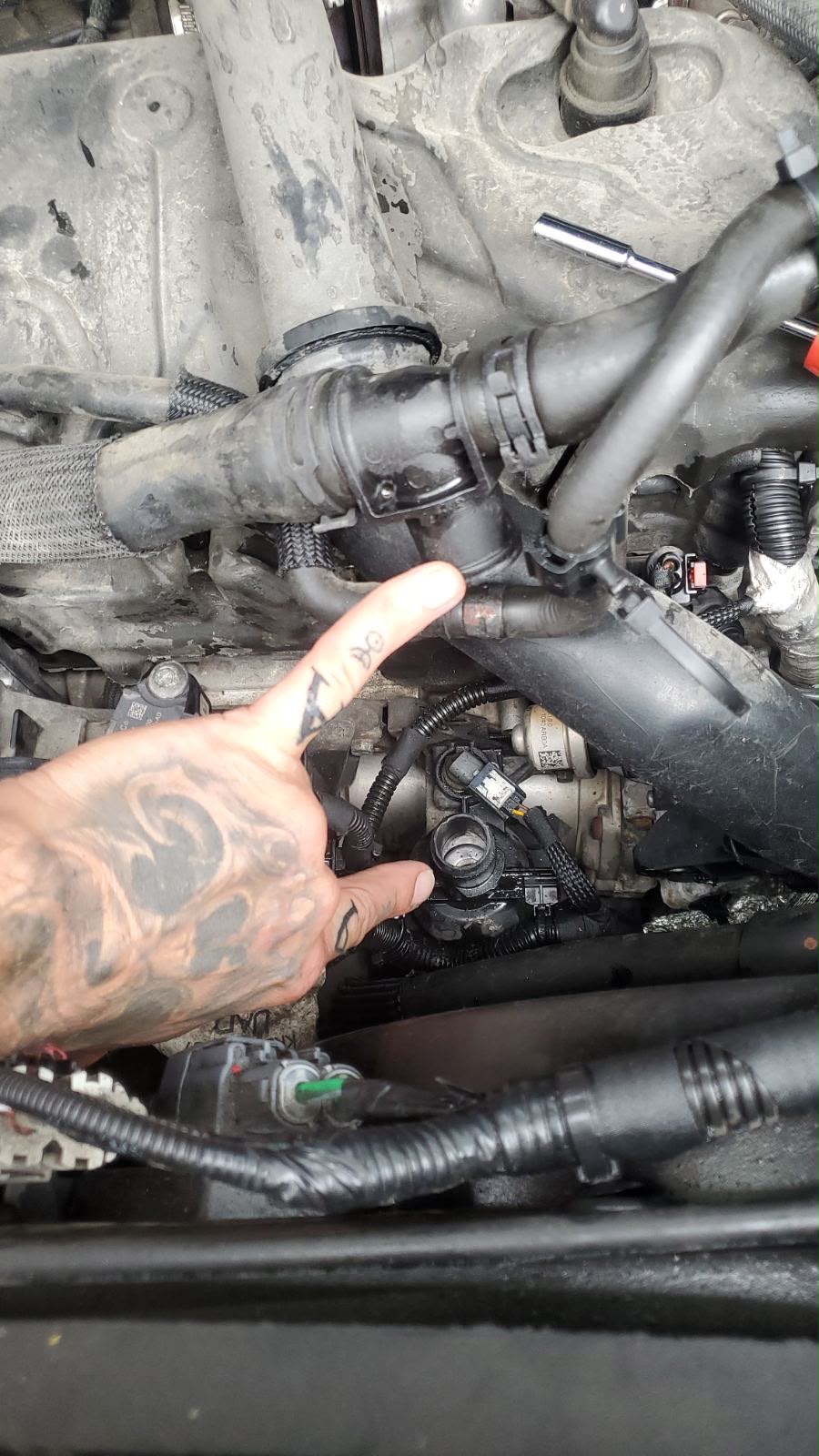
Case summary
- Location: A31 near Lingen, heading Emden, Autohof
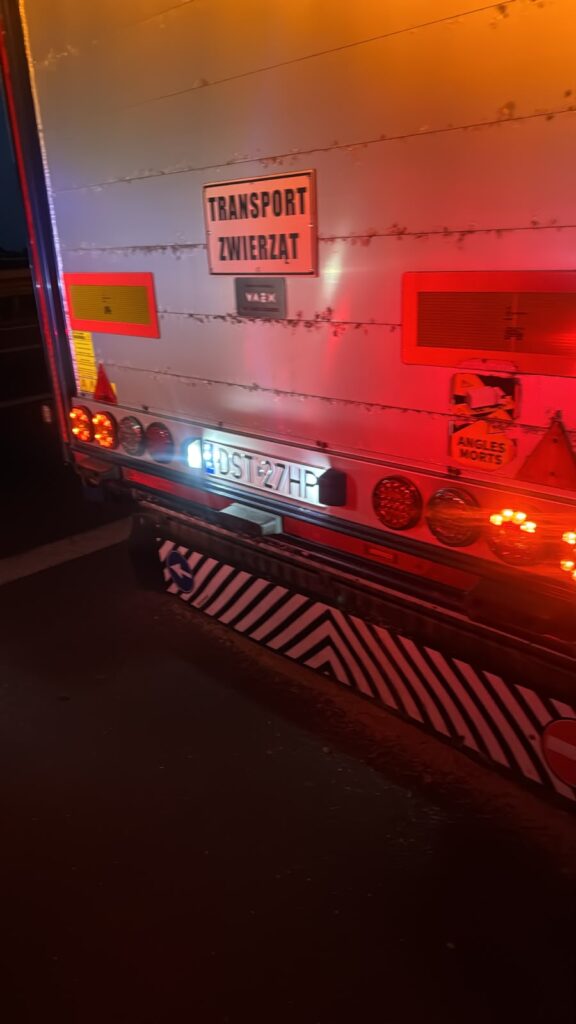
- Vehicle: semi-truck of an Eastern European carrier
- Fault: torn hose in the AdBlue/SCR circuit, EEC/EMS codes, engine limp mode
- Crew response time: 55 minutes
- Total duration: 10 hours 53 minutes (of which 2.5 hours was active repair work)
- Cost: €770 net
- Secondary damage: none, tyre 265/70R19.5 additionally checked and found sound
Need roadside assistance right now?
Call us on +49 160 5753826, our multilingual dispatch centre is available 24/7 across Germany. More about our services at www.lkwhelp24.com, including towing service and mobile on-site repairs.
Keywords: mobile truck breakdown assistance AdBlue | SCR repair truck | AdBlue fault motorway | truck engine diagnostics | multilingual breakdown dispatch | truck assistance A31 Lingen | mobile truck workshop Germany | EEC EMS fault code truck
Related articles
- Truck Breakdown Assistance on the A9 near Bayreuth: Ford F-Max AdBlue/SCR Fault Fixed On-Site
- Effective Solutions for CAN Bus Truck Repair – Fault Diagnosis and Mobile Help
- Truck Towing: Towing Service Frankfurt When the Electronics Completely Disable an IVECO S-Way
- Truck Roadside Assistance Near Frankfurt: Burst Coolant Hose Fixed in Under Two Hours on the A5
- Mobile Truck Service