Skip to content
Case Report: Truck Stuck in Snow

A recent job demonstrated just how demanding professional truck towing can be in winter conditions. A fully loaded semi-truck was travelling on a narrow country road when the vehicle left the carriageway due to snow and ice and became deeply stuck in the snow. In situations like this, the question arises: what should be done? It’s essential to park the vehicle in a safe spot or a suitable location to avoid creating hazards for other road users. Throughout the entire towing operation, both vehicles must run their hazard warning lights to alert other drivers. In addition, the connection between the vehicles — for example, the tow rope — must be clearly marked, typically with a red cloth.
The situation quickly developed into a complex recovery operation. The driver was no longer able to free the vehicle on his own — the reason towing became necessary was that there was no way to self-recover and the vehicle posed a hazard to traffic. In circumstances like these, a breakdown service should be called, since towing is only permitted as an emergency measure, for instance when the vehicle needs to reach a workshop.
A Difficult Starting Point for the Truck Towing Service
It was clear from the first assessment: this job would demand the expertise of a professional truck towing service.
The main challenges:
- ❄️ Deep snow beside the road
- 🚛 Fully loaded trailer (high total weight)
- 🛣️ Narrow, unpaved side road
- ⚠️ Vehicle tilted at a steep angle
Especially in the case of a truck breakdown under such conditions, proper preparation is decisive. The connection between the vehicles must be made at the designated towing eyes using a suitable tow hook. For truck towing, choosing the right towing equipment — a tow bar or a tow rope — is particularly important. Tow ropes and tow bars must be rated for the truck’s weight and must not exceed five metres in length. The connection must remain taut throughout the entire towing operation and be clearly marked to prevent hazards and rear-end collisions.
The vehicle being towed must have working brakes, an intact brake pedal, and functioning steering. On modern vehicles, attention must also be paid to the steering wheel lock, which may need to be deactivated. A tow bar offers greater safety than a rope for trucks, since it maintains a constant distance and minimises the risk of a rear-end collision. A tow rope, on the other hand, provides better shock absorption, is cheaper and easier to transport, while the bar is heavier and more expensive but transmits braking and pulling forces more directly.
Expert tip: keep the connection — whether rope or bar — taut at all times by pulling away carefully and evenly and avoiding sudden braking. This reduces the risk of accidents and ensures safe behaviour for everyone involved.
Choosing a suitable tow truck is essential under these conditions, as this is the only way to guarantee safety and compliance with all regulations. Bear in mind that a professional towing service may also involve towing costs, which vary depending on the effort and situation involved.
Towing on the Autobahn: Special Challenges in Winter
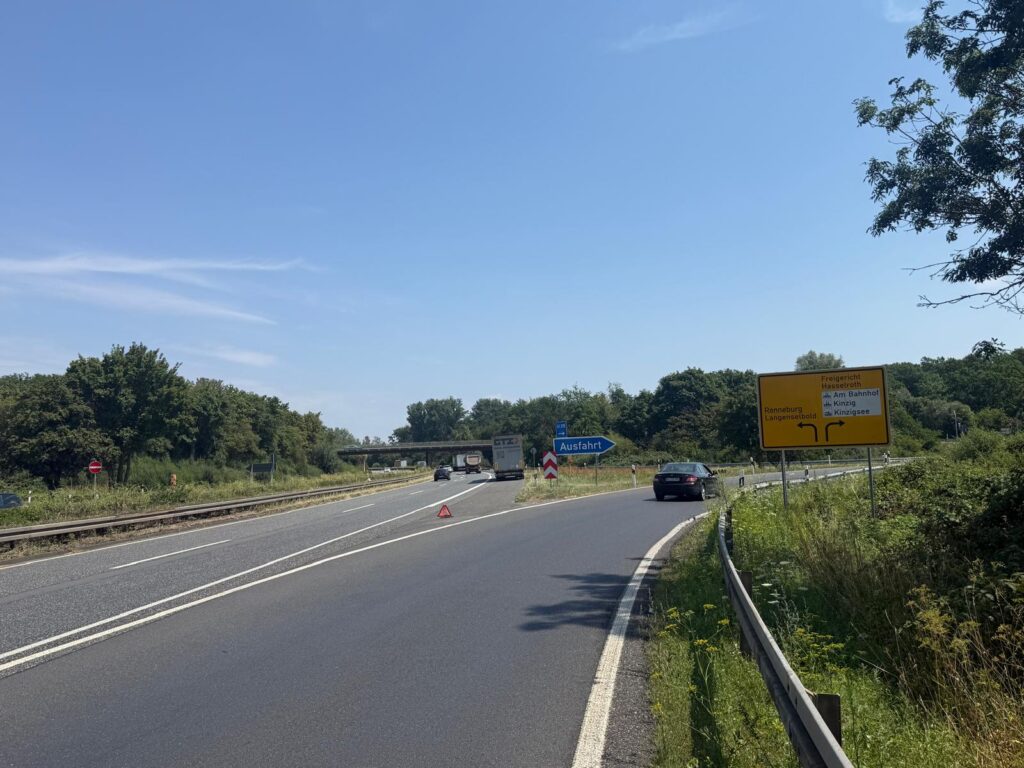
Towing on the autobahn is always a particular challenge — and in winter, the risks increase considerably. Icy road surfaces, drifting snow and poor visibility turn the towing operation into a real test for both driver and towing service. Even small mistakes can have serious consequences on the autobahn.
When towing on the autobahn, it is essential to adjust speed to winter road conditions and to always keep a sufficient distance from other vehicles. Switching on the hazard warning lights is mandatory in order to alert other road users to the danger in good time. Compliance with legal requirements (StVO) — such as the maximum towing distance and the use of a tow rope or tow bar — is also particularly important.
An experienced towing service knows the special requirements for towing on the autobahn in winter and ensures a safe process. If in doubt, the towing operation should be postponed if weather conditions are too dangerous. This minimises the risk for everyone involved and ensures road safety.
Deploying Two Heavy-Duty Tow Trucks
To safely recover the vehicle, our dispatchers decided to deploy two heavy recovery vehicles. This approach is often necessary when towing on the autobahn or on country roads with heavy commercial vehicles.
How the recovery unfolded:
- Securing the site
- Situation assessment by our technicians
- Positioning two heavy-duty tow trucks
- Synchronised pulling-out of the tractor unit
- Stabilising and returning it to the carriageway
For truck towing, using a suitable tow bar is especially important, since a rope poses considerable risks with heavy vehicles. A tow bar provides a secure connection between the vehicles, keeps the distance constant and thus prevents a rear-end collision. The connection is made via the towing eyes and tow hooks, which must be attached correctly and firmly to guarantee safety throughout the towing operation. Towing with a bar is also simpler, since braking and pulling forces are transmitted directly. However, a tow bar is heavier and more expensive than a rope. In general, when using tow trucks and carrying out all work, compliance with regulations and minimising hazards must be observed to ensure the safety of everyone involved.
Through the coordinated work of both vehicles, the truck was freed without any additional damage.
What to Keep in Mind When Towing
Many drivers underestimate what to keep in mind when towing, especially with heavy commercial vehicles.
Key points and tips:
- Both vehicles must run their hazard warning lights throughout the towing operation.
- The tow rope or tow bar must be rated for the vehicle’s weight and must not exceed five metres in length.
- The connection between the vehicles (e.g. rope or bar) must be clearly marked, for instance with a red cloth.
- Towing is only permitted when the vehicle can no longer move under its own power due to a defect and cannot be repaired on site.
- The vehicle may only be towed to the nearest workshop or a suitable parking area.
- The tow rope must be kept taut for the entire journey.
- The vehicle being towed must have working brakes and steering; the brake pedal should be checked.
- Take the vehicle’s total weight into account.
- Use suitable recovery equipment such as a tow rope, tow bar, tow hooks and towing eyes.
- Check the ground and stability at the location/spot/parking area.
- Secure the vehicle against further slipping.
- Only hire a professional truck towing service or a tow truck.
- The steering wheel lock must be unlocked during the towing operation.
- Compliance with the rules and correct behaviour are essential to avoid hazards and a rear-end collision.
- A tow rope offers better shock absorption than a bar and is usually cheaper and easier to transport.
- Clarify towing costs and the circumstances of the towing operation in advance.
What should be done if the vehicle no longer brakes? Drivers should ask themselves this question before towing in order to avoid risks.
Especially in winter, incorrect recovery attempts can lead to substantial follow-on damage.
Towing Considerations: Why Experience Is Decisive
When it comes to towing considerations, professionals pay particular attention to load distribution and the angle of the pulling forces. A stable connection between the vehicles and the use of a tow bar are especially important when towing heavy vehicles, as they ensure a constant distance and transmit braking and pulling forces directly. Expert tip: keep the connection taut at all times during the towing operation to avoid jerky movements and rear-end collisions. A tow bar offers more safety than a tow rope, as it makes control easier and reduces the risk of accidents. Be mindful of the hazards involved in towing and act cautiously, especially in difficult situations such as breakdowns or engine damage, to ensure the safety of all road users. Further tips: drive carefully, follow the legal requirements, and regularly check the connection between the vehicles.
In this job, particular caution was necessary because:
- the trailer was fully loaded
- the truck was standing at an angle in the snow
- the access route was very narrow
A single recovery vehicle would have significantly increased the risk of frame damage or further slipping.
What Does Towing Cost After a Breakdown?
Many customers ask themselves: what does towing cost after a breakdown?
Towing costs depend heavily on:
- Vehicle weight
- Location of the job
- Accessibility
- Number of recovery vehicles required
- Duration of the job
Towing costs can vary considerably, especially if you are not a member of an automobile club such as ADAC. Even straightforward towing jobs can run into three-digit sums. In addition to the towing costs, mileage fees and weekend surcharges may also apply. Breakdown service costs in Germany average between 350 and 550 euros per hour.
For professional, long-distance towing, a specialised tow truck with an underlift should always be called in order to tow vehicles such as trucks, cars, motorcycles or trailers safely and in compliance with the law.
For example, ADAC truck towing costs for standard cases can be significantly lower than for complex winter recoveries like this one.
Specialised Equipment Instead of a Simple Tow Bar
In situations like this, a simple truck tow bar is not enough. For stuck and loaded vehicles, the following are required:
- Heavy-duty winches
- Recovery straps with high load capacity
- Synchronised recovery vehicles
- Experienced operation leaders
Important: the tow bar or tow rope used must be rated for the truck’s weight and, under the regulations, must not exceed five metres in length. The connection between the vehicles, whether via rope or bar, must be clearly marked, for example with a red cloth, in order to increase road safety and avoid rear-end collisions. Make sure the rope or bar is attached exclusively to the designated towing eyes with a suitable tow hook, to ensure a safe and compliant towing operation.
Outcome of the Job
Thanks to a fast response and professional coordination, the stuck semi-truck was successfully recovered.
The result:
- ✅ Vehicle freed without damage
- ✅ Driver was able to continue the journey
- ✅ Road quickly cleared again
- ✅ No follow-on damage to the tractor unit or trailer
Conclusion: Professional Truck Towing Saves Time and Money
This job clearly shows: winter recoveries of heavy commercial vehicles require experience, the right equipment and the right strategy. Anyone who cuts corners or improvises here risks high follow-on costs. Winter tyre condition also plays a decisive role in avoiding such situations in the first place — read more in our guide to winter tyres for trucks.
If your truck is stuck or you need fast assistance, the experts at LKW Help 24 are on standby around the clock.
24/7 emergency hotline — fast help for your truck throughout Germany.