Skip to content
 Truck Towing: Fast Help in an Emergency
Picture the following situation: a road train with a faulty engine sits on the shoulder of the A2 near Hanover at night. The driver is far from home, the cargo needs to arrive on time, and ordinary roadside assistance for cars can’t do anything for a 40-tonne truck. This is exactly where we come in.
Towing commercial trucks requires specialized heavy tow trucks with sufficient pulling power and hydraulic lifting arms. It’s essential to call a specialized truck towing service, since it has the equipment and expert knowledge needed to safely transport a heavy vehicle.

LKW Help 24 offers 24/7 towing and recovery services for heavy commercial vehicles across Germany. We understand that towing a truck always requires specialized equipment. An ordinary car tow truck simply can’t move the mass of a road train, bus, or heavy van. That’s why we rely on machinery with the right power and technology, allowing us to work safely even in difficult conditions.
Our service covers road trains, single trucks of all weight classes, buses, vans, and construction equipment. For foreign drivers in Germany, we offer multilingual support in German, English, Russian, and Polish. This avoids misunderstandings when pinpointing a location or describing damage.
Truck Towing Service in Germany
What Does “Towing a Truck” Mean Legally Under German Traffic Regulations (StVO)?
The term “towing” is clearly defined by law in Germany. Under Section 15a of the StVO, it refers to a short-term emergency measure for a vehicle that is at least partially unfit to drive. The goal is to remove the vehicle from the road and bring it to the nearest suitable workshop or a safe parking area.
Towing commercial trucks in Germany is carried out in accordance with the provisions of the Road Traffic Regulations (StVO) and the Road Traffic Licensing Regulations (StVZO), specifically Section 15a StVO.
There’s an important distinction between emergency towing (Abschleppen) and planned transport (Schleppen). While emergency towing is a forced measure, planned transport refers to moving a functional vehicle over long distances. This distinction has practical consequences: for example, on the autobahn a towed vehicle must exit the highway at the nearest exit. A professional truck towing service is strictly necessary if the vehicle can’t roll, its brakes have failed, or it has structural damage after an accident. Attempting to tow a truck yourself with improvised means is not only dangerous but in most cases technically impossible.
Truck Towing: Conditions, Safety, and Preparation
A concrete example illustrates the situation well: a 40-tonne truck breaks down on the A3 in a roadwork zone. What should the driver do first?

Certain conditions must be met before a truck can be towed. The basic rules for a truck breakdown follow a clear procedure. The driver immediately switches on the hazard lights and puts on a high-visibility vest before leaving the cab. A warning triangle is placed at a sufficient distance — on the autobahn, at least 150 meters in front of the vehicle. Everyone must move behind the guardrail to stay safe from passing traffic.
The particular risks of working with a truck relate to its weight and size. A fully loaded road train has a considerably longer braking distance than any car. Crosswind, gradients, and uneven ground can cause the vehicle to roll on its own. That’s why professional securing before any towing process is mandatory.
Unlike cars, towing a truck generally doesn’t use an ordinary tow rope. Depending on the nature of the damage, we use partial-lift devices, recovery cranes, or special dolly axles. A tow bar can be used in certain cases, but only if the steering and braking system of the disabled vehicle are still functional.
Incorrect towing often causes secondary damage to the transmission, axles, air suspension, or steering. This damage frequently far exceeds the cost of the original repair. So the rule is: better to wait and call a specialized towing service than risk additional costs with improvised solutions.
Special Rules for Towing Trucks on the Autobahn
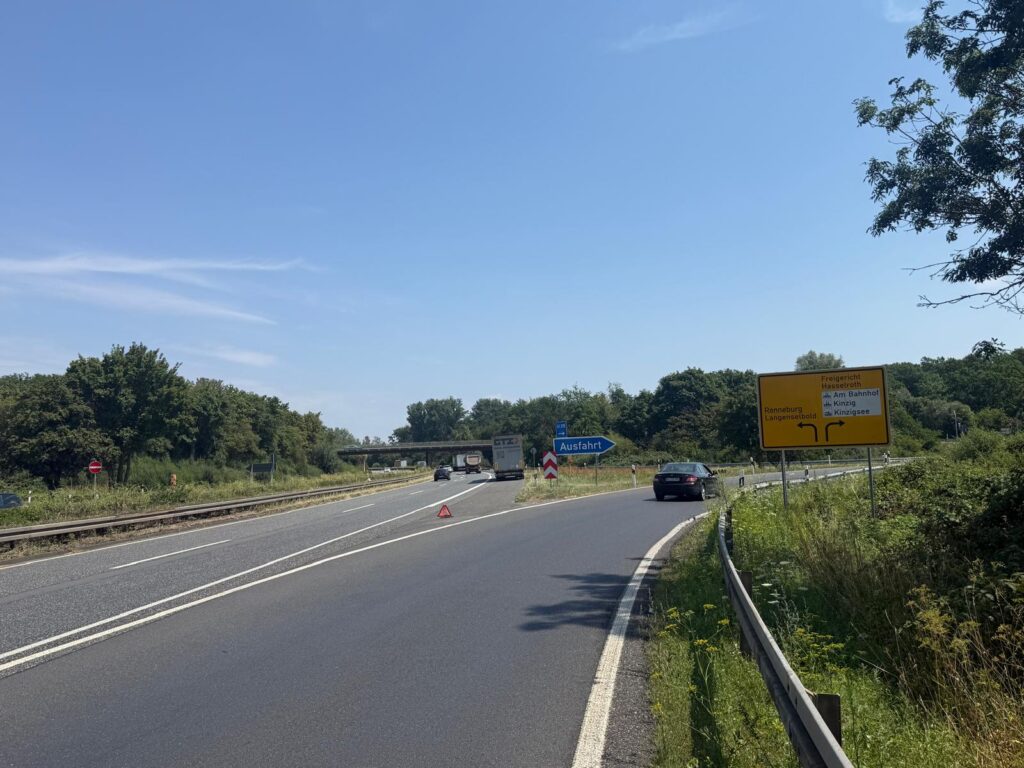
In the event of a breakdown on the autobahn, the driver should, if possible, make it to the nearest exit or rest area. If that’s not possible, the only remaining option is the hard shoulder as an emergency stop position.
Throughout the entire towing process, hazard lights must remain switched on — on both the towing and the towed vehicle. When towing a full combination with a trailer or semi-trailer, coordination with the police is often required before transport begins.
A practical example: a disabled road train partially blocks a lane in a roadwork zone on the A3. In this case, as the towing company, we coordinate the operation with the police and road authorities. This cooperation is especially important in high-traffic areas — for example, the Ruhr region, around Berlin, or the Rhine-Main area, where every minute of delay adds to the traffic jam.
How Does the Truck Towing Process Work with LKW Help 24?
Every real call-out begins with the first contact. The following steps show how we operate in a typical breakdown:
- Emergency call and initial information: The driver calls our hotline and provides the key details: license plate, vehicle type, type of cargo, and a short description of the problem. The more precise this information, the faster we can respond.
- Determining the location: Together we pinpoint the exact location of the breakdown. On the autobahn, kilometer markers, exit numbers, or the name of a rest area help. Alternatively, we use smartphone geolocation if the driver isn’t sure exactly where they are.
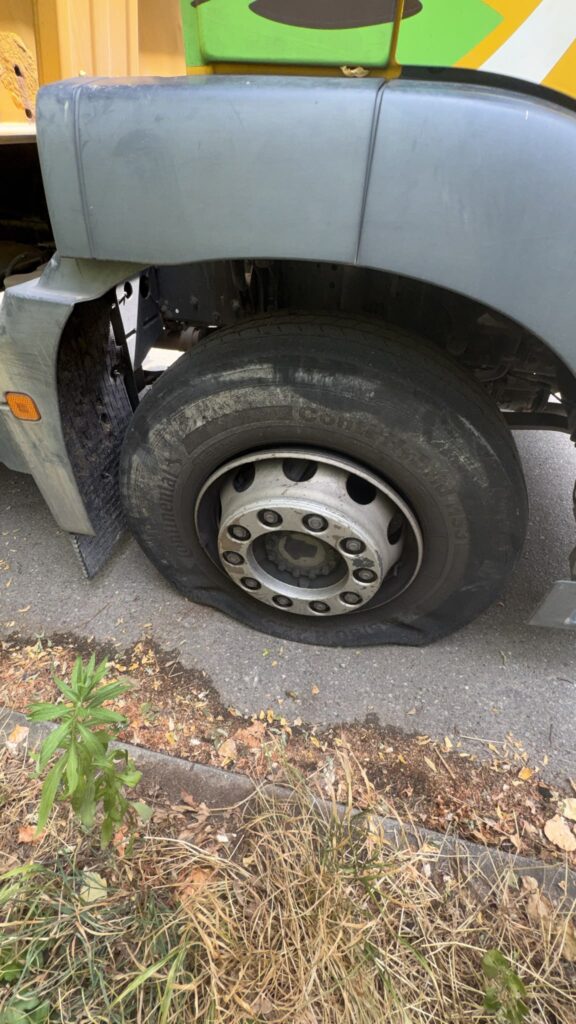
- Assessing the situation: Based on the damage description, our dispatcher checks whether an on-site repair via mobile roadside assistance is possible, or whether direct towing is necessary. For example, with an engine failure, transport to a workshop is usually unavoidable, while a tire change can often be handled on site.
- Selecting specialized equipment: Depending on the vehicle type and situation, we dispatch the appropriate tow truck. For a 40-tonne truck, for example, a heavy tow truck with a partial-lift device is used, capable of raising the front or rear axle.
- Securing and loading on site: Upon arrival, our staff first secure the work area. The lifting boom is then positioned, and the disabled vehicle is professionally secured. For vehicles with a faulty braking system or air suspension, this step requires particular care.
- Transport to the destination: Finally, the vehicle is transported to the nearest workshop or to the fleet location specified by the customer. The decision on the final destination is made by the customer or their transport company.
Roadside Assistance for Trucks Before Towing
Not every breakdown necessarily leads to towing. Our 24/7 truck roadside assistance service in Germany always tries to fix the problem on site first, if technically possible.
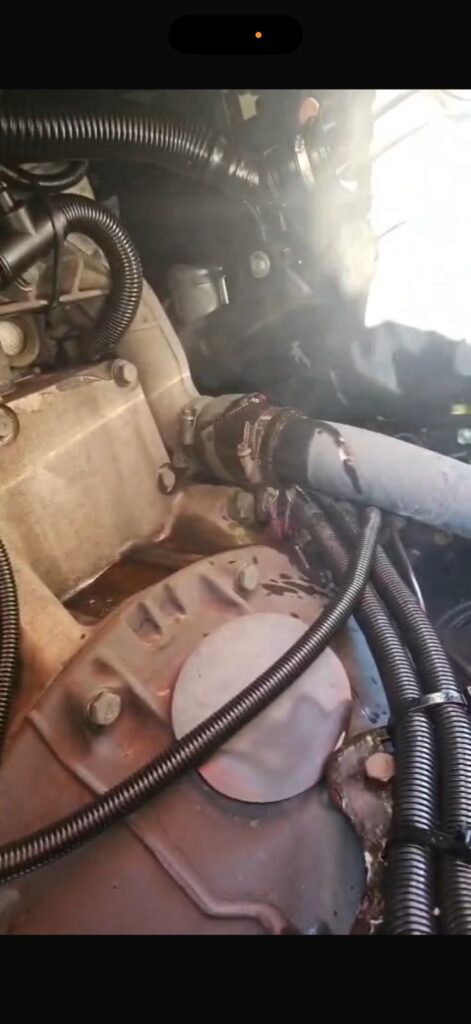
Typical cases for mobile assistance include flat batteries, minor issues with brake air pressure, faulty hoses, or displaced lines. Such repairs can often be completed within an hour, right on site. The benefit for the transport company is obvious: the vehicle stays in service, there are no additional towing costs, and downtime is reduced to a minimum.
Our technicians travel in service vehicles equipped with diagnostic tools, equipment, and common wear parts. A real-life example: at night in a parking area near Nuremberg, a single truck won’t start. Our technician diagnoses a dead battery, does a jump-start, and the driver can continue on their route. Another example: at the Port of Hamburg, a driver reports an air suspension problem on the rear axle. On site, it turns out an air hose is leaking — replacement takes less than 45 minutes.
Which Trucks and Commercial Vehicles Do We Tow?
LKW Help 24 handles not only classic road trains but also a wide range of commercial vehicles. These include 7.5-tonne and 12-tonne trucks, heavy 40-tonne semis, refrigerated trucks, silo trucks, and container carriers. In passenger transport, we service coaches and articulated buses, as well as van fleets.
For special vehicles such as construction equipment, work platforms, municipal vehicles, or refuse trucks, we check on a case-by-case basis whether our equipment is suitable for the job. In most cases, we can help here too.
Particular care is taken when transporting hazardous goods (ADR). In these cases, we always coordinate with the police and, if necessary, the fire department. The safety of everyone involved and of the environment is always our top priority during these call-outs.
Support for Foreign Truck Drivers in Germany
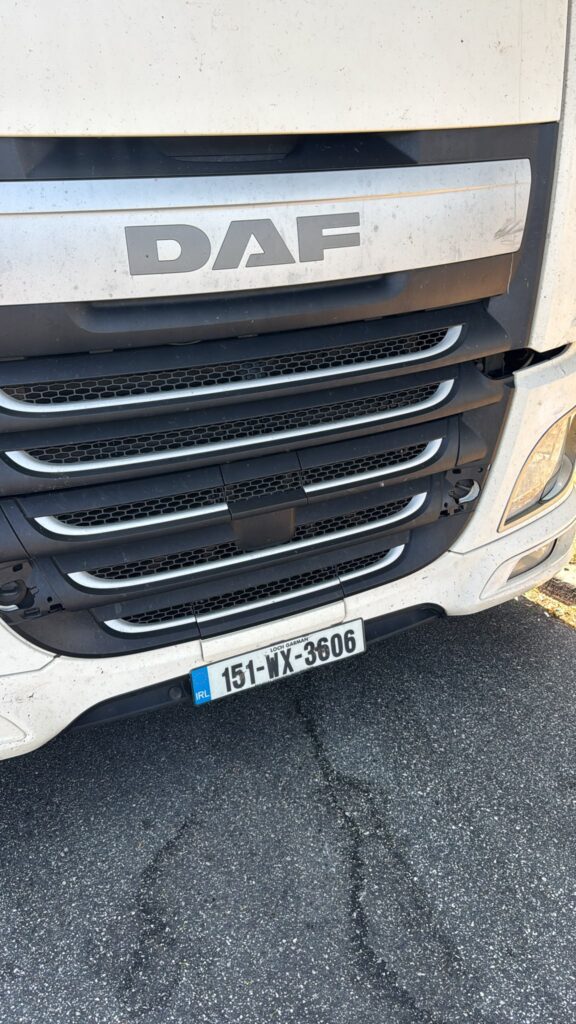
A significant share of disabled vehicles on German roads carry foreign license plates. Drivers from Poland, Lithuania, Romania, or Bulgaria pass through Germany on transit routes every day.
Our multilingual dispatch service in German, English, Russian, and Polish ensures there’s no misunderstanding when identifying the location, the type of cargo, or describing the damage, and supports our 24/7 truck towing service in Germany whenever needed. On request, we also stay in contact with the driver’s transport company headquarters — by email, phone, or messaging apps. We’re very familiar with typical transit routes, such as the A4 toward Poland, the A12 toward Frankfurt (Oder), or the A5 and A7 north-south corridors, thanks to numerous call-outs. This experience allows us to respond quickly even in less familiar regions.
Truck Towing Costs: What Do They Depend On?
Unlike cars, there are no fixed flat rates for towing trucks. The cost depends on several factors that vary from case to case.
Relevant cost factors include the vehicle’s weight and number of axles, the location of the breakdown (autobahn, city, construction site, or ditch), the time of day, and the specialized equipment required. A truck that has to be pulled out of a ditch at night on a holiday will require different resources than a rolling vehicle sitting in a parking area during the day.
Many call-outs are billed based on the actual time spent. This includes the trip to and from the site, waiting time, and safety measures on location. Additional costs may arise if recovery work is required, cargo needs to be transferred via a partner, or the vehicle is temporarily stored at the towing company’s secured yard.
Transport companies and fleet owners are advised to check in advance for framework agreements or service contracts. Such arrangements make billing predictable and help avoid surprises when invoices arrive.

Transparent Cost Agreement for Towing with LKW Help 24
We already provide a rough cost estimate over the phone as soon as we understand the nature of the damage and the location. This initial estimate is based on our experience with similar call-outs.
The final cost depends on the actual work required on site. If, for example, it turns out the vehicle can’t roll at all, the scope of work changes. We also work with insurance companies and assistance services. Don’t confuse this with membership clubs like ADAC for cars — the settlement process in the commercial vehicle sector works differently.
A recommendation for drivers: keep your vehicle documents and insurance policies ready. This speeds up the process and helps avoid unnecessary delays when confirming cost coverage.
Benefits for Transport Companies and Independent Operators
For transport businesses, one thing matters most: minimal downtime and predictable planning. A truck that isn’t driving isn’t earning money — while still generating ongoing costs.
Our availability 365 days a year, around the clock, means that someone is always reachable in an emergency. That applies at night as well as on weekends or holidays. Unlike general roadside assistance services focused mainly on cars, we concentrate exclusively on commercial vehicles. This shows in our equipment, our staff’s experience, and our knowledge of typical truck problems.
On request, we also coordinate the next steps: contacting workshops, arranging tire service, or finding a replacement vehicle. This significantly lightens the load for the transport company’s dispatcher. Instead of making dozens of calls themselves, the forwarder hands the matter to us and can focus on their core tasks.
Real Examples from Our Truck Towing Service
- Refrigerated truck on the A7: A road train carrying temperature-sensitive cargo suffers a technical fault at night. The cold chain is at risk of breaking. Our team secures the vehicle and swiftly delivers it to the nearest workshop so the cargo doesn’t spoil.
- Single truck in Leipzig: An empty truck’s clutch fails in the city center. The narrow street requires specialized recovery equipment. With a compact tow truck, we retrieve the truck and get it out of city traffic.
- Coach on the A9: A bus carrying passengers suffers an engine failure. Passengers are first brought to a safe location and alternative transport is arranged. We then tow the bus to the nearest workshop specializing in buses.
Checklist for Truck Drivers: What to Do in a Breakdown and Towing Situation
A structured approach in an emergency prevents accidents and secondary damage. Every driver should know the following steps.
Once the vehicle has stopped, the rule is: switch on the hazard lights, put on a high-visibility vest, place a warning triangle. Everyone must leave the vehicle and move to a safe location — on the autobahn, behind the guardrail. Before calling for emergency help, it’s worth checking the cargo, especially if it’s hazardous. Any markings should be reported to the towing service.
When calling, have the following information ready: the exact location, including the autobahn kilometer marker or exit, the license plate, vehicle type and weight, the type of cargo, and any visible damage. The more complete this information, the more targeted the response.
Important note: never attempt to improvise repairs on safety-critical components such as the braking system or air suspension yourself. What might work on a car can quickly turn dangerous with a truck. Staying calm and acting in a structured way is the best protection against additional problems.
Bottom Line: Trust the Professionals for Safe Truck Towing and Minimize Downtime
Towing a truck in Germany is always a job for specialized services. The legal framework, safety requirements, and professional equipment leave no room for improvised solutions using cars or simple ropes. A qualified towing service has the equipment and experience to handle even the most complex situations.
LKW Help 24 is an experienced partner for transport companies and independent carriers. In an emergency, you can reach us by phone at +49 160 5753826. Have all the necessary information ready — that way we can provide fast, targeted help.