A steering fault is one of the few breakdowns that can turn dangerous in seconds rather than minutes. When a truck driver on the A8 near Augsburg felt the steering wheel go slack and heard a metallic knock from under the front axle, he did exactly the right thing: he pulled onto the hard shoulder, switched on the hazard lights, and called for help before attempting to drive another metre.
A worn or broken track-rod end is not a comfort issue. It is the joint that physically connects the steering gear to the wheel. Once that ball joint separates or the linkage starts to fail, the driver loses the ability to steer predictably. The wheel can turn on its own, pull to one side, or simply stop responding to input at the worst possible moment, for example when changing lanes at speed on a motorway.
This case study documents exactly how LKWHelp24 handled that situation for a heavy truck over 7.5 tonnes, a Scania R: from the first phone call to the release of a roadworthy vehicle, in roughly two hours, with a mobile mechanic working directly at the roadside on the A8.
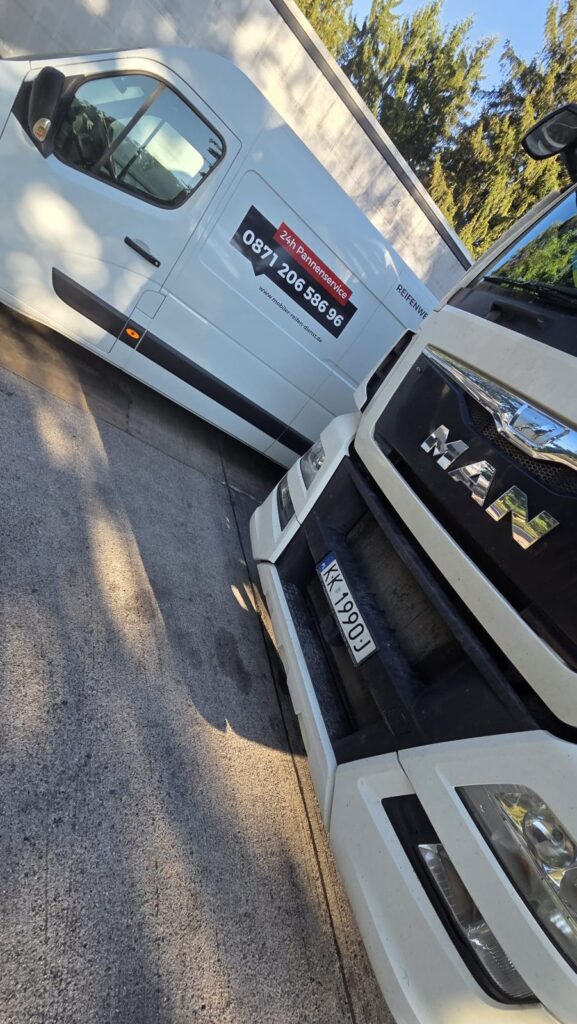
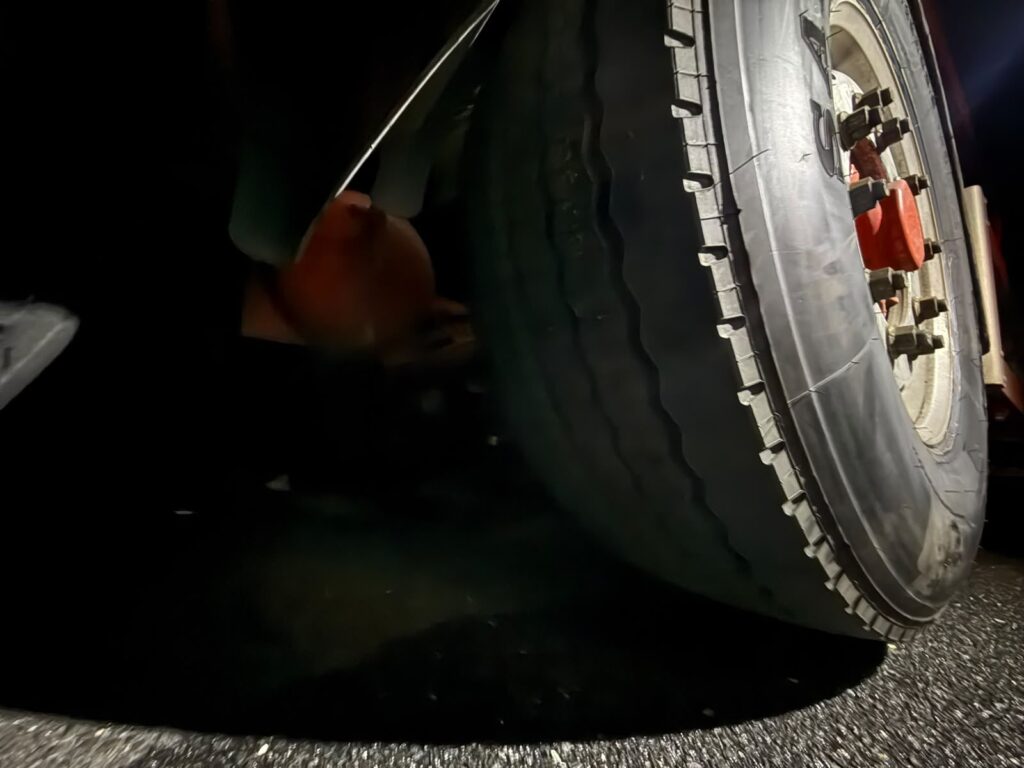
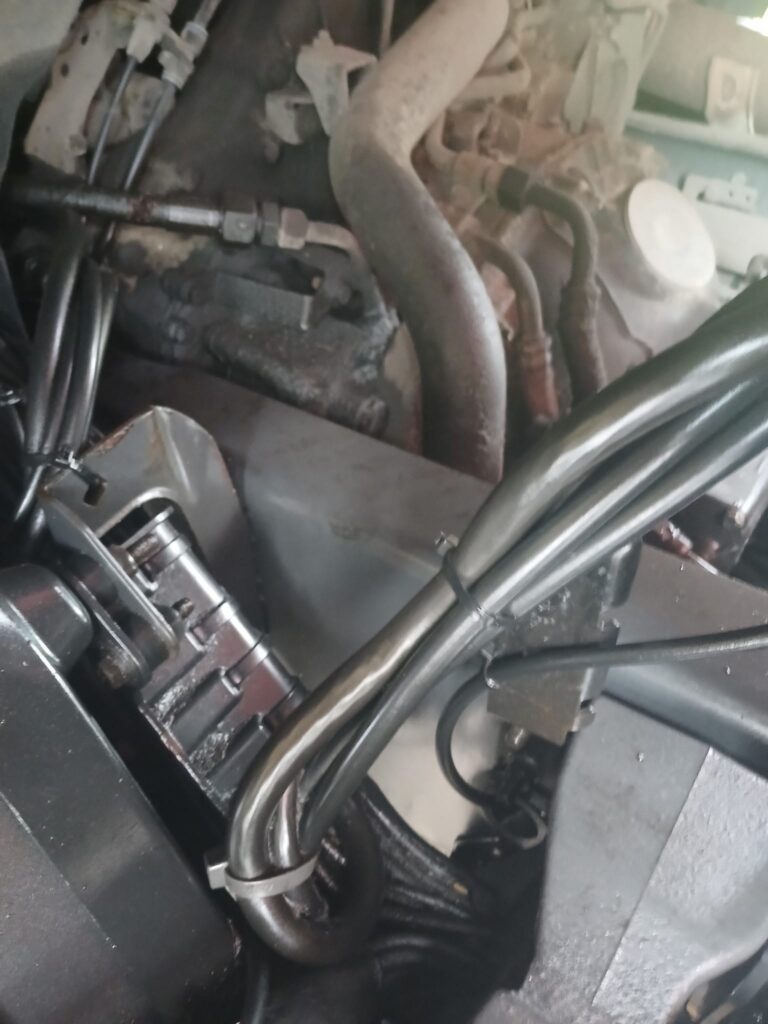
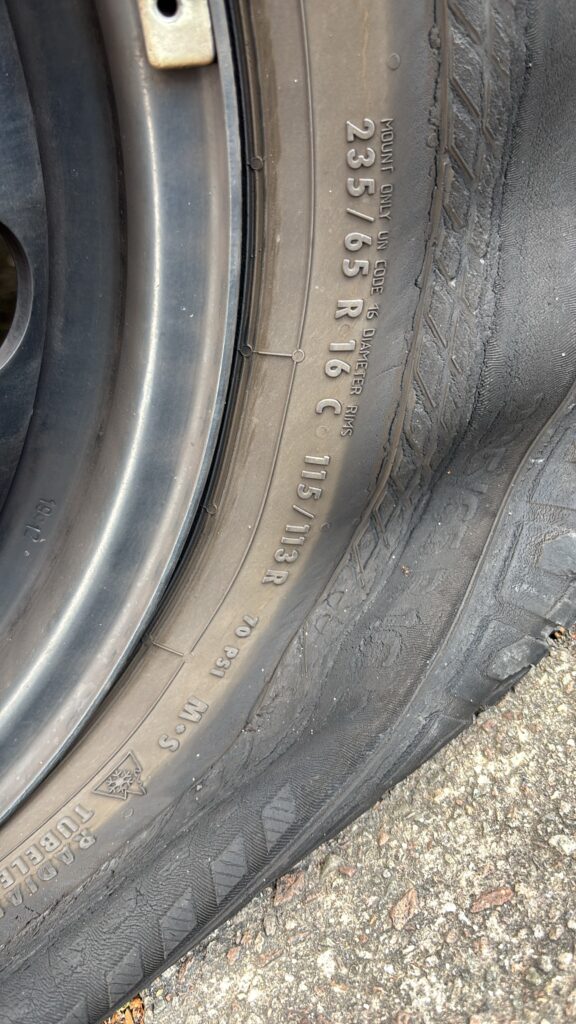
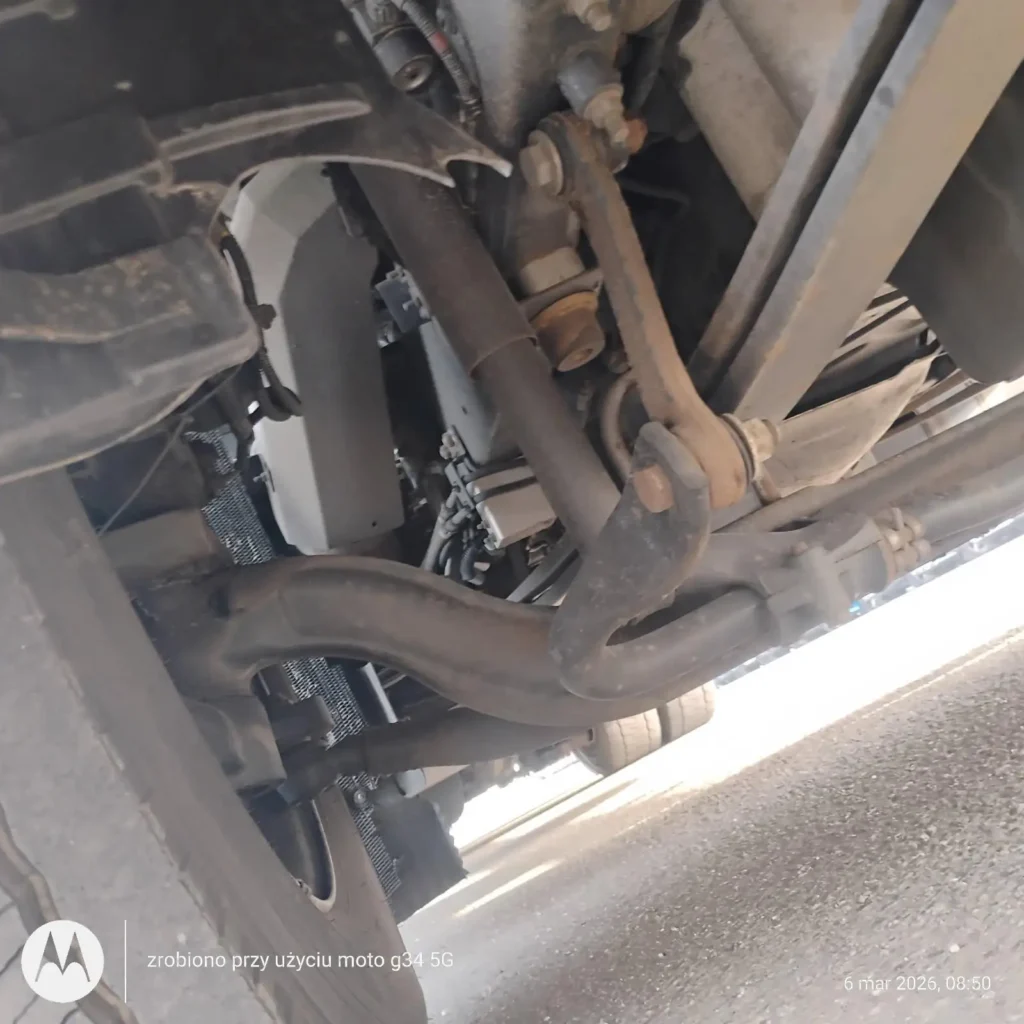
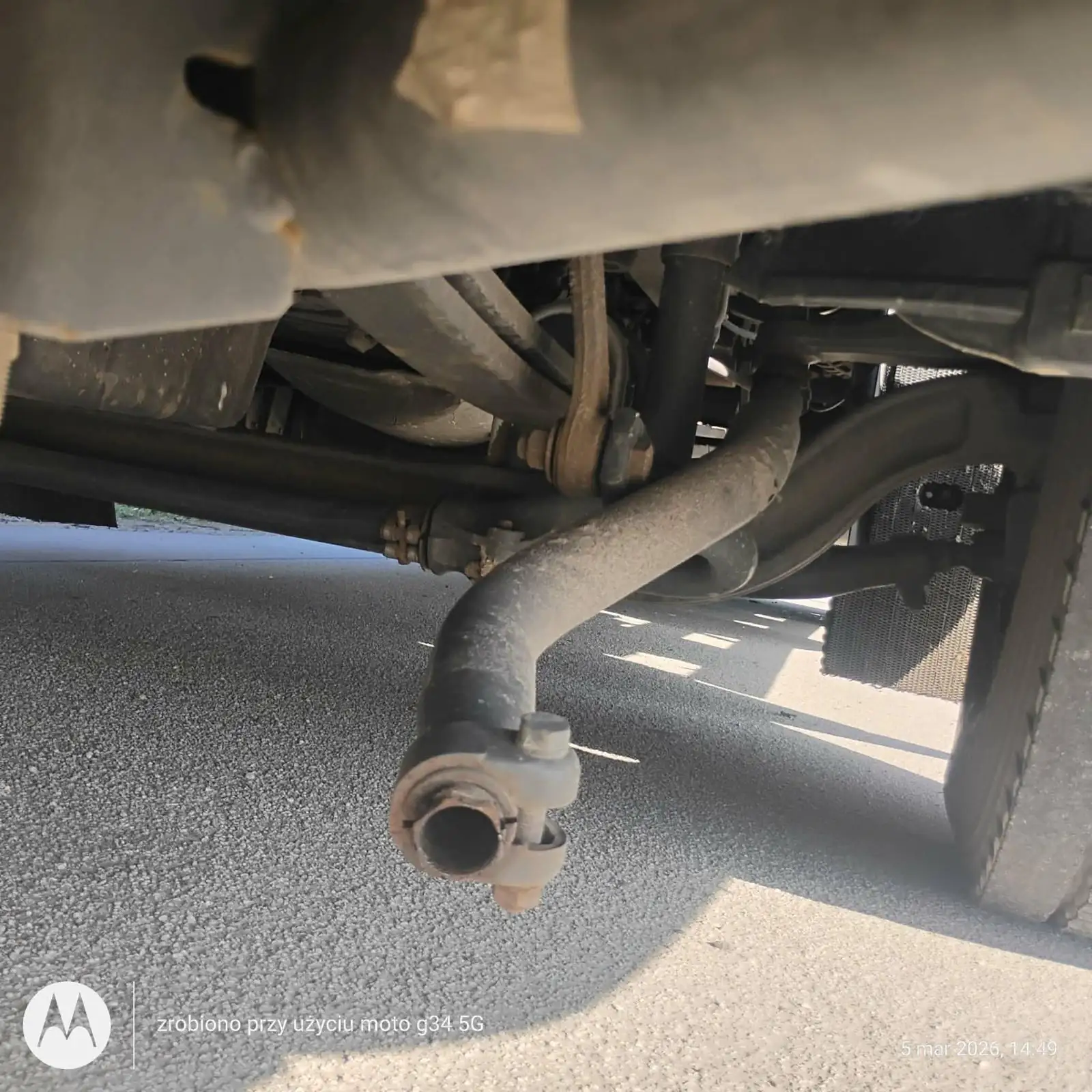
Photo caption (German): „Defekte Lenkstange bzw. Spurstangenkopf an einem LKW – mobile Reparatur durch LKWHelp24 auf der A8 bei Augsburg.”
The Emergency
The driver was travelling on the A8 near Augsburg, Bavaria, in daytime traffic when the steering began to feel loose. A short time later he noticed a knocking noise from the front end whenever he turned the wheel even slightly. He slowed down, moved onto the hard shoulder, and stopped the truck as soon as it was safe to do so.
This was the correct call. A failing track-rod end can go from “slightly loose” to “completely disconnected” within a few more kilometres, and at motorway speed that is not a risk worth taking. The driver contacted LKWHelp24’s 24-hour breakdown line at 09:10.
How Help Was Organised
LKWHelp24 operates a nationwide partner network of independent commercial-vehicle workshops and mobile mechanics across Germany. For a call from the A8 corridor near Augsburg, the dispatch team checked which certified partner in the Augsburg/Swabia area could reach the vehicle fastest.
The dispatch process followed the same structure used for every emergency call:
● Pinpoint the exact breakdown location using the caller’s description and, where available, GPS data ● Assess the fault description over the phone (loose steering, knocking noise, no drivability) to select a partner with the right tools and spare parts on board ● Identify the nearest available mobile commercial-vehicle mechanic in the Augsburg/Swabia region ● Confirm the estimated time of arrival with the driver and advise him to keep the hazard lights on and stay outside the vehicle, away from the carriageway ● Brief the partner mechanic on the reported symptoms before departure, so the correct diagnostic tools and a likely track-rod end were already anticipated
By 09:25 the partner mechanic was on the road, and the driver had a realistic arrival estimate rather than an open-ended wait.
The Situation On-Site
The mechanic arrived at 10:05. With the truck already safely positioned on the hard shoulder with hazard lights on, the first task was to confirm the vehicle was secure before anyone worked near live traffic.
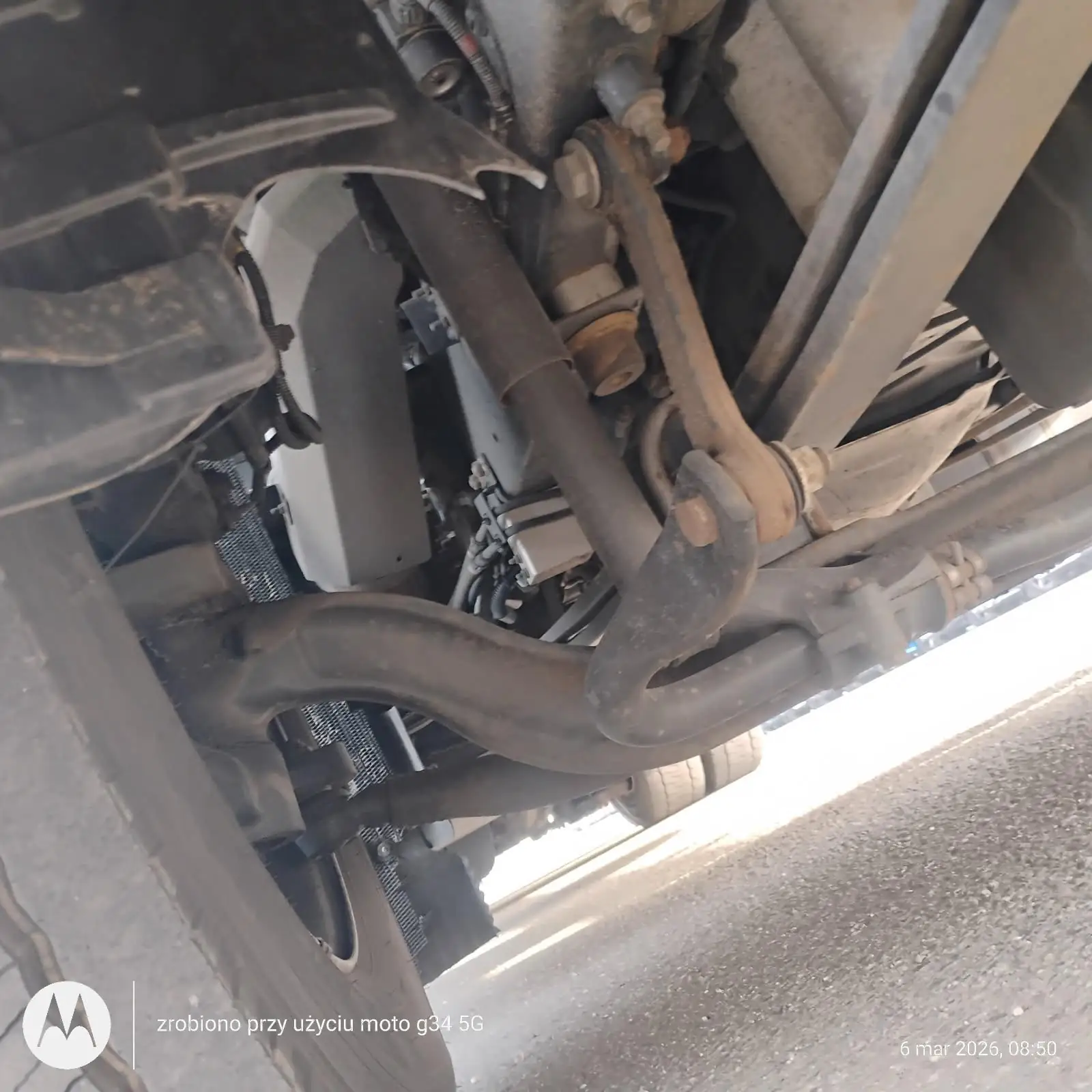
The diagnosis at 10:20 confirmed what the symptoms had suggested: the steering linkage on the front axle had a failed track-rod end. Looking from underneath, the ball joint housing showed visible play and the boot/gaiter had split, allowing the joint to wear rapidly and eventually come loose.
This is precisely why driving on would have been reckless. The track-rod end is not a supporting component; it is a direct link in the chain that turns the driver’s steering input into an actual change of direction at the wheel. Once that joint’s play increases beyond tolerance, or in a worse case separates entirely, the vehicle can:
- Wander unpredictably even with a straight steering wheel
- Pull sharply to one side under braking or acceleration
- Lose steering control entirely if the joint disconnects completely
Given the truck’s weight and the speed of A8 traffic, continuing the journey was not an option. The mechanic confirmed no secondary damage to the surrounding suspension or chassis components, which meant the repair could proceed as a straightforward, contained job rather than a wider suspension overhaul.
Step-by-Step: How the Repair Was Carried Out
Step 1 – Secure the vehicle. Hazard warning lights, a warning triangle, and safe positioning on the hard shoulder were checked and adjusted before any work began. Both the driver and the mechanic worked with their backs to the barrier where possible, away from the live carriageway.
Step 2 – Underbody diagnosis. The mechanic inspected the full steering linkage from underneath: the steering box output, the drag link, the track-rod end, and the ball joint itself. This confirmed the fault was isolated to the single track-rod end and ruled out damage to the steering rack, the opposite track rod, or the suspension arms.
Step 3 – Remove the defective part. With the front wheel raised slightly and the vehicle stabilised, the castle nut and split pin securing the ball joint were removed, and the worn track-rod end was separated from the steering arm and unthreaded from the drag link.
Step 4 – Fit the new part and secure to correct torque. A replacement track-rod end was fitted, threaded to the correct length as a starting reference, and torqued to the manufacturer’s specification. The ball joint was secured with a new castle nut and a fresh split pin, exactly as the original assembly required, so nothing was left to chance on a safety-critical fastener.
Step 5 – Rough tracking check, visual and function check, release. The mechanic carried out a rough check of the front-end tracking to confirm the wheel sat within a reasonable geometry range, tested the steering through full lock in both directions, and inspected the joint under load one more time. With everything confirmed sound, the truck was released to continue its journey at 11:10, with a clear recommendation to have a full wheel alignment carried out at a workshop as soon as practical.
Full Timeline
| Time | Phase | Action |
|---|---|---|
| 09:10 | Call received | Driver reports loose steering and knocking noise, A8 near Augsburg |
| 09:25 | Partner dispatched | Mobile commercial-vehicle mechanic assigned, ETA confirmed |
| 10:05 | On site | Mechanic arrives at the vehicle on the A8 |
| 10:20 | Diagnosis | Steering linkage inspected; track-rod end confirmed failed |
| 10:55 | Part replaced | Defective track-rod end removed, new part fitted and torqued |
| 11:10 | Function/visual check | Steering tested through full lock, joint and rough tracking checked |
| 11:10 | Released | Truck cleared to continue, wheel alignment recommended |
Total elapsed time from call to release: approximately two hours. Time actually spent on site working on the vehicle: about one hour and five minutes.
Cost
| Item | Price (EUR) |
|---|---|
| Call-out / 24-7 service | 180 |
| Diagnosis & labour on site | 160 |
| Spare part (track-rod end) | 110 |
| Sundries (split pin, castle nut, grease) | 40 |
| TOTAL | 490 |
What Drives the Price
The cost of a roadside steering repair reflects three things: the call-out itself (covering 24-hour availability and travel to the exact breakdown location), skilled diagnostic and repair labour carried out safely at the roadside rather than in a workshop bay, and the part itself plus the small consumables that a safety-critical steering joint requires by design, such as a new split pin and castle nut rather than reused fasteners.
Compared with the Towing Alternative
The alternative to a mobile repair would have been recovery of the truck to a workshop, most likely by flatbed given that the vehicle was not safely driveable with a failed track-rod end. Towing charges on a German motorway typically start well above the total cost of this repair once distance, waiting time, and the workshop’s own diagnostic and labour charges are added on top. In this case, a mobile mechanic who could carry the right part and complete the repair at the roadside meant the driver was back on his route within about two hours, at a total cost of 490 EUR, rather than losing the rest of the day to a tow and a workshop queue.
Why a Professional Service Is Essential
Steering components are not a place to cut corners, and they are certainly not a place for a driver to attempt a fix alone at the roadside. A few reasons stand out:
Driving on is not a viable gamble. Once a track-rod end shows play, the failure point is unpredictable. It might hold for another ten kilometres, or it might let go the moment the driver has to swerve to avoid something in the road. There is no safe way to estimate remaining life once the joint has started to wear through its boot.
Torque and fastening matter more than they look. The castle nut and split pin on a steering ball joint exist for one reason: to guarantee the joint cannot work loose under vibration and load. Fitting a track-rod end without torquing it to specification, or without a fresh split pin, defeats the purpose of the part entirely, regardless of how good the part itself is.
Rough tracking is not the same as a full alignment, and both matter. A rough check at the roadside confirms the truck is safe to drive to a workshop. It does not replace a proper wheel alignment, which corrects the precise geometry that affects tyre wear, fuel consumption, and long-term handling. Skipping that follow-up step, thinking the roadside fix is the end of the story, risks uneven tyre wear within a few thousand kilometres.
DIY steering repair on the hard shoulder carries its own risk. Working on the underside of a vehicle metres from moving traffic, without the right lifting equipment, torque tools, or experience with steering geometry, is dangerous for the person doing it and for anyone relying on the result afterwards.
Typical Breakdown Situations We Handle
Steering and chassis faults are one recurring category among the calls LKWHelp24 receives every day across Germany. Others include:
- Electrical faults that leave a truck immobilised or with warning lights that won’t clear
- Engine and cooling system failures, including hose and coolant leaks that force a stop before overheating causes further damage
- Trucks that need recovery rather than roadside repair, transported safely by flatbed to a workshop
- Full towing operations from breakdown location to a partner workshop when a repair on site isn’t possible
Whatever the fault, the priority is always the same: get a qualified technician or the right transport to the vehicle as fast as possible, and make an honest call on whether a roadside repair is appropriate or whether the vehicle needs to go to a workshop.
Prevention Tips
A track-rod end rarely fails without warning. A few habits catch the early signs before they turn into a roadside emergency:
- Watch for steering play. If the steering wheel has noticeably more free movement before the wheels respond, or if the truck wanders slightly on a straight road, get the steering linkage checked before the next long trip.
- Check the gaiters/boots regularly. The rubber boot over a ball joint keeps grease in and dirt out. A split boot lets grit into the joint and accelerates wear dramatically; this is often the first visible sign of trouble during a routine inspection.
- Listen for knocking over bumps or on lock. A knock from the front end when turning, or over uneven surfaces, is a classic symptom of a worn track-rod end or ball joint and should not be ignored.
- Keep to inspection intervals. Commercial vehicles covering high annual mileage need their steering and chassis components inspected more frequently than the standard service interval assumes. A five-minute check under the front end at each service can catch a failing joint long before it becomes a breakdown.
- Have a wheel alignment done after any steering component replacement. Even a rough on-site check is only a stopgap. Proper geometry protects tyre life and keeps the vehicle tracking straight under load.
Steering Linkage, Chassis, and Mobile Repair: What Fleet Operators Should Know
For fleet operators running heavy trucks across Germany, steering linkage failures like this one are a recurring cost if preventive inspection is skipped. A track rod end failure rarely happens without prior warning signs, but those signs are easy to miss on a vehicle covering long daily distances. Building a habit of checking the steering linkage, ball joints, and gaiters at every service interval, alongside the rest of the commercial vehicle chassis, is far cheaper than an unplanned roadside steering repair and the resulting delay to a delivery schedule.
When a breakdown does happen, a mobile commercial vehicle mechanic who can reach the vehicle directly, whether that’s a truck breakdown on the A8 near Augsburg or a truck breakdown assistance call anywhere else in the country, is usually the fastest way back on the road. For manufacturer-level guidance on steering and chassis systems, ZF publishes detailed technical background on modern steering and chassis technology at zf.com.
Why LKWHelp24
LKWHelp24 exists for exactly this kind of situation: a driver stranded with a safety-critical fault, needing a fast, correct decision about whether the vehicle can be repaired on site or needs to be recovered. A few things set the service apart:
- 24 hour breakdown service, every day of the year, across all of Germany, not limited to business hours
- A certified partner network of mobile commercial vehicle mechanics and workshops, so the nearest qualified technician is dispatched rather than the nearest available one regardless of skill match
- Transparent, itemised pricing agreed and confirmed before work starts, as shown in the cost table above
- Multilingual support, useful for international drivers and fleets operating across borders
- Honest recommendations, including telling a driver when a roadside repair is genuinely appropriate and when the vehicle should go to a workshop instead, as with the wheel alignment recommendation in this case
Summary
- Vehicle: Heavy truck (Scania R class, 7.5 t+), front axle
- Fault: Worn/broken track-rod end, steering ball joint failure
- Location: A8 near Augsburg, Bavaria
- Response time: 15 minutes to dispatch, on site within 55 minutes of the call
- Total time, call to release: Approximately 2 hours
- On-site working time: Approximately 1 hour 5 minutes
- Total cost: 490 EUR
- Secondary damage: None
Request Emergency Assistance Now
If your truck develops a steering fault, unusual noise, or any handling problem anywhere in Germany, don’t take the risk of driving on. Call LKWHelp24 immediately.
Phone: +49 160 5753826 Website: lkwhelp24.com Available 24/7 across all of Germany
You might also be interested in
- Truck Breakdown Erfurt: Actros Electrical Fault Repair
- Engine Breakdown A5 Frankfurt: Coolant Hose Failure
- Van Recovery A4 Bautzen: Flatbed Transport
- Truck Towing Regensburg: Breakdown to Workshop
Further reading: For more on how a mobile truck tyre change works, see our truck tyre repair guide, our emergency tyre service overview and our service page. Technical background on commercial vehicles is available from MAN Truck & Bus.
Further reading: https://lkwhelp24.com/en/truck-tyre-pressure/, https://lkwhelp24.com/en/truck-tyre-repair/. Continental.