Skip to content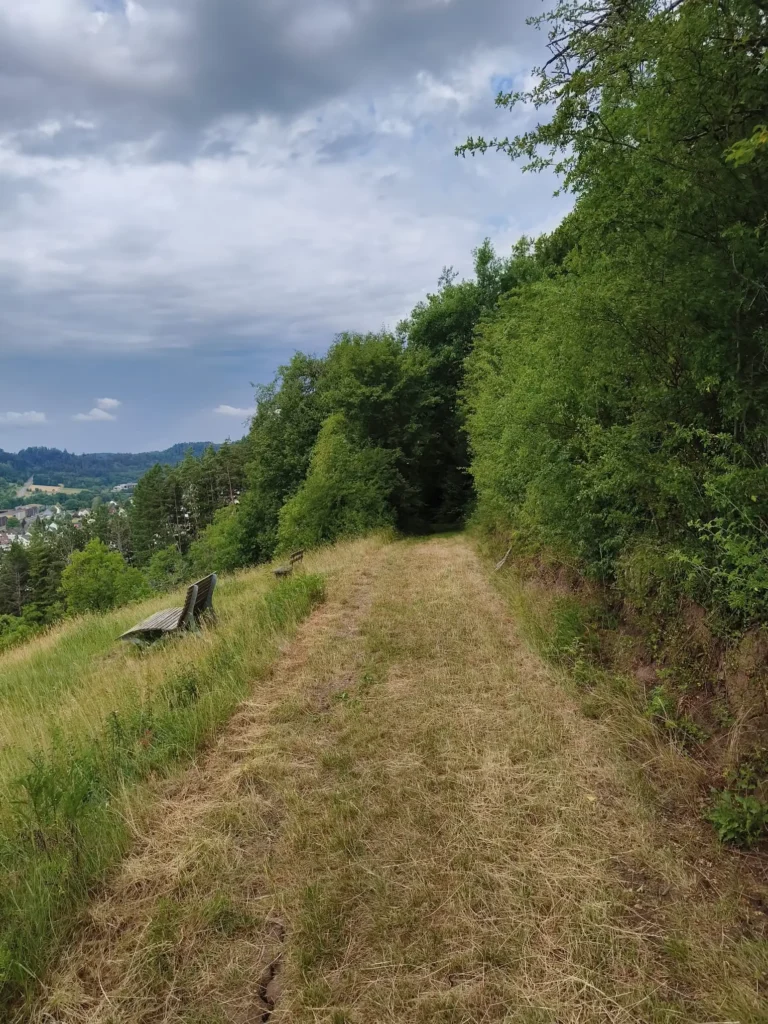
Getting a heavy commercial vehicle stuck on a narrow mountain track is one of those situations that turns a routine delivery run in the Bavarian foothills into a genuine emergency within seconds. One wrong angle on a loose gravel bend, a soft verge that gives way under the front wheel of a semi-trailer, and suddenly a perfectly healthy 40-tonne truck is pinned against a slope with a wheel hanging over the edge. No engine fault, no blown tyre, nothing mechanically broken — and yet the vehicle cannot move an inch under its own power.
This is exactly what happened to a MAN TGS tractor unit with a semi-trailer on a steep access track above Weilheim in Oberbayern, close to the B2. It is a scenario we are called out to more often than most fleet operators expect, particularly around the foothills of the Alps, where narrow mountain roads and unpaved access routes are part of everyday driving for hauliers reaching remote sites. When a heavy vehicle leaves the compacted surface on ground like this, self-recovery is rarely possible and often dangerous — which is exactly why LKWHelp24 exists: to get a certified recovery partner with a winch-equipped vehicle to the scene fast, safely, and at a transparent price.
Below is the full breakdown of what happened, how our partner network responded, what recovery with a winch actually involves, and why calling a professional service rather than attempting a DIY tow is almost always the right call on terrain like this.
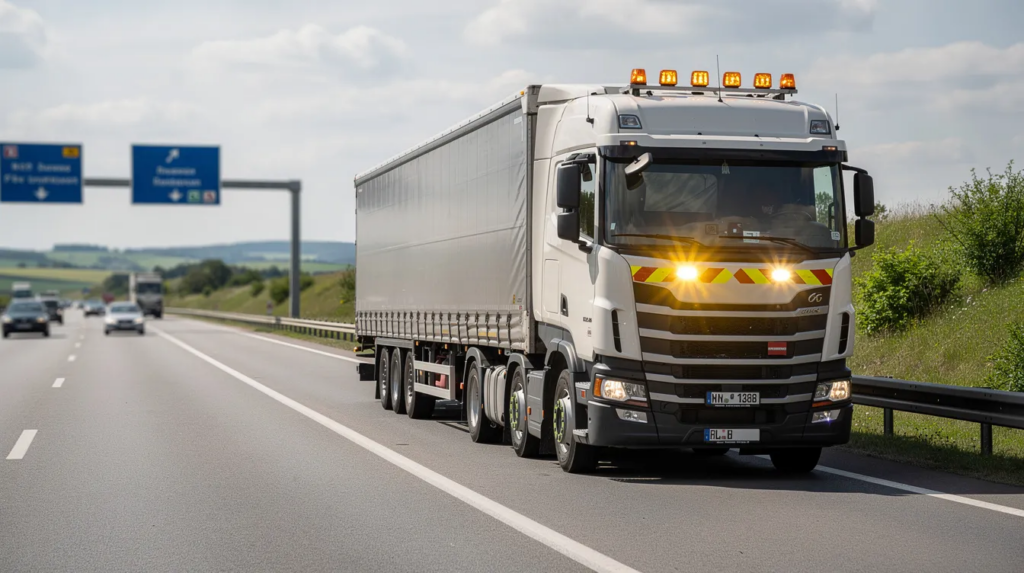
Truck winched clear – stuck on a mountain track near Weilheim, recovery by LKWHelp24.
The Emergency: A Truck Stuck on a Narrow Mountain Track near Weilheim
The vehicle involved was a white MAN TGS tractor unit with a semi-trailer, operated by a haulage company based in Oberbayern and travelling to a job site off the beaten path. The driver had taken a narrow access track — the kind of unpaved, single-lane route common throughout Oberbayern — when the front wheel drifted off the compacted path and onto the soft shoulder above a drop while passing an oncoming vehicle.
Within moments, the tractor unit had slid sideways into the slope and undergrowth beside the track, with the front wheel resting right at the edge of the embankment. The vehicle was not damaged and the engine ran fine, but it was completely immobilised: any attempt to reverse or drive forward under its own power risked pulling the front wheel further over the edge. This was not a case for a simple tow rope. It needed a controlled, winch-based recovery, with equipment rated for the weight of a fully loaded semi-trailer, carried out by someone who does this for a living.
The location — a steep access track near the B2 close to Weilheim — added its own complications. Recovery vehicles cannot simply reverse up to a stuck truck on this kind of terrain; access has to be planned, anchor points identified, and the whole operation carried out with the same caution you would use on any slope where a wrong move could send a heavy vehicle further downhill rather than back onto solid ground.
How Help Was Organised
As soon as the call came in, LKWHelp24’s dispatch team went into action. Our strength is not that we own every recovery vehicle in Germany — it is that we run a nationwide network of certified partners who do, and we know exactly which of them can reach a specific location, with the right heavy-recovery equipment, in the shortest possible time.
The process looked like this:
– Call received and case logged immediately, with the exact location pinpointed via the driver’s description and coordinates
– Nearest available recovery partner in the Weilheim/Oberbayern region identified and checked for winch-equipped heavy recovery capability
– Partner dispatched with a confirmed ETA relayed back to the driver so they knew exactly what to expect and when
– Continuous coordination between dispatch, the partner crew and the driver throughout the callout
– On-site briefing covering terrain, angle of the vehicle and the safest recovery method before any equipment was deployed
Getting the correct vehicle moving towards the scene within minutes of the first call is the whole point of a dispatch network like ours.
The Situation On-Site: Why This Wasn’t a Job for a Standard Tow Rope
When the recovery crew arrived at 14:00, the picture on the ground confirmed what dispatch had already assessed over the phone: this was not a straightforward pull-out. The tractor’s front wheel was resting close to the edge of a drop into a wooded slope, with the vehicle’s considerable weight partially transferred onto soft ground rather than the compacted track surface.
- Uncontrolled pulling risk. Attaching a standard tow rope and pulling from a moving vehicle can jerk a 40-tonne combination sideways rather than backwards, which on a slope like this could easily push it further off the track.
- Load distribution on soft ground. With one wheel already off the compacted surface, sudden acceleration transfers even more weight onto the unsupported side, increasing the risk of tipping.
- No stable anchor for a simple pull. A winch allows load to be applied gradually and under full control, with the recovery vehicle itself acting as a fixed, stable anchor point.
- Terrain visibility. On a wooded slope, ground conditions immediately beneath and behind the stuck wheel are not always visible from the cab, meaning any recovery attempt has to be guided step by step.
Step-by-Step: How the Recovery Was Carried Out
Step 1 — Securing the scene. Before any equipment was touched, the crew secured the immediate area and positioned warning signage for any other track users.
Step 2 — Planning the recovery line. The team identified the safest recovery path back onto the compacted track and confirmed a stable position from which to winch.
Step 3 — Attaching the winch. Proper anchor points on the tractor’s chassis were identified and the winch cable was attached correctly, avoiding contact with anything that could fail under load.
Step 4 — Controlled extraction. The winch was operated slowly and steadily, drawing the truck back onto solid ground metre by metre. A second crew member monitored the wheels and undercarriage throughout.
Step 5 — Post-recovery inspection. Once back on the compacted track, the crew carried out a visual check of the suspension, tyres, fifth wheel coupling and underbody before confirming the vehicle was safe to drive.
Only after this final check was the truck driven, under its own power, back onto the safe stretch of road near the B2 — with no need for onward transport, since the vehicle was entirely roadworthy once free.
Full Timeline
| Time | Phase | Action |
|---|---|---|
| 13:10 | Call received | Driver reports truck stuck on mountain track near Weilheim |
| 13:22 | Partner dispatched | Recovery partner confirmed, ETA given |
| 14:00 | Arrival on-site | Crew reaches the location near the B2 |
| 14:10 | Scene secured | Recovery plan agreed, area made safe |
| 14:30 | Winch attached | Anchor points set, winch cable connected |
| 14:45 | Vehicle recovered | Truck winched back onto the compacted track |
| 14:55 | Final check | Suspension/tyre/underbody inspection, released on safe road |
Total time from call to vehicle back on the road: approximately 1 hour 45 minutes — of which roughly 55 minutes was spent on-site.
Cost Breakdown
| Item | Price (EUR) |
|---|---|
| Daytime callout (from 290 EUR) | 290 |
| Winch recovery (heavy commercial vehicle) | 310 |
| On-site securing and recovery work | 120 |
| TOTAL | 720 EUR |
Our daytime callouts start from 290 EUR; night, Sunday and public-holiday callouts start from 549 EUR; mobile tyre service for heavy commercial vehicles from size R17.5 starts from 315 EUR. We always confirm a fixed price before work begins.
Why a Professional Recovery Service Is Essential
- Vehicle damage. Pulling from the wrong point can bend a chassis rail or tear a tow eye off a vehicle this heavy.
- Worsening the position. An uncontrolled pull can push the truck further off the track rather than back onto it.
- Personal injury. Snapped straps and sudden vehicle movement are a genuine hazard to anyone standing nearby.
- Legal and liability exposure. An amateur recovery attempt that damages third-party property can leave the driver or operator liable for costs well beyond the original recovery bill.
Typical Breakdown and Recovery Situations We Handle
- Winch recovery for heavy trucks stuck in mud, soft verges, ditches or off-track terrain — see our recent Actros recovery from waterlogged ground
- Heavy recovery for HGVs, coaches and articulated vehicles following an accident or breakdown
- Truck breakdown assistance on motorways, federal roads and rural routes
- Mobile tyre service for heavy commercial vehicles from R17.5, starting from 315 EUR
- Transport on a low-loader when a vehicle cannot be driven after recovery
- Recovery for horseboxes and livestock transporters from 7.5 t
- 24/7 towing service for heavy vehicles immobilised by mechanical faults far from a workshop
Prevention Tips for Drivers on Mountain and Forest Access Tracks
- Check the width and surface condition of an access track before committing to it with a heavy vehicle
- Slow right down on loose gravel or soft-edged bends, where a wheel can drift onto unstable ground before the driver even notices
- Keep a wide margin from the edge of any track running alongside a slope, particularly with a long semi-trailer combination
- If a wheel does leave the compacted surface, stop immediately rather than trying to steer back
- Save the LKWHelp24 number before setting off into remote or mountainous areas where mobile signal can be patchy
Fleet Maintenance and Tyre Considerations for Off-Road and Mountain Routes
For fleet operators covering mountain routes, tyre choice and condition play a bigger role in avoiding incidents like this than many drivers assume. Brands such as Michelin, Continental and Goodyear all produce all-terrain and heavy-commercial tyre ranges designed to hold their line better on unsealed surfaces. Scheduling tyre checks before each season, combined with a saved emergency contact for recovery, is one of the cheapest ways to keep unplanned downtime to a minimum.
LKWHelp24: Your Truck and Heavy Vehicle Emergency Partner
- Available 24/7, every day of the year, across the whole of Germany
- Certified partner network covering winch recovery, heavy recovery, towing, mobile tyre service and roadside repairs
- Transparent, fixed pricing, agreed before work begins — daytime callouts from 290 EUR, night/Sunday/holiday from 549 EUR, tyre service from R17.5 from 315 EUR
- Multilingual dispatch and support in German, English, Polish and Russian
- Fast response times, typically 30 to 60 minutes
Summary
- Vehicle: MAN TGS tractor unit with semi-trailer
- Location: Mountain access track near Weilheim, Oberbayern, close to the B2
- Problem: Vehicle left the track surface and became stuck on a slope, front wheel at the edge of a drop
- Response time: Call to partner on-site — 50 minutes
- Total time: 1 hour 45 minutes, call to vehicle back on the road
- On-site recovery time: Approximately 55 minutes
- Cost: 720 EUR total, fixed price confirmed before work began
- Secondary damage: None — vehicle inspected and released fully roadworthy
Request Emergency Assistance Now
If your truck or heavy commercial vehicle is stuck, immobilised or damaged anywhere in Germany, call or WhatsApp +49 160 5753826 or visit lkwhelp24.com. Available 24/7 across all of Germany, in German, English, Polish and Russian.
You might also be interested in
- Heavy Recovery on the A8 near Stuttgart: Scania Recovered from a Car Transporter
- Truck Recovery from Mud: Freeing an Actros from Waterlogged Ground
- Coach Transport on a Low-Loader After a Mountain Recovery
- Horsebox Breakdown on the A8 near Munich: Recovery in Under Two Hours
Further reading: For more on how a mobile truck tyre change works, see our truck tyre repair guide, our emergency tyre service overview and our service page. Technical background on commercial vehicles is available from MAN Truck & Bus.
You might also be interested in
- Truck Breakdown Assistance Near Erfurt: How LKWHelp24 Got a Mercedes-Benz Actros Back on the Road in 1 Hour 45 Minutes
- Truck Tyre Service Near Me: How LKWHelp24 Replaced a Blown Drive-Axle Tyre in 1 Hour 40 Minutes on the A1 near Bremen
- Mobile Tyre Service for Distribution Trucks: 12-Tonne LKW Back on the Road in 1 Hour 36 Minutes After a Blowout on the A5 Near Homberg (Efze)
- Truck Tyre Service Near Me at Night: How LKWHelp24 Got a Semi-Truck Back on the A61 near Koblenz in 1 Hour 50 Minutes
- Steer-Axle Tyre Failure on the A20 Near Bad Segeberg: DAF XF 480 Back on the Road in 1 Hour 45 Minutes