Skip to content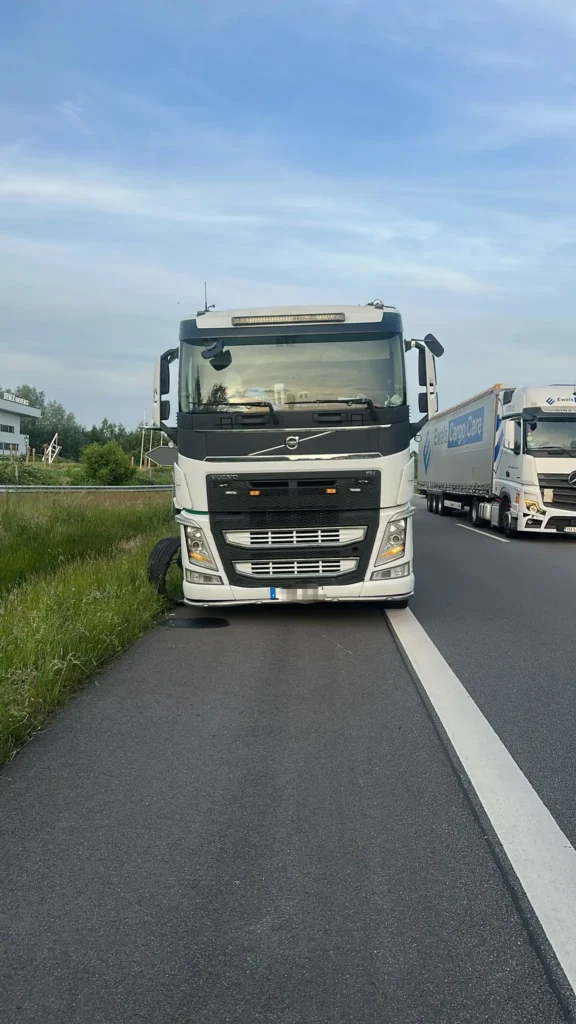
A steer axle tyre failure is not the same kind of problem as a flat on a trailer wheel. When the front tyre of a fully loaded semi-trailer tractor lets go at motorway speed, the driver loses steering feedback in an instant, and the margin for error drops to almost nothing. That is exactly what happened to a Volvo FH driver on the A9 near Ingolstadt in the early hours of a weekday morning, heading south towards Munich.
This case study walks through what happened, how LKWHelp24’s partner network responded, and what the whole recovery actually cost, minute by minute and euro by euro. If you drive for a living or manage a fleet that runs the A9 corridor between Nuremberg and Munich, the story will feel familiar. Tyre failures on the steer axle are one of the most common reasons for a roadside call-out in Bavaria, and they are also one of the situations where calling a professional mobile tyre service near me beats any DIY fix by a wide margin.
We publish these accounts for a simple reason: transparency builds trust. Drivers want to know what to expect before they dial a number in the dark, standing on a hard shoulder with lorries thundering past at 130 km/h. So here is the full breakdown, timeline included, cost included, nothing hidden.
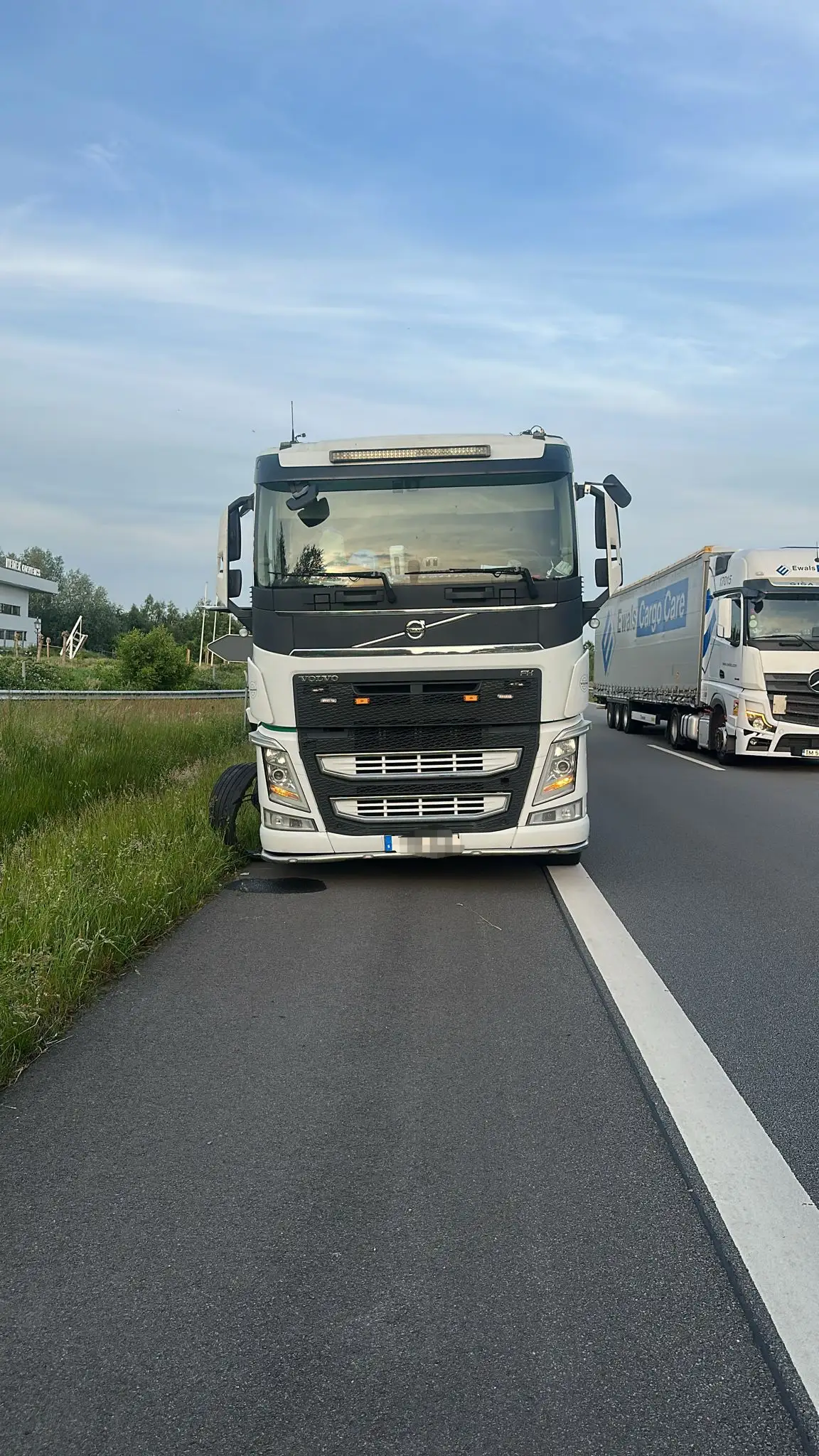
Volvo FH with steer-axle tyre damage on the A9 near Ingolstadt – mobile truck tyre service by LKWHelp24.
The Emergency: A9 Hard Shoulder, Direction Munich
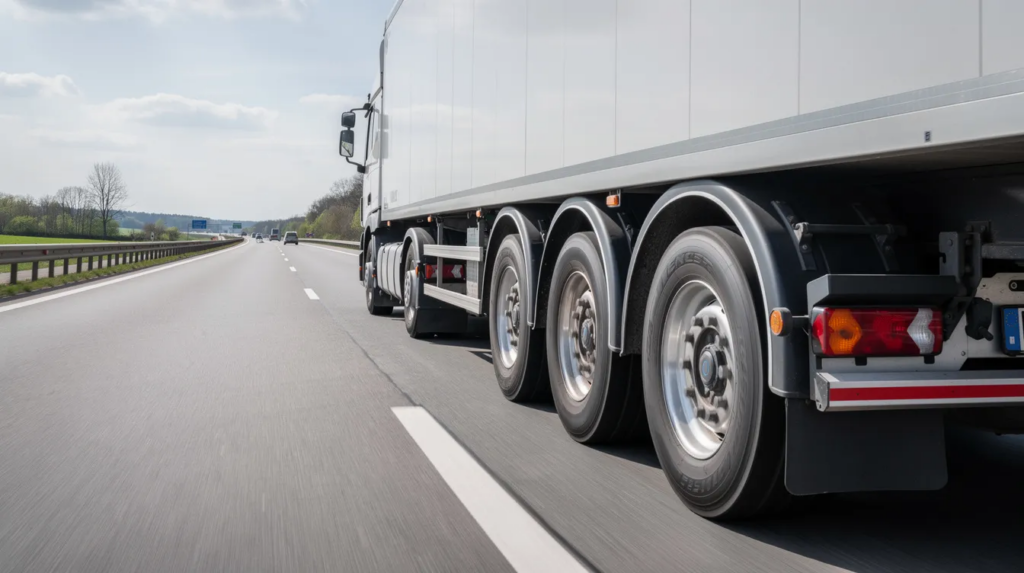
The vehicle involved was a white Volvo FH tractor unit running long-haul freight, coupled to a semi-trailer. Somewhere on the stretch of the A9 near Ingolstadt, in the direction of Munich, the tyre on the front left steer axle failed. The driver felt the pull immediately, the classic symptom of a steer tyre going down: the truck wants to drift, the wheel fights back, and every second behind it matters.
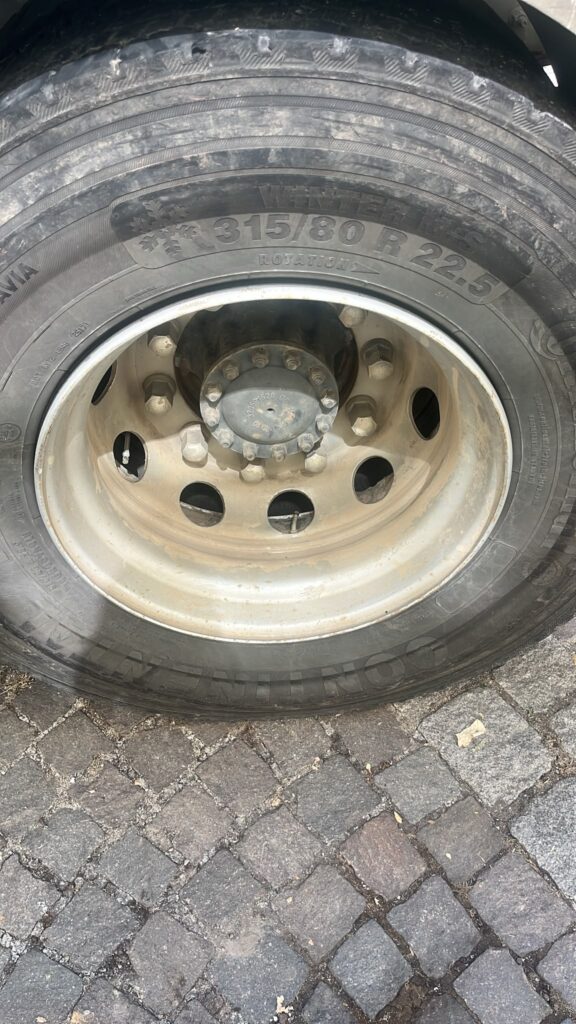
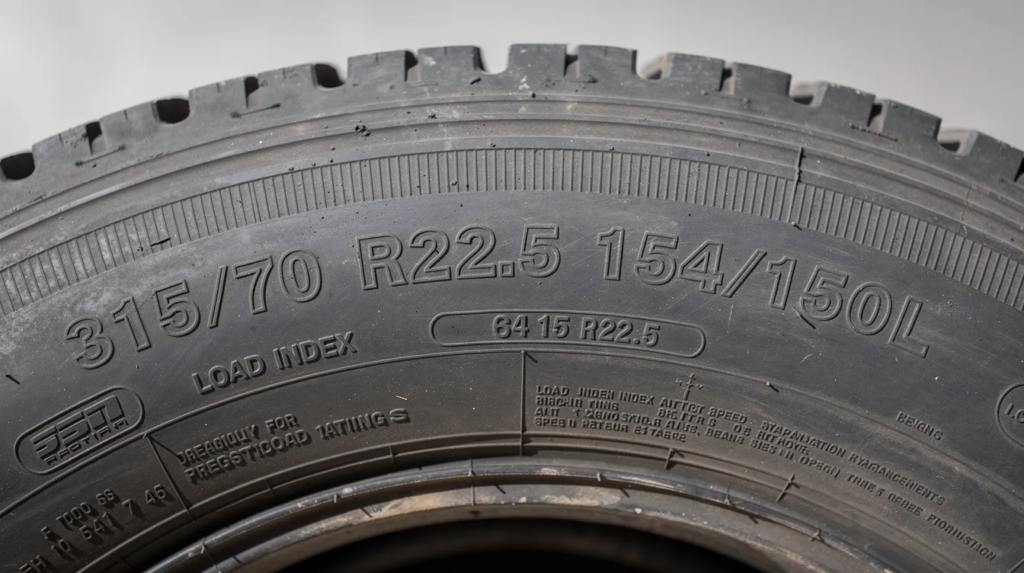
He did the right thing. Rather than trying to limp further down the motorway on a collapsing front tyre, he brought the Volvo FH to a stop on the hard shoulder, switched on the hazard lights, and got clear of the carriageway before calling for help. The specification on the wheel was 315/70 R22.5, standard fitment for a steer axle on a tractor of this class, and by the time our dispatcher had the details, the tyre was already flat and unusable.
Traffic on the A9 doesn’t slow down for a stationary lorry on the shoulder. Every truck and car passing at full motorway speed created a wall of turbulence and noise a metre or two from where the driver was standing, which is precisely why speed of response matters as much as the quality of the repair itself.
How Help Was Organised
LKWHelp24 doesn’t send out a single roaming van and hope it happens to be nearby. We run a nationwide network of vetted truck tyre and breakdown partners across Germany, which means that whichever motorway you break down on, there is very likely a partner workshop or mobile unit within a short drive.
For this call, here is what happened behind the scenes:
- The driver’s call was logged and the exact breakdown location on the A9 near Ingolstadt was confirmed using landmark and kilometre-post information.
- Our dispatch team immediately identified the nearest available LKW tyre partner covering the Ingolstadt area and checked stock for 315/70 R22.5 steer axle tyres.
- The partner was briefed on vehicle type (Volvo FH tractor unit), axle position (steer, front left), and tyre size, so the mobile unit rolled out with the correct replacement already loaded.
- An estimated time of arrival was given to the driver so he knew roughly how long he’d be standing on the hard shoulder.
- The partner crew drove directly to the coordinates and confirmed on-site arrival to dispatch.
This kind of pre-briefing is what separates a fast recovery from a slow one. Turning up at a breakdown with the wrong tyre size, or without the right jacking equipment for a steer axle, wastes precious minutes that add up on a live motorway.
The Situation On-Site
Steer axle tyre work is not something you improvise. Unlike a drive axle or trailer axle, where a lorry usually has a second wheel on the same side sharing the load, a steer axle has only one tyre per side. If that tyre is gone, the vehicle cannot be driven at all, not even a few metres to a safer spot, without risking damage to the rim, the hub, or the steering geometry.
The technician assessed the scene and the vehicle before touching anything. Key checks included:
- Confirming the truck was fully secured on the hard shoulder with hazard triangles and lights positioned according to German traffic safety regulations, since working this close to live motorway traffic carries real risk.
- Inspecting the wheel arch and suspension components around the failed tyre for any sign of secondary damage from the blowout, which is common when a steer tyre disintegrates at speed.
- Checking the rim itself for cracks, deformation or bead damage before fitting a new tyre. There was none here, so the original rim could be reused.
- Verifying the correct inflation target for a steer axle tyre of this specification, which for the 315/70 R22.5 on this Volvo FH sits around 8.5 bar, well above the pressures most car drivers are used to seeing.
Steer axle tyres carry the full weight of the front of the vehicle plus the leverage forces of steering, so under-inflation or an incorrectly torqued wheel here is genuinely dangerous, not just a comfort issue.
Step-by-Step: The Repair
Step 1 — Stabilise the vehicle. The truck was already stopped and braked, so the technician’s first job was to secure the scene: warning triangle placed well back from the vehicle, hazard lights confirmed active, high-visibility clothing on before anyone stepped near the carriageway edge.
Step 2 — Lift the axle. A hydraulic jack rated for the axle weight of a loaded Volvo FH tractor was positioned at the correct jacking point beneath the steer axle, and the wheel was raised clear of the road surface.
Step 3 — Remove the damaged wheel. Wheel nuts were released using an impact wrench, the failed 315/70 R22.5 tyre was pulled from the hub, and both the rim and the hub face were inspected and cleaned before fitting the replacement.
Step 4 — Fit and inflate the new tyre. A fresh 315/70 R22.5 tyre was mounted, seated on the rim, and inflated to the specified 8.5 bar for this axle position and load.
Step 5 — Torque and final check. Wheel nuts were tightened in the correct sequence, working across the wheel in a star pattern rather than round in a circle, to seat the wheel evenly on the hub and avoid warping the disc. Torque values were checked against manufacturer spec, and a final visual and pressure check was carried out before the truck was cleared to move.
Total time from the technician’s arrival on scene to the vehicle being roadworthy again was roughly 55 minutes, a pace only achievable with the right kit already on the van and a crew that has done this exact job hundreds of times before.
Full Timeline
| Time | Phase | Action |
|---|---|---|
| 06:20 | Call received | Driver reports steer axle blowout, A9 near Ingolstadt, direction Munich |
| 06:32 | Partner dispatched | Nearest available LKW tyre partner briefed and given ETA |
| 07:10 | Arrival on site | Partner crew reaches the vehicle on the hard shoulder |
| 07:18 | Vehicle secured | Truck stabilised, jacked, ready for wheel removal |
| 07:38 | Old tyre removed | Damaged 315/70 R22.5 dismounted, rim inspected |
| 07:56 | New tyre fitted | Replacement mounted and inflated to 8.5 bar |
| 08:06 | Torque check complete | Wheel nuts torqued in star pattern, final inspection |
| 08:09 | Vehicle roadworthy | Volvo FH cleared to re-join traffic |
Total elapsed time: approximately 1 hour 49 minutes from first call to the truck being back on the road, with the on-site repair itself taking around 55 minutes.
Cost Breakdown
| Item | Price (EUR) |
|---|---|
| Call-out / 24-hour motorway emergency service | 190 |
| Tyre 315/70 R22.5 (Continental Conti Hybrid HS3) | 330 |
| Fitting and balancing on site | 90 |
| Old tyre disposal | 20 |
| TOTAL | 630 EUR |
A few things shape the final figure on jobs like this one. Motorway call-outs cost more than yard or depot work because of the extra logistics, the safety equipment required to work beside live traffic, and the fact that a mobile unit has to carry a wide range of stock rather than pulling from a fixed warehouse. Steer axle tyres from premium manufacturers such as Continental, Michelin or Goodyear also sit at the upper end of the price range compared with budget trailer tyres, precisely because they’re engineered for the steering and braking loads a front axle has to handle.
For comparison, calling a flatbed recovery truck to transport the Volvo FH to the nearest depot for a tyre change would typically run well beyond this figure once you factor in transport, lost driving hours, and the knock-on delay to the delivery schedule. A mobile fix on the hard shoulder, done properly, is very often the cheaper and faster option.
Why a Professional Service Is Essential
Some drivers are tempted to attempt a temporary fix themselves, particularly if they’re carrying a spare or think they can nurse the truck to the next exit. On a steer axle, this is a genuinely bad idea, and here’s why:
- A steer axle tyre supports the full steering geometry of the vehicle. Driving even a short distance on a flat or badly damaged tyre can bend the rim, damage the wheel bearing, or throw the alignment out entirely.
- Jacking a fully loaded tractor unit on the hard shoulder of a live motorway without the right equipment, training, and safety positioning is dangerous, both to the driver and to passing traffic.
- Wheel torque on a steer axle has to be correct and applied in sequence. An unevenly tightened wheel can work loose at speed, which is one of the more serious failure modes on a motorway.
- Roadside tyre pressures for steer axle applications, often 8.5 bar or higher, require calibrated equipment. Guessing, or using a pump designed for a passenger car, isn’t good enough.
- Standing beside a stationary HGV on the hard shoulder of the A9 is itself a hazard. Professional technicians are trained and equipped for exactly this kind of roadside exposure; most drivers are not.
Typical Breakdown Situations We Handle
LKWHelp24’s partner network deals with the full range of HGV roadside emergencies across Germany, not just tyre blowouts. Common call-outs include:
- Steer axle and drive axle tyre failures on motorways including the A9, A8, A3 and A6 in Bavaria
- Trailer tyre blowouts and multi-wheel damage on long-haul routes
- Battery and electrical failures leaving a truck unable to start
- Puncture repairs that can be handled on site without a full tyre replacement
- Wheel bearing and hub issues detected before they cause a full breakdown
- Recovery and towing coordination when a repair on site isn’t possible
- Support for buses, refrigerated trailers, tankers, and construction vehicles alongside standard tractor-trailers
Whatever the make, whether it’s a Volvo FH, a Mercedes Actros, a Scania or a MAN, the priority is always the same: get the driver safe, get the vehicle assessed properly, and get it back on the road with the minimum possible delay.
Prevention Tips for Drivers and Fleets
Steer axle failures rarely come without warning if you know what to look for. A few habits go a long way toward avoiding a repeat of this scenario:
- Check tyre pressure on all axles at the start of every shift, not just when something looks obviously wrong. Steer axle tyres in particular lose pressure gradually before they fail suddenly.
- Look for uneven wear patterns during walkaround checks. Cupping, feathering or one-sided wear on a steer tyre often points to alignment or suspension issues that will eventually cause a blowout.
- Keep an eye on tyre age, not just tread depth. Rubber compounds degrade over time even on tyres that look fine visually, and older steer axle tyres are more prone to sudden failure at speed.
- Avoid mixing tyre brands or tread patterns across a steer axle pair. Matched tyres behave predictably; mismatched ones can create handling issues that mask an underlying problem.
- Have fleet vehicles inspected on a fixed schedule rather than only reactively. A tyre that’s marginal in the depot is far safer to replace there than to gamble on it lasting another 500 km on the autobahn.
Fleet Maintenance and Tyre Options for Steer Axles
For fleet operators running regular routes on corridors like the A9, the choice of steer axle tyre brand matters more than many managers assume. On this job, the driver’s Volvo FH was fitted with a Continental Conti Hybrid HS3, a tyre designed specifically for the mixed regional and long-haul use that’s common on German motorways, offering a balance of mileage, wet grip and steering precision.
Where stock allows, our partners also carry Michelin X Line and Goodyear KMAX S as alternatives for steer axle applications, both well regarded across German fleets for consistent wear and predictable handling under load. Michelin’s X Line range tends to be favoured by operators prioritising total mileage and fuel efficiency, while Goodyear’s KMAX S is often chosen for its wet-weather steering performance, a genuine consideration given how much of the year German motorways see rain.
Fleet managers running multiple Volvo FH units, or mixed fleets including Scania and MAN tractors, often set up standing arrangements with LKWHelp24 so that recurring breakdown coverage, tyre stock preferences and invoicing are all agreed in advance. This cuts the decision-making time down to almost nothing when a driver calls in from the roadside, because the dispatcher already knows which brand, which supplier terms, and which billing process to follow.
LKWHelp24: Your Truck Emergency Partner
We built LKWHelp24 around one idea: a broken-down truck driver, alone on a German motorway at any hour of the day or night, needs a fast answer from someone who actually knows what they’re doing. That’s the whole business model.
What that means in practice:
- 24/7 dispatch, every day of the year. A steer axle blowout doesn’t check the clock, and neither do we.
- A vetted partner network across all of Germany. Rather than one central depot, we work with certified LKW tyre and breakdown specialists positioned across the country, which is how a partner could reach the A9 near Ingolstadt within 40 minutes of the initial call.
- Transparent pricing. The cost table above is exactly what the driver was told before work began. No surprises on the invoice.
- Multilingual support. Long-haul HGV drivers on German motorways come from all over Europe, and our dispatch team works in German, English, Russian and Polish, among others, so nobody is left explaining a roadside emergency in a language they don’t speak well.
- Right equipment, first time. Because our partners are briefed on vehicle type and tyre specification before they leave the depot, jobs like this one avoid the wasted trip of turning up with the wrong stock.
Summary
- Vehicle: Volvo FH tractor unit, semi-trailer combination
- Problem: Steer axle (front left) tyre blowout
- Tyre specification: 315/70 R22.5, inflated to 8.5 bar
- Location: A9 hard shoulder near Ingolstadt, direction Munich
- Response time (call to arrival): 50 minutes
- On-site repair time: approximately 55 minutes
- Total time, call to roadworthy: approximately 1 hour 49 minutes
- Total cost: 630 EUR
- Secondary damage: none
Request Emergency Assistance Now
If you’re facing a steer axle blowout, a trailer tyre failure, or any other HGV breakdown anywhere in Germany, call LKWHelp24 immediately.
Phone: +49 160 5753826
Website: lkwhelp24.com
Available 24/7 across all of Germany.
You might also be interested in
- Truck Tyre Service on the A9 near Nuremberg: Volvo FH 460 Steer Axle Blowout in 2026
- Steer Axle Tyre Blowout on the A5 near Baden-Baden: Full Recovery Case
- Steer Axle Tyre Blowout on the A14 near Leipzig: How LKWHelp24 Responded
- Volvo Trucks Germany: www.volvotrucks.de
- Continental Truck Tyres: www.continental-reifen.de/lkw