Skip to content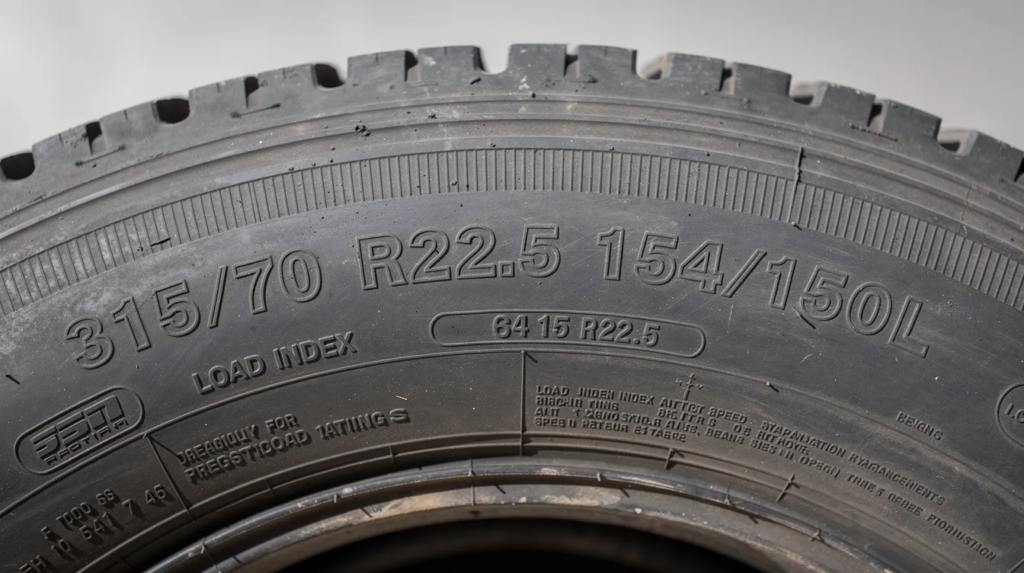
Key Takeaways (Quick Overview)
- The marking 91H consists of the load index 91 and the speed rating H. This means: up to 615 kg load capacity per tyre and up to 210 km/h maximum speed.
- Load index 91 is derived from the axle load in the vehicle registration document. Example: 1,230 kg axle load divided by 2 tyres = 615 kg per tyre.
- Speed rating H allows a higher speed than T tyres (190 km/h), but less than V tyres (240 km/h).
- The marking values are important for the safety and performance of a vehicle. A lower load index than stated in the vehicle documents is not permitted.
- Lkwhelp24 only supports commercial vehicles from 7.5 t upward. In case of a breakdown, we arrange tyres with the correct speed rating and load capacity through vetted service partners.
Introduction: What Does Tyre 91H Actually Mean?
On the sidewall of a car tyre, digits and a letter appear directly after the tyre size. 195/65 R15 91H or 205/55 R16 91H are typical codes on compact and mid-size cars. The part “91H” describes two properties: load capacity and speed.
The number 91 is the load index. It stands for a maximum load capacity of 615 kg per tyre. The letter H is the speed rating. Tyres with speed rating H are approved for 210 km/h. The same logic – a number plus a letter – also applies to vans and trucks (HGVs). There, however, the number ranges are significantly higher. German road traffic regulations govern tyre marking in a binding way. The values on the new tyre must not be lower than the values in the vehicle documents.
The marking 91H is not an indicator of the tyre’s general quality. It only describes load capacity and permitted maximum speed.
Lkwhelp24 only works with trucks and buses from 7.5 t upward. In this article, we explain the 91H marking in an easy-to-understand way – and show why it is not sufficient for heavy commercial vehicles.
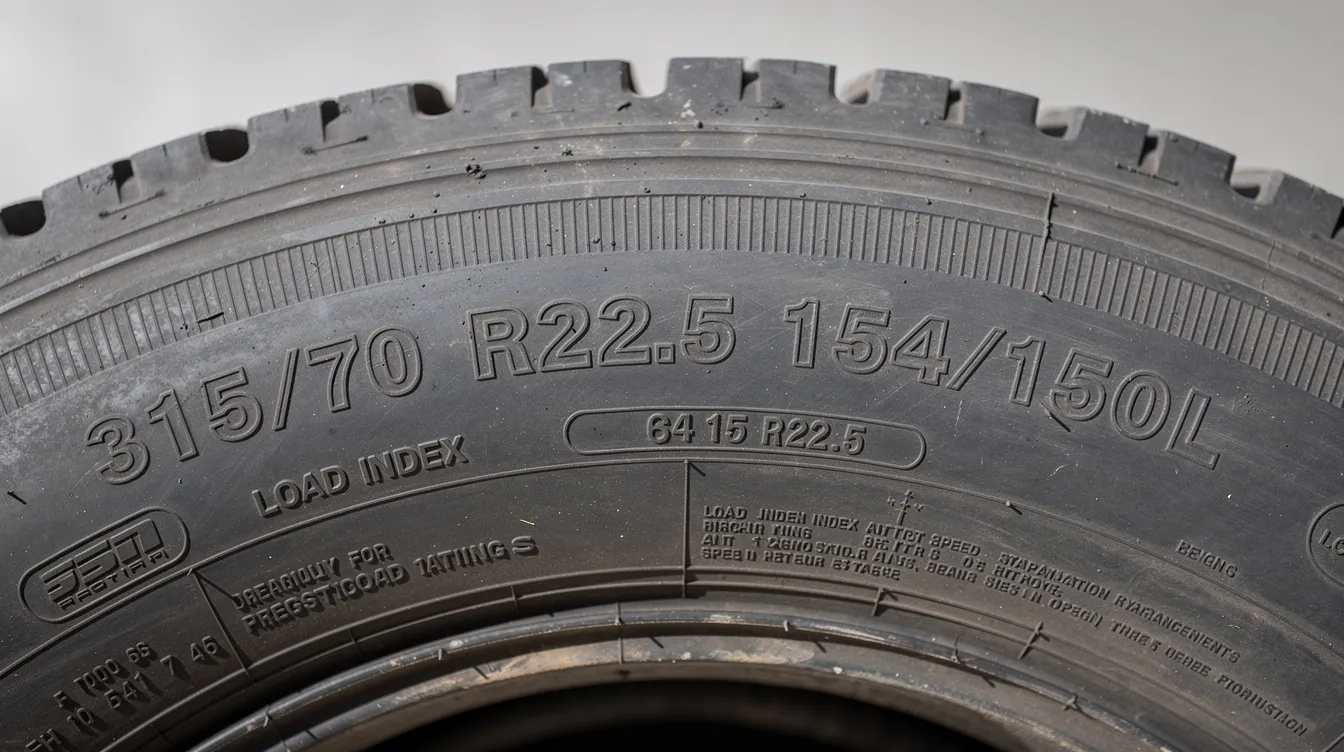
Load Index 91: Load Capacity up to 615 kg Explained
The load index (also called load rating) is a number on the tyre sidewall. It shows the maximum weight a tyre can carry. The value applies at the correct pressure and within the permitted speed.
According to the official index table, load index 91 means: a tyre carries up to 615 kg. How is this value derived? An example: the vehicle registration document lists a maximum axle load of 1,230 kg. Two tyres sit on this axle. So: 1,230 kg ÷ 2 = 615 kg per tyre. Load index 91 fits exactly.
The theoretical maximum permitted axle load is 2,460 kg with four tyres each rated at 615 kg – for example on tandem axles.
For comparison, a few indexes:
- Load index 88 = approx. 560 kg – not enough for the example above
- Load index 91 = 615 kg – fits an axle load of 1,230 kg
- Load index 94 = 670 kg – more reserve, but also heavier and more expensive
- A load index of 100 means a maximum load capacity of 800 kg
A lower load index than stated in the vehicle documents is not permitted. If the load capacity is exceeded, there is a risk of overheating, structural damage and tyre blowouts. Tyres with a higher load index are permitted as long as the other dimensions match.
Speed Rating H: Up to 210 km/h
The speed rating indicates the maximum permitted speed of a tyre. It appears as a letter at the end of the tyre designation. In Germany, tyres must match the speed rating required for the vehicle.
Rating H means: the tyre is tested and approved for a maximum speed of 210 km/h. A tyre must not be driven faster than its speed rating allows. Anyone driving faster than 210 km/h on H-rated tyres risks tyre failure.
Compared to other speed classes:
- Speed rating T = up to 190 km/h – typical for smaller or speed-limited vehicles
- Speed rating H = up to 210 km/h – standard on compact and mid-size cars
- Speed rating V = up to 240 km/h – common on more powerful models
The vehicle registration document (Zulassungsbescheinigung Teil I) lists at least the required speed rating. Higher ratings may be fitted. Lower ratings only under certain conditions. Safe use only applies with correct tyre inflation pressure and matching load capacity. A tyre must also have sufficient load capacity at high speed.
Speed Index and Speed Rating Table: Key Classes at a Glance
The permitted maximum speed is assigned to the speed rating. The speed class ranges from A to Y with 32 classes. In practice, for passenger cars mainly the ratings from Q to Y are relevant.
Here is a compact overview of the key classes:
Letter | Maximum speed |
|---|---|
Speed rating L | 120 km/h |
Speed rating Q | 160 km/h |
Speed rating T | 190 km/h |
Speed rating H | 210 km/h |
Speed rating V | 240 km/h |
Speed rating W | 270 km/h |
Speed rating Y | 300 km/h |
Speed rating K (130 km/h) and speed rating J (100 km/h) are found more often on special vehicles or classic cars. |
The official tables range from A1 to Y. Older symbols such as ZR are used less often today. By law, at least the speed rating stated in the vehicle registration document must be observed.
There is one exception for winter tyres: tyres with a lower speed rating require a warning sticker in the driver’s field of view. This reminds the driver of the lower permitted speed.

Where to Find Load Index 91 and Speed Rating H on the Tyre
The speed rating is printed on the tyre sidewall. It is the last letter of the tyre designation. Both ratings appear on the sidewall – directly after the tyre size. On a tyre marked 195/65 R15 91H, the 91 stands for load capacity and the H for speed.
Overview of where to find them:
- Tyre sidewall: directly visible, e.g. “205/55 R16 91H”
- Vehicle registration document (Zulassungsbescheinigung Teil I): the speed rating is also noted in the vehicle documents. The minimum values are in fields 15.1/15.2, or in fields 20–23 on older documents.
- Modern EU tyre labels and QR codes provide additional information on rolling resistance and wet grip. Load capacity and speed rating, however, remain on the sidewall.
Before calling for breakdown assistance, read or photograph this data. It saves time and prevents misunderstandings when choosing a replacement tyre.
What Does 91H Mean When Load Index and Speed Rating Interact?
The number (91) and the letter (H) must always be considered together. Both values together describe what the tyre can do.
A concrete example: 195/65 R15 91H means 615 kg load capacity at a maximum of 210 km/h. 195/65 R15 91T means the same load capacity, but only 190 km/h maximum speed. The maximum load capacity of a tyre depends on the speed rating. Load capacity decreases at higher speeds.
For a tyre marked 91V (240 km/h), the effective load capacity at top speed is reduced to about 91% of the rated load. This means: instead of 615 kg, the tyre carries only around 560 kg at 240 km/h.
For truck and van tyres there is often a dual load index, for example 154/150L. The first value applies to single fitment, the second to dual (twin) fitment on the rear axle. More on this in the article Load Index on Truck and Commercial Vehicle Tyres.
A wrong combination – too little load capacity or too low a speed rating – can void insurance cover.
Difference Between Speed Rating and Load Index
Both ratings sit side by side on the tyre sidewall. But they measure different things.
The load index is a number. It shows how much weight a tyre can carry at most. Example: 91 = 615 kg.
The speed rating is a letter. It indicates the permitted maximum speed. Example: H = 210 km/h.
Higher speed generates greater forces on the tyre. That’s why speed affects the available load capacity. A tyre with a low speed rating can reduce stability – especially when driving fast on the motorway (Autobahn).
Comparison: 91H vs. 91V. Both have the same base load capacity of 615 kg. But at 240 km/h, a reduction factor is applied to the V tyre. Workshops and mobile services must check both ratings at the same time before fitting a tyre.
Speed Rating Table for H and T Tyres in Everyday Driving
On the road, the question often comes up: H or T tyres? The choice depends on the vehicle registration document and the typical driving profile.
T tyres (speed rating T) are approved for up to 190 km/h. They are often used on smaller vehicles or cars with a lower top speed. The tyre cross-section and rubber compound are designed for moderate speed. Typical speeds on country roads and in city traffic suit T tyres well.
H tyres (speed rating H) are approved for up to 210 km/h. On many compact and mid-size cars, they are the mandatory standard fitment. Anyone driving a lot on the motorway needs at least the rating entered in the vehicle registration document.
A higher rating (e.g. H instead of T) is permitted. It provides a reserve at faster speeds. But it is not a license for faster driving. Road conditions, weather and tyre condition determine the safe speed.
Important: the vehicle registration document states the minimum rating. Anyone choosing a lower rating, for example with certain winter tyre offers, must observe the special rule requiring a sticker.
91H Tyres and Their Suitability for Different Vehicle Types
Tyres marked 91H are a typical standard on compact and mid-size passenger cars.
This is purely informational. 91H tyres fit such car models because of matching tyre width, rim diameter and axle load.
For trucks and buses, a load index of 91 is nowhere near enough. Heavy commercial vehicles need indexes of 120 and significantly more – often 140 to 180 depending on the axle and vehicle type. 91H is completely unsuitable there.
Lkwhelp24 arranges roadside assistance only for trucks and buses from 7.5 t upward. Current tips and background knowledge on breakdowns, safety and tyres are also available in our Lkwhelp24 news section.
Special Cases: Winter Tyres and All-Season Tyres with Index 91H
On winter tyres, the speed rating may be lower than the vehicle’s required rating, provided a warning notice is displayed. This is a legal exception for M+S tyres and tyres with the Alpine (3PMSF) symbol.
An example: in summer, a car runs on 91H (summer tyres, 210 km/h). In winter, 91T winter tyres (190 km/h) are fitted. This is permitted. But a visible sticker in the driver’s field of view must remind the driver of the reduced maximum speed.
Vehicle speed must always be based on the lower rating – regardless of what is stated in the registration document. The manufacturer specifies which tyres are approved for winter use. Driving on 91H summer tyres in winter is unsafe in many situations and violates the winter tyre requirement.
Some countries have stricter rules. In Italy, for example, at least the summer-tyre rating must be fitted in summer. Before holiday trips, check the regulations in the destination country online.
Reading the Tyre Marking Correctly: From 195/65 R15 to 91H
The tyre marking on the side of a tyre contains all the key information. It must match the requirements in the vehicle documents. Here are the components using the example 195/65 R15 91H:
- 195 = tyre width in millimeters
- 65 = aspect ratio (height-to-width ratio in percent)
- R = radial construction (standard on modern tyres)
- 15 = rim diameter in inches (rim size)
- 91 = load index (615 kg)
- H = speed rating (210 km/h)
The speed rating appears on the tyre sidewall as a letter. It is the last letter of the tyre designation.
Other markings on the tyre:
- XL or Extra Load: reinforced construction for higher load capacity
- M+S or 3PMSF (Alpine symbol): winter suitability
- DOT number: production date (calendar week and year)
- C tyre: marking for reinforced van/commercial tyres (Commercial)
The tyre type and all figures should be fully noted or photographed before placing an order or calling roadside assistance. This allows the correct tyre to be identified immediately.

Common Mistakes When Choosing 91H Tyres
Many mistakes happen when choosing the tyre type. Here are the most common:
- Load index too low fitted: an 89H tyre instead of 91H, because the price was lower. This reduces load capacity by about 55 kg per tyre. This is not permitted and dangerous.
- Higher speed rating assumed to be “better”: a Y tyre (300 km/h) often has stiffer sidewalls. This can reduce ride comfort. A higher speed rating does not automatically mean better quality.
- Winter tyre special rule ignored: winter tyres with speed rating T fitted instead of H, but no speed sticker placed in the driver’s field of view. This can lead to fines and insurance problems.
- Wrong tyre pressure driven: with too low pressure, the tyre no longer safely reaches its rated load capacity of 615 kg. Wear increases, safety decreases.
- Mixed tyres on one axle: different ratings on one axle worsen handling. Identical values must always be fitted on the same axle.
Legal Requirements for the Speed Rating (StVZO)
Load index and speed rating are not just technical values — in Germany they are regulated by the StVZO (§ 36) road traffic licensing regulation and are safety-relevant. The minimum speed rating entered in the vehicle registration document must not be undercut with summer tyres, for cars or for trucks, trailers and buses from 7.5 t. With winter tyres and all-season tyres a lower speed rating is allowed, but only with a sticker in the driver’s field of view stating the permitted maximum speed.
If the required rating is undercut, this can lead to the vehicle’s operating permit (Betriebserlaubnis) being voided. Fines are possible, along with the charge of “driving without an operating permit”. In the event of a claim, insurers check among other things whether the fitted speed rating was sufficient — if it was too low, they can refuse to pay out. This matters especially for fleet operators and haulage companies: before any tyre purchase or breakdown replacement, the values in the vehicle registration document (Part I) should be checked first.
How Drivers and Fleet Managers Can Check Whether the Rating Fits
Choosing the right tyre starts with the right sources of information. Drivers and fleet managers should check:
- Vehicle registration document (Part I): shows the approved tyre sizes with minimum load index and minimum speed rating (fields 15.1/15.2).
- CoC documents (Certificate of Conformity): especially useful for imported or new vehicles.
- Owner’s manual: contains further information on all approved tyre dimensions.
Recommended sequence: check the approved tyre dimension, read off the minimum load index and minimum speed rating, assess the usage profile (load, speed, motorway or road), and for trailers and commercial vehicles from 7.5 t pay extra attention to axle loads and the dual load index. Tyres with a higher rating are permitted and sometimes sensible, but never lower than stated in the vehicle registration document. For mixed fleets of trucks and cars: never confuse car and truck ratings — a 91H tyre does not belong on a truck from 7.5 t.
Tyre 91H and Trucks: Why This Marking Is Not Enough for Heavy Commercial Vehicles
91H tyres are designed for cars and light vehicles. On trucks from 7.5 t upward, they are completely unsuitable. The load capacity of 615 kg per tyre is not even enough for a single truck axle.
Truck tyres have significantly higher load indexes. Typical values:
- Steering axle: load index approx. 152–156 (single fitment)
- Drive axle: load index e.g. 154/150 (single/dual fitment)
- Trailer axle: load index e.g. 152/148
With dual (twin) fitment, two tyres run side by side on one side of the axle. That’s why two load values are listed: the higher one for single fitment, the lower one for the individual tyre within the dual setup.
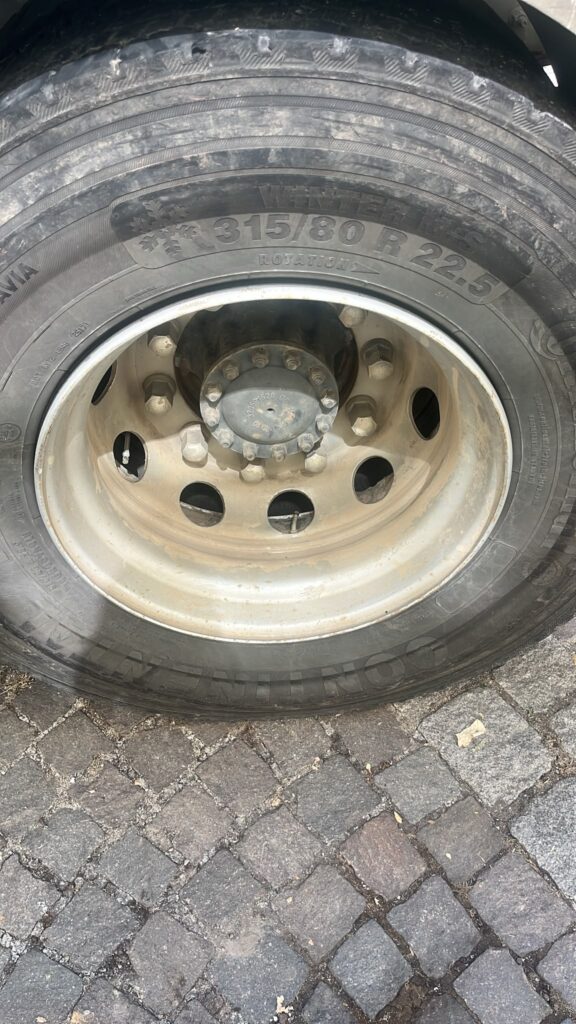
Besides load index and speed rating, tyre diameter is also decisive for commercial vehicles. Typical dimensions are 315/80 R22.5 or 385/65 R22.5. Lkwhelp24 checks precisely on every breakdown which dimension and which rating is needed. A 91H tyre is never used here. More on truck-specific load indexes in the article Load Index on Truck and Commercial Vehicle Tyres.
What Information Drivers Must Provide in a Tyre Breakdown (Trucks from 7.5 t)
In a truck tyre breakdown, every minute counts. The more precise the information, the faster help arrives. The following details are needed:
- Location: motorway (Autobahn) number, direction of travel, kilometer marker. Or share your GPS location via WhatsApp.
- Vehicle data: license plate, vehicle type (tractor-trailer, solo truck, bus, semi-trailer), gross weight class (from 7.5 t).
- Tyre data: dimension (e.g. 315/70 R22.5), load and speed rating, affected axle (steering, drive, trailer axle), single or dual fitment.
- Damage description: tyre blowout, slow air loss, rim damage? Photos help plan the correct tyre and the right equipment.
- Reachability: mobile number and preferred language.
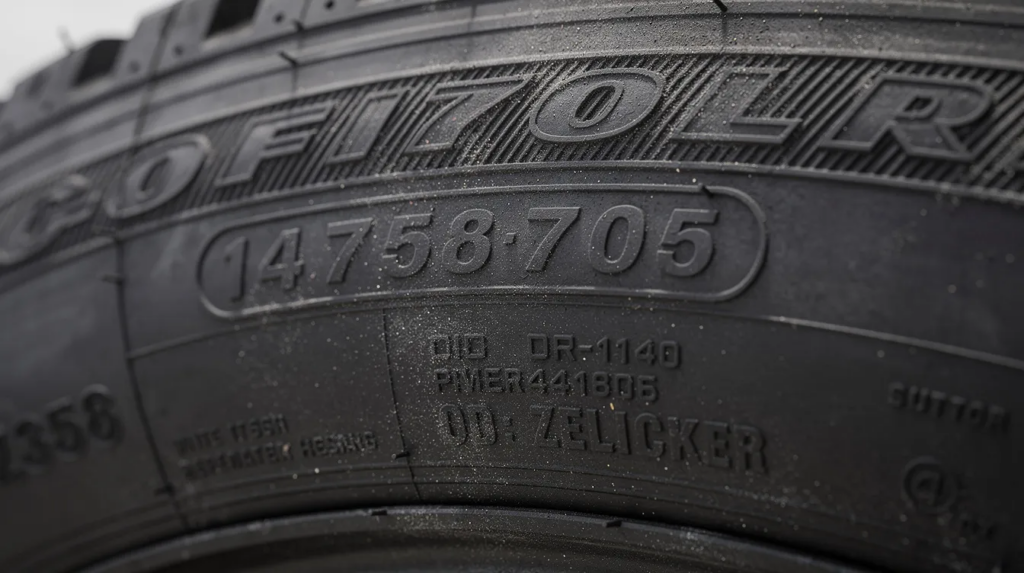
Sending this information via WhatsApp saves time. A photo of the tyre sidewall with the tyre size and rating often replaces many words and makes communication with our truck roadside assistance in Germany, available 24/7, easier, especially for international drivers.
Truck Breakdown on the Motorway: Correct Behavior and Safety
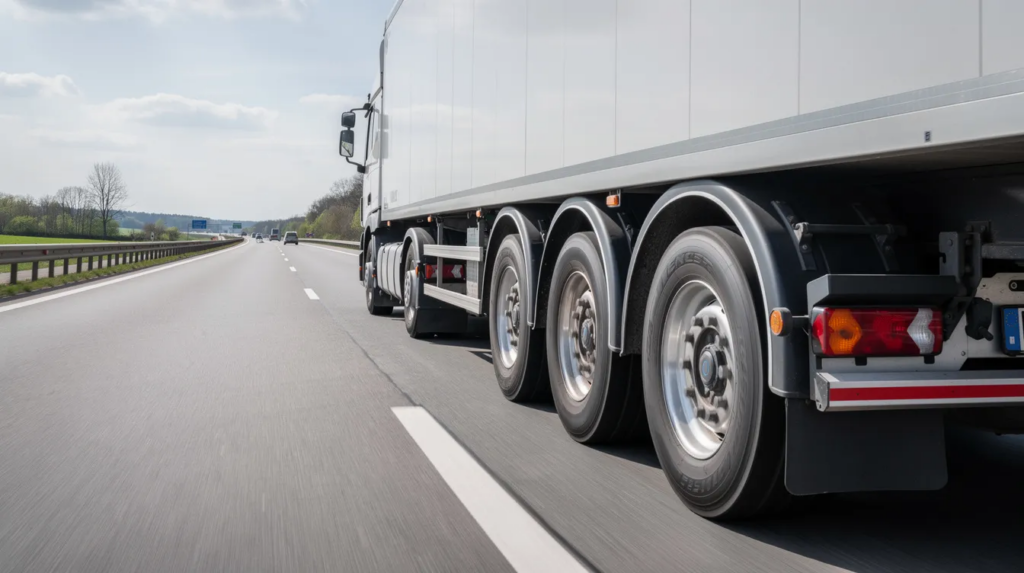
A truck with a tyre breakdown on the motorway is a dangerous situation. Correct behavior and quickly organized truck roadside assistance in Germany protect everyone involved.
- Steer the vehicle as far as possible onto the hard shoulder or a rest area. Switch on the hazard warning lights immediately.
- Put on a hi-vis vest before leaving the cab. Secure passengers as well.
- Set up a warning triangle. On German motorways, at least 150 to 200 meters behind the vehicle.
- Do not stay near the truck or in the danger zone. Move behind the crash barrier or to a safe area.
- Arrange breakdown assistance from there. Pass on the exact location.
More on safe behavior during truck breakdowns can be found in the article What to Watch Out for When Towing a Vehicle and in the overview of our Truck Towing Service Germany – 24/7.

Types of Breakdown Services for Trucks (Neutral Overview)
For truck breakdowns, there are several types of help and general truck service in Germany, available 24/7. Here is a neutral overview:
- Automobile clubs with a truck program: some large clubs offer special memberships for commercial vehicles. The service is tied to an annual membership fee.
- Manufacturer breakdown services: some truck manufacturers offer their own breakdown programs. These are usually tied to authorized workshops and apply only to certain brands.
- Independent mobile services and regional towing companies: the driver contacts them directly. Availability depends on the region and time of day.
- Brokers: services like Lkwhelp24 organize a suitable service partner nearby 24/7, for example for mobile truck service in Germany, available 24/7. They coordinate all communication between driver, dispatcher and service partner.
Each option has advantages and disadvantages. What matters is that the service can handle trucks from 7.5 t upward and is quickly reachable. More on the page Truck Roadside Assistance Germany 24/7.
How Lkwhelp24 Helps with Tyre Problems and Breakdowns (From 7.5 t Only)
Lkwhelp24 works as a broker. We coordinate vetted service partners for trucks and buses from 7.5 t upward – throughout Germany, 24 hours a day, 365 days a year. This includes a specialized truck tyre service in Germany, available 24/7, focused on load index, tread condition and correctly set tyre pressure.
Our mobile truck tyre service works like this: you call or send a WhatsApp message. We find the nearest available partner, who, if needed, provides a comprehensive truck tyre service in Germany, available 24/7, directly at the breakdown site. The partner usually arrives within 30 to 60 minutes. They fit an immediately available tyre with the correct size, load capacity and speed rating. In a breakdown, the tyre is selected based on availability. Brand preferences can be considered when placing the order, possibly at an additional cost.
Further services: truck towing service and recovery, breakdown assistance for air or brake problems, mobile workshop services, and a specialized Truck Towing Service Germany – 24/7.
Contact: WhatsApp or phone: +49 160 575 3826. Communication in German, English, Polish and Russian. Send your location via WhatsApp – we organize the rest.
We only serve trucks, semi-trailers and buses from 7.5 t upward. No passenger cars, motorhomes or vans under 7.5 t.
Cost Factors for Truck Roadside Assistance and Mobile Tyre Service
The cost of a mobile tyre callout depends on several factors:
- Time of day: daytime prices differ from night and weekend prices.
- Distance: the further away the nearest service partner, the higher the travel cost.
- Type of callout: tyre fitting only, recovery, or a combination of both.
- Tyre price: depends on dimension, load capacity, speed rating and availability. Truck tyres cost significantly more than car tyres.
- Extra work and waiting time on site can affect the price.
For orientation: mobile tyre service during the day starts at €290 net, at night and on weekends from €549 net, plus the tyre in each case.
Lkwhelp24 always confirms the fixed price by phone with the driver or dispatcher before dispatching. No hidden costs. Payment by cash or card.
FAQ on Tyre 91H, Speed Rating and Truck Breakdown Service
Here we answer common questions about tyre 91H and its connection to truck breakdown service.
Can I drive tyres with a higher speed rating than 91H?
Yes, this is generally permitted. A tyre marked 91V (up to 240 km/h) may be fitted instead of 91H (up to 210 km/h). Requirement: the load index (91 = 615 kg) must at least match the manufacturer’s specifications in the vehicle registration document. However, a higher speed rating does not automatically mean more safety. Tyres with a higher rating often have stiffer sidewalls and can change ride comfort. If in doubt, ask a specialist workshop.
Am I allowed to mix 91H tyres with other ratings on one vehicle?
On a single axle, identical dimensions, load indexes and speed ratings should always be used. Mixing between the front and rear axle is technically possible but often not recommended. Different ratings can lead to unpredictable handling. Follow the vehicle’s factory approvals and consult a specialist tyre workshop if in doubt.
How old can 91H tyres be at most?
Age can be read from the DOT number on the tyre sidewall. It is a four-digit code: the first two digits show the production week, the last two the year. Example: 2319 means production week 23 of 2019, 0524 means week 5 of 2024. Car tyres should be critically inspected after about 5 to 6 years and replaced depending on condition – even if the tread is still sufficient. Stricter fleet policies often apply to truck tyres, sometimes even earlier, since they run under higher continuous load. Freight companies frequently have their own internal rules on maximum tyre age and on shipping used tyres for retreading.
What happens if I drive on a tyre below the required speed rating?
The tyre can overheat under continuous load and high speed, risking material damage and a blowout. Legally, this can lead to the charge of “driving without an operating permit”. In addition, insurers can refuse to settle a claim if the fitted rating did not match the requirements in the vehicle registration document. This applies to cars just as much as to trucks, trailers and buses from 7.5 t.
Does Lkwhelp24 also help with tyre breakdowns on vans (e.g. Sprinter, Ducato)?
No. Lkwhelp24 organizes breakdown assistance and mobile tyre service only for trucks, semi-trailers and buses from 7.5 t upward. The explanations of 91H in this article still help all drivers better understand their tyre data – regardless of which vehicle they drive.
How do I contact Lkwhelp24 fastest in a breakdown?
Fastest is via WhatsApp to +49 160 575 3826. Send your location (GPS or a photo of the kilometer marker), vehicle data and tyre dimension. Alternatively, call the same number. We speak German, English, Polish and Russian. Lkwhelp24 then organizes an available service partner near you and shares the fixed price before dispatch. Top service around the clock – for trucks and buses from 7.5 t upward.