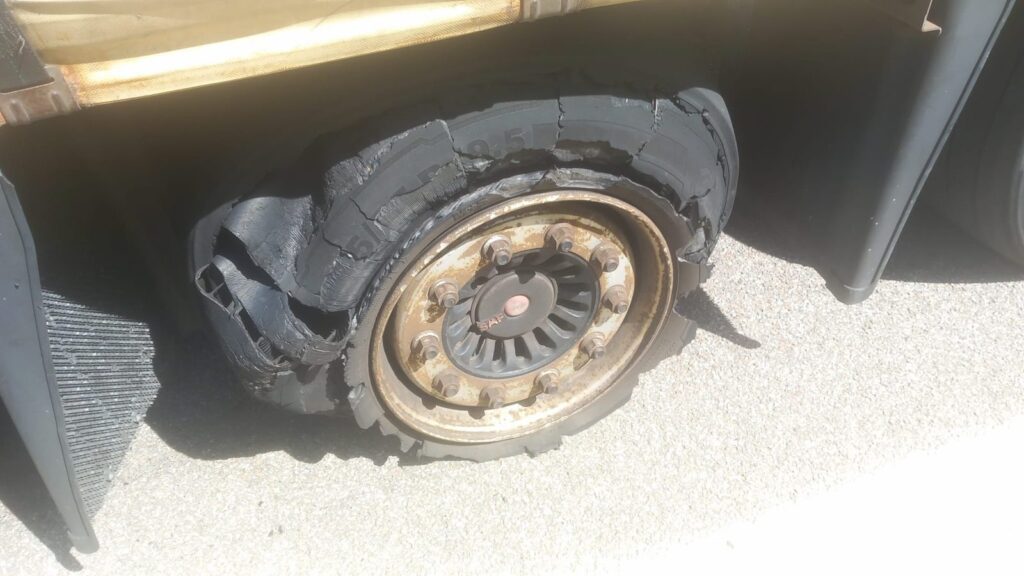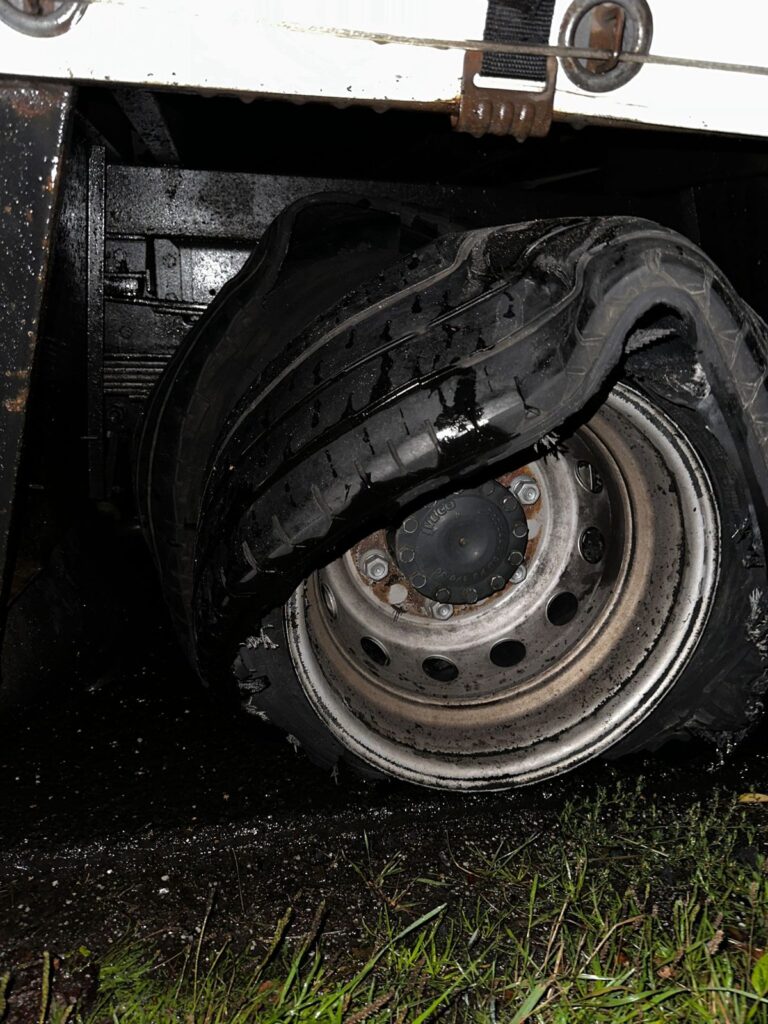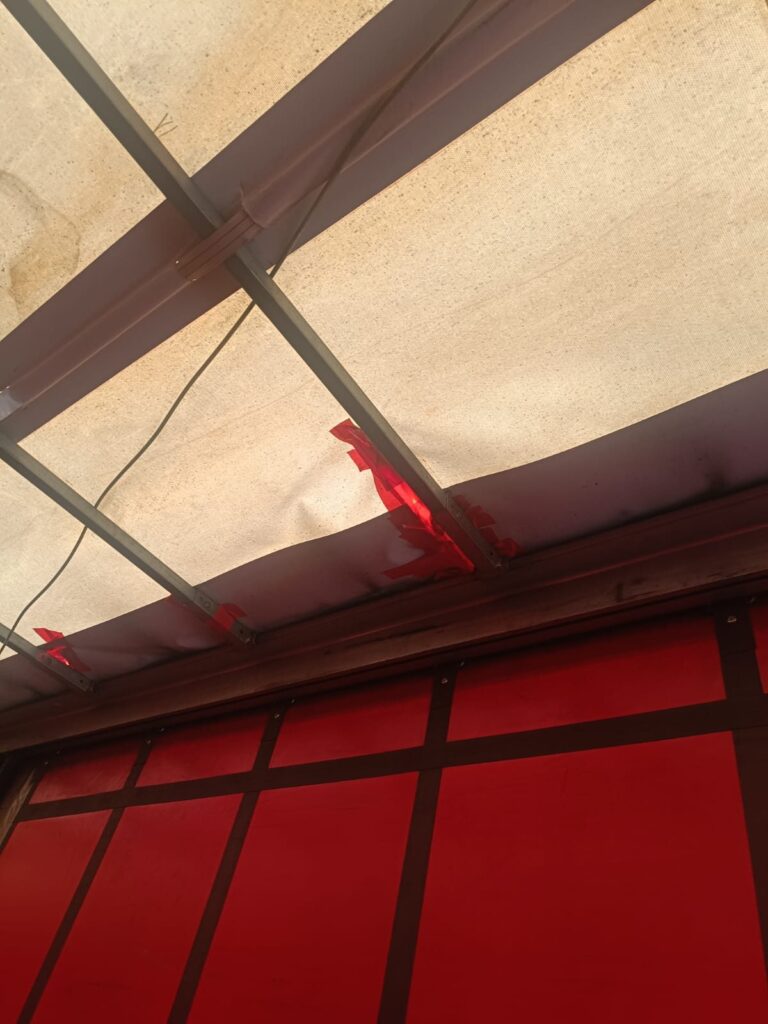
On 28 August a curtainsider semi-trailer with a torn roof edge was repaired at a parking area on the A2 near Bielefeld, direction Hannover. Our mobile truck service had the roof watertight again 2 hours 25 minutes after the first call, for €582.50 net, just ahead of the evening rain. The trailer was empty, so no cargo was damaged and no night was lost.
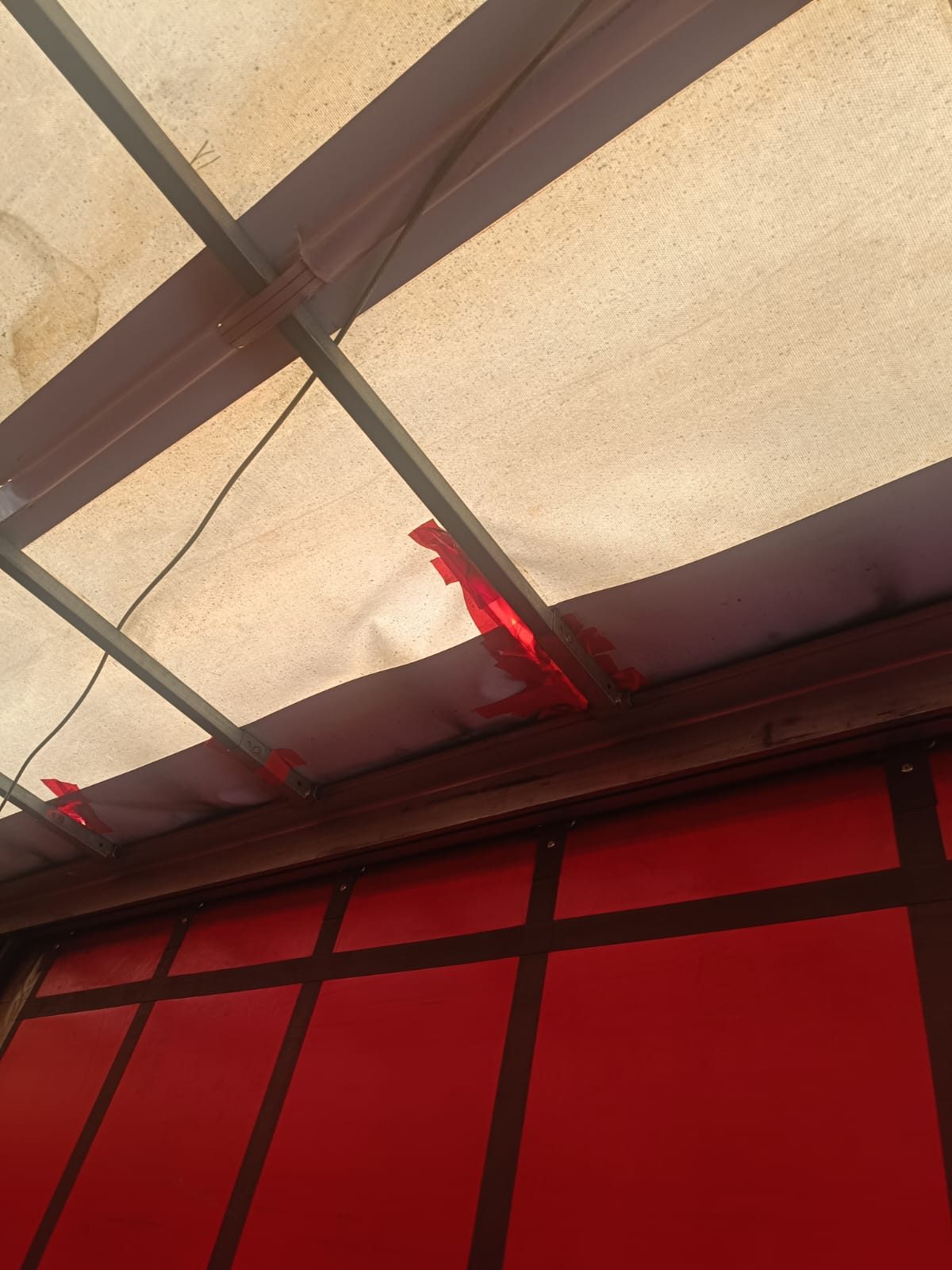
A ripped roof sheet looks like a cosmetic problem until you picture a pallet of paper or electronics under a downpour. Most consignees refuse wet freight, and a trailer that cannot be loaded does not earn anything. This write-up walks through the whole job: what happened, how the call was handled, what the fitters did on site, what it cost and why a mobile truck service made more sense than a trip to a workshop.
Quick facts: what happened on the A2
Truck service in one paragraph: a driver called at 17:05 about a split in the roof sheet of his sliding-curtain semi-trailer. A partner crew from our network left the dispatch at 17:20, arrived at 17:57 and finished at 19:30. Total time from call to completion: 145 minutes. Work on site: 93 minutes.
| Item | Detail |
|---|---|
| Vehicle | Semi-trailer, curtainsider with sliding roof |
| Location | A2 near Bielefeld, direction Hannover, parking area |
| Fault | Roof sheet torn away from the longitudinal beam |
| Weather | Dry, overcast, rain forecast for the evening |
| Response time | 52 minutes from call to arrival |
| Total time | 2 h 25 min (145 minutes) |
| Price | €582.50 net (excl. VAT) |
| Cargo damage | None, compartment was empty |
The emergency: a torn roof edge on the autobahn
A torn roof is a breakdown even when the wheels still turn. The driver was heading east on the A2 when a gust, or possibly the edge of a stiff roof batten, caught the sheet where it is fixed to the top rail of the curtain frame. The edge came away from the longitudinal beam over a stretch of roughly half a metre, and a few of the fixing loops let go with it.
He stopped at the next parking area, walked round the trailer and found the tear. Being a sensible professional, he did not carry on. He taped the worst of it with red adhesive tape, took photographs from inside and outside, and phoned us. The tape is what you see in the pictures. It is a fine first-aid measure, but it holds for perhaps an hour of dry driving and not a minute of heavy rain.
The forecast was the real clock. Rain was due that evening, and the trailer was booked to load the next morning. A wet floor and a leaking roof would have meant refusal at the ramp, a lost slot and a possible knock-on for the whole driving week.
Why this counts as truck breakdown service and not workshop work
Trailer roof damage sits in an odd gap. A tractor-unit mechanic cannot help, a tyre fitter has no materials, and a tarpaulin specialist’s yard might be two hundred kilometres away with a queue of its own. A truck breakdown service that comes to the vehicle closes that gap. Nothing needs to be towed, nothing is unhooked, and the driver stays with his rig and keeps within his permitted driving time.
How we organised the help: the dispatch in 15 minutes
Good dispatch is mostly about asking the right questions fast. Within the first minutes of the call we needed to know four things: what type of sheet or roof system, how long the tear is, whether the beam itself is bent, and where exactly the trailer stands.
The steps in the control room looked like this:
- Take the call and the photos. The driver sent pictures by phone. They showed the edge of the roof sheet, the red tape and the loose loops.
- Identify the system. A curtainsider with a sliding roof uses a PVC-coated sheet on steel bows. That decides the repair method and the material.
- Size the damage. The tear was a short edge failure, not a split across the whole roof, so a patch and new fixing loops would be enough.
- Pick a crew. We chose a mobile team in our partner network that was already working in the Ostwestfalen region and carried PVC material on the van.
- Agree the plan with the driver. Estimated price, arrival window, and what he should leave untouched until the crew arrived.
- Release the job at 17:20. Dispatch took 15 minutes, which is typical for a clear photo-backed case.
If you are curious how a dispatch for tyre jobs or recovery differs, our pages on mobile truck service and general truck repairs explain the usual flow. The principle is always the same: precise facts first, vehicle second.
On site: what the crew found at the parking area
The crew reached the parking area at 17:57 after a 37-minute drive. Traffic on the A2 was heavy but moving, and the partner team had a short run from their previous job.
The first ten minutes went into inspection, and this is where experience shows. The fitters peeled off the temporary tape, cleaned the area and looked at four things:
- the edge of the sheet, to see whether the PVC coating had split along a weld seam or in the open fabric;
- the longitudinal beam, to make sure it was straight and had no sharp burr that would cut the new patch again;
- the fixing loops and straps, of which four were worn or torn;
- the sliding mechanism, to check that the roof still ran freely on its rails.
The beam was fine, which meant the repair would last. A sharp burr on the beam is the single most common reason a patched roof tears twice, so this check matters more than the patch itself. They also found no water ingress yet, thanks to the dry weather and the driver’s quick action.
Why a rough repair on a trailer roof is a bad idea
A taped or sewn emergency repair seems cheap, but it moves the tension of the sheet to the stitched edge, which tears faster than the original. On a sliding-roof trailer, the sheet is pulled back and forth every time the roof is opened for crane loading. A patch that is not welded or vulcanised flexes, lifts at the edges and lets water in at the first heavy shower.
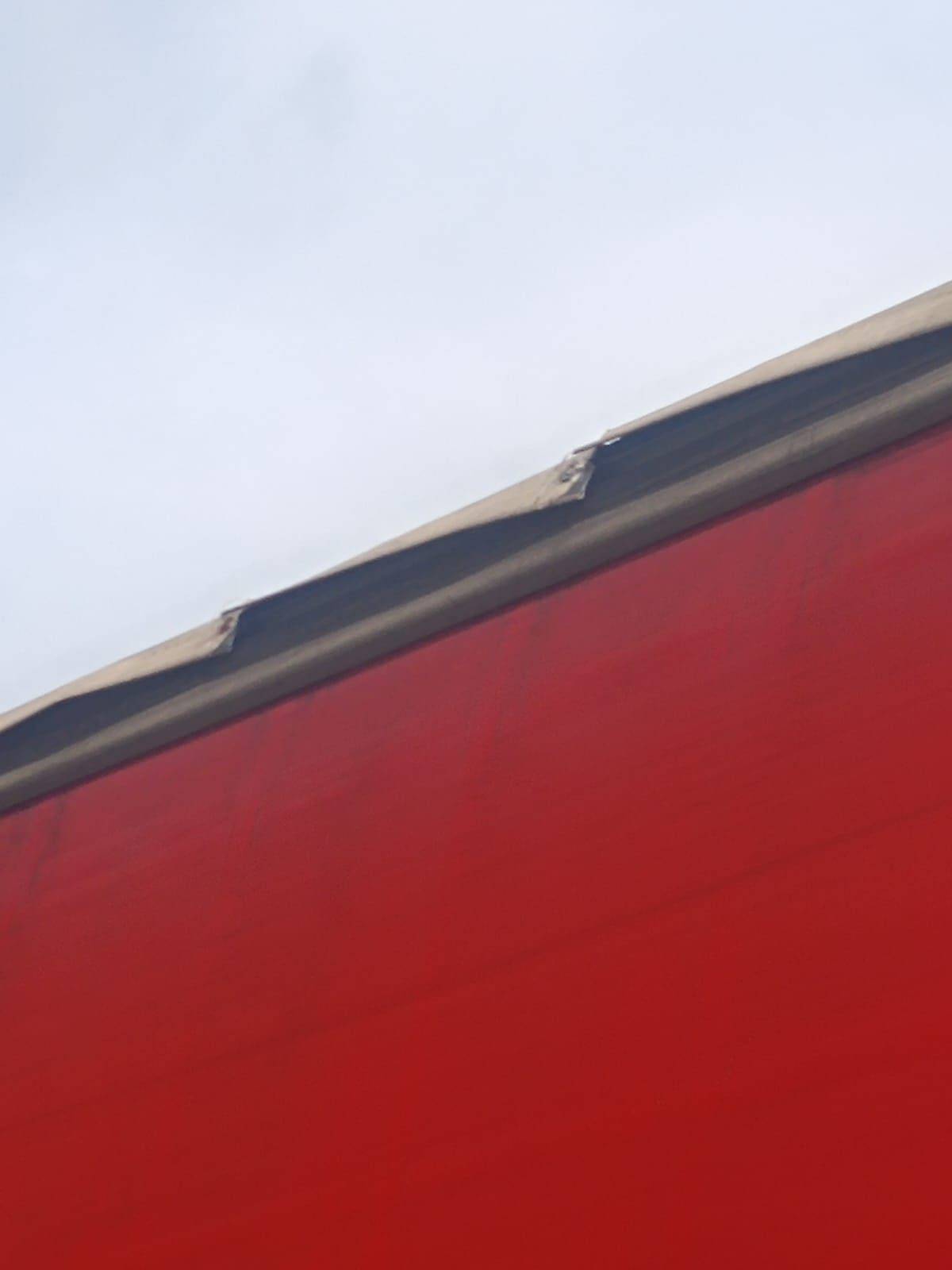
Step-by-step repair of the roof sheet
The repair itself took 60 minutes, from 18:07 to 19:07. In plain terms, this is how a professional mobile truck repair of a PVC roof sheet goes.
Step 1: Clean and degrease
The area around the tear was cleaned of dirt, road film and adhesive residue. Then the fitters degreased it with a solvent suitable for PVC. This is the step amateurs skip, and it decides whether any patch will hold. The consumables for this job are the €25 line in the estimate.
Step 2: Prepare the patch
A PVC patch was cut from material with the same weight and coating as the original sheet. The corners were rounded, because a square patch lifts at the corners first. The patch overlapped the tear by several centimetres on every side.
Step 3: Join by welding or bonding
Depending on the coating, the joint is made with hot-air welding or with a bonding agent in a process similar to cold vulcanisation. For a mobile vulcanisation style repair on tarpaulin, pressure and curing time matter more than speed. The crew pressed the patch with a roller and let the joint set before putting any load on it.
Step 4: Replace the fixing loops and straps
Four fixing loops and roof straps were replaced and attached to the longitudinal beam with correct tension. Roof straps are not decoration. They keep the sheet from fluttering at motorway speed and are the first thing to fail when a sheet starts to flap.
Step 5: Reinforce the edge at the beam
The edge was fixed to the beam so that the load is spread along the whole length of the sheet, not on the repaired seam. This is why the repair is more durable than the original tear line.
Final inspection: 23 minutes that decide whether the job holds
The last phase ran from 19:07 to 19:30 and is the one customers often undervalue. The crew:
- checked the patch and seams for tightness by running a hand along every edge and looking for gaps;
- opened and closed the sliding roof several times to make sure it ran smoothly;
- checked the roof from inside for light leaks, which are a quick way to find pinholes;
- photographed the finished repair for the driver and for the job record;
- completed the paperwork and handed over the invoice details.
The driver signed off at 19:30. The first drops of rain came about an hour later. He was already on his way east.
Full timeline of the job
The table below shows every phase of the rescue with the real times. If you manage a fleet, this is the pattern worth comparing with your own response times.
| Time | Phase | Action |
|---|---|---|
| 17:05 | Call | Driver reports a torn roof and sends photos; rain forecast for the evening |
| 17:05–17:20 | Dispatch | Clarifying roof type and tear size, choosing a partner crew and material (15 min) |
| 17:20–17:57 | Arrival | Crew on the road to the A2 parking area (37 min) |
| 17:57–18:07 | Inspection | Removing temporary tape, checking edge, beam and loops, measuring, agreeing scope (10 min) |
| 18:07–19:07 | Repair | Cleaning, degreasing, welded PVC patch, replacing loops, fixing to beam (60 min) |
| 19:07–19:30 | Final check | Tightness test, sliding roof movement, photos, paperwork (23 min) |
Result: 145 minutes (2 h 25 min) from call to completion, of which 93 minutes of work on site.
What does a mobile roof sheet repair on the autobahn cost?
The job cost €582.50 net, which is €693.18 gross at 19 per cent VAT. All prices below are excluding VAT.
| Item | Price (EUR) |
|---|---|
| Call-out (Anfahrt), A2 Bielefeld | 240.00 |
| Fitter’s labour, 1.5 h at €115/h | 172.50 |
| PVC patch, adhesive and welding material | 85.00 |
| Fixing loops and roof straps (replacement, 4 pieces) | 60.00 |
| Cleaning, degreasing, consumables | 25.00 |
| TOTAL (net) | 582.50 |
What drives the price of a truck service call-out
Three factors move the number most. The first is the call-out charge, which depends on the distance the crew has to travel and the time of day. Nights and weekends carry a surcharge of 25 to 50 per cent. This job ran on a weekday evening, so none applied. The second is labour time: a short edge repair takes 1.5 hours, a long split across the roof or a damaged bow can double that. The third is material, and here the patch and loops are modest compared with a replaced sheet, which can run into four figures.
Compare it with the alternative
A trailer that cannot load is a trailer that does not earn. Standing time for a tractor and trailer is commonly put at €800 to €1,200 per day, and that figure ignores the risk of spoiled goods. On top of that, the nearest tarpaulin workshop would have meant a detour, an unhooked trailer and possibly a day in the queue. Against that, €582.50 for a repair done in the same evening is the cheaper road. If you want to see how we price other jobs, the page on our truck service shows the main services.
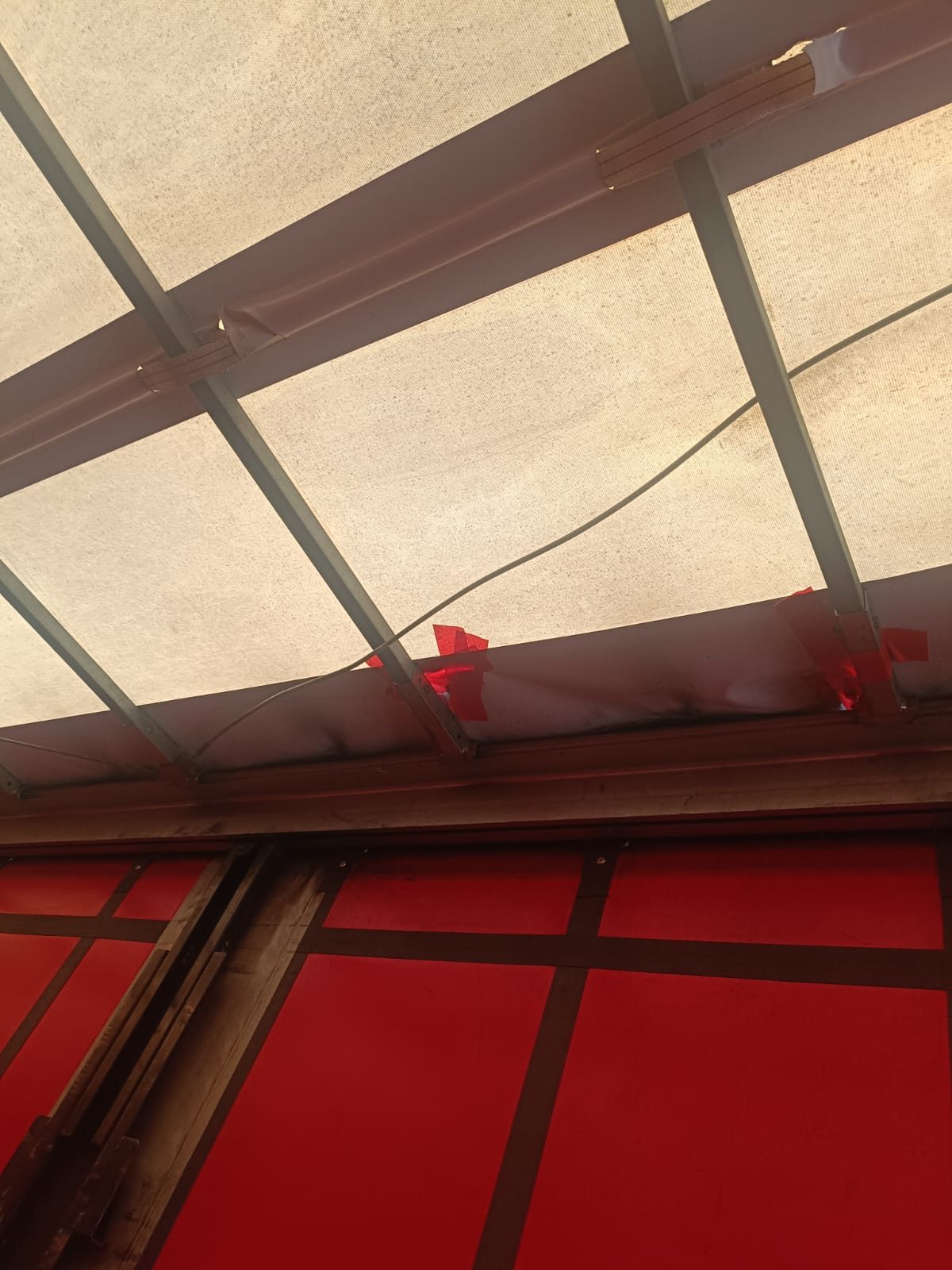
Why you need a professional for roof sheet repair
Repairing a sliding-roof sheet looks like a job for tape and patience. In practice, the do-it-yourself route fails in predictable ways:
- Wrong material. Hardware-store tape and patches are not made for PVC-coated truck fabric and peel off at motorway speed.
- No degreasing. A greasy surface means no bond, however good the glue.
- Ignored beam. A burr or bent edge cuts through the new patch within a few hundred kilometres.
- Unsafe working position. Climbing on a trailer roof or reaching over the edge of an autobahn parking area, without fall protection, is dangerous. The German Road Safety Council publishes useful guidance on securing loads and working safely around vehicles at DVR.
- Legal exposure. A loose or flapping roof sheet is a safety defect. Roadside inspectors can stop a vehicle with an insecure sheet, and a fine plus a prohibition to continue the journey is more expensive than the repair.
A mobile crew has the right materials on the van, knows which coating they are dealing with and works to the standard the trailer manufacturer expects. For tarpaulin and frame specifics, the manufacturers themselves, such as Schmitz Cargobull, publish details of their roof systems.
Typical situations our mobile truck service handles across Germany
The Bielefeld job is one of many. A mobile truck service on German roads covers far more than tyres and tow-ins. In a normal week our partner crews attend situations such as:
- Tyre blowouts and slow punctures on tractor units and trailers, including emergency wheel changes on the hard shoulder.
- Coolant, oil and hydraulic leaks from burst hoses and loose clamps.
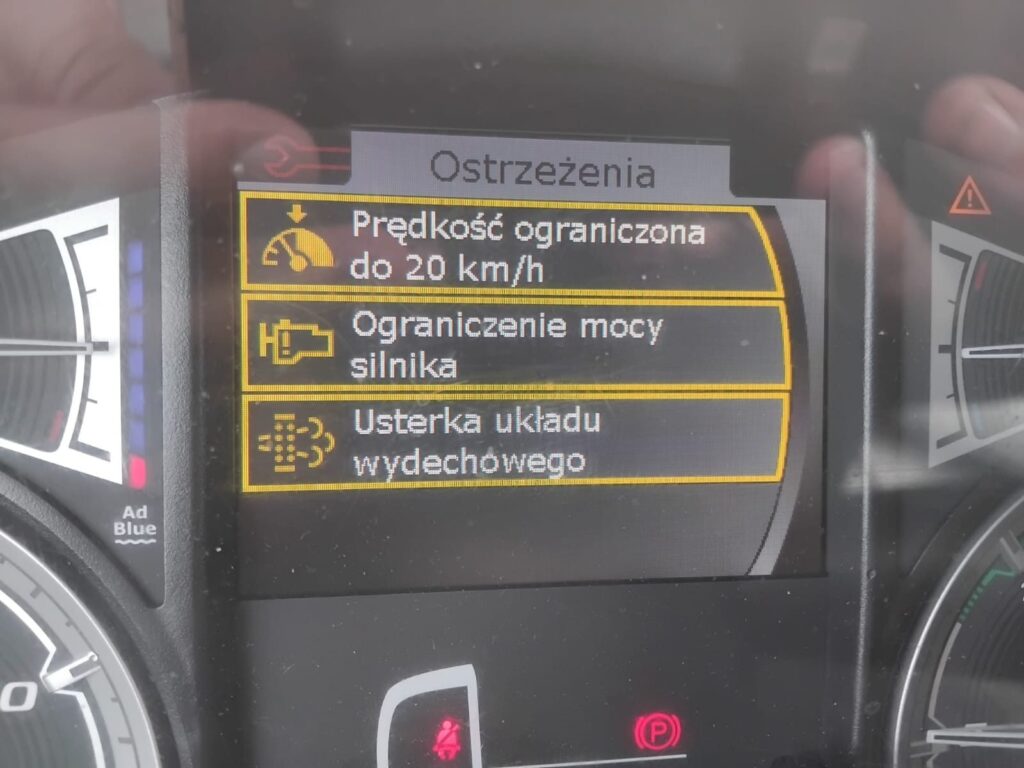
- Dashboard warnings, AdBlue and exhaust system faults, where a mobile diagnostic reader finds the cause.
- Brake faults on trailers, such as valve failures and worn linings.
- Electrical problems: lights, ABS sensors, tachograph faults, flat batteries.
- Body and roof damage like the one described here: torn sheets, broken curtain buckles, damaged bows and rails.
- Recovery and towing when a repair on the spot is not possible. The page on our towing service explains what happens then.
Each of these is a roadside assistance case in Germany, and each shares the same logic. Reach the vehicle quickly, repair on site when it is safe and economical, and tow only when you must.
How to prevent roof and trailer sheet damage
Most tears begin as small, ignored defects. Fleet managers and owner-drivers can lower the risk with a few routines:
- Walk round the trailer at every stop. Look at the roof edge, the loops and the straps. Thirty seconds can save a night.
- Replace worn fixing loops early. They cost a few euros each and prevent edge tears.
- Check the beam and rails. A sharp burr or a bent section should be straightened or filed down.
- Keep the sheet clean. Dirt and oil weaken PVC over time, and a clean roof shows pinholes sooner.
- Watch the wind. On the open stretches of the A2 and A7, a half-open roof and a crosswind can load the edge heavily.
- Book a regular inspection. Safety bodies such as DEKRA offer vehicle checks, and an annual look at the roof system belongs on the fleet plan.
- Carry a basic emergency kit. Quality tape, a few spare straps and a torch will not fix the roof but will buy you time until the crew arrives.
Our own pre-trip and roadside inspections show how much a quick check can find, and you can read a similar case in our report on a roadside check on the A3 near Emmerich.
Trailer service and fleet maintenance: the wider picture
A roof sheet is only one wear part on a trailer. A well-run trailer service plan treats the whole combination as a system: tyres, brakes, axles, lights, sheet, curtains and locks. Spreading checks across the year keeps downtime short.
Tyres are the biggest running cost. Premium makers such as Michelin, Continental, Goodyear and Bridgestone publish guidance on pressure, load index and retreading, and a sensible fleet follows the pressure figures for the axle load rather than the habit of the last decade. Typical commercial sizes are 315/80 R22.5 on the drive and steer axles and 385/65 R22.5 on trailers. Check the tread depth monthly and the pressure weekly. Legal minimums are set by the German road vehicle regulations (StVZO), but a sensible fleet changes tyres before the limit.
Brakes deserve the same attention, since a trailer brake fault stops the combination as surely as a puncture. Reading the wear indicators and checking air lines for chafing costs little time. And for drivers who run international routes with a mixed fleet of Scania, MAN, DAF, Volvo, Mercedes-Benz and Iveco units, a mobile mechanic who knows these brands can usually read the fault codes on site.
If you are building a maintenance schedule, our article on what a mobile truck mechanic in Germany can fix is a useful companion.
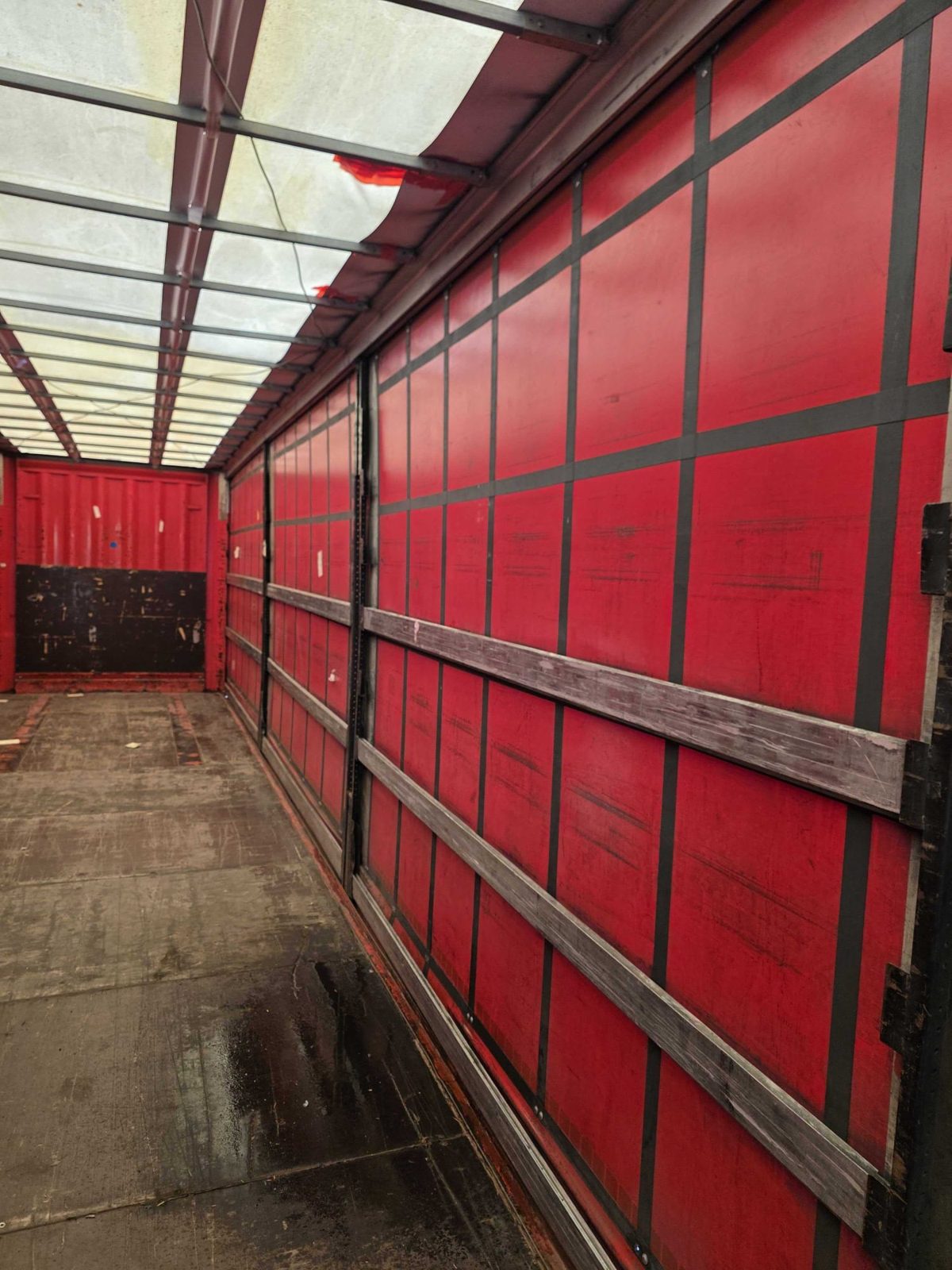
Why drivers and fleets choose LKWHelp24
Fleet managers tell us the same few reasons again and again:
- Available 24/7. The control room is staffed round the clock, every day of the year, and answers calls in several languages, including German, English, Polish and Russian.
- A tested network. Partner crews are vetted for qualification, equipment and response times in each region, so a call from the A2 and a call from the A8 are handled to the same standard.
- Clear prices. The driver hears an estimate before the crew leaves. Call-out, labour and materials are itemised, as in the table above, and every price is quoted net.
- Photos and records. We ask for pictures at the start and send them at the end. That helps with insurers, with consignees and with your own fleet documentation.
- Coverage across Germany. From the North Sea coast to the Alps, mobile crews cover the main autobahn corridors, so a repair on the road is usually possible rather than a tow.
Frequently asked questions
How much does a mobile truck service call-out cost in Germany?
A typical call-out charge is €180 to €320 net, depending on distance, plus labour at roughly €90 to €140 per hour and materials. In this case the total was €582.50 net. Night and weekend jobs carry a surcharge of 25 to 50 per cent on the call-out.
How long does it take until the crew arrives on the autobahn?
Usually 35 to 70 minutes after dispatch, depending on traffic and location. On this A2 job, dispatch took 15 minutes and the crew needed 37 minutes, so the driver had help on site 52 minutes after calling. At night or in bad weather, expect a longer wait.
Can a torn trailer roof sheet be repaired at the roadside?
Yes, in most cases. Clean edge tears and holes can be repaired on the spot with a welded or bonded PVC patch and new fixing loops. If the roof bow or rail is badly bent, or the sheet is split along a large area, a replacement in a workshop may be necessary.
Is taping the tear a safe temporary fix?
Tape is acceptable as a short emergency measure to keep rain out for a short distance. It will not survive motorway speed for long or heavy rain, and it can hide the true size of the damage. Always have the sheet properly repaired before the next load.
Who pays for a roof repair on the road?
The owner or operator of the trailer pays for the repair, normally invoiced net with VAT added. Some fleets have their damage covered by a comprehensive trailer or breakdown policy, so ask your insurer before the crew arrives and keep the photos and invoice.
Can the crew also help with other defects during the same visit?
Yes. If the visit uncovers worn tyres, a faulty light or a brake issue, the crew can often deal with it at the same time, provided the parts are on the van. Tell the dispatcher about every known fault when you call so that the right material is loaded.
Summary
- Vehicle: curtainsider semi-trailer with sliding roof, empty.
- Fault: roof sheet torn from the longitudinal beam, four fixing loops worn.
- Location: A2 near Bielefeld, direction Hannover, parking area.
- Reaction time: 52 minutes from the call to the crew on site.
- Time on site: 93 minutes of work.
- Total time: 2 hours 25 minutes (145 minutes).
- Cost: €582.50 net, excluding VAT.
- Secondary damage: none; the roof was watertight before the rain began and the trailer loaded on schedule.
Need help on the road? Call us now
If a trailer, tractor unit or van breaks down anywhere in Germany, you do not have to work out what to do alone. Call +49 160 5753826, tell us where you are and send a photo. We will find the nearest crew and give you a price before they set off.
Phone: +49 160 5753826 · Website: www.lkwhelp24.com · Contact page
Round the clock across Germany.
Keywords: truck service | truck service Germany | truck breakdown service | trailer service | truck mobile service | mobile truck maintenance | roadside assistance Germany | truck repair | mobile vulcanisation | curtainsider roof repair | trailer roof sheet repair | A2 Bielefeld