Skip to content
TL;DR: On 27 July 2026, a DAF articulated tractor unit that had stood idle for several weeks was inspected before returning to service at an Autohof on the A81 near Heilbronn, Germany. A technician found ageing cracks on one steer-axle tyre, replaced it, checked all tyres and torques, and cleared the vehicle in 2 hours 10 minutes from the first call, including 53 minutes of travel.
Introduction
A lorry that has not turned a wheel in weeks is not simply “resting”. Tyres carry the same load on the same contact patch hour after hour, day after day, and the rubber remembers it. Brakes sit unmoved while moisture and road grime settle on the discs. None of this shows up on a walk-around inspection unless someone actually looks.
That is why fleet managers who plan properly build a tyre check into the return-to-service routine, rather than trusting that a vehicle which “looked fine when it was parked” will still be fine after standing untouched through a summer heatwave. This case describes exactly that kind of planned check, not an emergency.
We cover the specific call-out on the A81 near Heilbronn on 27 July 2026, then go deeper into the mechanics of standstill: flat spotting, pressure loss without a puncture, rubber ageing, and why the first kilometres after a layup carry more risk than the thousand that follow.
On-Site Situation: A Parked Tractor Unit, Not a Breakdown
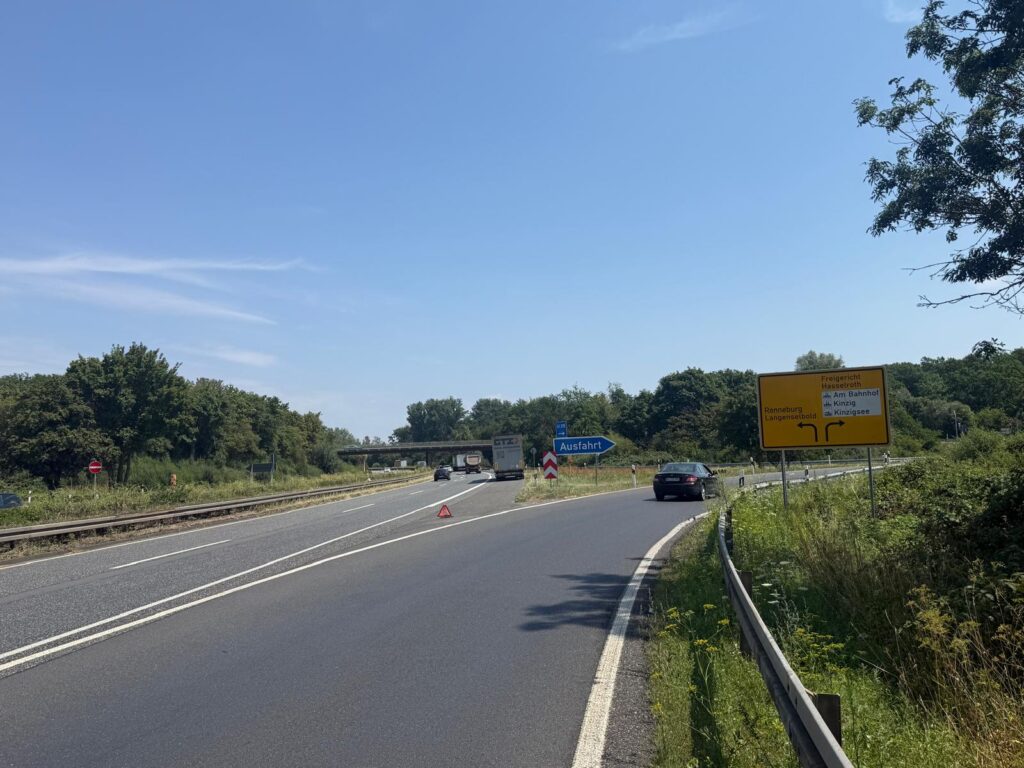
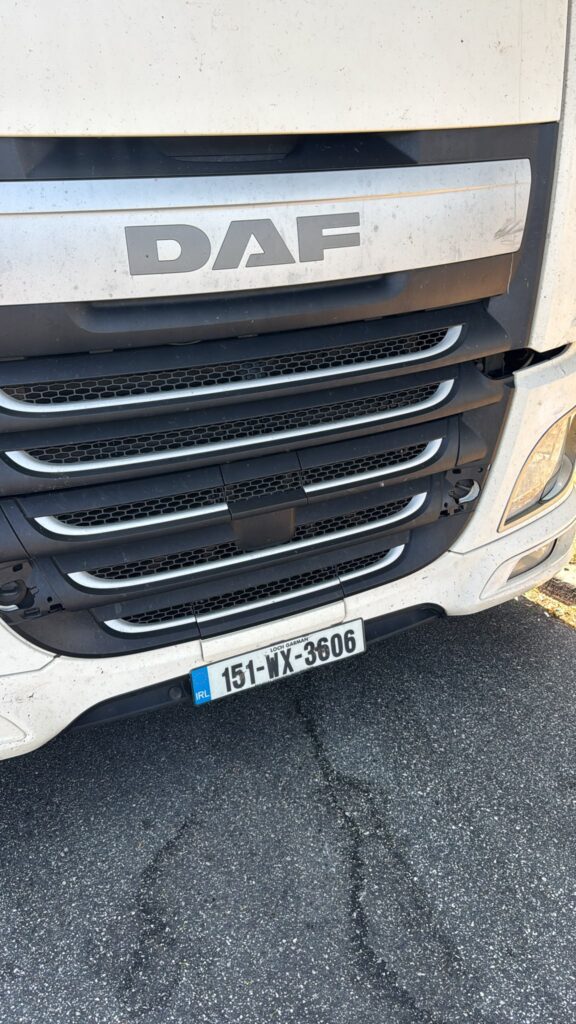
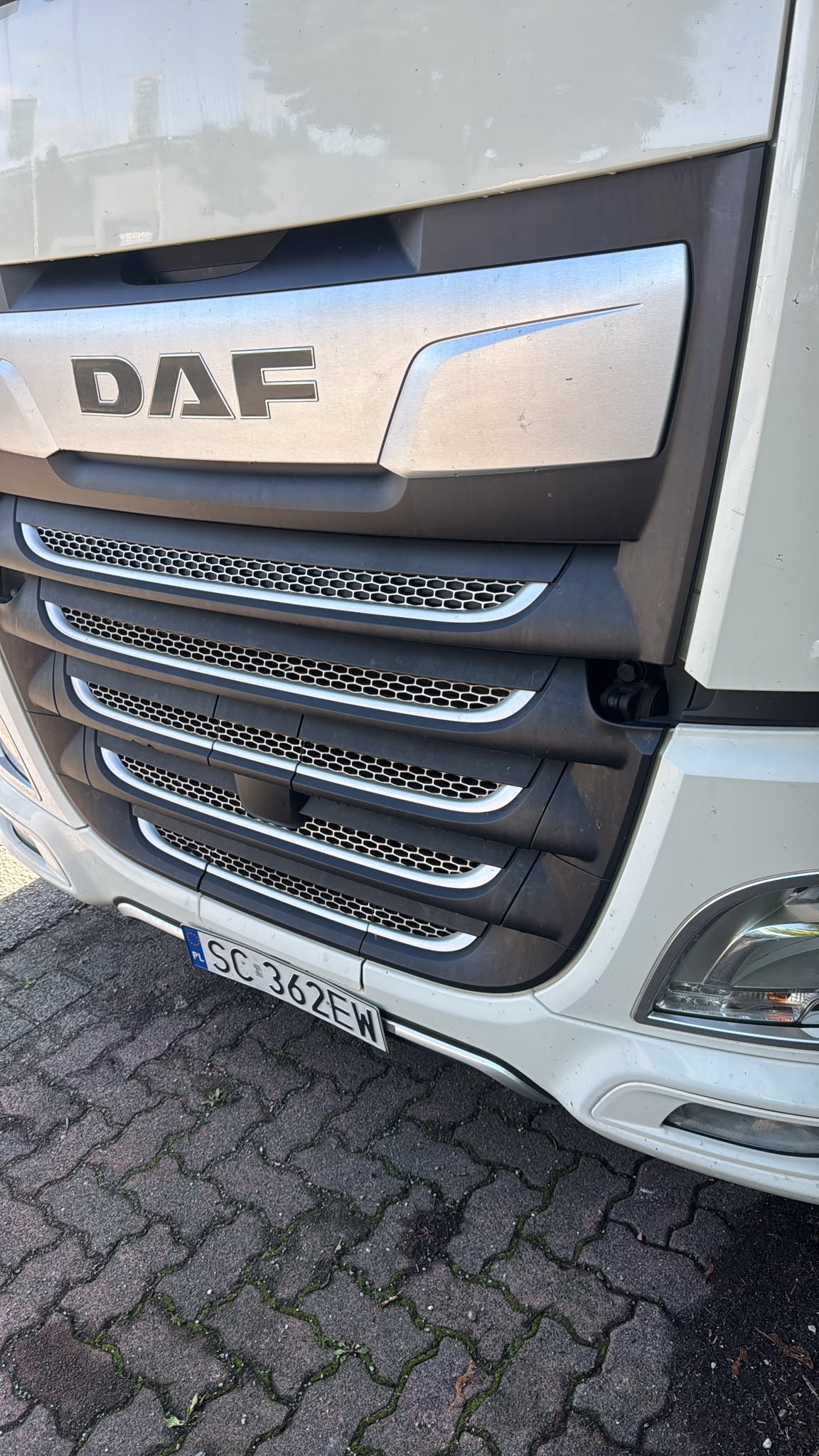
The tractor unit, a DAF, had been parked at an Autohof just off the A81 near Heilbronn for several weeks. There was no puncture, no warning light, and no roadside emergency. The fleet manager simply wanted the vehicle checked before it went back into rotation.
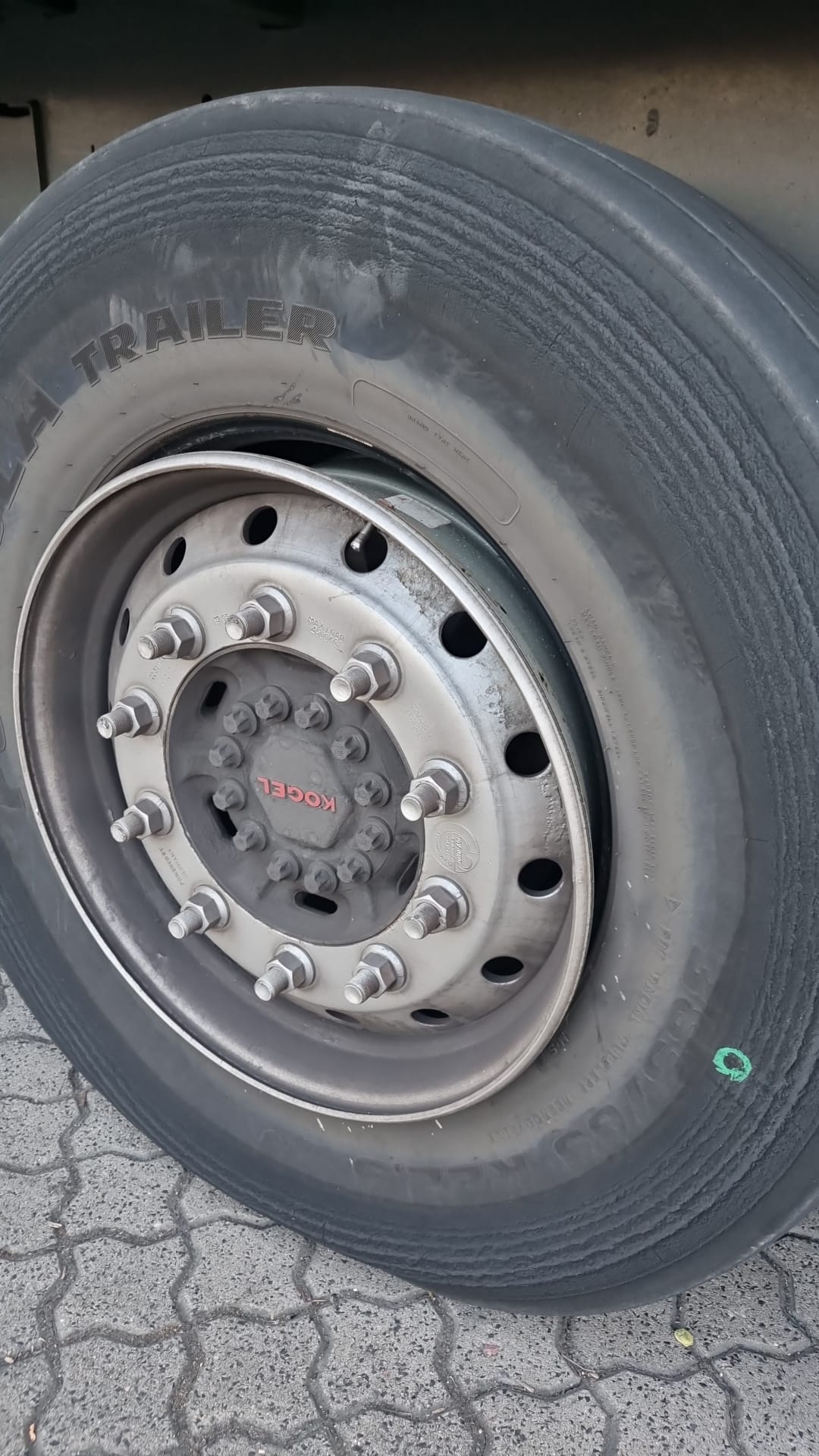
It was a warm, dry late-July morning, the kind where standing asphalt at an Autohof starts to shimmer by mid-morning. The tractor unit sat exactly where it had been left, dust settled along the lower bodywork, tyres slightly flattened where they met the ground. That flattened look at the contact patch is the first visible clue of a standstill tyre issue, and it is worth explaining before anything else.
This was a planned inspection, arranged in advance through our tyre service, not a breakdown response. That distinction matters because a scheduled check gives a technician time to do a proper job rather than a rushed roadside patch.
How the Inspection Was Organised
Getting a technician to a parked vehicle at an Autohof is more straightforward than a live breakdown, but it still follows a defined process:
- The fleet manager’s request is logged with vehicle type, location, and the reason for the check (standstill, pre-return-to-service)
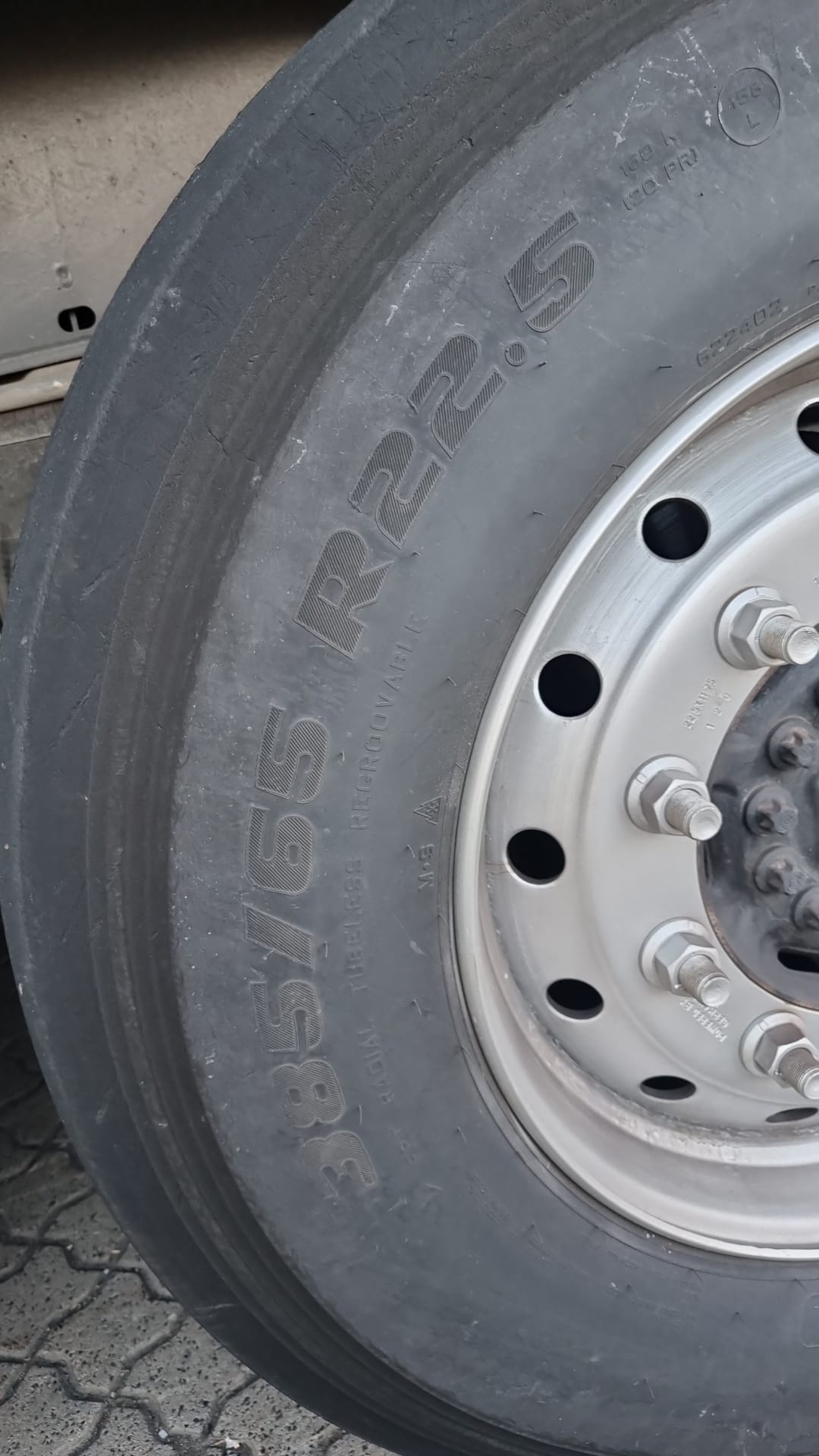
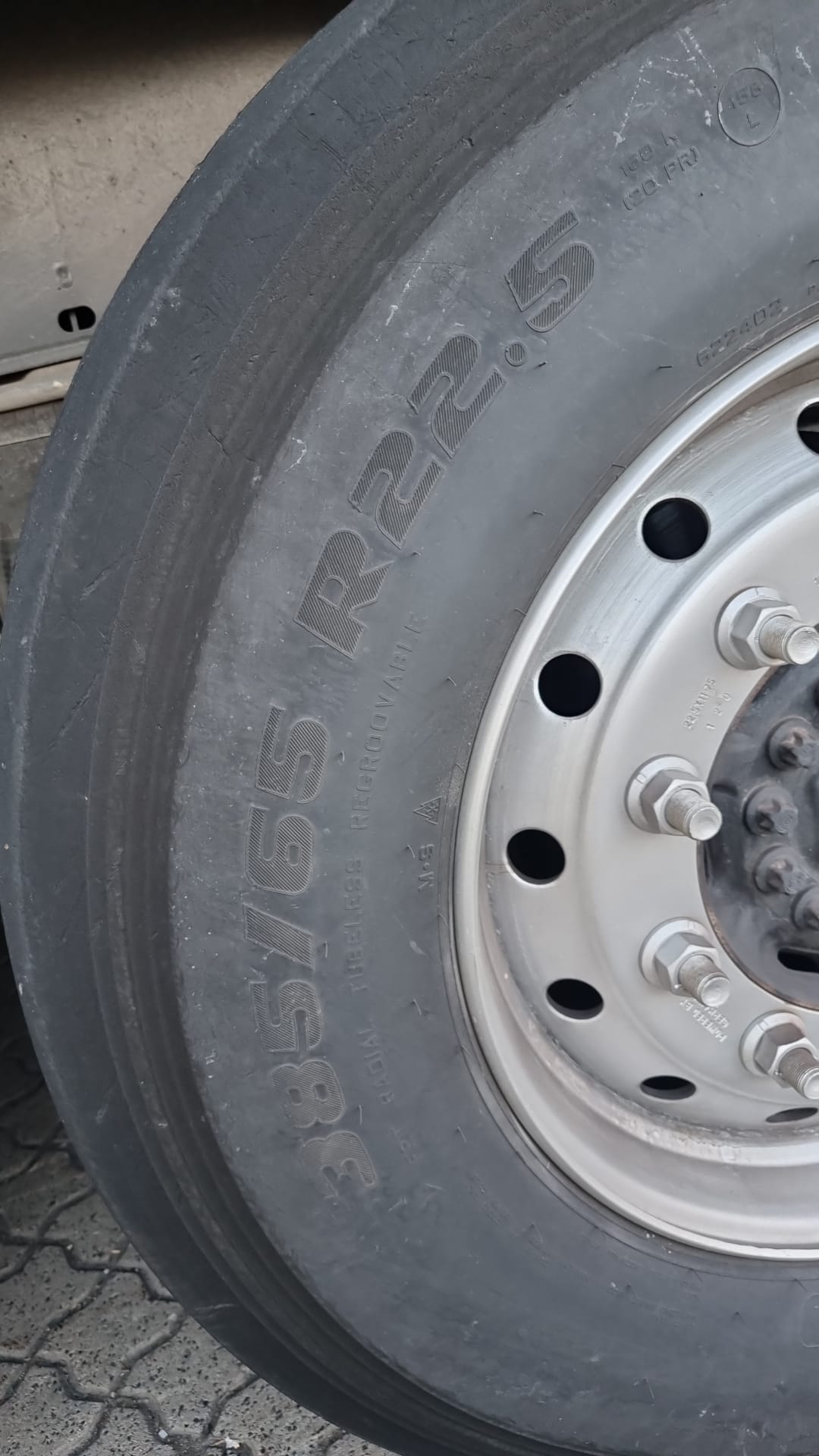
- Dispatch matches the job to the nearest available technician or regional service partner with the right stock for a 315/80 R22.5 lorry tyre
- The technician confirms tools, spare tyre stock, and torque equipment before leaving
- On arrival, the technician walks the full vehicle before touching anything, noting anything unusual on all axles
- Findings are relayed to the fleet manager in real time, so any replacement decision is agreed before work starts
Our regional service partner network across Germany means a mobile unit is rarely more than an hour from most Autohof locations on the main corridors, including the A81.
Why Long Standstills Cannot Be Ignored
A tyre under load is not a static object even when the vehicle isn’t moving. The carcass, the layered structure of steel and fabric belts beneath the tread, is designed to flex as the tyre rotates. When it sits still under the full weight of a laden or even unladen tractor unit, the same patch of rubber stays compressed for hours, days, or weeks.
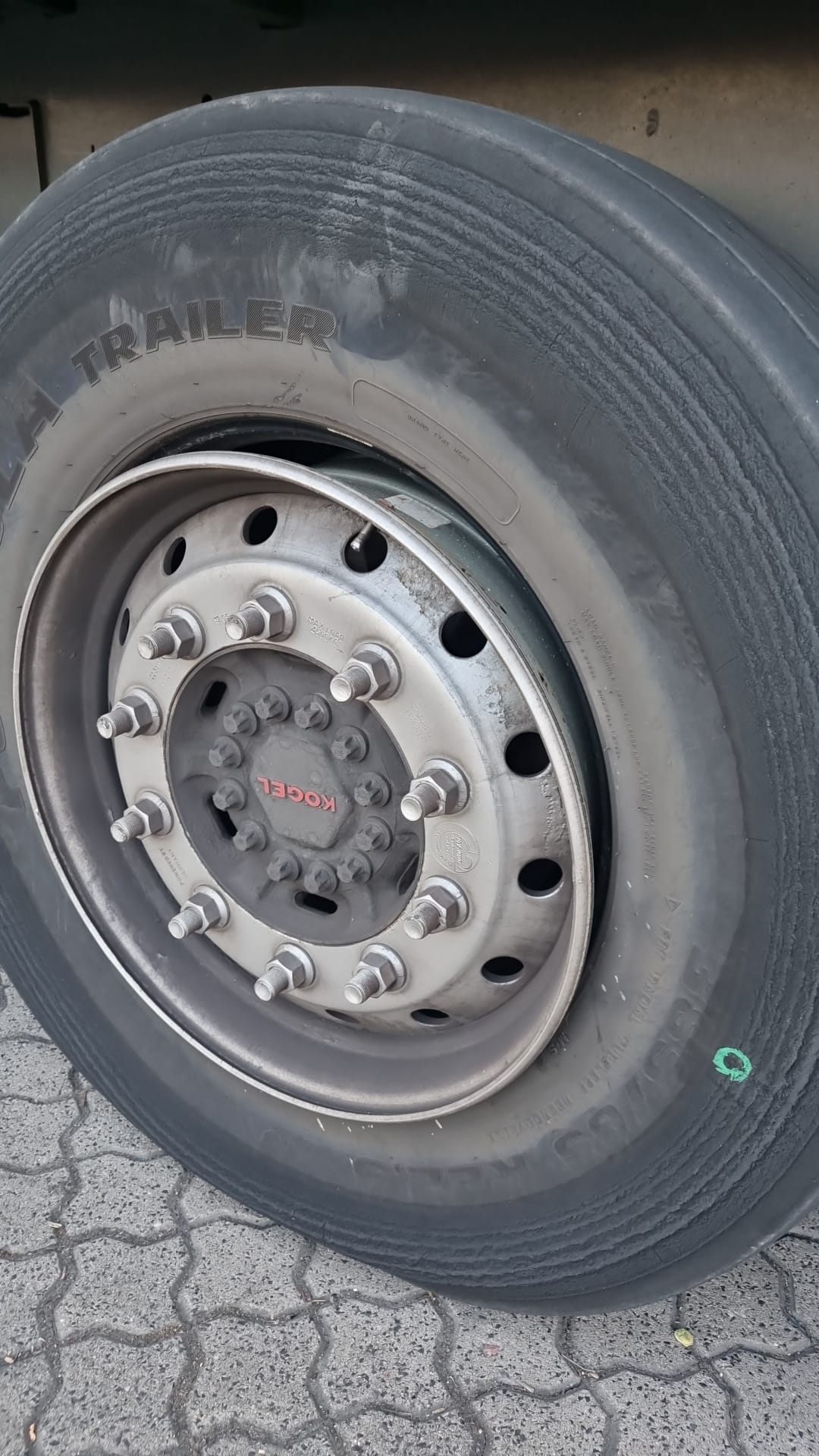
Flat spotting — permanent or temporary deformation of the tyre where it has been resting under load for an extended period, causing a flat section on an otherwise round tyre. Temporary flat spots usually work themselves out after a few kilometres of driving as the rubber warms and relaxes. Severe or long-standing flat spots can be permanent, in which case the tyre needs replacing rather than just running in.
Pressure is the other silent factor. Even a tyre with no puncture loses air over time, because gas molecules migrate slowly through rubber, a process called permeation. Over several weeks this loss is not trivial, and a tyre that looked fine when parked can be significantly underinflated by the time the vehicle is due back on the road.
There is a third dimension that many drivers overlook: the sidewall itself ages even when the tyre never turns. Heat, oxygen, and UV light break down the rubber compound gradually, and on a tyre standing in one position, the strain from the flat contact patch accelerates cracking on the sidewall closest to the ground.
Step-by-Step: Inspection and Repair Procedure
Step 1 — Visual check. The technician walked around the tractor unit, examining every tyre for flat spots, sidewall cracking, uneven wear, and visible tread depth. Attention went specifically to the steer axle, since steer tyres carry different loads and steering forces than drive-axle tyres.
Step 2 — Pressure check. Cold pressure was measured on all tyres with a calibrated gauge. Cold readings matter because a tyre that has just been driven or sat in direct sun will read higher than its true baseline, masking real loss.
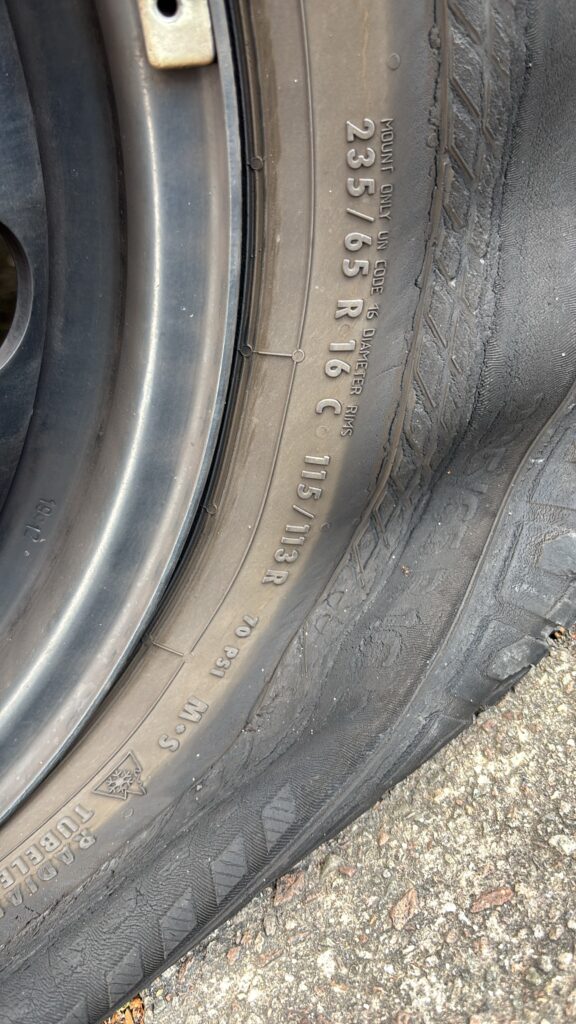
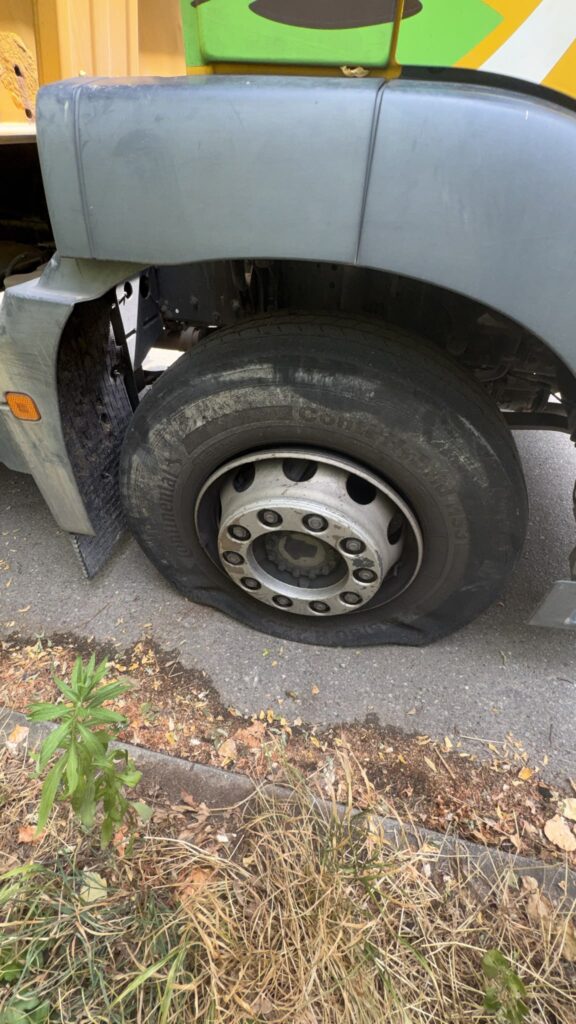
Step 3 — Removal and assessment. One steer-axle tyre showed ageing cracks running along the sidewall, deep enough that the technician judged it unsafe to return to service. It was removed for replacement rather than risk a sidewall failure at speed on the autobahn.
Step 4 — Fitting and balancing. The replacement 315/80 R22.5 tyre was fitted to the rim, checked for correct seating, and balanced on the wheel to prevent vibration at motorway speed.
Step 5 — Final torque check. Wheel nuts were tightened in a star, or crosswise, pattern to ensure even clamping force across the hub, then re-checked. A final pressure check was carried out across all tyres, not just the replaced one, before the vehicle was cleared.
Full Timeline: Call to Completion
| Time | Phase | Action |
|---|---|---|
| 09:10 | Call | Fleet manager reports the tractor unit needs a tyre check before returning to service after several weeks standing |
| 09:22 | Dispatch | Technician confirms, heads to the Autohof on the A81 near Heilbronn |
| 10:15 | Arrival | 53 minutes travel time |
| 10:15–10:35 | Visual inspection | All tyres checked for flat spots, ageing cracks, tread depth, cold pressure measured |
| 10:35–11:05 | Tyre replacement | One steer-axle tyre replaced due to sidewall ageing cracks |
| 11:05–11:20 | Completion | Wheel balancing, final pressure check on all tyres, torque check in a star/crosswise pattern |
| 11:20 | Done | Vehicle cleared to return to service |
Total time from call to completion: 2 hours 10 minutes (130 minutes). Travel time: 53 minutes. On-site working time: 65 minutes.
Cost of the Call-Out
| Item | Price (EUR, net, plus VAT) |
|---|---|
| Call-out fee | 220 |
| Labour (1.25 hrs at €110/hr: inspection, replacement, checks) | 140 |
| Truck tyre 315/80 R22.5 (steer axle) | 540 |
| Old tyre disposal | 20 |
| Wheel balancing | 35 |
| TOTAL | €955 net |
Pricing on a job like this depends mainly on the tyre size and specification, whether a replacement is needed at all, and how many axles need checking. A tractor unit alone is quicker to check than a full combination with a trailer.
For comparison, an idle or immobilised lorry typically costs a fleet somewhere in the region of €800 to €1,200 per day in lost use, driver downtime, and missed schedules. A €955 planned check that catches a cracked sidewall before it fails on the autobahn is, in that light, a modest outlay against the alternative.
Why You Need a Professional for This
A visual glance from the cab is not the same as a proper standstill inspection. Several risks make this a job for a trained technician rather than a driver on their own:
- Flat spots can look like they’ve “gone away” after a short drive when in fact the deformation is still present and only masked by warm rubber
- Sidewall ageing cracks are easy to miss without deliberately flexing and inspecting the rubber close up, particularly on the inner-facing sidewall of dual-mounted drive tyres
- Torque on wheel nuts needs a calibrated tool and the correct star pattern; under- or over-tightening after any wheel-off work can lead to a loose wheel or a cracked stud later
- Cold pressure readings taken incorrectly, for instance after the vehicle has already moved a short distance, give a false sense of security
- A DIY check has no record; a professional call-out gives the fleet manager a documented basis for the return-to-service decision
Typical Situations We Respond to Across Germany
Standstill checks like this one are one of several recurring jobs our dispatch handles nationwide:
- Seasonal vehicles brought out of winter storage before spring haulage picks up
- Reserve or backup tractor units in a fleet that sit for weeks between uses
- Vehicles parked during driver holidays, sick leave, or contract gaps
- Equipment left at an Autohof or yard during a project pause, such as construction downtime
- Trailers and semi-trailers stored between seasonal contracts, needing the same tyre and brake checks as tractor units
The Standstill Problem, in Depth
What exactly is flat spotting, and does it always go away?
Flat spotting — a temporary or permanent flat section on a tyre caused by the weight of the vehicle compressing the same contact patch for an extended period without rolling. Temporary flat spots, common after a few days to a couple of weeks standing, usually disappear after some kilometres of driving as friction heat lets the rubber recover its shape. Permanent flat spots, more likely after several weeks or in cold weather, do not recover and the tyre needs replacing.
The giveaway is vibration in the first few kilometres after a layup. If it fades as the tyre warms up, it was probably temporary. If it persists, or gets worse, stop and check. Wikipedia’s entry on tyre flat-spotting covers the mechanics in more technical detail, including why aircraft and classic-car tyres face the same problem.
How long can a lorry safely stand before tyres are affected?
There’s no single legal number, but as a practical guide, noticeable flat spotting risk starts to build after roughly one to two weeks stationary under full load, and grows the longer the vehicle sits, especially in hot weather when the rubber is softer and more prone to taking a set.
How should a vehicle be laid up properly for a long standstill?
Fleets that plan for extended downtime, rather than just parking and forgetting, typically do a few things differently:
- Inflate tyres slightly above normal running pressure before storage, since some pressure loss over weeks is inevitable
- Roll the vehicle forward a short distance every one to two weeks to shift the contact patch and avoid the same spot bearing all the load
- Where possible, unload the axles using axle stands, particularly for vehicles expected to stand for a month or more
- Park on a firm, level, shaded surface rather than direct sun on tarmac, which accelerates both heat build-up and rubber ageing
- Disconnect or trickle-charge the battery, since a flat battery is one of the most common reasons a “ready” reserve vehicle refuses to start
Does tyre pressure really drop without a puncture?
Yes. Air, mostly nitrogen and oxygen molecules, diffuses slowly through the rubber compound even with no leak, damage, or valve fault. This is normal permeation, not a fault, but over a month it adds up to a noticeable drop, sometimes several tenths of a bar. A vehicle that hasn’t moved for weeks should never simply be driven off on the assumption that “it looked fine when it was parked.” Cold pressure needs checking every time, full stop.
Does rubber age even if the tyre never touches a road?
Yes, and this surprises a lot of drivers. Ozone in the air, UV exposure, and daily temperature swings between hot afternoons and cool nights all degrade the rubber compound over time, independent of mileage. The visible sign is sidewall cracking, sometimes called weather checking, fine lines that spread across the sidewall rubber. A tyre can have plenty of tread depth left and still be unsafe because of age-related cracking.
DOT date code — a four-digit code moulded into the tyre sidewall showing the week and year of manufacture, used to track tyre age independent of tread wear or mileage. Fleets managing reserve vehicles should check this code as part of any return-to-service inspection, since a tyre that’s been in storage for years before it was ever fitted can already be well into its useful life before the first kilometre.
Germany’s regulation on tyre condition, § 36 StVZO, sets requirements around tread depth and overall tyre condition, and age-related cracking that compromises the carcass falls squarely within what makes a tyre non-roadworthy under that rule, regardless of remaining tread.
What else goes wrong on a lorry that’s been standing for weeks?
Tyres get most of the attention, but they are far from the only system affected by standstill:
- Brake discs and drums develop light surface corrosion where the pads sat in one position, especially after rain, which can cause dragging or uneven braking on the first few applications
- Batteries lose charge through parasitic drain and natural self-discharge, and a battery that’s been sitting for a month may not have enough cranking power left
- Rubber seals around doors, air lines, and the cab dry out and can crack or lose their grip, leading to leaks that only show up once the vehicle is back in daily use
- Condensation builds up in the air brake system’s reservoirs over time, which can freeze in cold weather or cause corrosion inside brake valves
- Wheel bearings and hub grease can settle unevenly, worth a temperature check on the first drive
Why are the first kilometres after a layup the most dangerous?
Because several of these issues compound at once. A tyre with a residual flat spot vibrates, brakes that have picked up light surface corrosion drag unevenly until the first few applications wear it off, and pressure that’s crept down over weeks means the tyre is running softer than it should. Combine those three on a vehicle merging onto a fast-moving autobahn and the margin for error shrinks fast. This is exactly why a planned check before return to service, rather than trusting the vehicle “as parked,” matters as much as it does.
Who experiences seasonal standstill, and why do reserve vehicles break down more?
Seasonal standstill is common across transport and construction: winter downtime for site vehicles, off-season gaps in seasonal haulage contracts, and fleet reserve units kept as backup that might sit for months between uses. Reserve vehicles, somewhat counterintuitively, tend to break down more often than daily-driven trucks in the same fleet, precisely because none of the slow, standstill-related issues above get caught early. A daily-driven vehicle reveals a dragging brake or a slow leak within a day or two. A reserve vehicle can carry the same fault for weeks before anyone notices, by which point it’s a bigger repair.
Return-to-Service Checklist
Before any vehicle that has stood for more than a week or two goes back into daily rotation, a few checks are worth doing every time:
- Cold tyre pressure on every wheel position, checked before the vehicle has moved
- Visual sidewall inspection for cracking, bulges, or embedded debris
- Roll the vehicle a short distance and listen and feel for vibration consistent with flat spotting
- Low-speed brake test in a safe, open area before joining fast traffic
- Hub temperature check after the first 20 to 30 km, since a dragging brake or failing bearing will show up as unusual heat at the wheel
Prevention Tips for Drivers and Fleets
A few habits reduce the risk that a standstill turns into an unplanned repair bill later:
- Log the date any vehicle goes off the road, so the standstill duration is known rather than guessed at
- Build a return-to-service check into the process as a fixed step, not something left to the driver’s discretion on a busy morning
- Rotate reserve vehicles into occasional short drives if the fleet has the flexibility, rather than letting one unit sit untouched for months
- Keep an eye on tyre DOT codes across the fleet, not just tread depth, especially on vehicles that see low mileage
Why Choose Us
Our dispatch runs 24/7, covering breakdowns, planned checks, and everything in between across all of Germany. Technicians and our regional service partner network carry the stock needed for common lorry tyre sizes, so replacements like the one on this DAF tractor unit don’t turn into a second, separate visit. Pricing is agreed before work starts, with no surprises on the invoice, and dispatch communicates in German, English, and Polish depending on who’s calling.
Whether it’s a genuine roadside breakdown or, as here, a planned tyre check on a truck service call before a vehicle returns to duty, the same standard applies: a documented inspection, clear pricing, and a technician who knows what to look for on a vehicle that’s been standing rather than driving.
Summary: Key Figures
- Date: 27 July 2026, Autohof on the A81 near Heilbronn
- Vehicle: DAF articulated tractor unit, parked for several weeks
- Total time, call to completion: 2 hours 10 minutes
- Travel time: 53 minutes; on-site working time: 65 minutes
- Work carried out: full tyre inspection, one steer-axle tyre replacement, balancing, star-pattern torque check
- Total cost: €955 net
- Comparison: a day of lorry downtime typically runs €800–1,200
Get in Touch
If a vehicle in your fleet has been standing and needs a proper check before it goes back on the road, or if you need mobile truck service anywhere in Germany right now, call us on +49 160 5753826 or visit www.lkwhelp24.com. We operate 24/7, all across Germany.
Keywords: tyre check after standstill | truck tyre service | DAF tractor unit inspection | flat spotting lorry tyres | mobile tyre service Germany | steer axle tyre replacement | A81 Heilbronn truck stop | fleet return to service checklist | § 36 StVZO tyre condition | lorry downtime cost