Skip to content
TL;DR: A tractor unit lost power and started jerking under load at a truck stop on the A14 near Naumburg on 26 July. The cause was contamination and a pressure drop in the common-rail fuel system, not a broken high-pressure pump or injectors. A regional partner technician read the fault codes, tested rail pressure, replaced the fuel filter and water separator, drained water from the pre-filter and tank, bled the system and sent the driver back on the road in 3 hours for a net €800. Had the pump or injectors themselves been damaged, roadside repair would not have been possible at all.
That last point matters more than the invoice. High-pressure pumps and injectors are the most expensive wear parts on a modern diesel engine, and they fail in a way that has nothing to do with luck. This case is a useful illustration of the difference between “fixable in a car park” and “needs a workshop with a test bench,” and why fuel discipline on long hauls is not a minor housekeeping detail.
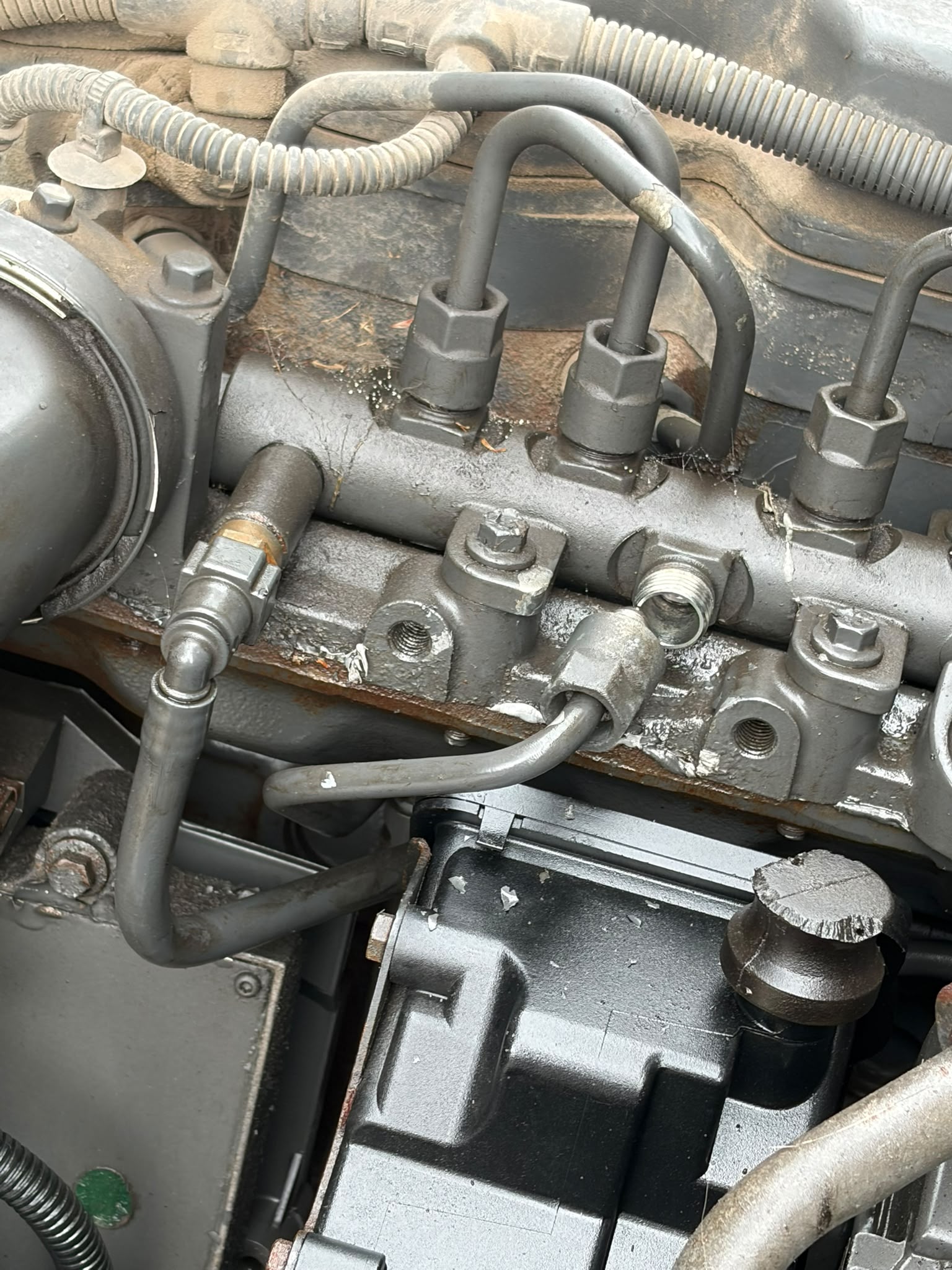
The emergency situation
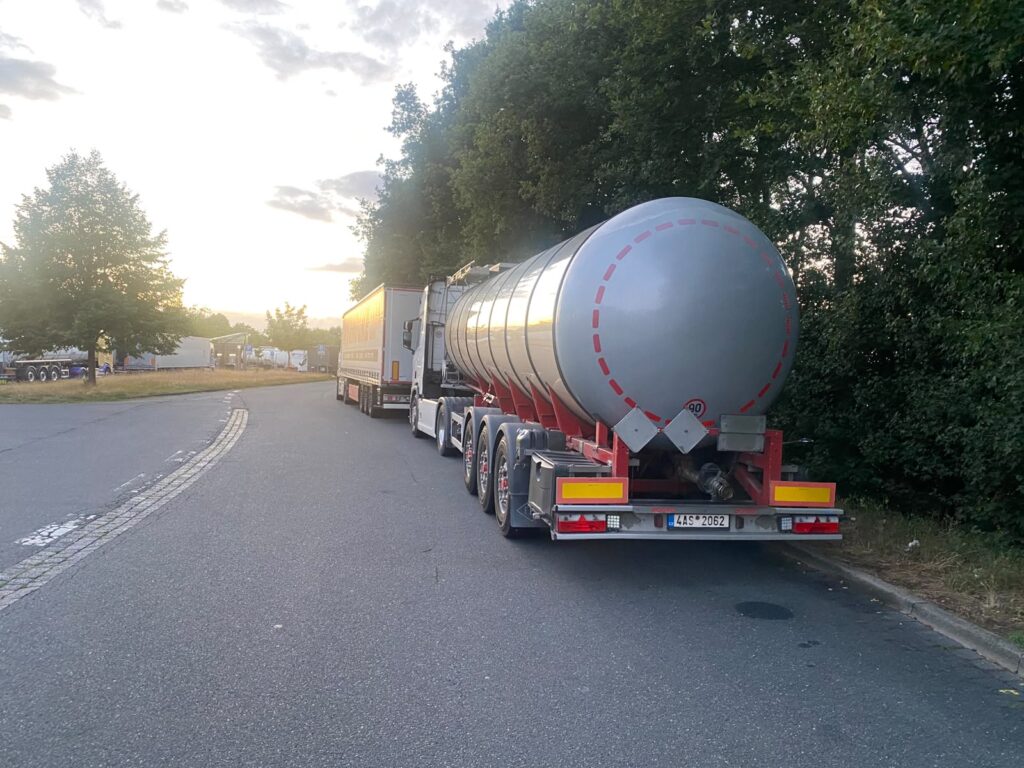
The driver pulled into a truck stop (Autohof) on the A14 near Naumburg in Saxony-Anhalt on the afternoon of 26 July because the engine had started losing power under load. On the gentle gradients typical of that stretch of autobahn, the truck was jerking and hesitating instead of pulling cleanly, the kind of symptom that gets worse, not better, the longer you keep driving.
He did the right thing and stopped rather than trying to nurse the lorry to the next depot. Power loss under load, combined with jerking, is a classic sign of a pressure problem somewhere between the tank and the injectors. It can be as simple as a clogged filter or as serious as physical damage inside the injection system. From the driver’s seat, the two feel almost identical. Only a pressure test tells you which one you are dealing with.
How the help was organised
The call came in at 09:40. Our dispatcher took the description over the phone: power loss and jerking under load, engine otherwise running, no unusual noises reported. That combination pointed towards the fuel supply side rather than a mechanical fault, so the case went to a technician with common-rail diagnostic equipment rather than a generalist.
- Driver reports the fault and location at 09:40.
- Dispatch identifies the nearest regional partner workshop with the right diagnostic kit.
- Technician is briefed on symptoms by phone before leaving, so the right tools go in the van the first time.
- Technician drives to the truck stop.
- On arrival, diagnosis starts immediately rather than a general inspection.
Fifteen minutes passed between the call and the technician being briefed and moving. That is not instant, but it is realistic: a job like this needs someone who actually carries a pressure-test kit and a laptop with the right diagnostic software, and not every nearby technician does.
Situation on site: why this can’t just be ignored
A driver who keeps pushing a truck with fuel pressure problems is gambling with the most expensive parts under the bonnet. Common-rail systems run at pressures well above 1,500 bar, and the pump and injectors are machined to tolerances measured in microns, not millimetres. Water or grit in the fuel scores those surfaces almost immediately, and once the metal is damaged there is no cheap fix.
By the time the technician arrived at 10:45, the driver had switched the engine off and left it, which was the sensible call. Continuing to drive on contaminated fuel means the injectors run a leaner, less controlled spray pattern, combustion gets hotter and less even, and components start overheating and scoring. What starts as a filter problem can turn into a full injection system overhaul within a few hundred kilometres if the driver keeps going.
Typical warning signs of this kind of fault, in roughly the order drivers report them:
- Power loss under load or on gradients
- Jerking or hesitation when accelerating
- Dark or black exhaust smoke
- Hard starting, especially in the morning
- Noticeably higher fuel consumption
- A fault code referencing rail pressure or fuel quantity control
Step-by-step: diagnosis and repair
Step 1: Fault code read-out. The technician connected diagnostic equipment and pulled the stored fault codes first, before touching anything mechanical. This narrowed the search to the fuel rail pressure circuit rather than ignition or turbo faults.
Step 2: Pressure test on the common-rail. With the codes pointing at pressure, the technician ran a live pressure test on the rail under cranking and idle conditions. Readings were low and unstable rather than absent, which is the pattern you see with restriction or contamination, not with a seized pump.
Step 3: Visual check of filter and water separator. The fuel filter looked overdue and the water separator bowl had a visible layer of water sitting under the diesel, a fairly clear sign of where the problem was coming from.
Step 4: Replace filter and separator, drain the system. The fuel filter and water separator were replaced. Water and sediment were drained from both the pre-filter housing and, as a precaution, from the bottom of the tank itself.
Step 5: Bleed and flush, then re-test. The system was bled of air, the fuel line flushed through, and the rail pressure test repeated to confirm the readings had come back into spec before releasing the vehicle.
Full timeline
| Time | Phase | Action |
|---|---|---|
| 09:40 | Call-in | Driver reports power loss and jerking under load at the truck stop on the A14 near Naumburg |
| 09:40–09:55 (15 min) | Dispatch | Regional partner workshop alerted, technician briefed |
| 09:55–10:45 (50 min) | Travel | Drive to the truck stop |
| 10:45–11:25 (40 min) | On-site diagnosis | Fault code read-out, pressure test on the common-rail fuel rail, visual check of filter/water separator |
| 11:25–12:20 (55 min) | Repair | Fuel filter and water separator replaced, water/sediment drained from pre-filter and tank, system bled and line flushed |
| 12:20–12:40 (20 min) | Test drive & final check | Test drive under load, pressure readings confirmed |
Total time from call-in to release: 3 hours (180 minutes).
Costs
| Item | Price (EUR) |
|---|---|
| Call-out fee (daytime) | 220 |
| Diagnostics (fault read-out, fuel rail pressure test) | 150 |
| Fuel filter + water separator – parts & labour | 240 |
| Draining water/sediment, bleeding and flushing the system | 130 |
| Additional on-site labour (0.5 hr) | 60 |
| Total (net, plus VAT) | 800 |
Three things push this price up or down in similar cases: time of day (night and weekend call-outs cost more), how much sediment has actually reached the tank (a full drain-and-clean job takes longer than a quick filter swap), and whether the fault code points at the rail circuit alone or hints at pump-side damage, which changes the whole scope of work.
Set against downtime, €800 is not a bad outcome. A stationary long-haul truck typically costs an operator somewhere in the region of €800–1,200 a day once you count lost mileage, driver hours and missed delivery windows, according to typical fleet cost estimates used across the haulage industry. In this case the truck was back on the road well within a single working day, which kept the delivery on schedule rather than turning into a missed slot and a rescheduled load.
Why you need a professional, not a DIY fix
It’s tempting to think a fuel filter change is something any driver could do with a spare filter in the cab, and in fairness, some drivers do carry one. The part that isn’t DIY-friendly is the diagnosis. Bleeding a common-rail system incorrectly can introduce air that causes hard starting or misfires that look like a completely different fault. Draining the wrong point, or draining an amount of water that suggests the tank itself has rust or internal corrosion, needs a trained eye to catch before it becomes a much bigger repair.
And critically: if the pressure test on site had shown the pump itself was failing, or that individual injectors were leaking or sticking, none of that gets fixed at a truck stop. Repairing or replacing a high-pressure pump and injector set on a modern common-rail diesel typically runs somewhere around €1,500 to €4,000 or more depending on scope, parts and labour, often with the truck off the road for several days while it sits on a specialist test bench. Manufacturers such as Bosch, whose common-rail systems are fitted across a large share of the European truck fleet, design these pumps to extremely tight tolerances precisely because that precision is what lets the engine meet emissions and fuel economy targets. It is also exactly why they are unforgiving of contamination.
Typical fuel-related situations we respond to
Roadside fuel faults come in a fairly narrow set of patterns, and dispatchers learn to recognise them from the first phone call:
- Power loss or stalling caused by a clogged or waterlogged filter
- Wax or paraffin crystallisation in cold weather, blocking the filter with waxy diesel rather than dirt
- Water ingress from condensation in a half-empty tank, especially overnight in autumn and winter
- Fuel contaminated at questionable filling stations, sometimes with visible sediment in the tank
- Injector faults following a long period of running on poor-quality fuel
- Fuel gelling in extreme cold, distinct from contamination but with similar symptoms
Prevention: what actually reduces the risk
Most of this is boring, and that’s exactly why it works. Keep the tank as full as practical overnight, especially heading into autumn and winter, because a near-empty tank has more air space and more condensation forms on the inside walls as temperatures swing. Drain the water separator on the schedule the manufacturer specifies rather than waiting until the dashboard warns you. Change the fuel filter on the interval, not “until it stops working,” because a filter that’s already struggling won’t stop fine contaminants from reaching the pump even before it fully blocks.
Fuel quality matters more on a long haul than a few cents per litre. Fuelling at unfamiliar, cut-price stations occasionally makes sense on a tight schedule, but doing it as a habit raises the odds of picking up water or sediment, and one bad tank can wipe out weeks of fuel savings if it damages the injectors. Sticking to well-known networks with high turnover, where fuel doesn’t sit in the tank for weeks picking up condensation, is a cheap form of insurance.
On additives: some products genuinely help, particularly water-dispersants and cetane improvers used correctly in cold weather, but no additive substitutes for a clean tank and a filter changed on schedule. Treat additives as a supplement to good fuel discipline, not a replacement for it.
A wider note on common-rail systems and fleet maintenance
Common-rail injection, first widely adopted in heavy trucks in the late 1990s and early 2000s, replaced older mechanical injection pumps with a system that stores fuel at very high pressure in a shared rail and meters it electronically to each injector. The upside is much finer control over combustion, better fuel economy and lower emissions. The Wikipedia entry on common rail is a reasonable starting point if you want the engineering background beyond what’s useful here.
The downside is tolerance for error dropped sharply compared with older mechanical systems. A 1990s inline pump could shrug off fuel that would wreck a modern common-rail pump within a few hundred kilometres. Fleet managers who run mixed-age vehicles sometimes underestimate this: the fuel discipline that was “good enough” for an older truck genuinely isn’t good enough for a newer one. Regular filter changes, tank inspections and driver training on fuelling habits pay for themselves many times over against a single pump-and-injector replacement bill.
Bodies such as ADAC and TÜV publish general guidance on fuel system maintenance and roadworthiness checks that’s worth reviewing for fleets standardising a maintenance schedule across a mixed fleet of tractor units.
Why choose lkwhelp24
We run dispatch 24 hours a day, every day of the year, across Germany, and route jobs to vetted regional partner workshops rather than sending whoever happens to be free. For a fuel system fault that means a technician who actually carries pressure-test equipment, not just a generic breakdown van. Dispatchers work in German, English and several other languages so a driver from anywhere in Europe can describe the fault accurately on the first call. Pricing is quoted before work starts, itemised the way the table above shows it, with no surprises on the invoice at the end.
Related services:
– Mobile truck service across Germany
– Truck repair and workshop service
– Tyre service for trucks
– Towing service
FAQ
Can a fuel filter change really fix power loss and jerking? Often, yes, if the cause is contamination or water rather than mechanical damage. A pressure test after the filter change confirms whether rail pressure has returned to normal before the truck is released.
How do I know if it’s wax crystallisation or contamination? Wax crystallisation typically appears suddenly in cold weather and clears once the fuel warms up or a cold-flow additive is used. Contamination doesn’t improve with temperature and usually shows visible water or sediment in the filter bowl.
Can the driver just keep driving to the next depot? Not recommended. Running an engine with low or unstable rail pressure risks scoring the pump and injectors, turning a €800 filter job into a multi-thousand-euro pump and injector replacement.
What if the pump or injectors are actually damaged? That can’t be repaired roadside. The truck needs recovery to a specialist workshop with a test bench, and repair or replacement typically costs roughly €1,500–4,000+ with the vehicle off the road for several days.
How much does a callout like this cost? In this case, €800 net plus VAT covered the callout fee, diagnostics, parts and labour, and the water/sediment drain. Costs vary with time of day, contamination level and diagnostic complexity.
Do fuel additives prevent this kind of fault? Water-dispersant and cetane-improving additives can help, particularly in winter, but they don’t replace scheduled filter changes and draining the water separator. Treat them as a supplement, not a fix.
Summary
A tractor unit on the A14 near Naumburg lost power under load on 26 July because of contamination and a pressure drop in the common-rail fuel system. A regional partner technician read the fault codes, confirmed low and unstable rail pressure, replaced the fuel filter and water separator, drained water from the pre-filter and tank, bled the system and confirmed pressure on a test drive. Total time from call to release: 3 hours. Total cost: €800 net plus VAT. The high-pressure pump and injectors were undamaged, which meant this stayed a roadside job rather than a multi-day workshop repair costing several thousand euros.
Get help now
If your truck is losing power, jerking under load, or throwing a fault code anywhere in Germany, call +49 160 5753826. We dispatch 24/7, every day of the year, across the entire country. More at www.lkwhelp24.com.
Keywords: truck fuel system diagnosis Germany | common rail pressure test roadside | truck breakdown A14 Naumburg | fuel filter water separator truck | injector pump repair cost | 24/7 truck roadside assistance Germany | diesel contamination truck repair | mobile truck fuel diagnostics | lkw kraftstoffsystem diagnose | truck power loss under load fix