Skip to content
TL;DR: Early on 7 August, a DAF articulated lorry refused to start at a truck stop on the A2 near Bad Oeynhausen, heading towards Hanover — both 12V batteries in its 24V electrical system had failed. Our technician arrived 45 minutes after the call, replaced both batteries as a matched pair, and checked the alternator and terminals. From the first call to the driver pulling away: 1 hour 50 minutes, total cost €870 net.
A lorry that won’t start in the morning is more than a nuisance for a professional driver. Every minute stuck at a truck stop eats into driving time, pushes back a delivery slot, and on time-critical loads can turn into a contractual penalty. On an articulated lorry running a 24V electrical system, swapping “any battery that fits” is not enough either — cut that corner and the driver is back on the hard shoulder the next morning.
This report walks through the real callout: why lorry batteries seem to die suddenly, what our technicians actually tested on the vehicle, and why both batteries were replaced together rather than just the obviously weaker one.
The Emergency: A Cold-Start Failure at a Truck Stop
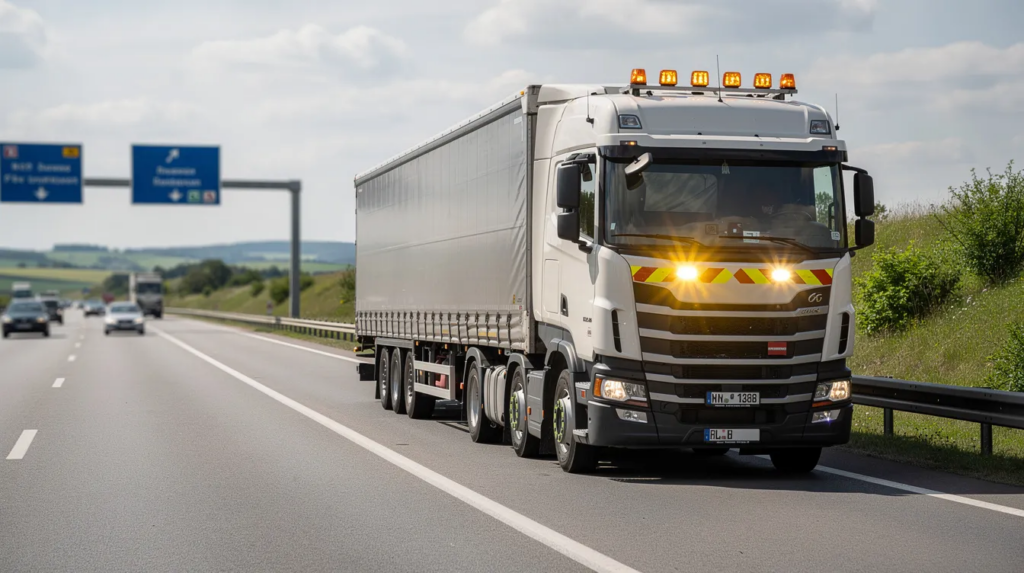
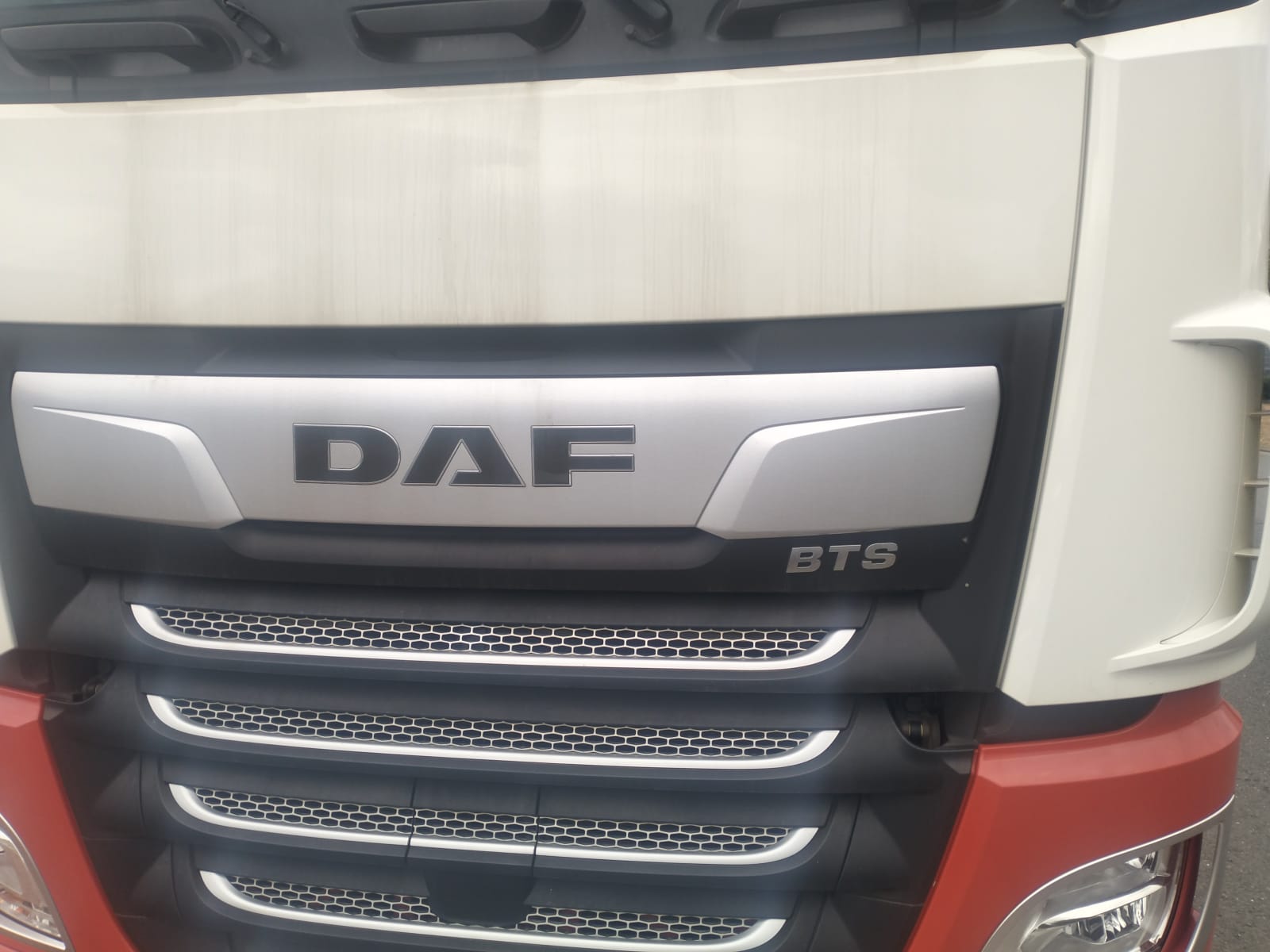
The driver of a tractor unit from DAF tried to pull out from a truck stop on the A2 near Bad Oeynhausen, heading towards Hanover, early in the morning of 7 August. Turning the key produced no cranking, just a weak click, then silence. Voltage across the electrical system was next to nothing — a textbook battery failure in the twin-battery 24V system fitted to almost every heavy artic on the road.
The driver called our emergency line. He was parked safely on the truck stop grounds, no roadside risk, but with no working night heater, no fridge unit running on any trailer that carried one, and no way to start his working day. This is exactly the situation our mobile truck service is built for: bring the workshop to the vehicle, not the other way round.
How the Callout Was Handled
Our dispatch team follows a fixed sequence the moment an emergency call comes in:
- Log the location and vehicle type — DAF artic, truck stop on the A2, no access restrictions.
- Ask about symptoms over the phone — no cranking, no dashboard lights, no relay clicking. That combination points almost always to both batteries, not a blown fuse.
- Assign the right technician from the regional partner network, carrying replacement batteries of the correct capacity.
- Communicate the arrival time, asking the driver to keep hazard lights and a warning triangle ready in case any manoeuvring is needed.
- On-site diagnosis first, repair approval second — the driver is told the price before any work begins.
This structure isn’t paperwork for its own sake. It prevents a technician turning up with the wrong parts and saves exactly the minutes that matter when a driver’s whole day is already delayed.

Why Truck Batteries Seem to Die Suddenly
Two 12V batteries wired in series make up a lorry’s 24V system — once one starts to age, the other inevitably suffers alongside it. Heavy commercial vehicles run two 12V batteries in series. If one loses capacity, the other has to supply more current during cranking to hold the combined voltage, gets overloaded, and ages faster as a result. The failure looks sudden, but it is usually the endpoint of a gradual decline over several weeks.
That was exactly the case at the truck stop near Bad Oeynhausen. Both batteries tested with significantly reduced capacity — neither one alone was the cause; it was the combination.
Why Winter and Long Standing Times Make It Worse
Cold cuts a battery’s available cold-cranking current by up to 50% at -18°C, and standing overnight with a night heater, fridge unit, or inverter running drains the battery further without the engine ever turning to recharge it. Chemical reactions inside a battery cell slow down at low temperatures, raising internal resistance. At the same time, a cold diesel engine demands more current to start than a warm one. That combination is the single most common reason failures cluster in the colder months.
The problem is real in summer too, whenever a driver spends a long weekend parked at a truck stop. A night heater, a 12V cooler, or an inverter running a laptop and coffee machine draw current continuously with no engine running to top it back up. A battery that has already lost condition rarely survives that unscathed.
Parasitic Drains Nobody Thinks About
A tachograph, telematics unit, and alarm system draw current around the clock, even with the engine off — over a long weekend that alone can flatten a battery without a single component failing. Modern tractor units are packed with electronics that stay in standby permanently: the digital tachograph, GPS tracking for the haulier, alarm systems, sometimes even a trailer refrigeration unit with its own control module. Each draw is tiny on its own — a few milliamps — but across 60 to 70 hours of standing time over a weekend, that is enough to push a weakened battery below the threshold needed to start the engine.
For fleet operators this is an underestimated cost driver. A lorry that starts without issue on Friday evening can be completely dead by Monday morning, with nothing actually broken.
Why a Jump Start Often Doesn’t Solve the Problem
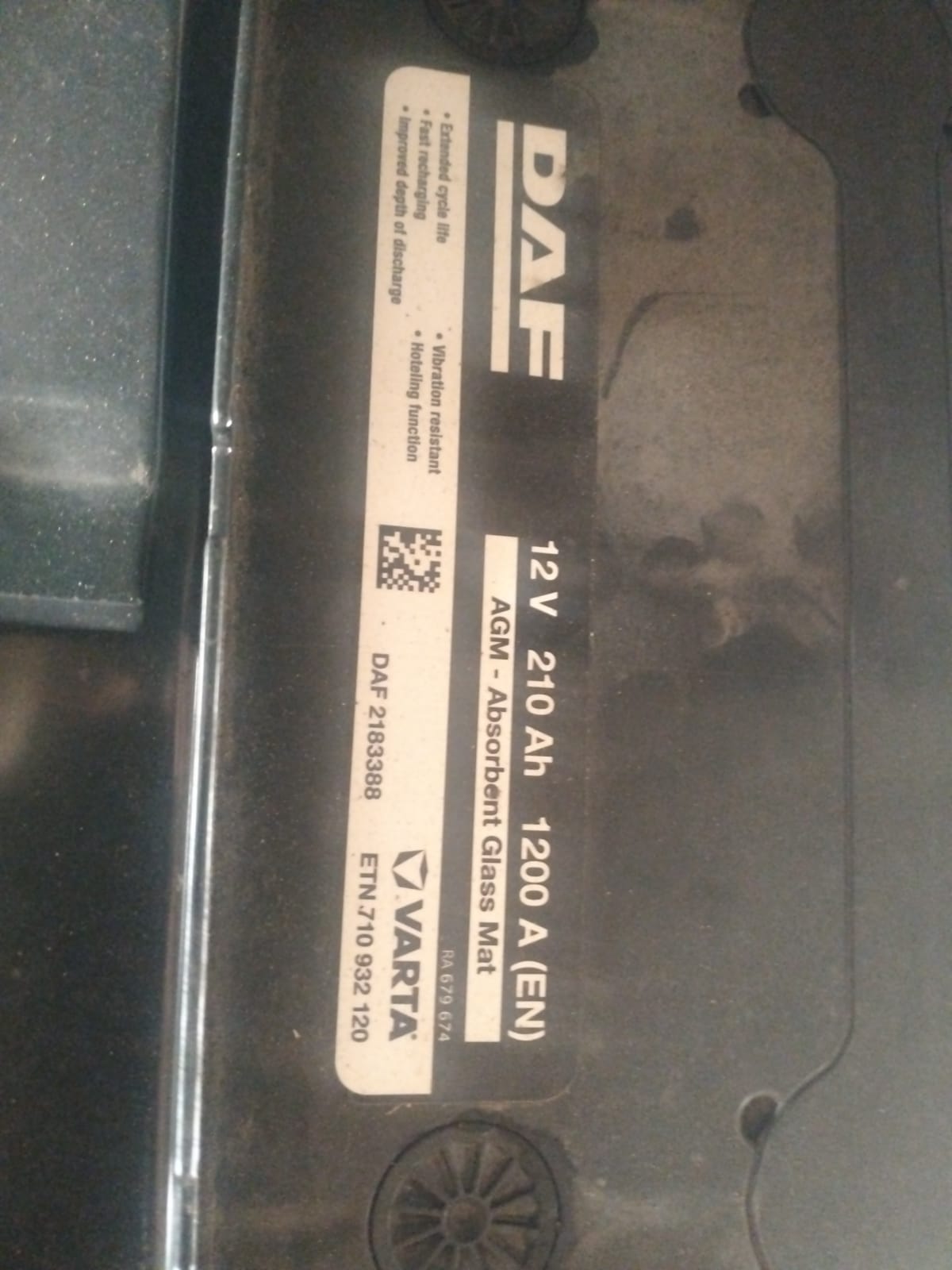
A jump start gets the engine running but doesn’t fix the underlying issue if the battery has already lost capacity — the driver is left stranded again at the next stop. Jump leads supply enough current from a donor vehicle to spin the starter motor. Once the engine is running, the alternator theoretically recharges the battery. But a battery with significantly reduced capacity often can’t take on enough charge during the drive to the next break. The driver assumes the problem is solved and, hours later, is stuck with a dead vehicle again — often somewhere far less convenient than before.
Our technicians draw an honest line here. If a battery test after a jump start shows stable charging voltage and normal capacity, a jump start is enough. If the test shows permanent capacity loss, we recommend replacement, even though a jump start would be cheaper in the moment. A breakdown on open road costs far more than replacing the battery at the depot.
Why Both Batteries Are Always Replaced Together
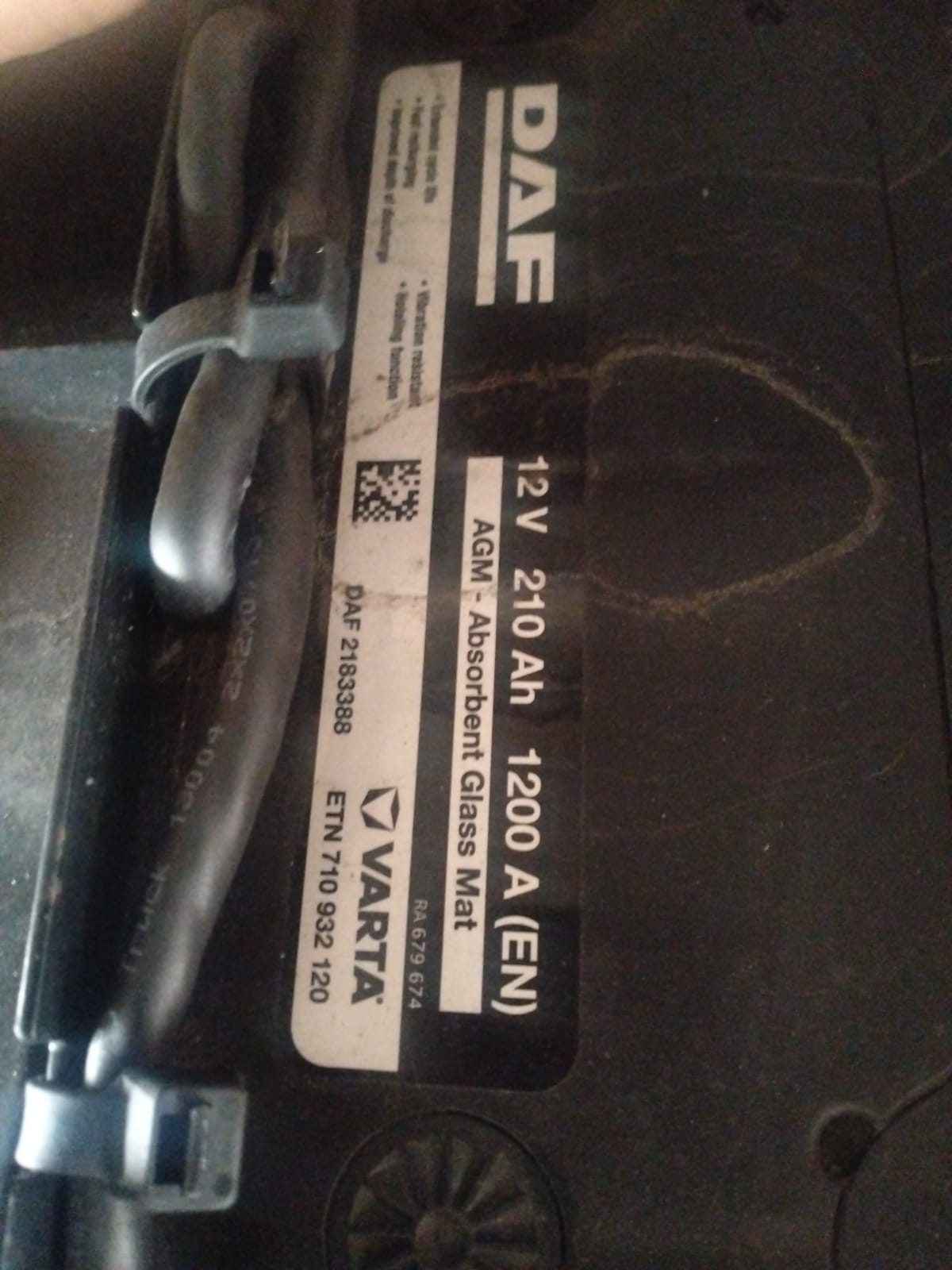
Fitting one new battery next to an old one is wasted money — the new battery degrades quickly alongside the weaker one, because both share the same charging curve and current. In a series-wired pair, the weaker battery does not fall in line with the stronger one. It works the other way round: the alternator charges both through the same regulator, the weaker cell gets overworked during charging, ages faster, and the new battery visibly loses capacity within a few months because it is constantly compensating for its worn partner.
This rule is often underestimated by drivers, and sometimes by workshops, when only one battery is visibly causing trouble. On a 24V system the rule is simple: replace both together, or not at all. That’s exactly what our technicians did on this DAF — both batteries were swapped, not just the one that looked weaker at first glance.
Cold-Cranking Current and Capacity: How the Right Battery Is Chosen
For an articulated lorry it isn’t enough that a battery physically fits the tray. Two figures matter far more:
- Cold-cranking amps (CCA) — how much current the battery can deliver to the starter motor at -18°C. Get this too low and the starter turns sluggishly in winter.
- Capacity in amp-hours (Ah) — how long the battery can run accessories with the engine off, relevant for a night heater, fridge unit, and telematics.
A battery that only “fits the tray” but is undersized rarely lasts a full year in the day-to-day work of a long-haul artic. Our technicians select batteries based on vehicle type and typical duty cycle, not on whatever happens to be within reach on the van.
What Gets Checked Besides the Batteries
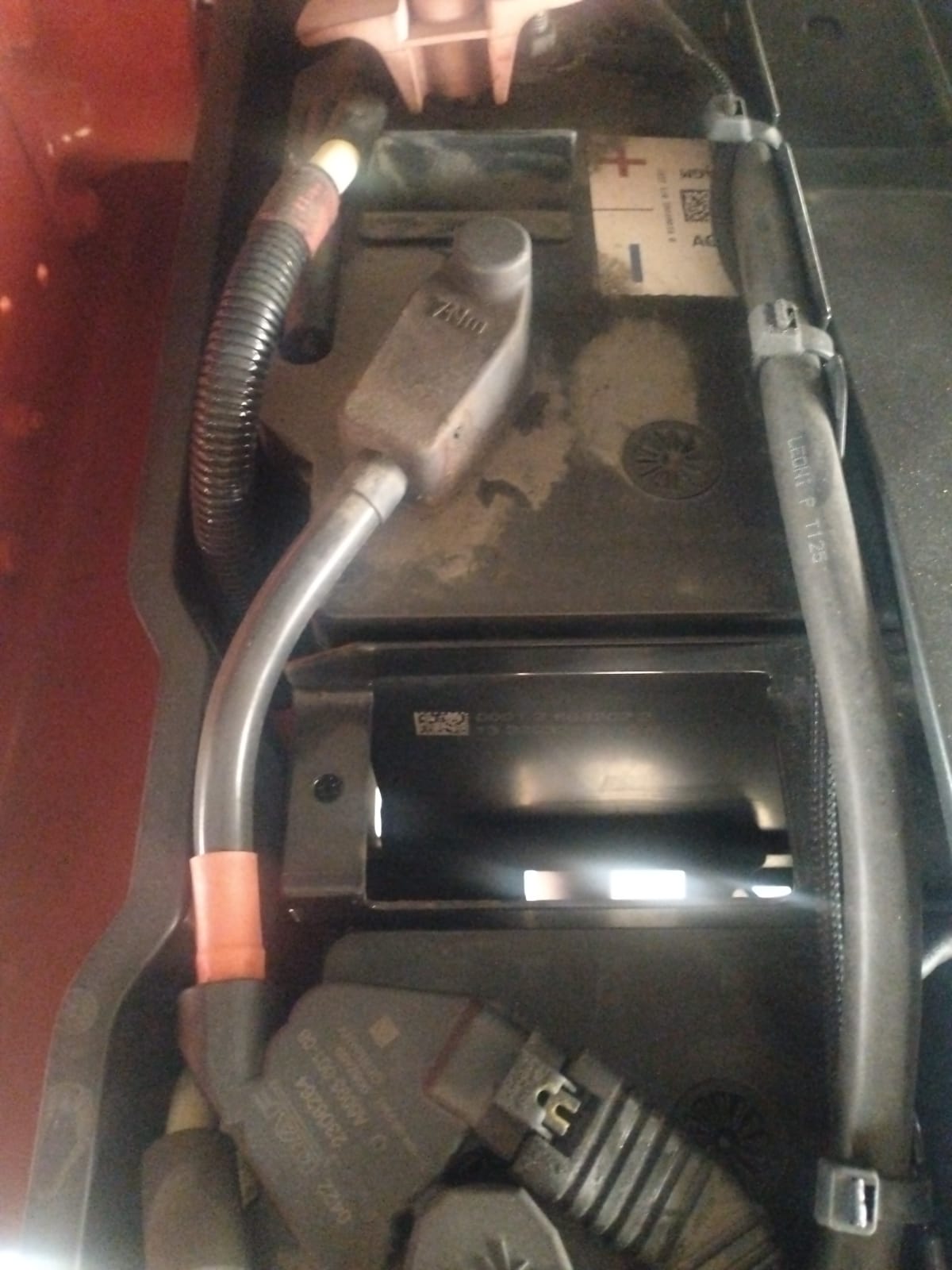
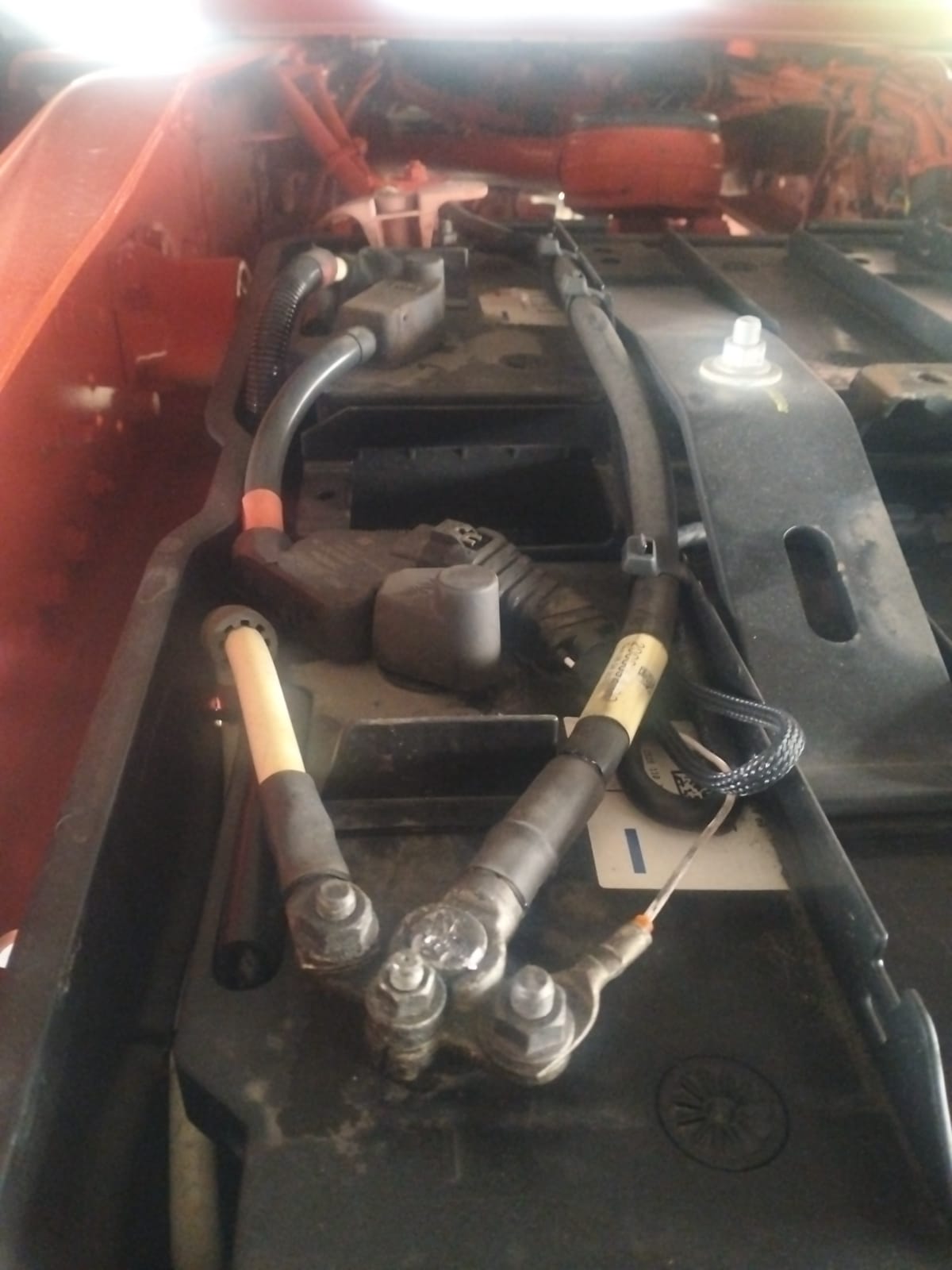
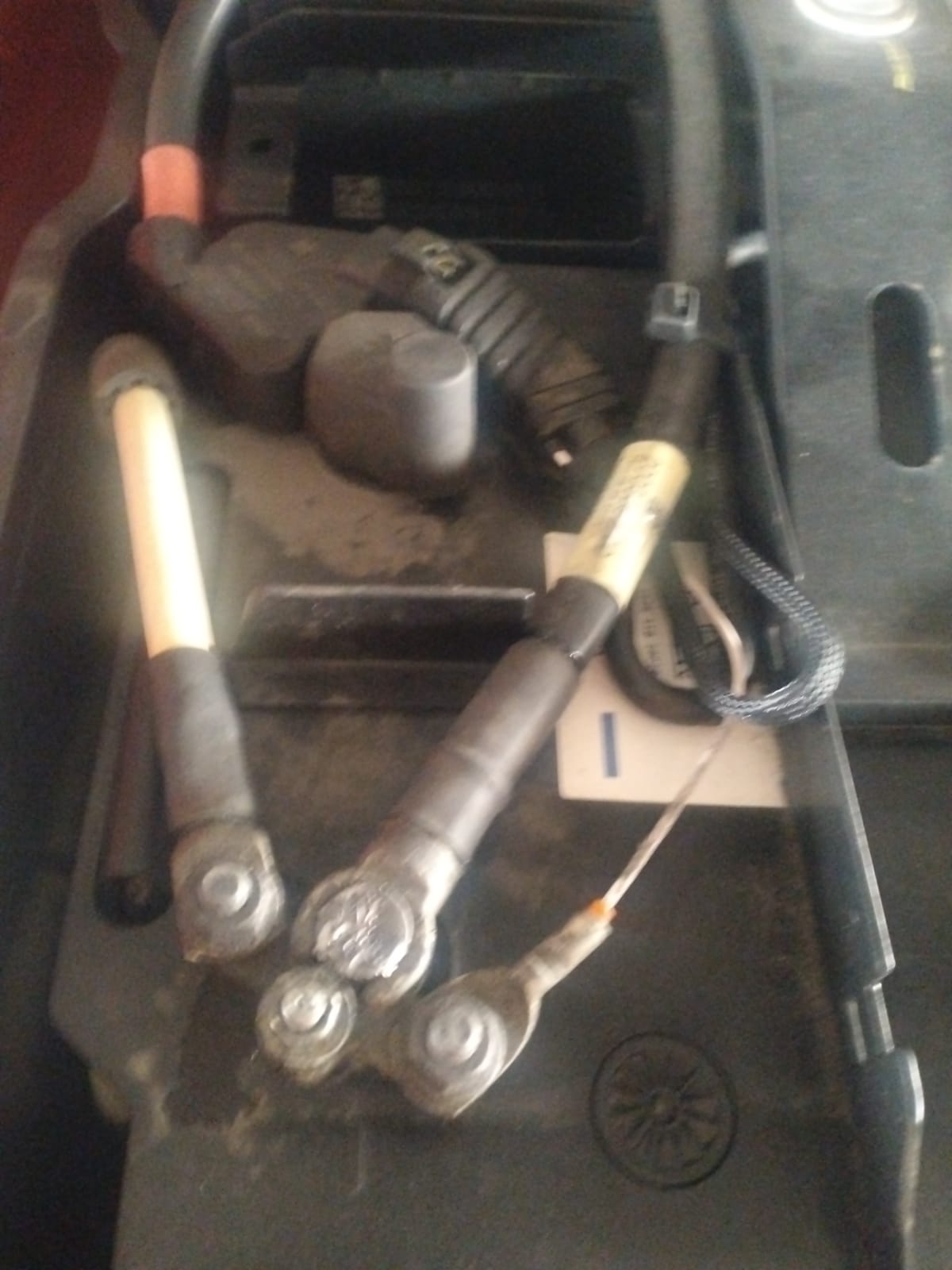
New batteries alone won’t solve anything if the alternator, terminals, or earth connection are faulty — so checking the whole charging system is part of any proper battery replacement. Alongside the swap on this DAF, our technician checked:
- Alternator and drive belt — is the alternator supplying correct charging voltage, and is the belt tight enough to drive it properly?
- Battery terminals and contacts — corrosion at the terminals raises resistance and can cause starting problems even with a brand-new battery.
- Earth connection between engine block, chassis, and battery — a poor earth often only shows up in cold weather or under full load.
Skip this check, and a new battery pair fails the same way within weeks.
Step by Step: The Repair on Site
- Diagnosis — voltage measured on each battery individually, starter current checked, charging system tested.
- Secure the work area — vehicle chocked against rolling, hi-vis vest on, ignition off, negative terminal disconnected first.
- Removing the old batteries — both units taken out of the battery tray, connections documented.
- Fitting the new batteries — batteries matched for cold-cranking current and capacity installed, terminals sealed with heat-shrink and labelled (positive connected first).
- Function check — engine started, charging voltage measured at idle and at higher revs, accessories (lights, air conditioning, telematics) switched on and tested.
That sequence — negative disconnected first on removal, positive connected last on installation — prevents short circuits and protects sensitive onboard electronics from voltage spikes.
Full Timeline
| Time | Phase | Action |
|---|---|---|
| 06:15 | Emergency call | Driver reports no-start, location and symptoms logged |
| 06:15–06:30 | Dispatch | Technician assigned with matched replacement batteries (15 min) |
| 06:30–07:15 | Travel to site | Drive to the truck stop on the A2 near Bad Oeynhausen (45 min) |
| 07:15–07:20 | On-site diagnosis | Battery test confirms both batteries have failed |
| 07:20–07:35 | Removal | Work area secured, old batteries removed |
| 07:35–07:55 | Installation | New batteries fitted, terminals connected and secured |
| 07:55–08:05 | Testing | Engine started, charging voltage checked, accessories tested |
| 08:05 | Completion | Driver confirms and continues the journey |
Total time from call to departure: 1 hour 50 minutes.
Cost Breakdown
| Item | Price (EUR) |
|---|---|
| Call-out (early morning) | 220 |
| Labour (removal, installation, testing) | 140 |
| 2× lorry battery, 12V (€220 each) | 440 |
| Charging system check (alternator, terminals, earth) | 50 |
| Disposal of old batteries (2×) | 20 |
| Total (net, plus VAT) | 870 |
Breaking down the pricing factors: an early-morning call-out costs more than a daytime one simply because fewer technicians are available at that hour. Battery prices vary by capacity and cold-cranking current — a battery for a heavy long-haul artic costs more than one for a light van. Disposal is a legal requirement and shown as a separate line, not a hidden markup.
For comparison, a haulier typically loses €800 to €1,200 per day in missed revenue, contractual penalties, and demurrage when an artic is delayed by a late repair or a wrong diagnosis. Against that, €870 for a full battery replacement with a system check is a manageable figure.
Why a Professional Should Handle a Battery Swap
- Wrong battery choice — an undersized battery won’t survive a full winter of heavy use.
- No system check — skip testing the alternator and earth connection and the failure repeats within weeks.
- Short-circuit risk — connecting or disconnecting terminals in the wrong order can damage the onboard electronics, in the worst case the ECU.
- No capacity test — an untrained eye often can’t tell a battery with remaining capacity from a total write-off.
- Safety risk — battery acid and short-circuit sparks are genuinely dangerous without proper protective equipment.
Typical Callouts We Handle
Electrical and starting problems are far from rare on articulated lorries. Alongside cold-start failures like this DAF case, our regular workload includes: failing alternators that stop recharging the battery on the move; corroded terminals on older vehicles; short circuits caused by damaged wiring looms; and full CAN bus failures that knock out an entire tractor unit’s electronics. More on diagnosing that kind of fault in our report on CAN bus truck repair.
A straightforward jump start is also a frequent callout when the battery still has usable capacity — details in our guide to jump-starting a vehicle correctly.
Prevention for Drivers and Fleets
Most battery failures are avoidable with a handful of habits:
- Check voltage at every walkaround — a simple multimeter reading on resting voltage flags a weakening battery early.
- Replace batteries by age, not by failure — lorry batteries typically last 3 to 4 years, after which failure risk rises sharply.
- Switch off accessories during long standing times — run the night heater, fridge unit, or inverter only with the engine running or on external charge.
- Check terminals for corrosion regularly, especially before the cold season.
- Log the battery pair’s installation date in the service record, so both are replaced together on time.
For fleets, a fixed inspection interval as part of regular servicing is far cheaper than a breakdown on the road. Organisations such as the ADAC also recommend a routine visual check of the battery and charging system before the cold season starts. More on ongoing maintenance in our truck workshop service.
Electrical Systems and Onboard Power in Long-Haul Fleets
The electrical system of a modern articulated lorry powers far more than the starter motor and lights. Tachograph, navigation, telematics, refrigeration units, night heaters, and increasingly electronic driver-assistance systems all sit on the same 24V circuit. Every one of these components adds to the baseline load on the batteries, even while the vehicle is standing still.
Battery manufacturers such as Bosch produce AGM and EFB batteries specifically for commercial vehicles, designed for the heavier cycling that modern lorries put them through — unlike conventional flooded batteries, they tolerate frequent partial discharge and recharge far better. For fleet operators running multiple vehicles with night heaters or fridge units, choosing the right battery technology is an operating-cost decision, not a technical footnote.
Alongside battery maintenance, it’s worth understanding the wider charging landscape for modern and electrified commercial vehicles — more in our article on charging electric trucks in Germany.
Why Drivers and Hauliers Choose Us
Our dispatch team is reachable 24/7 across Germany, works in multiple languages, and coordinates a vetted network of technicians on the ground. Pricing is communicated before any work starts, with no hidden line items on the invoice. That structure delivered exactly what it’s built for on this job: from first call to departure in under two hours, with a repair that holds.
Frequently Asked Questions
How much does a battery replacement cost for a lorry at a truck stop?
A full replacement of both 12V batteries, including call-out, labour, system check, and disposal, comes to around €870 net in practice, as on this job. The exact price depends on battery capacity, time of day, and distance.
How long does a battery replacement take on an articulated lorry?
The on-site repair itself takes 45 to 60 minutes. Including travel and diagnosis, the total time on this job was 1 hour 50 minutes from call to departure.
Do both batteries always need replacing, or is one enough?
On a 24V system with two batteries wired in series, both should always be replaced together. A new battery paired with an old one degrades quickly and ends up as wasted money.
Isn’t a jump start enough?
A jump start gets the engine running in the short term but doesn’t fix a battery that has already lost capacity. The driver is left stranded again at the next stop. Our technicians test on site whether a jump start is sufficient or a replacement is needed.
How often should lorry batteries be replaced?
As a rule of thumb, 3 to 4 years under normal use. Frequent short trips, long standing times with a night heater, or extreme cold shorten that lifespan considerably.
What happens to the old batteries?
Used lead-acid batteries are subject to a legal take-back obligation and are disposed of and recycled correctly — shown on the invoice as its own line item.
Summary
- Vehicle: DAF tractor unit
- Location: Truck stop on the A2 near Bad Oeynhausen, heading towards Hanover
- Problem: Both 12V batteries of the 24V system failed, engine wouldn’t start
- Response time: 45 minutes’ travel after the emergency call
- Total time: 1 hour 50 minutes from call to departure
- Cost: €870 net, including batteries, labour, system check, and disposal
- Secondary damage: none — alternator and earth connection were both in good condition
Call Us Now
Is your lorry refusing to start, anywhere in Germany? Our team is available around the clock and brings the workshop to you. Call +49 160 5753826 or visit www.lkwhelp24.com — help 24/7 across all of Germany.
Keywords: mobile truck battery replacement | truck battery change autobahn | lorry won’t start | 24V truck electrical system | truck jump start breakdown service | battery failure long haul | truck roadside assistance 24/7