Skip to content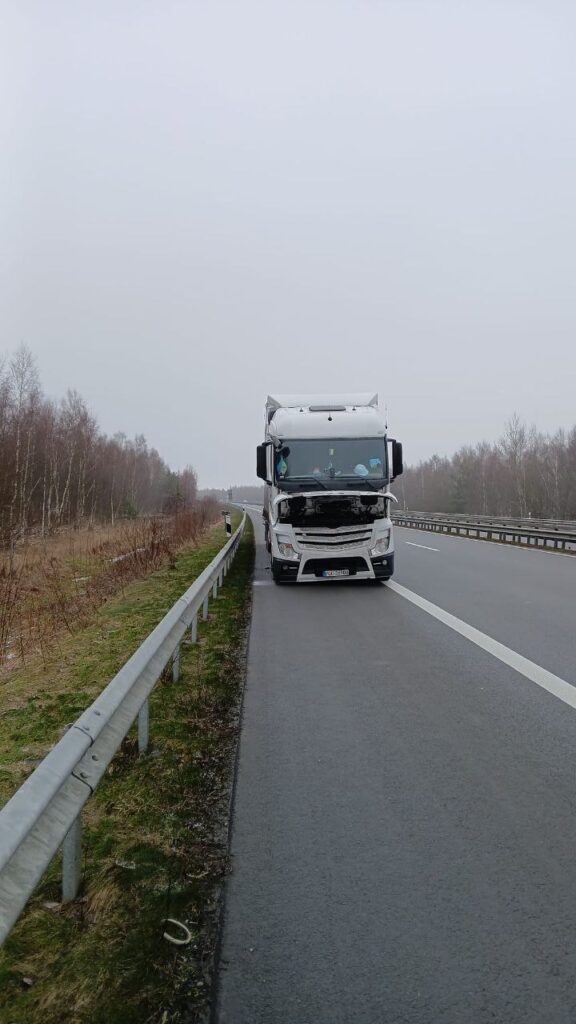
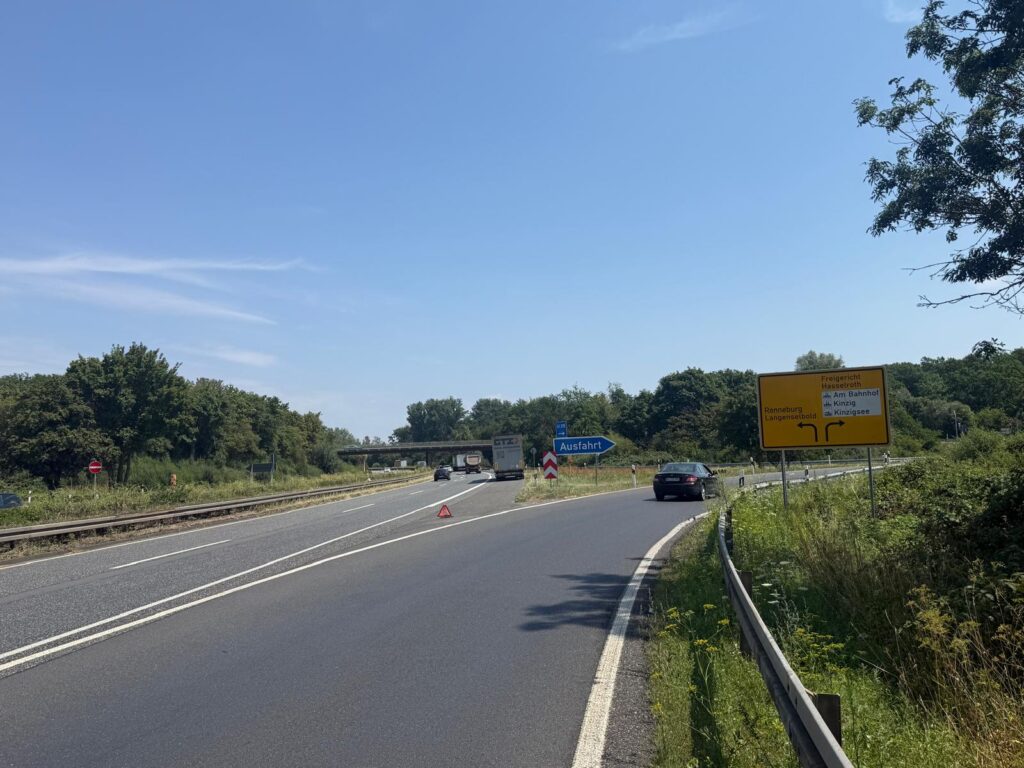
A semi-truck is parked on the left lane of the autobahn in Bavaria, hazard lights flashing, the driver already safe behind the crash barrier. This is how a typical call-out for the team at AutoHelp / Lkwhelp24 often begins, several times a week. This practical case report shows, using a realistic composite example, how a truck recovery on the Bavarian autobahn actually unfolds – from the first emergency call through the safety procedures to the invoice. It is written for professional drivers, dispatchers and fleet managers who want to know what really matters when a commercial vehicle over 7.5 tonnes breaks down.
Important note: the sequence of events, timings and situations described below is a typical, reconstructed example drawn from everyday truck breakdown assistance practice. It reflects recurring patterns from numerous real call-outs, but is deliberately not tied to a specific date, a named driver or a specific haulage company. Readers who want to read documented individual cases can find further examples in the A3 semi-truck case study or the report on a Scania recovery near Regensburg.
The starting point: a semi-truck breaks down on the autobahn
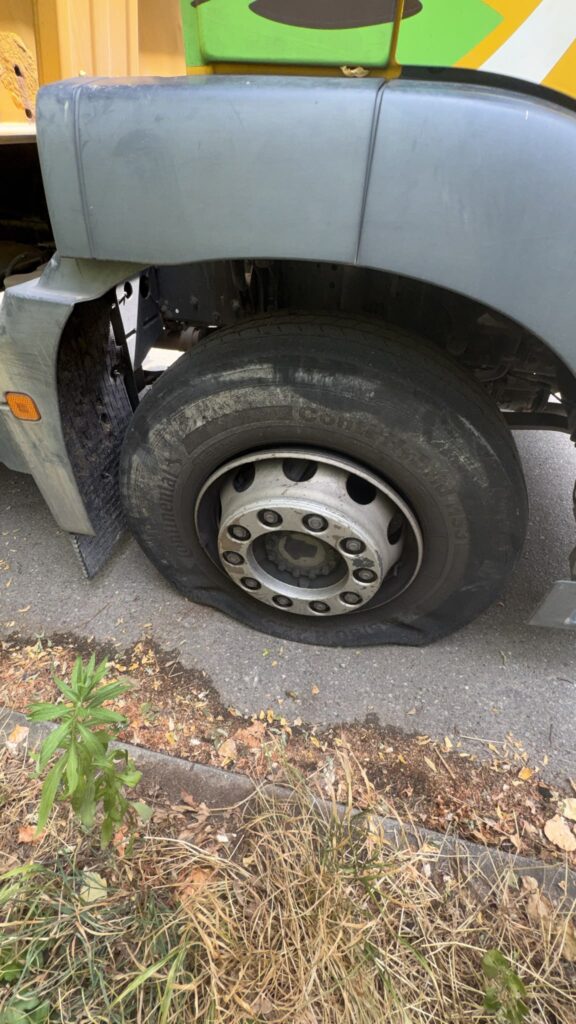
A loaded semi-truck is travelling from Nuremberg towards Munich when the engine warning light suddenly comes on and power noticeably drops. The driver just manages to steer the vehicle onto the hard shoulder before the drivetrain cuts out completely. Scenarios like this – engine failure, transmission breakdown, a blown tyre or a technical fault in the braking system – are part of everyday life on Bavarian motorways such as the A3, A6, A9 or A99. It is exactly for these moments that specialised truck breakdown assistance exists, working differently from a standard car breakdown service.
A stranded semi-truck is no small obstacle. With a length of up to 16.5 metres and a permissible total weight often exceeding 40 tonnes, it represents a considerable safety risk on the motorway – for the driver, for following traffic, and for the responders who later have to work at the scene. That is why every professional truck recovery does not begin with the tow truck, but with securing the accident or breakdown site.
The emergency call: what the control centre needs to know
The driver picks up the phone or, as is often the case with international drivers, writes directly via WhatsApp to the dispatch centre. A well-organised dispatch operation like AutoHelp UG’s works according to a clear pattern in order to find the right partner company from its network as quickly as possible. The following details are essential:
- Exact location: motorway number, direction of travel, kilometre marker or the nearest junction. A GPS location shared via WhatsApp speeds up the search considerably.
- Vehicle type: solo truck, semi-truck, articulated combination or bus, plus the permissible total weight and number of axles.
- Type of breakdown: engine failure, transmission fault, tyre blowout, electronics fault, accident damage or a load-related problem.
- Type of cargo: especially with dangerous goods, refrigerated freight or oversized loads, the entire recovery procedure changes.
- How to reach the driver: language, phone number, whether WhatsApp can be used.
This information determines which partner company in the network is alerted – a towing company with heavy-recovery equipment, a mobile tyre service, or a combination of both. AutoHelp itself does not operate its own fleet of tow trucks; instead it coordinates, as a specialised dispatch centre, a nationwide network of vetted partner companies. This model enables short response distances, because it is not a single vehicle driving across Bavaria, but the nearest suitable partner that gets dispatched.
Safety on the hard shoulder: what the German road traffic rules require
Even before the breakdown service arrives, the driver’s behaviour in the first few minutes decides the safety of everyone involved. German traffic regulations require specific conduct in the event of a breakdown or accident on the motorway, governed by the general rules on securing hazard sites in road traffic. In practice this means for truck drivers:
- Switch on the hazard lights immediately as soon as a technical problem becomes apparent.
- Wherever possible, let the vehicle roll onto the hard shoulder, or better still to a lay-by or rest area.
- Put on the high-visibility vest before opening the driver’s door – not once already outside.
- Leave the vehicle via the passenger side and move immediately behind the crash barrier; never stand on the hard shoulder.
- Set up the warning triangle. For trucks on the motorway, a considerably greater safety distance is recommended than for cars – typically around 150 to 200 metres, depending on visibility and the speed of oncoming traffic, because trucks behind the breakdown site need correspondingly longer braking distances.
- In darkness or poor visibility, use an additional warning light if available.
This sequence – first personal safety, only then reporting the breakdown – is taught in driver training but is often forgotten under the stress of a real breakdown. That is exactly why an experienced control centre usually asks, in the first seconds of the call: “Are you safe?”, before even asking for technical details about the breakdown.
What the driver should do while waiting for help
Once the site is secured, a waiting period begins that can vary considerably depending on traffic conditions, time of day, and distance to the nearest partner company. During this time, several steps are useful:
- Take photos of the vehicle, the damage and the position on the motorway, and send them via WhatsApp to the control centre. This helps assess whether a simple tyre change is enough or whether heavy-recovery equipment is needed.
- Keep vehicle documents, freight papers and, if applicable, dangerous-goods documentation ready to hand.
- In case of load-securing problems, avoid independent repair attempts on straps or lashing equipment if this would require entering the hazard zone on the carriageway.
- Contact the haulage company or client, especially if a delivery time window is at risk.
- In cold, heat or bad weather, wait inside the vehicle or at a safe location away from the carriageway, not directly next to the truck on the hard shoulder.
A well-equipped cab makes this waiting period considerably easier. Sensible basic equipment, beyond the legally required warning triangle and vest, includes a second warning triangle for international journeys, a torch with a warning function, sufficient water, and a first-aid kit that is regularly checked for completeness and expiry dates.
The response: how AutoHelp finds the right partner
Once the control centre has all the relevant information, the search for a suitable partner company begins. Unlike a single garage or workshop, AutoHelp maintains a network of towing companies, mobile workshops and tyre services across different regions of Germany. The principle: the best-suited and fastest-available partner near the breakdown site is dispatched, rather than a single vehicle stationed somewhere centrally.
For a semi-truck with engine or transmission failure, this usually means deploying a heavy-recovery tow truck equipped with a sufficiently rated crane or a low-loader combination able to safely recover a vehicle with a total weight of 40 tonnes. For a simple tyre failure, on the other hand, a mobile truck tyre service is often enough, fitting a replacement tyre directly on the hard shoulder without the vehicle needing to be towed at all.
The average response time until a partner company arrives is typically between 30 and 60 minutes with a well-functioning dispatch system, though it can take considerably longer in rural stretches of Bavaria, for example away from the major motorway interchanges. Weather conditions, traffic volume and time of day all play a significant role. A night-time call-out on a lightly travelled stretch can look quite different from a breakdown during heavy rush-hour traffic around Munich.
On site: the actual recovery process
Once the heavy-recovery tow truck arrives at the breakdown site, a phase begins that is often underestimated from the outside. Before the actual towing can even be considered, several steps must take place:
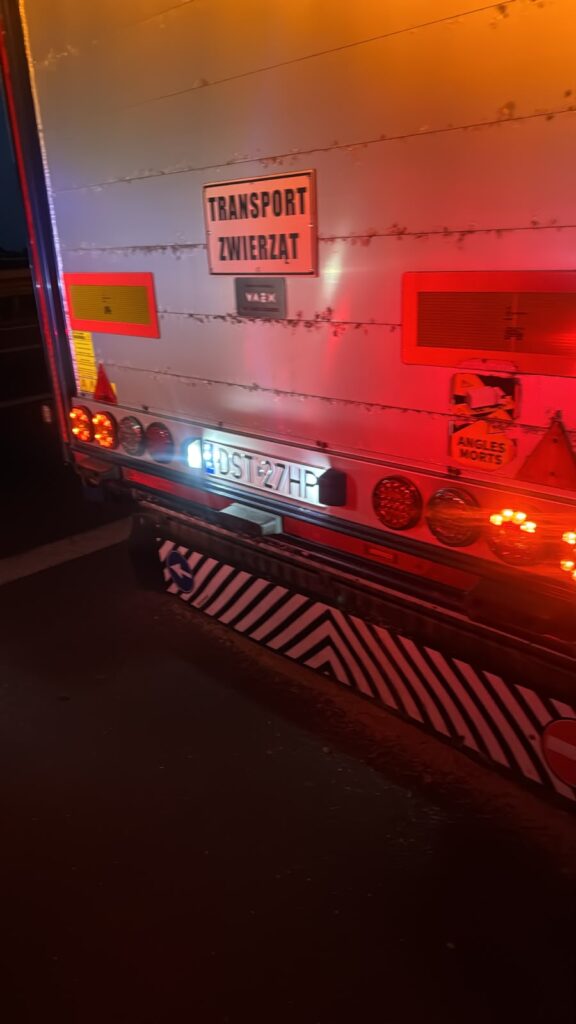
- Additional securing of the site: the tow truck itself is positioned to provide additional protection for the work, often with its own warning lighting and sometimes in coordination with the motorway police, who are called in for traffic management on larger recoveries.
- Damage assessment: the recovery vehicle operator checks whether the truck can be made roadworthy or must be fully loaded onto a low-loader, and whether oil, fuel or other fluids have leaked.
- Checking load security: for loaded vehicles, it must be ensured that the cargo remains securely fixed throughout the entire recovery process. Shifted cargo can significantly complicate the whole procedure.
- Hitching or loading: depending on the type of damage, the truck is either towed using a tow bar or coupling, or fully loaded onto a low-loader. With a blocked drivetrain, full loading is often the only option.
- Transport away: the vehicle is taken to the nearest suitable workshop, a safe parking location or, if requested, directly to a truck workshop within the network.
Especially with articulated semi-trucks, this last step is often more complicated than with a solo truck, because the tractor unit and trailer sometimes have to be recovered separately. Similar challenges are shown in the documented case of a semi-truck recovery from difficult terrain, where additional equipment was required.
Special challenges on Bavaria’s motorway network
Bavaria has a dense but topographically demanding motorway network, with routes such as the A3, A6, A7, A8, A9, A92 and A99. Gradients, for example in the area of the Franconian Jura or on the A8 towards the Alps, put additional strain on heavily loaded trucks – clutch overheating, overheated brakes or a failure of the engine brake are not uncommon here. Weather also plays a role: wintry conditions at higher elevations, sudden changes between fog and sun, or heavy summer rain all increase the risk of technical problems and accidents.
A practical example: on a steep gradient, thermal overload of the clutch can occur, a phenomenon described in the report on a semi-truck recovery near Munich. In such cases, a cooling-down period on site is often necessary before the vehicle can even be moved – one more reason why recovery times can vary considerably.
The difference between truck recovery and standard car breakdown assistance
Anyone who has experienced a car breakdown knows the familiar picture: a single breakdown vehicle arrives, lifts the car with a small jack, changes the wheel or jump-starts the battery if needed, and within a few minutes the journey continues. For a truck over 7.5 tonnes, this approach does not transfer for several reasons:
- Weight and dimensions: a semi-truck weighs many times more than a car. Standard jacks or tow bars for cars are not designed for this. Specialised heavy-recovery equipment is required.
- Cargo: a car rarely carries cargo that needs to be specifically secured. With trucks, the cargo – whether general freight, liquids, refrigerated goods or dangerous goods – can change the entire recovery procedure.
- Tyres and brakes: truck tyres operate at significantly higher air pressures and load ratings than car tyres, and the braking system is often an air brake system that requires specialist knowledge to handle safely in the event of a failure.
- Regulations: commercial vehicles are subject to additional requirements, for example driving and rest time rules, which must also be taken into account during a longer breakdown.
- Specialist personnel: recovering a semi-truck requires specially trained staff and appropriately certified vehicles, which are not kept on hand by standard car breakdown services.
For this reason, specialised providers like AutoHelp work exclusively for commercial vehicles over 7.5 tonnes and buses, and do not arrange assistance for cars or vans below this weight threshold. A truck driver who encounters a standard car breakdown service will usually be redirected, since the technical equipment simply is not sufficient.
What does a truck recovery on the motorway cost?
The cost of a truck recovery cannot be expressed as a single flat figure, since it depends on several factors. Realistically, prices for a recovery involving heavy-recovery equipment often range from several hundred to well over a thousand euros net, depending on the following points:
- Distance: the further away the nearest suitable partner company is, the higher the call-out fee.
- Time of day: call-outs at night, on weekends or on public holidays are generally more expensive than call-outs during the day on weekdays, due to higher staffing costs.
- Severity of the damage: a simple hitch-up differs significantly in price from an elaborate recovery involving crane or low-loader technology, for example if the vehicle has left the carriageway.
- Cargo: if the cargo needs to be reloaded, secured or kept refrigerated, additional costs arise.
- Waiting time on site: delays caused by traffic, weather or coordination with the motorway police can affect the duration of the call-out and therefore the price.
Reputable providers ideally confirm the expected fixed price by phone or WhatsApp before setting off, so that drivers and haulage companies are not caught off guard. Readers wanting more background can find further details in the article on truck breakdown assistance in Bavaria.
Insurance and comprehensive cover: who pays in the end?
For haulage companies and fleet operators, the question of cost coverage is often just as important as fast help itself. Comprehensive truck insurance in many cases also covers recovery and towing costs following an accident or a technical breakdown, though the exact terms vary considerably between insurers. Key points fleet managers should clarify in advance:
- Are pure breakdowns without third-party fault also covered under comprehensive insurance, or only accident damage?
- Is there an upper limit for recovery and towing costs in the policy?
- Must specific partner companies be commissioned for the insurer to cover the costs, or is a free choice of breakdown service possible?
- Are costs for temporary storage of cargo or for a replacement driver under driving-time regulations also covered?
In practice, it is advisable to carefully keep the invoice and all receipts from the breakdown service and submit them to the insurer promptly. Transparent pricing, such as the fixed-price confirmation before dispatch mentioned above, noticeably simplifies this process.
Common causes of truck breakdowns on the motorway
Everyday dispatch experience reveals a number of recurring damage patterns that particularly often lead to recovery call-outs on Bavarian motorways:
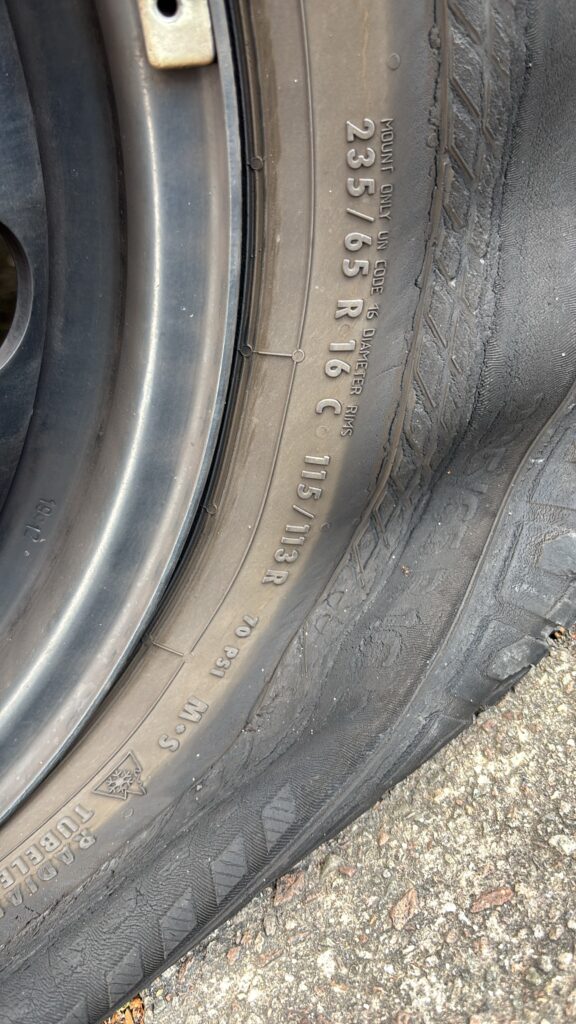
- Tyre damage: blown or badly damaged tyres, often caused by debris on the carriageway, incorrect tyre pressure or aged material.
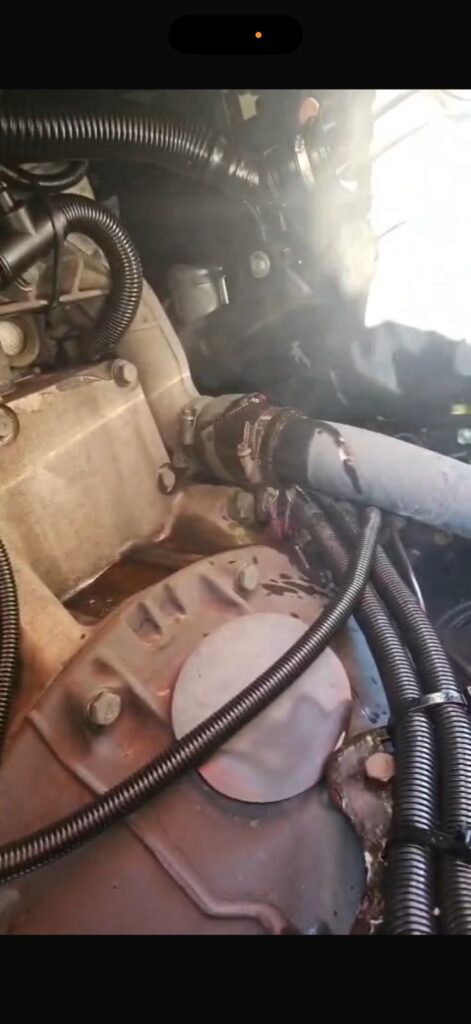
- Engine and transmission faults: especially with older vehicles or after long uphill stretches, overheating or mechanical defects can occur.
- Electronics failures: modern trucks rely on complex control units; a fault in the onboard network or engine management can immobilise the vehicle, as illustrated in the example of a CAN-bus fault.
- Brake faults: problems with the air brake system or the electronic braking system are considered particularly safety-critical and require immediate stopping.
- Load problems: shifted or inadequately secured cargo can cause vehicle instability.
- Fuel and AdBlue problems: empty tanks, contaminated fuel or an AdBlue limp-home mode also force vehicles to stop.
In winter road conditions, additional risks such as ice, slush build-up in wheel arches or frozen lines add to the picture. This topic is covered in more detail in the article on a semi-truck winter recovery.
Emergency equipment: what belongs in every truck cab
Good preparation not only shortens response time in an emergency, it also considerably increases personal safety. Beyond the legally required basic equipment, drivers on Bavarian motorways are advised to carry the following additional equipment:
- Two warning triangles, especially for journeys into other European countries, where different rules may apply.
- At least two high-visibility vests, in case a passenger or a second person is on board.
- A complete, regularly checked first-aid kit meeting the relevant standard.
- A working torch, ideally supplemented by an additional battery-powered warning light.
- Sufficient drinking water and a small supply of non-perishable food for longer waiting periods.
- A power bank or a vehicle charger, so the mobile phone stays usable even if the vehicle loses power.
- Important phone numbers, including the haulage company, the insurer and a specialised truck breakdown service, ideally stored both digitally and on paper.
- Reflective gloves and sturdy footwear, to move safely within the hazard zone of the carriageway.
Professional drivers who regularly cross borders should also check the differences in national vehicle-equipment regulations, since these can vary from country to country.
International drivers: overcoming language barriers in an emergency
A significant proportion of the semi-trucks travelling on German motorways are driven by drivers from Poland, Ukraine, Romania, the Baltic states or other European countries. In the event of a breakdown, a language barrier can make an already stressful moment even more difficult, especially when location, vehicle data and damage description need to be communicated precisely. For this reason, AutoHelp’s control centre operates multilingually – communication is possible in German, English, Polish and Russian, supplemented by the option of sending photos and the GPS location directly via WhatsApp, which bypasses language problems in many cases from the outset.
The question of payment is also frequently raised by international drivers, especially when no cash or German credit card is available. More on this topic and practical solutions for drivers without local means of payment can be found in the article truck breakdown assistance for foreign drivers.
After the recovery: workshop, continuing the journey, or a replacement vehicle
Once the vehicle has been removed from the hazard zone of the motorway, the second phase of problem-solving begins. Depending on the type of damage, there are different paths forward:
- On-site repair: for minor defects, a mobile workshop can carry out the repair directly at the location or at a nearby rest area, so the journey can continue shortly afterwards.
- Transfer to a workshop: for more extensive damage, the vehicle is taken to a suitable truck workshop, where the actual repair takes place.
- Temporary storage of cargo: for time-critical or sensitive freight, reloading onto a replacement vehicle may be necessary to meet delivery deadlines.
- Organising a replacement driver: if the repair causes the permitted driving time to be exceeded, a replacement driver may need to be organised.
For haulage companies, it is advisable to define fixed contacts and procedures for such situations in advance, so that no valuable time is lost on organisational questions in an emergency.
The role of the motorway police and coordination with authorities
For larger recovery operations, especially when one or more lanes are blocked or cargo is on the carriageway, the motorway police are often called in. In such cases, they take over traffic management, provide additional security for the area, and can, if necessary, order a full closure to ensure the safety of the responders. Cooperation between the towing company and the police is closely coordinated in such situations: while the police manage traffic, the technical personnel focus entirely on the actual recovery.
In accidents involving personal injury or leaked fluids, the emergency medical service and, where necessary, the fire brigade are also deployed. In such more complex scenarios, clearing the motorway entirely can take several hours, even if the actual technical recovery of the vehicle is completed considerably faster.
Technical inspection after a recovery
After a recovery, especially following an accident or driving with a blocked wheel, a technical inspection of the vehicle is advisable before continuing the journey. Tyres, brakes, steering and suspension should be checked by a specialist workshop to rule out hidden secondary damage. Independent organisations such as TÜV offer technical inspections and assessments for this purpose, which are particularly recommended after major damage or before a longer onward journey. Tyre manufacturers themselves also regularly highlight, as part of their technical guidance, how important it is to correctly recheck tyre pressure and tread depth after a breakdown – guidance on this can be found among other places in the technical information provided by major tyre manufacturers such as Michelin.
Preventive maintenance: how many breakdowns can be avoided
Not every motorway breakdown can be prevented, but a considerable share of the call-outs AutoHelp coordinates trace back to causes that regular maintenance would have identified early on. This particularly concerns tyre condition, correct tyre pressure, and the appropriate load and speed rating for the vehicle in question – topics also covered in detail in the article on the Q speed rating for truck tyres. An incorrect or too-low rating can lead to overheating under continuous load and, in the worst case, to a tyre blowout on the motorway.
Other useful checkpoints before longer journeys, especially in cold weather, include battery condition, coolant level, brake pad wear and lighting function. Drivers travelling in winter can find further guidance in the article on the load index and tyre load capacity, which describes typical weather-related failures and how to prevent them. Haulage companies that maintain fixed service intervals and train drivers in daily visual vehicle checks noticeably reduce the likelihood of a costly motorway breakdown – even though a residual risk of technical failure can never be fully eliminated.
Lessons for dispatchers and fleet managers
For haulage companies that regularly operate vehicles on Bavarian motorways, it is worth looking beyond the individual case. Systematically evaluating response times, costs and typical damage patterns from past call-outs allows more targeted maintenance planning and a better assessment of risks on certain routes – for instance steep sections or roadworks areas. It is equally helpful to give drivers clear, short checklists for breakdown situations that summarise the key steps, from securing the site to contacting the control centre, in the right order. In the stressful moment of a real breakdown, every minute counts, and a rehearsed routine often compensates for a lack of direct experience.
Frequently asked questions about truck recovery on the motorway
How quickly is a truck breakdown service on scene on a Bavarian motorway?
Response times are typically between 30 and 60 minutes, depending on location, traffic conditions and time of day. In particularly remote areas or extreme weather, the response can take longer.
Do I as a driver need to secure the load myself before help arrives?
Only if this can be done safely without entering the hazard zone on the carriageway. If in any doubt, wait until specialist personnel are on site.
What happens if I am a foreign driver without cash or a suitable card?
Specialised providers such as AutoHelp typically offer several payment options and communicate multilingually to resolve such situations without complications.
Can I use this breakdown service as a car or van driver?
No. The service described here is exclusively for trucks, semi-trucks, trailers and buses with a permissible total weight of 7.5 tonnes or more. Lighter vehicles are served by other, car-specific breakdown services.
Roughly how much does a truck recovery cost?
Costs depend heavily on distance, time of day, type of damage and cargo, and can range from a few hundred to over a thousand euros net. A fixed price is ideally confirmed before dispatch.
Conclusion: preparation and a fast response make the difference
A truck breakdown on the motorway in Bavaria is rarely a simple event; it is a situation that requires technical expertise, clear safety procedures and well-organised dispatching. From the initial securing of the breakdown site, through correct communication with the control centre, to the actual recovery using heavy-recovery equipment, many steps interlock to bring driver, cargo and vehicle safely out of a critical situation. Drivers and fleet managers who know the key procedures and equip their vehicles accordingly not only reduce their own risk but also significantly speed up help in an emergency.
In the event of a truck breakdown on a motorway in Bavaria or elsewhere in Germany, you can reach the AutoHelp / Lkwhelp24 control centre around the clock via our contact page, by phone or WhatsApp at +49 160 5753826.
You might also be interested in
- Truck Breakdown Assistance in Germany 24 7 Emergency Service from LKW Help 24: Real Example of How We Rescued the Truck on the Autobahn in Bavaria
- Trucks Towing Service: How We Rescued a 25t Scania from the Mud in 85 Minutes in Regensburg (93055)
- Truck Tire Service Near Me: How We Got a DAF Artic Back on the Road in 2 Hours After a Tyre Blowout on the Autobahn Near Hof
- Truck Towing: How We Pulled a Semi-Truck Out of the Mud
- Towing Service Case Study: How LKW Help 24 Rescued a Stranded Semi-Truck on the A3 in Germany