Skip to content
A drive-axle blowout on the motorway is one of the more frightening breakdowns a truck driver can experience. The rear wheels carry the engine\’s power to the road, and when one of those tyres fails at speed, the load shifts sideways before the driver has time to react. This case study covers a real call-out on the A9 near Dessau in Saxony-Anhalt, where a medium-duty distribution truck lost a drive-axle tyre in a full blowout. From the first phone call to the vehicle driving away again took just under two hours.
Drive-axle tyres take a different kind of punishment from steer-axle tyres. They transmit torque, they carry a share of the load, and on a twin-wheel axle they run in pairs, which means a sudden failure on one side can throw extra strain onto its partner tyre within seconds. When the carcass disintegrates completely, as it did in this case, the driver is left with a wheel that is no longer round, no longer balanced, and no longer safe to move on.
The truck involved was a regional delivery vehicle with a light body and a 10-stud alloy wheel setup, the kind of vehicle you see doing daily runs between depots and retail sites. It was running commercial tyres sized 245/70 R19.5 with a load index of 154/149 L, a size that is common across the 19.5-inch class of light and medium trucks. When the tyre let go, the driver did exactly what he should have done: pulled onto the hard shoulder, put out a warning triangle, and called for help.
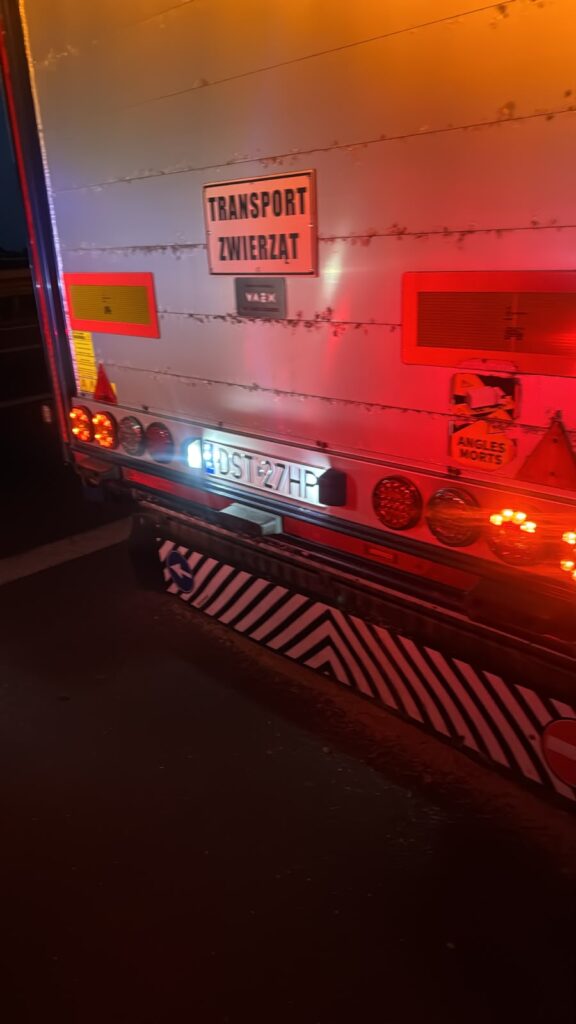
Bild: „LKW Reifenservice bei Reifenplatzer an der Antriebsachse auf der A9 bei Dessau – mobiler Reifenwechsel durch LKWHelp24.\”
The Emergency
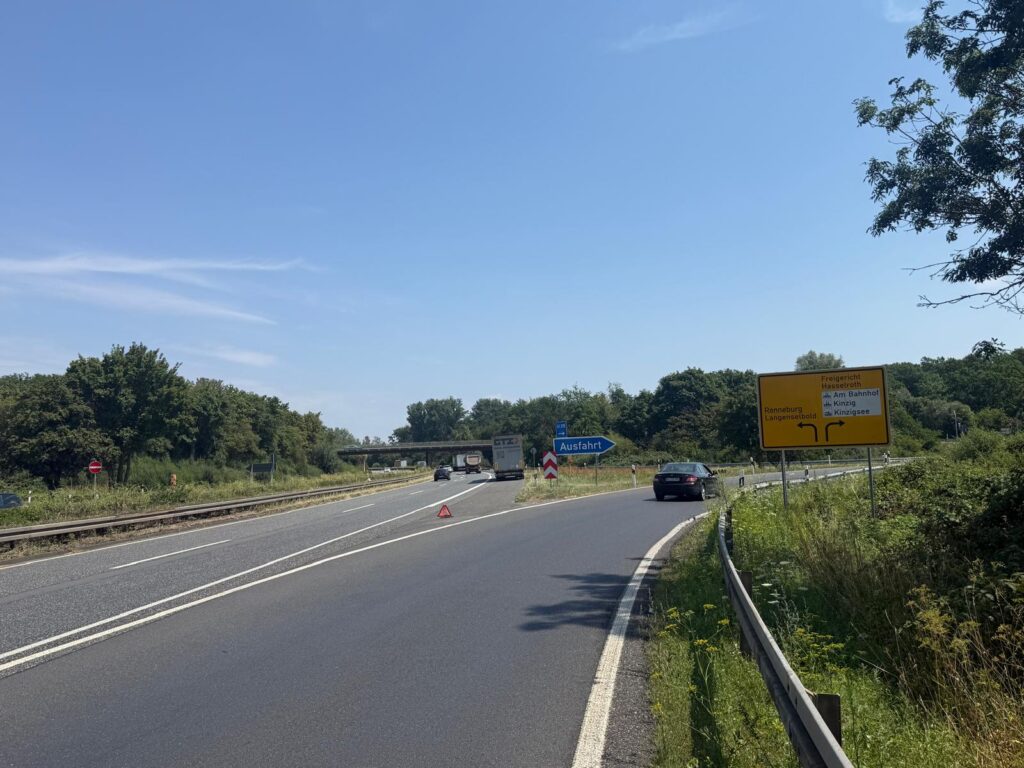
The call came in at 14:05. The driver described a loud bang followed by heavy vibration through the cab, then a rapid loss of control on the rear axle before he managed to bring the truck to a stop on the hard shoulder of the A9 near Dessau. This is a classic description of a tyre blowout motorway incident: the tyre doesn\’t simply deflate, it disintegrates under load and heat, and the rubber comes apart in strips while the vehicle is still rolling.
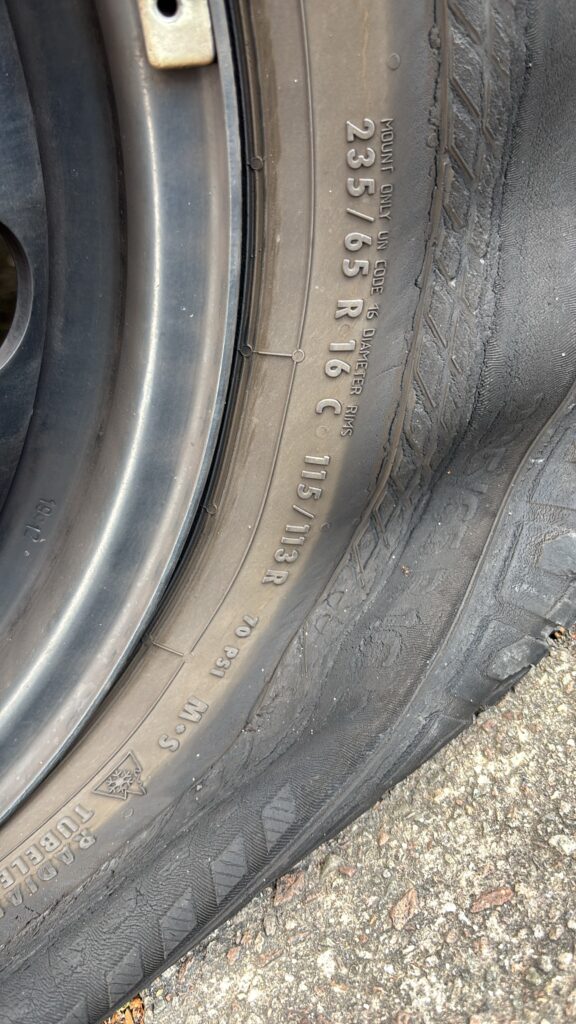
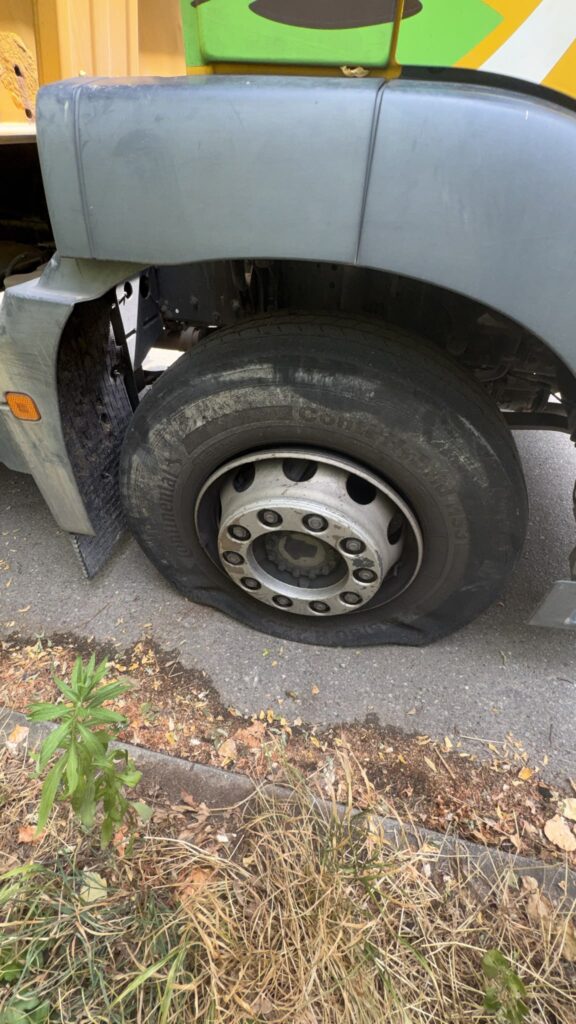
Once stationary, the driver walked around the vehicle and found the drive-axle wheel in a state that is unfortunately familiar to anyone who has dealt with a serious commercial tyre failure. The carcass had shredded and wrapped itself in long strips around the rim, some of it tangled around the axle components nearby. There was no tyre left to speak of, only fragments held on by the bead. The vehicle was not driveable, not even at walking pace, and there was no spare wheel on board, which is standard for this class of distribution vehicle.
This is precisely the scenario emergency truck tyre replacement services exist for. A driver stranded on a live motorway with a wrecked drive-axle wheel cannot fix the problem themselves, cannot safely inspect the axle without proper jacking equipment, and cannot simply wait for a garage to open on Monday. The clock starts the moment the tyre fails, and every minute on the hard shoulder is a minute of exposure to fast-moving traffic.
How Help Was Organised
LKWHelp24 operates a nationwide roadside assistance Germany network built specifically around commercial vehicles, which means the response to a call like this one is never a guess. The dispatcher takes the tyre size, the axle position, and the exact location, then checks which certified partner workshop is realistically closest and available.
For this case, the details worked in the driver\’s favour: a mobile commercial-vehicle tyre service based in the Dessau/Anhalt area was available and correctly equipped for 19.5-inch commercial fitments. The dispatch process followed the same structure LKWHelp24 uses for every 24 hour truck tyre service call:
- Confirm the exact breakdown location using motorway markers and direction of travel
- Identify the tyre size, axle position, and load index from the driver
- Match the case to the nearest certified partner carrying stock for 245/70 R19.5 tyres
- Give the driver a realistic ETA and safety instructions for waiting on the hard shoulder
- Keep the driver updated by phone until the technician arrives on site
The partner was dispatched at 14:20, fifteen minutes after the initial call, with an estimated time of arrival that put the technician on site by 15:00. That gap between the call and dispatch is where a lot of the value in a mobile tyre service actually sits: most breakdown numbers spend that quarter of an hour trying to work out who is even available, while a dedicated commercial network already knows.
The Situation On-Site
When the technician arrived at 15:00, the truck was still safely positioned on the hard shoulder with hazard lights running and the warning triangle in place well back from the vehicle. The first job on any drive-axle callout is not the wheel, it\’s the environment: confirming the truck is visible to approaching traffic and that there\’s enough clearance to work safely between the vehicle and the live lanes.
A close inspection of the wheel confirmed what the driver had already reported. The tyre carcass was completely destroyed, with strips of rubber and steel belting wound tightly around the rim and partly caught against the wheel arch. Total carcass failure like this on a drive axle is usually the end result of a sudden structural event: an impact, a slow puncture that ran too long unnoticed, or a tyre reaching the end of its usable life without being caught during routine inspection. Once the belting starts separating at speed, the tyre effectively comes apart from the inside out, and there is no partial repair available; the wheel has to be stripped and rebuilt from scratch.
The rim itself was checked carefully for damage, since a violent blowout can sometimes bend or crack an alloy wheel, particularly at the bead seat. In this case the rim had survived intact, which meant the job was a straightforward tyre replacement rather than a wheel replacement, saving both time and cost. The replacement tyre matched the original specification exactly: 245/70 R19.5, load index 154/149 L, the correct rating for a drive-axle position on this class of vehicle.
Step-by-Step
Step 1: Secure the vehicle and the work area. Hazard lights confirmed, warning triangle positioned, technician\’s vehicle parked to shield the work zone from oncoming traffic.
Step 2: Loosen the wheel nuts and raise the vehicle. With the truck on firm, level ground on the hard shoulder, the wheel nuts were loosened before jacking, then the axle was raised on a stable jack point rated for the vehicle\’s weight.
Step 3: Remove the destroyed wheel and inspect the rim. The shredded tyre was cut away and stripped from the rim, and the alloy wheel was checked for cracks, bent flanges, or bead-seat damage before fitting anything new.
Step 4: Fit the new 245/70 R19.5 tyre. The replacement commercial tyre, matched to the correct load index of 154/149 L, was mounted and seated on the rim using the technician\’s mobile fitting equipment.
Step 5: Torque, pressure, and release. Wheel nuts were tightened crosswise in a star pattern to the correct torque specification, tyre pressure was set to the manufacturer\’s figure for a drive-axle position, a final visual check confirmed everything was correctly seated, and the truck was released back onto the road.
Full Timeline
| Time | Phase | Action |
|---|---|---|
| 14:05 | Call received | Driver reports drive-axle blowout on the A9 near Dessau |
| 14:20 | Partner dispatched | Mobile tyre service assigned, ETA given |
| 15:00 | On site | Technician arrives on the A9, assesses the situation |
| 15:20 | Wheel removed | Destroyed wheel and shredded tyre demounted, rim inspected |
| 15:45 | New tyre fitted | Replacement 245/70 R19.5 tyre mounted on the rim |
| 15:55 | Torque + pressure check | Wheel nuts torqued star-pattern, pressure set, final inspection |
| 15:55 | Released | Truck cleared to continue its journey |
Total elapsed time from the first phone call to the truck being roadworthy again: around 1 hour 50 minutes. Time spent physically on site working on the vehicle: around 55 minutes. For a full drive-axle tyre replacement on a live motorway, that is a fast turnaround, and it reflects why a specialised network beats a general breakdown number for this kind of job.

Cost
| Item | Price (EUR) |
|---|---|
| Call-out / 24-7 service | 180 |
| Labour / on-site fitting | 120 |
| New 245/70 R19.5 tyre, load index 154/149 L | 380 |
| Old-tyre disposal + valve | 40 |
| TOTAL | 720 |
The bulk of this bill sits with the tyre itself. A 19.5-inch commercial tyre in this load rating is not a budget item, and drive-axle tyres in particular are built with reinforced casings to cope with torque and load, which pushes the unit price above what a comparable steer-axle tyre would cost. The call-out fee reflects round-the-clock availability and a technician travelling to a live motorway rather than working from a fixed workshop bay. Labour covers the actual on-site fitting time, and the disposal fee covers legally compliant handling of the wrecked carcass along with a new valve for the replacement tyre.
Compared with the alternative, this price holds up well. Leaving a drive-axle blowout unresolved on a motorway hard shoulder is not really an alternative at all: it risks a secondary collision, it risks further damage to the wheel arch or brake lines from flailing rubber, and it stops the vehicle earning money for every hour it sits idle. A tow to the nearest garage would add its own cost on top of the tyre and labour, often without the same speed of response. In this case, the total cost of 720 EUR bought a same-day, on-site fix with no towing and no overnight delay.
Why a Professional Service Is Essential
A drive-axle wheel is not something to attempt without the right tools and training. The vehicle has to be jacked at a point rated for its weight, on ground that won\’t shift under load, with wheel nuts loosened before the axle leaves the ground rather than after. Get any of that sequence wrong on a live motorway and the risk moves from inconvenient to dangerous very quickly.
There\’s also the question of what actually caused the blowout. A carcass that has shredded completely can hide underlying damage to the rim, the hub, or nearby brake components, and a driver without the training to check for that damage could end up back on the road with a wheel that isn\’t actually safe. A qualified technician checks the whole assembly, not just the tyre, before signing off on the job.
Attempting a DIY fix on a HGV tyre replacement at the roadside, without proper jacks, torque wrenches, or a warning setup that actually protects the work area, exposes the driver to passing traffic at close range. Commercial vehicle wheels are heavy, and cross-threading a wheel nut or under-torquing it because it was tightened by hand rather than to spec can lead to a wheel coming loose further down the road. This is exactly the kind of job that belongs with a specialist truck tyre service rather than a driver\’s own toolkit.
Typical Breakdown Situations We Handle
LKWHelp24\’s partner network deals with the full range of tyre and wheel emergencies that hit commercial vehicles on German roads, including:
- Drive-axle tyre blowouts, as in this case, where the carcass fails completely under load
- Steer-axle punctures and slow deflations that need urgent attention before continuing a journey
- Sidewall damage from kerbs, potholes, or debris on the autobahn
- Wheel bearing failures that present alongside tyre problems
- Complete wheel changes where the rim itself needs replacing after impact damage
- Fleet vehicles running mismatched tyre brands or sizes that need correcting on-site
Every one of these situations shares the same underlying need: a fast, correctly equipped response that gets the vehicle back on the road without cutting corners on safety.
Prevention Tips
Regular pressure checks catch a slow deterioration long before it turns into a full blowout, and drive-axle tyres in particular deserve close attention since they run under constant torque load. A quick visual inspection before setting off, looking for uneven wear, embedded debris, or bulging sidewalls, takes only a couple of minutes and catches most developing problems.
Rotating and monitoring tyre wear across a fleet helps identify a tyre that\’s ageing faster than its partners on the same axle, since mismatched wear on a twin-wheel setup puts extra strain on the newer tyre. Checking tyre age against manufacturer guidance matters too — even a tyre with plenty of tread left can suffer carcass degradation over time, particularly with heavy daily mileage. And keeping a record of any known impacts, from kerbs or road debris, means a workshop can inspect that specific tyre more closely at the next service rather than waiting for it to fail on the motorway.

19.5-Inch Tyres, Drive-Axle Demands, and Fleet Service
The 245/70 R19.5 size sits firmly in the light-to-medium commercial vehicle bracket, common on distribution trucks, box vans, and municipal vehicles that need a smaller wheel diameter than a heavy long-haul tractor unit but still need to carry serious load. Manufacturers such as Continental and Michelin, along with brands like Goodyear, produce dedicated drive-axle patterns in this size that are built to handle torque transfer differently from a free-rolling steer-axle tyre. Continental Truck Tires publishes detailed guidance on matching tyre patterns to axle position, and Michelin Truck offers similar fitment advice for fleets running mixed vehicle types.
For fleet operators, the lesson from a case like this one is straightforward: a single tyre failure on a drive axle doesn\’t just cost the price of the tyre, it costs the vehicle\’s earning time, the driver\’s schedule, and potentially a knock-on delay to deliveries further down the chain. Building a relationship with a mobile truck tyre service A9 corridor operators can call at any hour turns an unpredictable emergency into a manageable, budgeted event. Fleets running multiple vehicles benefit from having stock availability confirmed in advance for their common tyre sizes, so a call-out doesn\’t turn into a search for the right fitment.
Why LKWHelp24
LKWHelp24 exists to take the guesswork out of a truck breakdown anywhere in Germany. The service runs 24 hours a day, seven days a week, with a certified network of partner workshops and mobile technicians who already carry stock for the most common commercial tyre sizes, including the 19.5-inch class covered in this case.
Every case is handled with clear, upfront pricing before work begins, so a driver or fleet manager knows the cost before committing to the call-out. Dispatchers and technicians work across German, English, Russian, and Polish, which matters on a network where international haulage is the norm rather than the exception. And because the network is built specifically around commercial vehicles rather than general roadside assistance, the technician who turns up already understands drive-axle torque specs, load ratings, and the safety procedures needed to work on a live motorway.
Summary
- Tyre size: 245/70 R19.5, load index 154/149 L
- Location: A9 near Dessau, Saxony-Anhalt
- Response time: 15 minutes from call to dispatch, on site by 15:00
- Total time: approximately 1 hour 50 minutes, call to release
- On-site time: approximately 55 minutes
- Total cost: 720 EUR
- Secondary damage: none
Request Emergency Assistance Now
If you\’re facing a truck tyre blowout, a wheel failure, or any roadside breakdown anywhere in Germany, call LKWHelp24 now.
Phone: +49 160 5753826
lkwhelp24.com
Available 24/7 across all of Germany.