Skip to content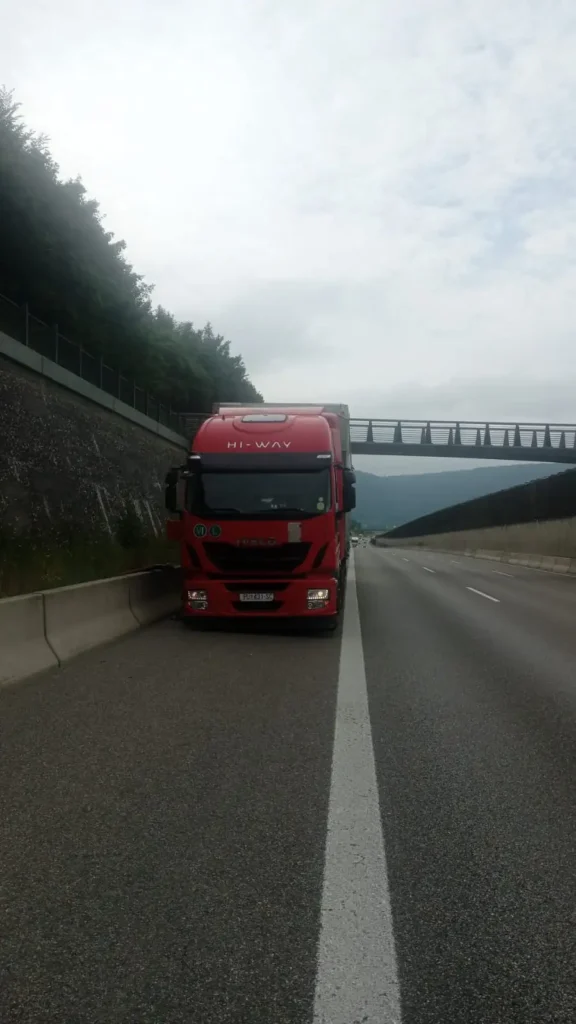
When a steer-axle tyre lets go on a fully loaded articulated lorry doing motorway speed, there is no such thing as a minor incident. The driver loses steering feedback in an instant, the cab lurches towards the shoulder, and everything from that point on comes down to reflexes and a bit of luck. That is exactly what happened to an Iveco tractor unit on the A3 near Aschaffenburg, heading towards Frankfurt, on a weekday afternoon in early 2026. The driver kept the rig on the hard shoulder, switched on the hazards, and rang LKWHelp24. What followed was a mobile HGV tyre service call-out that had the truck back on the road in well under two hours — with no secondary damage, no towing, and a fixed, transparent bill.
This is not a hypothetical case study. It is a real breakdown, logged minute by minute, with the invoice that the haulier actually received. We are publishing the full timeline and the full cost breakdown for two reasons: first, because fleet managers and owner-drivers deserve to know what a proper roadside tyre service actually costs before they are standing on the hard shoulder in a panic, and second, because a steer-axle blowout is one of the most dangerous failures a truck can suffer, and knowing how a competent recovery team handles one might save someone’s life the next time it happens on their watch.
LKWHelp24 runs a nationwide network of certified truck breakdown and roadside assistance partners across Germany, available 24 hours a day, every day of the year. Call +49 160 5753826 and you reach a dispatcher, not a call centre script — someone who understands lorry tyres, air-brake systems, and the difference between a trailer axle and a steer axle, and who can get a qualified technician moving within minutes.
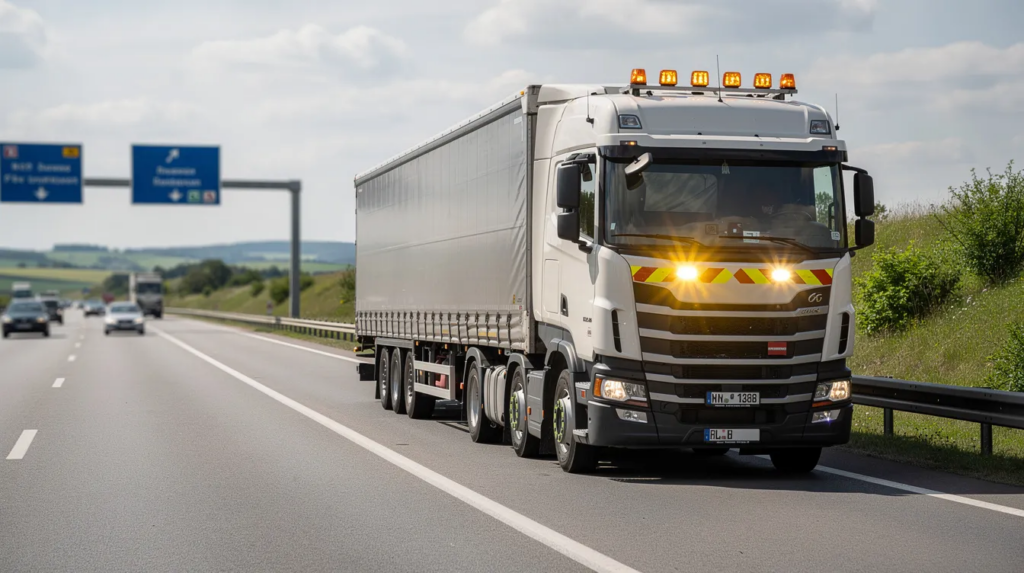
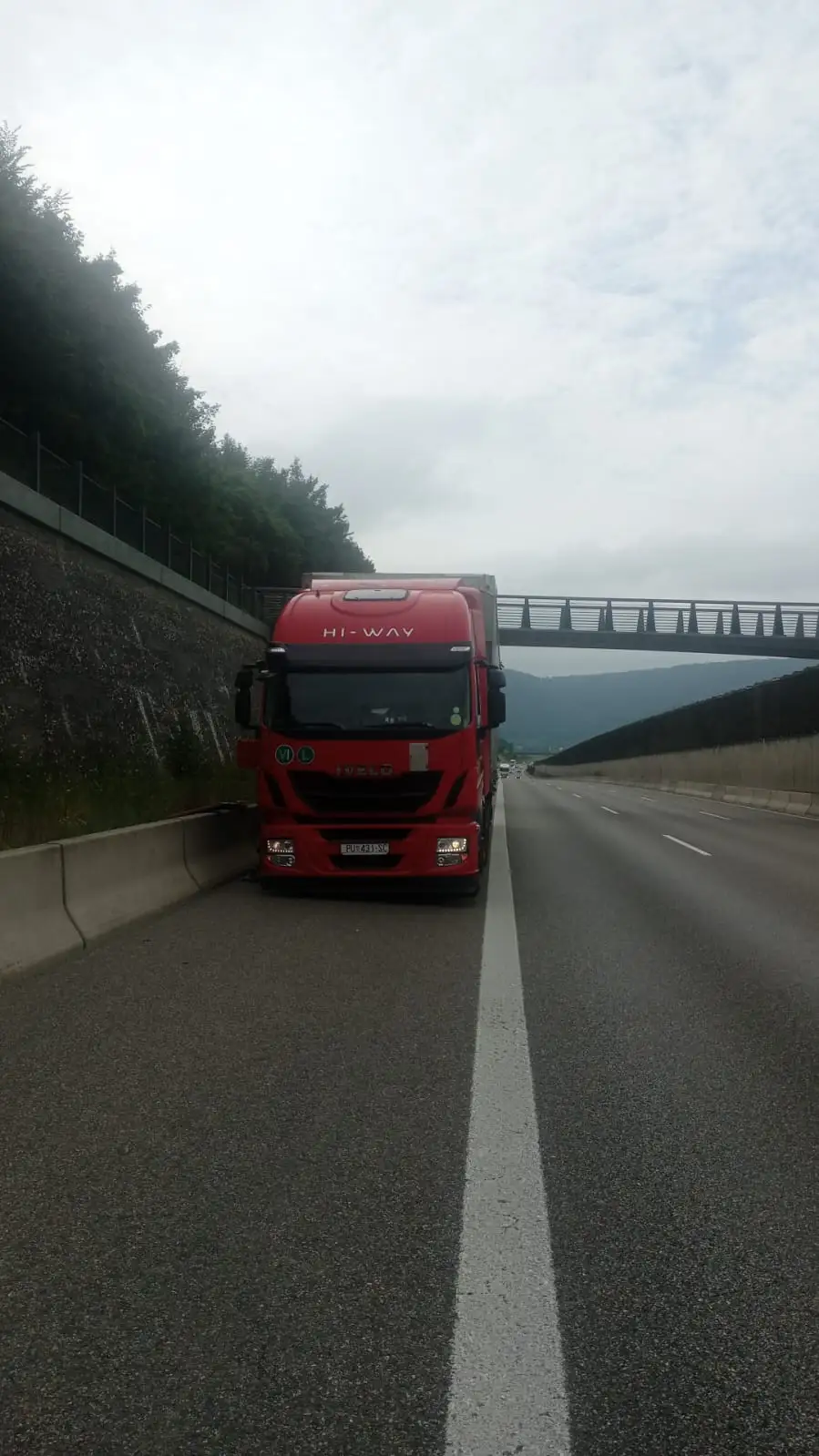
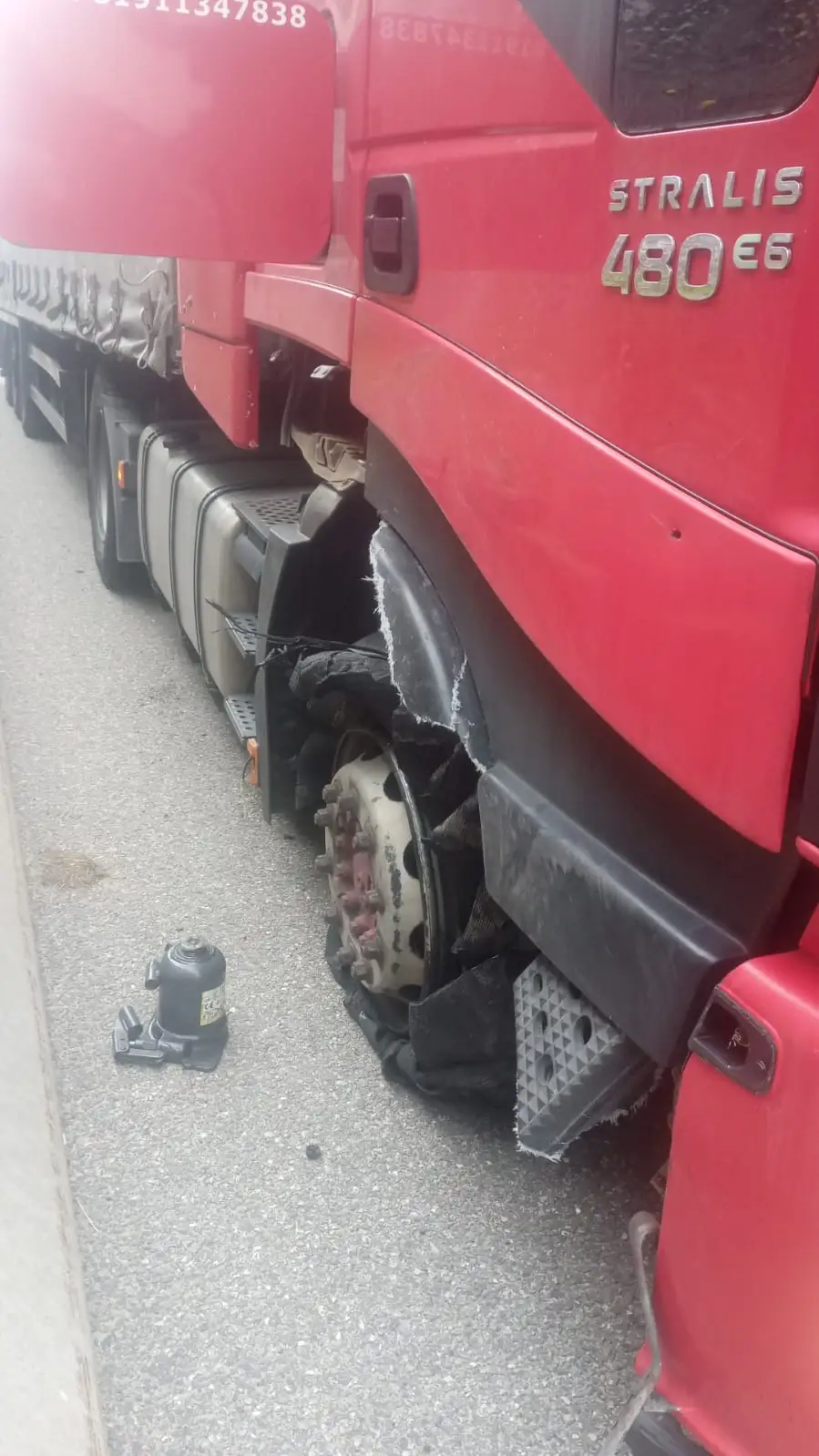
Iveco with a steer-axle tyre blowout (385/65 R22.5) on the A3 near Aschaffenburg – mobile truck tyre service by LKWHelp24.
The Emergency: A Steer-Axle Failure on the A3
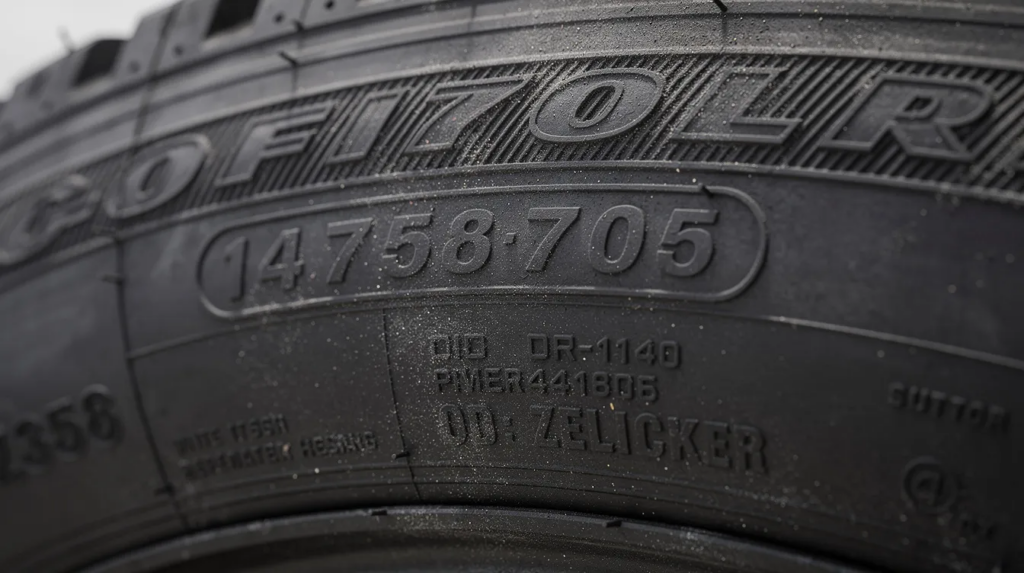
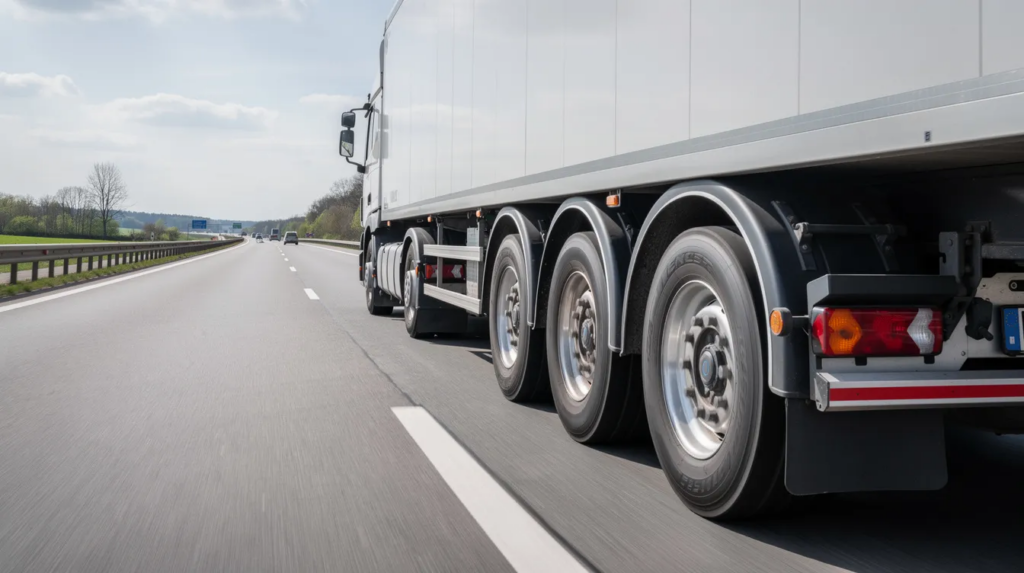
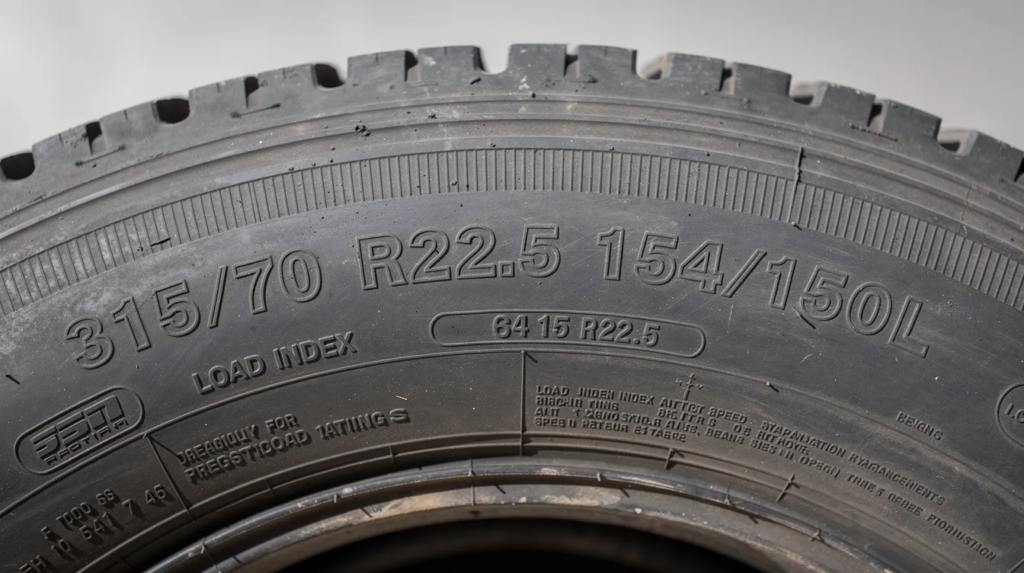
The vehicle involved was a white Iveco articulated tractor unit on long-haul duty, running a 385/65 R22.5 wide-base tyre on the steer axle — the front axle that carries all the steering forces and the bulk of the front-end weight on a modern semi-trailer combination. Somewhere on the A3 near Aschaffenburg, in the direction of Frankfurt, that tyre suffered a catastrophic blowout. This was not a slow puncture. The carcass was shredded, the tread was gone, and the tyre was, in the driver’s own words, “finished” — completely unusable, beyond any roadside repair.
Steer-axle tyres take a battering on German motorways that trailer tyres never see. They absorb every steering input, every camber change, every pothole and expansion joint at 80 km/h plus, and they carry more static load per tyre than most people realise. A wide-base 385/65 R22.5 fitted to a steer axle typically runs at a pressure between 8.5 and 9.5 bar, considerably higher than a car tyre, and when the carcass fails at that pressure and speed, the failure is instant and violent. The driver reported the classic signature of a steer-axle blowout: a loud bang, a sudden pull to one side, and a heavy vibration through the steering wheel as the shredded tyre continued to rotate on the rim for a second or two before the vehicle could be brought under control.
He did everything right. Rather than fighting the wheel or braking hard — both of which can make a steer-axle blowout considerably worse — he eased off the throttle, held a steady line, and worked the truck gently onto the hard shoulder before it lost momentum. Hazard lights on, warning triangle out, high-vis vest on, and a call to LKWHelp24. That sequence of calm, correct decisions in the first ten seconds after a blowout is, frankly, more important than anything a recovery technician does afterwards — but it only buys you time if the roadside assistance that follows is fast and competent.
How Help Was Organised
LKWHelp24 does not run a single depot with a handful of vans covering the whole of Germany. It operates a distributed network of vetted, certified truck tyre and breakdown partners positioned across the country, so that whichever motorway a vehicle breaks down on, there is realistically a qualified technician within a manageable driving radius. For a call on the A3 near Aschaffenburg, that meant activating the regional LKW tyre partner covering the Aschaffenburg area.
The dispatch process ran as follows:
● Driver calls the LKWHelp24 emergency line and reports the location (A3, hard shoulder, direction Frankfurt, near Aschaffenburg), the vehicle type (Iveco tractor unit), and the nature of the failure (steer-axle blowout, 385/65 R22.5).
● Dispatcher confirms the exact position using motorway kilometre markers and nearby exits, checks that the driver and vehicle are safely positioned off the running lanes, and reminds the driver to remain behind the crash barrier if the hard shoulder is narrow.
● The nearest available certified partner in the Aschaffenburg area is contacted, briefed on the tyre size and axle position, and given an estimated time of arrival.
● The partner confirms stock availability for a 385/65 R22.5 steer-axle tyre and loads the mobile fitting van accordingly, along with a spare in case the fitted wheel shows further damage.
● LKWHelp24 relays the confirmed ETA back to the driver and stays on standby in case the situation changes.
The entire booking and dispatch process, from the first ring of the phone to a technician being on the road, took twelve minutes — a call answered, assessed, and actioned by people who deal with this exact scenario on a weekly basis.
The Situation On-Site
By the time the recovery van arrived, the truck had been sitting on the hard shoulder for roughly fifty minutes — uncomfortable, but not dangerous, thanks to the driver’s positioning and visibility measures. The technician’s first job on arrival was not the wheel. It was the safety perimeter: extra warning triangles set further back up the hard shoulder to give approaching traffic more reaction time, the van’s own amber beacons running, and a visual check that the truck was stable and not at risk of rolling once it was jacked.
Only then did the inspection of the damage begin. The tyre itself was beyond salvage — the sidewall and tread had separated in multiple places, consistent with a rapid deflation at speed under heavy load. More importantly, the technician checked the rim, the wheel studs, the brake components, and the suspension for any signs of secondary damage, because a violent blowout on a steer axle can sometimes bend a rim or damage a brake caliper if the shredded rubber gets caught in the wheel arch. In this case, the inspection came back clean: no secondary damage, no bent rim, no compromised brake line. The failure was contained to the tyre itself.
That inspection step matters more than most drivers realise. Fitting a new tyre onto a damaged rim, or ignoring a brake line that has been nicked by flying rubber, is how a routine roadside repair turns into a second breakdown twenty kilometres down the road — or worse. A properly run truck tyre service always checks the whole wheel end before touching the replacement, not just the tyre.
Step-by-Step: The Repair
With the perimeter secured and the inspection complete, the technician worked through a standard sequence for a steer-axle wheel change:
Step 1 — Stabilise and chock. The vehicle was chocked on the rear axles and the parking brake confirmed engaged before any jacking began. On a steer axle, this step is non-negotiable, because the front of the vehicle carries proportionally more weight and a mis-set jack point can be genuinely dangerous.
Step 2 — Jack and support. A hydraulic bottle jack rated for HGV steer-axle loads was positioned at the manufacturer’s specified jacking point, and the axle was raised until the damaged wheel cleared the road surface by a safe margin.
Step 3 — Remove the damaged wheel. The wheel nuts were released with a pneumatic torque gun, and the wrecked tyre and wheel assembly were pulled clear. The rim was cleaned and re-inspected under better light before fitment of the replacement.
Step 4 — Fit and inflate the new tyre. A new tyre was mounted onto the rim, balanced, and fitted to the steer axle, then inflated to the specified 9.0 bar for that load rating and position — critical, because an underinflated steer tyre on a heavy tractor unit will scrub unevenly and can itself become a steering hazard within a few hundred kilometres.
Step 5 — Torque and final check. Wheel nuts were tightened in a star pattern to the correct torque specification, rechecked with a calibrated torque wrench, and the vehicle was lowered off the jack. A final walk-around confirmed tyre pressure, wheel security, lights, and general roadworthiness before the driver was cleared to move off.
Full Timeline
| Time | Phase | Action |
|---|---|---|
| 14:15 | Call received | Driver reports steer-axle blowout, A3 near Aschaffenburg |
| 14:27 | Partner dispatched | Regional tyre partner briefed, ETA confirmed |
| 15:05 | Arrival on site | Technician reaches the hard shoulder location |
| 15:13 | Secured | Safety perimeter set, vehicle chocked and jacked |
| 15:33 | Old tyre removed | Damaged 385/65 R22.5 demounted, rim inspected |
| 15:51 | New tyre fitted | Replacement mounted, inflated to 9.0 bar |
| 16:01 | Final checks | Wheel nuts torqued in star pattern, roadworthiness confirmed |
| 16:04 | Vehicle fahrbereit | Iveco cleared and back on the road |
Total elapsed time: 1 hour 49 minutes from first call to the truck rejoining traffic. On-site working time: approximately 55 minutes.
For a steer-axle failure on one of Germany’s busiest motorway corridors, that is a genuinely fast turnaround — fast enough that the driver’s schedule for the day was barely dented, and fast enough that the truck spent under an hour exposed on the hard shoulder rather than sitting there for half a day waiting for parts.
Cost of the Repair
| Item | Price (EUR) |
|---|---|
| Call-out / 24/7 motorway emergency service | 190 |
| Tyre 385/65 R22.5 (Continental Conti Hybrid HT3) | 340 |
| On-site fitting and balancing | 90 |
| Old tyre disposal | 20 |
| TOTAL | 640 EUR |
Several factors drive the final figure on a job like this. The call-out fee reflects the fact that this is a 24/7 emergency dispatch to a live motorway hard shoulder, not a scheduled workshop appointment — the technician, the fully stocked mobile van, and the safety equipment all have to be available on short notice, at any hour, every day of the year. The tyre itself is a premium steer-axle product; wide-base 385/65 R22.5 tyres for the front axle of a long-haul tractor are not a budget item, because they need to handle high steering loads, resist irregular wear, and deliver predictable handling in wet and dry conditions across tens of thousands of kilometres. Fitting and balancing a wheel of this size on the roadside, rather than on a workshop lift, requires specialist portable equipment and adds a modest premium over an in-house job. Disposal of the wrecked tyre is a small, fixed cost that keeps the operation compliant with German waste regulations.
Compare that 640 EUR, roughly two-hour outcome against the alternative: calling a standard breakdown recovery service with no lorry tyre stock on board, waiting for a flatbed to arrive, having the vehicle towed to the nearest workshop, and then waiting for that workshop to source a steer-axle tyre in the right size and load rating. That route routinely costs a full day or more of downtime, easily several hundred euros in towing alone, plus whatever the driver’s lost hours are worth to the haulage company — and that is before factoring in the tyre and fitting cost, which does not disappear either way.
If Continental was not the preferred brand, the same job could equally have been completed with a Michelin X Multi T or a Goodyear KMAX T, both of which are common alternatives for steer-axle applications on long-haul tractor units and are stocked by LKWHelp24’s partner network as standard options.
Why a Professional Truck Tyre Service Is Essential
Attempting to handle a steer-axle blowout without trained help, or worse, attempting a DIY roadside fix, carries risks that most drivers underestimate:
- A steer axle carries significantly more static and dynamic load than a trailer axle, and an incorrectly torqued wheel nut on the front of a tractor unit is a wheel-loss risk at motorway speed.
- Jacking a loaded HGV without the correct jack point and stabilisation can cause the vehicle to slip off the jack, with catastrophic consequences for anyone working underneath or nearby.
- A tyre fitted without checking the rim for hidden damage can fail again within kilometres, putting the driver back in exactly the same dangerous situation.
- Incorrect tyre pressure on a steer axle — even a few tenths of a bar out — measurably affects steering precision and braking distance on a fully loaded tractor unit.
- Working on the hard shoulder of a German motorway without proper high-visibility warning equipment and beacon lighting puts both the driver and any bystanders at serious risk from passing traffic.
- Using the wrong load-rated tyre, or a tyre not rated for the steer position, is not just a performance issue — it can invalidate insurance in the event of a subsequent accident.
None of these are things a driver should be figuring out alone on the hard shoulder. A certified mobile tyre service brings the right jack, the right torque specification, the right stock, and the experience to spot problems that are not immediately obvious.
Typical Breakdown Situations We Handle
LKWHelp24’s partner network covers the full range of HGV breakdown scenarios across Germany, not just tyre failures:
- Steer-axle and trailer-axle tyre blowouts on motorways (A3, A9, A4, A14, and every other Autobahn corridor)
- Slow punctures and irregular wear diagnosed during routine stops at a rest area or Raststätte
- Battery replacement and jump-start assistance for tractor units that will not start after a rest break
- Air-brake and pneumatic system faults that leave a vehicle immobilised
- Abschleppdienst / towing service when a fault genuinely cannot be resolved roadside
- Fleet tyre management for hauliers running multiple vehicles across regular routes
- Refrigeration unit and trailer electrical faults on temperature-controlled loads
- Roadside assistance for buses, refrigerated trailers, low-loaders, and other specialist commercial vehicles
Whatever the failure, the same principle applies: a fast, correctly equipped response from a partner who knows heavy vehicles beats a generic roadside assistance call every time.
Prevention Tips for Drivers and Fleet Managers
Steer-axle tyre failures are rarely completely random. There are things drivers and fleet operators can do to cut the odds significantly:
- Check steer-axle tyre pressure at every fuel stop, not just at scheduled service intervals — a slow leak on a steer tyre is far more dangerous than one on a trailer axle.
- Inspect the tread and sidewalls visually during pre-trip checks, looking specifically for cuts, bulges, and uneven wear patterns that indicate an alignment or suspension issue.
- Respect load limits on the steer axle — overloading the front end accelerates tyre wear and increases blowout risk disproportionately.
- Keep a record of tyre age and mileage; even a tyre with plenty of tread depth left can become unsafe once the rubber compound has aged beyond its recommended service life.
- Plan routes with known Raststätte and rest area locations in mind, so that if a slow issue does develop, the driver has somewhere safe to stop before it becomes a full failure on the hard shoulder.
- Keep the LKWHelp24 number saved and visible in the cab — +49 160 5753826 — so there is no fumbling for a phone number in the middle of an emergency.
Fleet Maintenance and Steer-Axle Tyre Options
For haulage companies running larger fleets, steer-axle tyre selection is worth treating as a proper procurement decision rather than an afterthought. The three brands most commonly fitted by LKWHelp24’s partners on steer positions — Continental, Michelin, and Goodyear — each bring slightly different strengths. Continental’s Conti Hybrid HT3, as fitted in this case, is built for mixed motorway and regional use with a focus on even wear and predictable steering feel, which is exactly what a long-haul tractor covering routes like the A3 corridor needs. Michelin’s X Multi T range is popular with fleets prioritising mileage and fuel efficiency across varied terrain, while Goodyear’s KMAX T is frequently specified where wet-grip performance and reduced rolling resistance are the priority.
For fleet managers, the smarter long-term move is proactive tyre management: scheduled pressure checks, tread-depth logging across the fleet, and rotating steer tyres to trailer positions once they reach the tread depth threshold where steering precision starts to matter more than raw mileage. A fleet maintenance contract with LKWHelp24 can build exactly this kind of monitoring into a haulier’s regular servicing schedule, reducing the number of emergency call-outs over a full operating year and keeping vehicles on predictable, plannable maintenance cycles rather than reactive roadside emergencies.
LKWHelp24: Your Truck Emergency Partner
What separates a genuinely useful truck breakdown service from a generic call centre is speed, competence, and honesty about cost. LKWHelp24 was built around those three things specifically for the German commercial vehicle market:
- 24/7 coverage, every day of the year, across the entire German motorway network, not just business hours in major cities.
- A certified partner network, meaning every technician dispatched has the training and equipment for heavy commercial vehicles, not passenger car breakdown kit stretched to fit a lorry.
- Transparent, fixed pricing communicated before work begins, so there are no surprise invoices once the truck is back on the road.
- Multilingual dispatch and support, recognising that international drivers on German motorways need to be able to explain a problem clearly and understand the solution just as clearly.
- Full-scope service, from a single tyre blowout to towing, battery issues, and fleet maintenance contracts, so hauliers deal with one trusted number rather than a different local contractor for every problem.
- Nationwide reach built on regional partners, meaning response times stay realistic wherever in Germany a breakdown happens — the A3 near Aschaffenburg included.
Summary
- Vehicle: Iveco articulated tractor unit
- Tyre size: 385/65 R22.5, steer axle
- Location: A3 hard shoulder, near Aschaffenburg, direction Frankfurt
- Response time: 12 minutes from call to partner dispatch; technician on site within 50 minutes
- Total job time: 1 hour 49 minutes, call to roadworthy
- On-site working time: approximately 55 minutes
- Total cost: 640 EUR, fixed and itemised
- Secondary damage: none
- Tyre fitted: Continental Conti Hybrid HT3 (Michelin X Multi T and Goodyear KMAX T available as alternatives)
Request Emergency Assistance Now
If you are dealing with a truck breakdown anywhere in Germany right now, call +49 160 5753826 or visit lkwhelp24.com. LKWHelp24 is available 24/7 across all of Germany, with certified partners ready to respond to steer-axle blowouts, trailer tyre failures, towing needs, and every other roadside emergency a commercial vehicle can throw at you.
You might also be interested in
- Steer-Axle Tyre Blowout on the A14 near Leipzig: Mobile Repair in Record Time
- Volvo FH 460 Steer-Axle Tyre Service on the A9 near Nuremberg
- Scania Tyre Blowout on the A4 near Dresden: What It Cost and How Long It Took
- Iveco Tractor Emergency Response: How Our Mobile Team Works
- Understanding Continental Truck Tyre Specifications