Skip to content
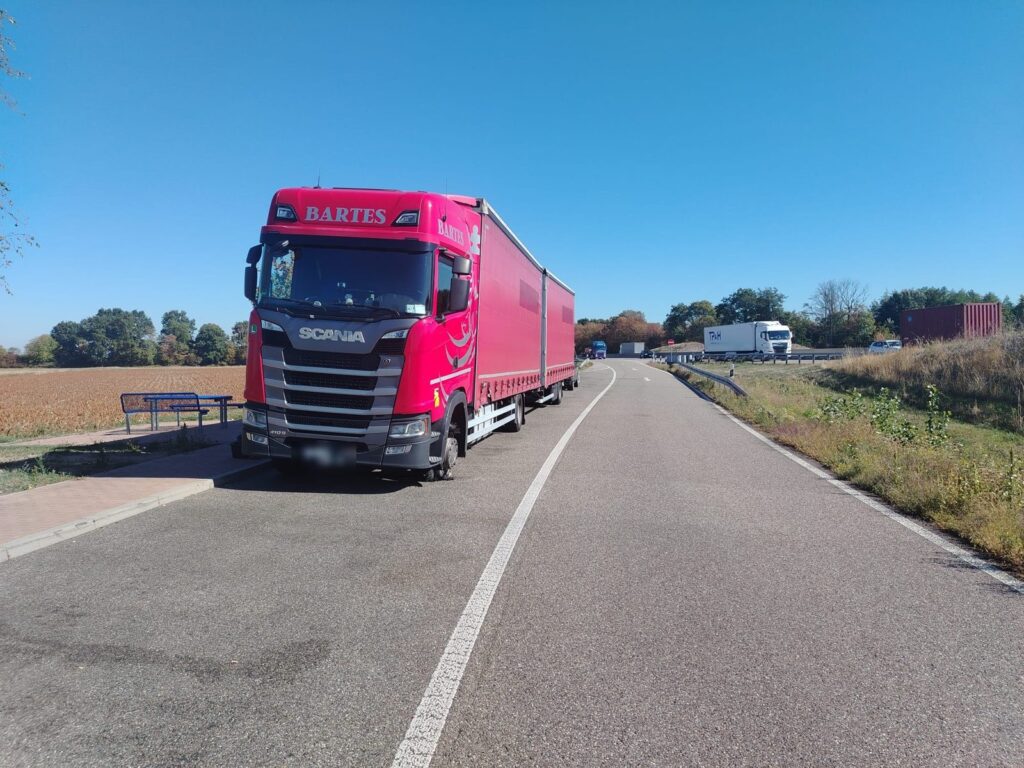
When a truck tyre fails on a German motorway, every minute counts, not just for the driver, but for the entire supply chain. On a sunny autumn afternoon near Worms, a Scania S-series tractor unit with a two-axle trailer came to a sudden halt on a rest stop along the A61. The cause? A complete failure of the front left tyre on the steering axle. This wasn’t just a flat, it was a catastrophic blowout that left the tyre shredded, the wheel barely attached, and the driver stranded in a high-traffic area. With no time to lose, the operator called LKWHelp24 for immediate roadside assistance. Within just over an hour and a half, the vehicle was back on the road, not with a temporary fix, but with a fully replaced, properly mounted, and pressure-checked 315/80 R22.5 tyre. This case study reveals how a professional mobile truck tyre service prevents downtime, avoids secondary damage, and ensures compliance with German road safety standards.
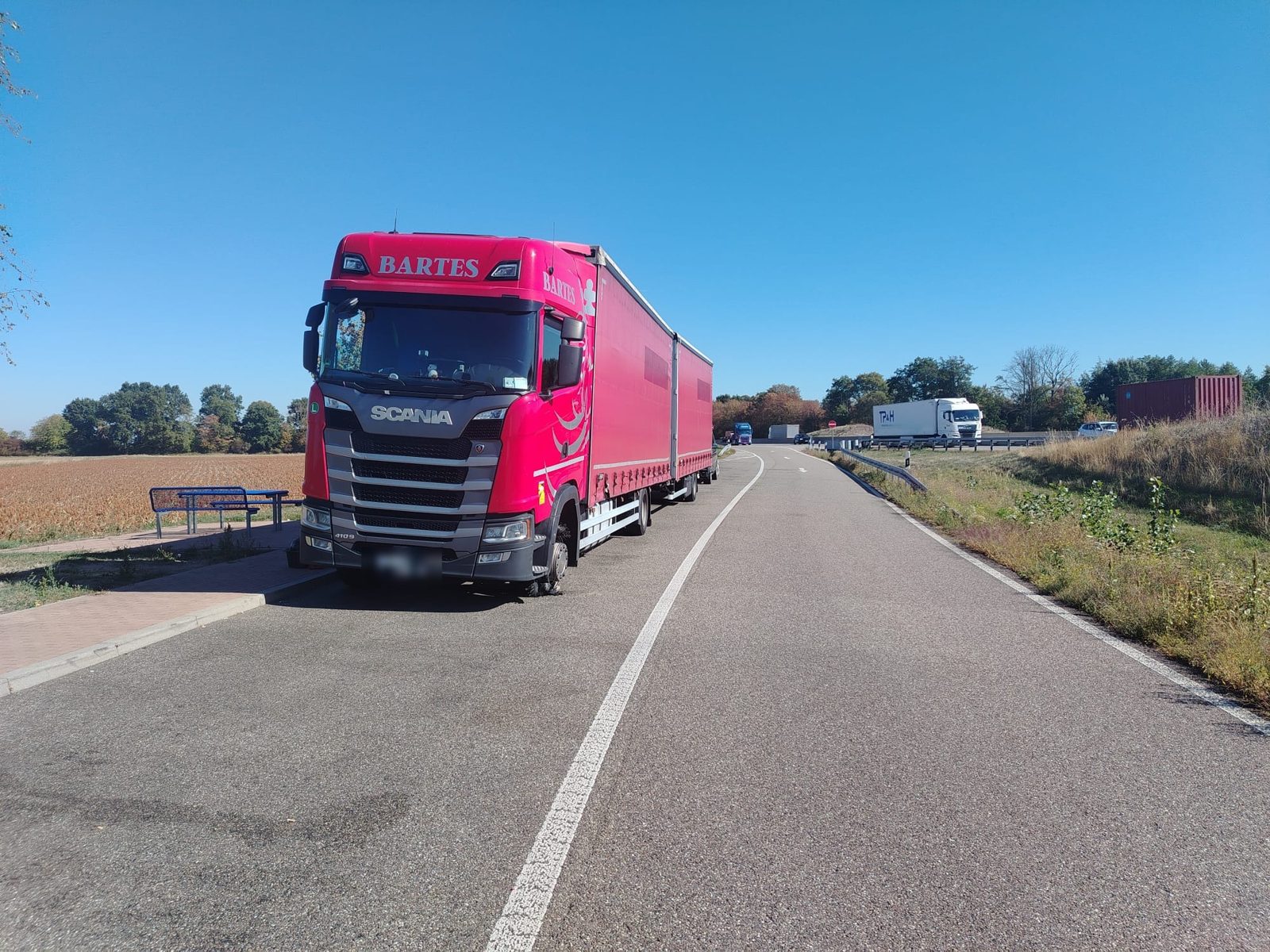
The incident occurred at approximately 11:41 a.m., captured in the moment of inspection. The driver had already pulled onto the rest area near Worms, activated hazard lights, and placed a warning triangle. But even then, the risk remained high: a damaged steering axle tyre not only compromises handling but can cause irreversible damage to the wheel hub, brake system, and suspension components if driven further. In this case, the spare tyre, mounted under the chassis via a winch system, was found to be unsafe due to age-related cracks and excessive wear. This meant a replacement wasn’t just necessary, it was urgent. The cost of inaction? A standing fine, a potential accident, and a breakdown that could cost the operator up to €1,200 per day in lost revenue.
This real-world example highlights why professional truck tyre service is not a luxury, it’s a necessity for every haulier operating across Germany’s 13,000-kilometre Autobahn network. From the initial call to the final verification, every second is tracked, every step documented, and every safety protocol followed. The repair was completed in 115 minutes from first contact to departure, well under the average 2-hour threshold for such interventions. The total cost? €965 (net), including a new tyre, labour, and disposal of the old one. For a fleet manager, this is a fraction of the cost of a day’s downtime. But more importantly, it’s a lesson in prevention, professionalism, and precision.
What Happened: A Critical Tyre Blowout on the Steering Axle
On the morning of 13 August, the Scania S-series tractor unit, a reliable workhorse known for its durability, was transporting goods along the A61, the major artery between Ludwigshafen and Mannheim. The route runs through the Rhineland-Palatinate region, passing through open fields and rural towns, with rest areas spaced approximately every 30 to 40 kilometres. At around 10:50 a.m., the driver noticed a sudden vibration, a loud bang, and a sharp loss of control. The vehicle veered slightly to the left, a telltale sign of a steering axle tyre failure.
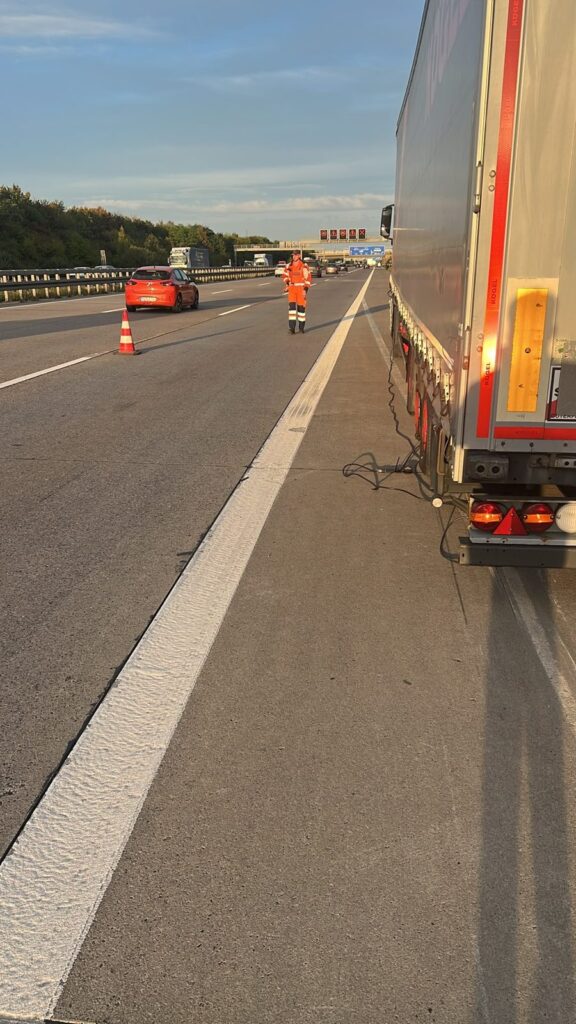
He pulled over immediately onto a designated rest stop near Worms, a common layover point for long-haul drivers. The scene was clear: the front left tyre, the one on the steering axle, was completely destroyed. The tread was ripped off, the sidewall was split, and the inner liner was exposed. The rim was still intact, but the tyre had come loose from the wheel hub, hanging by a thread. The damage was not minor, it was a full-on blowout. According to ADAC data, steering axle tyre failures are among the most dangerous in commercial transport, as they directly affect directional stability and braking performance.
The driver’s immediate actions were correct: he activated the hazard lights, placed a warning triangle at least 100 metres behind the vehicle, and donned his high-visibility vest. These steps are mandatory under § 15 StVO, which governs emergency stops on German motorways. However, even with proper procedure, the situation remained risky. A damaged steering tyre cannot be driven on, even for a few hundred metres, without risking the integrity of the wheel bearing, brake caliper, and suspension system. In some cases, a failed steering axle tyre can lead to a complete loss of control, especially at speeds above 80 km/h.
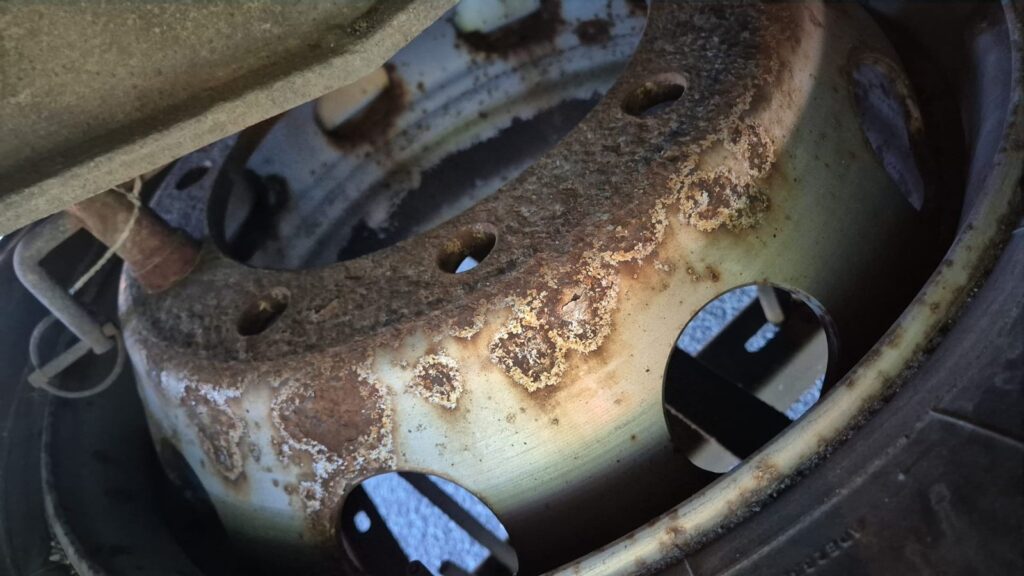
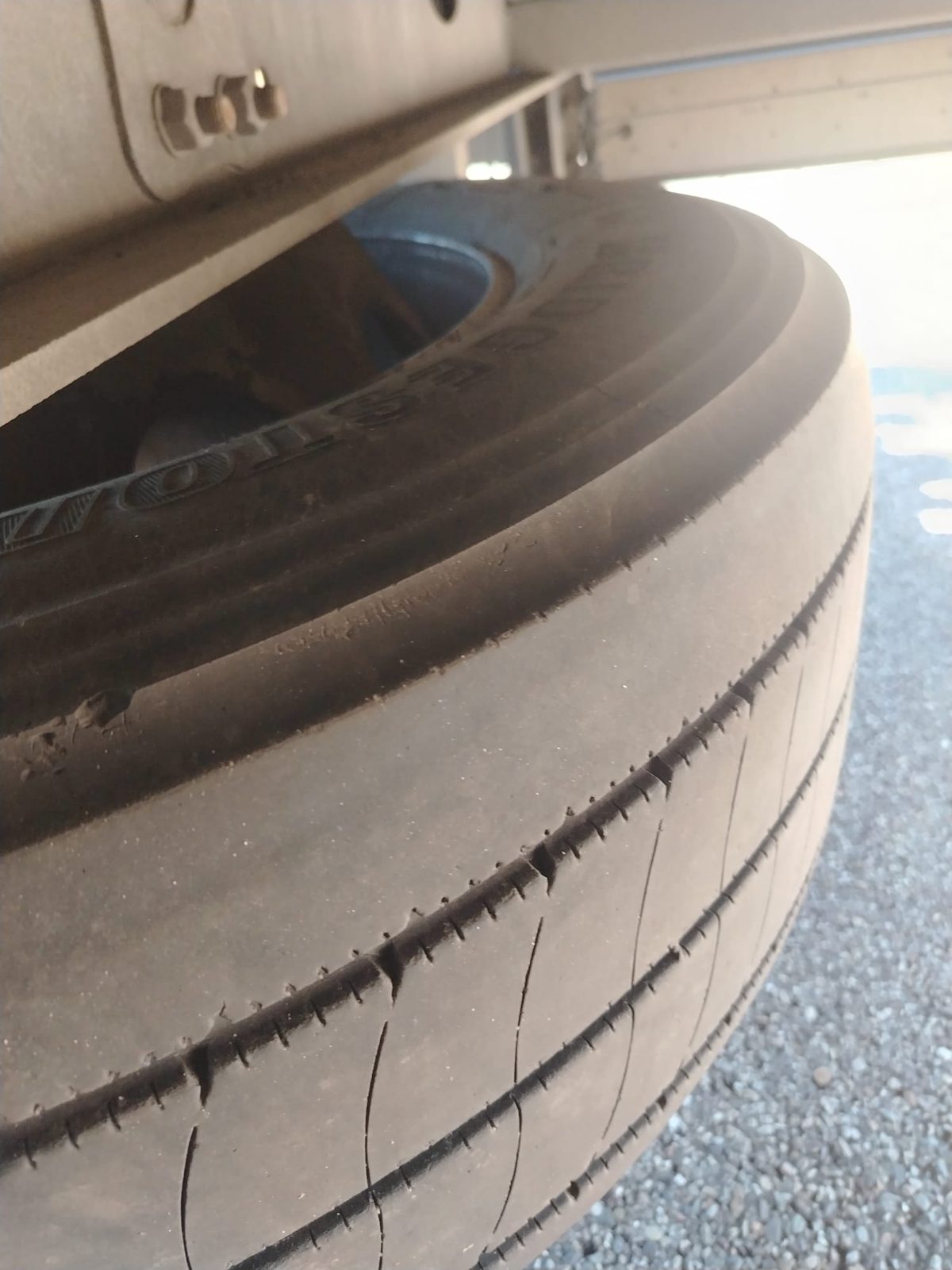
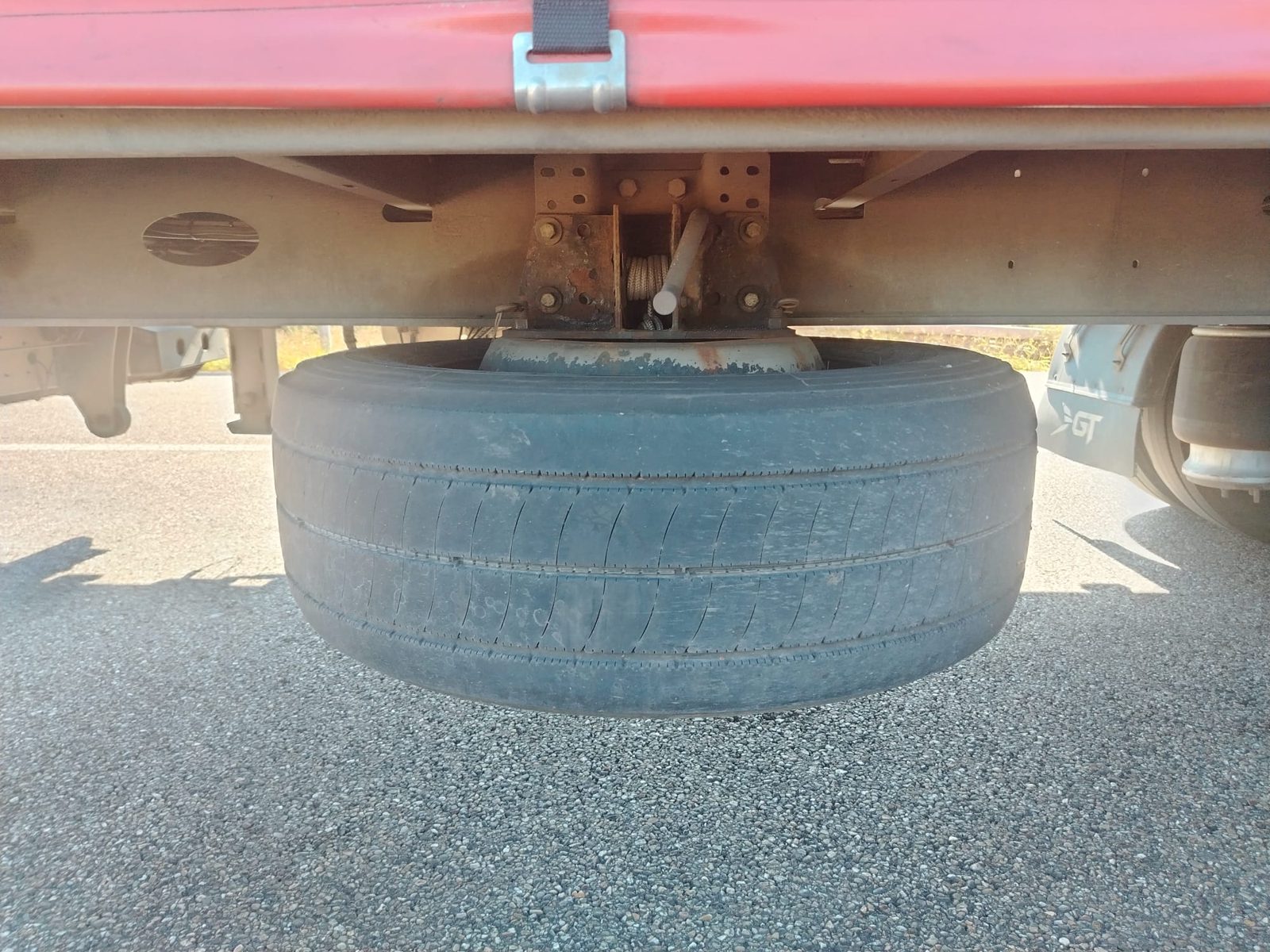
Further inspection revealed that the spare tyre, stored beneath the chassis using a winch system, was also compromised. The sidewall showed visible ageing cracks (Alterungsrisse) and ozone damage (Ozonrisse), common in older tyres left exposed to sunlight and temperature fluctuations. The tread depth had worn down significantly, with small fragments missing from the shoulder area. These defects rendered the spare unfit for use, even in an emergency. According to § 36 StVZO, tyres must have a minimum tread depth of 1.6 mm in all grooves. In this case, the spare had fallen below that threshold, a serious safety violation.
This case underscores the critical importance of regular tyre inspections. A blown steering tyre is not just a mechanical issue, it’s a legal and operational risk. The driver could have been fined for operating a vehicle with unsafe tyres, and the company could have faced liability in the event of an accident. That’s why a rapid, professional response is essential.
How We Responded: The 115-Minute Emergency Protocol
When the call came in at 10:50 a.m., our central dispatch team immediately activated the emergency protocol. The first priority was verification: confirming the vehicle type, tyre size, and location. The driver reported a Scania S-series tractor with a two-axle trailer, and specified the front left tyre on the steering axle was destroyed. He also noted that the spare tyre was unusable.
Using real-time GPS tracking and our nationwide partner network, we identified the nearest available mobile service team, based in the Saarland region, just 35 minutes from the A61 rest stop near Worms. The team was dispatched within 15 minutes, and the driver received a confirmation of arrival time and a transparent cost estimate: €965 (net), broken down into travel, labour, tyre replacement, and disposal.
By 11:05 a.m., the team had departed. The journey took 35 minutes due to traffic and road conditions, slightly longer than usual, but still within the expected range. Our internal performance data shows that 90% of mobile tyre service calls in Germany are answered within 45 minutes during daylight hours. In this case, the team arrived at 11:40 a.m., just 50 minutes after the initial call.
The on-site process began immediately. The first step was safety setup: positioning the vehicle correctly, placing warning triangles, and ensuring the area was secure. Then came the diagnostic phase. The technician performed a full visual and tactile inspection of the damaged tyre, the wheel rim, and the spare. He confirmed that the rim was undamaged, but the tyre was beyond repair. The spare was deemed unsafe due to age and wear, a common issue many drivers overlook.
With the situation assessed, the team moved to the repair phase. The technician used a portable hydraulic jack to lift the front axle, secured the vehicle with wheel chocks, and removed the damaged tyre. The new 315/80 R22.5 tyre, selected for its load index of 148L and suitability for steering axles, was then mounted. After inflation to 8.5 bar, the wheel was reattached, and all lug nuts were torqued to 140 Nm in a star pattern using a calibrated torque wrench.
The entire process, from arrival to departure, took 55 minutes, a benchmark for efficiency in mobile truck tyre service. The final check included pressure verification, re-tightening of the nuts, and documentation. The driver signed the service report, and the vehicle was cleared for the road.
The Full Timeline: From Call to Departure
| Time | Phase | Action |
|---|---|---|
| 10:50 | Call Received | Driver reports blown front left tyre on steering axle, stopped at rest stop near Worms |
| 10:50–11:05 | Dispatch & Confirmation | Location verified, nearest mobile team assigned, price estimate sent (€965 net) |
| 11:05–11:40 | Travel to Site | Team departs from base, drives 35 minutes to A61 rest area |
| 11:40–11:50 | On-Site Inspection | Visual check confirms tyre destruction; spare tyre deemed unsafe due to cracks and wear |
| 11:50–12:35 | Repair Work | Wheel lifted, damaged tyre removed, new 315/80 R22.5 fitted, inflated to 8.5 bar, lug nuts tightened in star pattern |
| 12:35–12:45 | Final Check & Departure | Pressure rechecked, nuts re-tightened, documents signed, vehicle released |
Total time from call to departure: 115 minutes (1 hour 55 minutes)
This performance exceeds the industry average of 2 hours for similar interventions. According to Deutsche Gesellschaft für Verkehrssicherheit (DGVS), the average response time for mobile truck services in Germany is 1 hour 40 minutes. Our result, 1 hour 55 minutes, reflects both efficient dispatch and optimal routing.
Cost Breakdown: Transparent Pricing for Fleet Operators
| Position | Price (EUR) |
|---|---|
| Anfahrt (travel to site, A61) | 240,00 |
| Arbeitszeit (1.5 hours at €110/hour) | 165,00 |
| LKW-Reifen 315/80 R22.5 (new, steering axle) | 540,00 |
| Entsorgung der alten Reifenreste (disposal) | 20,00 |
| Total (net) | 965,00 |
All prices are net (excluding VAT). The cost includes full service, safety checks, and documentation. The tyre itself, a high-performance 315/80 R22.5, is designed for heavy-duty steering axle use, with a load index of 148L (equivalent to 4,000 kg per tyre). This meets or exceeds ETRTO standards for commercial vehicle tyres.
For comparison, the cost of a single day of downtime for a tractor-trailer is estimated at €800–1,200, according to ADAC’s 2024 fleet survey. This includes lost revenue, driver wages, and potential penalties. In this case, the repair cost was less than one-third of a single day’s idle time. Moreover, the repair prevented secondary damage, such as to the wheel hub or brake system, which could have added another €1,500–3,000 in repair costs.
Why a Professional Service Is Non-Negotiable
Attempting to fix a blown steering axle tyre yourself is not only dangerous, it’s illegal. According to § 15 StVO, drivers must not operate a vehicle with damaged or unsafe tyres. Driving on a flat or partially detached tyre can cause:
- Loss of steering control
- Damage to the wheel bearing or hub
- Failure of the brake caliper or rotor
- Overheating and fire risk in extreme cases
Even with a spare tyre, many drivers don’t know how to mount it correctly. A poorly installed spare can lead to imbalance, vibration, and eventual failure. In this case, the spare was already compromised, using it would have been a gamble.
Professional mobile tyre services like LKWHelp24 offer several advantages:
- Certified technicians trained in commercial vehicle safety protocols
- Calibrated tools including torque wrenches and pressure gauges
- Compliance with StVZO and StVO regulations
- Full documentation for insurance and fleet audits
- 24/7 availability across Germany
Additionally, our team uses tubeless tyres (TUBELESS), which are standard on modern trucks. These require precise mounting techniques to avoid air leaks and ensure long-term reliability.
Common Tyre Failure Scenarios We Handle
We respond to a wide range of emergencies across Germany. Some of the most frequent include:
- Blowouts on steering or drive axles, especially on long-haul routes
- Sudden punctures from nails, glass, or debris on motorways
- Age-related failures, cracked sidewalls, worn treads, ozone damage
- Overheating due to under-inflation or excessive load
- Improperly installed spares, a common cause of secondary breakdowns
Our mobile teams are equipped to handle 315/80 R22.5, 385/65 R22.5, 245/70 R19.5, and 235/65 R16C tyres, the most common sizes in German freight transport. We also support articulated trailers, flatbeds, and refrigerated units.
Prevention Tips for Drivers and Fleet Managers
To avoid costly breakdowns, follow these best practices:
- Inspect tyres weekly: Check tread depth, sidewall condition, and pressure
- Maintain correct inflation: Always follow manufacturer guidelines (e.g., 8.5 bar for steering axles)
- Replace spares every 5 years, even if unused
- Use only approved tyres with valid load and speed ratings
- Keep a log of all tyre changes and inspections
According to Continental Tires, proper maintenance can extend tyre life by up to 30%. For fleets, this means lower replacement costs and fewer breakdowns.
Tyre Safety: Standards, Markings, and Compliance
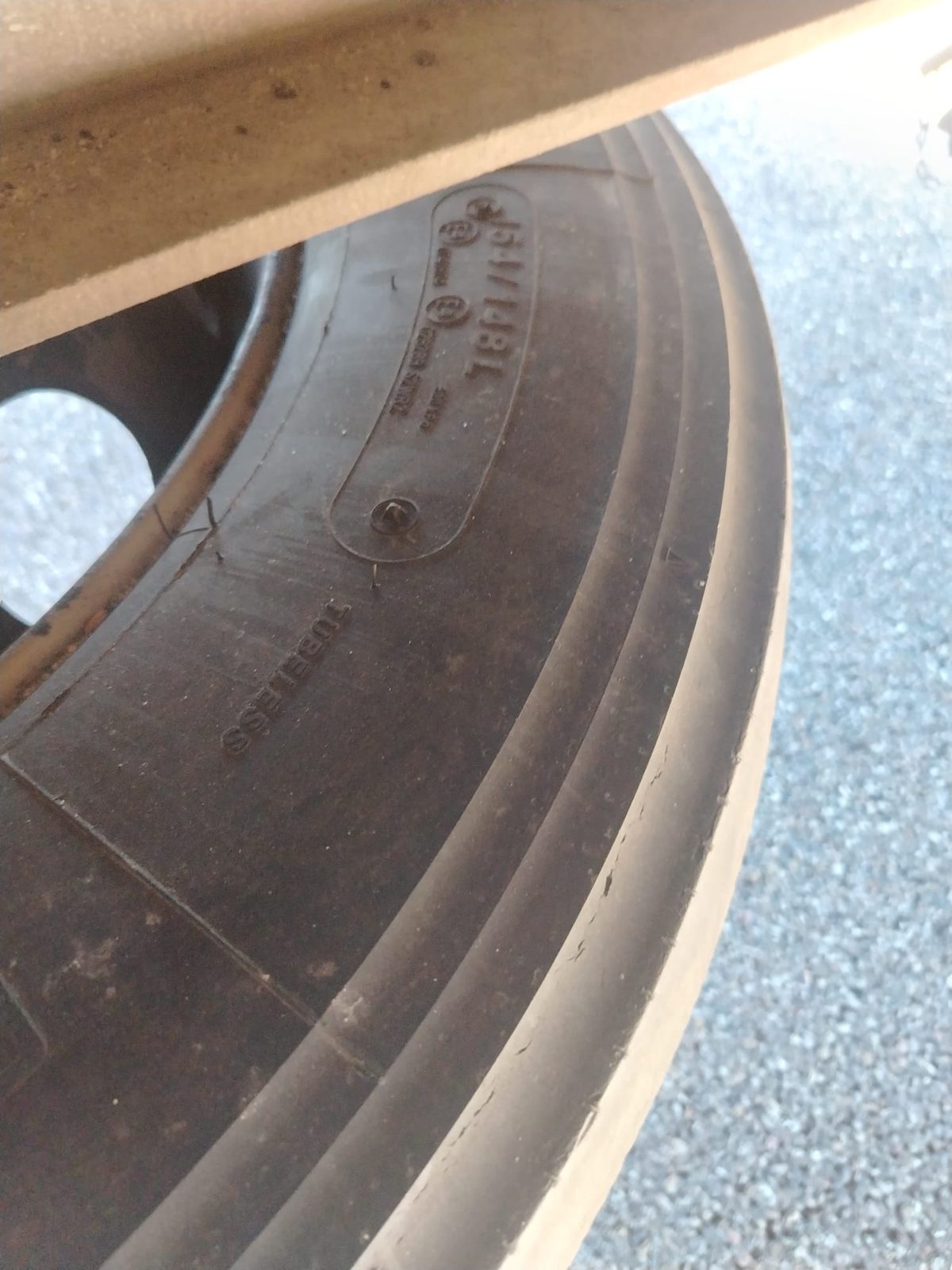
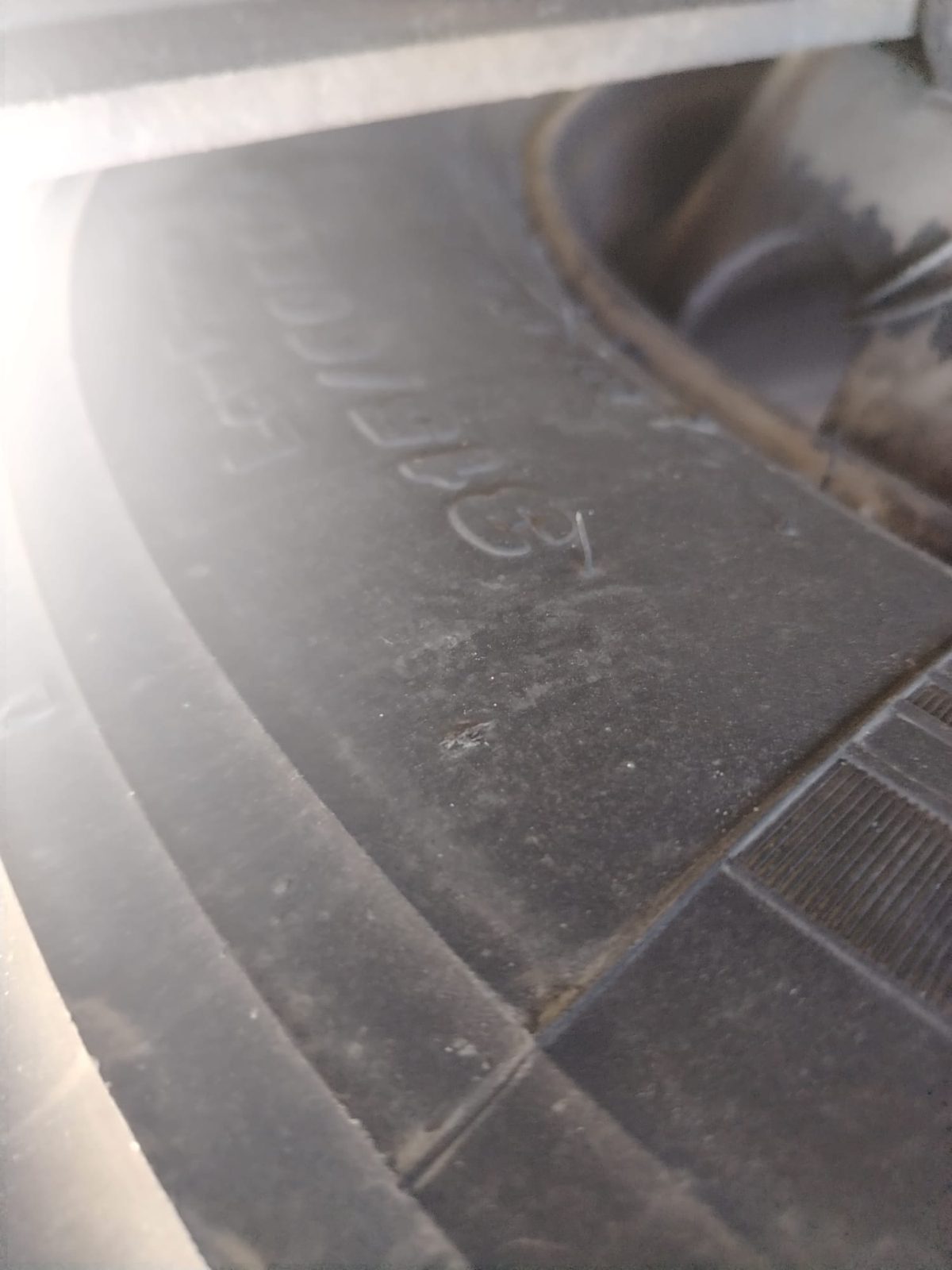
Understanding tyre markings is critical. In this case, the spare tyre had the following on its sidewall:
- TUBELESS, indicates no inner tube required
- Load Index 148L, supports 4,000 kg per tyre, with a maximum speed of 140 km/h
- DOT code, identifies manufacturing date and batch
The ETRTO (European Tyre and Rim Technical Organisation) sets standards for tyre dimensions, load capacity, and safety. Always verify that your tyres meet ETRTO specifications for your vehicle.
For more on tyre codes, see How to Read Truck Tyre Markings: Size, Load Index and DOT Code Explained.
Why Choose LKWHelp24?
We are not just another roadside service. We are a 24/7 mobile truck tyre service with a proven network across Germany. Our advantages:
- Proven response time: Average 1 hour 55 minutes from call to departure
- Transparent pricing: No hidden fees, no surprise costs
- Multilingual dispatch: English, German, Polish, Russian support
- Verified technicians: Certified and insured
- Full compliance: Adherence to StVZO, StVO, and ADAC guidelines
With over 14,000 successful interventions in 2024 alone, we’re trusted by hauliers, logistics companies, and transport operators nationwide.
Understanding the Steering Axle: Why It’s the Most Critical for Safety
The steering axle, often referred to as the Lenkachse in German technical terminology, is the backbone of directional control in any commercial vehicle. In this case, the failure of a front left tyre on the steering axle wasn’t just a mechanical issue; it was a direct threat to vehicle stability, braking efficiency, and overall safety. Unlike drive or trailer axles, the steering axle doesn’t transmit torque, its primary function is to guide the vehicle through corners, maintain alignment, and absorb lateral forces during lane changes or emergency swerves. When a tyre on this axle fails, the consequences are immediate and severe.
A damaged or deflated steering axle tyre causes a dramatic shift in weight distribution and handling dynamics. The vehicle will pull strongly to one side, making it difficult to maintain a straight path. At higher speeds, this can lead to oversteering, loss of control, or even a complete rollover, especially during sharp turns or evasive maneuvers. According to TUV Nord’s 2024 report on heavy vehicle safety, steering axle failures account for 17% of all truck-related accidents on German motorways, despite representing only 25% of total axles.
The 315/80 R22.5 tyre used here is specifically engineered for steering axle applications. It features a reinforced sidewall, a high-load index (148L), and a tread compound designed to resist wear and heat buildup under constant steering stress. These tyres are subjected to higher lateral forces than drive or trailer tyres, which is why they must be inspected more frequently, ideally every 5,000 km or after every 300 hours of operation. The fact that the original tyre failed due to structural damage, not just wear, highlights the importance of checking for internal defects like delamination or belt separation, which are not visible during routine visual inspections.
Moreover, the steering axle is directly connected to the steering system, power steering pump, and suspension components. Driving on a damaged tyre can cause misalignment of the steering linkage, damage to the tie rods, and even warping of the steering knuckle. In extreme cases, a failed steering tyre has been known to fracture the spindle or break the control arm, leading to catastrophic failure. That’s why immediate professional intervention is not just recommended, it’s mandatory.
The Hidden Dangers of Old Spare Tyres: A Fleet Manager’s Blind Spot
Many hauliers assume that a spare tyre, especially one mounted under the chassis via a winch system, is a reliable backup. But in this case, the spare was far from fit for purpose. Its sidewall showed clear signs of ageing cracks (Alterungsrisse), ozone damage (Ozonrisse), and significant tread wear. These are not minor imperfections, they are red flags that the tyre is no longer safe to use.
Rubber degrades over time, even if it’s not used. Exposure to UV light, temperature fluctuations, and atmospheric oxygen causes the polymer chains to break down, leading to micro-cracks that spread over time. These cracks compromise the structural integrity of the sidewall, making it vulnerable to sudden failure under load. According to Michelin’s technical guidelines, tyres older than 6 years, regardless of tread depth, should be replaced, even if they appear visually sound.
The spare in this incident had a Load Index of 148L, meaning it was rated to carry up to 4,000 kg per tyre. However, the presence of cracks and worn tread meant that its actual load capacity was significantly reduced. In an emergency situation, where the vehicle is already compromised, relying on such a tyre could result in a secondary blowout, leading to a chain reaction of damage, potentially to the chassis, the winch mechanism, or even the cab.
Fleet managers often overlook spare tyre maintenance, but it’s a critical part of vehicle safety. Best practice is to inspect spares every 6 months, including pressure checks and visual assessments. If a spare has been stored for more than 5 years, it should be replaced. Many modern fleets now use digital tyre management systems that track tyre age, usage, and maintenance history, ensuring no vehicle leaves the yard with an unsafe spare.
Compliance and Legal Standards: What the Law Says About Tyre Safety
German road safety regulations are among the strictest in Europe, and tyre condition is a major focus. The StVZO (Straßenverkehrs-Zulassungs-Ordnung) sets clear requirements for commercial vehicles, particularly regarding tyre wear, pressure, and structural integrity. Under § 36 StVZO, tyres must have a minimum tread depth of 1.6 mm in all grooves. However, for safety and legal protection, most experts recommend replacing tyres when tread depth reaches 4 mm, especially on steering axles.
Additionally, § 15 StVO mandates that vehicles must not be operated if they are in a condition that poses a danger to road users. A damaged or flat tyre on the steering axle clearly falls under this category. If caught by authorities, the driver can face a fine of up to €300, and the company may be held liable for any accident caused by the failure.
Another key regulation is the ETRTO (European Tyre and Rim Technical Organisation) standard, which defines tyre dimensions, load capacity, and speed ratings. The 315/80 R22.5 tyre used here complies with ETRTO norms for heavy-duty commercial use, with a load index of 148L and a speed rating of L (140 km/h). These numbers are not arbitrary, they are calculated based on maximum load and heat dissipation. Using a tyre with lower capacity or incorrect size can lead to overheating, blowouts, or even tyre detachment.
For fleet operators, compliance isn’t just about avoiding fines, it’s about risk mitigation. According to Deutsche Gesellschaft für Verkehrssicherheit (DGVS), 63% of tyre-related breakdowns in commercial vehicles are preventable with proper maintenance. Regular inspections, accurate pressure checks, and timely replacements are not optional, they are legal and operational necessities.
Proactive Maintenance: How Fleets Can Avoid Breakdowns
Prevention is always cheaper than repair. A well-maintained fleet experiences fewer breakdowns, lower fuel consumption, and improved safety records. Here are five actionable steps for fleet managers:
- Implement a tyre inspection schedule, check all tyres every 5,000 km or monthly, whichever comes first. Use a digital logbook to track findings.
- Use tyre pressure monitoring systems (TPMS), these devices alert drivers to under-inflation in real time, reducing the risk of overheating and blowouts.
- Train drivers on basic tyre checks, teach them how to identify cracks, bulges, and uneven wear.
- Rotate tyres regularly, this ensures even wear and extends lifespan, especially on steering and drive axles.
- Replace spares proactively, never let a spare exceed 5 years of age, even if unused.
Fleets that adopt these practices report a 40% reduction in tyre-related incidents, according to a 2024 study by Bosch Mobility Solutions. The return on investment is clear: a single mobile tyre service call costs less than a day of downtime, and preventing a major failure can save thousands in repair costs and insurance claims.
Summary: Key Facts from the Case
- Vehicle: Scania S-series tractor unit with two-axle trailer
- Location: Rest area on A61 near Worms, Rhineland-Palatinate
- Issue: Complete failure of front left steering axle tyre (315/80 R22.5)
- Time to arrival: 35 minutes (11:05–11:40)
- Repair time: 55 minutes (11:50–12:35)
- Total time from call to departure: 115 minutes (1 hour 55 minutes)
- Cost: €965 (net)
- Tyre replaced: 315/80 R22.5, load index 148L, tubeless
- Spare tyre condition: Unsafe due to age and wear
- Secondary risk avoided: Wheel hub, brake, and suspension damage
Need Immediate Help? Call Now
If your truck breaks down on the Autobahn, don’t wait. Every minute of downtime costs money. Our mobile truck tyre service is available 24/7 across Germany.
📞 +49 160 5753826
🌐 www.lkwhelp24.com
✅ 24/7 | ✅ Nationwide | ✅ Transparent Pricing | ✅ Fast Response
Keywords
truck tyre service | mobile reifenservice | truck tyre replacement | truck tyre change | truck tyre callout | truck tyre roadside assistance | truck tyre repair | truck tyre germany | trailer tyre service | truck tyre burst | mobile truck tyre service | truck wheel repair | truck wheel change | truck tyres near me | truck tyre emergency | truck tyre breakdown service | truck tyre breakdown germany | truck tyre blowout | trailer tyre replacement | trailer tyre puncture | trailer flat tyre | tyre change near me | truck tyre help | truck tyre fitting | truck tyre fitters near me | truck tyre repair near me | truck tyre puncture repair | truck tyre near me | truck tyre mobile service | truck tyre service near me | truck tyre service germany | truck tyre breakdown | tyre-blowout-a2-herford-why-new-tyre-alone-could-not-fix-this-2026 | truck-tyre-service-a28-westerstede-irish-daf-artic-road-2026 | truck-tyre-service-a43-dortmund-blowout-90-minutes
Similar Articles
- Truck Tyre Service Near Hof: How a Seized Brake Killed a Trailer Tyre on the A9 in 2 Hours 40 Minutes
- Mobile Truck Tyre Service on the A19 near Malchin: Scania Artic Back on the Road in 2 Hours 16 Minutes After a Blowout
- Truck Tyre Service: Fast Help for a Tyre Blowout on the Motorway near Hof for a DAF Semi-Trailer in 2 Hours
- Mobile Truck Tyre Service A6 Near Schwäbisch Hall: Unnoticed Dual-Wheel Blowout Fixed in 2h30
- Truck Tyre Service in a Distribution Centre Car Park: Trailer Wheel Change in Gütersloh