Skip to content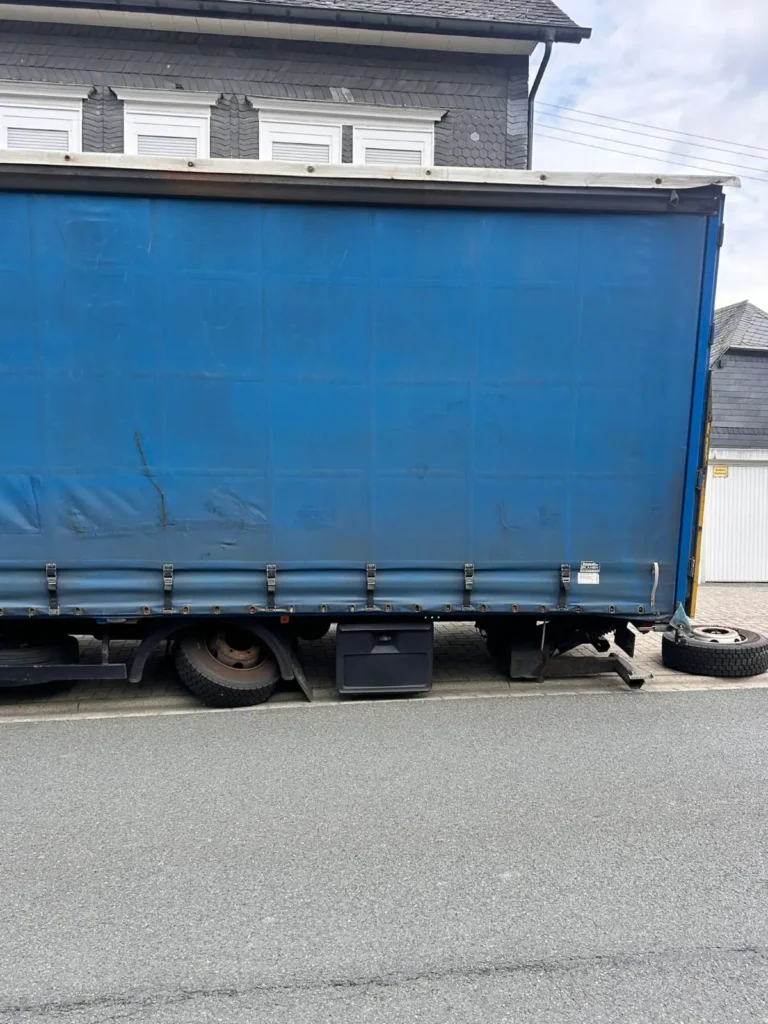
When a distribution truck loses a rear tyre on the A3 hard shoulder in fading afternoon light, every minute the vehicle sits there is a minute of risk — for the driver, for the freight, and for everyone else hurtling past at 130 km/h. This is exactly the kind of call LKWHelp24 takes dozens of times a week: a genuine roadside emergency that needs a certified mobile tyre technician on site, not a tow truck, not a wasted afternoon, and definitely not a driver crouched behind the vehicle trying to sort it out alone.
n
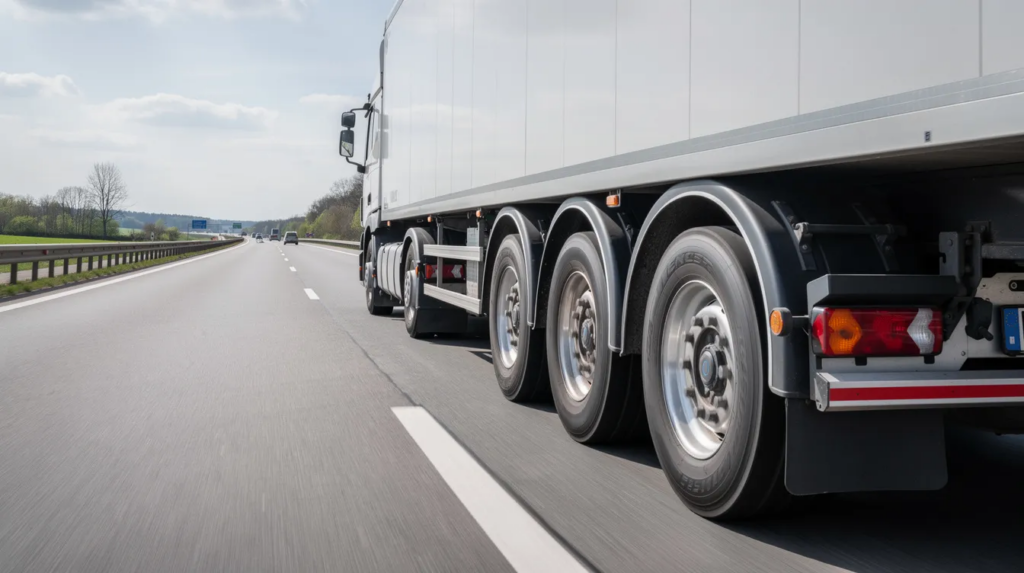
This case study walks through a real callout on the A3 near Würzburg, heading towards Nuremberg. A mid-weight distribution lorry — an older flatbed/tarpaulin truck on steel wheels, the kind that criss-crosses Bavaria every day delivering to regional depots — suffered a rear tyre failure: a cut and rapid air loss that left the vehicle unsafe to continue. From the first phone call to the driver pulling back onto the carriageway, the whole job took roughly an hour and thirty-five minutes. Below you\’ll find the exact timeline, the exact invoice, and the reasoning behind every step, because transparency is the whole point of publishing these reports.
n
If you\’re a fleet manager, an owner-driver, or a dispatcher searching for \”truck tyre service near me\” at two in the morning, this article should tell you almost everything you need to know about how LKWHelp24 works, what it costs, and why calling a professional network beats improvising on the hard shoulder.
n
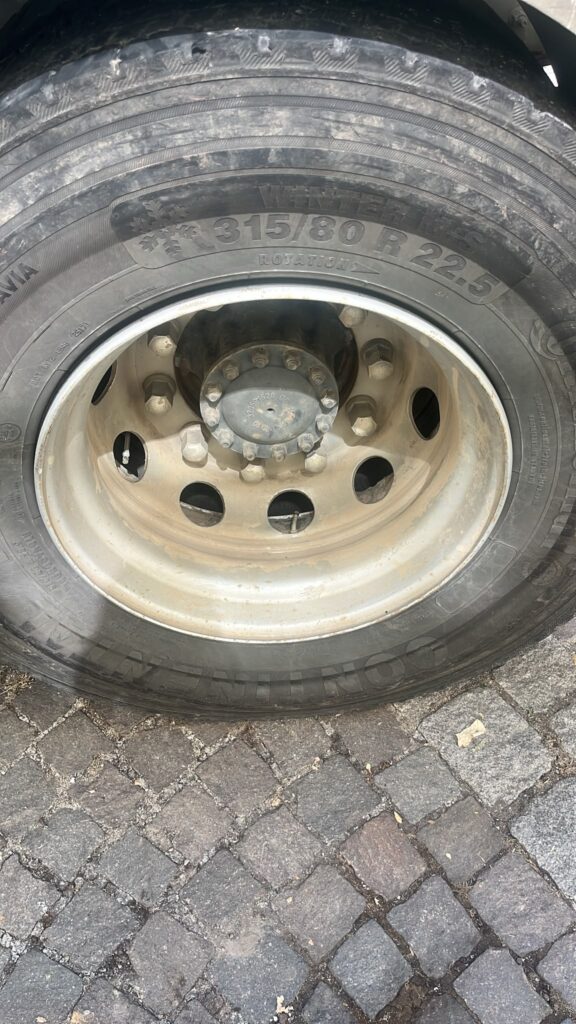
nReifenschaden an einem Pritschen-Lkw auf der A3 bei Würzburg – mobiler Radwechsel durch LKWHelp24.
n
The Emergency
n
The driver was running a regional distribution route on the A3, one of the busiest north-south arteries in Bavaria, when he felt the unmistakable shudder of a rear tyre going soft. He managed to steer the truck onto the hard shoulder near Würzburg, hazards on, safely off the live lane but still exposed to passing traffic at motorway speed.
n
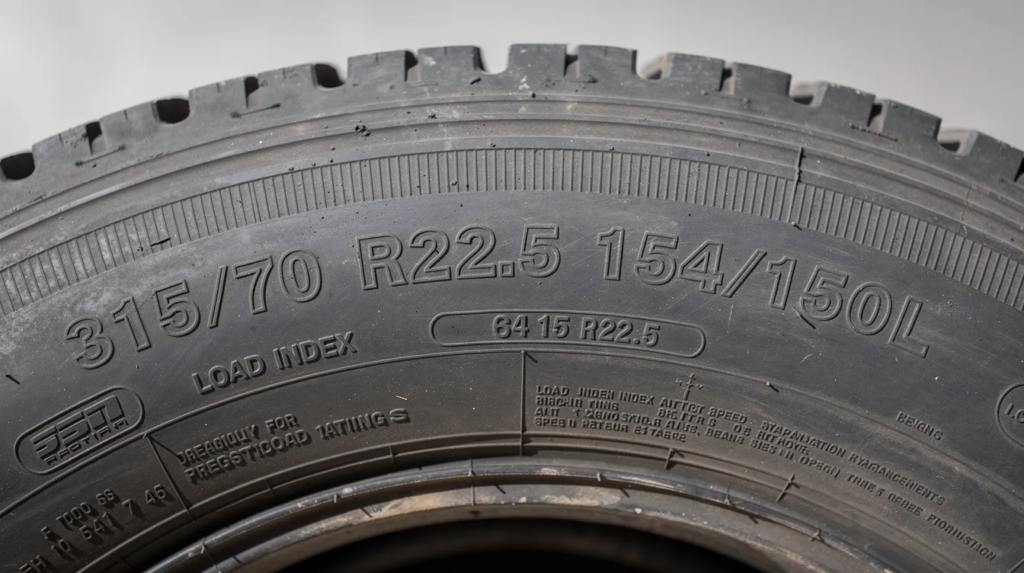
A quick look confirmed the worst: a deep cut in the tread had let the air out fast, and the tyre was no longer holding pressure. This wasn\’t a slow puncture he could nurse to the next services — the sidewall was compromised and the truck was, in plain terms, not roadworthy. The tyre in question was a 245/70 R19.5, the standard fitment for a mid-weight distribution vehicle of this type, mounted on a steel rim. With no spare of that size carried on board (as is normal for this class of truck) and no way to safely limp forward, the only responsible option was to call for a mobile tyre service and wait it out with the hazard triangle deployed.
n
This is precisely the scenario LKWHelp24 exists for: not a routine tyre change in a workshop yard, but an unplanned, safety-critical breakdown on a live motorway shoulder, where every extra minute increases the risk of a secondary collision.
n
How Help Was Organised
n
LKWHelp24 doesn\’t run a single fleet of vans covering all of Germany — it runs a dispatch network of vetted, certified truck tyre partners positioned across the country, so that whichever motorway you break down on, someone qualified is realistically close by. For this case, dispatch worked as follows:
n
● Driver called the LKWHelp24 emergency line and gave the location (A3, hard shoulder, direction Nuremberg, near Würzburg), the vehicle type, and a description of the damage.
n● The dispatcher immediately flagged this as a rear-tyre, sidewall-compromised case — high priority, no towing needed if a matching 245/70 R19.5 tyre was in stock nearby.
n● Within minutes, the nearest available certified partner in the Würzburg area was contacted and confirmed available with the correct tyre in stock.
n● The partner was briefed on the exact location, the vehicle description, and the specification required, and given an estimated time of arrival.
n● The driver received confirmation of who was coming and roughly when, so he wasn\’t left waiting in the dark without information — which, on a motorway hard shoulder, matters almost as much as the repair itself.
n
That\’s the core value of the LKWHelp24 model: instead of a driver ringing around workshops that might not carry heavy-truck tyres, or waiting for a technician to drive across three states, the network puts a genuinely local, properly equipped partner onto the job within roughly ten minutes of the first call.
n

n
The Situation On-Site
n
A truck stopped on the hard shoulder of the A3 is not a comfortable place to work. Traffic doesn\’t slow down much for a stationary vehicle with hazards on, and a technician crouched at wheel height beside a live carriageway is in a genuinely dangerous position unless the job is secured properly from the first minute.
n
There\’s also the technical reality of the tyre itself. A 245/70 R19.5 commercial tyre runs at a substantially higher inflation pressure than a car tyre — typically in the 8.0 to 9.0 bar range depending on load rating, against roughly 2.2 to 2.5 bar for a passenger car. That pressure differential means the equipment, the jacking points, and the torque procedure all have to be right; there\’s no room for guesswork or borrowed tools. A wheel of this size, once removed, also weighs somewhere in the region of 70 to 90 kilograms complete with the steel rim — not something a lone driver can safely lift and manoeuvre on a sloped, gravelled hard shoulder, especially with traffic passing a few metres away.
n
This is why LKWHelp24 insists on certified partners rather than \”the nearest garage that says yes.\” The team that arrived on the A3 didn\’t just carry a spare tyre — they carried motorway-rated safety equipment, a proper hydraulic jack rated for the axle load, a calibrated torque wrench, and the experience of doing this exact job routinely on live carriageways rather than in a covered workshop bay.
n
Step-by-Step: What the Team Did
n
Step 1 — Secure the scene. The technician\’s van was positioned to act as a physical buffer between live traffic and the work area, warning triangles and additional lighting were set out well back from the truck, and hi-vis was mandatory throughout. On a motorway shoulder, this step is not optional paperwork — it\’s the difference between a routine job and a second emergency.
n
Step 2 — Stabilise and jack up the vehicle. With the truck\’s parking brake engaged and wheels chocked, the axle was jacked at the correct manufacturer-specified point. Getting this wrong on a loaded distribution truck can damage the axle housing or, worse, let the vehicle shift while raised — so the technician checked ground stability on the hard shoulder surface before committing to the lift.
n
Step 3 — Remove the damaged wheel. Wheel nuts were loosened in the correct star pattern before the truck was fully raised, then the wheel — tyre, rim, and all, at 70–90 kg — was walked off the hub and set aside for inspection.
n
Step 4 — Inspect the rim and fit the replacement. The steel rim was checked for damage, cracking, or corrosion around the bead seat before a new tyre was even considered — mounting a fresh tyre on a compromised rim is a false economy that just creates the next breakdown. With the rim confirmed sound, the replacement 245/70 R19.5 Continental tyre was mounted and inflated to the correct 7.5 bar working pressure for this application, checked with a calibrated gauge rather than guessed.
n
Step 5 — Final torque and safety check. Wheel nuts were tightened to the manufacturer\’s specified torque in the correct star (cross) sequence — critical on a commercial vehicle, since uneven torque is one of the leading causes of wheel-off incidents on trucks in the weeks after a roadside repair. A final visual and pressure check across all wheels on that axle followed, along with a check that nothing else on the running gear had been disturbed or damaged during the original tyre failure.
n
Only once all of that was confirmed did the technician clear the scene and give the driver the all-clear to pull back into traffic.
n
Full Timeline
n
| Time | Phase | Action |
|---|---|---|
| 16:20 | Call received | Driver reports rear tyre damage, A3 hard shoulder near Würzburg |
| 16:31 | Partner dispatched | Local certified partner confirmed, ETA given |
| 17:05 | Arrival on site | Technician reaches the truck |
| 17:12 | Scene secured | Truck stabilised, jacked up safely |
| 17:30 | Wheel removed | Damaged 245/70 R19.5 tyre demounted, rim inspected |
| 17:44 | New tyre fitted | Continental 245/70 R19.5 mounted, inflated to 7.5 bar |
| 17:52 | Torque & final check | Wheel nuts torqued in star pattern, full safety check |
| 17:55 | Roadworthy | Driver cleared to re-join the A3 |
n
Total elapsed time: approximately 1 hour 35 minutes from first phone call to the truck rolling again, with roughly 50 minutes of hands-on work once the technician arrived on site. For a roadside repair involving a heavy commercial wheel on a live motorway, that is a genuinely fast turnaround — and it\’s the direct result of dispatching a partner who was already close by, rather than the nearest generic breakdown firm.
n

n
Cost Breakdown
n
| Item | Price (EUR) |
|---|---|
| Callout / 24-hour motorway emergency service | 170 |
| Tyre 245/70 R19.5 (Continental) | 210 |
| On-site fitting and balancing | 70 |
| Disposal of the damaged tyre | 15 |
| TOTAL | 465 EUR |
n
A few points worth being upfront about, because pricing questions come up on almost every call:
n
-
n
- The callout fee reflects 24/7 motorway coverage, not a flat \”we\’re open\” charge. Dispatching a technician to a hard shoulder at short notice, with the safety equipment and insurance that involves, costs more than a scheduled workshop visit — that\’s true everywhere in Germany, not just with LKWHelp24.
- Tyre brand affects price. This case used a Continental, a solid mid-to-premium choice for a regional distribution truck. Michelin and Goodyear are common alternatives at broadly similar price points; budget brands exist but are rarely what LKWHelp24\’s certified partners carry as first-choice stock for commercial fitments, because tyre failure on this class of vehicle isn\’t somewhere to cut corners.
- Compare that to the alternative. A driver stuck on the A3 with no roadside cover isn\’t just risking a fine or a stressful wait — a distribution truck sat idle for half a day, plus a flatbed tow to the nearest workshop, plus after-hours labour, routinely runs well past 800–1,000 EUR once lost time and towing are added in. Against that, 465 EUR for a same-hour mobile repair is, in plain terms, the cheaper outcome as well as the safer one.
n
n
n
n
Why a Professional Service Is Essential
n
It\’s tempting, especially for an experienced driver, to think \”I can sort a tyre myself.\” On a passenger car, maybe. On a loaded commercial vehicle stopped on a motorway hard shoulder, the calculation changes completely:
n
-
n
- Traffic exposure. Working at wheel height a metre or two from live motorway traffic is one of the most dangerous environments in road transport. Professional technicians carry motorway-rated safety equipment and follow a strict scene-securing protocol precisely because this risk is well documented.
- Jack and lift risk. Jacking a loaded truck without the correct rated equipment, on an uneven hard shoulder surface, risks the vehicle shifting or falling — a scenario that has caused serious injuries to drivers attempting DIY roadside repairs.
- Wheel weight. At 70–90 kg for a complete commercial wheel, manual handling injuries are common when this is attempted without the right lifting technique or equipment.
- Torque accuracy. Under-torqued or unevenly torqued wheel nuts are a leading cause of wheels detaching after a roadside repair — sometimes hours or days later, often at speed. A calibrated torque wrench and the correct star sequence aren\’t optional extras; they\’re the difference between a permanent fix and a second, potentially far worse, breakdown.
- Legal roadworthiness. Continuing to drive on a damaged commercial tyre, or on one repaired incorrectly, exposes the operator to liability if it fails again — quite apart from the basic safety case.
n
n
n
n
n
n
None of this is scaremongering. It\’s the reason every certified partner in the LKWHelp24 network is required to demonstrate exactly this level of competence before being added to the dispatch system.
n

n
Typical Breakdown Situations We Handle
n
The A3 case above is one of dozens of scenarios LKWHelp24 partners deal with across Germany every week, including:
n
-
n
- Tyre blowouts and sidewall cuts on motorways (A1, A2, A3, A5, A7, A9, and every other Autobahn)
- Slow punctures that become critical mid-route
- Drive-axle and trailer-axle tyre failures on fully loaded HGVs
- Wheel bearing and hub problems discovered during a routine check
- Battery failure and jump-starts for trucks and coaches
- Fuel and AdBlue issues, including running dry
- Lock-outs and minor mechanical faults that leave a vehicle immobile
- Coordination of towing when a repair genuinely isn\’t possible roadside
- Multilingual support for international drivers who need to explain a fault clearly under pressure
n
n
n
n
n
n
n
n
n
n
Whatever the fault, the underlying model is the same: a nationwide dispatch network putting a genuinely local, certified partner onto the job, rather than one central depot trying to cover the whole country.
n
Prevention Tips for Drivers and Fleet Managers
n
A tyre failure on the A3 is rarely completely random — most have warning signs a driver or fleet workshop could have caught. A few habits that consistently reduce roadside tyre emergencies:
n
-
n
- Check pressure weekly, not just at service intervals. Commercial tyres running even 10–15% underinflated heat up faster and are far more prone to sidewall damage and sudden failure.
- Inspect for cuts and embedded debris before every long haul, particularly after driving through construction zones or unpaved yard surfaces.
- Watch tread depth against the legal minimum and replace proactively rather than waiting for the statutory limit — a tyre near the end of its life has far less margin to survive a minor impact.
- Keep a wheel torque log after any tyre work, and re-check torque after the first 50–100 km, since a small amount of settling is normal and worth verifying.
- Match tyre specification to axle position and load rating exactly. Fitting the wrong load index on a distribution truck\’s rear axle is a false economy that shows up, sooner or later, exactly like this A3 case did.
- Save the LKWHelp24 number in the cab before you need it. Losing ten minutes searching for a breakdown number while parked on a motorway shoulder is ten minutes of unnecessary exposure.
n
n
n
n
n
n
n

n
Fleet Maintenance and Tyre Brand Considerations
n
For fleet operators running multiple distribution trucks, tyre choice is a maintenance strategy decision as much as a purchasing one. Continental — fitted in this case — is a strong, well-balanced choice for regional and distribution work, offering solid wet-grip and even wear characteristics across the kind of mixed motorway-and-urban routes a Würzburg-based distribution truck typically covers. Michelin tends to be the premium choice where mileage life is the priority, particularly on long-haul fleets clocking very high annual kilometres, while Goodyear offers a competitive middle ground with strong availability across German commercial tyre networks, which matters when a fast roadside replacement is needed.
n
Whichever brand a fleet standardises on, consistency matters more than the specific badge: mixing tyre brands or, worse, tread patterns across a single axle affects handling and even wear, and it complicates exactly the kind of fast roadside matching that got this Würzburg truck back on the road within 95 minutes. Fleets that keep a documented, standardised tyre specification per vehicle type make it far easier for a mobile partner to carry the right stock and complete a same-hour repair.
n
LKWHelp24: Your Truck Emergency Partner
n
LKWHelp24 exists to remove the guesswork from exactly the kind of situation this driver faced on the A3: stranded, exposed to traffic, and needing someone competent, fast. What that means in practice:
n
-
n
- 24/7 coverage across all of Germany — not a regional service with gaps, but a genuine nationwide dispatch network.
- A certified partner network, not a single overstretched fleet — which is how a Würzburg-area technician reached this truck within roughly 45 minutes of the first call.
- Transparent, itemised pricing, shown here exactly as it was invoiced, with no hidden surcharges added after the job is done.
- Multilingual support, essential on German motorways where a significant share of drivers are international and need to describe a technical fault clearly under pressure.
- A single number to remember: +49 160 5753826, available around the clock, every day of the year.
n
n
n
n
n
n
Summary
n
-
n
- Tyre specification: 245/70 R19.5, rear axle, distribution truck
- Location: A3 hard shoulder near Würzburg, direction Nuremberg
- Response time (call to arrival): 45 minutes
- Total time (call to roadworthy): approximately 1 hour 35 minutes
- On-site repair time: approximately 50 minutes
- Total cost: 465 EUR, fully itemised
- Secondary damage: none
- Outcome: truck back on the road, safely and legally, same evening
n
n
n
n
n
n
n
n
n

n
Request Emergency Assistance Now
n
If your truck, trailer, van, or coach is stranded anywhere in Germany, don\’t wait it out on the hard shoulder hoping the problem fixes itself. Call LKWHelp24 on +49 160 5753826 and a certified partner will be dispatched to your exact location.
n
Available 24/7 across all of Germany.
nWebsite: lkwhelp24.com
n
n
n
You might also be interested in
n
-
n
- Mobile Truck Tyre Service on the Autobahn: Actros 2543 Wheel Change
- Truck Tyre Blowout on the A1 near Bremen: Drive Axle Emergency Repair
- Truck Tyre Service Near Me: How LKWHelp24 Fixed a Semi-Truck Blowout on the A2 Near Hannover in 1 Hour 42 Minutes
- Car Tyre Blowout on the A3 near Cologne: Roadside Spare Wheel Fitting
n
n
n
n