Skip to content
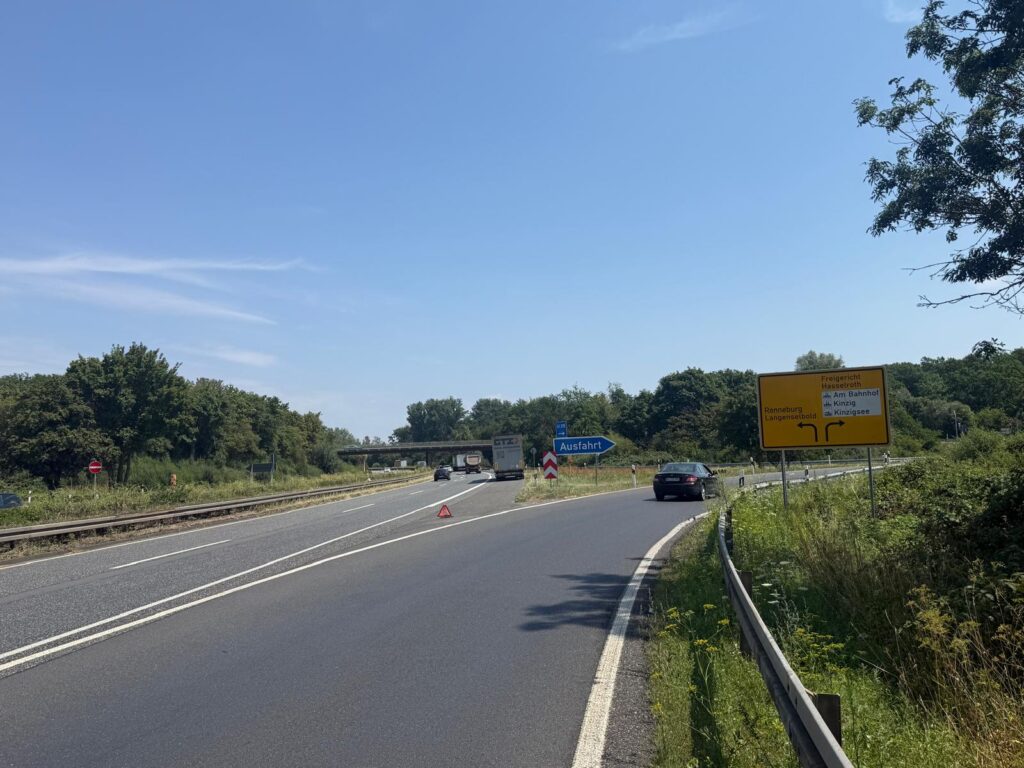
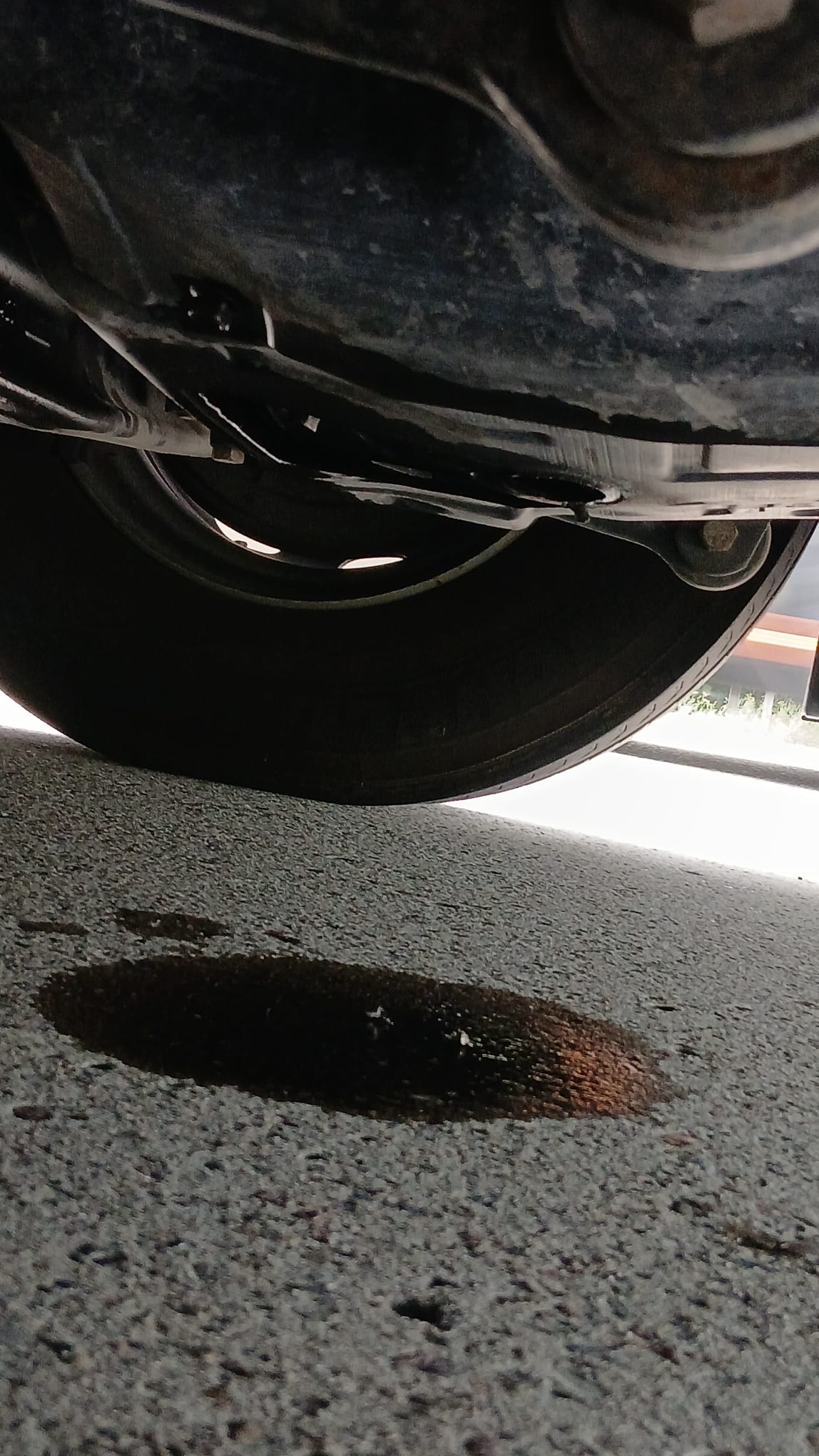
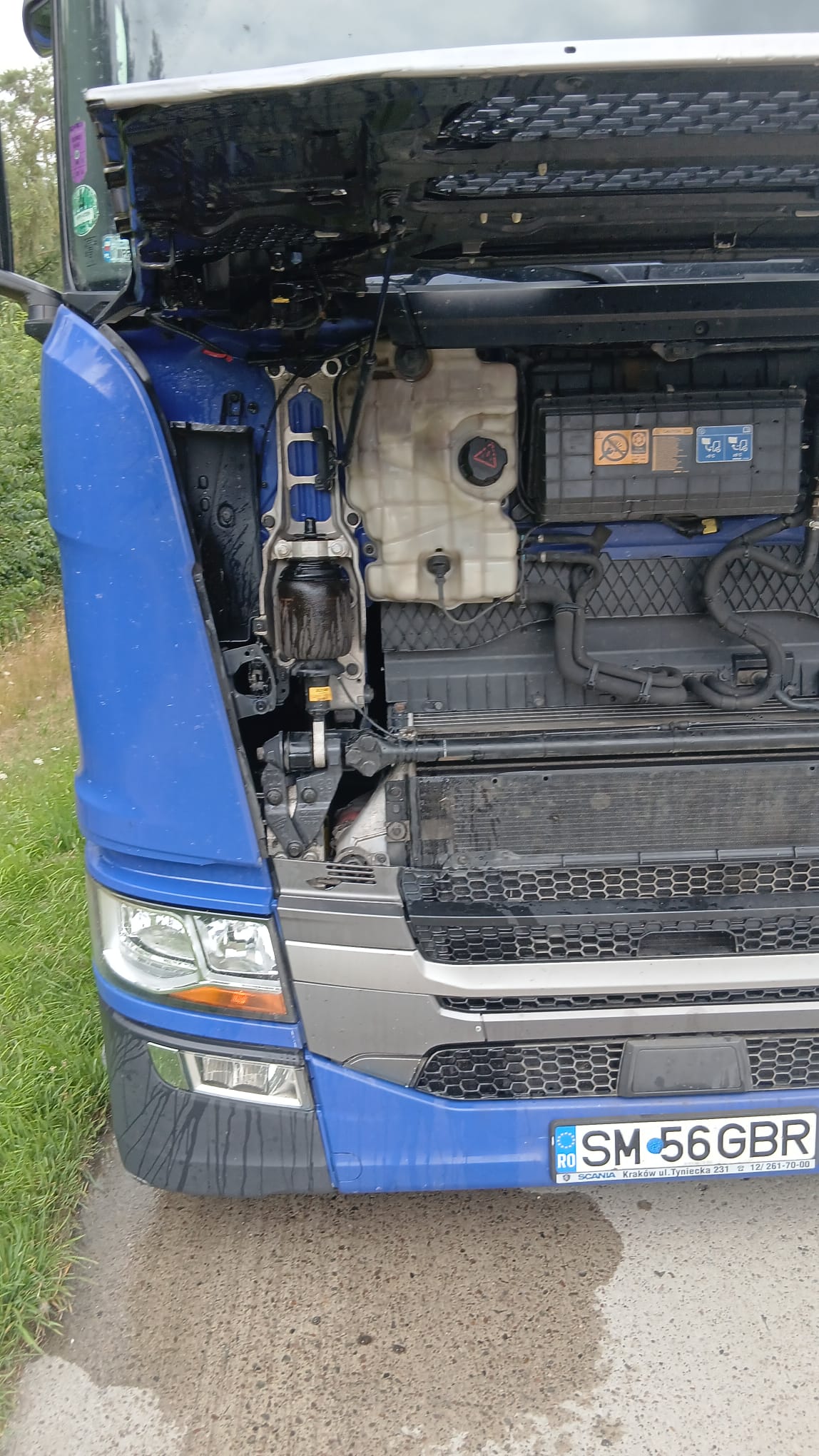
A warning message on the dash, an oil sheen spreading across the tarmac, and a driver who makes the one decision that actually matters: switch the engine off. That is exactly what happened on 5 August on the A6 near Kaiserslautern, heading towards Saarbrücken. A Scania tractor unit stood on the grass verge with the bonnet up, and beneath it a growing puddle of oil.
To an untrained eye this looks like a leaking gasket. In reality it is one of the most expensive forks in the road a professional driver ever faces. Keep driving, and you risk a seized piston, wrecked bearings, or a total engine write-off. Stop immediately, and you’re looking at a repair bill in the low thousands, not a rebuild. The driver in this case made the right call, and those seconds decided the entire scale of the outcome.
This report explains why oil starvation destroys an engine in seconds rather than minutes, what actually causes an oil leak like this, how our partner crew assessed the situation on the hard shoulder, and why towing to a workshop, rather than a top-up and a cautious drive, was the only sensible outcome.
The emergency on the A6
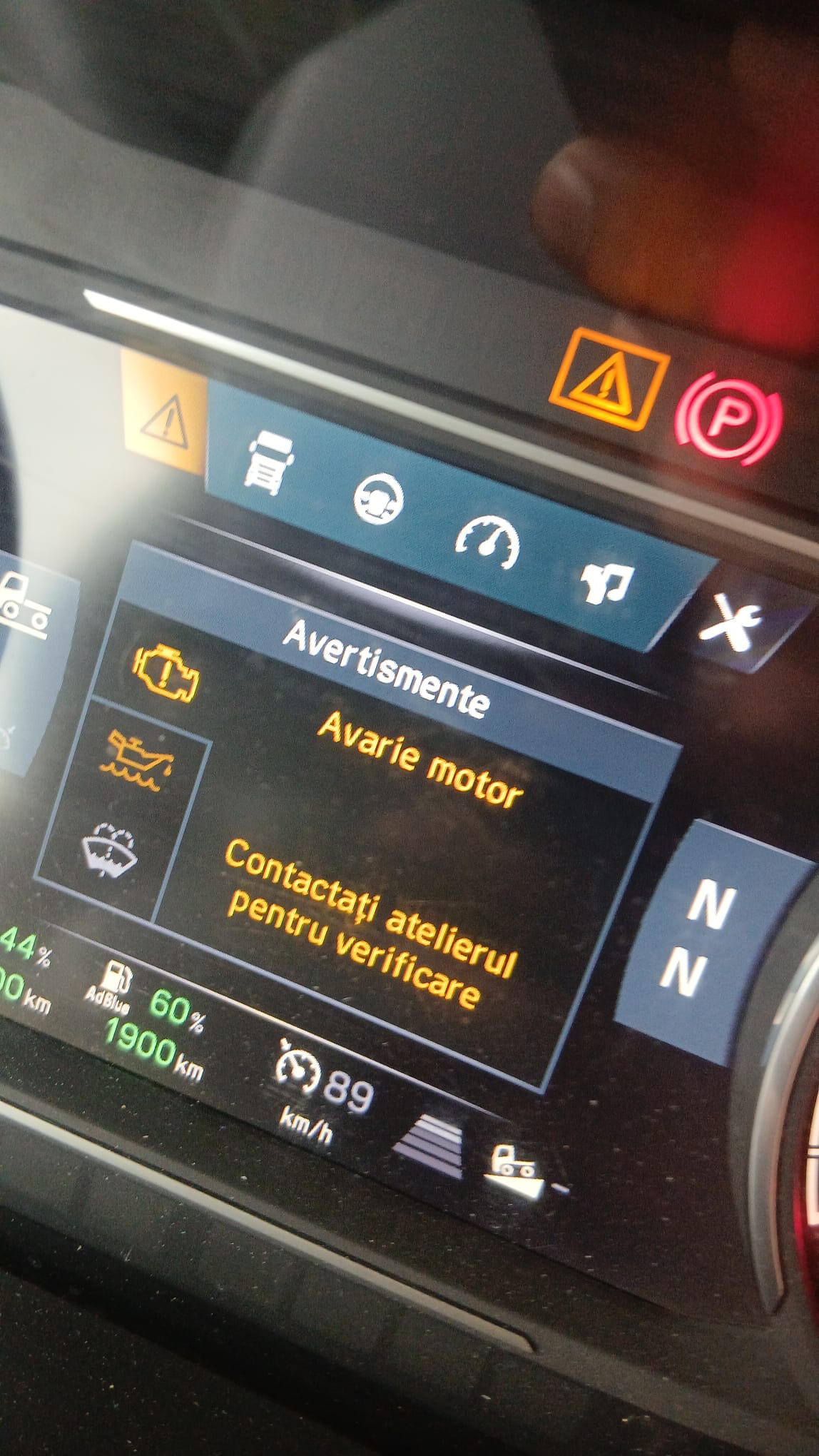
The driver noticed a warning message on the dashboard during daylight hours: engine fault, contact a workshop. Almost simultaneously he caught an unusual smell and, glancing in the mirror, saw an oil trail on the road behind him. He steered the tractor unit carefully onto the grass verge, switched off the engine, and secured the scene with a warning triangle and hi-vis vest.
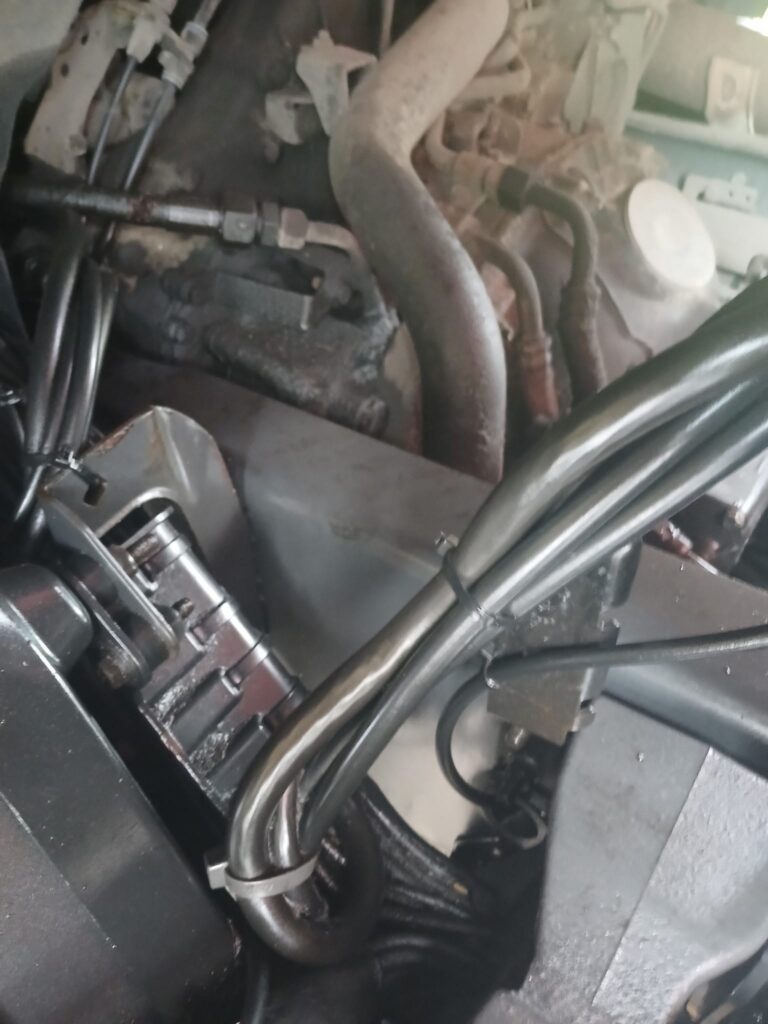
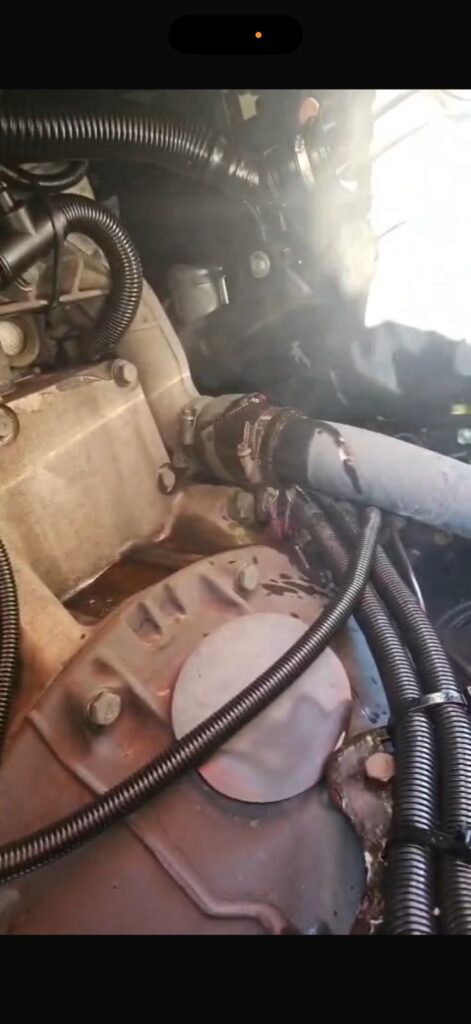
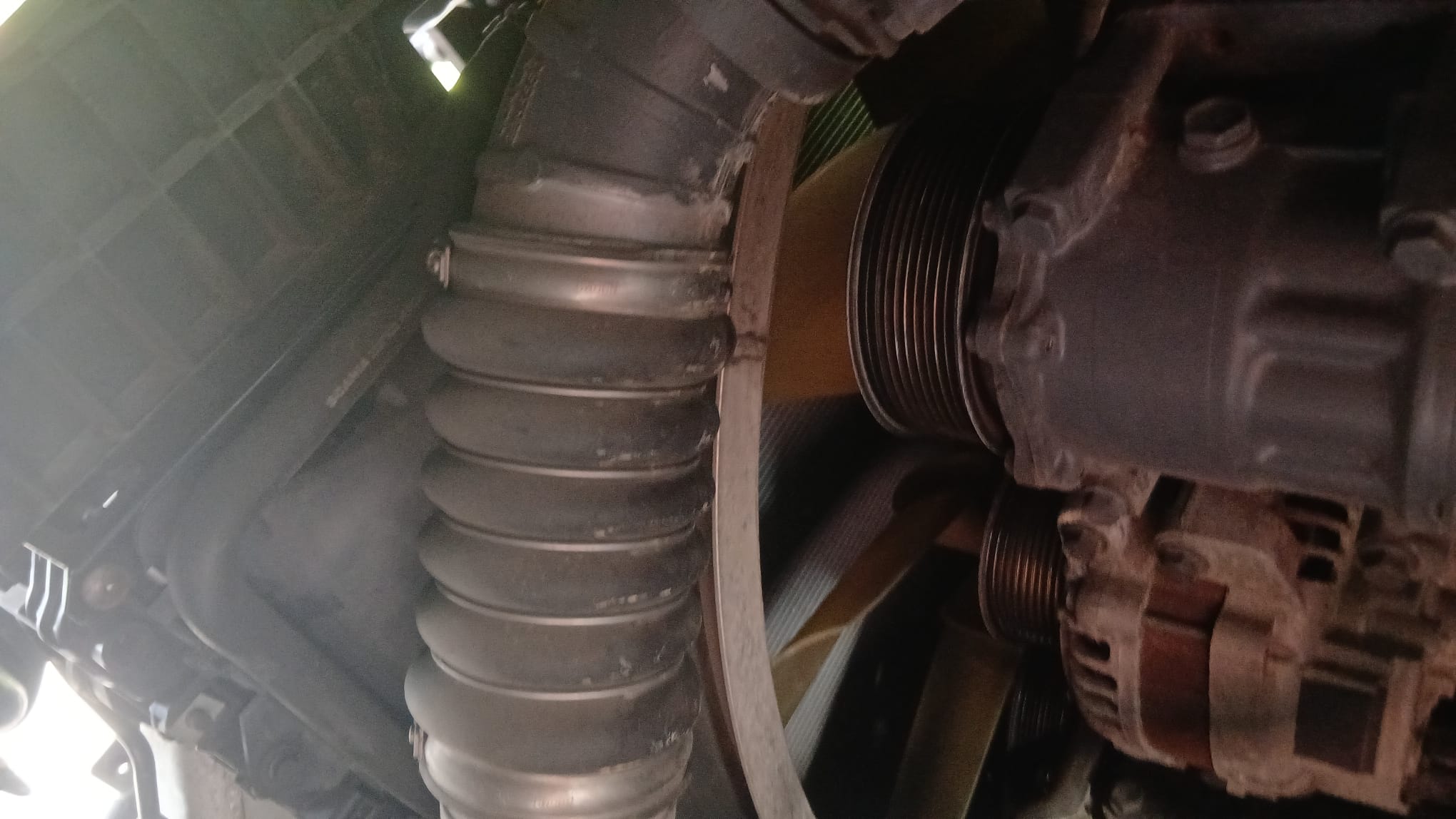
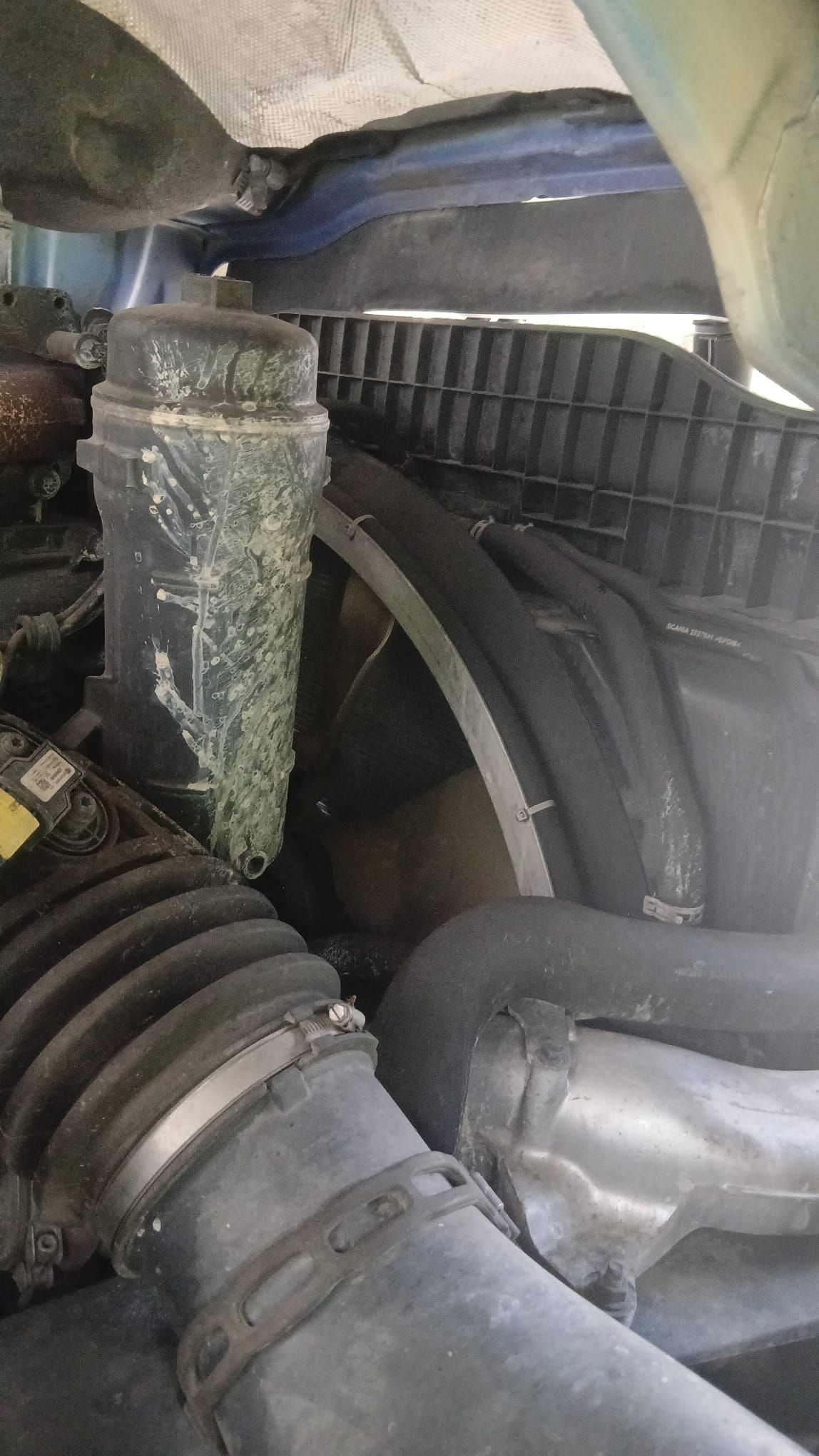
By the time the engine stopped, a sizeable pool of oil had already formed underneath the vehicle. Inside the engine bay, the belt drive and alternator were visibly coated in oil mist. Repairing the fault at the roadside was never realistic: the cause was unclear, the oil level critical, and continuing to run the engine would have finished it off for good. Recovery to a proper workshop was the only sound option left.
This kind of breakdown is not rare on German motorways. An engine failure on the A14 near Leipzig followed exactly the same pattern: warning light, immediate stop, transport to a workshop instead of a risky onward drive.
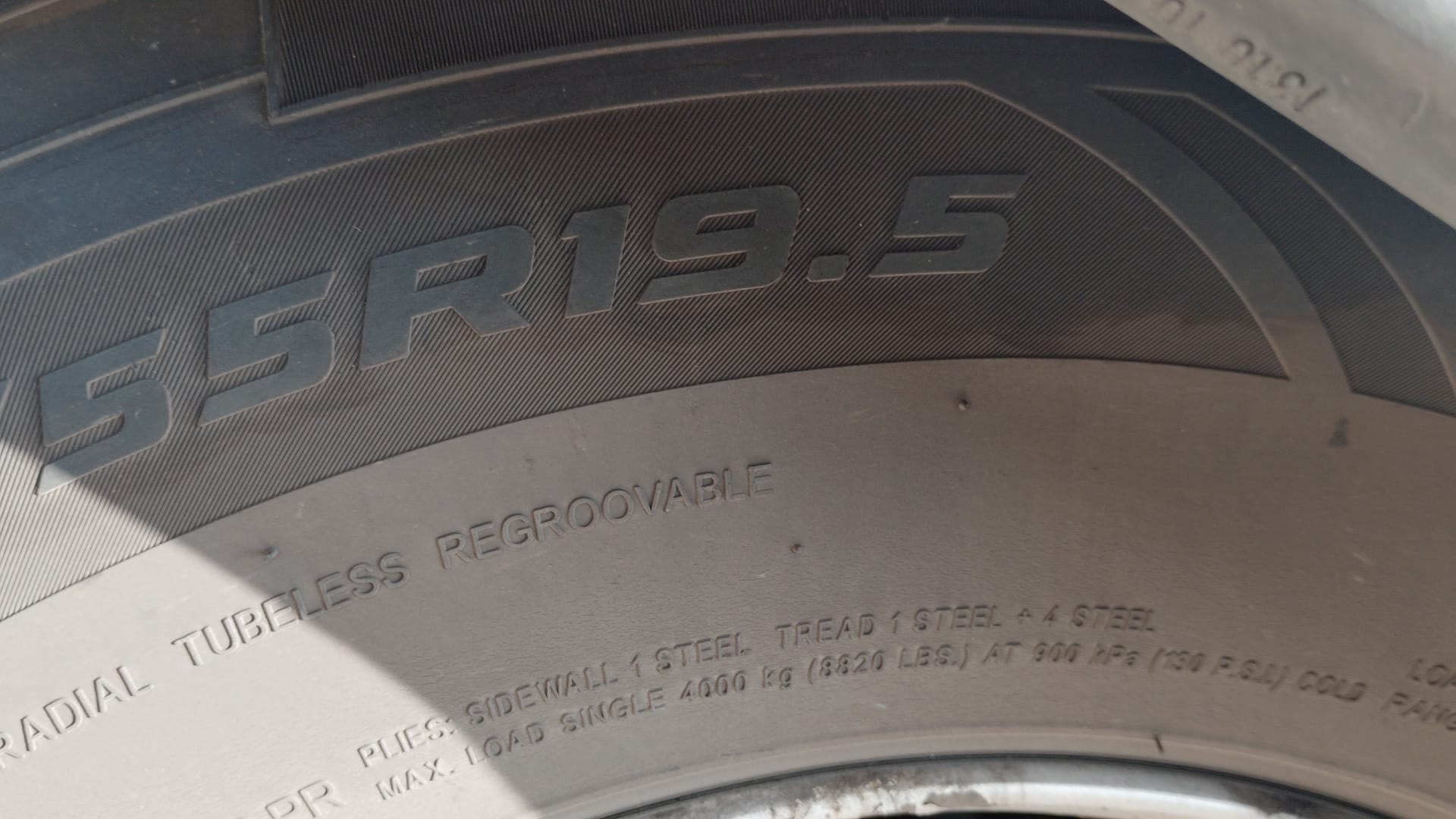
Why the engine had to stop immediately, not at the next services
This is the heart of the story, and the reason we’re spelling it out in detail. Plenty of drivers, faced with an oil pressure warning, instinctively think: I’ll push on to the next services and take a proper look there. That’s a reasonable call for almost any other warning light. For a loss of oil pressure, it is the single most expensive mistake you can make.
A diesel engine putting out 400 to 500 horsepower typically turns at 1,200 to 1,800 rpm on the move. On every rotation, the crankshaft bearings, con-rod bearings and camshaft slide against each other, separated only by an oil film a few thousandths of a millimetre thick. When oil pressure drops, that film breaks down. Metal grinds on metal. Within seconds, not minutes, the bearing shells overheat and start eating into the crankshaft itself.
The difference between a gasket repair costing a few hundred euros and a full engine rebuild costing twenty to thirty thousand often comes down to the thirty seconds a driver kept driving after the warning appeared. That’s not an exaggeration; it’s what our partner workshops see routinely. Engines that were driven even a kilometre further after an oil warning almost always show bearing damage severe enough to require a full strip-down.
The rule, then, is simple and has no exceptions: if the oil pressure lamp lights, a warning flashes, or you smell burning oil, pull over and stop the engine straight away. Don’t wait for the next lay-by, don’t push on “just to be safe about where you stop.” Every additional revolution the engine turns without adequate oil pressure costs real money, and in the worst case, the entire drivetrain.
Typical sources of an engine oil leak
An oil leak on a tractor unit rarely has one obvious cause. Our technicians work through a fixed checklist of likely sources on every call-out before reaching a diagnosis:
- Rocker cover gasket: hardens and becomes brittle as the vehicle ages, usually producing a slow weep across the engine block rather than a sudden loss.
- Crankshaft oil seals: front, near the belt drive, and rear, near the flywheel; these wear with mileage and are among the most common causes of a serious leak.
- Oil cooler and its lines: often sits close to the coolant circuit, and the lines and sealing rings age from heat and vibration until they fail suddenly.
- Oil filter after a poor service: an under-tightened or misseated filter loses its seal quickly under operating pressure, sometimes within a few kilometres of the last service.
- Sump after grounding: contact with an obstacle, a kerb, or uneven ground can crack or dent the sump, producing anything from a drip to a steady gush.
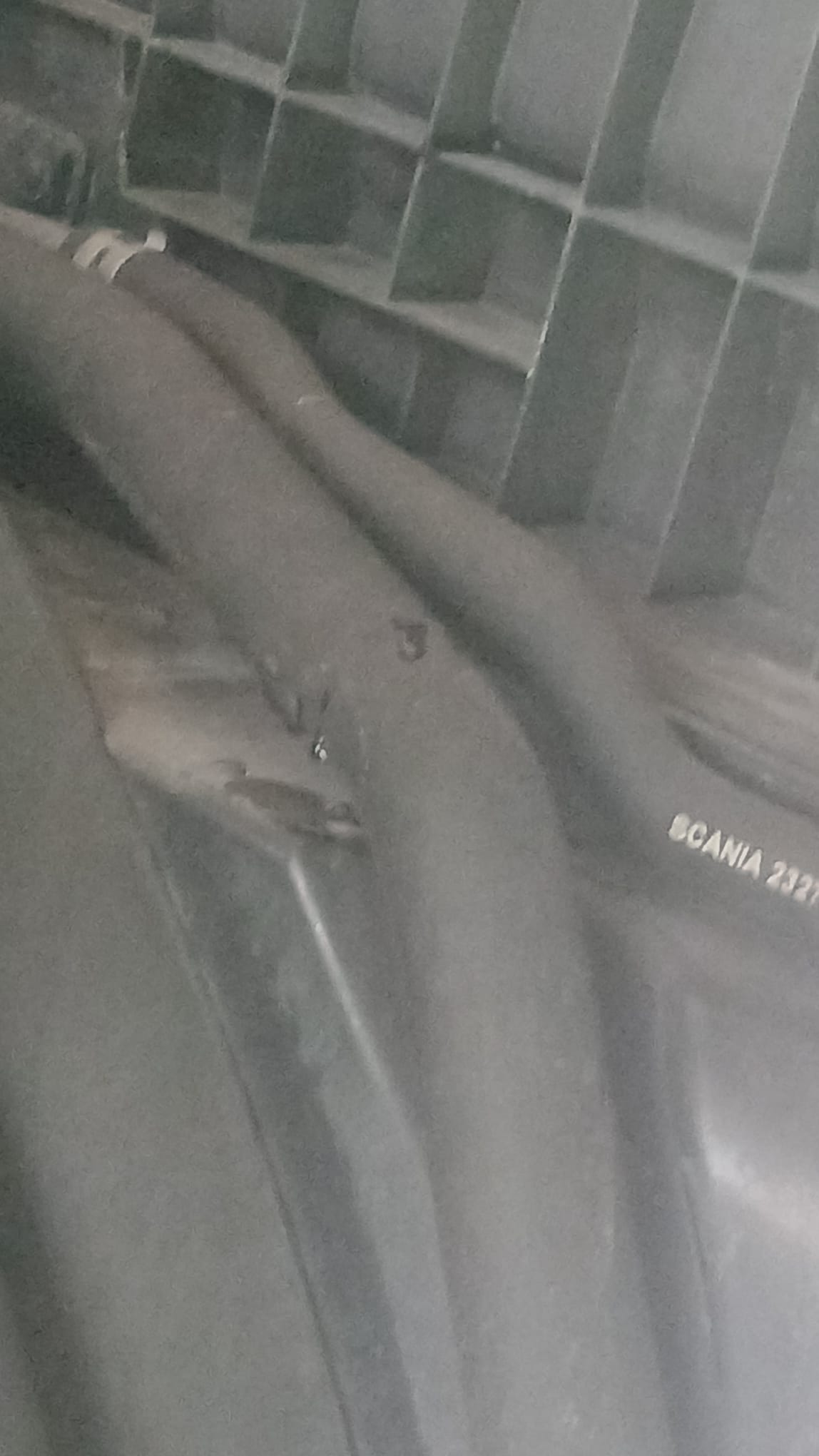
In this case, the engine bay showed clear oil traces around the belt drive and alternator, along with a substantial pool under the vehicle. Pinpointing the exact gasket or seal at fault on the hard shoulder, without a lift, was never realistic, which is why a proper workshop diagnosis was the only reliable next step.
Telling critical from tolerable
Not every oil stain means red alert. Experienced drivers, and our dispatchers, judge it on three things.
First, the nature of the leak. A slight sweating or misting around the rocker cover gasket looks bad but rarely threatens the next hundred kilometres. A drip that builds into a visible puddle needs prompt attention. A jet or gush, the kind you get from a burst oil cooler or a severed line, means stop now, no discussion.
Second, the instruments. The oil pressure warning lamp is the last warning, not an early one. If it lights, pressure is already critically low, not “a bit low.” Digital gauges showing bar pressure give more lead time: a reading that drops below the manufacturer’s minimum at idle is already a red flag, even before the lamp comes on.
Third, the dipstick. A check with the engine off and reasonably cool shows how much has already been lost. If the level sits below the minimum mark, every further mile is a gamble with the crankshaft as the stake.
In this case, the combination of a warning message, visible oil mist in the engine bay, and an already-formed puddle was unambiguous: critical, do not continue.
The environmental angle: oil on the verge is already a pollution incident
One aspect of engine failures that gets underestimated is the environmental side. Engine oil that reaches the road surface or the verge is classed as a water-hazardous substance. Once it leaves the tarmac and soaks into the ground, it is legally a soil contamination incident, not a cosmetic side effect.
The haulier, or vehicle keeper, is generally liable for cleaning up the site. That’s exactly why every oil-leak call-out on the motorway includes proper containment with absorbent granulate: the sorbent is spread over the affected area, binds the fluid chemically and mechanically, is then swept up and disposed of correctly. For larger volumes, a drip tray also goes under the vehicle before it’s moved.
The bodies responsible for environmental and water protection, including road cleaning obligations, can issue fines for failing to clean up and bill the responsible party for professional remediation afterwards. For background on the legal handling of water-hazardous substances, see the TÜV association, which regularly publishes on environmental and safety topics in road transport.
In this instance, the affected area was treated with absorbent granulate and cleaned immediately after the vehicle was secured, so no lasting contamination of the verge was left behind. This line item is a standard part of the cost breakdown on every oil-leak call-out.
Why recovery, not a self-driven trip to the workshop
A fair question at this point: why not just top up the oil and drive carefully to the nearest workshop? The answer lies in the risk assessment our technicians make on scene.
When the leak’s source is unclear, as it was here, there’s no honest way to predict how quickly further oil will be lost. What looks like a stable situation can deteriorate dramatically after a few hundred metres through vibration, thermal expansion, or pressure build-up. On top of that, the engine had already been stopped with a significant volume of oil already on the road surface, a clear sign of meaningful volume loss that made even a top-and-go approach too risky.
The call between “top up and drive” and “load and recover” comes down to three questions the technician asks: is the leak source confidently identified and temporarily sealable? Is the remaining oil level sufficient for the drive to the nearest workshop? Is there a risk of consequential damage to the drivetrain under further load? Once any of these gets a no or a maybe, the decision goes to recovery. That’s exactly what happened here.
What the recovery crew did on site
Once the call reached our dispatch, a standard procedure kicked in, one that has proven itself over years of exactly this kind of engine failure:
- Remote diagnosis by phone: gathering symptoms, warning message, oil volume, location and traffic conditions to prepare the right equipment for the job.
- Securing the scene: on arrival, additional warning measures were set up, particularly important on the A6 given the heavy volume of freight traffic.
- Locating the leak source: a visual inspection of the engine bay, focusing on the belt drive, alternator, sump and connecting lines, to narrow down the most likely cause.
- Assessing the oil loss: checking the remaining level via the dipstick and cross-referencing it against the visible puddle to gauge the scale of the loss.
- Ruling out onward driving: given the unclear leak source and the significant volume lost, the decision clearly favoured recovery.
- Environmental containment: absorbent granulate applied to the spilled oil, the affected area cleaned, and the material disposed of correctly.
- Preparing for loading: securing the tractor unit for transport, checking brakes and steering ahead of loading onto the recovery vehicle.
- Transport to the partner workshop: handing the vehicle over to a commercial vehicle specialist for final diagnosis and repair.
This structure is deliberately built so every step is documented and traceable, which can be decisive in any later dispute with an insurer or haulier.
The full timeline
| Time | Phase | Action |
|---|---|---|
| 09:10 | Emergency call | Driver reports warning message, smell of oil, oil trail on the road |
| 09:10–09:25 (15 min) | Remote diagnosis | Dispatch gathers symptoms, plans the crew |
| 09:25–10:20 (55 min) | Travel to site | Recovery crew travels to the A6 near Kaiserslautern |
| 10:20–10:50 (30 min) | On-site diagnosis | Locating the leak source, checking oil level |
| 10:50–11:35 (45 min) | Environmental containment & scene safety | Absorbent granulate, cleaning the area, securing the scene |
| 11:35–12:15 (40 min) | Loading | Securing the tractor unit, driving it onto the recovery vehicle |
| 12:15–13:00 (45 min) | Transport | Journey to the partner workshop |
Total time: 3 hours 50 minutes from the call coming in to handover at the workshop.
What the call-out cost
| Item | Price (EUR, net) |
|---|---|
| Call-out fee | 260 |
| On-site engine diagnosis | 150 |
| Labour (securing the scene, preparation, 2 hrs) | 240 |
| Absorbent granulate & site clean-up | 180 |
| Recovery/towing to the partner workshop | 1,200 |
| Total | 2,030 |
All figures are net, plus statutory VAT. The actual amount depends on the extent of the contamination, the distance to a suitable workshop, and the time of day. Night and weekend call-outs typically run 25 to 50 percent above this range.
For comparison: a loaded tractor unit standing idle costs the haulier, depending on contract terms, somewhere between 800 and 1,200 euros in lost use per day, before any late-delivery penalties are even considered. The 3 hours 50 minutes in this case kept that downtime to a bare minimum, compared with the days-long standstill that an improvised roadside repair without proper diagnosis would have caused.
Why this needs a professional, not an improvised fix
Tackling an oil leak with an unclear cause yourself, at the roadside, is not an option for several reasons:
- Without a lift and pressure test, the actual leak source can’t be reliably identified, and topping up only masks the problem short-term.
- Continuing to drive with inadequate oil pressure can cause irreversible bearing damage within minutes, with repair bills running into five figures.
- Disposing of spilled oil incorrectly breaches environmental regulations and can result in fines.
- Attempting a DIY recovery without securing the scene puts the driver and following traffic at risk on a heavily used motorway.
Typical call-outs of this kind across Germany
Engine failures involving oil loss are among the more common emergencies we’re called to, alongside standard tyre blowouts and post-collision blockages. Our day-to-day work also includes electronics failures that require similarly uncertain remote diagnosis, as well as cases where our mobile truck service handles first-line measures on site before the final call between repair and recovery is made.
Prevention: what drivers and fleets can do
Most oil leaks give some warning, if you know what to look for:
- Check the oil level on every daily walk-round. A glance at the dipstick during the morning vehicle check takes two minutes and catches a slow leak early.
- Check the parking spot. Fresh stains under a parked vehicle are a clear warning sign, even if nothing seemed wrong while driving.
- Take the smell of burning oil seriously. Oil dripping onto a hot exhaust manifold vaporises and smells burnt, a genuine fire risk in the worst case.
- Stick to service intervals. Gaskets and seals age with mileage; regular inspections at a truck service centre catch wear before it turns into total failure.
- Check after every oil change. A look underneath the vehicle after the first few kilometres following a service catches a loose filter before it becomes a leak.
Tyres, maintenance and fleet service: the bigger picture
Oil changes and engine care rarely stand alone. Anyone running tractor units on long-haul routes over time comes to understand how engine maintenance, braking systems and tyres all interact. Brands like Continental or Goodyear don’t just supply tyres; they publish technical guidance on axle load and tread depth that directly affects fuel consumption and vehicle downtime. A well-maintained drivetrain, paired with correct tyre pressure, noticeably reduces the risk of unplanned breakdowns on the motorway.
Why LKWHelp24
Our dispatch works around the clock, seven days a week, in multiple languages for drivers from across Europe. We draw on a vetted partner network of recovery specialists and commercial vehicle workshops right across Germany, so that even a complex engine failure like this one gets a fast, well-reasoned decision on site. Transparent pricing with no hidden items matters to us just as much as proper environmental containment on every oil-leak call-out.
Frequently asked questions
What does an engine diagnosis with recovery cost on the motorway?
In this case, the total for diagnosis, scene safety, environmental containment and recovery came to 2,030 euros net. The exact figure depends on the distance to the workshop, the extent of the contamination, and the time of day.
How long does a call-out like this take?
From the first call to handover at the partner workshop, 3 hours 50 minutes elapsed, including travel, diagnosis, environmental containment and transport.
Why wasn’t the engine simply topped up and driven on?
The source of the leak wasn’t clearly identified, and the oil already lost was too significant to risk the crankshaft. Topping up without knowing the cause would only have delayed the problem, not solved it.
Who’s responsible for cleaning up an oil trail on the road?
Generally the vehicle keeper or haulier. That’s why proper containment with absorbent granulate is a mandatory part of every oil-leak call-out.
How can I tell an oil leak is critical?
A drip that builds into a puddle, a lit oil pressure warning lamp, or a dipstick reading below the minimum mark are all clear signals to stop immediately and not risk continuing.
What happens to the load during recovery?
The cargo generally stays secured on the trailer and is transported to the workshop together with the tractor unit, unless a separate transhipment is required.
Summary
- Vehicle: Scania tractor unit
- Location: A6 near Kaiserslautern, towards Saarbrücken
- Problem: Significant engine oil loss, warning message on the dash
- Response time: 15 minutes from the call to the crew being dispatched
- Total duration: 3 hours 50 minutes
- Total cost: 2,030 euros net
- Consequential damage: None, thanks to stopping the engine immediately and proper environmental containment
Get help now
Oil leak, oil pressure warning, or an unclear engine noise on the motorway: don’t hesitate, switch off the engine and call us. Our dispatch is available around the clock on +49 160 5753826, with more information at www.lkwhelp24.com, and all contact routes listed on our contacts page. We are on call 24/7, right across Germany.
Keywords: truck engine failure motorway | HGV oil leak | Scania engine diagnosis | truck recovery Kaiserslautern A6 | breakdown assistance engine failure | oil pressure loss lorry | commercial vehicle towing | mobile engine diagnostics