Skip to content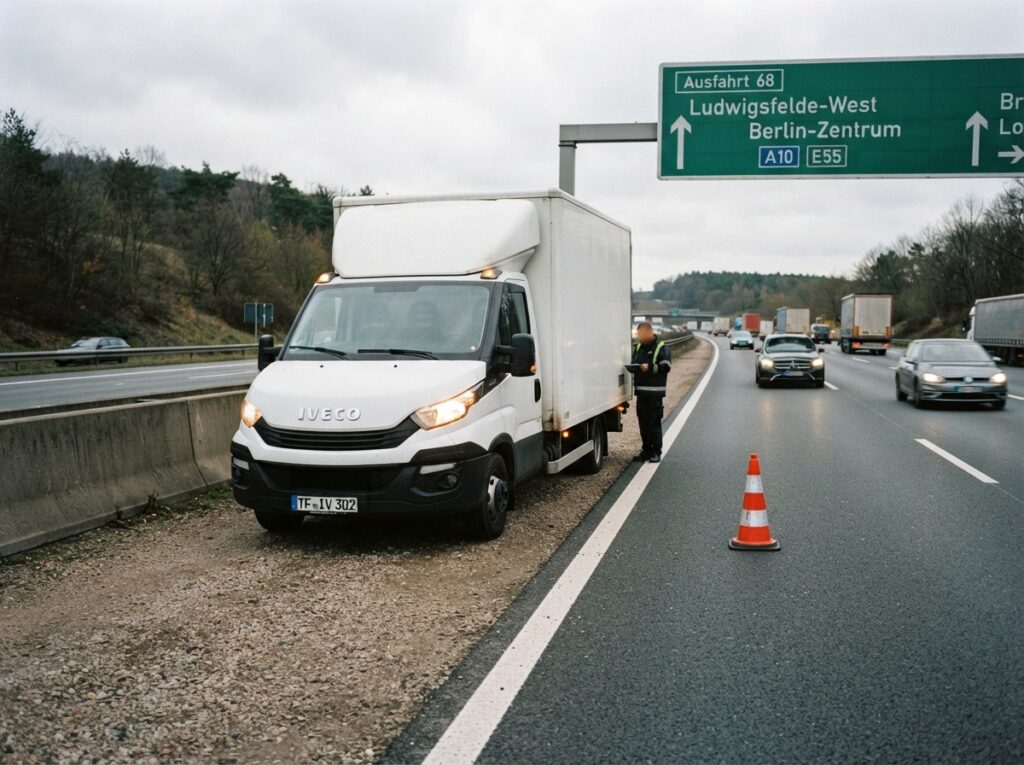
Iveco on the road: a brand with its own character
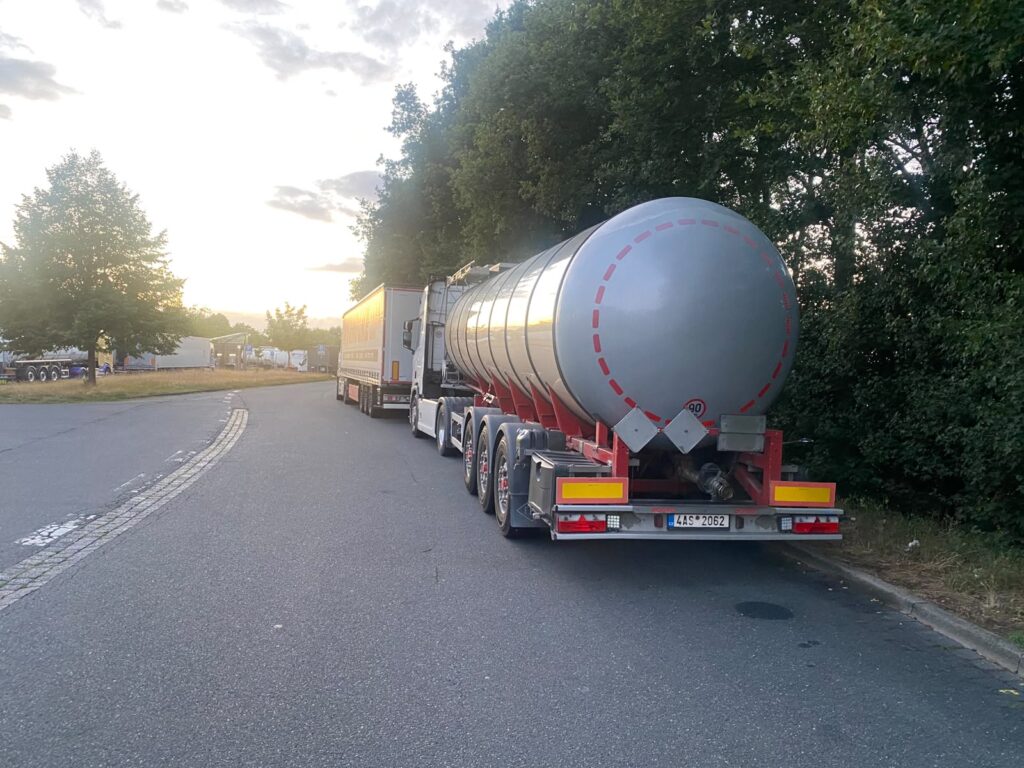
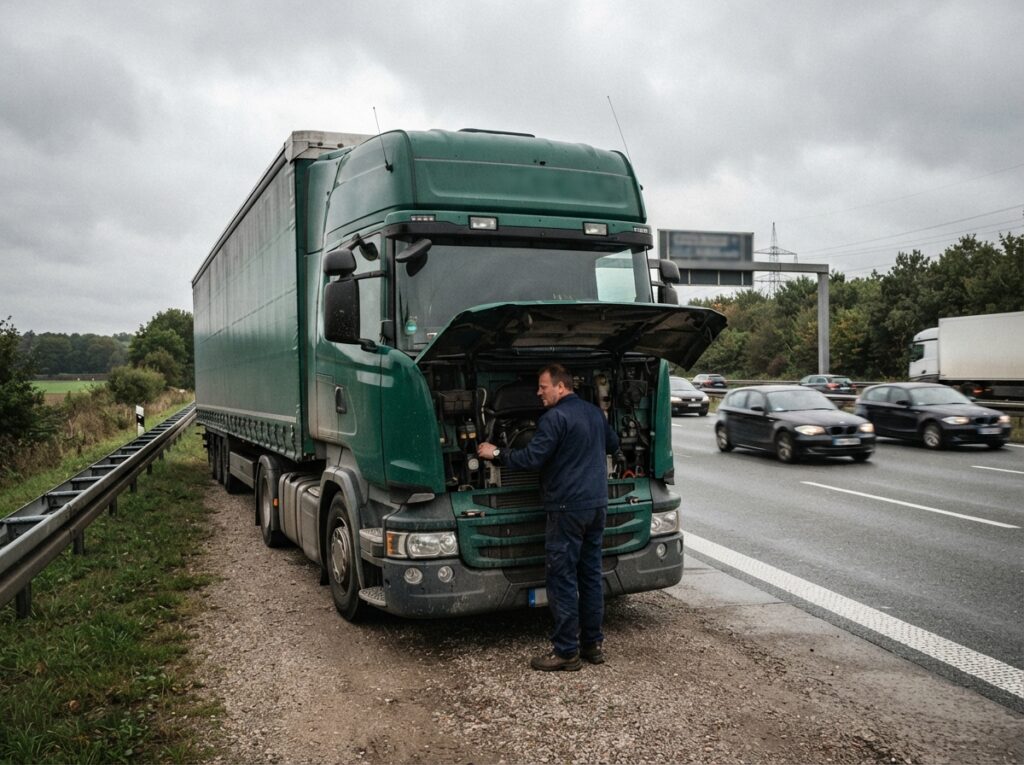
Anyone who works professionally around trucks knows the picture: an Iveco S-Way parked on the hard shoulder, hazard lights on, the driver on the phone. Iveco is one of the major commercial vehicle brands in Europe and a completely normal sight on German motorways, from courier vans to long haul trucks crossing the continent. That is exactly why this brand deserves a closer look when talking about mobile breakdown assistance.
This text is a practical overview from an independent, brand neutral breakdown service. LKWHelp24 is not a contracted partner of Iveco, not a dealer and not an official workshop of the manufacturer. We repair and assist trucks of every brand from 7.5 tonnes upward, Iveco included, the same way we handle Volvo, Scania, DAF, Mercedes or MAN. Every statement about Iveco models in this article refers to publicly known, current model lines and to general experience gained in mobile tire and breakdown service, not to internal manufacturer data or factory figures on engine output and fuel consumption.
The current Iveco lineup for long haul
Iveco organizes its truck range today into clear model lines. For long haul and heavy transport, the S-Way is the brand flagship for distance driving. Alongside it comes the X-Way for construction site work and mixed duty, plus the T-Way as a true off road vehicle for the toughest terrain. For medium tonnage, for example distribution work or municipal vehicles, the Eurocargo remains the classic choice and has been a familiar sight on German roads for many years.
Before the S-Way, the Stralis carried long haul duties for years, a model line that many fleets still operate today. Even though the Stralis has disappeared from the current sales lineup, we encounter it regularly in breakdown service, simply because such vehicles stay in use for ten, fifteen years or longer. For a mobile service what matters in the end is not how new a model is, but how well the team knows the particular quirks of that line.
We deliberately avoid stating specific engine power, fuel consumption or technical figures for individual model lines here. Such numbers change with facelifts and market versions, and reliable figures come only from the manufacturer’s own website or an authorized dealer. What we can offer from daily work on the roadside are practical observations about common failure patterns instead.
Typical problem areas on Iveco trucks from a mobile service perspective
Every truck brand has its own weak points that show up over the years in workshop and roadside work. Based on our experience, three areas stand out more often on Iveco vehicles, the electronics, various sensors in the drivetrain and braking system, and the air suspension.
Modern trucks are rolling computer networks. Dozens of control units constantly exchange data, monitoring the engine, gearbox, brakes and exhaust treatment. On Iveco models our technicians more often encounter situations where a single sensor triggers a fault message that forces the whole vehicle into a limp mode, even though the actual component still works fine. This is not unique to Iveco alone, but with this brand we see it in mobile service often enough that it deserves mention.
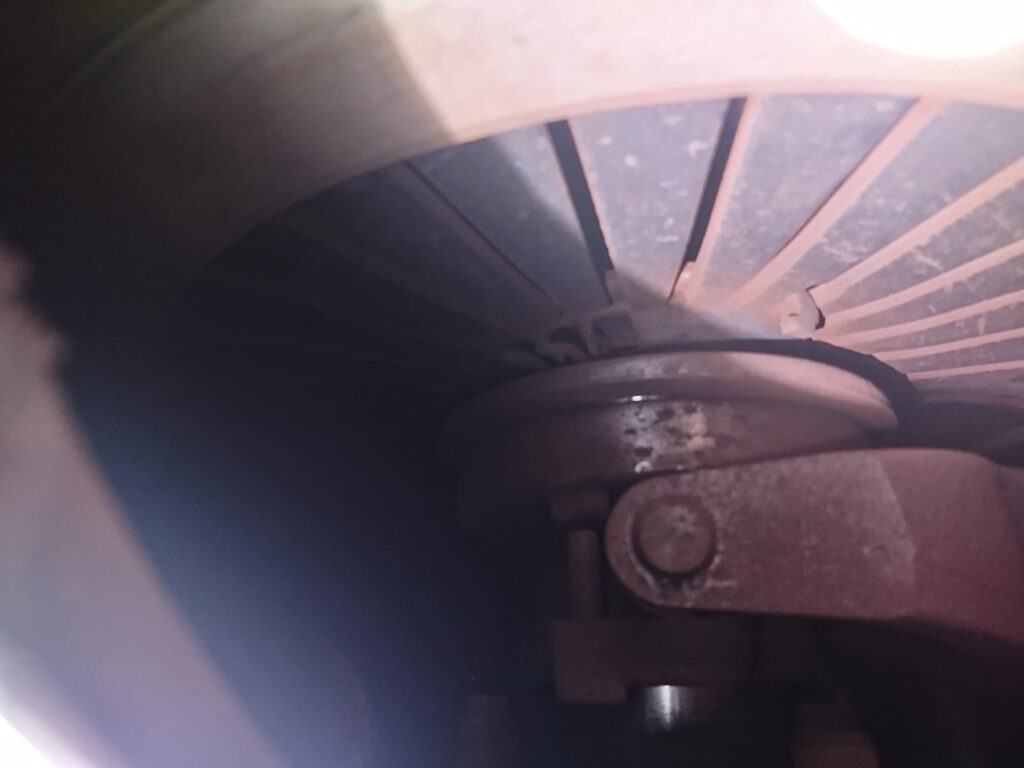
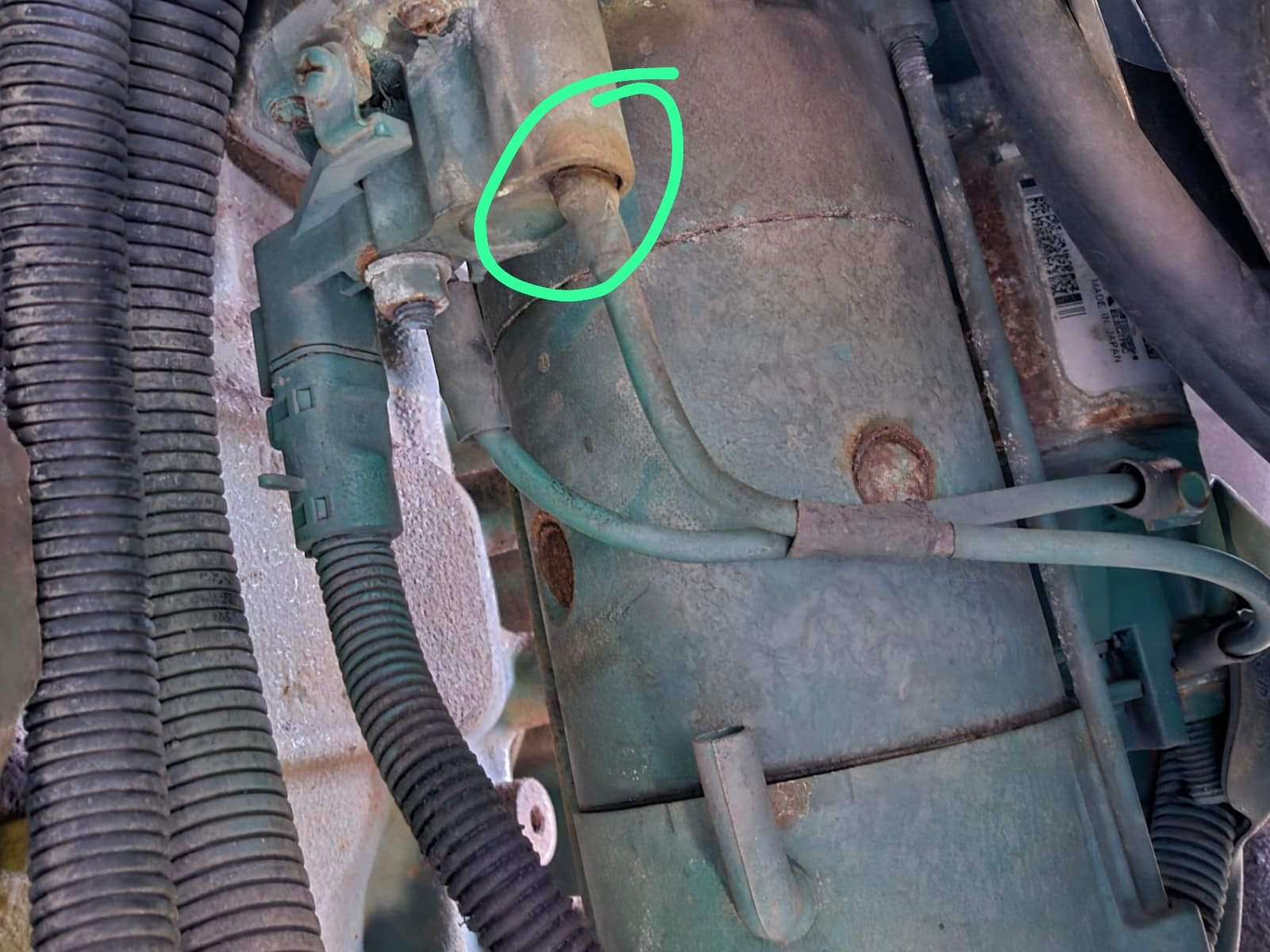
Chassis sensors, for wheel speed, axle load or distance, are sensitive components on any modern truck. They often sit unprotected close to the road, exposed to dirt and road salt. A loose connector, corrosion on a contact or a stone impact can sometimes be enough for the system to switch into a safe mode and cut speed or engage the brake. For the driver this often feels more dramatic than it technically is, but without a diagnostic tool on site it can be hard to tell the difference.
Air suspension is a third area that plays a role on many Iveco long haul lines. Air bellows, valves and lines are wear parts that turn brittle or start leaking over time. A sudden pressure loss on one axle usually shows up first as a tilted vehicle and unusual driving noise, before any warning light comes on. Again, this is not exclusive to Iveco, but it is one of the recurring themes our team deals with on this brand.
Tires and rims: standard sizes in the heavy duty segment
When it comes to tires, an Iveco truck is fundamentally no different from other European brands in its class. Common sizes for long haul work include 295/80R22.5 for the drive axle and often 315/70R22.5 on steer or trailer axles, depending on the vehicle configuration and fleet standard. These sizes are industry standard, not an Iveco specific feature, but they are exactly the sizes our mobile tire service replaces most often on Iveco vehicles when an emergency happens on the motorway.
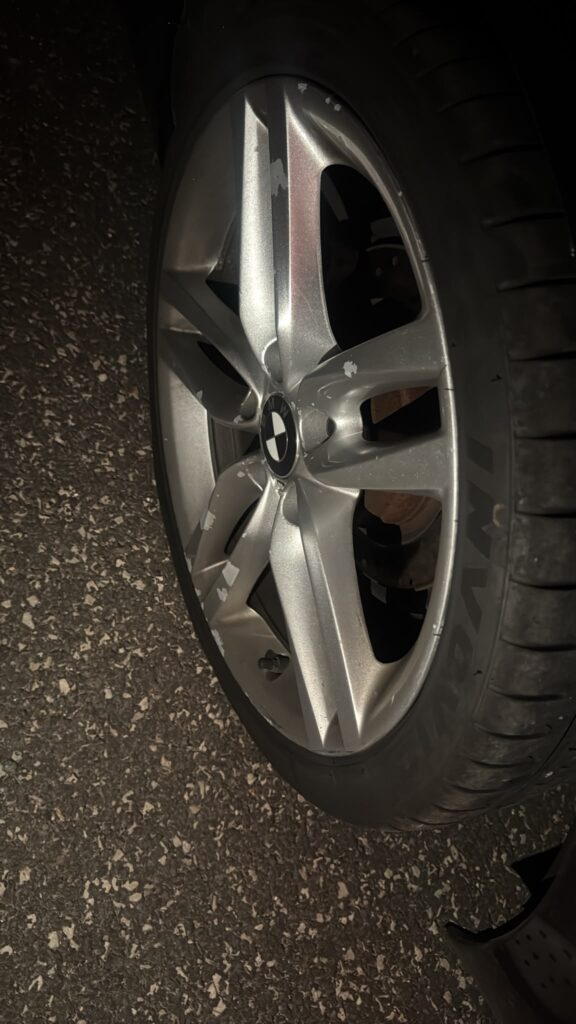
More important than tire size alone is often the condition of the rim and the valve. On vehicles that spend a lot of time on long distance routes, we frequently see rim damage from curb contact or potholes appearing together with a tire failure. A simple tire swap is not enough in that case, the rim needs to be checked as well before the vehicle can safely continue. Anyone who wants to understand tire pressure and its role in safety can read our dedicated article about truck tire pressure on our site.
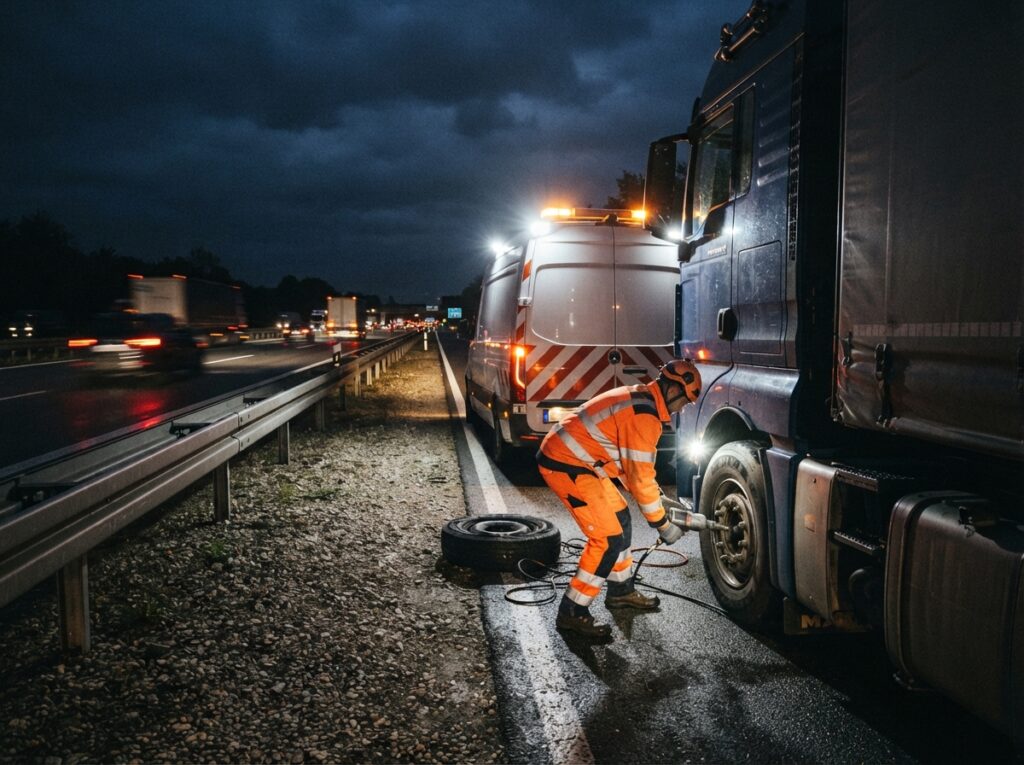
Changing a wheel on a heavy truck follows its own rules regarding tools, torque values and securing the accident scene. Drivers who want to attempt this themselves, or simply understand what a team does during an emergency, can find a detailed guide to emergency wheel change on trucks in our blog.
Why brand experience really matters in breakdown service
One might think a truck is a truck, and a good mechanic can handle any make. In theory that is true, in practice on the roadside, experience with a specific brand makes a noticeable difference. Every manufacturer has its own diagnostic systems, its own connector layouts, its own routines for reading fault codes or resetting a limp mode.
A technician who has already worked on an Iveco S-Way or Eurocargo many times has a rough idea where to look first when a particular warning light comes on. He knows the location of important fuses, knows which sensors on that model line tend to develop contact problems, and can therefore decide faster whether an on site repair is possible or whether towing is necessary. That saves time in the end, and time with a stranded truck on the motorway is always a safety factor, not just a cost question.
That is exactly why at LKWHelp24 we make it a point that our technicians are familiar with as many brands as possible and share their knowledge across the team. If a colleague has already seen an unusual Iveco fault code once, that helps the next callout even when a different technician is on site. This kind of accumulated experience cannot be replaced, no matter how good a diagnostic tool is in theory.
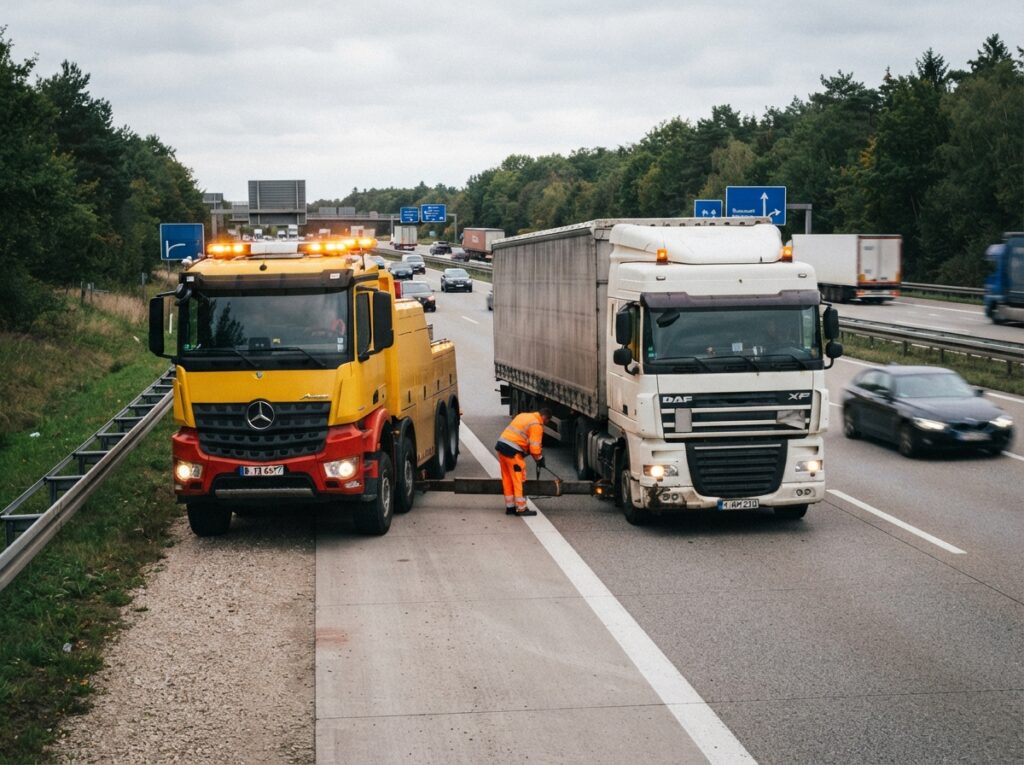
If an on site repair truly is not possible anymore, for example with a major gearbox or engine failure, we also arrange transport to a workshop. What such a heavy truck towing service typically costs and what the price depends on is explained in detail in our article about truck towing costs.
A typical case on the motorway
To illustrate how such a callout can play out in practice, here is an example that summarizes many similar cases without representing one specific real incident exactly as it happened.
A haulage company has an Iveco S-Way heading north on a German motorway, late evening, light rain. Suddenly a warning light for the air suspension flashes on the dashboard, and at the same time the vehicle feels noticeably lower at the rear. The driver notices the right side is sitting visibly lower than the left. He decides to pull onto the next hard shoulder, activates the hazard lights and sets up the warning triangle, exactly as the rules for securing a stranded vehicle require.
The call to LKWHelp24 comes in through WhatsApp, with location and a short description of the warning light. A technician with Iveco experience gets dispatched and arrives within the usual response window. The first check quickly shows a torn air bellow on the rear axle, likely caused by a sharp object on the road surface. Since a spare part of this type is carried in the service vehicle, the bellow can be replaced on the spot, the system is refilled and tested. The driver is able to continue the trip without needing a tow truck at all.
In another, equally typical case, a flat tire hits a Eurocargo on distribution duty. The driver notices an unusual driving noise, pulls over in a controlled manner and calls in. On site there is a classic tire failure in the 295/80R22.5 size, caused by a sharp piece of metal on the road. The tire gets replaced, the rim is quickly checked for damage, and the vehicle continues its route. Callouts like this are everyday work, especially in industrial areas and on motorways around larger cities.
What a driver can do during an Iveco breakdown
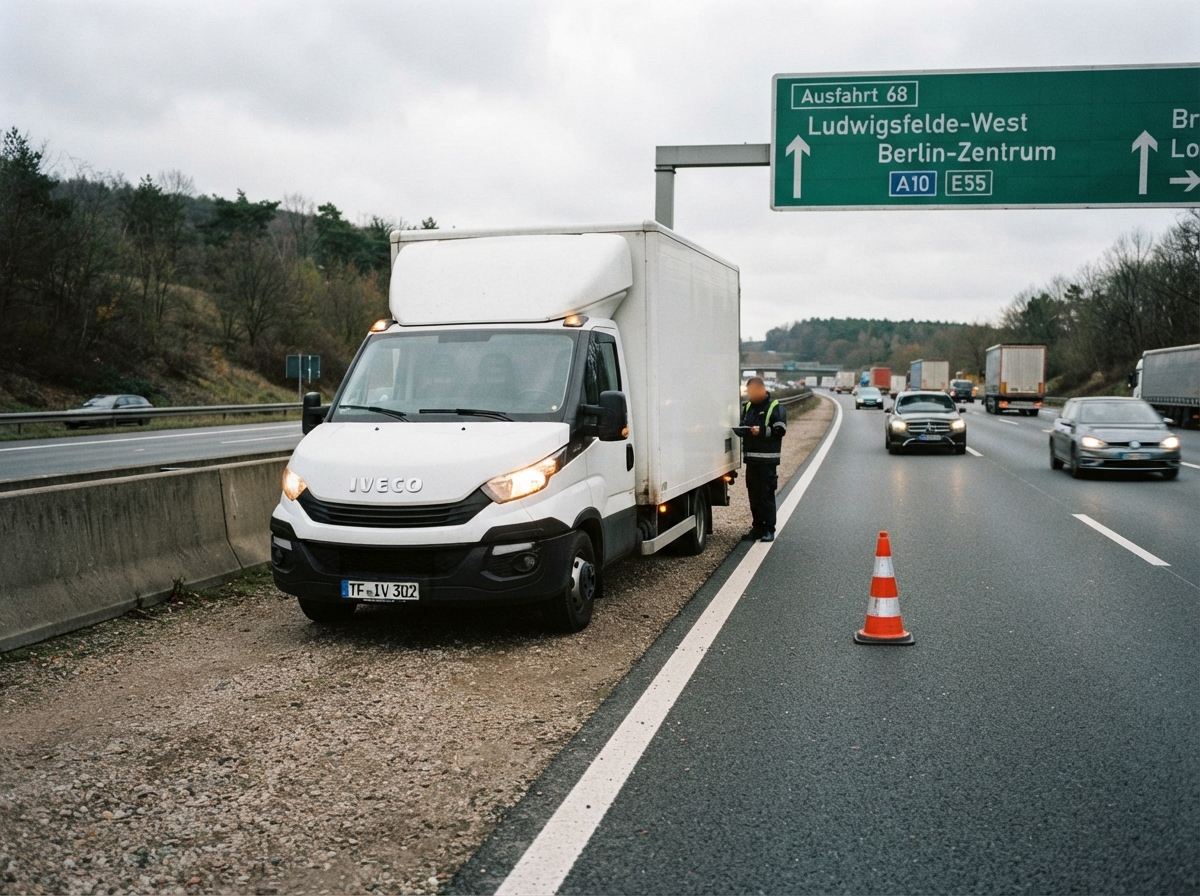
Before help arrives, a driver can do several things that make the situation safer and help the technician assess it faster. Turning on the hazard lights, putting on a safety vest, steering the vehicle as far to the edge of the hard shoulder as possible and placing the warning triangle at a sufficient distance are the basic rules that apply to any vehicle regardless of brand. With Iveco vehicles it also helps to write down or photograph the exact warning message on the display before it possibly disappears again. This information helps the technician form an initial picture even before arriving on site.
Anyone driving longer distances regularly should also know some basic facts about the different truck models and drivetrains found on German roads. Our overview of truck models and breakdown assistance from 7.5 tonnes offers a good starting point and also explains from which vehicle class specialized services like LKWHelp24 actually become responsible.
When it specifically comes to tires
Tire failures are the most common cause of unplanned stops on every truck brand, and Iveco vehicles are no exception. A professional tire emergency service needs to do more than just replace the broken tire, it also has to judge whether dual tires on the drive axle carry an even load, whether the tread matches on both sides, and whether the spare tire in the vehicle even fits the rest of the tire set. With larger fleets running several brands at once, it occasionally happens that different tire brands or tread patterns get mixed together, which can affect driving stability. General breakdown clubs such as the ADAC focus mainly on passenger cars, while specialized providers like LKWHelp24 concentrate on truck tires and dual wheel setups.
Anyone looking for a quick solution nearby when a tire fails on the road can find an overview on our site about tire emergency service nearby, including an explanation of how our team covers locations across Germany. Fleet managers who purchase larger quantities of truck tires or are looking for a fixed replacement partnership can also find information about our wholesale and mobile tire service.
The legal framework during a breakdown
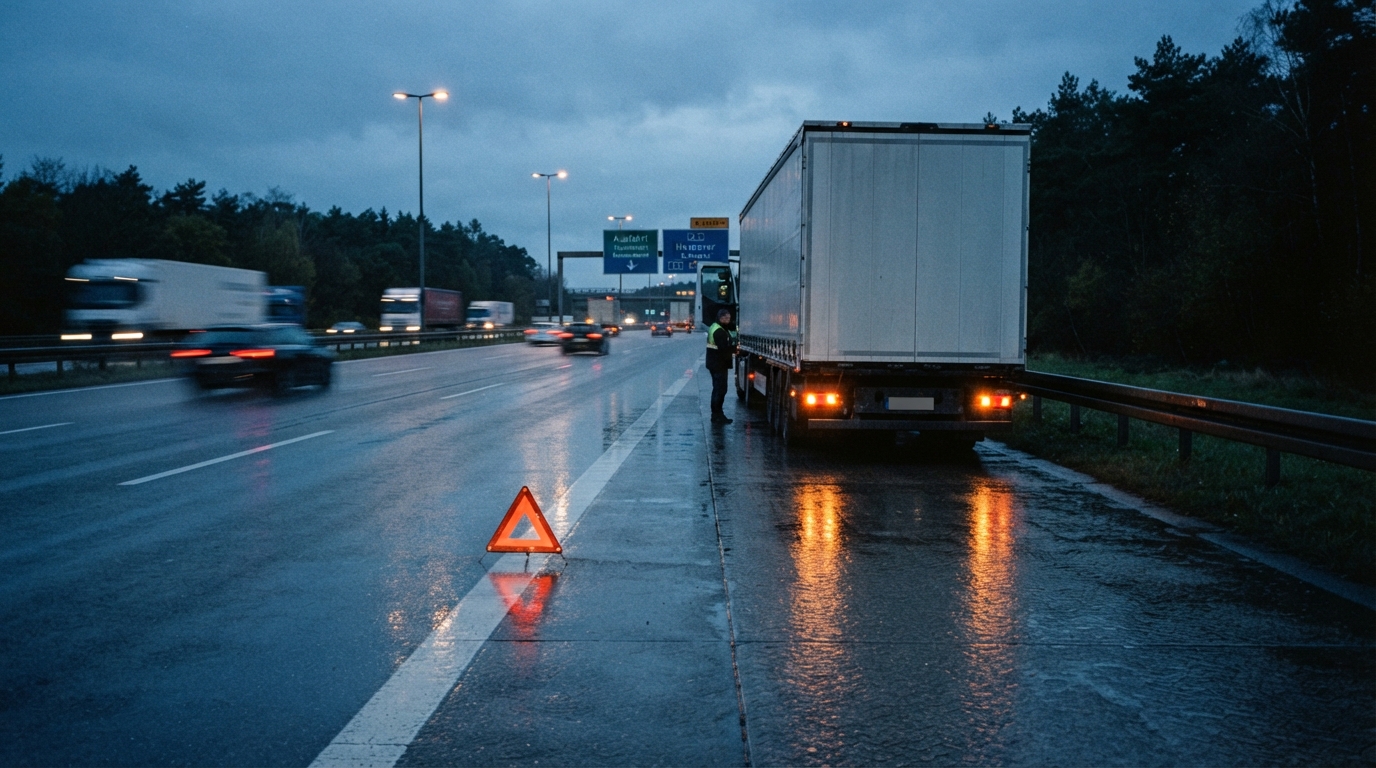
Regardless of brand, stranded trucks in Germany must follow fixed rules for securing the scene, such as hazard lights, warning triangle and safety vest, rules that derive among other things from the German road traffic licensing regulation, compliance with which in Germany is also monitored by the Federal Office for Goods Transport (BAG). Anyone interested in the exact legal basis can read the full text of the German road traffic licensing regulation on the federal law portal. These rules obviously apply to Iveco vehicles just as much as to any other brand.
Maintenance and prevention on Iveco vehicles in long haul use
Many breakdowns cannot be avoided completely, but their likelihood drops considerably when a fleet follows certain routines. Especially in the three areas described above, electronics, sensors and air suspension, regular visual inspection helps more than many drivers assume. A quick look under the vehicle before a long trip, checking air bellows, lines and visible connectors, costs little time and can prevent a breakdown on the motorway.
On older Iveco vehicles, such as the Stralis mentioned earlier, it is also worth checking the overall age of rubber components. Air bellows, seals and cable insulation lose elasticity over the years regardless of how many kilometers were actually driven. A vehicle that spends a lot of time parked sometimes ages faster in these spots than one that stays constantly in motion. Fleet managers running several model years at once do well to factor this into maintenance planning rather than scheduling purely by mileage.
Tire care belongs in this prevention category too. Regularly checking air pressure, especially before longer trips with strongly changing outside temperatures, prevents a considerable share of all tire failures in long haul transport. If pressure in one tire of a dual setup drops noticeably while the neighboring tire stays normal, that tire carries the extra load, overheats faster and can fail itself. Our technicians see this pattern across all brands, Iveco included, again and again as the cause of seemingly sudden tire failures that, on closer inspection, had already been building for days.
Differences between long haul and distribution duty on Iveco
An Iveco S-Way in international long haul work gets stressed completely differently than a Eurocargo running stop and go through a city center all day. On the long haul vehicle, long and steady loads dominate, high mileage, many hours at relatively constant speed. Typical weak points here tend to show up through material fatigue, for example in air suspension or bearing points that simply wear out over time.
In distribution work with a Eurocargo, different stress patterns dominate instead, frequent starting and braking, many steering movements at low speed, often in narrow alleys or yards with curbs and obstacles. Here in mobile service we more often see mechanical damage from contact with curbs or ramps, which can then affect the rim or axle geometry. A fleet manager running both vehicle types does well not to simply copy maintenance intervals, but to differentiate them according to actual usage profile.
Communication during an emergency: what actually helps
An often underestimated factor in any breakdown is the quality of the first contact between driver and breakdown service. The more precise the information at first contact, the better the dispatched technician can prepare before even arriving at the vehicle. A short message with location, vehicle type, visible problem and, if possible, a photo of the warning light or the damage saves valuable minutes on site.
For international haulage companies employing drivers from different countries, a language barrier often comes on top of that. A driver who feels more comfortable expressing themselves in Polish or Russian than in German usually describes a problem more precisely in their own language. That is exactly why our team at LKWHelp24 can be reached in four languages, German, English, Polish and Russian, so misunderstandings during the critical first phase of an emergency do not arise in the first place.
What fleet managers can learn from recurring Iveco callouts
Haulage companies running several Iveco vehicles often notice a pattern over time, certain model years or lines fail more often at certain points than others. Anyone who documents such patterns can adjust maintenance intervals more precisely instead of relying only on manufacturer guidelines. A simple internal log, noting every unplanned stop with date, vehicle and cause, delivers surprisingly useful information about a fleet’s own weak points after a year.
From our experience, especially smaller and medium sized haulage companies benefit from having a fixed contact for mobile breakdown assistance instead of searching anew with every incident. A team that already knows the fleet works faster on the next callout, because it already knows which vehicles are in the fleet and what quirks they bring along. That is true for Iveco just as much as for any other brand in a fleet.
Frequently asked questions about Iveco breakdown assistance
**Is LKWHelp24 an official Iveco partner?** No. LKWHelp24 is an independent, brand neutral breakdown service for trucks from 7.5 tonnes. We have no contractual relationship, no trade license and no official cooperation with Iveco as a manufacturer. We assist Iveco vehicles with the same care as any other brand.
**Which Iveco models does your service cover?** We generally operate on all Iveco truck lines from 7.5 tonnes, from the current S-Way and X-Way through the Eurocargo to older vehicles such as the Stralis, which still run in many haulage fleets today.
**How fast are you on site during a breakdown?** That depends on the location, our response time typically ranges between 30 and 60 minutes. Dispatch works fastest through WhatsApp with a shared location.
**Can you also help at night or on weekends?** Yes, we are reachable around the clock, every day of the week. A breakdown does not follow office hours, and our team is organized accordingly.
**What should I do if I do not understand the warning message on the display?** Best to take a photo of the display and send it to us directly through WhatsApp. Even without knowing the exact meaning of the message, this helps our technician prepare and bring the right equipment.
**Which languages can I communicate with you in?** Our team can be reached in German, English, Polish and Russian, which is especially helpful for international drivers and haulage companies in European long haul transport.
**What does help during an Iveco breakdown cost?** That depends on the specific damage, whether a simple tire change is enough or towing becomes necessary. Details on pricing for larger callouts can be found in the article about truck towing costs linked earlier in this article.
Conclusion
Iveco is a fixture in European long haul transport, with a clear, current lineup from Daily through Eurocargo to the S-Way, and with older vehicles such as the Stralis still remaining in many fleets for a long time. For a mobile breakdown service, what matters in the end is not the manufacturer logo on the cab, but the ability to recognize quickly and correctly what a vehicle needs right now. That kind of experience, built across many brands and many years, is exactly what makes the difference at LKWHelp24 when an Iveco truck breaks down somewhere in Germany, whether the issue is a tire, a sensor or a problem with the air suspension. In an emergency, reach our team around the clock through WhatsApp at +49 160 5753826, for trucks from 7.5 tonnes of any brand.