Skip to content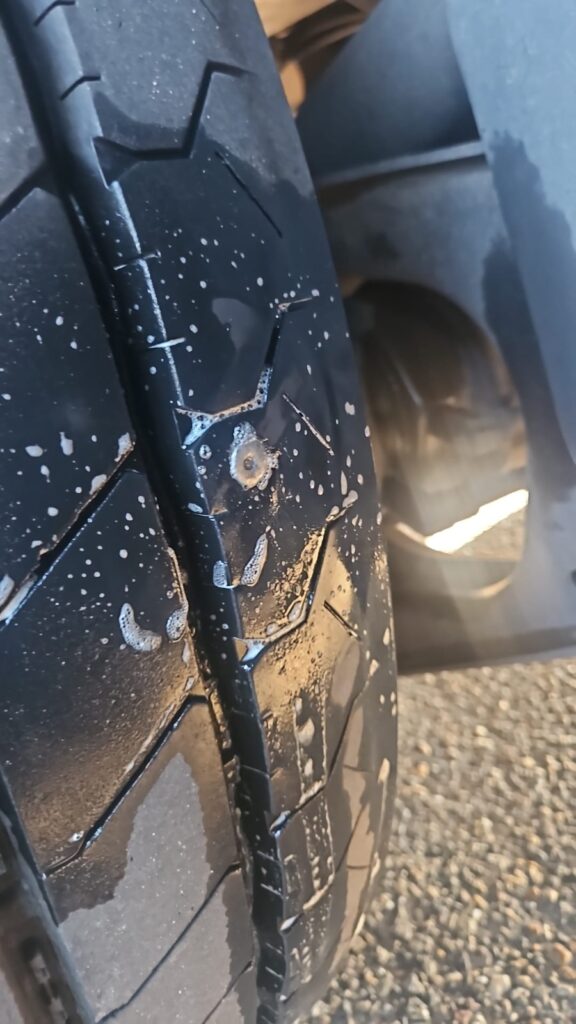
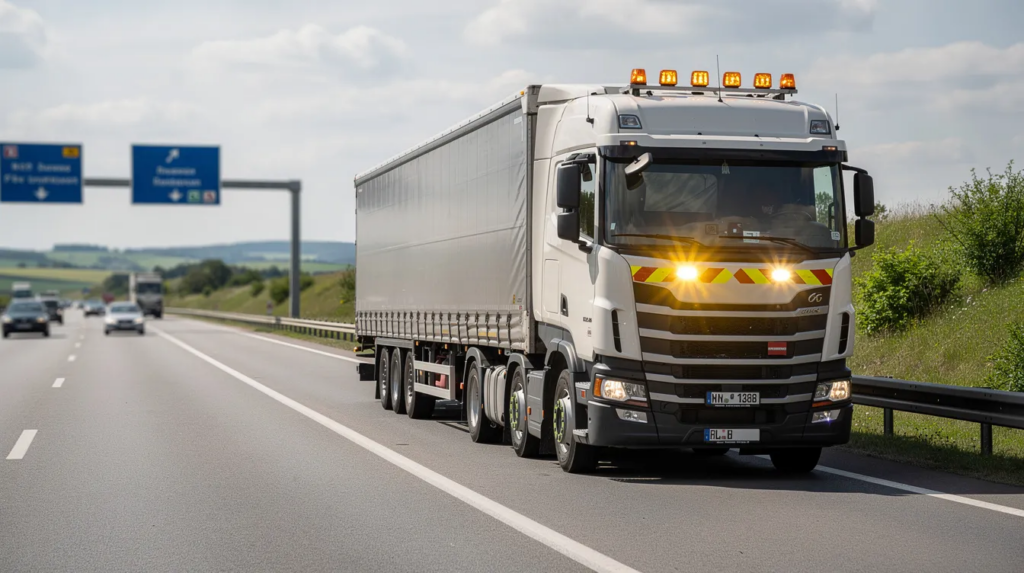
On 13 August 2026, an articulated lorry pulled into a rest area just off the A1 near Münster after the in-cab TPMS display flagged a pressure drop on one of the trailer’s 315/70 R22.5 tyres. A screw was found embedded in the tread. Because the damage sat in the repairable zone, our technician fitted an internal mushroom plug on site rather than swapping the tyre. Total time from the first call to the driver rolling again: 1 hour 53 minutes.
The case is a straightforward tyre repair on paper, but what actually prevented it turning into a roadside blowout was a piece of electronics most drivers rarely think about until it saves them: the tyre pressure monitoring system. Without it, the crew would likely have found out about the screw only when the tyre failed at speed, somewhere on the open motorway rather than in the relative safety of a rest area.
This report walks through what happened, how the dispatch and repair were organised, and — because the trigger here was a sensor rather than a driver noticing a wobble — takes a closer look at how TPMS works on heavy trucks, where it helps most, and where its limits are.
The situation at the rest area
The driver was running a routine leg on the A1 corridor near Münster, North Rhine-Westphalia, when the dashboard TPMS display showed a drop in pressure on one wheel position of the semi-trailer. Rather than continuing and hoping the reading was a glitch, the driver did the correct thing immediately: signalled off at the next exit and pulled into a proper rest area, not the hard shoulder of the running motorway.
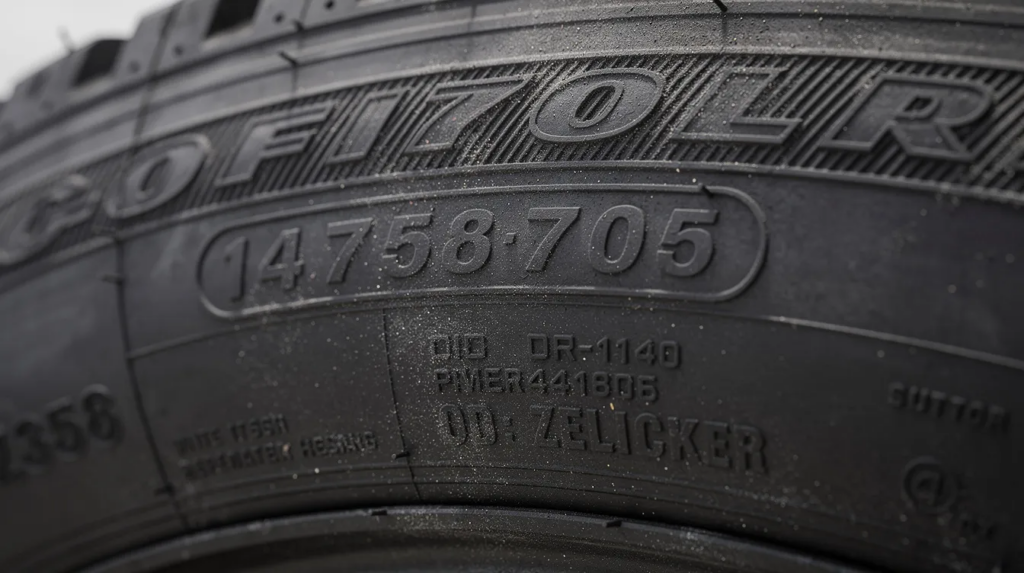
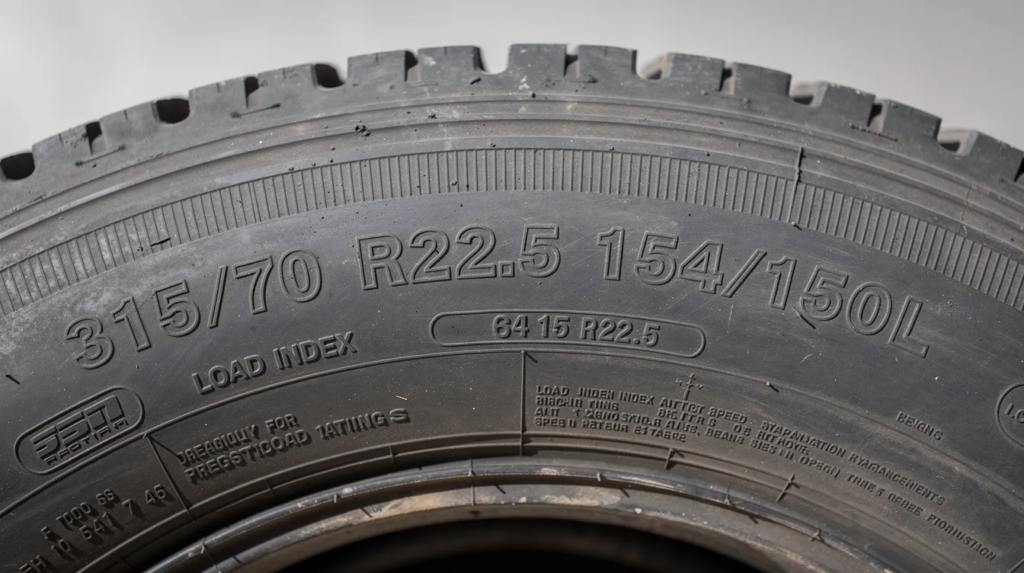
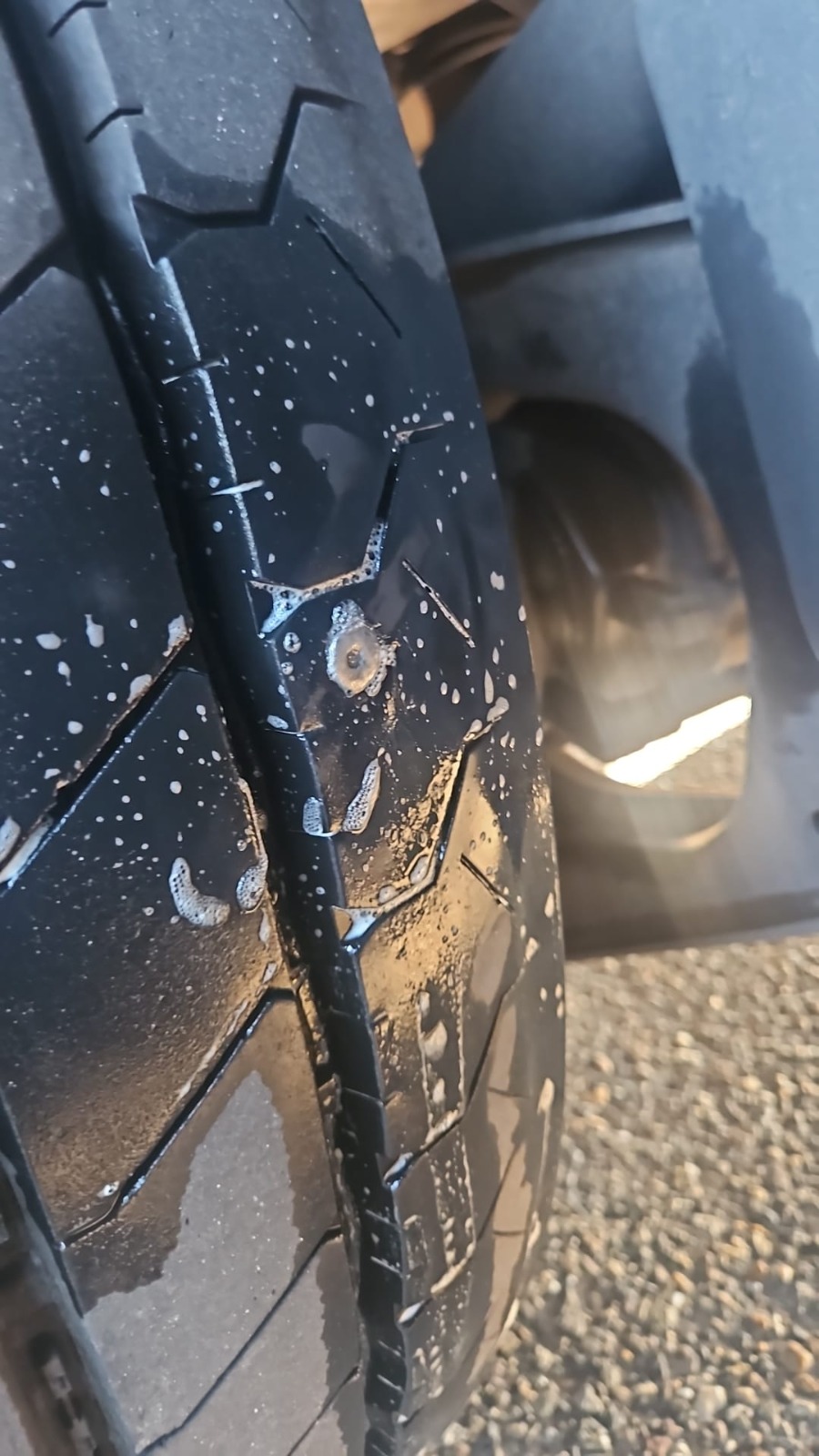
A short walk-round confirmed the display was not lying. One of the 315/70 R22.5 tyres was visibly softer than its neighbours, and a self-tapping screw was sitting in the tread, roughly in the centre rib. No obvious sidewall bulge, no chunking, no sign the casing had been run flat for any distance. The tyre had lost pressure gradually enough that the TPMS caught it well before the structure was compromised.
That distinction, tread versus sidewall, decides almost everything about what happens next. A tread puncture from a foreign object, caught early and without prolonged under-inflated running, is usually repairable. A sidewall injury on an HGV tyre almost never is, regardless of size, because the sidewall flexes constantly under load and a repaired sidewall cannot be trusted to hold under the working pressures a 40-tonne combination generates.
How the roadside assistance was organised
Once the driver’s call came in, our control centre worked through a short, fixed sequence rather than simply dispatching the nearest available van:
- Confirmed the vehicle’s exact location (rest area, direction of travel, nearest access point) and tyre size to avoid a wasted trip with the wrong stock on board
- Checked which regional partner workshop had a 315/70 R22.5 mushroom plug kit and a qualified technician free within the hour
- Briefed the technician on the likely repair (screw in tread, size confirmed by the driver) so tools and consumables were loaded before departure
- Kept the driver on standby instructions: hazard triangle, warning lights, safe positioning of the vehicle within the rest area, no attempt to move the vehicle further
This sequencing is why the dispatch phase in this case took 18 minutes rather than the 5 it might take to simply “send someone.” A technician arriving without the right plug size, or discovering the tyre is beyond repair only after driving out, costs everyone more time than a slightly more careful dispatch call.
Why an under-inflated HGV tyre cannot be left alone
Heavy truck tyres run at 8.5 to 9.5 bar depending on axle position and load, roughly four to five times the pressure of a typical car tyre. That figure matters because the margin for error is much smaller than drivers assume. A tyre that has lost even 20 to 30 percent of its rated pressure is already generating excess heat through sidewall flex, and heat is what eventually destroys the casing from the inside, long before the driver would notice anything by eye or feel through the steering.
On a loaded articulated lorry, axle loads on a driven or trailer axle commonly run to 10 tonnes or more. Distribute that across an under-inflated tyre and the contact patch deforms in ways it was never designed for, accelerating wear on the shoulder, risking rim damage from the bead losing its seal, and in the worst case leading to a sudden structural failure at speed. That is precisely the scenario TPMS exists to prevent: catching the problem while it is still a slow leak from a screw, not a blowout on the autobahn.
Understanding TPMS: how it actually works
TPMS (Tyre Pressure Monitoring System) – an electronic system that continuously measures air pressure, and usually temperature, inside each tyre and relays that data to a display the driver can see while driving.
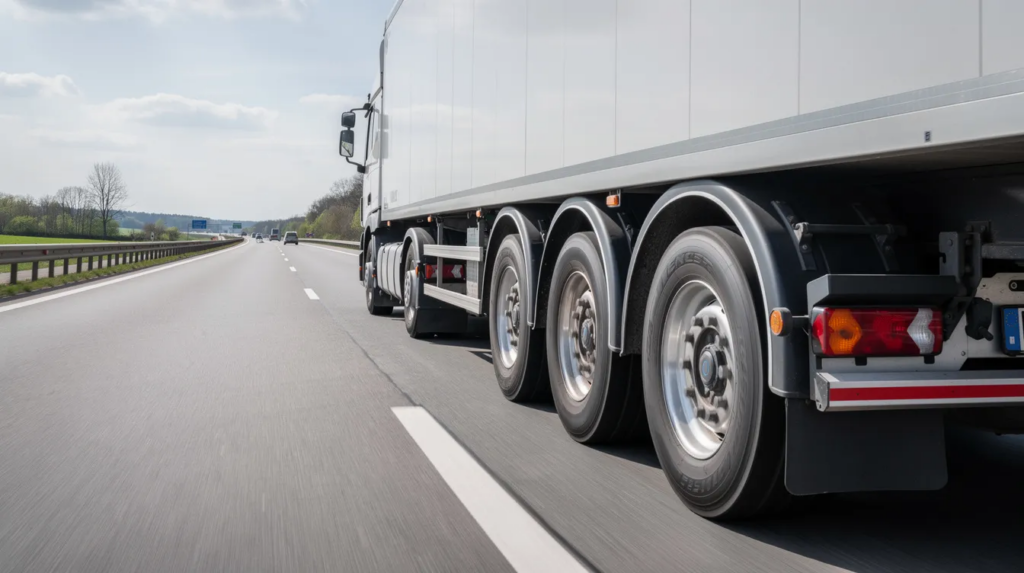
At its simplest, a TPMS is trying to answer one question in real time: is any wheel on this combination losing air right now, and if so, how fast. For a solo car that is already useful. For an 18-metre articulated combination running six or more axle positions, several of them on twin wheels the driver cannot see or reach without crawling underneath, it is close to essential.
Direct systems versus indirect systems
There are two fundamentally different ways to build a TPMS, and the difference matters a great deal for trucks specifically.
Direct TPMS – a physical pressure sensor mounted inside each wheel, usually on the valve stem or strapped to the rim, that transmits pressure and temperature readings by radio to a receiver in the cab.
Indirect TPMS – a system with no in-wheel sensors at all, which infers pressure loss by comparing wheel rotation speed data from the ABS system; a tyre losing pressure has a slightly smaller rolling radius and spins marginally faster than its neighbours.
Indirect systems are cheaper and are common on passenger cars, but they have a structural blind spot that makes them unsuitable for HGV use on their own: if all tyres lose pressure at a similar, gradual rate, the relative wheel-speed comparison never triggers a warning, because there is no single tyre spinning differently from the others. A slow, uniform loss across several tyres, exactly the kind of thing that happens with age or minor porosity, can go completely undetected. Direct systems have no such gap, because each wheel is measured independently against an absolute reference pressure, not against its neighbours. That is why virtually every serious commercial TPMS retrofit for trucks and trailers uses direct, in-wheel sensors.
Why temperature is the second half of the picture
A pressure reading alone tells you what has already happened. Temperature tells you something is starting to go wrong before pressure has visibly dropped. A rising wheel temperature with pressure still nominally in range can indicate a dragging brake caliper, a wheel bearing running hot, or the early stages of under-inflation before the pressure sensor has crossed its warning threshold. An ordinary hand-held pressure gauge, checked once at the depot in the morning, cannot show any of that, because it is a single snapshot rather than a continuous trend. This is one of the more underappreciated advantages of direct TPMS on trucks: the temperature channel often flags a developing problem before the pressure channel does.
The legal picture in Germany and the EU
TPMS has been mandatory on new passenger cars sold in the EU since 2014, under Regulation (EC) 661/2009, which set the framework for general vehicle safety requirements including tyre monitoring. For heavy goods vehicles the picture is different: as things stand, there is currently no general TPMS mandate for heavy trucks comparable to the passenger car rule, either at German or EU level. Fleets that run TPMS on their tractor units and trailers do so voluntarily, as a maintenance and safety investment rather than a legal obligation, and inspection bodies such as DEKRA and TÜV still assess tyre condition primarily through physical checks during periodic inspections.
Twin-wheel axles: the blind spot only a sensor can see
On a standard twin/dual wheel assembly, common on drive axles and trailer axles across most of the fleet on German roads, the inner tyre of each pair is effectively invisible during a routine walk-round. A driver can see tread pattern and sidewall condition on the outer tyre, but the inner tyre is largely hidden behind it, and a genuinely thorough check requires removing the outer wheel or crawling underneath with a torch, which nobody does before every departure. A pressure sensor mounted inside each wheel is one of the only practical ways to know, without dismantling anything, that the inner tyre of a twin pair is holding its correct pressure.
Where TPMS falls short
No system is maintenance-free, and TPMS sensors have their own weak points worth knowing about:
- Sensor batteries typically last several years, but they are not permanent, and a dead sensor stops reporting silently rather than throwing an obvious fault in every configuration
- Radio signal dropouts can occur, particularly with cheaper aftermarket sensors or poor receiver placement, leading to gaps in the data the driver sees
- Sensors are vulnerable to damage during careless tyre fitting; a technician who does not know to check for and protect the sensor before breaking the bead can crack the housing or snap it off entirely
- Extreme cold can affect sensor accuracy and battery performance, which is worth factoring into winter maintenance schedules alongside the usual winter tyre requirements for HGVs
That last point is one reason we brief every technician in our network on TPMS handling specifically, not just general tyre fitting. A repair that saves €345 on the tyre itself but destroys a €40 to €80 sensor in the process is not the win it looks like on paper.
What to do when a TPMS warning appears
The correct response is the one the driver in this case followed, and it is worth stating plainly because the wrong instinct is common: do not try to reach the depot or the next scheduled stop “just a bit further.” A slow leak can accelerate without warning, particularly once the tyre starts flexing more than it should and generating additional heat. Head for the nearest safe stopping point, a proper rest area or service station rather than the hard shoulder of a live motorway, switch on hazard lights, and call for assistance. That single decision, made early, is usually the difference between a 25-minute repair and a full breakdown recovery.
Step-by-step: how the repair was carried out
- Visual inspection. The technician confirmed the screw’s position in the tread, checked the surrounding casing for any secondary damage, and measured remaining tread depth to confirm the tyre was still economically worth repairing.
- Securing the site. Wheel chocks were placed, warning triangles positioned, and the trailer’s parking brake confirmed engaged before any work began on the wheel.
- Removal and inspection. The wheel was removed, the tyre broken from the rim, and the injury inspected from the inside to rule out any damage the outside view had not shown.
- Mushroom plug repair. A combination mushroom plug, the industry-standard method for HGV tread punctures, was fitted through the injury channel, sealing the inner liner and filling the puncture in one piece rather than a stem-only plug. The tyre was then remounted and dynamically balanced.
- TPMS check and clearance. The sensor on that wheel position was checked for physical damage from the repair process, re-paired with the display if needed, and the final pressure confirmed and logged before the vehicle was cleared to continue.
Full timeline
| Time | Phase | Action |
|---|---|---|
| 13:42 | Call | Driver reports TPMS warning, pulls in safely at the A1 rest area near Münster |
| 13:42–14:00 (18 min) | Dispatch | Control centre finds a partner workshop in the region, checks parts availability |
| 14:00–14:45 (45 min) | Travel | Technician drives to the rest area |
| 14:45–15:05 (20 min) | Diagnosis | Tyre removed, screw located, casing inspected |
| 15:05–15:30 (25 min) | Repair | Internal mushroom plug fitted, tyre remounted and balanced |
| 15:30–15:35 (5 min) | Sign-off | TPMS sensor checked and recalibrated, final pressure confirmed |
Total time from call to clearance: 1 hour 53 minutes.
That travel window, 45 minutes, is fairly typical for a rural stretch of the A1 corridor around Münster during daylight hours with clear roads. In wet weather or during rush-hour congestion around the city, the same journey can take noticeably longer, and we factor that into the estimated arrival time we give drivers rather than promising a fixed figure regardless of conditions.
Costs
| Item | Price (EUR, net, excl. VAT) |
|---|---|
| Callout fee | €240 |
| Labour (approx. 50 min on site) | €110 |
| Tyre repair, TPMS mushroom plug 315/70 R22.5 (materials + fitting + balancing) | €160 |
| TPMS sensor check and recalibration | €45 |
| TOTAL | €555 net |
A few things shift this figure up or down in other cases. Night or weekend callouts carry a surcharge, as does a location that is genuinely hard to reach rather than a well-signed rest area with easy lorry access. Tyre size also matters directly: a 315/70 R22.5 is a common drive- and trailer-axle size, and stock availability keeps the repair cost predictable; a less common size can add waiting time if the partner workshop needs to source the right plug kit.
For comparison, a full replacement tyre in this size, including callout, fitting and disposal of the old casing, would have cost around €900 net. Because the damage sat in the tread and the casing was otherwise sound, the repair route saved roughly €345 and let the tyre continue in service for the rest of its tread life rather than scrapping a casing with plenty of life left in it. Set against that, a breakdown that turns into a full day off the road typically costs a fleet €800 to €1,200 in lost operating time alone, on top of whatever the repair itself costs. The €555 spent here is small next to either of those numbers.
Why a professional repair matters here
A screw in a tread looks like a simple fix, and on a car it often is. On a 315/70 R22.5 running at 9 bar under a multi-tonne axle load, the margin for a mistake is much smaller, and a DIY or improvised repair on the roadside carries real risk:
- An external plug pushed in from the outside without inspecting the inner liner can leave a hidden air path that fails within days under load and heat
- Incorrect repair placement, too close to the shoulder or over the belt edge, can create a stress point that leads to sudden failure later rather than solving the problem
- Reinflating a tyre that has been run flat, even briefly, without checking the casing for internal damage risks a later blowout that has nothing to do with the original puncture
- Careless handling of the TPMS sensor during any DIY wheel removal can damage or dislodge it, leaving the driver with no future warning on that wheel position at all
- A rushed rebalance, or skipping it entirely, leads to uneven wear and vibration that shortens the life of the repaired tyre regardless of how good the plug itself was
None of these are exotic failure modes. They are the ordinary ways a well-intentioned roadside fix goes wrong, which is why HGV tyre repair sits with trained technicians rather than being a job for whoever happens to be on site.
Typical call-outs we handle
Beyond tread punctures like this one, our network across Germany regularly deals with sidewall damage requiring full replacement, sheared or loose wheel bolts, trailer axle bearing failures, brake disc damage on long descents, and the full range of breakdown recovery when a vehicle genuinely cannot continue under its own power. Our tyre service and mobile truck service cover most roadside mechanical issues directly, and where a vehicle needs recovery rather than repair, our towing service handles that end to end.
Prevention: cutting the number of roadside stops
Most tread punctures cannot be prevented outright, foreign objects on the road surface are simply a fact of long-distance haulage, but the difference between a controlled 25-minute repair and an uncontrolled roadside failure comes down to a handful of habits:
- Check displayed TPMS readings at the start of every shift, not just when a warning light appears, so a slow developing trend is caught early
- Keep sensor batteries and calibration on the fleet’s regular maintenance schedule rather than waiting for a sensor to go silent
- Brief drivers explicitly that a TPMS warning means “find the next safe stop,” not “monitor it and see”
- Rotate tyres and check tread depth at scheduled intervals so a repair candidate does not get missed until it becomes a replacement candidate
- Have contact details for a 24/7 roadside partner saved in the cab before they are needed, not searched for during the incident
Tyres, TPMS and fleet maintenance: the wider picture
Correct inflation is not just a safety question, it is a fuel economy question. Major tyre manufacturers including Michelin generally indicate that under-inflated tyres increase rolling resistance and can measurably raise fuel consumption across a fleet, on the order of a few percentage points depending on how far pressure has drifted from target. For a fleet running tens of thousands of kilometres a year per vehicle, even a modest, consistent improvement in inflation discipline translates into a real fuel saving over a full year, on top of longer tyre life and fewer roadside incidents.
That is also where TPMS earns its keep financially, beyond the obvious safety case. A single avoided roadside blowout, factoring in the tyre itself, the callout, and the downtime, typically saves a fleet somewhere in the range of €750 to €1,400 in direct repair and replacement cost, before counting the €800 to €1,200 per day in lost operating time that a genuine breakdown causes. Retrofitting a direct TPMS system across a handful of tractor units and trailers is not a trivial outlay, but for a fleet running regularly on the autobahn network, it typically only takes a small number of avoided incidents, blowouts that instead became a controlled 20-minute stop like this one, for the system to have paid for itself. This is reflected in how mainstream the retrofit case has become for fleets that run long distances daily, with commercial-grade sensor and monitoring hardware now widely available from major automotive suppliers.
Why choose LKWHelp24
We run a 24/7 dispatch operation covering the whole of Germany, built on a vetted network of regional partner workshops rather than a single depot trying to cover the entire country from one location. That structure is why we could get a technician with the right stock to a rest area near Münster within 45 minutes of confirming the job. Our dispatch team works in German, English and Polish, pricing is agreed and confirmed before work starts, and every job comes with a clear breakdown of parts and labour, not a lump-sum invoice with no detail behind it.
Frequently asked questions
What does a TPMS warning actually mean when it appears on the dashboard?
It means a sensor in one of the wheels has detected a pressure reading outside the normal range, either dropping steadily or already below the safe threshold. It does not diagnose the cause, only the symptom, so the next step is always a physical check rather than guessing.
Can I keep driving to the next depot if the TPMS light comes on?
No. Pull into the nearest safe stopping point as soon as it is safe to do so, ideally a rest area rather than the hard shoulder. Continuing to drive on an under-inflated tyre accelerates heat build-up and increases the risk of a sudden failure, which is far more dangerous and costly than a short delay.
Why can’t every screw puncture be repaired?
Location decides it. A puncture in the tread, away from the shoulder and belt edge, and without a history of running flat, is normally repairable with a mushroom plug. A sidewall puncture, or a tread injury larger than the accepted repair limit, requires replacement because the structural integrity cannot be reliably restored.
Is TPMS legally required on trucks in Germany?
Not currently. TPMS has been mandatory on new passenger cars in the EU since 2014, but there is at present no equivalent general mandate for heavy goods vehicles. Fleets that fit it do so as a voluntary safety and cost-saving measure.
How much does a mushroom plug repair cost compared to a new tyre?
In this case the repair, including callout, labour, materials and a TPMS sensor check, came to €555 net. A full replacement in the same 315/70 R22.5 size, including callout and disposal, would have cost around €900 net, roughly €345 more.
Does fitting TPMS sensors damage the tyre or slow down a repair?
No, when handled correctly. A technician trained on TPMS knows where the sensor sits and how to protect it during demounting and remounting. The sign-off step in this case, checking and recalibrating the sensor, added only around five minutes to the job.
Summary
An articulated lorry running 315/70 R22.5 tyres picked up a screw in the tread on 13 August 2026, detected via TPMS while travelling the A1 near Münster. The driver pulled safely into a rest area rather than continuing. Our technician arrived within 45 minutes of dispatch, diagnosed the injury as repairable, fitted an internal mushroom plug, rebalanced the wheel and confirmed the TPMS sensor was undamaged and correctly calibrated. Total time from the first call to the vehicle being cleared to continue: 1 hour 53 minutes. Total cost: €555 net, against an estimated €900 for a full tyre replacement, with no secondary damage to the rim, axle or casing.
Get help now
If a TPMS warning or any other roadside issue puts your vehicle out of action anywhere in Germany, call us on +49 160 5753826 or visit www.lkwhelp24.com. We operate 24/7 across Germany with a vetted regional partner network ready to respond.
Keywords: TPMS truck tyre | tyre pressure monitoring system HGV | mushroom plug repair 315/70 R22.5 | A1 Münster roadside assistance | truck tyre repair Germany | direct vs indirect TPMS | fleet tyre maintenance
Related articles
- Truck towing service Münster: brake disc damage and trailer recovery
- Winter tyres for HGVs in Germany: requirements and safety
- Truck tyre blowout and rim damage on the motorway near Trier
- Truck loses two wheels near Hannover: sheared bolts and mobile roadside repair
- Rest areas and service stations on the German autobahn