Skip to content
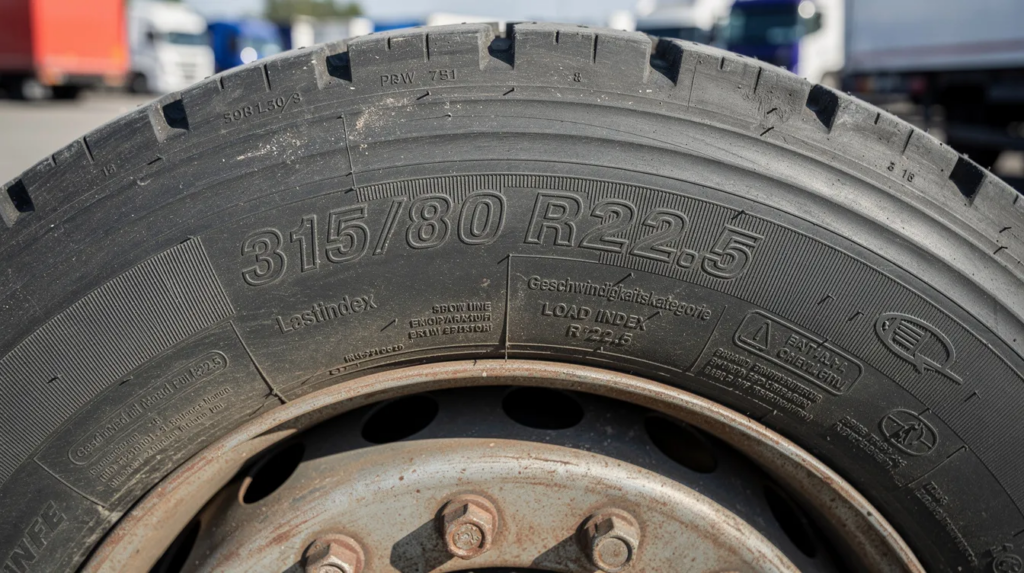
TL;DR: On 3 August 2026, our team ran a planned intake truck tyre inspection on an articulated tractor unit at a haulage yard near Marburg, Hesse, right after it returned from a long-haul run. No damage was found. One trailer-axle tyre showed slight uneven wear, still legal, flagged for replacement within 4–6 weeks. Total cost: €397.50, roughly a third of what a motorway blowout callout runs.
Why check tyres when the truck gets back, not before it leaves
Most fleet operators think about tyre checks before a truck sets off. That’s backwards, or at least incomplete. The moment a vehicle is most informative about its own condition is the minute it stops moving, not the minute before it starts.
A tractor unit that just finished 600, 800, or 1,200 kilometres carries evidence. The tread pattern, the pressure numbers, the heat in the hubs — all of it reflects what actually happened on the road, not what a driver hopes will happen next time. Checking tyres on the way out only confirms nothing broke overnight in the yard. Checking them on the way in tells you what the last trip did to the vehicle, and what the next one will do if nothing changes.
This is the logic behind an intake inspection: catch wear and damage while the truck is parked, with time and daylight and a torque wrench on hand, rather than 600 km from home again on a hard shoulder somewhere between Kassel and Dortmund.
What happened at the Marburg yard on 3 August
Our regional service partner carried out a scheduled post-trip check for an articulated tractor unit at a haulage yard near Marburg, Hesse — not a motorway, not an emergency. The vehicle had just completed a long-haul tour and was due to go back out on its next dispatch within days. The client wanted the wheels, brakes, and undercarriage checked before that happened.
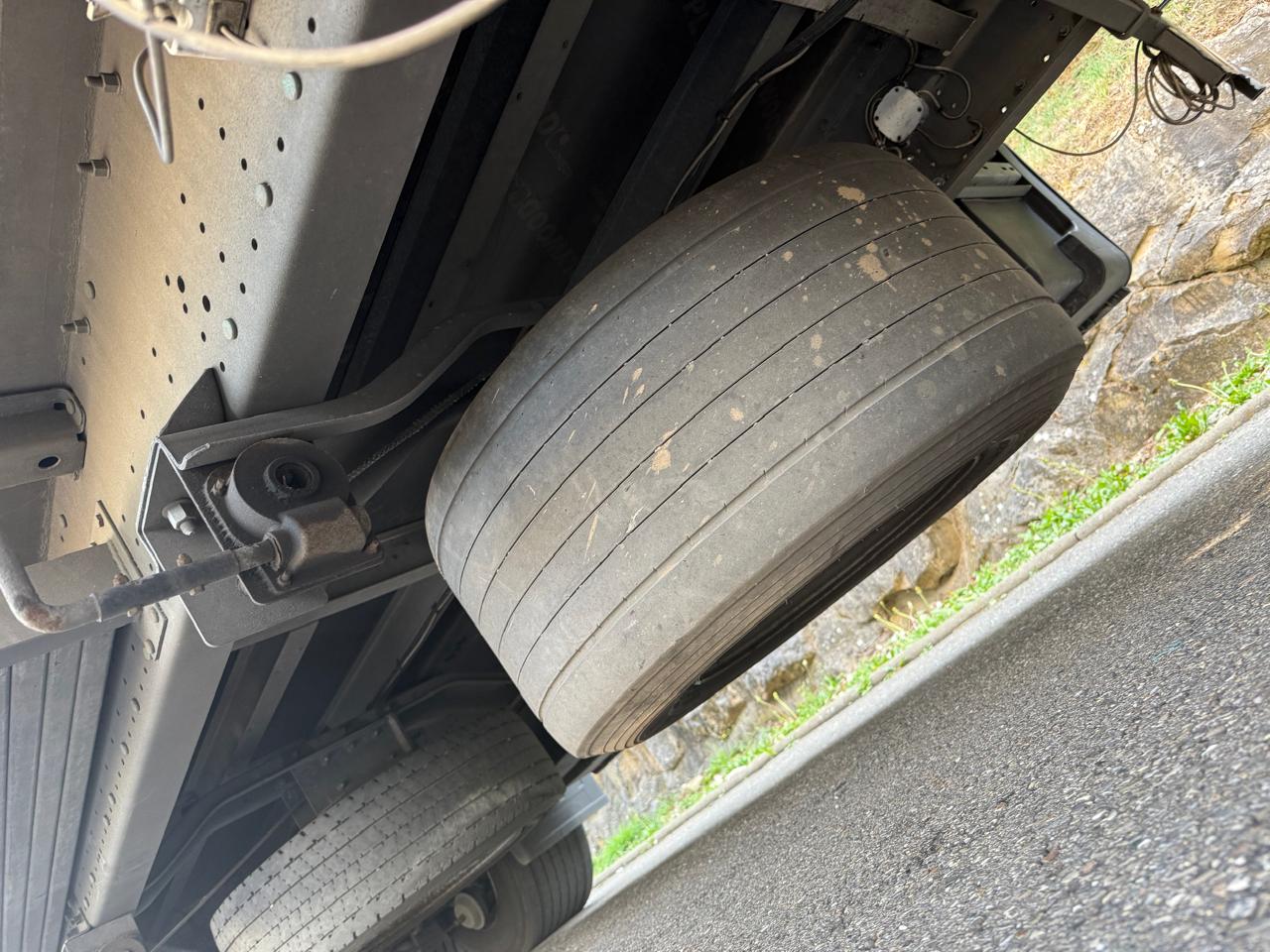
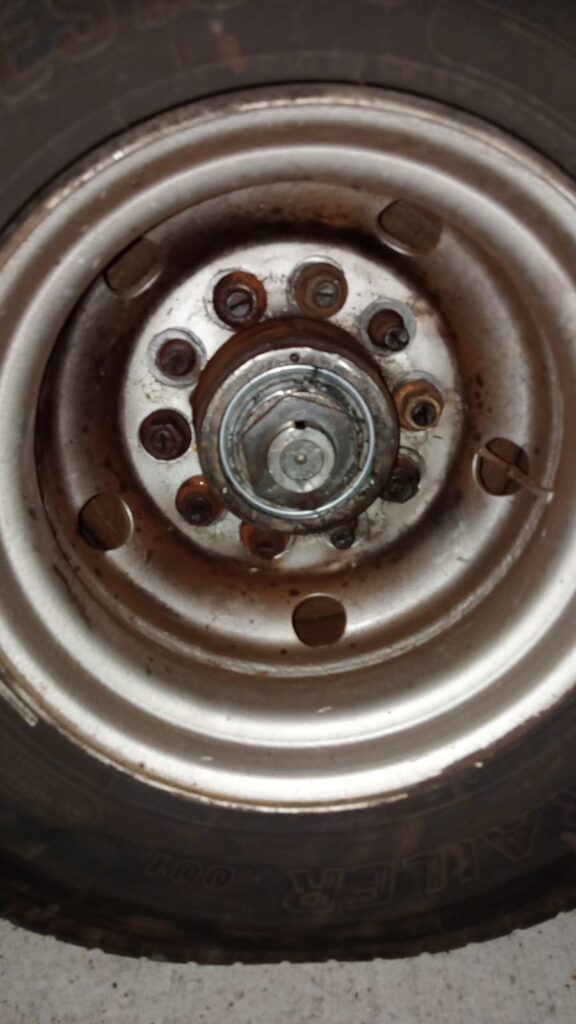
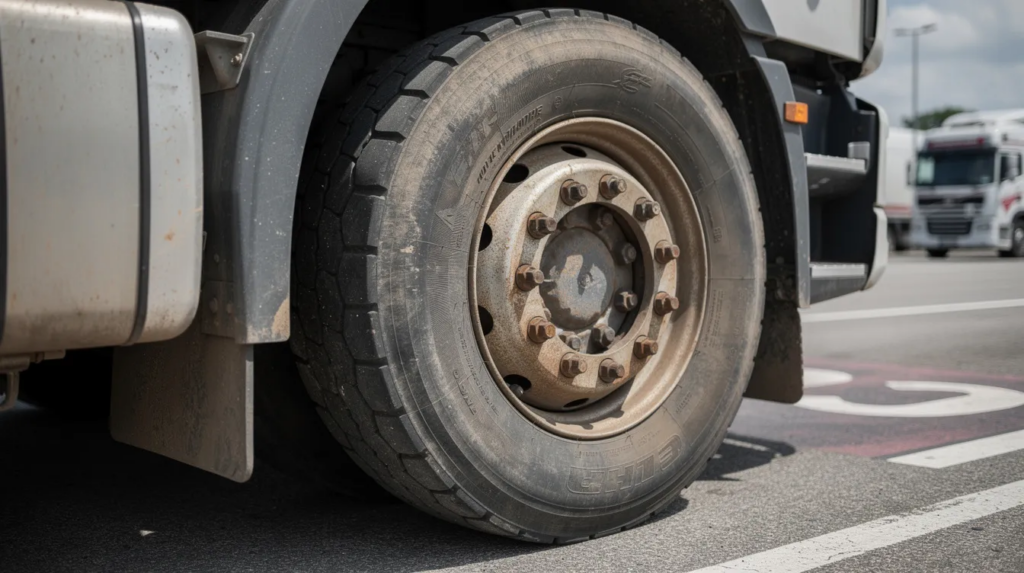
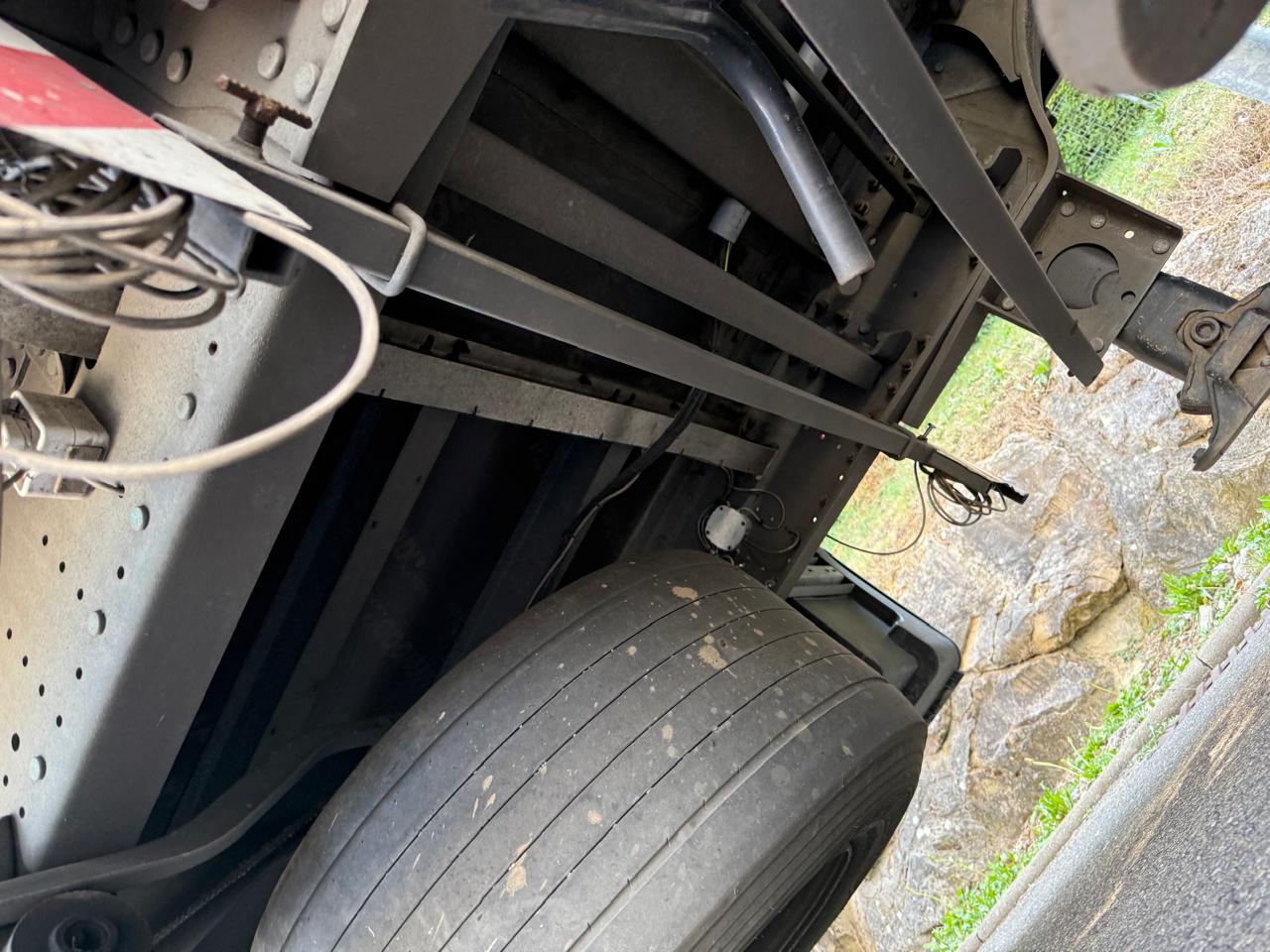
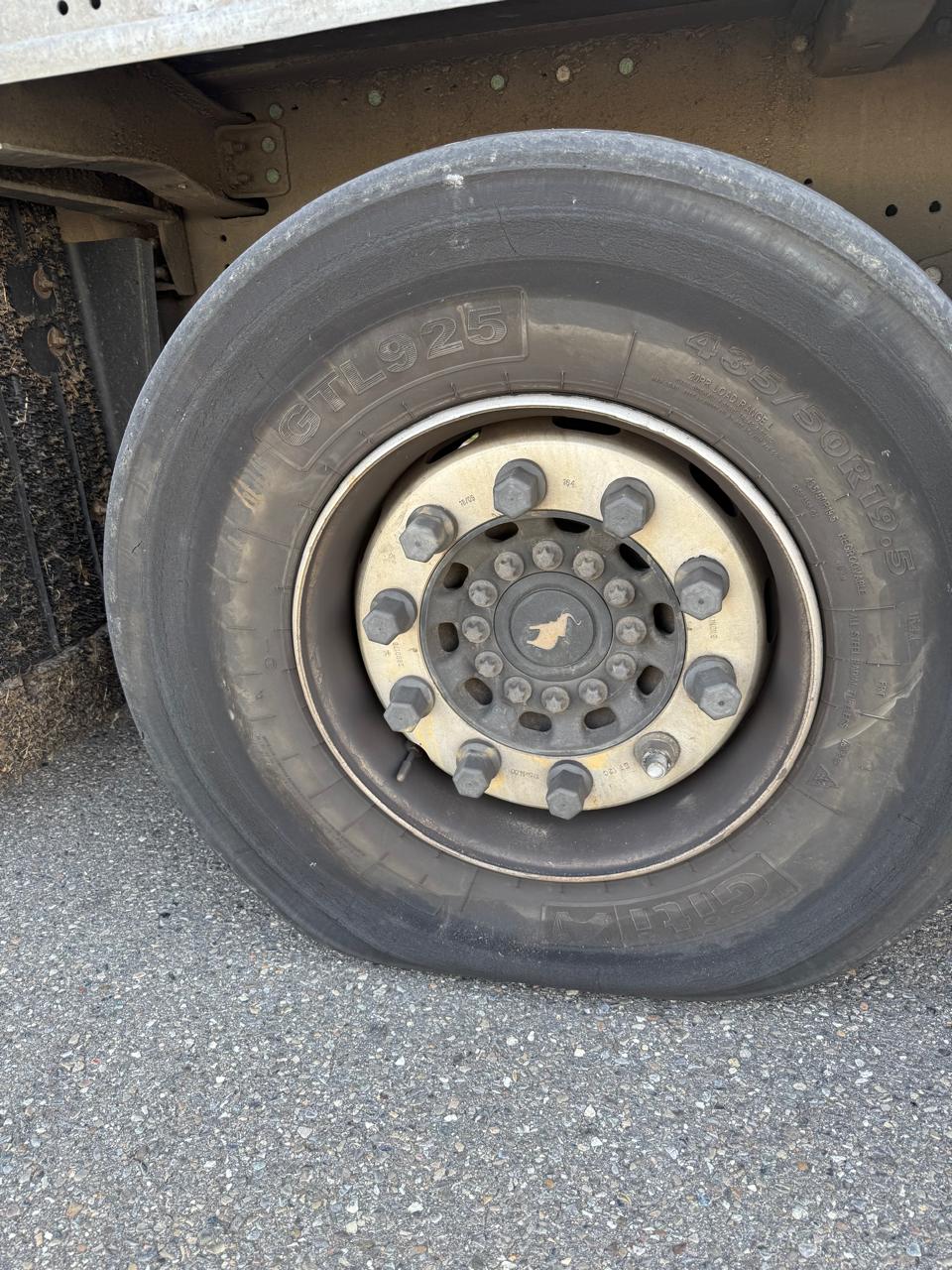
Nothing was smoking, leaking, or scraping. The photos from the visit show wheels and tyres photographed against grass and gravel, plus a few shots from underneath the chassis — plain condition documentation. That’s the point of an intake check: it’s boring by design. The interesting part is what you find before it becomes a problem, not after.
The technician worked through steer axle, drive axle, and trailer axle in sequence, checked cold pressure, pulled a torque wrench across the wheel nuts, and looked for anything the driver might not have noticed during the run — a slow leak, an early sign of misalignment, a hub running warmer than its neighbours.
Intake-inspection walkthrough: what gets checked and why
A proper post-trip inspection isn’t a five-minute glance at tread depth. It works through the wheel end and the chassis in a fixed order, so nothing gets skipped because the technician is in a hurry.
- Tyres and cold pressure on every axle. Pressure is read only once the tyres have cooled — checking straight off the motorway gives a false-high number, because heat expands the air inside the carcass.
- Tread wear pattern per tyre, per axle position. Even wear across the tread face is normal. Wear concentrated on one shoulder, in the centre, or in patches points to something mechanical, not random bad luck.
- Rims and wheel nuts, checked with a torque wrench. Torque marks (paint lines across nut and stud) get inspected for movement — a shifted mark means a nut has worked loose during the trip.
- Brake inspection. Pads, discs or drums, and any sign of uneven brake wear that could point to a sticking caliper or an imbalance between axles.
- Hub temperature. A hub that runs noticeably hotter than the others on the same axle usually means a bearing or brake problem starting to develop.
- Air system leak check. Listening and checking for slow leaks in the brake air lines, which matter more on long-haul routes with repeated braking on gradients.
- Underbody and fluid check. A look underneath for oil, coolant, or grease marks that shouldn’t be there.
- Documentation and driver handover. Everything gets written up, and the driver is asked directly what they noticed on the road — noise, vibration, pulling to one side, smell.
That last step matters as much as the torque wrench. A driver who spent eight hours behind the wheel has information no inspection can replicate.
Timeline: how long a full intake inspection actually takes
| Time | Phase | Action |
|---|---|---|
| 08:00 | Arrival | Articulated tractor unit reaches the yard after a long-haul run |
| 08:15 | Visual check | Tyre and cold-pressure check on all axles (25 min) |
| 08:40 | Wheel check | Rims, wheel nuts checked with a torque wrench, brake inspection (30 min) |
| 09:10 | Chassis check | Hub temperature, air system leak check, underbody check (20 min) |
| 09:30 | Documentation | Report written up, handover briefing with driver, fleet notified (15 min) |
| 09:45 | Complete | Inspection finished |
Total duration: 1 hour 45 minutes (105 minutes). That’s less time than most drivers spend on a mandatory rest break, and it happens while the vehicle would otherwise be sitting idle anyway.
What it cost, and what a breakdown would have cost instead
Planned work has a predictable price. Roadside recovery after a blowout does not, and that difference is the whole argument for doing intake checks in the first place.
| Item | Cost (net) |
|---|---|
| Call-out to the yard | €150 |
| Labour, full inspection (1.75 hrs at €110/hr) | €192.50 |
| Wheel nut re-torque (several positions, torque check) | €35 |
| Consumables/valves | €20 |
| TOTAL | €397.50 |
Compare that with a typical motorway tyre callout after a blowout, which runs €750–1,400, plus €800–1,200 for a day of downtime while the vehicle sits waiting for recovery, a replacement tyre, and paperwork. A planned yard inspection like this one comes in roughly 50–70% cheaper, and there’s no unplanned downtime at all — the truck was going to be at the yard anyway.
That gap widens further if the blowout happens somewhere without easy hard shoulder access, or during peak traffic on a stretch of motorway with no nearby exit. Recovery vehicles still have to reach the truck, and that alone can add hours.
What the tyre wear told us about the trip
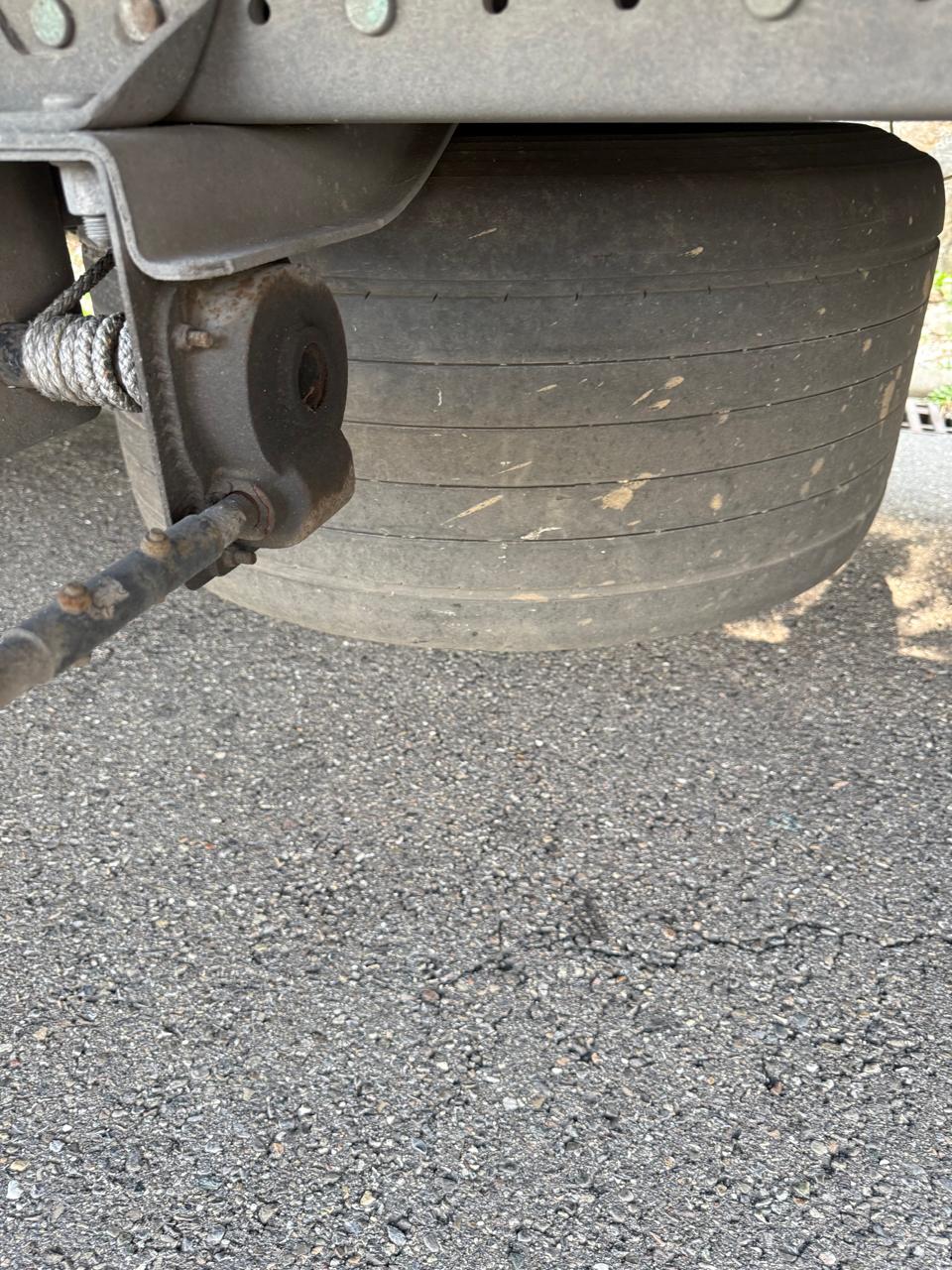
Tyres keep a record of everything a truck did on the road, and reading that record is most of the value in a post-trip check. On this vehicle, one trailer-axle tyre showed slight uneven wear — not dangerous, still above the legal 1.6 mm tread depth minimum under German StVZO §36, but worth watching. The technician flagged it for replacement within the next 4–6 weeks rather than waiting for it to fail. No repair was needed on the day, and no damage was found anywhere else on the vehicle.
Different wear patterns point to different causes, and a technician who’s seen enough of them can often guess the story before the driver says a word:
- Uneven wear across the tread, as seen on this trailer axle, usually points to alignment or suspension geometry drifting out of spec over a long trip.
- Scrubbed or feathered shoulders suggest tight manoeuvring, repeated kerb contact, or too much time on narrow yard turns.
- Overheating marks or blistering on the sidewall or shoulder area often trace back to underinflation or a dragging brake, both of which generate extra heat in the carcass.
- Tread chunking — small chunks torn from the tread blocks — is common on trucks that spend a lot of time on gravel or poorly maintained yard surfaces rather than motorway tarmac.
None of these are visible from the cab. A driver feels vibration or hears noise eventually, but by the time that happens the tyre has usually already lost a fair amount of its useful life.
Why cold-pressure readings matter, and why the next morning
Pressure has to be measured cold, ideally the next morning, because a tyre that’s just finished a long run is still warm from friction and the air inside has expanded. Checking pressure right after arrival on 3 August would have given inflated numbers that mask a genuinely low tyre. Waiting until the tyre has sat overnight gives the real figure, which is why fleets that check pressure immediately after arrival often miss slow leaks that only show up the next day.
This is a small detail that gets skipped constantly, usually because everyone wants the truck back on the road as fast as possible. It’s also one of the cheapest checks to do properly and one of the most consequential to skip.
Why use a professional instead of a DIY check
A driver walking around the truck can spot an obvious flat or a chunk missing from a tread block. What a driver generally can’t do reliably is torque a wheel nut to spec, read hub temperature differentials with a thermal gun, or diagnose whether uneven wear is coming from alignment, suspension, or tyre pressure.
A trained technician brings calibrated tools and, more importantly, a reference point — they’ve seen hundreds of wheel ends and know what normal wear looks like versus what’s starting to go wrong. DEKRA inspection standards exist precisely because visual checks alone miss things that instrumented checks catch. A DIY walkaround is still worth doing every day. It’s not a substitute for a proper intake inspection with a torque wrench and a pressure gauge in hand.
Typical situations we help with
Intake inspections aren’t the only reason haulage yards call us, but they’re becoming one of the most common. Situations we handle regularly include:
- Post-trip tyre and brake checks after a long-haul tour, before the next dispatch
- Fleet-wide tread-depth and pressure audits across multiple vehicles at once
- Wheel nut torque verification after tyre changes or workshop visits
- Emergency roadside tyre service and mobile repairs anywhere in Germany
- Full truck service callouts covering brakes, electrics, and mechanical faults
- Towing service when a vehicle genuinely can’t continue
Not every job looks like the Marburg case. Some calls come in at 2am from a hard shoulder. Others, like this one, are scheduled a week in advance and finish with a coffee and a signed report.
Prevention and fleet management: building the habit
A single intake inspection is useful on its own. A history of them, tracked over months, is what actually prevents breakdowns. Fleets that keep records can plan tyre replacement around a schedule instead of around a failure.
A basic vehicle history for tyres should track:
- Tread depth per axle position, recorded at every inspection
- Cold pressure readings over time, per tyre
- Wheel nut torque checks and any re-torque events
- Driver-reported issues at handover (vibration, noise, pulling, smell)
- Dates and outcomes of every intake and pre-trip check
The driver-report line matters more than it looks. A driver who mentions a faint vibration at 90 km/h, even if nothing’s visibly wrong, gives the workshop a head start on diagnosis before the tyre fails outright. Building that habit into a fleet — making it normal to report small things at handover instead of shrugging them off — costs nothing and catches problems earlier than any scheduled inspection can.
Tyre brands and what they mean for wear patterns
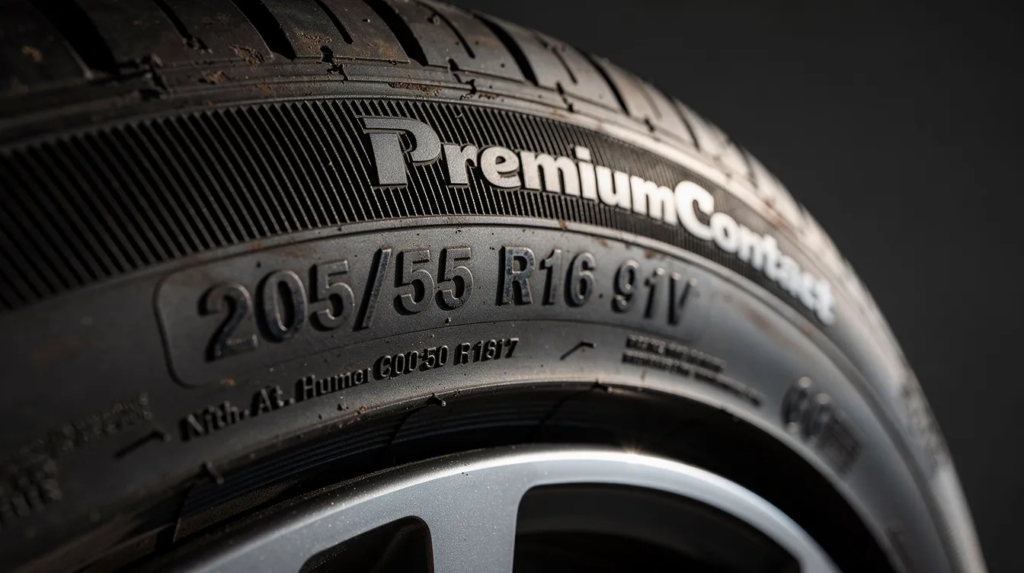
Not all tyres wear the same way, and the brand fitted affects what a technician expects to see during an intake check. Continental and Michelin truck tyres are common on long-haul fleets across Germany and tend to show gradual, predictable wear when alignment and pressure are maintained. Goodyear and Bridgestone tyres are also widely used on trailer axles, and each brand’s tread compound and carcass construction respond slightly differently to heat, load, and road surface.
Steer axle tyres generally wear faster than drive or trailer axle tyres because they carry steering forces on top of vertical load. Drive axle tyres take the brunt of traction and braking torque. Trailer axle tyres, like the one flagged at Marburg, often show the earliest signs of alignment drift because they track passively behind the unit rather than being actively steered. Knowing which axle a tyre sits on is part of reading what its wear pattern actually means.
Regardless of brand, ADAC guidance on commercial vehicle tyres is consistent: tread depth, correct inflation, and regular visual inspection do more to prevent failures than any specific tyre model choice.
Why choose LKWHelp24
We run intake and pre-trip inspections the same way we run emergency callouts: on time, with a written report, and without upselling work that isn’t needed. On this job, that meant telling the client the truck was fine to go back out, with one tyre flagged for planned replacement in a few weeks rather than an unnecessary same-day swap.
We cover truck breakdown, tyre, and towing service across Germany, 24 hours a day, seven days a week. Whether it’s a scheduled yard visit near Marburg or a 3am callout on the A5, the same technicians and the same standards apply.
Frequently asked questions
How often should a truck fleet run intake tyre inspections?
After every long-haul tour is the general rule, ideally before the vehicle goes back out on its next dispatch. Fleets running shorter regional routes often settle for weekly or fortnightly checks instead, combined with daily driver walkarounds.
Why check tyres when the truck arrives instead of before it leaves?
An arrival check reflects what actually happened on the completed trip — wear patterns, pressure loss, heat marks. A departure check only confirms nothing changed overnight, which tells you far less about the vehicle’s real condition.
Is a mobile truck tyre inspection cheaper than a roadside breakdown callout?
Yes. This inspection cost €397.50 against a typical motorway blowout callout of €750–1,400 plus €800–1,200 in downtime. Planned work at a known location is almost always cheaper than emergency recovery.
What does uneven tyre wear on one axle usually mean?
It often points to alignment or suspension geometry that’s drifted out of spec, though scrubbed shoulders can also mean tight manoeuvring or kerb contact. A technician checks the pattern against the axle position to narrow down the cause.
Why is tyre pressure checked cold rather than right after a trip?
Heat from driving expands the air inside a tyre, which inflates the pressure reading and can mask a genuinely low tyre. Checking cold, ideally the next morning, gives an accurate number.
Do I need a professional for wheel nut torque checks, or can drivers do it?
Wheel nut torque needs a calibrated torque wrench and training to do reliably — a driver can spot an obviously loose nut visually, but confirming correct torque across every position needs the right tool and a technician who checks it as routine.
Summary
The Marburg inspection on 3 August 2026 found nothing dangerous: no damage, one tyre flagged for replacement within 4–6 weeks, a full report handed to the fleet. That’s what a good intake inspection looks like most of the time — uneventful, documented, and cheaper than the alternative. The value isn’t in catching a dramatic failure. It’s in never letting one happen.
Need a truck tyre inspection or breakdown assistance anywhere in Germany? Call +49 160 5753826 or visit www.lkwhelp24.com — available 24/7, across the whole country.
Keywords: truck tyre inspection, HGV tyre check, post-trip vehicle inspection, articulated tractor unit, tread depth, wheel nut torque, fleet maintenance Germany, mobile truck tyre service