Skip to content
TL;DR: On 22 July, an articulated lorry at a truck stop on the A67 near Lorsch (Hesse) reported a failed trailer brake valve — the trailer kept dragging its brakes and the unit could barely move. From the call at 08:24 to a passed brake test, 2 hours 45 minutes elapsed. Cost: €1,015 net for callout, diagnosis, replacement valve, small parts and labour.
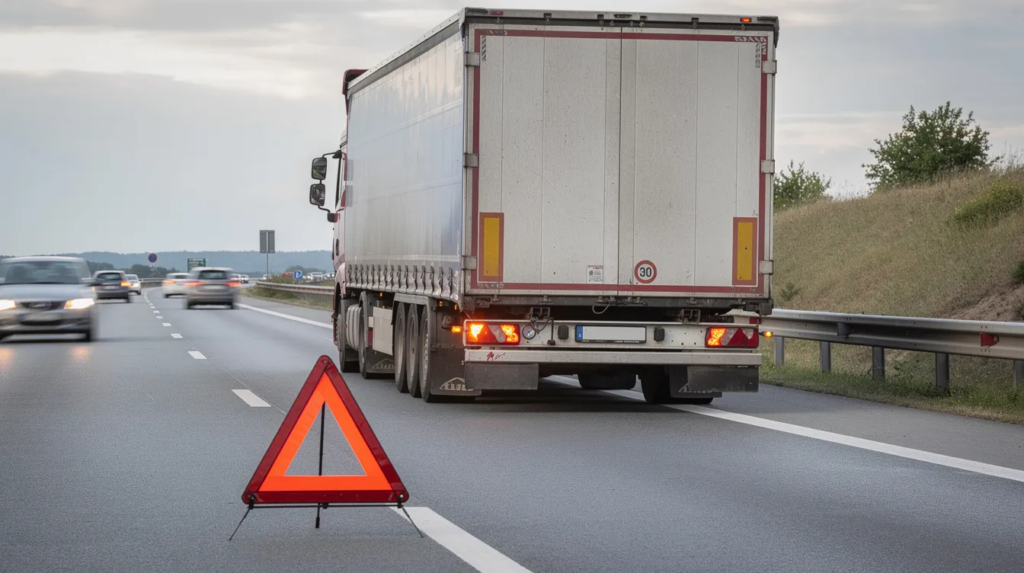
A lorry that can barely roll off its own parking spot is a warning sign no professional driver should ignore. That is exactly what happened this July morning: the trailer was visibly dragging, the tractor unit had to fight to move at all, and a faint but steady smell of hot brake lining drifted from the trailer’s rear axles.
A failed trailer brake valve is never a minor fault. It sits at the interface between tractor and trailer and helps decide whether a 40-tonne combination actually stops in time during an emergency brake. If the trailer drags continuously, overheated brakes and damaged tyres follow, and in the worst case, brake failure. If it fails to apply at all, up to a third of the whole combination’s braking power is simply missing.
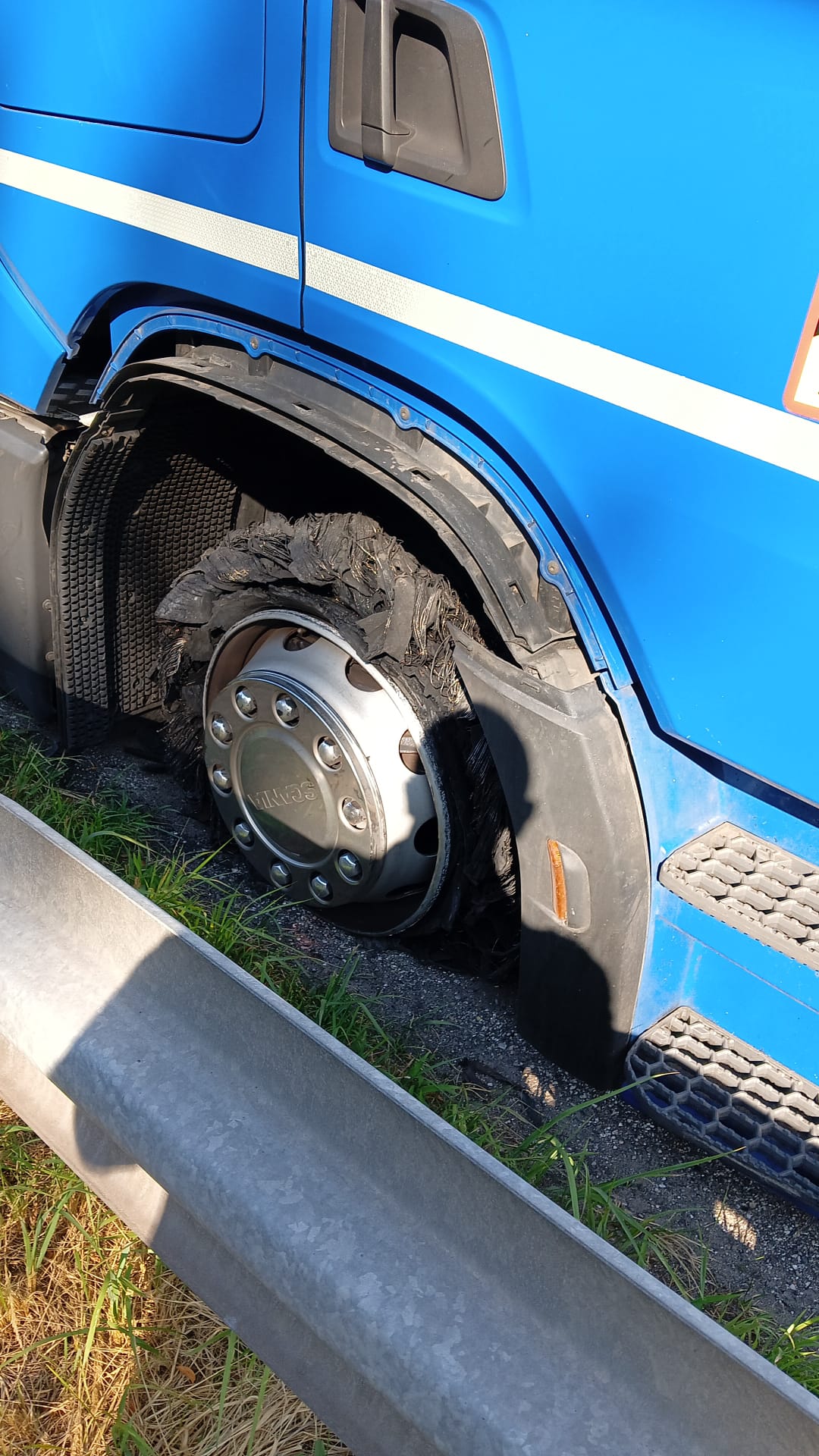
What happened at the truck stop on the A67 near Lorsch?
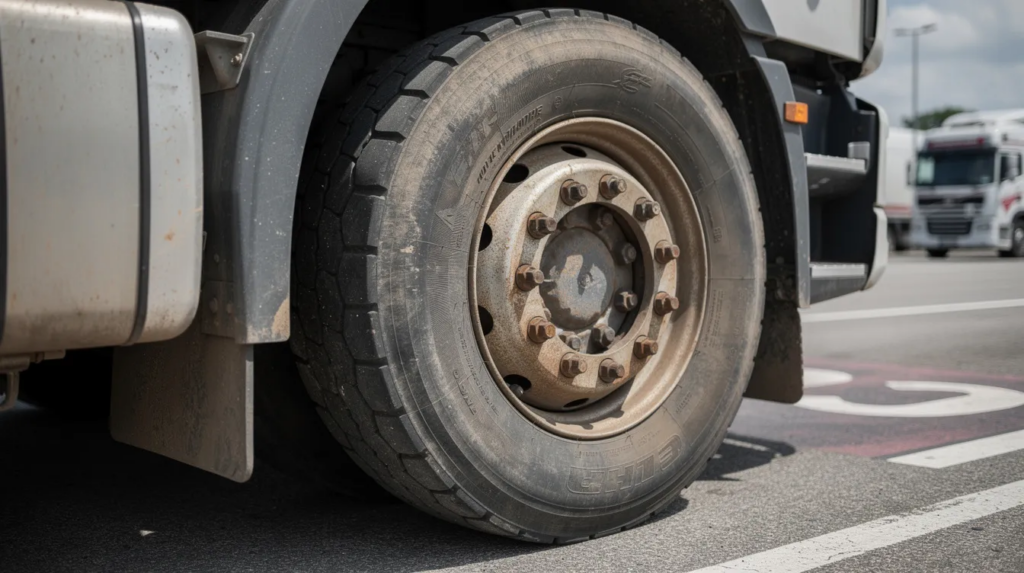
The driver of an articulated lorry noticed, while leaving the parking bay, that the combination barely moved even though the engine was under full load. A quick check at the trailer coupling narrowed down the cause fast: the trailer’s brake valve was not releasing pressure correctly and kept the trailer brakes partially applied.
The truck stop sits conveniently on the A67 near Lorsch, Hesse — a typical rest point for heavy traffic between the Rhine-Main area and the Bergstraße region. Places exactly like this are where technical faults often surface first, right after a break: the system cools overnight, condensation collects inside it, and an already weakened valve gives out the moment pressure builds again in the morning.
The driver read the situation correctly and left the combination parked rather than pulling away with dragging brakes. That single decision was the right call — and the first step toward a clean fix with no follow-on damage.
How are tractor and trailer brakes connected?
The tractor and trailer are linked by two separate compressed-air lines, and it is precisely that separation which keeps the brake system safe. The supply line (colour-coded red) continuously feeds the trailer’s air reservoirs with compressed air. The service line (colour-coded yellow) transmits the actual brake signal from the cab to the trailer brake valve.
That colour coding is not a formality. When coupling an unfamiliar trailer — say, after a trailer swap in international transport — mixing up red and yellow is one of the most common mistakes on record. The coupling heads often fit together mechanically even when swapped, so the system does not immediately flag the error. Only under the first hard braking does the fault reveal itself, and by then it is too late.
The trailer brake valve sits on the trailer and handles the fine regulation: it converts the signal from the yellow line into precisely metered brake pressure for the trailer axles. When this valve fails, the system tips one of two ways — and both matter.
Why does a trailer keep dragging its brakes when the valve fails?
A failed brake valve often traps residual pressure in the trailer’s brake cylinders instead of releasing it fully when the brake is off. The brake pads or shoes then remain lightly in contact with the disc or drum at all times.
The consequences show up quickly: the tractor unit has to overcome its own trailer’s braking force, fuel consumption climbs noticeably, and acceleration becomes sluggish — exactly the symptom the driver described that morning. At the same time, the trailer’s brake discs or drums heat up far beyond their normal range.
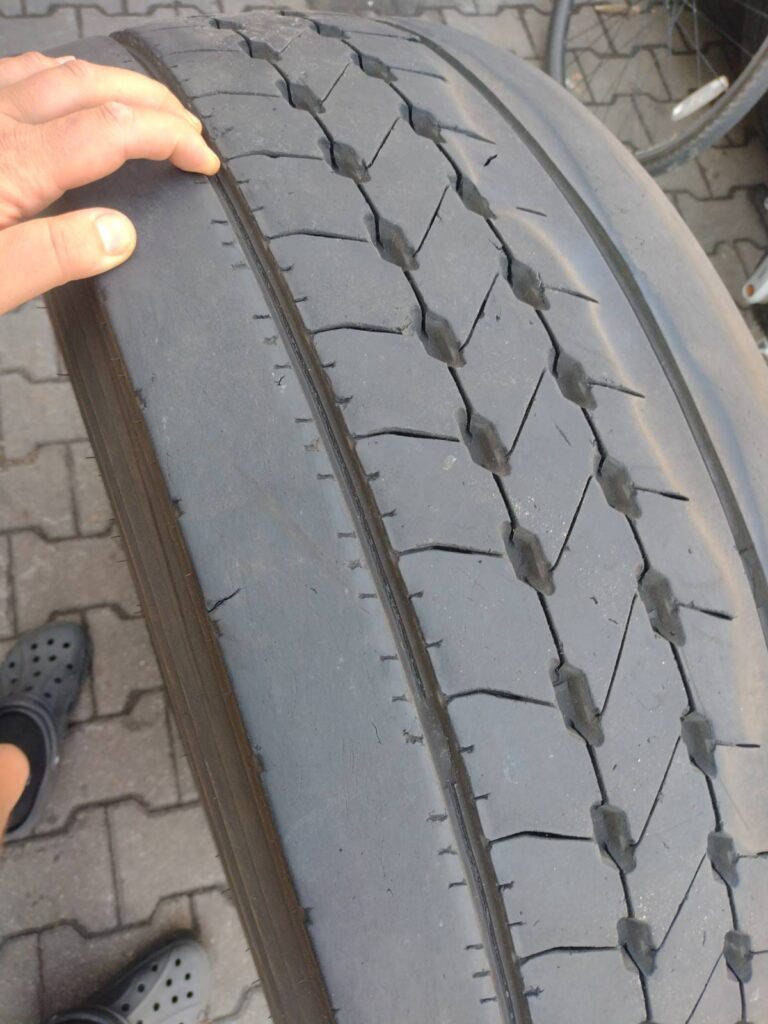
That overheating is the direct link to a problem we recognise from other jobs: damaged tyres. Sustained brake heat transfers into the rim and from there into the tyre carcass. After only a few kilometres with a dragging brake, a tyre can be soft and weakened enough to blow under perfectly normal load — a tyre failure whose real cause sits in the brake system, not in the tyre itself.
Why is a trailer that does not brake at all even more dangerous?
If the failed valve wrongly bleeds off brake pressure entirely instead of metering it correctly, the trailer stops contributing braking force when it matters most. This is the more dangerous of the two failure modes, because it barely shows itself during normal driving.
An articulated lorry without a working trailer brake loses up to 30–40% of its total braking power, since a large share of braking work happens on the trailer axles when the unit is fully loaded. In an emergency stop from 80 km/h, that can extend the stopping distance by several vehicle lengths — the difference between a controlled stop and a rear-end collision.
That is exactly why German road traffic licensing law leaves no room for compromise on brakes: under § 41 StVZO, brake systems on motor vehicles and trailers must be functional at all times. A vehicle with a recognised brake fault simply must not be driven on.
How does automatic emergency braking protect against a snapped line?
If the yellow service line snaps while driving, the system automatically triggers full braking at the trailer instead of releasing the brakes. This design — “brake on pressure loss” rather than “release on pressure loss” — is one of the most important safety philosophies in commercial vehicle engineering.
The mechanism behind it is simple and clever at once: as long as air pressure is present, a spring holds the brakes open. The moment pressure drops — whether from a snapped line, an accidental disconnection, or a serious valve fault — that same spring forces the brakes shut automatically. A trailer that breaks free uncontrolled from its tractor brakes itself, instead of rolling on driverless.
This automatic system has demonstrably saved lives over the decades, particularly in the rare but dramatic cases of a full disconnection on the motorway. It does not, however, replace the duty to have a visibly weakening valve repaired immediately — the automatic brake is the last line of defence, not standard operating procedure.
What should you check when coupling an unfamiliar trailer?
Coupling an unfamiliar or hired trailer is the single biggest risk point for the brake connection in international haulage. Unlike with your own tractor unit, the driver knows neither the condition nor the service history of the other trailer.
A short pre-coupling check should always cover these points:
- Inspect coupling heads for contamination — sand, oil or frost on the sealing faces prevents an airtight connection.
- Match red and yellow colour coding consistently — never by feel, always by the markings.
- Visually check coupling head seals for cracks and hardening — perished rubber is a frequent source of leaks.
- Listen for hissing after coupling — a leak almost always announces itself acoustically.
- Run a stationary brake test before leaving the yard: apply the brake, confirm the trailer is locked, release it, confirm the trailer rolls freely.
Across Eastern and Western European trailer fleets with different build years and manufacturers, brake valve calibration values can also differ. A valve that has run reliably for years on one trailer can behave unfavourably in combination with a specific tractor unit — another reason never to skip the stationary brake test.
How do you test the trailer brake before setting off?
A proper functional check takes under three minutes at a standstill and belongs before any journey with an unfamiliar or newly coupled trailer. The sequence:
- Wait for full pressure build-up until the air suspension and brake warning lights go out.
- Release the trailer parking brake and apply the service brake firmly once — the trailer must not be able to move.
- Release the brake and roll forward slightly — the trailer must follow freely with no resistance.
- Check drums or discs, warm to cold, after the first kilometres driven — noticeable heat at a single axle points to dragging brakes.
- Check the cab pressure gauge: reservoir pressure should hold steady around 7.5–8.5 bar, without a noticeable drop while stationary.
Drivers who keep this routine consistently usually catch a developing valve problem well before it strands them at a truck stop.
What does the automatic slack adjuster do, and why does it need checking?
The automatic slack adjuster compensates for brake pad or shoe wear on its own, gradually taking up the stroke of the brake chambers. Many drivers assume this component simply works forever — an assumption that can contribute to exactly this kind of valve problem.
A slack adjuster that binds or over-adjusts changes the stroke the brake valve has to control. Once that stroke drifts outside its designed tolerance, even a technically sound valve ends up working outside its intended range — braking becomes uneven, response lags, or, as in this case, the brake fails to release cleanly. That is why checking the slack adjuster belongs in every thorough brake inspection, not just a look at the valve and lines.
How was the assistance organised?
The driver reported the fault at 08:24 through the central emergency number. Dispatch located a suitable service partner from our network in the Rhine-Main area within minutes, specialised in brake systems and trailer technology.
The process followed clear steps:
- Initial fault intake by phone: vehicle type, location, symptoms (dragging brake, smell, loss of power).
- Urgency assessment: since the combination was already parked and the driver had reacted correctly, there was no acute danger, but high priority due to standing time and cargo.
- Assignment of the nearest suitable partner carrying a trailer brake valve in stock.
- Callout with an estimated arrival time communicated to the driver so they could plan around it.
- On-site diagnosis and cost approval confirmed after a brief phone check-in.
How did the on-site repair proceed?
Step 1 – Visual inspection and diagnosis. The technician first checked both coupling heads, the line routing and reservoir pressure before opening the brake valve itself. Only then was it confirmed that the fault sat inside the valve, not in a contaminated line.
Step 2 – Securing the work area. A warning triangle and high-visibility vest were deployed, and the trailer was further secured against rolling before anyone worked underneath it — standard procedure for any work on a depressurised system.
Step 3 – Pressure release and removal. The system was fully depressurised before the failed trailer brake valve was removed. The old valve showed visible wear at the sealing face, most likely the result of condensation that had built up in the system over extended standing periods.
Step 4 – Fitting the new valve. The replacement valve was fitted with new seals, all connections torqued to the specified value, and the line routing rechecked against the colour coding.
Step 5 – Function check and brake test. Once pressure was restored, a full stationary brake test followed: apply, confirm lock, release, confirm free roll, then a temperature check on all axles after a short test roll around the yard. Only after passing this test was the combination released.
Complete Timeline of the Job
| Time | Phase | Action |
|---|---|---|
| 08:24 | Report | Driver calls, fault reported |
| 08:24–08:40 | Dispatch | Partner assigned in Rhine-Main area (16 min) |
| 08:40–09:30 | Travel | Drive to the truck stop on the A67 near Lorsch (50 min) |
| 09:30–09:45 | Diagnosis | Checking lines, pressure and valve (15 min) |
| 09:45–09:55 | Securing | Warning triangle, hi-vis vest, securing the trailer (10 min) |
| 09:55–10:20 | Removal | Depressurising, removing the failed valve (25 min) |
| 10:20–10:55 | Fitting | Installing the new trailer brake valve (35 min) |
| 10:55–11:09 | Testing | Brake test, temperature check, release (14 min) |
Total time from report to departure: 2 hours 45 minutes (165 minutes).
What did the job cost?
| Item | Price (EUR, net) |
|---|---|
| Callout fee | 280 |
| Brake system diagnosis | 140 |
| Trailer brake valve (part) | 340 |
| Small parts (seals, fittings) | 45 |
| Labour (1.75 hrs × €120/hr) | 210 |
| Total | 1,015 |
All figures are net, plus statutory VAT. The price sits above that of a simple tyre change because a brake valve is a safety-critical component that requires a complete function test after fitting — this is not a straightforward swap, the trailer’s entire brake system is effectively re-certified on site.
For comparison, a standing day for a loaded articulated lorry costs between €800 and €1,200 in lost freight, demurrage and contract penalties, depending on cargo and contract. The on-site repair, finished in under three hours, reliably avoided that loss.
Why shouldn’t you repair a trailer brake valve yourself?
Brake systems on commercial vehicles are safety-critical assemblies where amateur intervention creates direct danger to life. The risks of a DIY attempt at the roadside:
- Incorrect torque on fittings leads to slow leaks that only surface after several kilometres.
- No test equipment on hand prevents a reliable check of brake pressure after the repair.
- Undetected secondary damage to lines or coupling heads often stays hidden without a systematic diagnosis.
- Legal consequences: driving on with improperly repaired brakes risks not just a fine but personal liability in the event of a claim.
- Lost time: a failed repair attempt usually extends standing time more than an immediate call to a professional would have cost.
What can and should be repaired on site: the valve itself, lines and coupling heads. Once the brake mechanics themselves — callipers, drums, pads requiring axle disassembly — are involved, the vehicle belongs in a workshop with a lift and a test bench.
What other brake-related jobs do we handle?
Beyond trailer brake valves as in this case, our partners regularly respond to related faults at the tractor-trailer interface: leaking coupling heads after a trailer swap, brake lines torn by stone impact or material fatigue, and damaged trailer brake discs that can no longer be repaired on site and require towing instead.
Classic wheel and tyre damage often ties back to brake technology too: a trailer tyre blowout near Berlin can be the result of an overheated brake, just as loose wheel bolts can be encouraged by uneven braking forces. Our dispatch recognises these connections over the phone and sends technicians with the right extra kit from the start.
What does a trailer brake valve replacement cost on the motorway?
A trailer brake valve replacement typically costs between €900 and €1,300 net for an on-site repair, depending on valve type, accessibility and time of day. In this case, the total came to €1,015 for callout, diagnosis, part and labour.
How long does repairing a failed trailer brake valve take?
A brake valve replacement takes 30 to 60 minutes of hands-on workshop time on site with good access, plus diagnosis and a brake test. In this job, diagnosis, removal, fitting and testing added up to 89 minutes, with total time including travel at 2 hours 45 minutes.
Can I keep driving with a faulty trailer brake valve?
No. A recognised brake system fault makes the combination unroadworthy under § 41 StVZO, and continuing the journey is not permitted. A roadside check can also mean a significant fine, and in the event of an incident, insurance cover may be forfeited.
Who pays for a trailer brake valve repair on the road?
Usually the vehicle owner or the haulage company covers the repair cost, unless a breakdown insurance policy or maintenance contract applies. Our dispatch clarifies cost approval transparently with the driver or haulier before repair work begins.
Is the faulty valve always replaced on site?
In most cases, yes, provided the matching replacement valve is available and site access allows a safe installation. If the brake mechanics themselves are damaged, or the correct part is not in stock, the trailer is towed to the nearest specialist workshop instead.
Tyres, brakes, fleet: what haulage companies should watch in maintenance
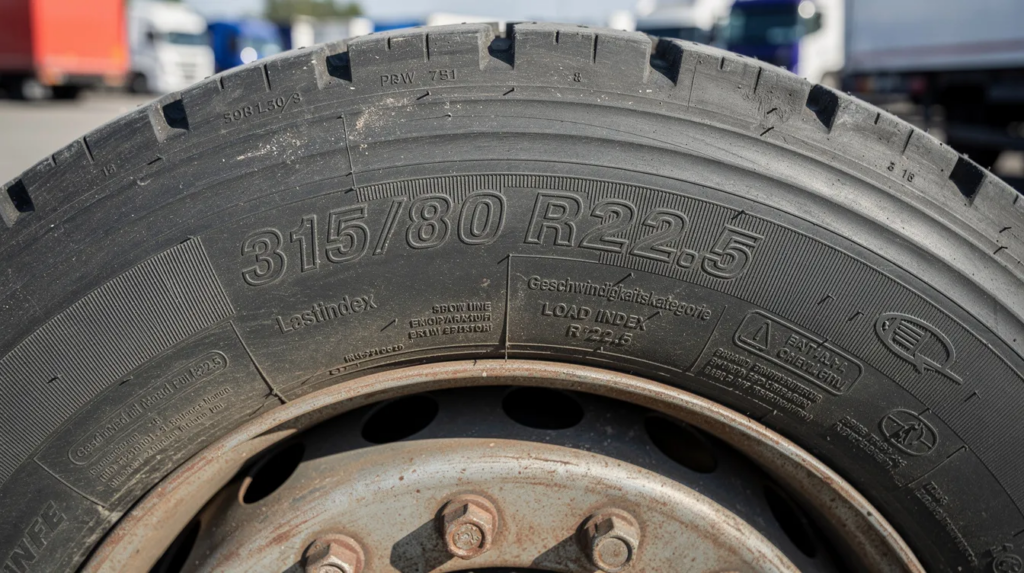
A functioning brake system and intact tyres are technically far more connected than many fleet managers assume. Branded tyres from Michelin, Continental, Goodyear or Bridgestone are engineered for a defined operating temperature range — once sustained brake heat pushes past that range, even high-quality tyres lose service life dramatically, regardless of tread depth or age.
Regular visual checks of coupling heads, lines and slack adjusters should therefore be a fixed part of every fleet’s maintenance routine, not just the annual roadworthiness test. Draining condensation from the air tank regularly cuts corrosion risk inside the valve significantly — precisely the cause suspected in this job.
Why choose LKWHelp24 for jobs like this?
Our network covers the whole of Germany around the clock, with partners specialised in brake systems, tyre technology and trailer couplings. Dispatch operates in multiple languages so drivers from across Europe can describe a fault precisely, without a language barrier getting in the way.
Transparency starts before the repair: the driver or haulier receives a cost estimate before the technician starts work. And because we know every hour of standing time costs money, brake system jobs are always given high priority — a vehicle with a brake fault simply cannot wait.
Summary
- Vehicle: Articulated lorry with semi-trailer
- Location: Truck stop on the A67 near Lorsch, Hesse
- Fault: Trailer brake valve, trailer dragging its brakes
- Response time: 50-minute drive after the call
- Total time: 2 hours 45 minutes from call to departure
- Cost: €1,015 net
- Secondary damage: none, as the driver stopped in time
Get Help Now
Faulty trailer brake valve, brakes not releasing, or the trailer dragging? Call us: +49 160 5753826 — 24/7, anywhere in Germany. More information at www.lkwhelp24.com.
Keywords: trailer brake valve failure | truck brake valve repair | mobile truck tyre service | articulated lorry dragging brakes | truck breakdown assistance A67 | trailer braking system | commercial vehicle brake emergency