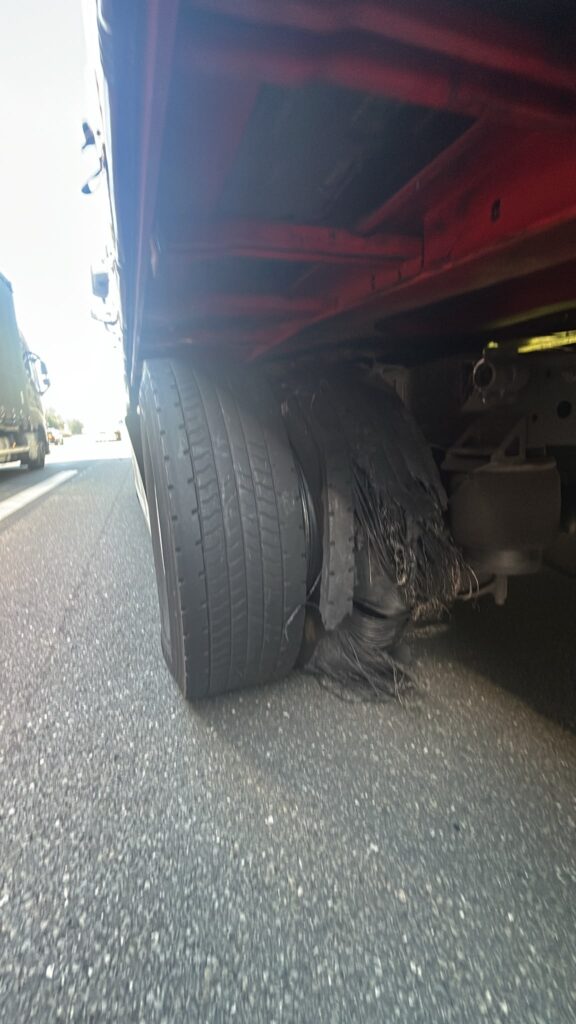
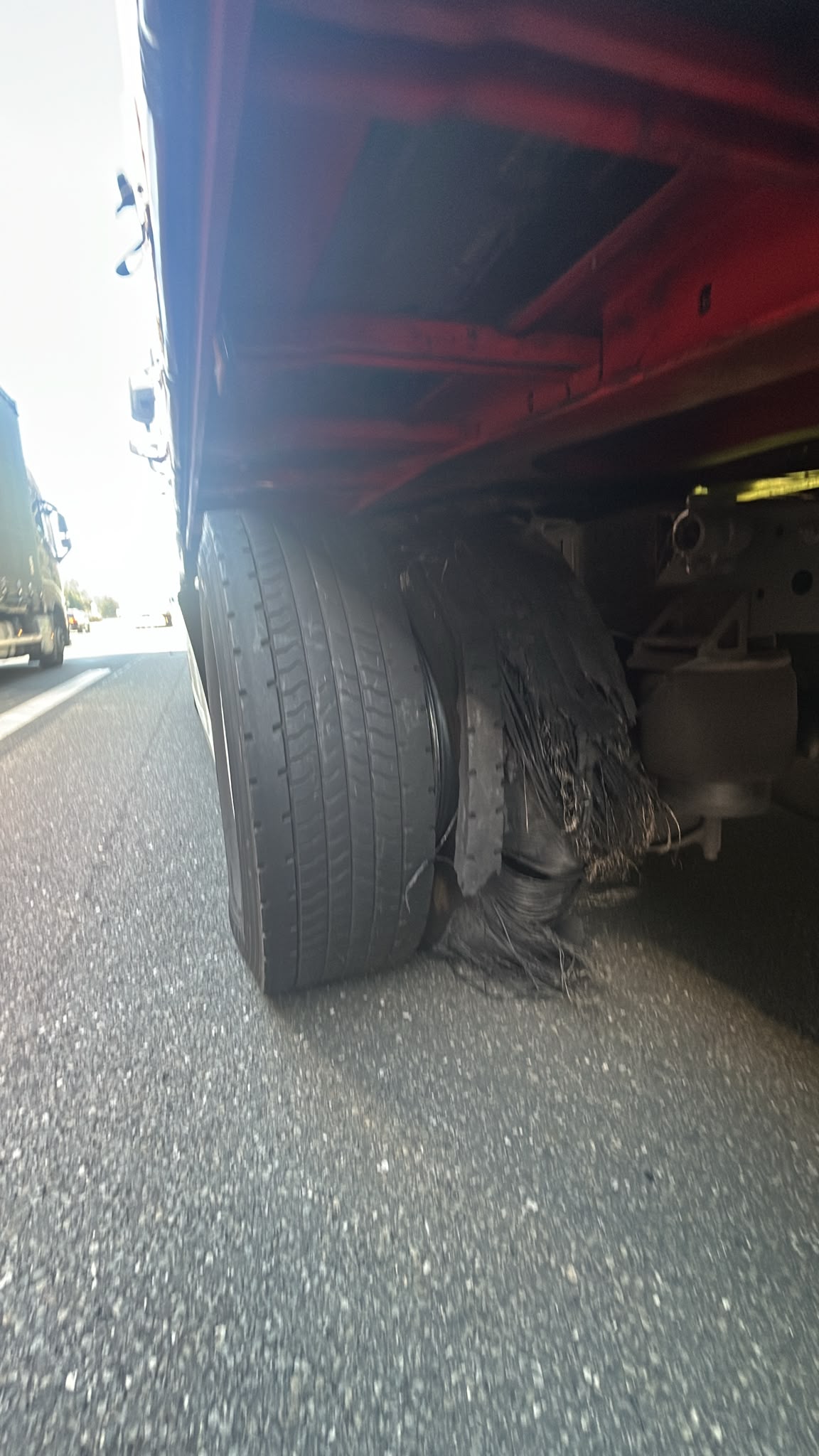
A dual tyre on a semi-trailer does not fail quietly. On the afternoon of 14 August, a Polish tractor unit hauling a curtainside trailer was running south on the A45 Sauerlandlinie near Siegen, heading towards Dortmund, when the outer tyre of a dual-mounted pair let go. What followed is a fairly ordinary case for a mobile truck tyre service, but it is worth walking through in detail, because most drivers never see what actually happens between the moment a tyre bursts and the moment the lorry pulls away again.
A blown tyre on a dual mounting is more dangerous than it looks from the cab. The remaining tyre in the pair is suddenly carrying almost the full load of both, tyre pressure in the working tyre can be running at 8.5 to 9.5 bar, and the axle itself does not care whether one tyre or two are doing the work. Drivers who keep going “just to reach the next services” are gambling with a wheel that can overheat, delaminate, or damage the rim within a few kilometres.
The core benefit of calling a specialist mobile truck tyre service straight away is simple: a trained technician gets to the vehicle, secures the site properly, and replaces the damaged tyre without moving the lorry an inch further than necessary. That is what happened here, and this article sets out the timeline, the pricing, and the reasoning behind every step.
The emergency: a blowout on the A45 Sauerlandlinie
The location was the A45 near Siegen, on the Sauerlandlinie section heading towards Dortmund — one of the busiest and most demanding stretches of motorway in western Germany for heavy goods traffic. The hard shoulder in that area narrows in places, bridges follow one another in quick succession, and lorry density is high throughout the day.
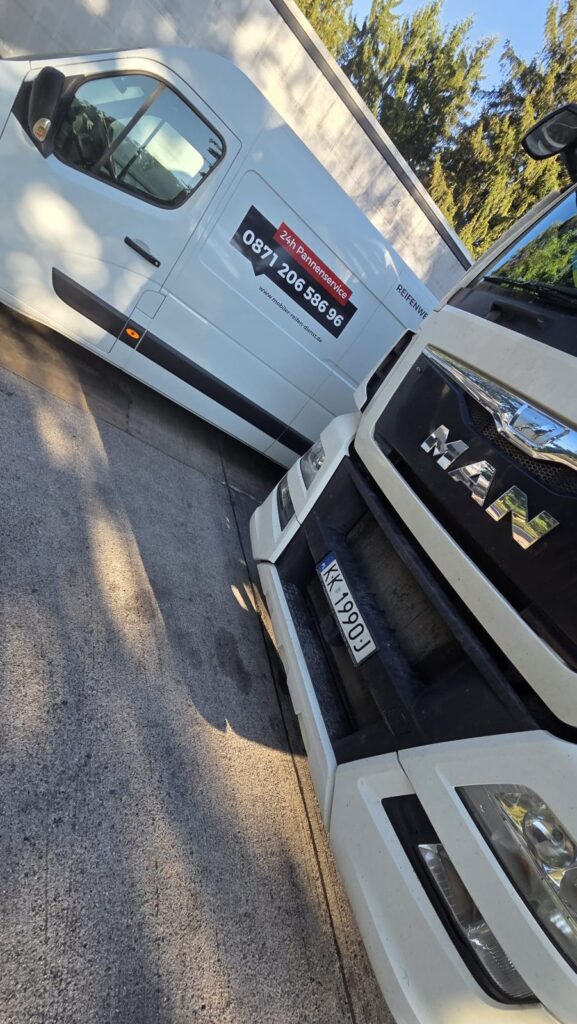
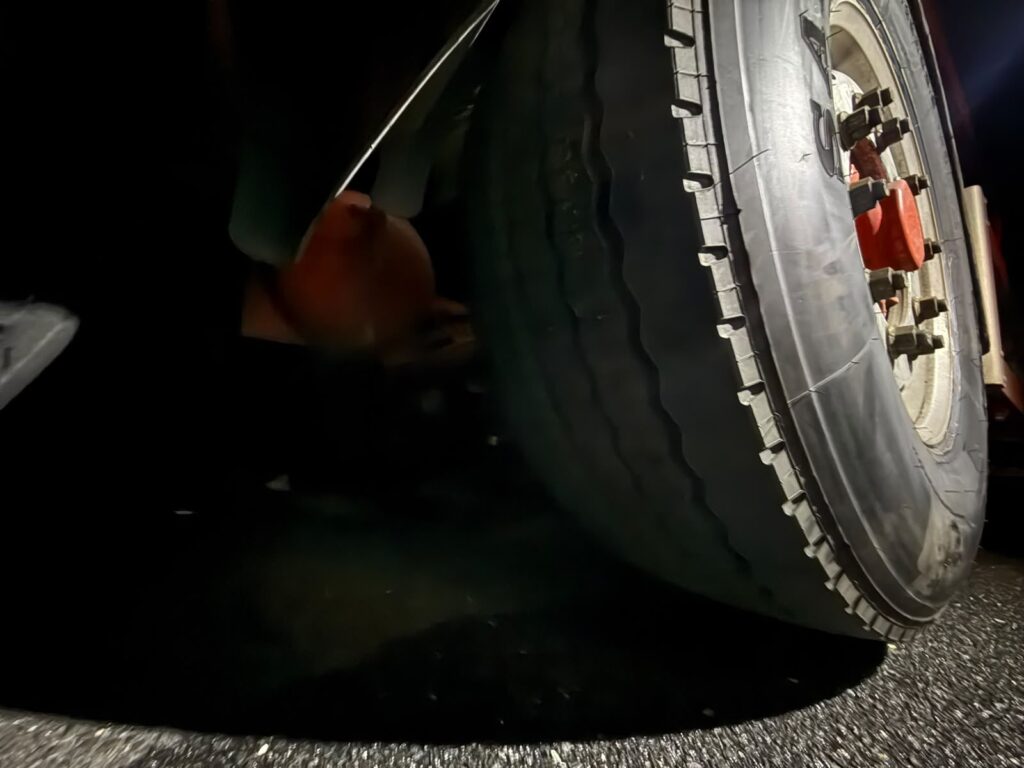
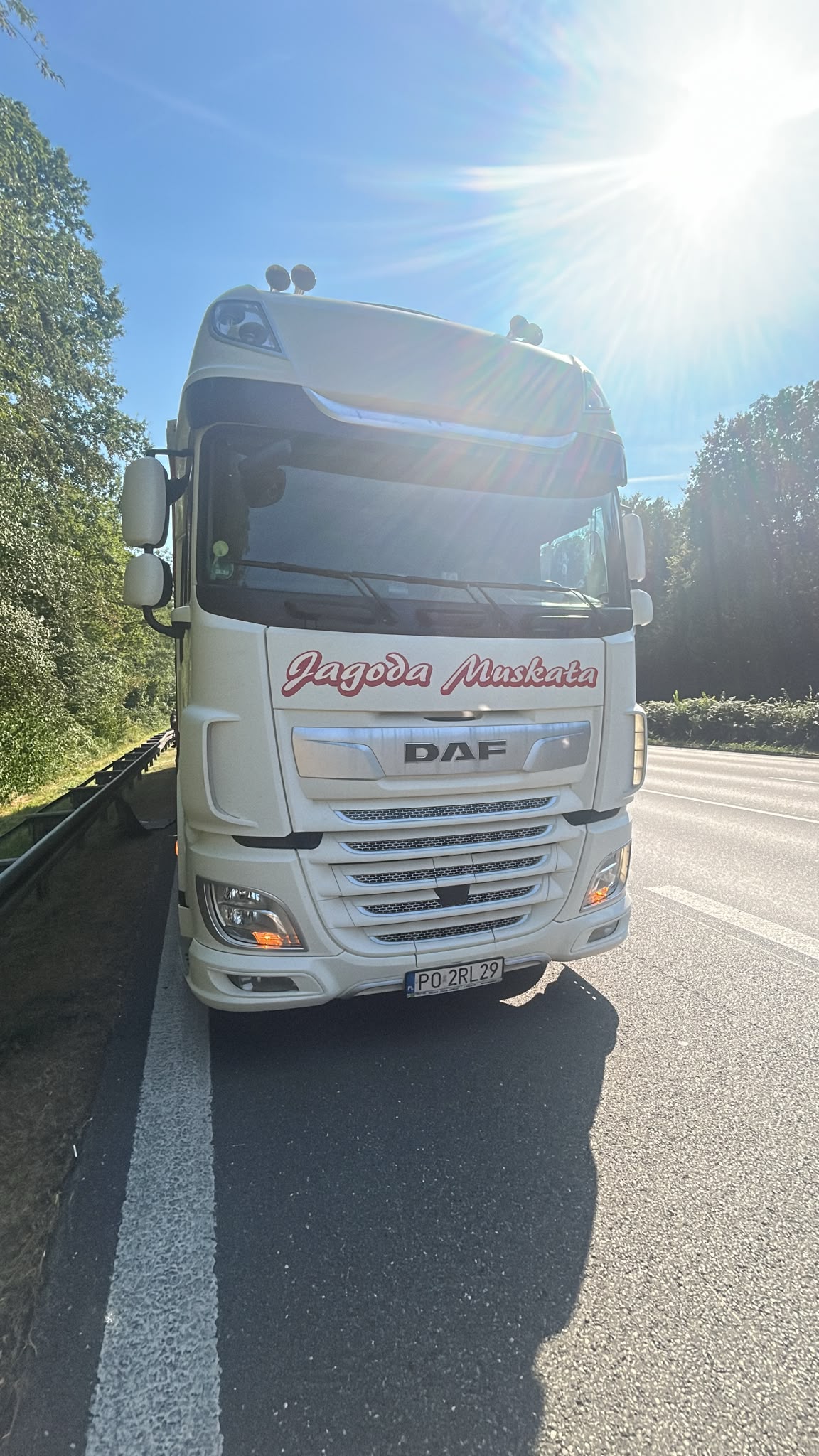
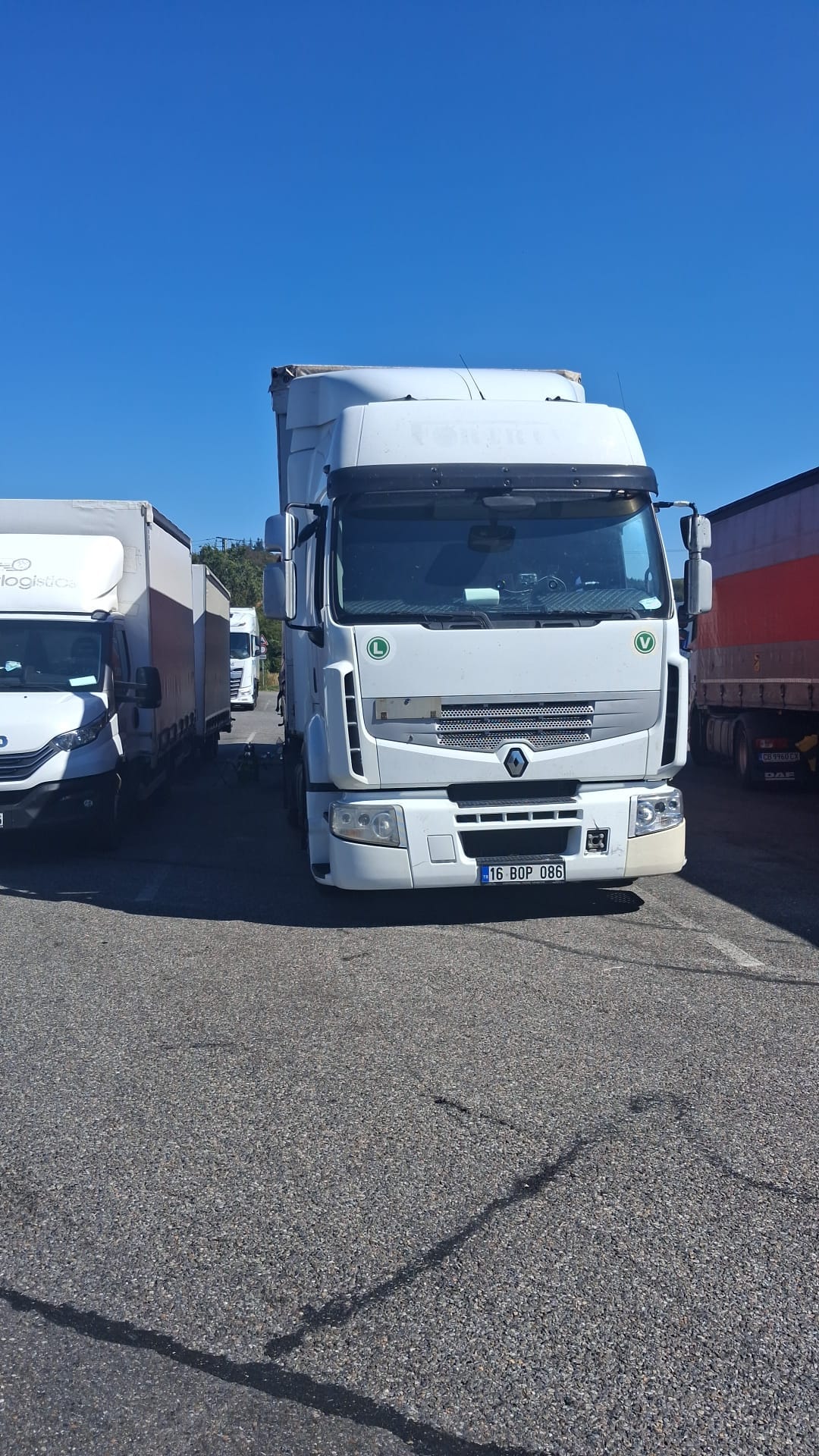
The vehicle involved was a Polish-registered articulated lorry: a tractor unit pulling a curtainside semi-trailer. The trailer’s rear axle ran a standard dual mounting — twin tyres in size 385/65 R22.5, the size fitted almost universally to semi-trailer axles across Europe. Shortly after 11:00, the outer tyre of one dual pair suffered a sudden blowout. The driver felt a bang, noticed the trailer pull slightly, and — sensibly — did not try to limp on to the next exit. He pulled onto the hard shoulder as far as the geometry allowed and called for help.
It was daytime, dry, warm, good visibility — about as favourable as roadside conditions get. That mattered later, because it kept the response time towards the faster end of the range rather than the slower one.
A blowout on a dual-mounted wheel is a specific failure mode. Unlike a steer-axle tyre, where a puncture is immediately obvious to the driver through the steering, a dual-tyre failure on a trailer axle can go almost unnoticed for a few hundred metres — the second tyre in the pair is still holding air and still carrying weight. That delay is exactly why so many dual-tyre failures end with a destroyed rim: the driver only stops once the damage has already spread beyond the original tyre.
How the callout was organised
The driver rang the emergency line and reached dispatch within the first ring. From that point, the workflow followed a fixed sequence designed to get a fully equipped technician to the exact spot with the correct tyre already loaded:
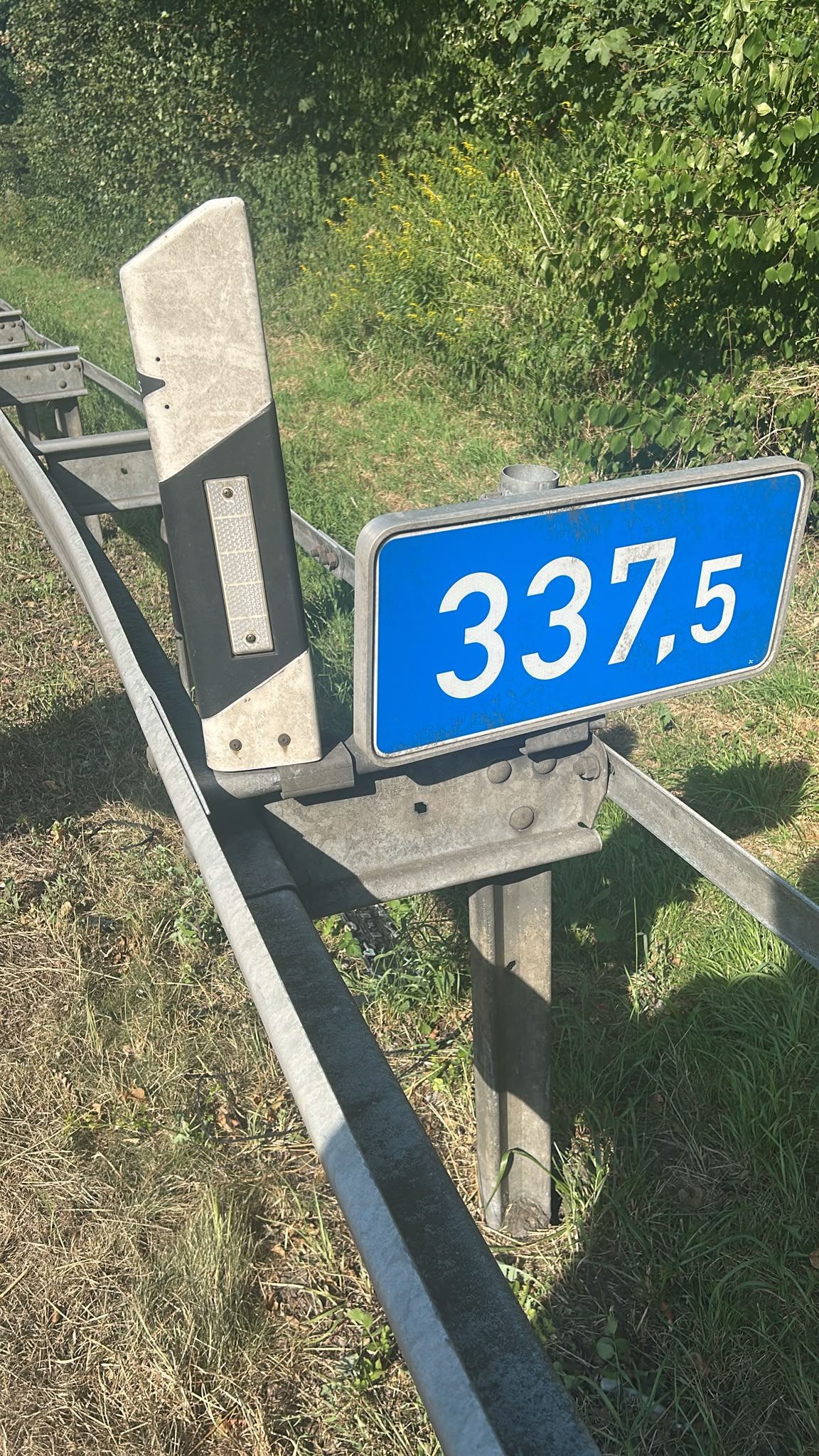
- Call intake — location confirmed via motorway marker post and direction of travel, vehicle type and axle configuration logged, tyre size (385/65 R22.5) confirmed by the driver reading it off the sidewall.
- Regional partner match — dispatch checked which service partner was closest to the A45 near Siegen with the right tyre in stock, rather than sending the nearest available vehicle regardless of load-out.
- Stock confirmation — the partner confirmed a matching 385/65 R22.5 trailer tyre was on the van before departure, avoiding a wasted first trip.
- Driver safety briefing — the driver was talked through switching on hazard lights, placing the warning triangle at a safe distance, and putting on a hi-vis vest before leaving the cab.
- Technician dispatched — travel time estimated and communicated to the driver so he knew roughly how long the wait would be.
- En-route update — the driver received a call when the technician was five minutes out, so he could confirm the exact position of the lorry on the hard shoulder.
This structure is the backbone of any competent breakdown assistance operation: match the right equipment to the right job before a vehicle even leaves the yard, rather than dispatching blind and hoping the tyre size matches.
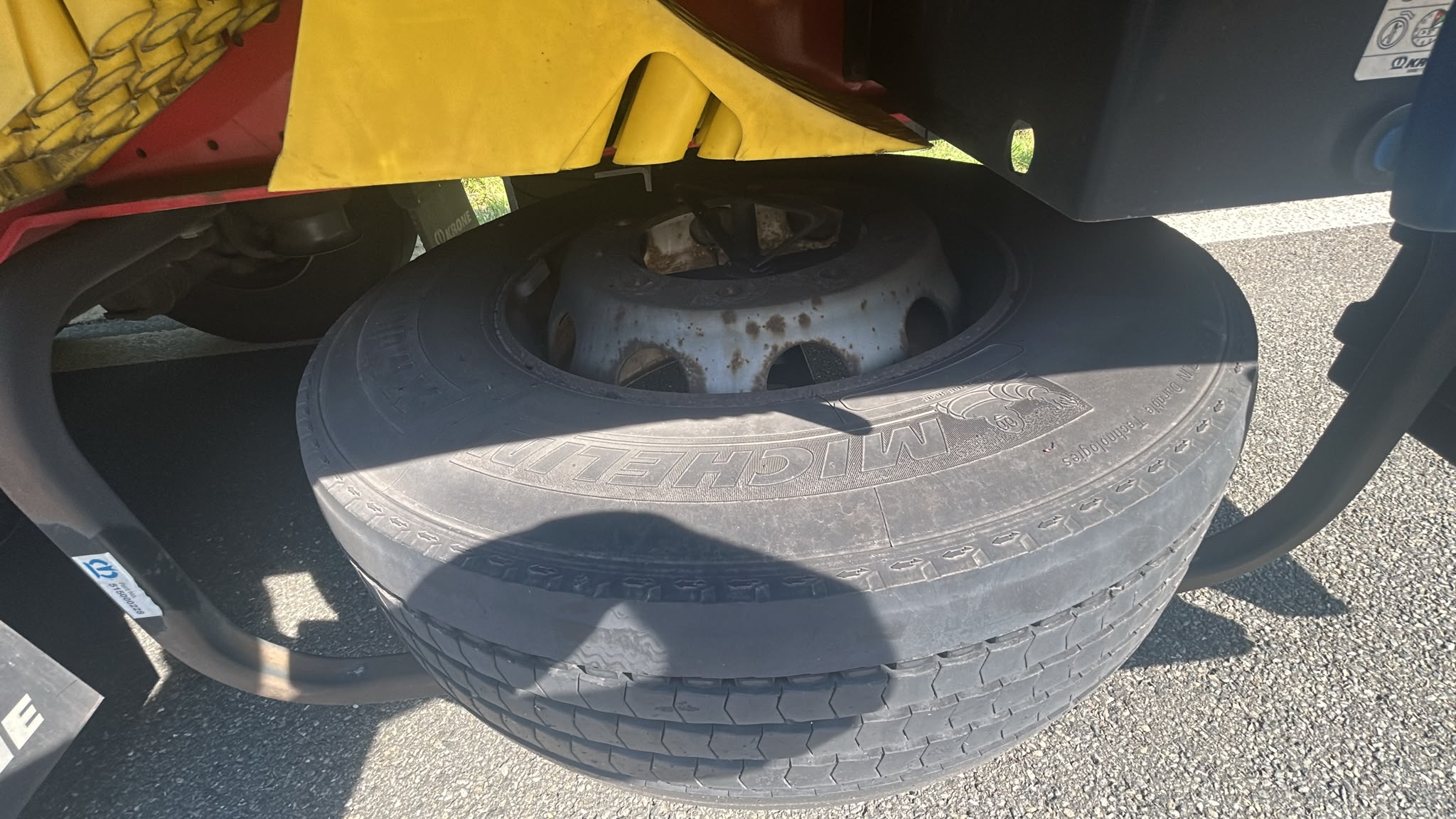
Why the situation on site could not be ignored
Heavy truck tyres run at pressures most car drivers never encounter — typically 8.5 to 9.5 bar on a trailer axle, compared with roughly 2.2 to 2.5 bar in a family car. When one tyre in a dual pair bursts, the neighbouring tyre inherits almost double its normal share of the axle load. On a fully laden semi-trailer, that can mean several tonnes running through a single tyre designed to share the work with a partner.
The risks compound quickly. An overloaded single tyre generates more heat through flex in the sidewall. Heat degrades the rubber compound and the internal carcass, and a tyre that overheats on the move can fail catastrophically at speed rather than simply going flat. There is also a real risk to the rim itself: once a tyre has lost pressure, continued driving — even a short distance — can let the rim edge grind against the road surface, distorting it beyond repair.
None of this happens in isolation from the environment the work is done in. The A45 Sauerlandlinie carries constant heavy lorry traffic in both directions, and the technician arrived to find a hard shoulder that narrowed noticeably near one of the many bridge structures on that stretch. Securing a safe worksite here is not a formality — it is the first real task of the job, often harder than the tyre change itself.
Before touching a wheel nut, the technician:
- Positioned the service vehicle behind the trailer at an angle, offering a physical buffer and pre-warning to approaching traffic.
- Extended the existing warning triangle placement further back, accounting for the speed of motorway traffic and limited sightlines near the bridge.
- Checked wind and spray conditions from passing lorries, which push a surprising amount of turbulence onto anyone working at the kerb-side edge of a narrow hard shoulder.
- Confirmed the driver stayed behind the barrier, out of the live lane and away from the trailer, for the duration of the work.
Step-by-step: the repair
Step 1 — Inspection. The technician examined both tyres of the dual pair, the rim on the damaged side, the wheel hub, and the wheel bolts for any sign of secondary damage from the blowout. The neighbouring tyre had been running overloaded for several minutes but showed no visible bulging, heat damage, or carcass separation.
Step 2 — Securing the site. With the warning triangle and vehicle positioning already in place, the technician set up cones closer to the wheel to keep a clear working zone, checked the trailer’s parking brake, and confirmed the tractor unit was fully immobilised before any wheel came off the ground.
Step 3 — Removal. Because the wheels sit as a dual pair, both had to come off together to reach the damaged tyre — this is one of the main reasons dual-tyre jobs take noticeably longer than a single steer-axle change. Wheel bolts were loosened in sequence, the pair was jacked and pulled as a unit, and the outer wheel was separated from the inner one for individual inspection.
Step 4 — Fitting. The new 385/65 R22.5 tyre was mounted onto the wheel, balanced, and inflated to the manufacturer’s specified pressure for that axle load — checked against the placard figure rather than a generic default. The inner tyre’s pressure was also checked and topped up to match, since a pressure difference within a dual pair causes uneven wear and puts extra strain on whichever tyre is running softer.
Step 5 — Final check. Both wheels were refitted as a pair and the wheel bolts were torqued in the correct star pattern to the specified Nm value — never in a simple circular sequence, which can leave a wheel unevenly seated. The technician then re-checked pressures on both tyres in the pair, inspected the rim once more under full load, and gave the trailer a short visual check before clearing the driver to move off.
Full timeline
| Time | Phase | Action |
|---|---|---|
| 11:05 | Call received | Driver reports blowout, location and tyre size confirmed |
| 11:05–11:20 | Dispatch | Regional partner matched, tyre stock confirmed, technician briefed |
| 11:20–12:00 | Travel | Technician en route to the A45 near Siegen (40 min) |
| 12:00–12:15 | Site setup | Vehicle positioning, warning triangle, hi-vis, cones |
| 12:15–12:30 | Inspection | Dual pair, rim, hub and bolts checked |
| 12:30–13:00 | Wheel removal | Dual pair removed as a unit, tyres separated |
| 13:00–13:10 | Fitting | New tyre mounted, balanced, both tyres pressure-checked |
| 13:10–13:20 | Final torque and check | Star-pattern torque, pressure re-check, rim inspection |
| 13:20 | Departure | Lorry cleared to rejoin traffic |
Total time from call to departure: 135 minutes (2 hours 15 minutes).
That figure sits at the upper end of what a single-tyre steer-axle job usually takes, and that is expected — a dual-tyre repair involves removing two wheels instead of one, plus an extra inspection pass on the tyre that stayed on the vehicle.
Cost breakdown
| Item | Price (EUR, net) |
|---|---|
| Callout and travel | 280 |
| Labour (approx. 1h20, dual-wheel handling) | 220 |
| Truck tyre 385/65 R22.5 | 480 |
| Old tyre disposal | 20 |
| TOTAL | 1,000 |
All figures are net, plus statutory VAT. The main cost driver on a dual-tyre callout is the tyre itself — a 385/65 R22.5 trailer tyre from a recognised manufacturer typically runs 420 to 540 euros before fitting. Labour comes in above a standard car-tyre job because removing and refitting a dual pair, then re-checking both tyres, simply takes longer than a single-wheel change.
It is worth putting that €1,000 figure against the alternative. A stranded articulated lorry on a German motorway costs the haulier roughly €800 to €1,200 per day in lost driving time alone, before counting missed delivery windows, driver hours burned sitting still, or contractual penalties for late cargo. A same-day roadside repair, even at €1,000, is close to a single day’s downtime cost — and it gets the vehicle moving again in just over two hours rather than losing the rest of the day waiting for a workshop slot.
Why you need a professional, not a DIY fix
Changing a dual truck tyre at the roadside is not a job for an improvised repair, and it is not something most drivers are equipped to do safely even if they wanted to try. The risks include:
- Wrong torque, loose wheel. Wheel bolts on a heavy truck axle need a specific Nm value applied in a star pattern. Under-torqued bolts can work loose within a few hundred kilometres; over-torqued bolts can crack the stud.
- Pressure mismatch. Fitting a tyre without checking it against the placard pressure, or leaving the neighbouring tyre in the pair unchecked, sets up uneven wear that can cause the next failure.
- Working next to live traffic without proper site security. A driver on his own has no spare vehicle to position as a buffer and no second pair of eyes watching the traffic.
- Rim damage going unnoticed. A rim that has taken impact damage from running low or flat can look fine and still fail under load later — this needs a trained eye and, in some cases, specialist inspection equipment.
- Jacking a loaded trailer incorrectly. Trailer axles carry serious weight; an incorrectly placed jack point can cause the trailer to slip or drop.
This is precisely the gap a mobile truck tyre service is built to close: equipment, tyre stock, and trained hands arriving together, on site, rather than a driver improvising with a roadside kit that was never designed for a 385/65 R22.5 dual mounting.
Typical situations we respond to across Germany
Dual-tyre blowouts on the autobahn network are one of the most frequent reasons hauliers call a mobile tyre service. The pattern repeats with minor variations across the country. A tractor unit loses a steer-axle tyre on the A43 near Dortmund. A trailer suffers a blowout on the approach to Berlin. A car transporter loses two tyres in quick succession outside Cottbus. A blowout near Trier ends in rim damage as well as tyre loss. Different motorways, same underlying story: a tyre fails, the driver has to decide fast whether to stop or push on, and the right call is almost always to stop and get a professional out.
We cover the whole of Germany, 24 hours a day, for exactly this reason — because a breakdown on the A45 at midday is one problem, and the same breakdown on the A2 at 3am in the rain is a different, harder problem, and both need the same reliable response.
Prevention: what drivers and fleets can do
No amount of maintenance eliminates blowouts entirely, but it reduces the odds significantly and buys drivers more warning before a tyre lets go completely.
- Check tyre pressure on every axle before a long haul, not just when a tyre looks visibly low — a slow leak in a dual pair is easy to miss by eye.
- Inspect tread depth regularly; German law (StVZO §36) sets a minimum, but most fleets replace well before the legal limit for safety margin.
- Pay attention to pressure balance within dual pairs specifically — a difference of even 0.5 bar between the two tyres in a pair accelerates wear on the lower one.
- Watch for irregular wear patterns, which often point to an alignment or suspension issue rather than the tyre itself.
- Keep a record of tyre age; rubber degrades even on a tyre with plenty of tread left, particularly on trailers that spend long periods stationary.
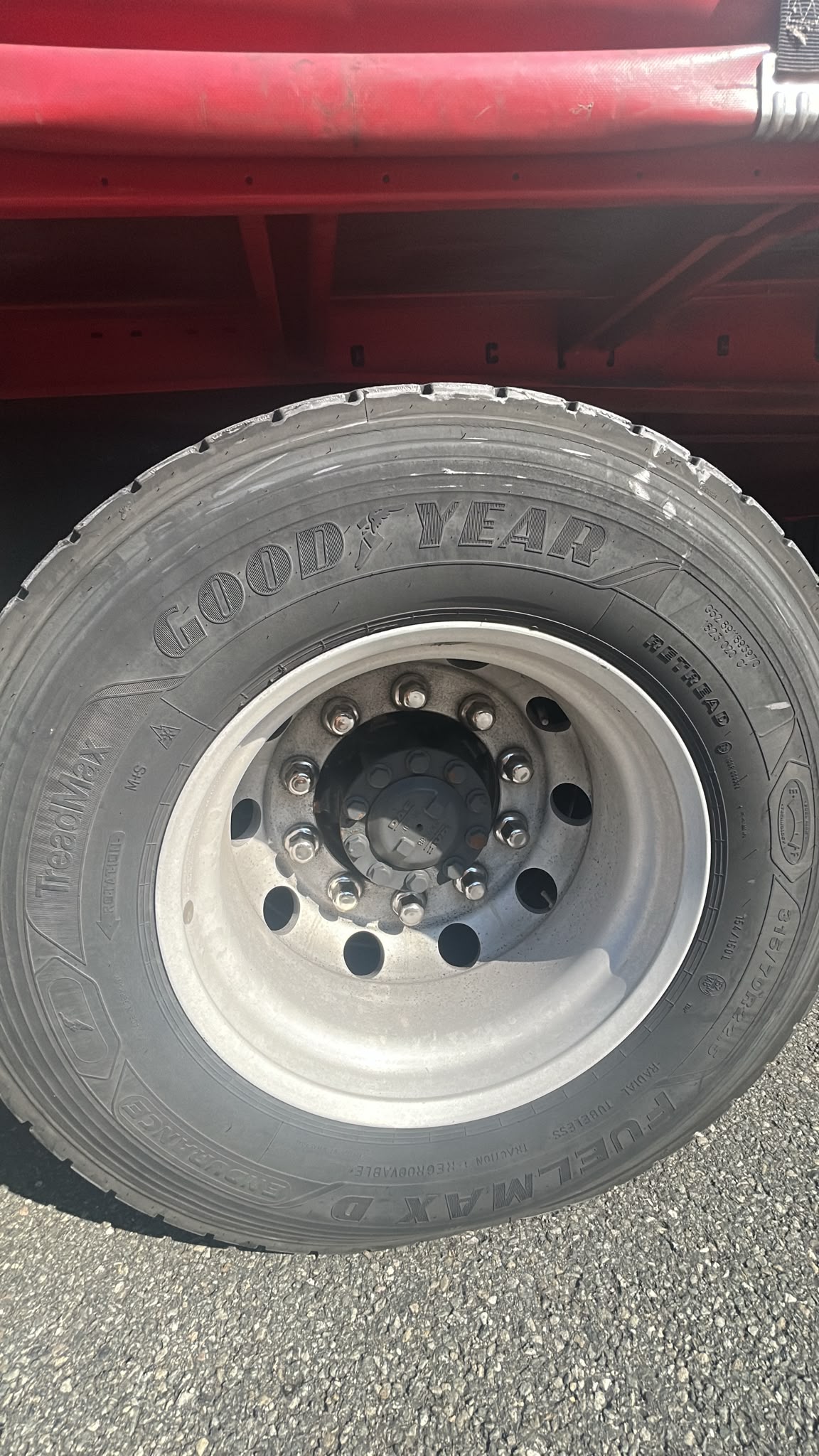
- Fit tyres from established manufacturers — Michelin, Continental, Goodyear and Bridgestone all publish load and pressure tables specific to dual-mounting axle use, and following them matters more on a dual axle than almost anywhere else on the vehicle.
- Build a tyre-check step into pre-trip and post-rest inspections, especially before motorway sections known for surface damage or roadworks.
None of this is about achieving zero risk — tyres fail even on well-maintained fleets. It is about narrowing the odds and making sure that when a failure does happen, it is caught early rather than driven on.
Dual tyres explained: why one blown tyre is never “just one tyre”
This is the part of the job most drivers underestimate, so it is worth explaining properly. A dual mounting — Zwillingsbereifung, or twin tyres — puts two tyres side by side on one hub, sharing the load of that axle position between them. The engineering assumption behind that design is that both tyres are healthy, both are at the same pressure, and both are carrying roughly half the load each.
The moment one tyre in that pair fails, that assumption collapses. The surviving tyre does not simply take “a bit more” weight — it can end up carrying close to double what it was designed to run under, because the axle load has nowhere else to go. A trailer axle can be carrying several tonnes; suddenly asking one tyre to hold nearly all of it, rather than half, pushes that tyre well outside its safe operating window.
This is why “just drive on the remaining one to the next services” is bad advice, however tempting it feels when a driver is behind on hours. An overloaded single tyre flexes more with every rotation, and that flex generates heat inside the carcass — the internal structure of belts and plies that gives the tyre its strength. Heat builds cumulatively. A tyre that would happily run all day at its correct load can overheat within a few kilometres when carrying double, and once the carcass starts to break down internally, the failure is often sudden rather than gradual — a second blowout, sometimes worse than the first, sometimes with rim damage attached. At speed, on a busy motorway, that is a loss-of-control risk, not just an inconvenience.
Pressure balance between the two tyres in a pair matters just as much as the fact of having two tyres at all. If one tyre in a healthy pair is running even slightly softer than the other — a slow leak, a valve fault, simple neglect — the softer tyre ends up carrying a disproportionate share of the load, because a tyre’s load capacity is directly linked to its inflation pressure. Over time this shows up as uneven wear: one tyre in the pair wearing faster than its partner, running hotter, and eventually becoming the next one to fail. Fleet workshops that check dual-pair pressure matching as a routine item catch this long before it becomes a roadside call.
Manufacturers take this seriously enough to publish detailed load-pressure tables specifically for dual-fitment use. Michelin, Continental, Goodyear and Bridgestone all differentiate between single-fitment and dual-fitment load ratings for the same nominal tyre size, because the real-world stresses are different. A 385/65 R22.5 on a dual mounting is not simply “half of the axle load” in a simplified sense — it is a tyre engineered against a specific dual-duty load curve, and running it outside that curve, even temporarily after a partner tyre fails, is exactly the scenario that leads to secondary blowouts and rim damage.
That is why the inspection step in every dual-tyre callout includes the tyre that did not fail, not just the one that did.
Why choose LKWHelp24
- 24/7 coverage, all of Germany. Motorway breakdowns do not wait for office hours, and neither does our dispatch.
- A vetted regional partner network. Every partner carries the equipment and stock to handle heavy truck axles properly, not improvised fixes.
- Transparent pricing from the first call. The driver hears a realistic price range before the technician even leaves the yard, not a surprise invoice afterwards.
- Multilingual dispatch. International hauliers on German motorways — Polish, Dutch, Romanian, and beyond — get help in a language they understand, at the moment they need it most.
- Built for the realities of the autobahn. Site safety on a narrow hard shoulder near a bridge is treated as part of the job, not an afterthought.
Frequently asked questions
How long does a truck tyre service callout usually take on the motorway?
On the A45 near Siegen, this callout took 135 minutes from call to departure — 40 minutes travel, roughly an hour of hands-on work, and time for site setup and final checks. Simpler single-tyre jobs can be quicker; dual-tyre jobs or bad weather push it towards the upper end of the range.
Can I keep driving on the remaining tyre in a dual pair?
Not recommended. The surviving tyre can end up carrying close to double its designed load, which generates excess heat and raises the risk of a second, more serious failure. Pull over as soon as it is safe and call for assistance.
How much does a roadside truck tyre replacement cost?
This callout totalled €1,000 net, covering callout, labour, a 385/65 R22.5 tyre, and disposal of the old one. Typical roadside heavy-truck tyre jobs in Germany run from €750 to €1,400 depending on tyre size, time of day, and access difficulty.
Do you check the rim and the other tyre in the pair, or just replace the damaged one?
Always both. A blowout can damage the rim even if it looks fine, and the neighbouring tyre in a dual pair runs overloaded for however long it takes to reach a stop, so both get inspected before the vehicle is cleared to move.
What tyre sizes do you carry for trucks and trailers?
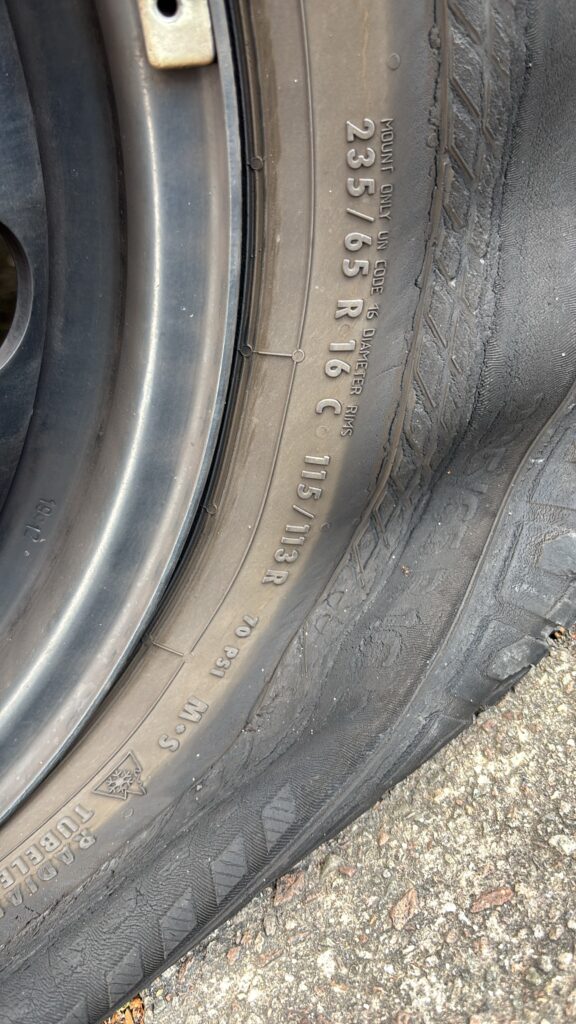
Coverage includes the common heavy-goods sizes, including 385/65 R22.5, 315/80 R22.5, 245/70 R19.5, and light-commercial sizes such as 235/65 R16C, depending on the vehicle and axle.
Is night or weekend callout more expensive?
Yes, night and weekend callouts typically carry a surcharge of 25 to 50 percent above the standard daytime rate, reflecting the additional logistics of night dispatch.
Summary
- Location: A45 Sauerlandlinie near Siegen, towards Dortmund
- Vehicle: Polish tractor unit with curtainside semi-trailer
- Tyre: 385/65 R22.5, dual-mounted trailer axle
- Response time: 55 minutes from call to arrival on site
- Total time: 135 minutes, call to departure
- Total cost: €1,000 net
- Secondary checks: neighbouring tyre in the pair inspected and pressure-matched, rim inspected — both confirmed sound
Need a truck tyre service, anywhere in Germany, right now?
Call +49 160 5753826 — available 24/7, across the whole of Germany. Our dispatch matches the right partner and the right tyre to your exact location, so help arrives ready to work, not to improvise. More information at www.lkwhelp24.com.
Keywords: truck tyre service | mobile truck tyre service | dual tyre blowout | Zwillingsbereifung | trailer tyre replacement | autobahn breakdown assistance | 385/65 R22.5 | heavy truck tyre repair Germany | 24/7 truck tyre service | roadside tyre fitting
Truck Service in Your Region
Our workshop and roadside service network also covers Aschersleben, Augsburg and Aurich.
Related articles
- Semi-trailer tyre service on the A43 near Dortmund — 90 minutes
- Trailer tyre blowout near Berlin
- Double blowout on a car transporter near Cottbus
- Blowout and rim damage on the motorway near Trier
- Truck tyre service near me — full overview
Related services: towing service | truck service | mobile truck service | contact us
Sources and further reading: tread depth and tyre requirements are set out in the German StVZO §36; the ADAC publishes independent guidance on commercial vehicle tyre safety, alongside organisations such as DEKRA; tyre manufacturers Michelin and Continental, as well as Goodyear and Bridgestone, publish load-pressure tables for dual-fitment axles; trailer axle specialist BPW provides technical background on axle and suspension design relevant to dual-tyre load distribution.