Skip to content
TL;DR: On 17 July, a Polish articulated lorry driver on the A2 near Frankfurt (Oder), heading towards the Polish border, reported a knocking sound from a trailer wheel. On-site diagnosis: several sheared wheel studs (385/65 R22.5) and a damaged wheel hub. Continuing the journey was out of the question. After 2 hours 50 minutes, the damaged unit was secured on a recovery truck – total cost net €1,600.
A sheared wheel stud is not a cosmetic fault. It is the first crack in a chain that can end in a complete wheel loss within hours. That was exactly the risk here: not a single broken stud, but a hub already stressed to the point where an on-site repair was no longer viable.
This report explains how wheel studs actually fail, what warning signs a driver can spot, and why the A2 near Frankfurt (Oder) — a key Germany–Poland transit corridor — is a hotspot for mobile breakdown assistance.
What happened on the A2 near Frankfurt (Oder)?
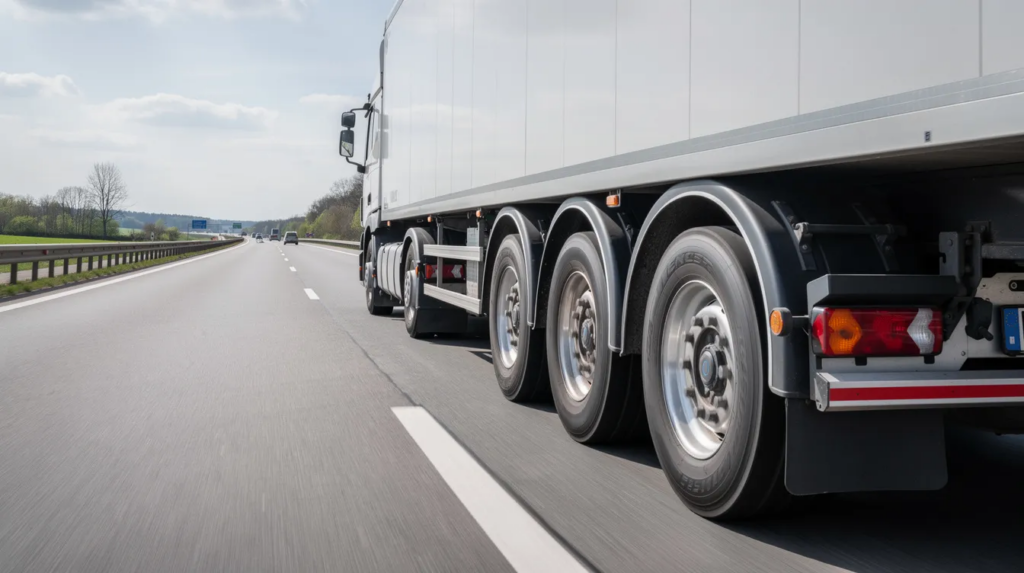
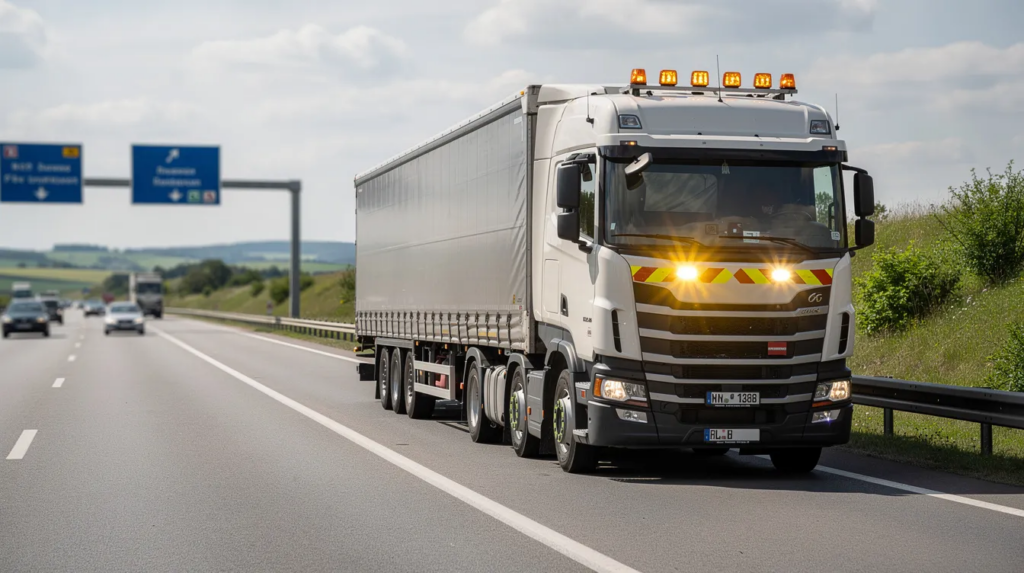
An articulated lorry belonging to a Polish haulage company was travelling on the A2 towards the Polish border in daylight on 17 July when the driver noticed a distinct knocking sound from a trailer wheel while pulling away from a junction. He pulled over onto the hard shoulder in a controlled manner.
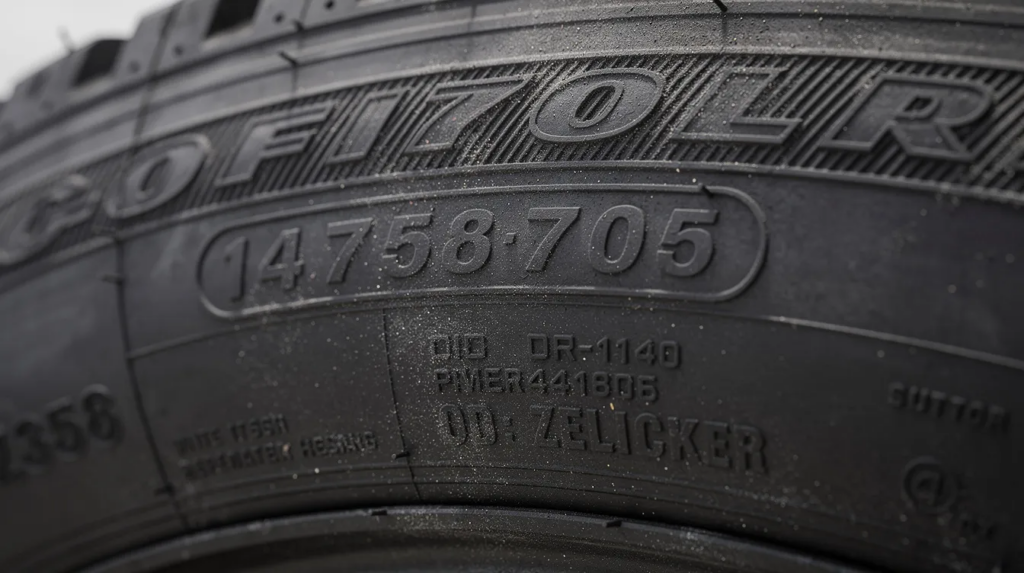
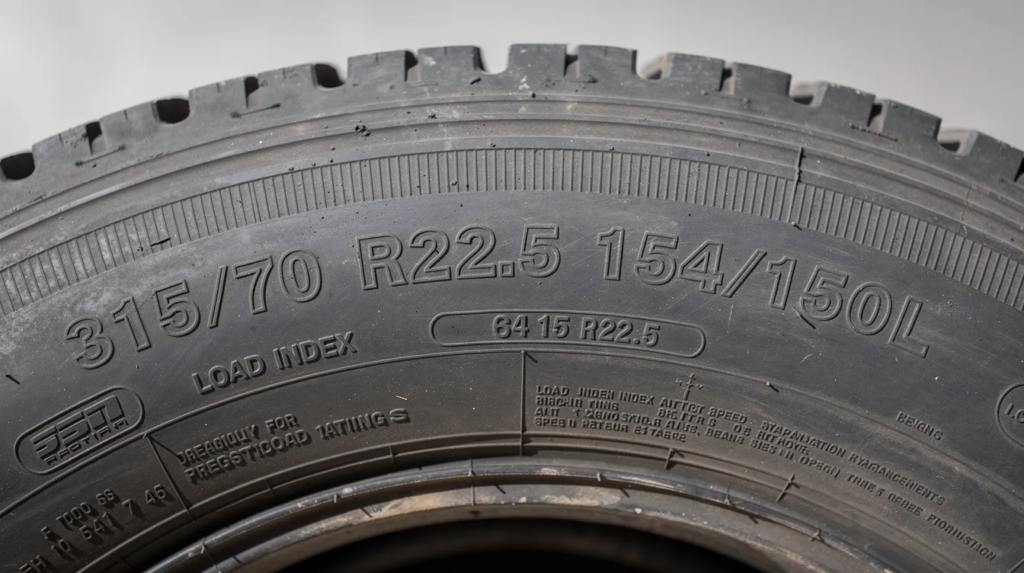
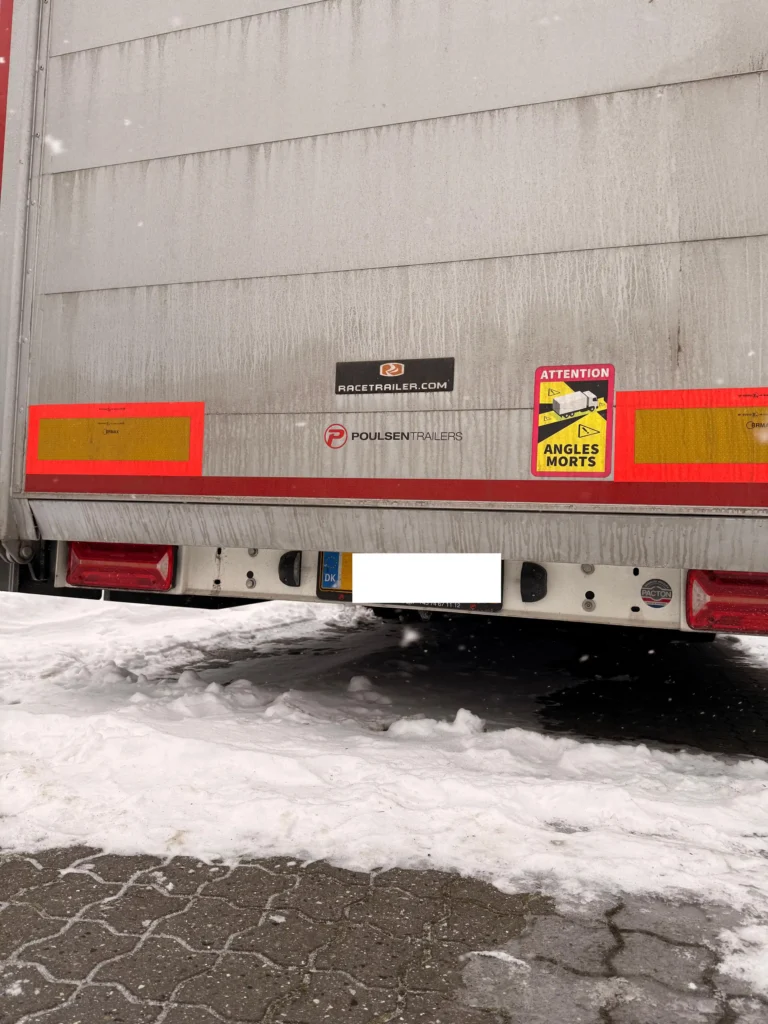
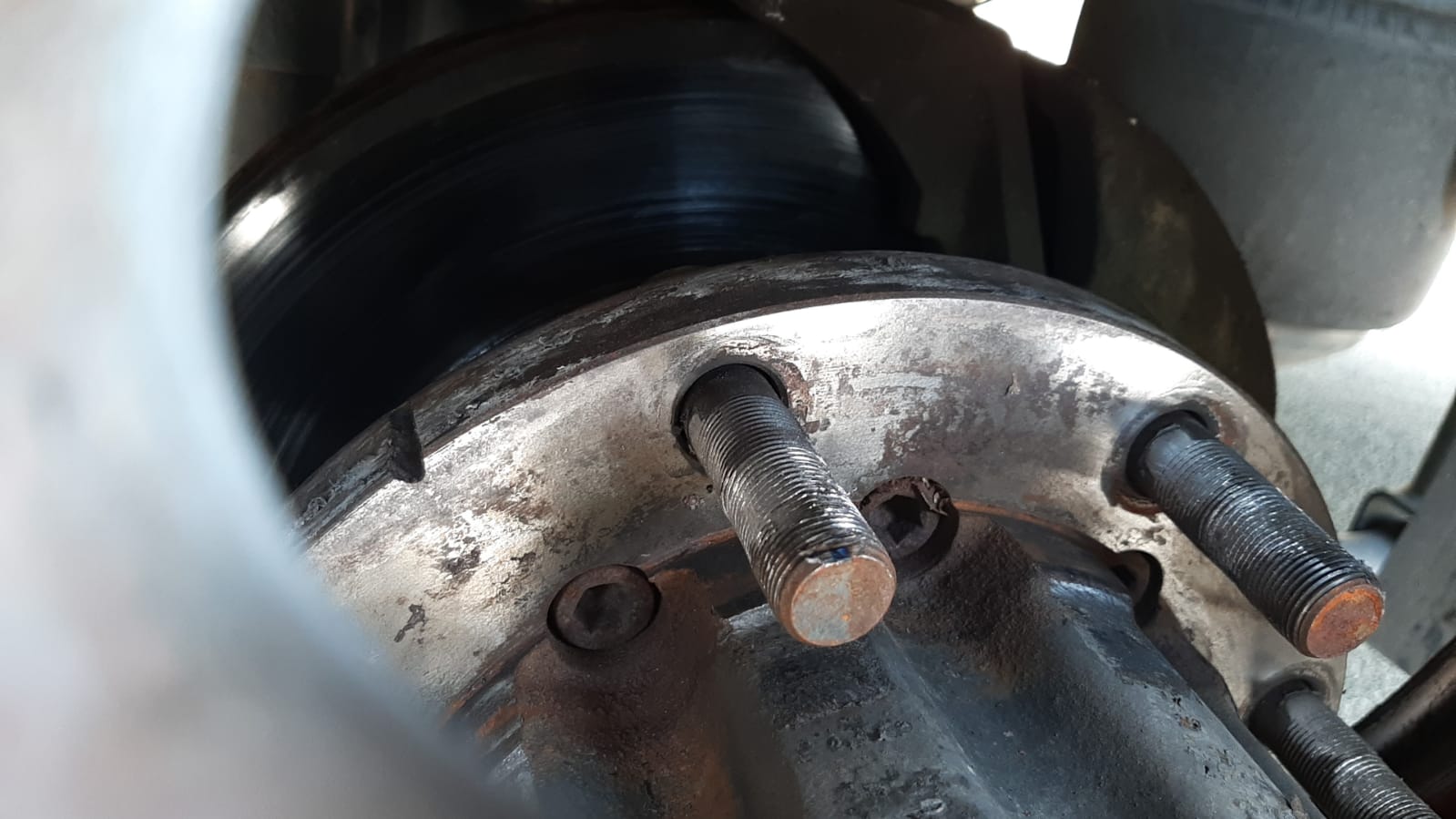
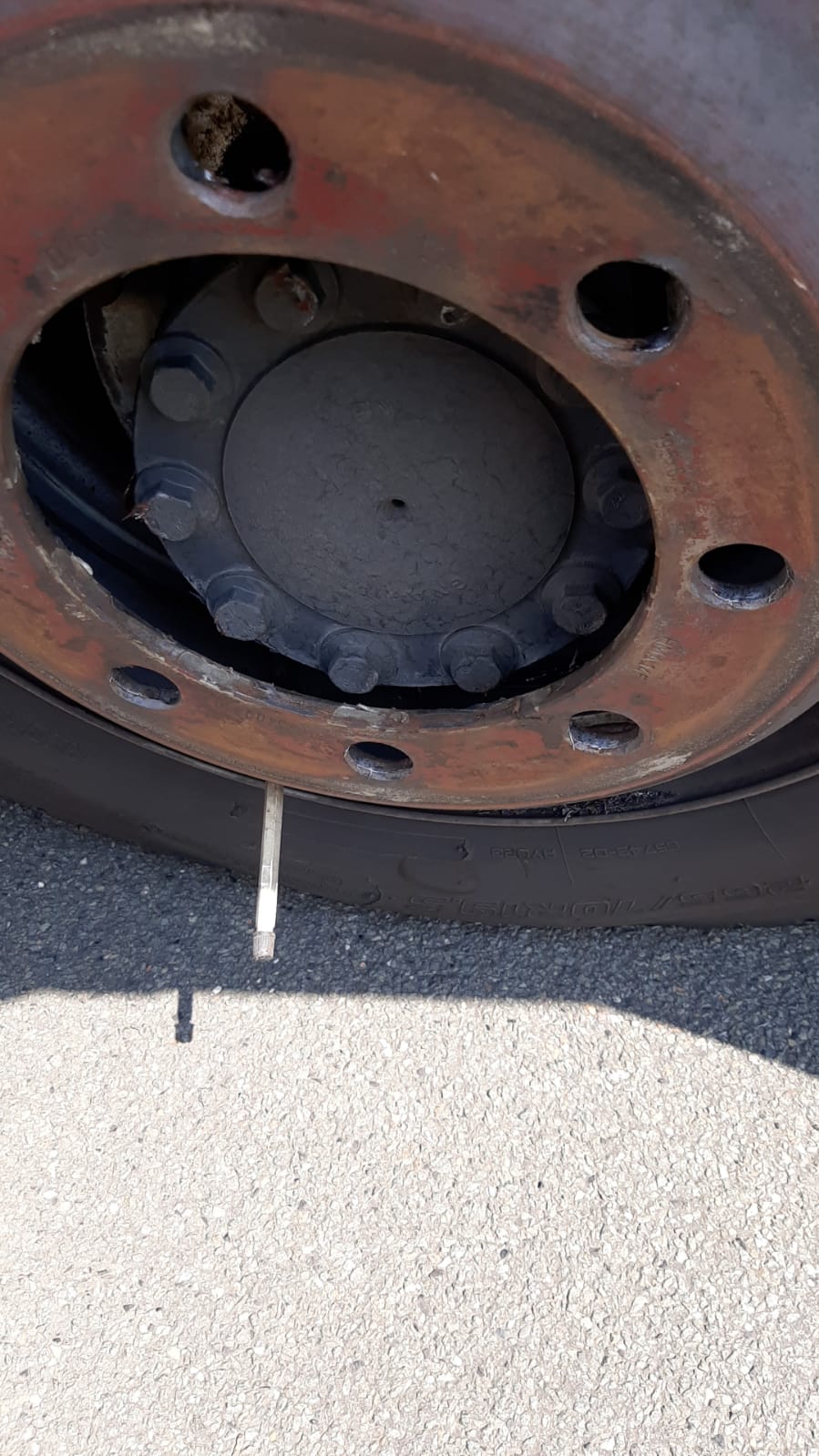
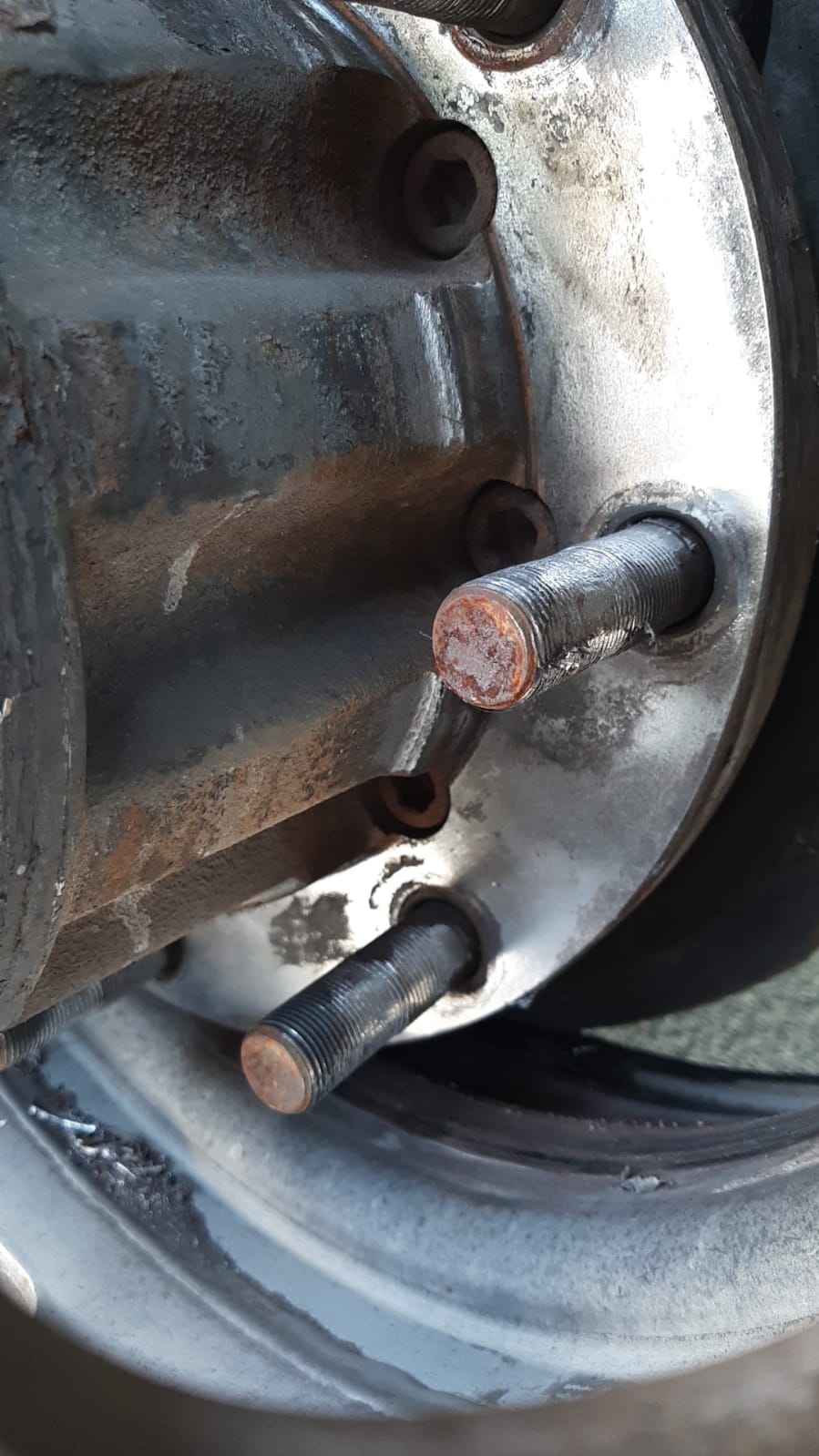
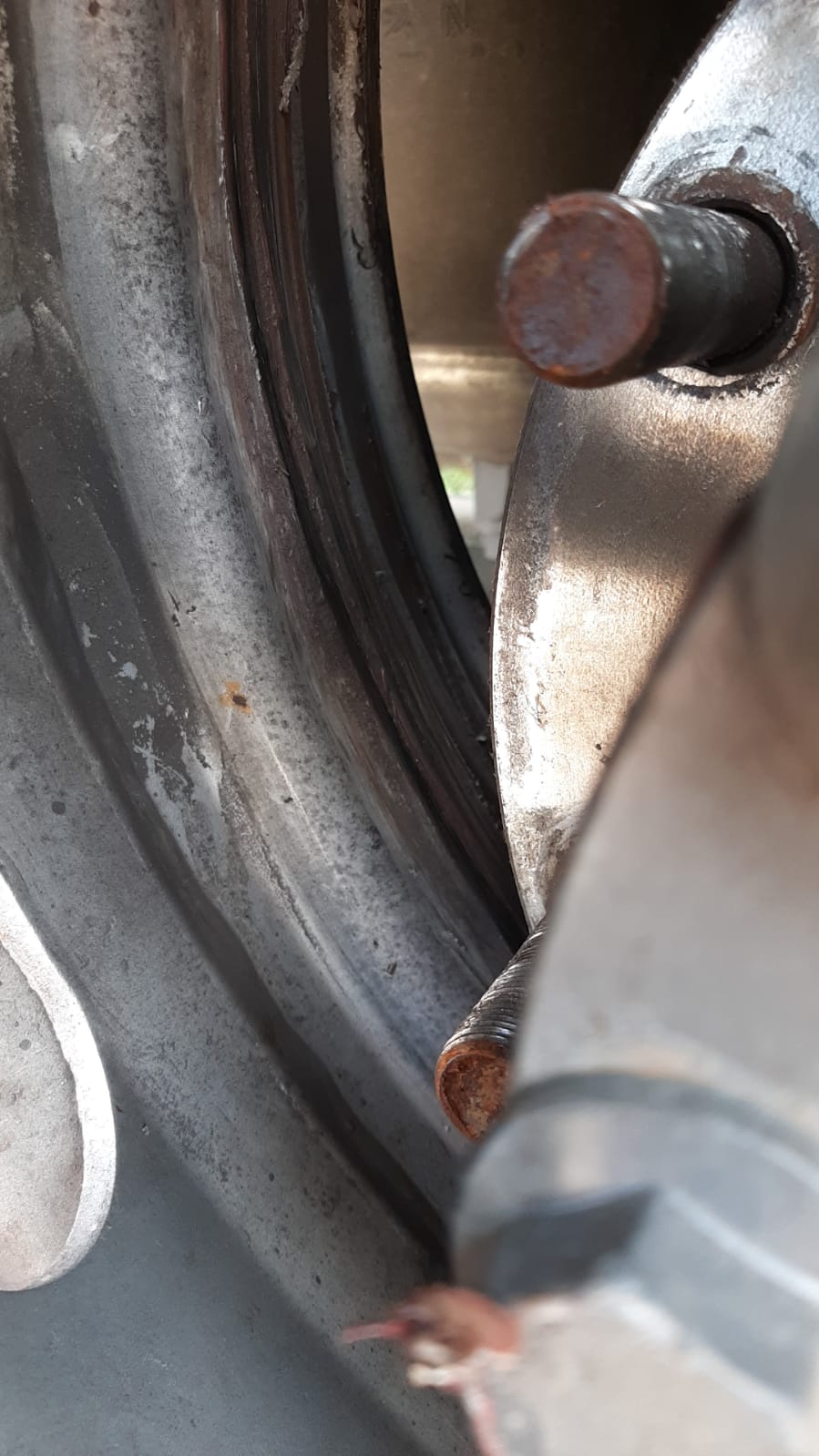
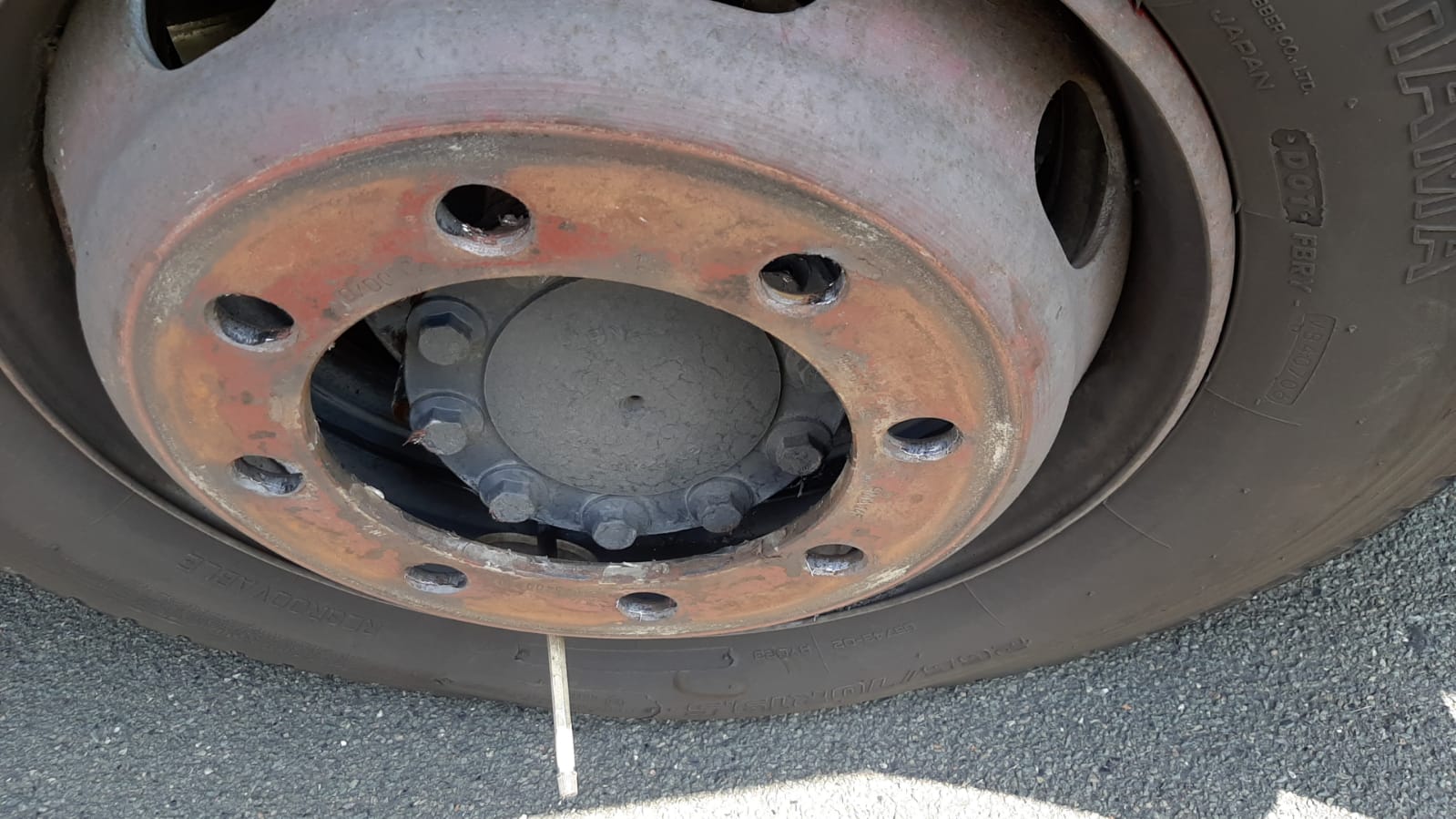
A visual check revealed the problem immediately: on one wheel of the axle, several wheel studs had sheared clean off, leaving the wheel held in place by little more than the remaining studs. Tyre size on the affected wheel: 385/65 R22.5, standard for a semi-trailer axle. Rust streaks around the nuts and misaligned torque-check marks suggested the fault had built up gradually rather than appearing overnight.
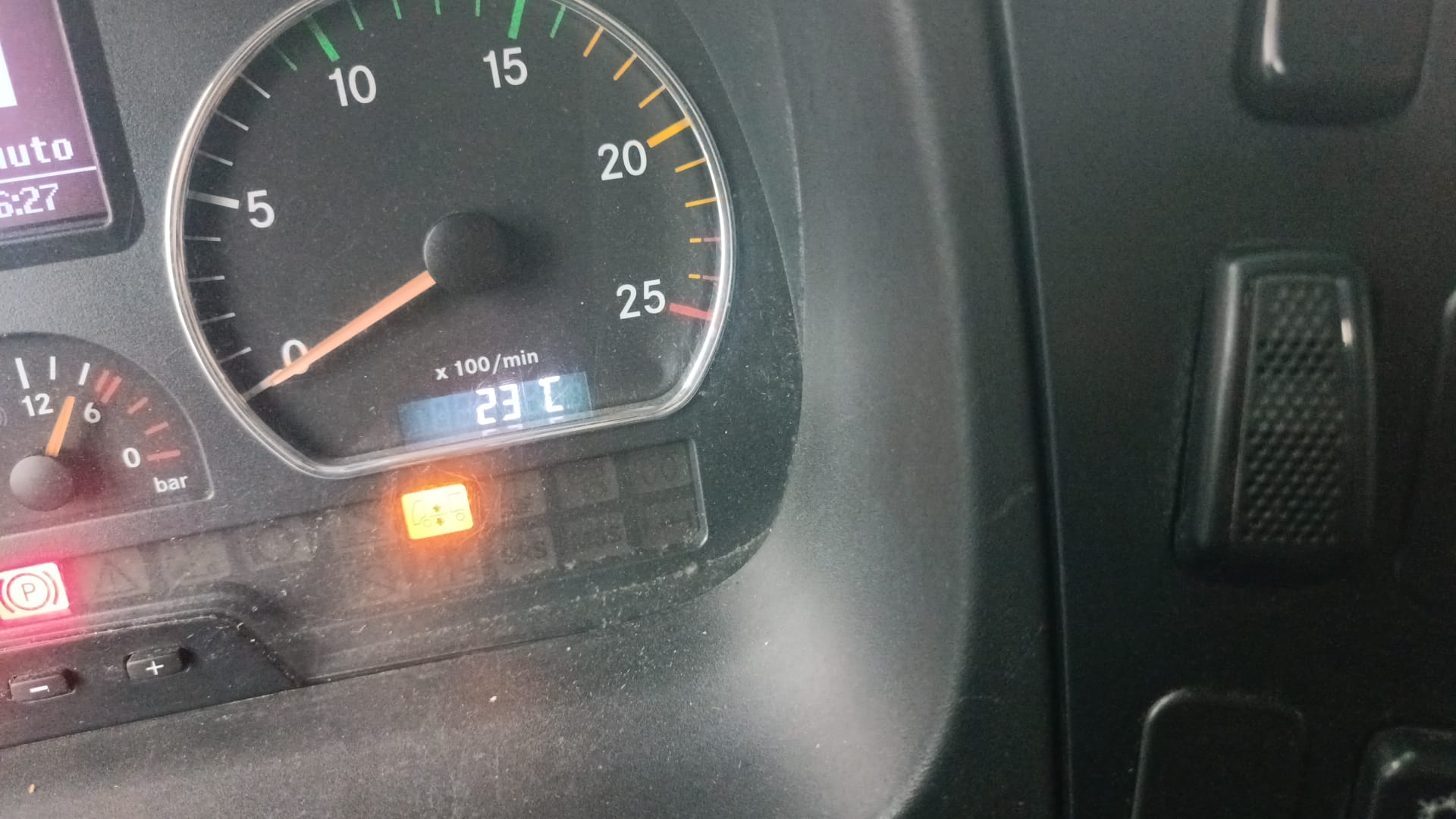
The combination was a semi-trailer with a refrigerated/box body. A trailer-coupling warning light was also lit on the dashboard — a second warning signal that fitted the picture: the connection between tractor and trailer was under additional strain because one wheel was no longer bearing load correctly.
How was help organised for a wheel stud failure on the A2?
Within minutes of the emergency call, dispatch assigned a partner workshop in the Frankfurt (Oder) region and confirmed the equipment needed for diagnosis and, potentially, recovery. The steps ran as follows:
- Emergency call logged via the central hotline, location and vehicle type recorded.
- Initial phone assessment: knocking noise from a wheel, vehicle safely stopped on the hard shoulder.
- Dispatch assigns a partner workshop with wheel-stud diagnostic tools and a standby recovery truck.
- Technician drives to the scene, secures the carriageway with a warning triangle and hi-vis vest.
- On-site diagnosis confirms hub damage — decision made for recovery rather than repair.
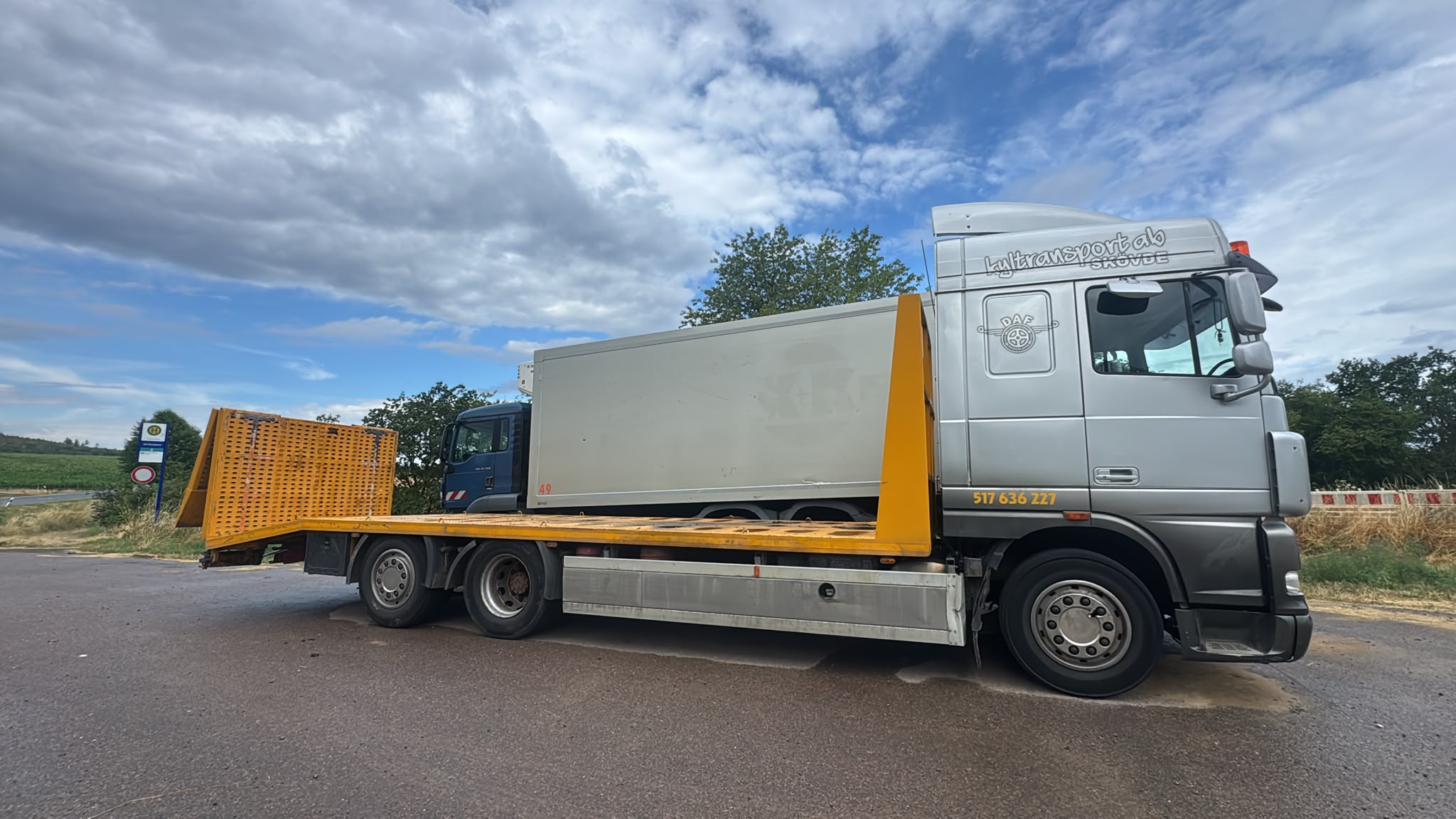
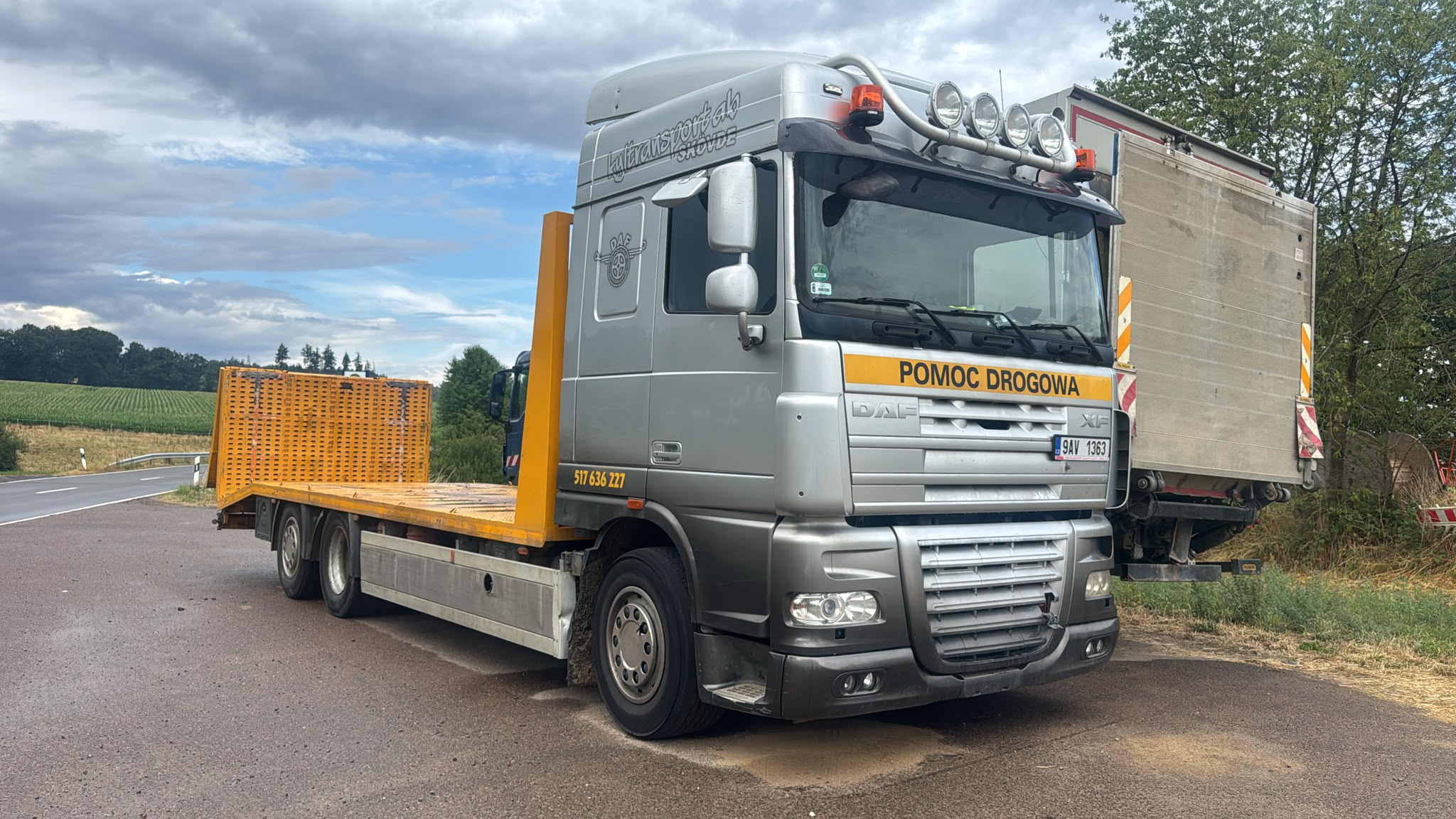
- Flatbed recovery truck arrives to load the damaged unit.
Multilingual dispatch — reachable in Polish, German, English and Russian — was not a minor detail here. The driver could describe the fault precisely in his own language, which sped up diagnosis before the technician even arrived.
Why couldn’t the artic keep driving?
Because one wheel stud had already failed – any further driving would have overloaded the remaining ones further. A truck wheel on 385/65 R22.5 tyres, running at 8.5–9.5 bar, carries substantial axle loads. Lose even one stud and the load redistributes to the rest — which is precisely what accelerates their failure.
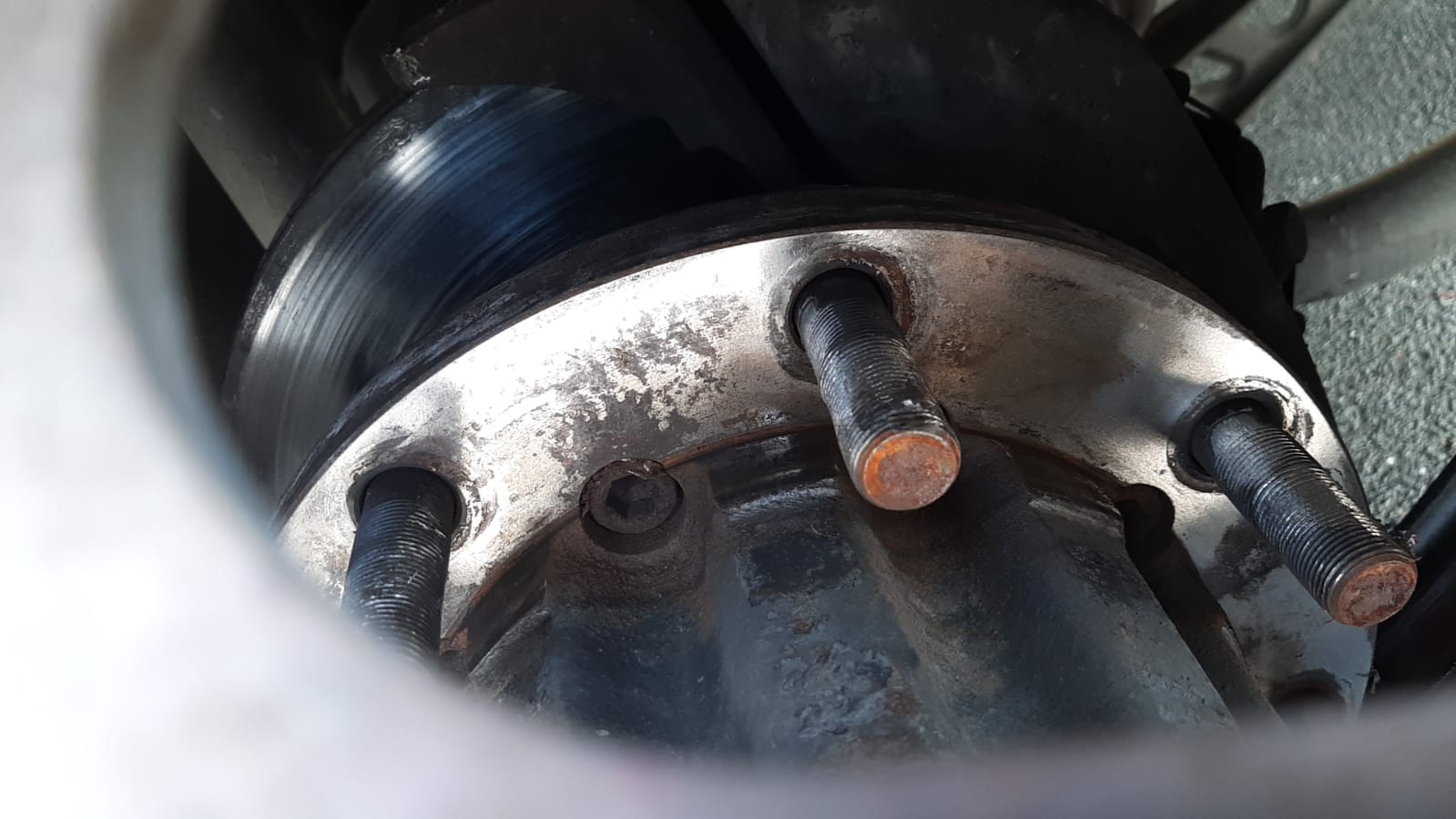
A second factor was present in this case: the wheel hub itself showed visible damage, most likely caused by uneven loading after the first stud sheared. A hub with a damaged mounting face or elongated stud holes cannot simply be fixed with new studs — they would fail again quickly, because the surface they clamp against no longer holds properly.
Under German law the position is unambiguous: a vehicle with a recognisable safety defect on the wheel or wheel fixing may not continue in traffic, per the technical requirements set out in the StVZO. Roadworthiness takes priority over any delivery schedule.
How wheel studs actually fail – one at a time
Wheel studs almost never shear all at once – they fail one after another, and that is exactly what makes them dangerous. When the first stud breaks, the remaining ones inherit its share of the load. They were never designed for that extra strain, so they stretch and eventually snap in turn. Between the first crack and complete wheel loss, several hours of driving can pass — sometimes far less, depending on load, cornering and braking.
This avalanche pattern explains why many wheel-off incidents on the motorway look like a sudden event, even though the underlying defect began days or weeks earlier. A single sheared stud found during a walk-round check is therefore never a minor detail — it is a warning about the entire wheel assembly.
Why do wheel studs shear – the most common causes
The most common cause is incorrect torque – over-tightening and under-tightening are equally dangerous. Over-torque a stud and the material is pre-stressed and loses elasticity, so it snaps at the next load spike. Under-torque it and the joint settles, the wheel develops play, and the studs fatigue through micro-movement with every rotation.
Other causes that show up regularly in practice:
- Dirt or rust between rim and hub, so the mating surface never sits flush.
- Reusing studs that were already stretched in a previous wheel change — wheel studs are not infinitely reusable.
- Corrosion that thins the stud cross-section over months, particularly in winter with road salt.
- Impact damage from kerb contact or potholes, which creates micro-cracks in the thread.
- No re-torque check after a wheel change — the first miles after fitting let the wheel bed in, and without a follow-up check, clamping force stays incomplete.
How can a driver recognise sheared wheel studs?
A knocking or clicking sound when pulling away or braking is the earliest audible warning. Other signs worth a few seconds’ check at every stop:
- Vibration through the steering wheel or cab at certain speeds.
- Rust streaks or fine rust rings around the wheel nuts — a sign of movement in the joint.
- Torque-check marks on nuts or rim that no longer line up.
- A visible gap between rim and hub.
A visual check of the wheel nuts at every stop takes about a minute – and that one minute can save a life. A routine glance while refuelling or at a service area costs almost no time compared with what a wheel-off incident at 80 km/h can cause.
What happens when an HGV wheel comes off on the motorway?
A lorry wheel weighs over 100 kg and, once detached, can travel across several lanes – including into oncoming traffic. Such incidents have caused fatal accidents in Germany when a detached wheel struck an oncoming vehicle. Liability for the operator can extend into criminal proceedings where a failure to maintain the vehicle is proven.
That is exactly why the rule holds at the first suspicion of a wheel stud problem: stop, inspect, do not continue — even under delivery pressure and a waiting consignee.
Is it possible to drive on with the remaining studs?
No – a single sheared stud already means the wheel is grounded. This is not a point that admits nuance: the remaining studs are already overloaded, and their remaining life drops sharply with every additional kilometre. “It’s still holding” is not a manageable risk on an axle carrying several tonnes — it is pure gambling.
Can wheel studs be replaced on the roadside?
Yes, if the hub itself is undamaged – faulty studs are pressed out and new ones pressed in, right on the hard shoulder. That is the standard outcome for many of our call-outs: diagnosis, stud replacement, torque check, back on the road.
If the hub itself is damaged — elongated stud holes, distorted threads, a scored mounting face — an on-site repair is no longer sensible. That was exactly the situation on the A2 in this case. Fitting new studs into a damaged hub only postpones the problem rather than solving it. From that point on, the job becomes a workshop repair with correspondingly higher costs — hub repair or replacement, often including a bearing change.
Why replace the whole set of studs, not just the broken ones?
Because the studs that were still holding have already been through an overload phase and can no longer be trusted to deliver their original clamping force. Replacing only the visibly sheared studs is treating the symptom, not the cause. The correct standard practice is a full stud set replacement on that wheel assembly, regardless of how many studs still look intact.
The full timeline
| Time | Phase | Action |
|---|---|---|
| 11:20 | Emergency call | Driver reports knocking from trailer wheel, stops safely |
| 11:35 | Dispatch | Regional partner assigned, equipment confirmed |
| 12:25 | Arrival | Technician on site, carriageway secured with warning triangle |
| 12:55 | Diagnosis | Several studs sheared, hub damage confirmed |
| 13:05 | Decision | On-site repair ruled out, recovery truck requested |
| 14:10 | Loading | Damaged unit secured and loaded, departs for workshop |
Total time from emergency call to secured loading: 2 hours 50 minutes (170 minutes).
What did the call-out cost?
| Item | Price (EUR, net) |
|---|---|
| Call-out fee | 220 |
| On-site diagnosis (studs/hub) | 140 |
| Scene safety and securing | 90 |
| Flatbed recovery truck incl. loading | 1,150 |
| Total | 1,600 |
All amounts are net, plus VAT. For comparison, a loaded semi-trailer standing idle typically costs the haulier roughly €800–1,200 per day, according to industry experience, through lost mileage, demurrage and possible penalty clauses. A prompt call-out with a clear diagnosis directly saves money, even when the outcome is a workshop job.
Factors affecting price: time of day (night/weekend surcharges of 25–50%), distance to the scene, availability of the correct recovery vehicle, and the complexity of load securing.
Why leave wheel stud diagnosis to professionals?
Assessing or attempting to repair a wheel stud problem without proper training carries real risk:
- Without a calibrated torque wrench and manufacturer specifications, correct clamping force is hard to achieve reliably.
- A missed hub defect means new studs fail again, often within a few miles.
- Working next to live motorway traffic without proper scene protection is genuinely dangerous.
- A wrong diagnosis can “clear” a vehicle to continue when a real safety risk remains.
Typical wheel-related call-outs across Germany
Alongside sheared wheel studs, our regular call-outs include:
- Loose wheel nuts following a recent wheel change at an unfamiliar workshop.
- Tyre blowouts with follow-on damage to the rim or brake disc.
- Vibration from imbalance after a temporary wheel fit.
- Complete wheel losses, where hub and braking system both need inspecting afterwards.
Prevention for drivers and fleets
Regular visual checks of the wheel nuts stop most wheel stud failures before they become critical. Practical recommendations:
- Check wheel nuts visually at every major stop — rust marks, gaps, shifted torque marks.
- Schedule a re-torque check roughly 50 km after any wheel change — this is mandatory practice, not optional.
- Fleets should document and enforce torque-check intervals as part of standard maintenance.
- Insist on manufacturer torque specifications when changing workshops, not “by feel” habits.
- Replace wheel studs after repeated removal rather than reusing them indefinitely.
Tyres and fleet service — wider context
A wheel stud failure rarely occurs in isolation — it is often linked to the condition of tyres and the axle as a whole. Manufacturers such as Continental, Michelin and Bridgestone recommend checking tyre pressure, tread depth and wheel fixings together at every inspection, because problems in this area tend to compound each other. A fleet that builds wheel checks into routine maintenance measurably reduces breakdown risk and downtime.
Operators running this corridor regularly benefit from a fixed point of contact for truck tyre service in Germany rather than searching from scratch after every breakdown. If a wheel stud failure already means a workshop visit, our truck workshop service provides a direct route from roadside diagnosis to repair bay, without a second phone call or a second wait.
When recovery is needed instead of a repair
Not every wheel stud failure ends with a stud swap on the hard shoulder. If the hub is damaged, what is needed is a truck towing service that loads the damaged unit onto a flatbed safely, without putting further strain on the axle. That is exactly what happened on the A2: the damaged body was fixed in place, secured, and transported to the nearest suitable workshop.
A clean handover between breakdown assistance and recovery matters more than it might first appear. Load a damaged hub incorrectly, and the wheel can detach fully during transport. That is why our partner network always secures a damaged wheel again before loading, regardless of how stable it looks at first glance.
Why choose LKWHelp24 for call-outs on the A2 near Frankfurt (Oder)?
The A2 between Berlin and the Polish border at Frankfurt (Oder) is one of the busiest transit corridors between Germany and Poland. This stretch carries an especially high volume of Polish-operated lorries on long-haul routes — and demand for fast, linguistically accessible roadside assistance is correspondingly high.
What that requires from us:
- 24/7 availability across the whole of Germany, not just around major cities.
- A vetted partner network equipped for wheel stud diagnosis, tyre changes and recovery work.
- Transparent pricing — the estimate is communicated before work starts, with no surprises afterwards.
- Multilingual dispatch, including Polish — a direct advantage on this corridor, where a large share of drivers come from Poland.
Our mobile truck service covers electrics, coupling faults and minor recoveries on site, in addition to wheel and tyre problems. All contact routes — phone, callback, live location sharing — are available through our contacts page whenever a direct call isn’t practical, for instance if the driver is still at the wheel or securing the scene.
Fleet managers benefit from building wheel-fixing checks into a systematic maintenance routine: a fixed inspection point at every workshop visit, documented torque values to manufacturer spec, and a clear escalation plan for who the driver calls first at the first suspicion of a stud problem. Those three points alone prevent most serious wheel damage before it turns into a costly motorway call-out.
Frequently asked questions
What does a wheel stud replacement cost on the motorway?
With an undamaged hub, a straightforward stud swap typically runs €300–600 net, depending on the number of studs and travel distance. If the hub is damaged, the cost rises significantly because a workshop repair becomes necessary.
How long does it take to diagnose a wheel stud failure?
An experienced technician confirms the fault within 15–30 minutes, including checking the hub, brakes and bearing for related damage.
Who pays for a call-out over a wheel stud failure?
Usually the vehicle owner or haulier, unless manufacturer warranty or insurance cover applies. If the fault traces back to recent workshop work, a recovery claim against that workshop may be possible.
Can I still drive to the next services with a sheared wheel stud?
No. Even one sheared stud means the remaining studs are already overloaded. Every additional kilometre increases the risk of a complete wheel loss.
Do I need to call the police for a wheel stud failure?
Not necessarily, as long as the vehicle is stopped safely on the hard shoulder and poses no risk to traffic. With limited visibility or an unsafe stopping position, police assistance to secure the scene is advisable.
How do I tell whether it’s the hub that’s damaged, not just the studs?
Signs include elongated stud holes, a visible gap between wheel and hub, or studs that will not hold correct torque no matter how carefully they’re tightened. This diagnosis belongs with a trained technician.
Summary
- Specification: 385/65 R22.5, semi-trailer of a Polish haulier
- Location: A2 near Frankfurt (Oder), towards the Polish border
- Response time: 65 minutes to arrival on site
- Total time: 2 hours 50 minutes from emergency call to loading
- Cost: €1,600 net (diagnosis, scene safety, recovery)
- Consequential damage: wheel hub damaged, workshop repair required
Sheared wheel studs on the A2? Call immediately
A knocking wheel, a rust ring around the nuts, a visible gap at the hub — every one of these signs means every minute counts. Our dispatch is reachable around the clock across Germany, multilingual, backed by a vetted partner network for wheel stud diagnosis, tyre service and recovery.
Phone: +49 160 5753826 · www.lkwhelp24.com · 24/7, operating across Germany.
Keywords: truck tyre service | sheared wheel stud | damaged wheel hub | breakdown assistance A2 Frankfurt Oder | artic recovery | HGV wheel fixing | wheel stud torque | 385/65 R22.5
Related articles
- Truck Loses 2 Wheels Near Hannover – Sheared Bolts | 24/7 Mobile Roadside
- Truck Towing: Gearbox Failure Frankfurt (Oder) – International Heavy-Duty Recovery
- Truck Tire Service Near Me: HGV Tyre Blowout Near Duisburg – DAF XF Artic On-Site Replacement
- How Much Does Trucks Towing Service Cost in Germany in 2026?
- Truck Tire Service Near Me