Skip to content
TL;DR: On 28 July, on a hot afternoon, a 385/65 R22.5 trailer tyre blew out on a long uphill stretch of the A8 near Merklingen (Swabian Alb, direction Ulm) on a foreign-registered articulated lorry. From the emergency call to clearance to continue, 2 hours 15 minutes passed, and the total cost was €910 net. The cause: heat, full load and a long climb — the classic summer combination that destroys tyres.
Summer heat is more dangerous to lorry tyres than any pothole. A blowout on a 385/65 R22.5 on the motorway is rarely random — it is almost always the result of temperature, pressure and load stacking up at the worst possible moment. That is exactly what happened on the A8 near Merklingen on 28 July.
For hauliers and drivers this is more than one isolated incident. It is a case study in how quickly an ordinary summer day turns into a safety risk, and how a properly organised mobile truck tyre service is the difference between an hour of delay and a written-off wheel.
This report walks through the whole job: diagnosing heat damage, the tyre change itself, and why call volumes at our dispatch centre spike every July and August.
What happened on the A8 near Merklingen?
An articulated lorry with foreign plates was heading towards Ulm when a 385/65 R22.5 trailer tyre disintegrated on the long climb through the Swabian Alb. The driver heard a loud bang, felt the rig pull to one side, and steered straight onto the hard shoulder.
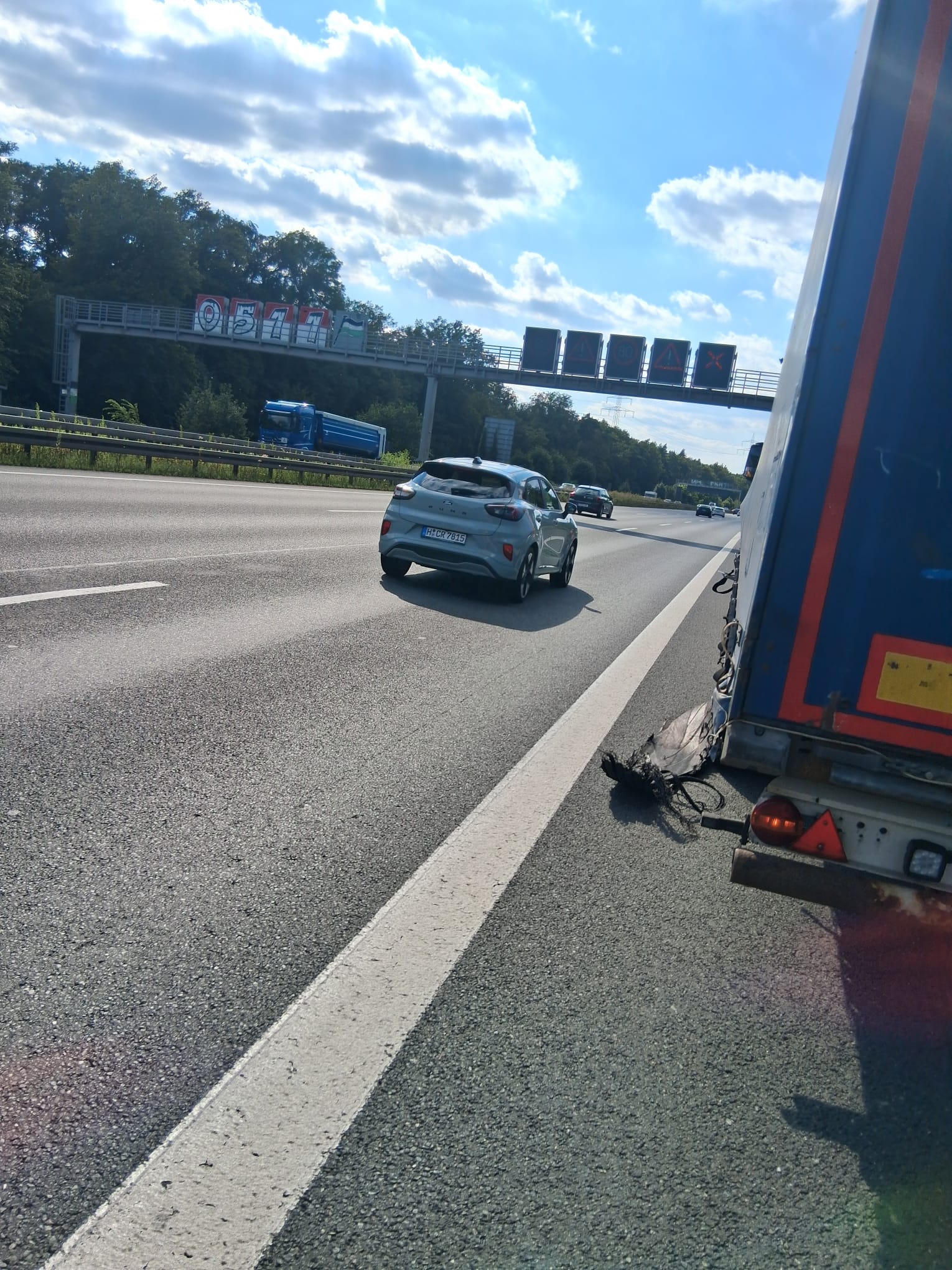
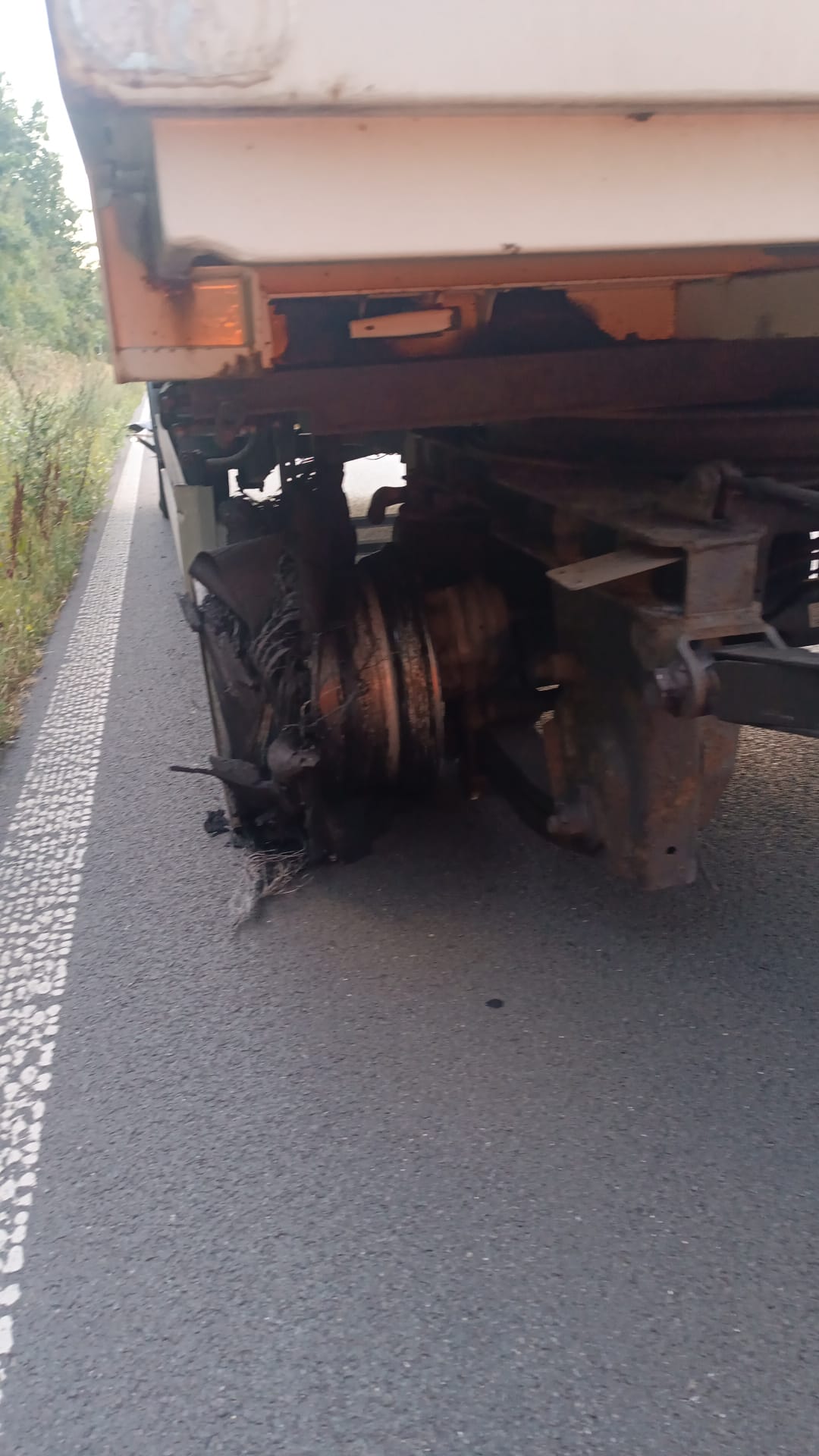
The tyre in question was completely torn apart: tread and sidewall hung in shreds, and cord fragments were scattered as far as the right-hand lane. That is where the real danger lies — tyre debris on hot tarmac is a genuine hazard to following traffic, especially motorcyclists and smaller cars with less ground clearance.
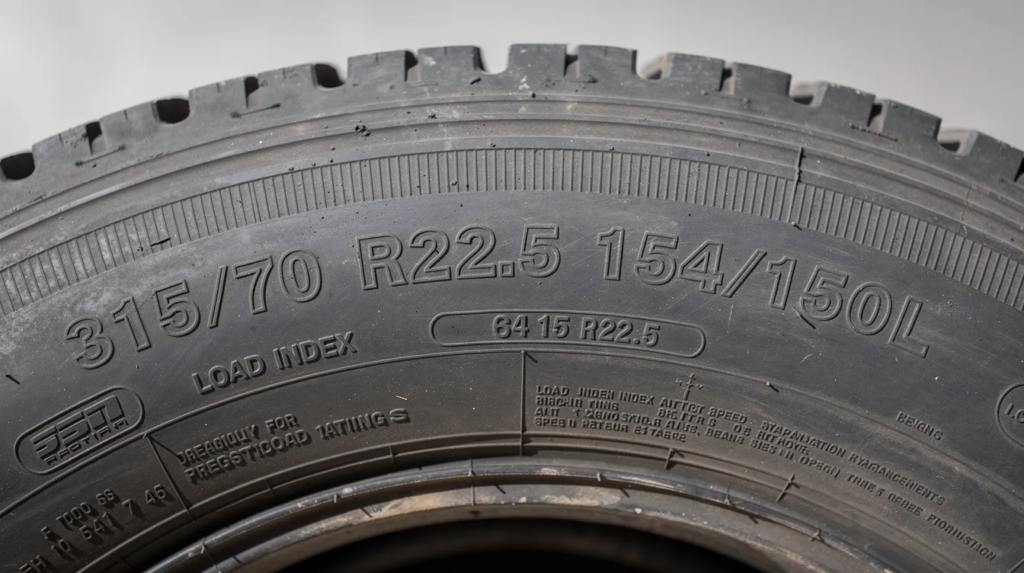
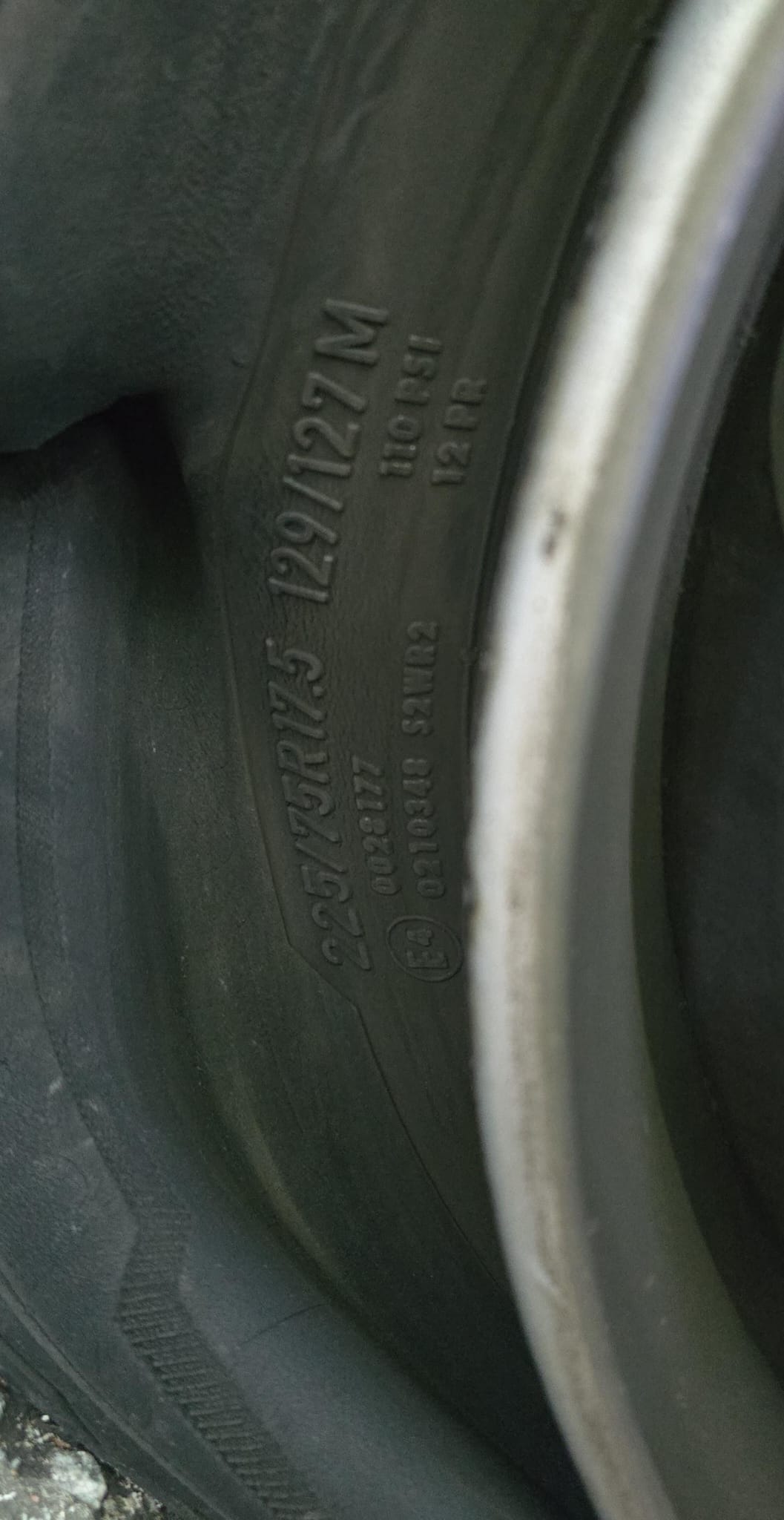
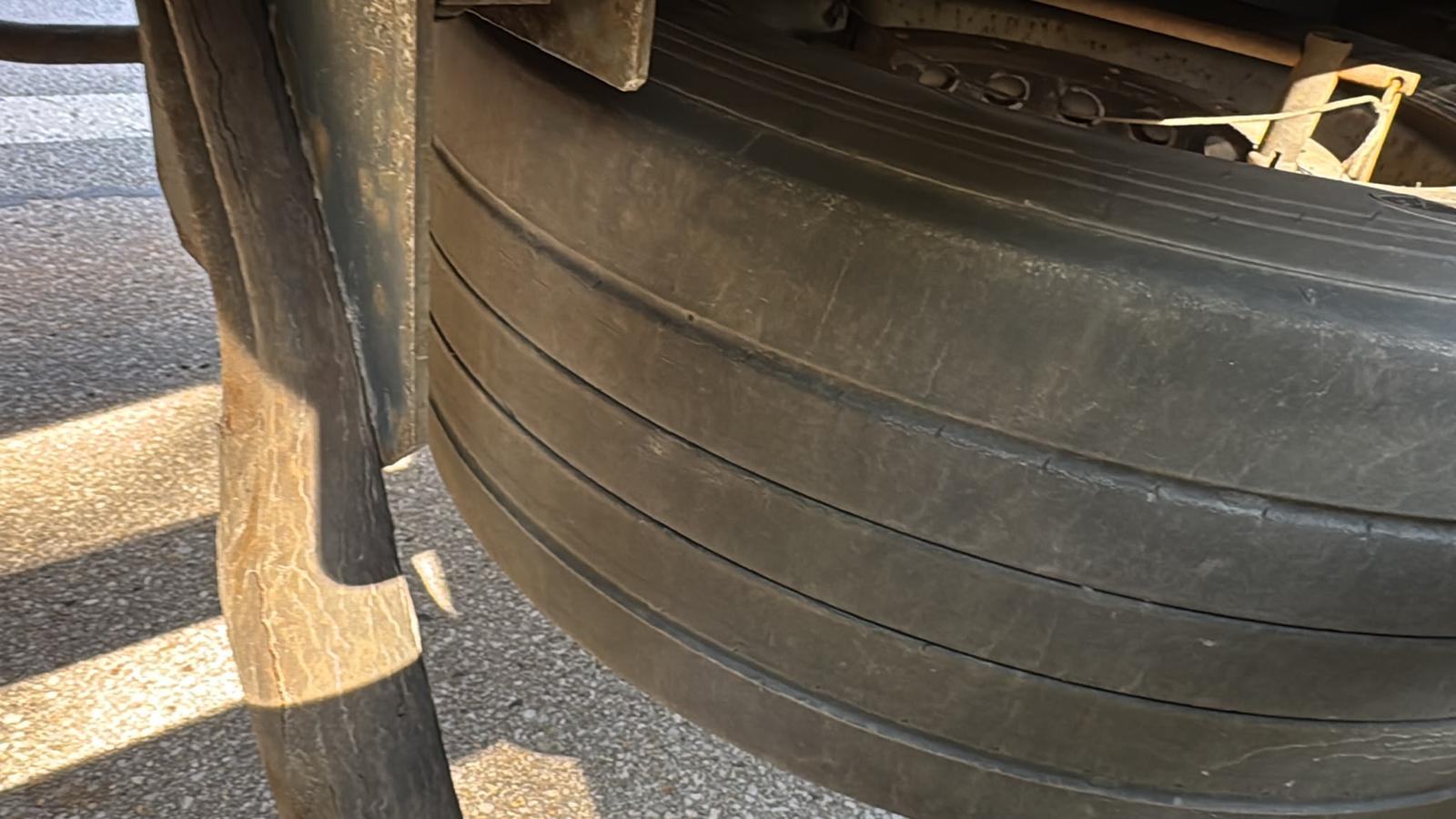
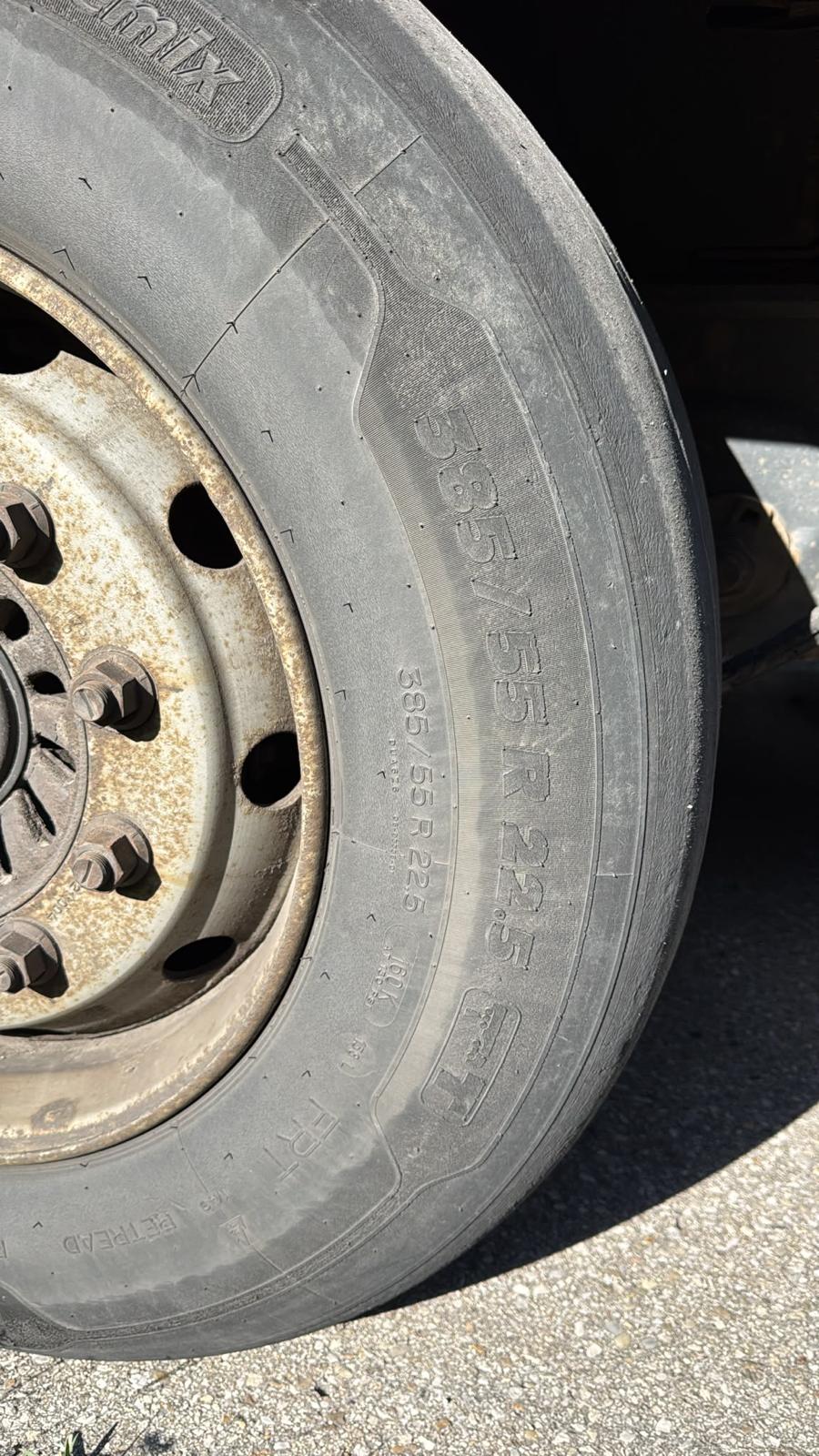
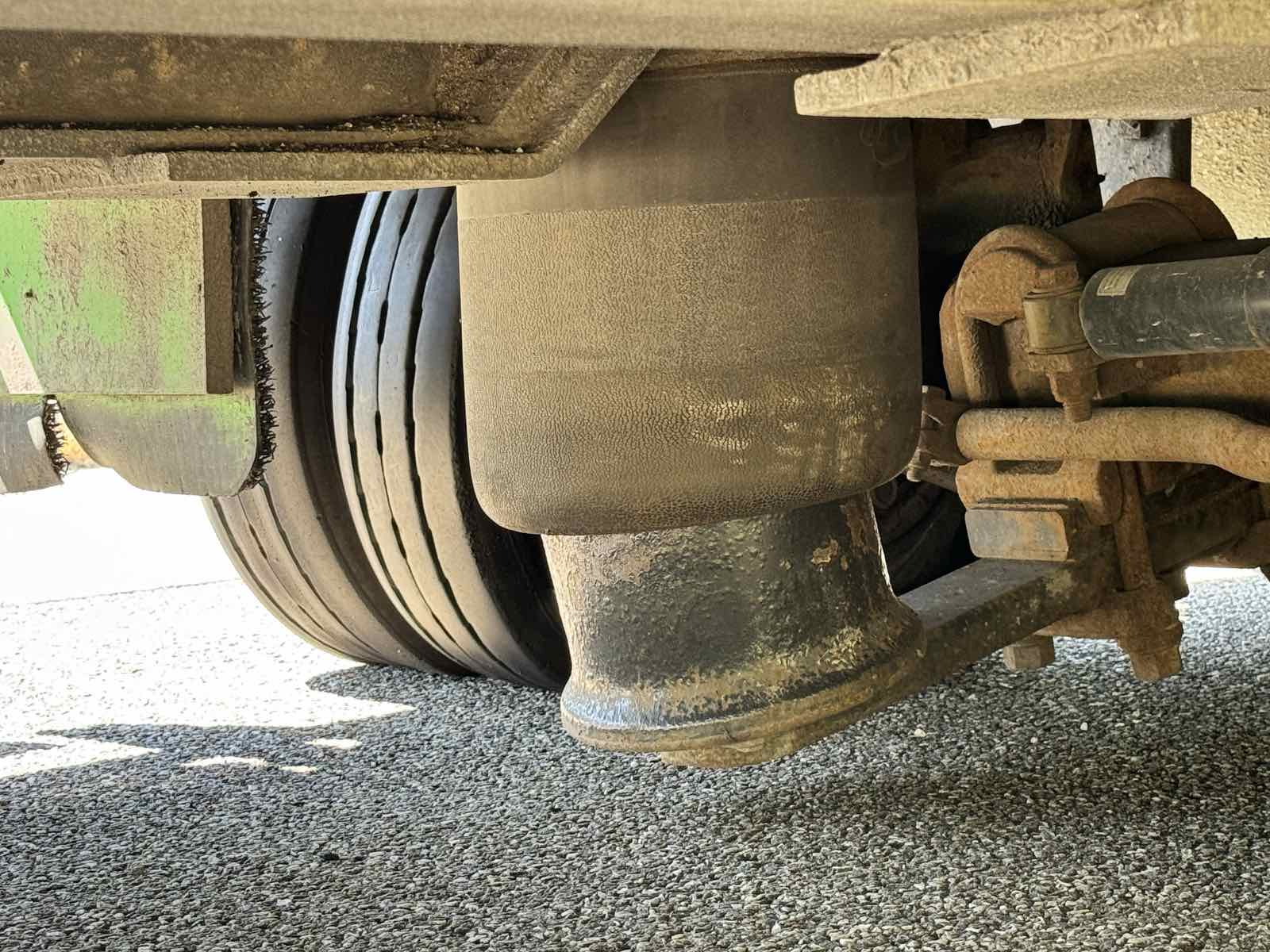
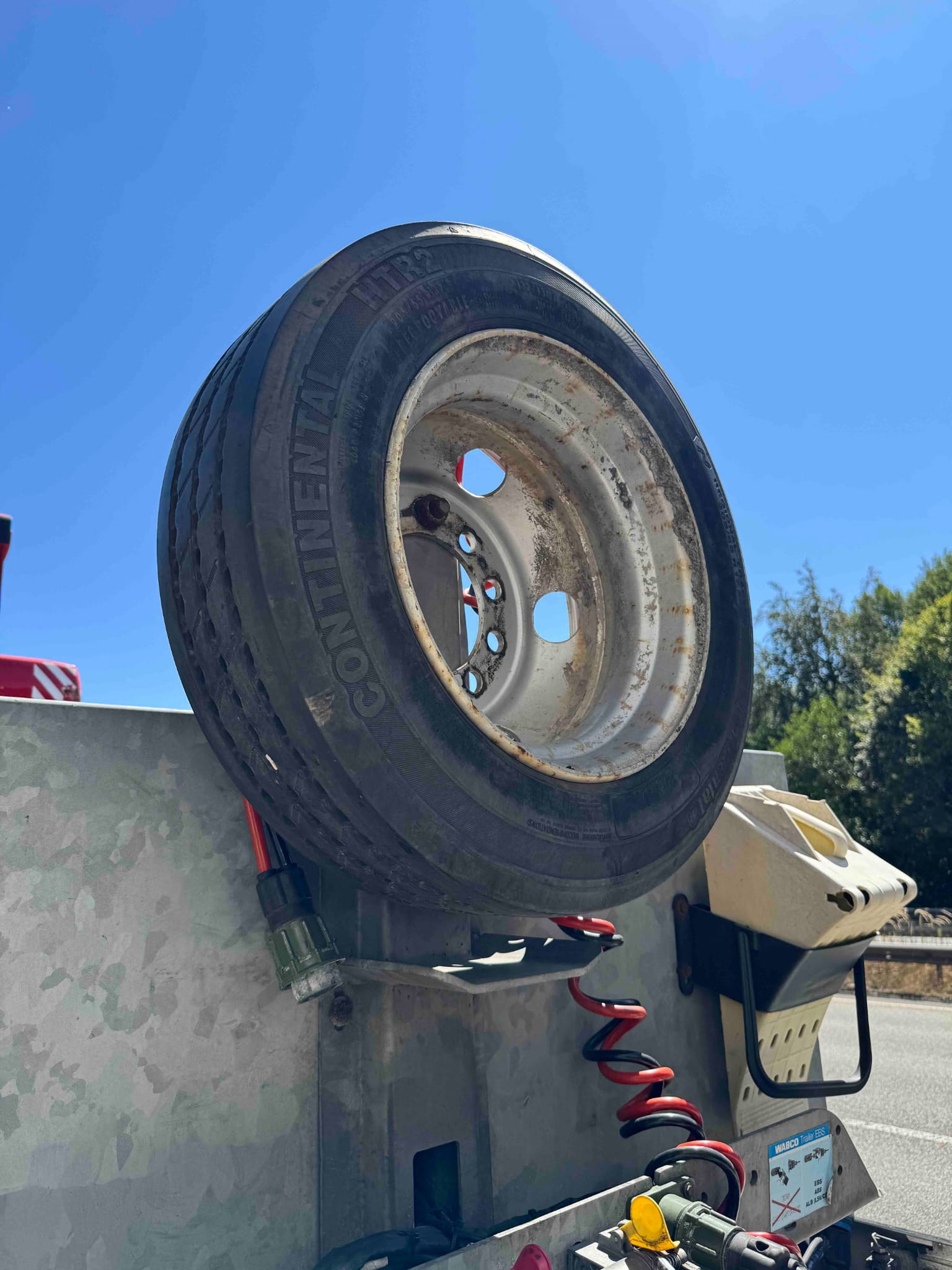
It was early afternoon, and asphalt temperature that July day sat well above 50°C. A check of the remaining tyres — including axles fitted with 385/55R22.5 and 225/75R17.5, plus the spare mounted under the frame — showed no acute faults, but was still mandatory before the lorry could carry on.
Why this exact stretch is risky
The long climb near Merklingen forces loaded artics to slow down and work the engine harder, both of which push tyre temperature up on top of the already hot road surface. Combined with heavy summer traffic on the A8 between Stuttgart and Ulm, it is one of the spots where our call-outs spike noticeably every high summer.
How does heat actually destroy a lorry tyre?
Heat destroys a lorry tyre by weakening the bond between rubber and steel cord while internal pressure rises at the same time — the tyre becomes mechanically less stable exactly when the load on it is at its highest.
On a sunny July afternoon, dark asphalt can reach a surface temperature of 50–60°C. A loaded trailer tyre working under load adds another 20–30°C through flex heating. Add it up, and a trailer tyre’s carcass is operating at temperatures it was never designed to sustain continuously.
Rising temperature naturally raises tyre pressure — that alone is normal and harmless. The danger appears when heat meets an existing structural weakness: sidewall ageing cracks, an old repair, or a tyre that has been running slightly underinflated for a while. That combination — pre-existing weakness plus a heat spike plus full load on a climb — is exactly what produced the blowout near Merklingen.
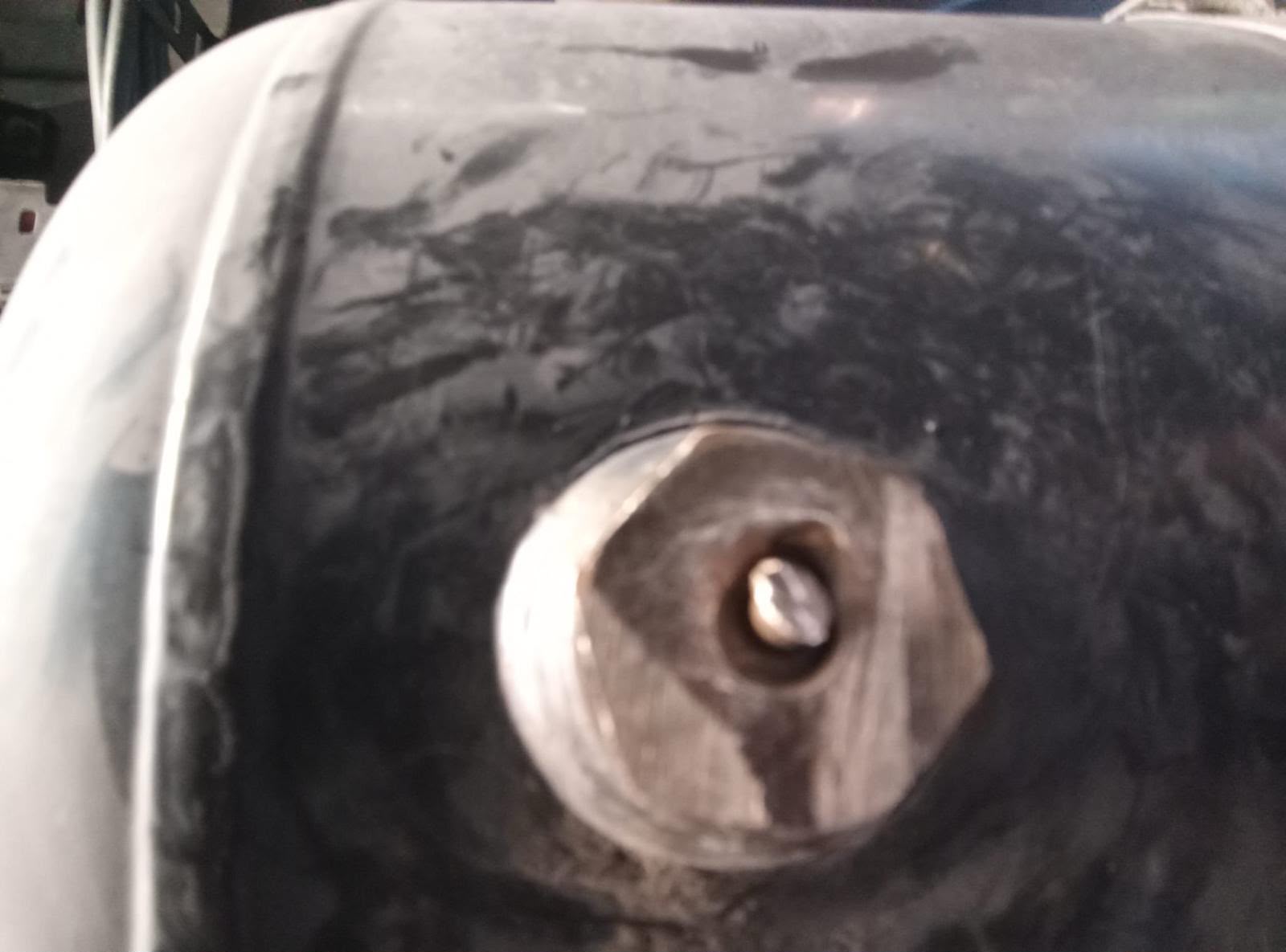
Why should you never bleed pressure from a hot tyre?
You should never bleed pressure from a hot tyre because the extra reading is a normal, temporary effect of heat — once the tyre cools down it ends up underinflated, and underinflation is structurally more dangerous than the harmless heat-related overpressure.
This is one of the most common mistakes we see at the roadside: a driver checks pressure at midday on hot tarmac, sees 9.5 or even 10 bar instead of the usual 8.5–9.5 bar for drive and trailer axles, and bleeds air off to hit “the correct number”. After sunset, once the tyre and road cool down, that tyre is now genuinely underinflated.
An underinflated tyre flexes more, heats up faster, and loses exactly the structural margin it needs for the next hot spell. The rule is simple: check and adjust pressure only on a cold tyre, ideally first thing in the morning, never on hot tarmac at midday.
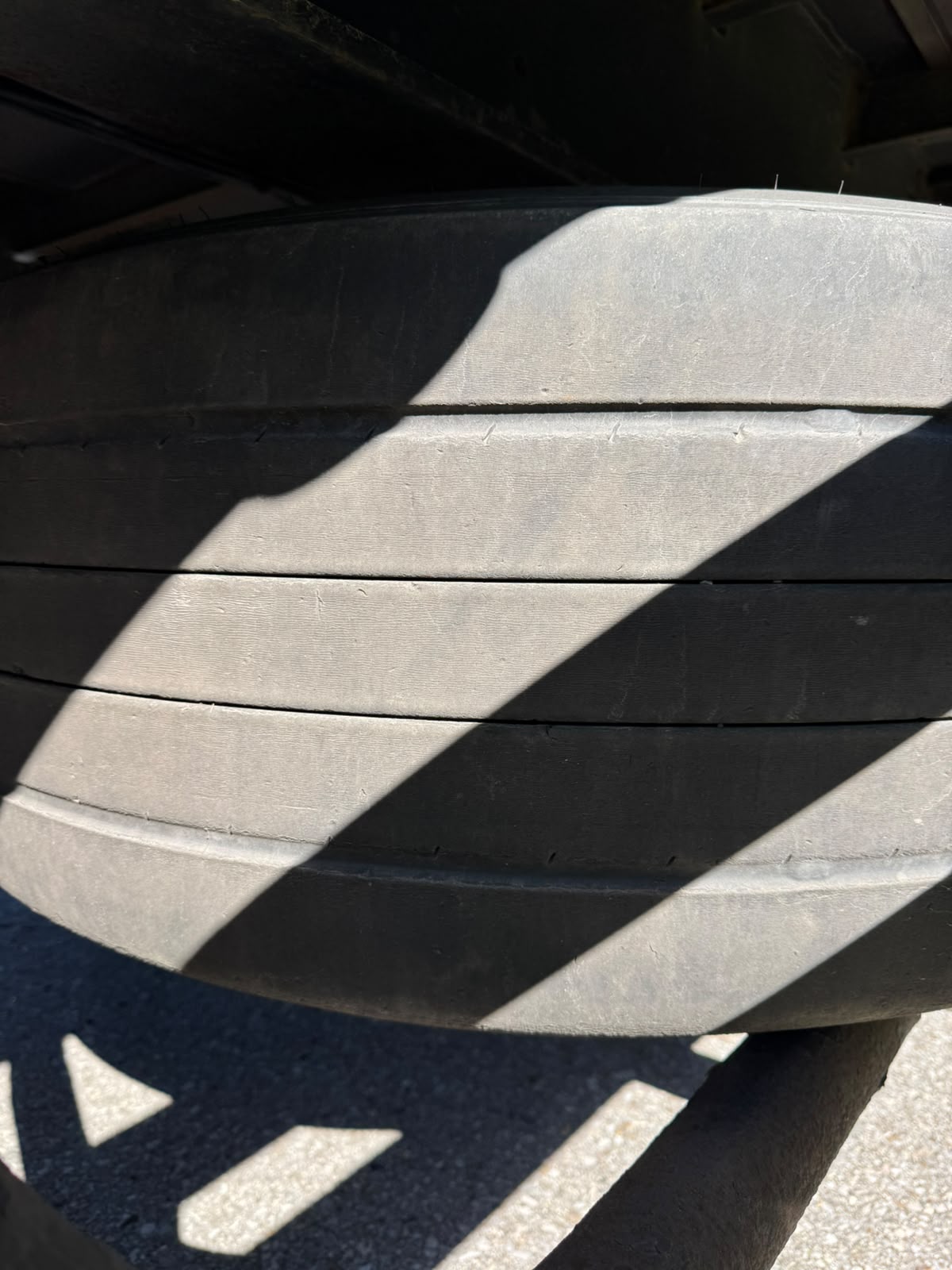
Why is a climb, heat and a full load the worst combination?
A climb, heat and a full load add up to the worst-case load because axle load increases on the gradient, speed drops, and the airflow that would normally cool the tyre disappears — heat can no longer escape while it is being generated at its highest rate.
On flat ground, airflow provides some cooling to the tyre wall. On a climb, that cooling largely disappears because of lower speed, while flex heating increases because of higher pulling force. A fully loaded trailer adds maximum static load to the axle on top of that.
The result is a tyre generating heat continuously over several minutes without being able to shed it. That exact pattern — gradient, summer heat, full load — is precisely what occurred near Merklingen. Fleets whose routes regularly cross the Swabian Alb, the Black Forest or similar terrain should factor this combination explicitly into summer route planning.
How was the call-out organised?
- Emergency call received — the driver reported a trailer tyre blowout, current position A8 before Merklingen, heading towards Ulm.
- Instant phone diagnosis — axle, tyre size (385/65 R22.5) and vehicle type were confirmed to pre-reserve the correct replacement.
- Regional partner alerted — our multilingual dispatch checked tyre stock and travel time for the nearest team in our partner network.
- Safety instructions to the driver — hazard lights, warning triangle at a safe distance, hi-vis vest, staying behind the crash barrier until the team arrived.
- Travel with live tracking — the driver received an estimated arrival time, updated en route.
This structure — central dispatch, a regional partner network, clear safety steps for the driver — is why our mobile truck service delivers predictable response times even on busy motorway sections.
Why is the hard shoulder situation serious?
A stranded trailer on the hard shoulder in heavy summer traffic is serious because lorry tyres run at 8.5 to 9.5 bar operating pressure, and continuing to drive on a damaged tyre can wreck the rim or overload the neighbouring axle — on top of the direct risk to the technician working next to live traffic.
When our team arrived, the tyre in question was effectively flat and the carcass destroyed. Driving on, even a few kilometres to the next service station, would have damaged the rim and, worst case, overloaded the neighbouring axle as it tried to compensate for the missing load capacity.
The working conditions themselves add to the picture: at asphalt temperatures above 50°C, physical work right next to the carriageway is significantly harder, and the team needs to pause more often than in spring or autumn. That is one reason heat call-outs tend to run slightly longer than a comparable tyre change in mild weather.
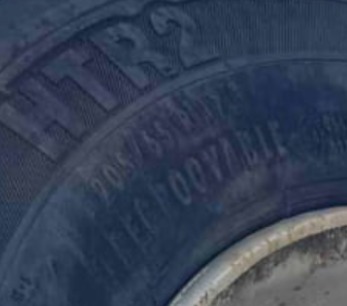
What are the exact steps in a lorry tyre change?
- Securing the site — warning triangle, hazard lighting, hi-vis for the whole team, positioning the service vehicle as an additional barrier.
- Damage diagnosis — checking the rim, wheel studs and hub for consequential damage caused by the blowout.
- Removing the failed tyre — stripping the remains, cleaning the rim, visually checking for cracks or deformation.
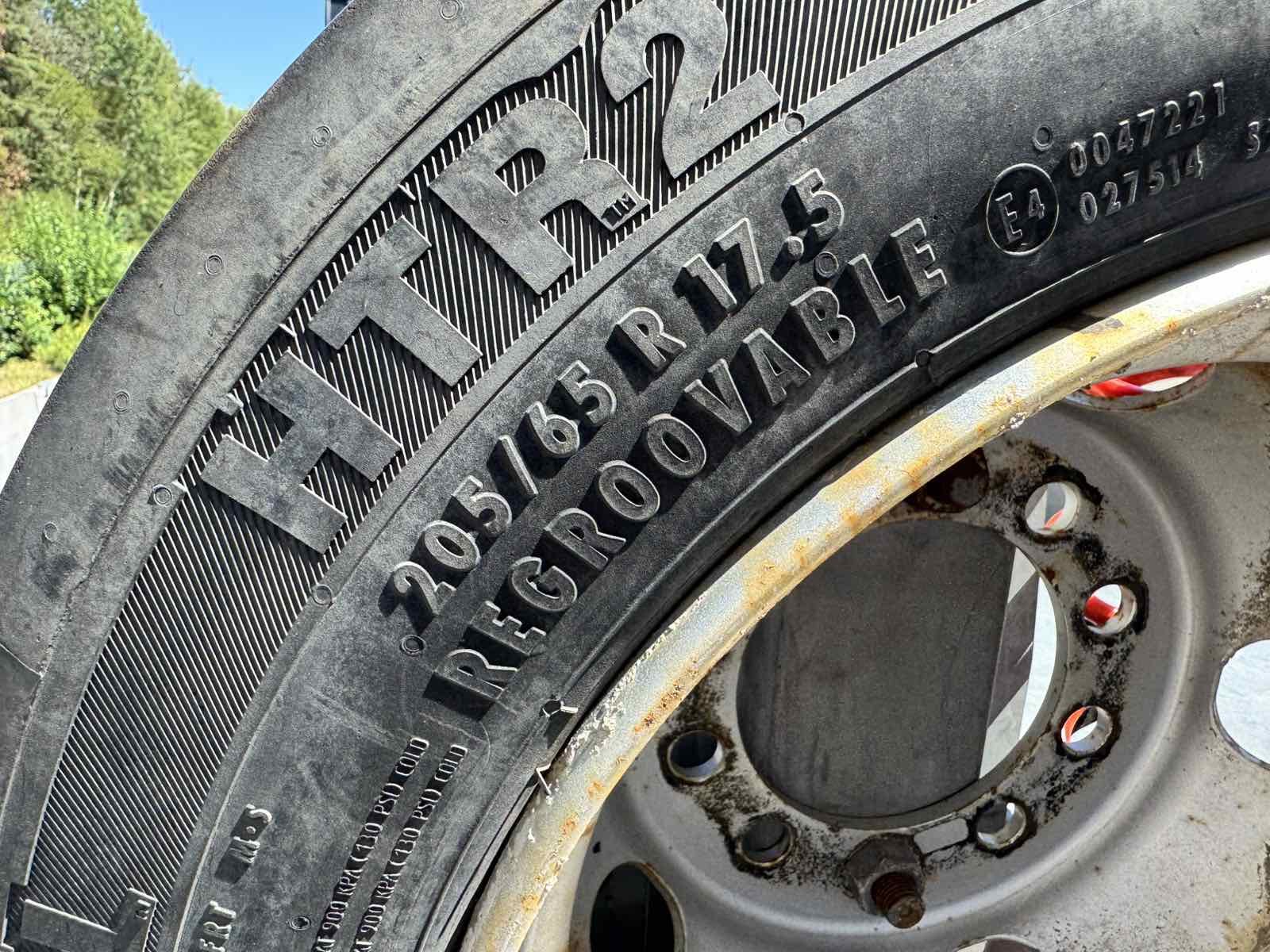
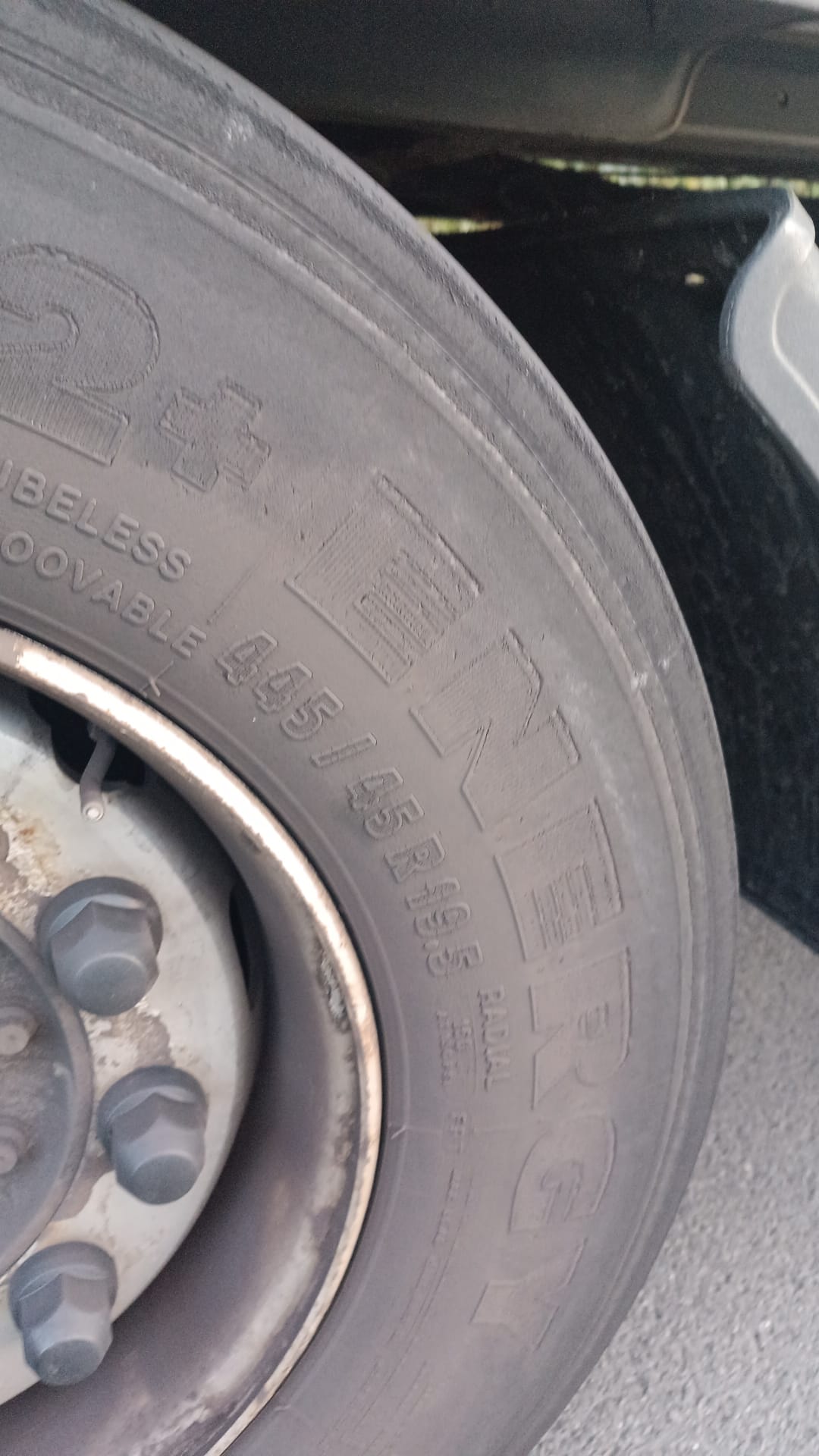
- Fitting the new tyre — mounting the 385/65 R22.5, balancing, tightening the wheel studs in a star pattern to the specified torque.
- Final check — cold-state pressure reading as a reference, visual check of neighbouring axles, clearance to continue.
The star-pattern torque sequence in step 4 is not a cosmetic detail — it prevents the rim seating unevenly, which can later cause vibration or loosened studs.
What is the full timeline of the call-out?
| Time | Phase | Action |
|---|---|---|
| 14:20 | Emergency call | Driver reports trailer tyre blowout, A8 before Merklingen |
| 14:20–14:35 | Dispatch | Location confirmed, 385/65 R22.5 stock confirmed, partner team alerted |
| 14:35–15:20 | Travel | Service team on the A8 towards Ulm, 45 minutes in summer traffic |
| 15:20–15:35 | Securing & diagnosis | Site secured, rim and neighbouring axles checked |
| 15:35–16:20 | Tyre change | Removal, fitting the new tyre, star-pattern torque |
| 16:20–16:35 | Final check | Pressure check, visual inspection, clearance |
Total time: 2 hours 15 minutes from the call to the lorry being cleared to continue.
What does a lorry tyre change on the motorway cost in hot weather?
A call-out like this one costs €910 net, made up of the tyre, the travel charge, labour and disposal. In hot weather, labour time tends to run slightly higher because the team has to pause more often due to the heat.
| Item | Price (EUR, net) |
|---|---|
| Tyre 385/65 R22.5 | €480 |
| Call-out charge | €260 |
| Labour (75 min) | €150 |
| Old tyre disposal | €20 |
| TOTAL | €910 |
All prices are net figures, plus statutory VAT. Factors that shift the price: time of day (night and weekend surcharges of 25–50%), distance to the nearest partner workshop, availability of the exact tyre size, and — in summer — the extra labour time caused by heat breaks.
For comparison: a stranded articulated lorry costs the haulier roughly €800–1,200 per day in downtime, before any contract penalties. A professional tyre change completed in a little over two hours is almost always the more economical option compared with an improvised DIY attempt or waiting for the next available workshop slot.
Why shouldn’t you attempt a tyre change yourself?
- No specialist tools: A trailer tyre this size weighs over 70kg — without a proper wheel lift and torque wrench, a safe fit is close to impossible.
- Rim damage risk: Driving on, even briefly, on a flat tyre can bend the rim, making the eventual repair far more expensive than the original tyre change.
- Danger from live traffic: Working on the hard shoulder without professional traffic protection is one of the most underestimated risks in the profession.
- Wrong torque value: Under-tightened studs can work loose; over-tightened ones can snap — both with potentially serious consequences.
- Missed damage on neighbouring axles: An untrained eye rarely spots whether the adjacent axle was also damaged by the overload.
What other situations does our tyre service get called out for?
- Trailer tyre blowouts on gradient stretches such as the Swabian Alb, the Black Forest or the Franconian Forest.
- Twin-tyre failures, often caused by an initially unnoticed flat on the inner wheel.
- Rim damage after kerb contact or a pothole, combined with tyre damage.
- Tyre failures on fully loaded car transporters, where time back on the road is especially critical.
- Call-outs where the driver is unsure whether continuing is even legally permitted with the current tyre condition.
How do you protect lorry tyres in summer?
Lorry tyres are protected in summer by checking pressure only when the tyre is cold, not driving at the top of the speed rating on hot days, and deliberately scheduling cooling breaks on long routes.
In practical terms, for drivers and dispatch that means:
- Check pressure in the morning before setting off, never at midday on hot tarmac.
- During heat warnings, keep cruising speed slightly under the legal maximum.
- Plan extra breaks on long climbs so tyres and brakes can cool down.
- Never exceed the tyre’s rated load index, even briefly.
- Track tyre age: tyres over six years old should get an extra check before the summer season starts.
Why does the number of tyre failures spike every July and August?
Tyre failures spike in July and August because high ambient temperatures use up the structural margin of ageing or slightly underinflated tyres — damage that would go unnoticed at 15°C becomes a blowout at 35°C.
Our own call-out statistics show noticeably more blowout calls in high summer than in winter, when cold-related faults and battery failures dominate instead. The effect hits long-haul vehicles on hilly routes hardest, because that is where heat, gradient and long drive times combine.
What does the speed rating mean when it’s hot?
A lorry tyre’s speed rating states the maximum sustained speed at full load — at high temperatures the real safety margin shrinks, which is why driving at the top of that rating is riskier in summer than in cool weather.
The rating is established under standard test conditions, not at 35°C ambient with 55°C road surface. A driver who runs consistently at the top of the legal speed limit through summer eats significantly into the tyre’s remaining thermal margin. Backing off by a few km/h on very hot days costs almost no time but meaningfully cuts the failure risk.
Why is tyre debris on hot asphalt dangerous for other road users?
Tyre debris on the carriageway is dangerous because it forces sudden evasive manoeuvres at speed, and it is a real fall and collision risk especially for motorcyclists, but also for cars with sensitive suspension setups.
Near Merklingen, cord fragments and rubber were scattered as far as the right-hand lane. On hot asphalt, debris like this also tends to stay tackier for longer and can bond to the road surface, making later clean-up harder. That is why securing and clearing the incident scene quickly is a standing part of our team’s job, not just the tyre change itself.
How should fleets prepare for summer?
Fleets should run a structured tyre check before summer starts: pressure checks on a fixed interval, rotation according to manufacturer guidance, and a clear record of the age of every tyre in the fleet.
Major manufacturers such as Michelin, Continental, Goodyear and Bridgestone recommend regular tread depth and pressure checks for commercial vehicle tyres, independent of the legal minimum. A systematic summer check covers:
- Pressure checks on all axles every two weeks, weekly for long-haul operations.
- Visual inspection for ageing cracks, especially on tyres over four years old.
- Rotation between steering, drive and trailer axles per manufacturer guidance, to avoid uneven wear.
- Recording the manufacturing date (DOT code) for every tyre in the fleet.
Fleets that follow these points consistently through summer meaningfully cut the risk of a roadside blowout, even though a residual risk — like the one near Merklingen — can never fully reach zero.
Why choose a professional tyre service over doing it yourself?
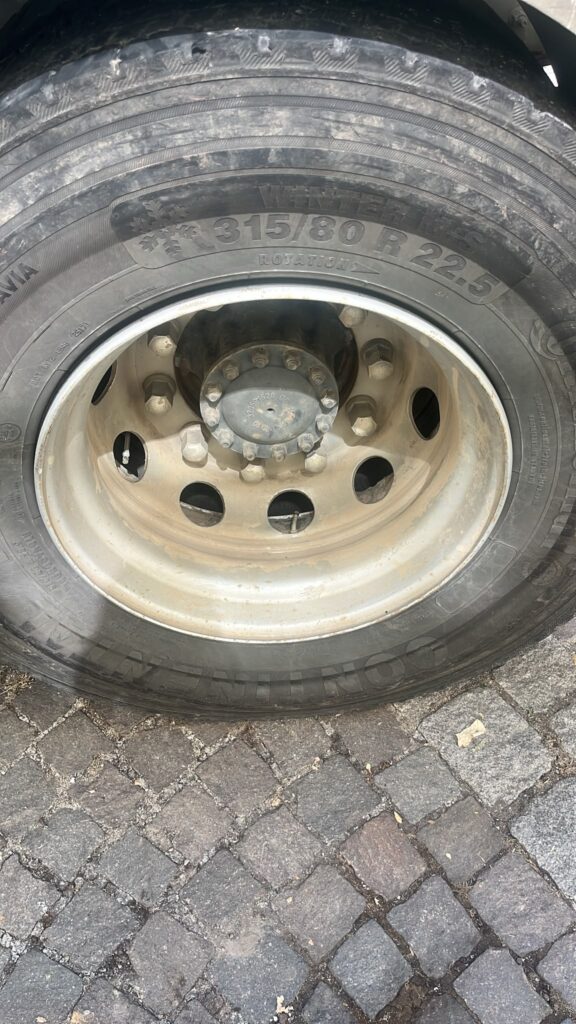
Our tyre service works with a regional partner network that stocks common sizes such as 385/65 R22.5, 315/80 R22.5 and 245/70 R19.5, and it is closely linked with our truck workshop for follow-up repairs. Multilingual dispatch reaches drivers from across Europe in their own language, which matters most in a stressful roadside situation.
We are reachable 24/7, every day of the year, including public holidays and the middle of the night. Pricing is transparent: the driver or dispatcher gets a realistic cost estimate before the job starts, not a surprise afterwards.
Frequently asked questions
What does a lorry tyre change on the motorway cost?
A typical motorway tyre change costs €750–1,400 net, depending on tyre size, time of day and distance. In this case, the total was €910 net for a 385/65 R22.5.
How long does a lorry tyre change take on the motorway?
From the call to being cleared to continue usually takes 1.5 to 3 hours. In this job it was 2 hours 15 minutes, including travel and securing the site.
Why do lorry tyres blow out more often in summer?
Heat weakens the bond between rubber and cord while internal pressure rises. Combined with gradients and full loads, the risk of a blowout increases significantly compared with cooler months.
Should you bleed air from a hot tyre?
No. The extra pressure reading when it’s hot is normal and temporary. Bleeding it off risks an underinflated tyre once it cools, which is structurally less stable than the original state.
Who pays for a roadside tyre change?
That depends on the contract between the driver, the haulier and the client. We invoice the address supplied by dispatch and work with clear pricing agreed in advance.
What happens to the burst tyre afterwards?
The damaged tyre is disposed of correctly; the cost for that is included in the total, at around €20.
Summary
- Tyre specification: 385/65 R22.5, trailer of a foreign-registered articulated lorry.
- Location: A8 near Merklingen, Swabian Alb, direction Ulm.
- Response time: 15 minutes to alert the partner team, 45 minutes travel.
- Total time: 2 hours 15 minutes from the call to clearance.
- Cost: €910 net.
- Consequential damage: none, thanks to a timely stop on the hard shoulder.
Request help now
A tyre blowout in hot weather is not a reason to panic, but it is a reason to act correctly straight away: stop, secure the scene, call. Our team is reachable 24/7, across Germany, on +49 160 5753826. More information about our services is available at www.lkwhelp24.com.
Keywords: mobile truck tyre service | tyre blowout motorway | 385/65 R22.5 | tyre blowout heat | lorry tyre pressure summer | tyre service A8 | truck roadside assistance summer
Related articles
- Truck Tire Service Near Me: How We Got a DAF Artic Back on the Road in 2 Hours After a Tyre Blowout on the Autobahn Near Hof
- Truck Tyre Service for Blowout and Rim Damage on the Motorway near Trier: Complete Solution in Under 2 Hours
- Winter Tyres for HGVs in Germany – Legal Requirements, Safety & Service by LKWHelp24
- Truck Tire Service Near Me: Professional Recovery of a 40-Tonner After a Blowout on Soft Terrain in Landsberg am Lech
- Truck Tire Service Near Me: HGV Tyre Blowout on the Motorway near Duisburg – DAF XF Artic On-Site Replacement