Skip to content
A driver pulling into a rest area on the A4 near Eisenach, heading towards Erfurt, caught the smell of diesel before he saw anything wrong. He climbed down, walked round the tractor unit and found a dark, spreading stain on the tarmac under the chassis. No warning light, no sudden bang, just a smell and a puddle. That is how most fuel line failures on heavy trucks actually announce themselves, and it is exactly the kind of fault that gets ignored until it becomes a breakdown, a fire, or a fine.
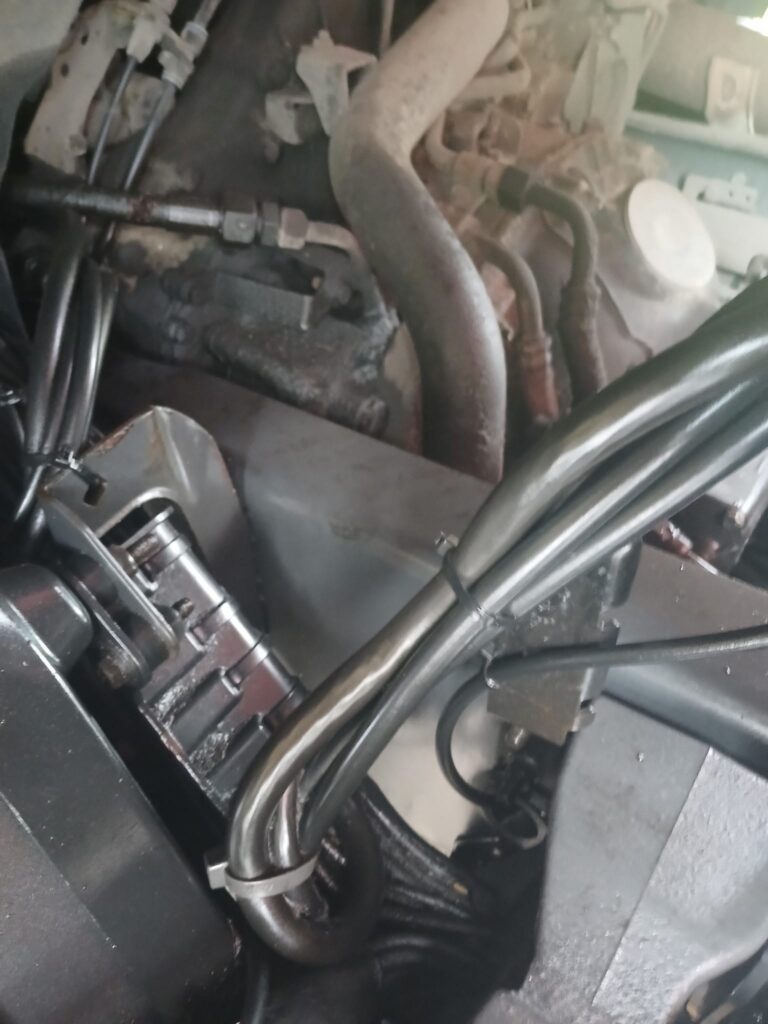
This is a walk-through of a real job: a corroded fuel line under the floor pan of a Sattelzugmaschine, found and fixed by a mobile technician on site, without a tow to a workshop. It covers what corrosion does to fuel lines over the years, why a diesel leak is more dangerous than most drivers assume, what a mobile repair actually involves, and what it cost. The numbers below (timeline and invoice) are the real figures from this callout.
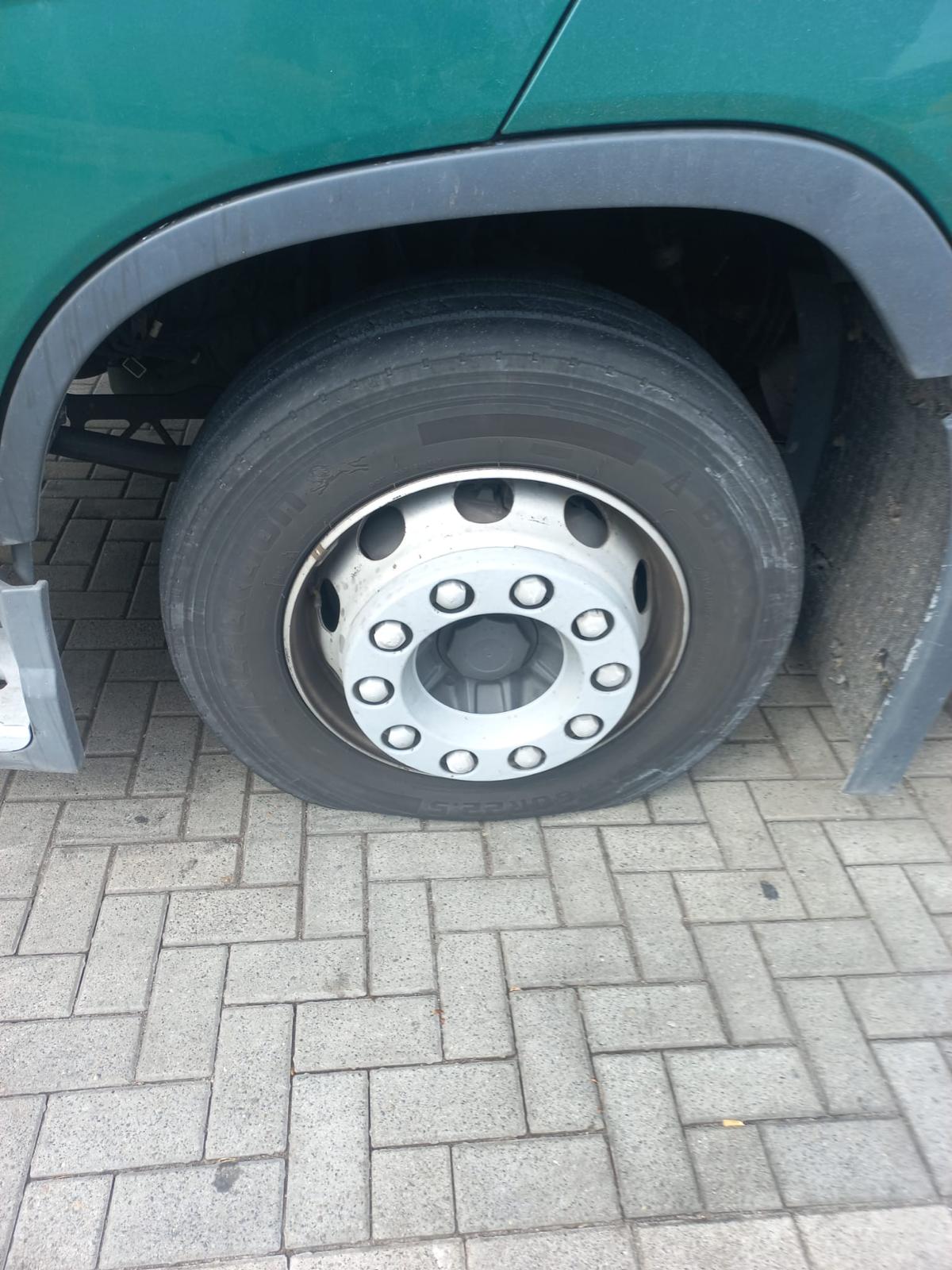
The situation: diesel on the tarmac, no obvious cause
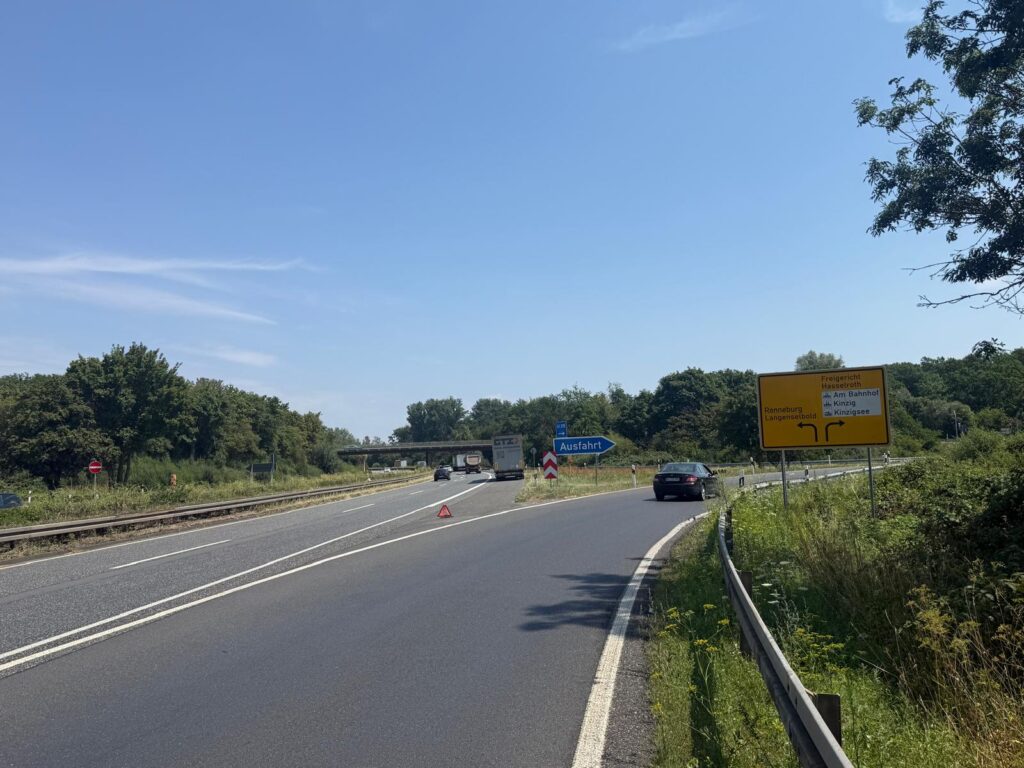
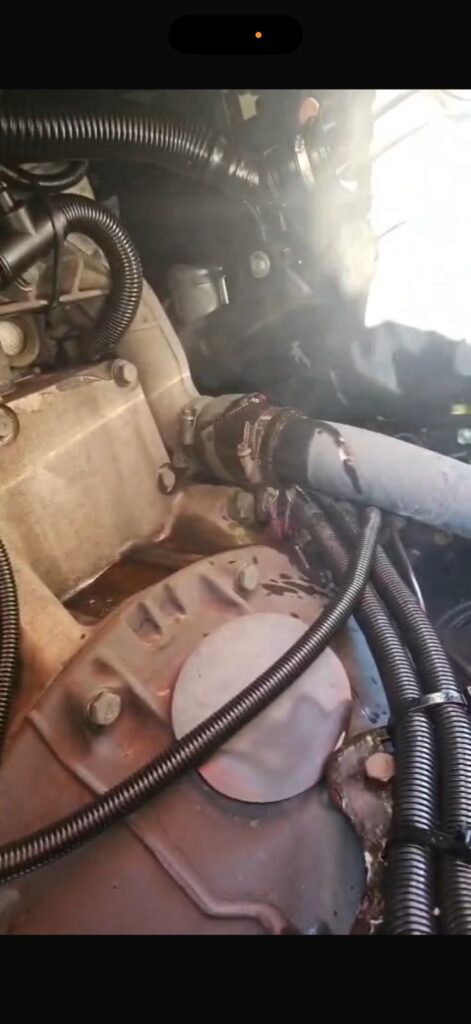
The vehicle was a [seven-figure-mileage] articulated tractor unit, parked at a rest area rather than stopped on the hard shoulder, which mattered a lot for how the job could be handled. The driver had noticed nothing unusual while driving; no drop in power, no warning on the dash. It was only during a routine stop that the smell gave it away, and a look underneath confirmed it: diesel dripping from somewhere near the chassis rail, dark and slick against the concrete.
He did the right thing immediately. He did not try to drive on to the next depot, did not attempt to top up and hope the leak was minor, and did not ignore it because the engine still ran fine. He called the emergency line. That single decision is the difference between a controlled repair and a much bigger problem an hour down the road, and it is worth explaining why before getting into the mechanics of the fix.
Why fuel lines corrode in the first place
Steel and even coated fuel lines do not fail overnight. Corrosion on a truck’s underbody is a slow, cumulative process, and by the time diesel is visibly dripping, the line has usually been thinning for months or years. A handful of factors line up to cause it, and on a German long-haul truck they tend to arrive together rather than one at a time.
Winter road salt is the biggest single driver. Germany, like most of central and northern Europe, salts its motorways heavily from November through March, and that brine gets thrown straight up into the chassis by the front wheels and by traffic on the carriageway. It settles into every seam, clip, and bracket along the fuel line run and simply does not dry out between trips. Add in the constant low-level sandblasting effect from grit and road debris kicked up by the tyres, which wears through factory-applied anti-corrosion coating faster than most operators expect, and you get bare metal exposed to salt spray on a weekly cycle.
Age plays its part too. A line that has done several hundred thousand kilometres has been through many winters, and any coating damage from a stone chip, a misaligned clamp, or a rough repair years earlier becomes the starting point for rust to spread from. Condensation adds a final, quieter mechanism: temperature swings between a cold overnight stop and a warm midday drive cause moisture to form on the underside of the chassis, and that moisture sits against the metal in exactly the low, sheltered spots where salt has already accumulated. None of this is dramatic on its own. Combined, over years, it eats through a line from the outside in.
Why a diesel leak is not something you drive through
A fuel leak on a truck is treated differently to almost any other fault, and for good reason. Three separate risks stack up the moment diesel starts escaping under the vehicle, and any one of them is enough to justify stopping immediately.
- Fire risk. The exhaust system and turbocharger housing run hot enough to ignite diesel vapour if a leaking line drips or sprays anywhere near them. Diesel itself is harder to ignite than petrol, but a fine mist landing on a hot manifold is a genuine ignition source, and a fuel fire under a loaded trailer is not a small incident.
- Loss of fuel pressure. As the leak worsens, the injection system can lose pressure, and the engine can stall without warning, potentially in moving traffic or on a slip road. An unpowered heavy vehicle in a live lane is a hazard to the driver and to everyone around it.
- Environmental damage. Diesel reaching the road surface is legally an environmental incident in Germany, not just a mechanical nuisance. It can trigger a fine for the operator and, depending on the volume and location, a call-out to the fire brigade or a hazardous-materials team to contain and clean the spill before the road can reopen to normal traffic. Carriers are expected to know this and to act on it, which is covered further down.
Put together, that is why “just drive carefully to the depot” is bad advice for a fuel leak, even a slow one. A line that is dripping now can fail completely within minutes if vibration, heat, or a pothole finishes off a corroded section that was already paper-thin.
How the mobile team handled it
The call came in at 14:35. The driver described the smell, the visible stain, and the location: A4 near Eisenach, direction Erfurt, vehicle stationary at a rest area rather than on the hard shoulder, which meant no need to secure a live carriageway before work could begin. Dispatch located the vehicle and alerted the regional partner workshop within fifteen minutes, and a technician was on the road shortly after.
Once on site, the process followed a fixed sequence rather than guesswork:
- Visual inspection and site safety. With the truck already parked off the running lanes, the technician’s first job was confirming the exact source of the leak rather than assuming it from the stain alone; diesel can travel along a chassis rail before dripping, so the visible puddle is not always directly below the actual failure point.
- Locating the leak. Working along the fuel line run from tank to engine, checking clips, unions, and any section showing surface rust or pitting.
- Exposing the corroded section. Once identified, the affected length of line was isolated so the extent of the corrosion could be assessed properly, rather than patched blind.
- Replacing the line. A new section was cut to length and fitted with appropriate connectors, matched to the original routing and clearances so it would not chafe against the chassis or brake lines nearby.
- Pressure and leak testing. The system was pressurised and checked for any residual seepage at the new joints and along the rest of the run, since a repair that leaves one weak fitting untested is not a finished repair.
The technician also checked adjacent sections of line for early signs of the same corrosion, since a fuel line that has failed once rarely fails in isolation; if one section has been sitting in salt spray for years, the metre either side of it has usually been sitting in the same conditions.
Full timeline: call to completion
| Time | Phase | Action |
|---|---|---|
| 14:35 | Emergency call | Driver reports diesel smell and a stain under the vehicle, calls the emergency dispatch |
| 14:35–14:50 | Dispatch | Control centre locates the vehicle (A4 near Eisenach, towards Erfurt), alerts the regional partner workshop |
| 14:50–15:35 | Travel | Technician drives to the rest area where the tractor unit is parked |
| 15:35–15:59 | Initial check | Visual inspection, securing the site, locating the leak |
| 15:59–16:37 | Repair | Exposing and replacing the corroded section of fuel line, pressure and leak test |
| 16:37 | Completion | System pressure checked, vehicle released |
Total time from call to completion: 2 hours 2 minutes.
That is broadly typical for a callout on a motorway network like this one; travel time depends heavily on where the nearest available technician is, and a rest-area breakdown is generally quicker to reach and work on safely than one on the hard shoulder, where traffic management alone can eat up 20 to 30 minutes before any tools come out.
What it cost
| Item | Price (EUR, net) |
|---|---|
| Callout fee | 260 |
| Fuel system diagnostics | 150 |
| Labour (repair, 1.5 hrs at €120/hr) | 180 |
| Fuel line (parts, cut-to-length + fittings) | 145 |
| Consumables (clamps, sealant, cleaner) | 45 |
| TOTAL (net, plus VAT) | 780 |
All figures are net, plus statutory VAT, as is standard for commercial vehicle work in Germany. It is worth putting that €780 next to the alternative. A loaded articulated truck standing idle costs the operator somewhere in the region of €800 to €1,200 per day once you count driver time, missed delivery windows, and knock-on penalties from customers waiting on cargo. A two-hour mobile repair, done on site at a rest area, is cheaper than a single day of standstill, and it avoids the cost and delay of a tow to a workshop entirely, which for a fuel system fault of this size would usually not even be necessary if caught early.
Why this is not a DIY job
Drivers occasionally ask whether a diesel leak can be patched with tape or a jubilee clip to get to the next stop. It cannot, safely, and here is why:
- A temporary seal on a corroded line rarely holds under the vibration and heat cycling of a running engine, and a failure a few kilometres down the road is far more dangerous than the original slow drip.
- Fuel lines run close to the exhaust and to electrical harnesses in places; a rushed or incorrect repair can create a fire risk that was not there before.
- Diesel that continues to drip while the vehicle is moving spreads the environmental problem across the network rather than containing it at one location, which is worse for the operator’s liability, not better.
- Getting the system pressure-tested afterwards, which a roadside patch cannot achieve, is the only way to confirm the fix has actually worked rather than just reduced the symptom.
Other situations our mobile teams handle
Fuel line corrosion is one item on a longer list of underbody and system faults that come up on German motorways and at rest areas across the network. Similar callouts include electrical failures that leave a vehicle completely immobilised, as documented in this gearbox and total electrical failure recovery near Frankfurt (Oder), and engine faults discovered mid-route, such as this engine failure case on the A14 near Leipzig. Not every job ends in a tow; plenty, like this one, are resolved on site with the right parts and the right diagnosis, in line with the standard our 24/7 breakdown assistance service is built around.
Prevention: what fleets and drivers can actually do
None of this is unpredictable if the underbody gets looked at regularly rather than only when something drips. A few habits catch the problem long before it becomes a roadside call:
- Underbody inspection at every service. A technician who lifts the vehicle and actually looks along the fuel line run, not just at the visible engine bay, will spot early pitting and coating damage years before it becomes a leak.
- Anti-corrosion treatment, reapplied periodically rather than assumed to last the vehicle’s whole life, especially on trucks that run German motorways through multiple winters.
- Washing the underbody after the winter salting season. A high-pressure rinse of the chassis and running gear removes accumulated salt before it has months to sit and work on bare metal.
- A proper daily walk-round, including a look underneath the vehicle for stains. A patch on the ground where the truck was parked overnight is the single most reliable early warning sign there is, and it costs nothing to check.
For a fleet manager, the economics are straightforward: a five-minute underbody glance at every stop is free, and a caught-early corrosion spot costs a fraction of what a full leak, a roadside callout, or worse, a fire incident, would cost. Trade bodies such as DEKRA publish general guidance on commercial vehicle underbody and roadworthiness checks that fleet operators can build into their own maintenance schedules, and it is worth pairing that with the vehicle manufacturer’s own service intervals rather than stretching them.
The carrier’s environmental responsibility in Germany
This is worth stating plainly, because it changes how seriously a small leak should be taken. Under German environmental and transport regulation, a carrier whose vehicle leaks fuel onto a public road is not just facing a repair bill. The operator can be held responsible for contamination of the road surface and any drainage it reaches, and depending on the scale, the incident may require the fire brigade or a specialist team to contain and clean the spill before the carriageway is cleared for use again. The Federal Office for Goods Transport (BAG) oversees commercial vehicle compliance on German roads, and the general legal framework for road use and vehicle condition is set out in provisions such as those published at gesetze-im-internet.de. A driver who stops the moment they smell diesel, rather than pushing on, is not being overly cautious; they are avoiding a much larger administrative and financial problem for their employer.
Fuel systems, tyres, and fleet maintenance: the wider picture
Underbody corrosion does not confine itself to fuel lines. Brake lines, air lines, and wiring looms running through the same chassis area are exposed to the same salt and grit, which is why a technician checking a fuel leak will typically glance at the surrounding lines rather than treat the job as isolated. Fleet operators running mixed brands, whether MAN, Scania, Volvo, DAF, or Mercedes-Benz, tend to see broadly similar corrosion patterns because the exposure is about routing and climate rather than manufacturer, though older vehicles and those that spend more winters on salted roads are consistently the ones that show up on a mobile technician’s callout list.
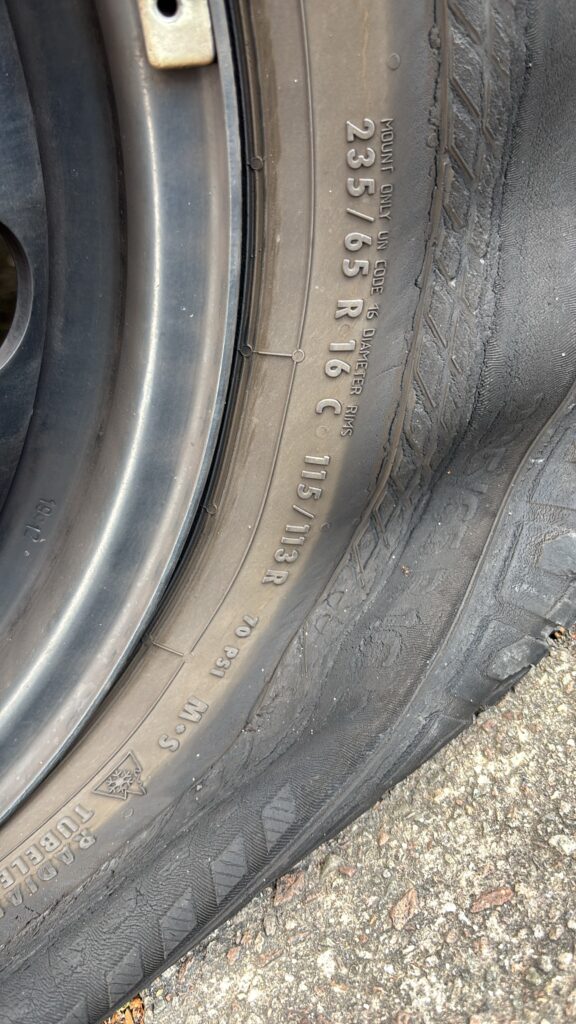
Component suppliers such as Bosch design fuel injection and line systems to tight pressure tolerances, which is exactly why a corroded, thinning line matters more on a modern common-rail diesel than it would have on an older mechanical system: pressure loss shows up faster and more visibly. Regular servicing that includes an underbody check, alongside routine tyre and brake maintenance from established suppliers, is the most cost-effective way to keep these faults from turning into roadside emergencies at all.
Why operators call us for this kind of fault
A fuel line failure is not a tyre change; it needs a technician who can diagnose a leak correctly, source or fabricate a replacement line on the spot, and pressure-test the result before releasing the vehicle. Our dispatch runs 24/7 across Germany, in multiple languages, with a partner network built specifically to reach motorway locations quickly rather than relying on a single depot. Every job comes with a transparent, itemised invoice before work starts, not a surprise total at the end, and every repair is tested before the driver is sent back on the road.
FAQ
How much does a mobile fuel line repair cost in Germany?
For a corroded fuel line section, expect a total in the region of €700 to €900 net, covering the callout, diagnostics, labour, and parts, as in this case where the total came to €780 net plus VAT. The exact figure depends on the length of line affected and how accessible it is.
How long does a roadside fuel line repair take?
From the first call to the vehicle being released, this case took 2 hours 2 minutes, including roughly 45 minutes of travel time for the technician. Straightforward jobs at accessible locations, such as a rest area rather than a live hard shoulder, tend to be at the faster end of that range.
Can I keep driving with a small diesel leak?
No. A fuel leak carries fire risk from the hot exhaust system, can cause a sudden loss of engine power, and creates an environmental incident on the road surface that can result in a fine. Stop as soon as it is safe to do so and call for assistance.
Who pays if diesel spills onto the road?
The vehicle operator is generally liable for contamination caused by a leak from their vehicle, and in serious cases the fire brigade or a hazardous-materials team may need to be called to clean the site, adding further cost on top of any fine.
What causes fuel lines to corrode on a truck?
The main causes are winter road salt, grit thrown up by the wheels wearing through protective coating, general vehicle age, and condensation forming in sheltered spots along the chassis. These effects build up over years rather than appearing suddenly.
Do I need to go to a workshop for this kind of repair?
Not always. A single corroded section, as in this case, can usually be replaced roadside by a mobile technician. A workshop visit becomes necessary when corrosion runs along the full length of the line or when the fuel tank itself is damaged.
Summary
- Vehicle: Articulated tractor unit (Sattelzugmaschine)
- Location: A4 motorway near Eisenach, direction Erfurt
- Fault: Corrosion of the fuel line under the floor pan, diesel leak
- Response time: Technician on site roughly 1 hour 15 minutes after the call
- Total time, call to completion: 2 hours 2 minutes
- Total cost: €780 net, plus VAT
- Secondary risk avoided: Fire hazard from the hot exhaust system, engine stall in traffic, environmental contamination fine
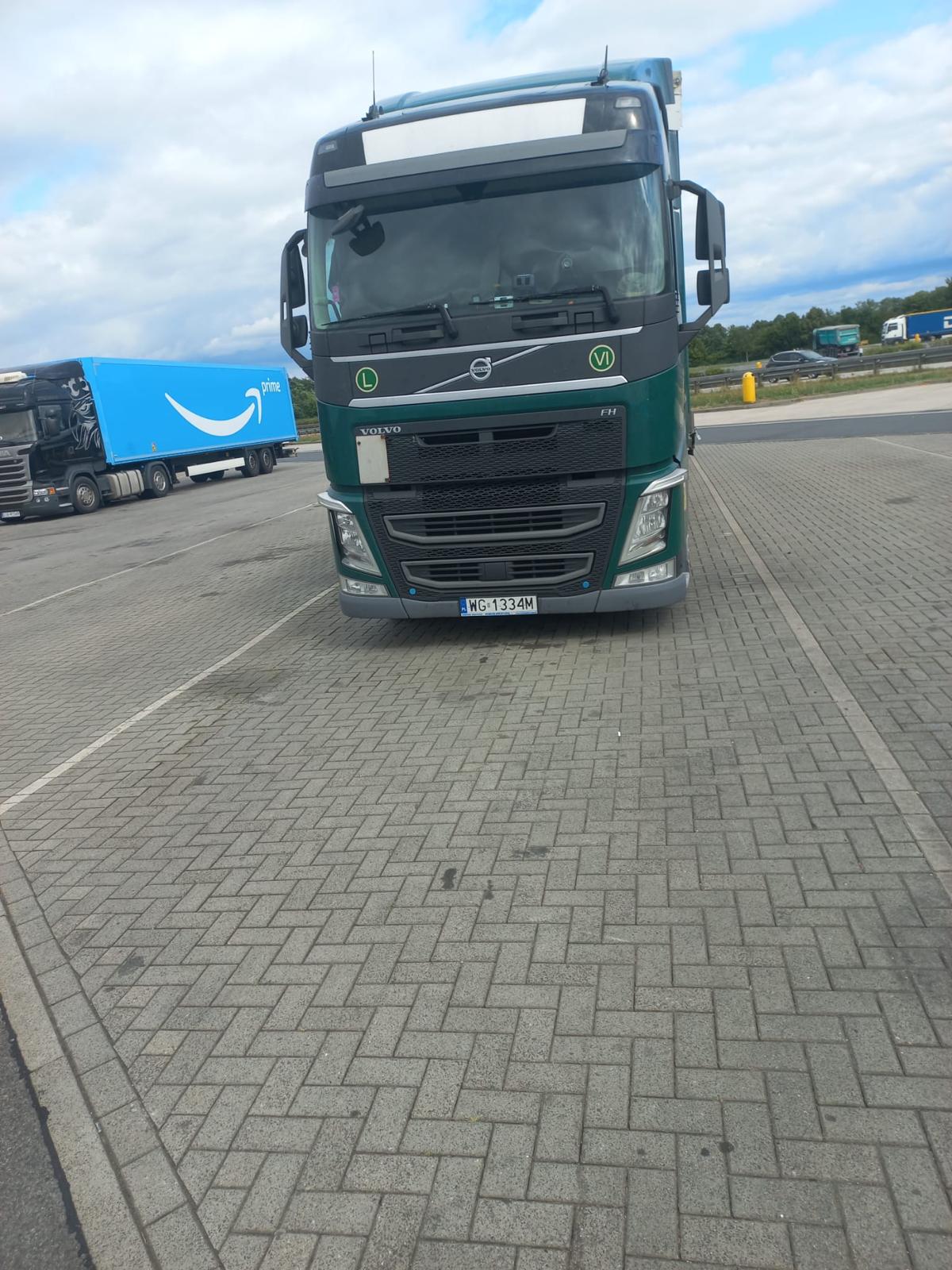
Need mobile truck assistance in Germany?
If you notice a fuel smell, a stain under your vehicle, or any other underbody fault while on the road, stop safely and call us straight away. Our mobile truck service covers fuel system faults, electrical failures, and mechanical breakdowns across the entire motorway network, and where a repair genuinely needs a full workshop, our truck workshop network and towing service are available around the clock as well.
Call +49 160 5753826 or visit www.lkwhelp24.com — 24/7, all across Germany.
For dispatch and account queries, see our contact page.
Keywords: truck fuel line corrosion | mobile truck repair Germany | diesel leak lorry A4 | truck breakdown assistance Germany | fuel system diagnostics HGV | truck fleet maintenance | 24/7 truck roadside assistance | Sattelzugmaschine fuel leak repair