Skip to content
 In May 2024, a Polish DAF XF tractor unit with a refrigerated trailer broke down on the A2 motorway in Germany due to an SCR/AdBlue system failure. The driver found himself at night in unfamiliar territory, carrying a load of fresh food requiring controlled temperature, with no knowledge of German. This case study shows how LKW Help 24 carried out a complete towing and recovery operation for a 40-tonne vehicle under significant time pressure.
Only 45 minutes passed from the call to the arrival of the heavy tow truck. The total time to clear the rig from the hard shoulder was 1 hour 20 minutes. Towing heavy goods vehicles on German motorways is an operation on a completely different risk scale than towing a car – it requires specialised equipment, knowledge of local regulations, and immediate coordination.
Key business takeaways from this case study:
- Operational response time under 45 minutes on the A2 section
- Full process coordination in Polish for the driver and English for the fleet manager
- Vehicle downtime minimised enough to allow delivery with only a 4-hour delay
Background: who was the customer and what happened?
The customer was a Polish transport company specialising in refrigerated food haulage, operating a fleet of around 25 truck-and-trailer combinations. The company runs regular routes on the Poland–Germany–Netherlands axis, mainly serving supermarket chains that require deliveries within strict time windows.
The specific run that became the subject of LKW Help 24’s intervention started in Łódź. The cargo consisted of fresh food products destined for a distribution centre in Dortmund. The delivery deadline was contractually set for the following morning – every hour of delay meant potential contractual penalties and a risk of losing the goods.
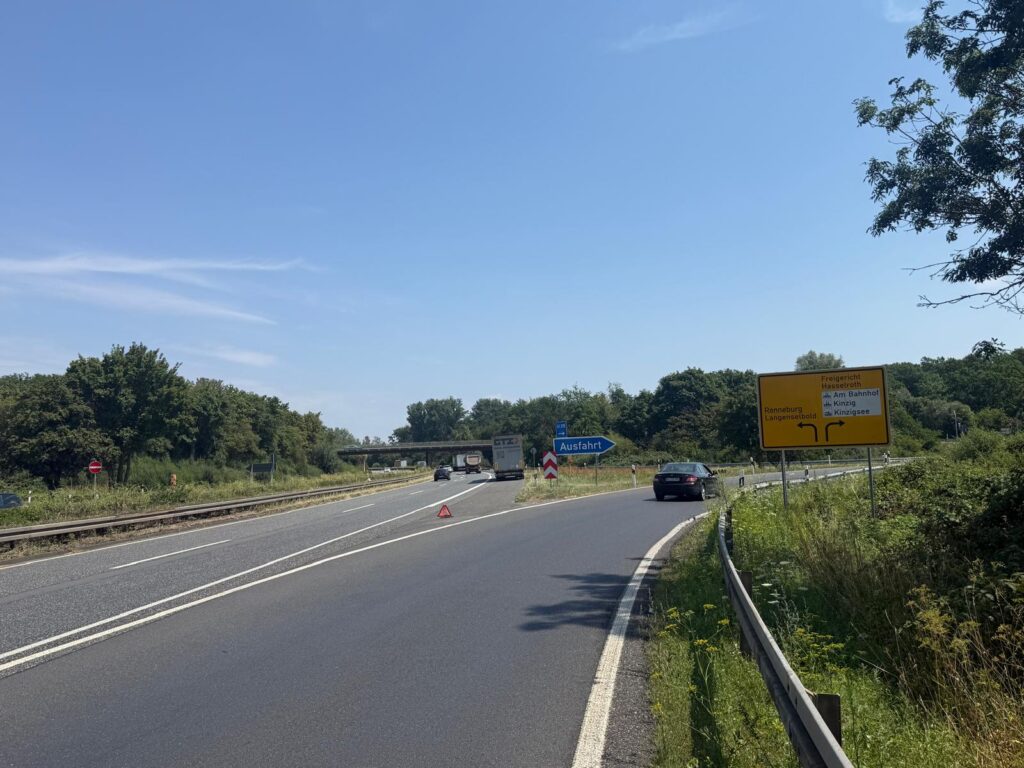
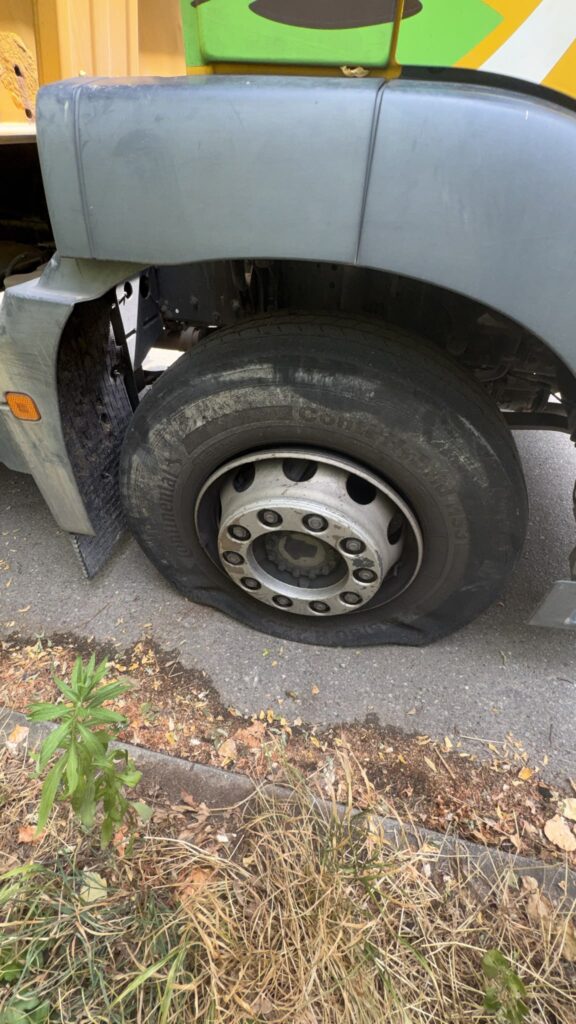
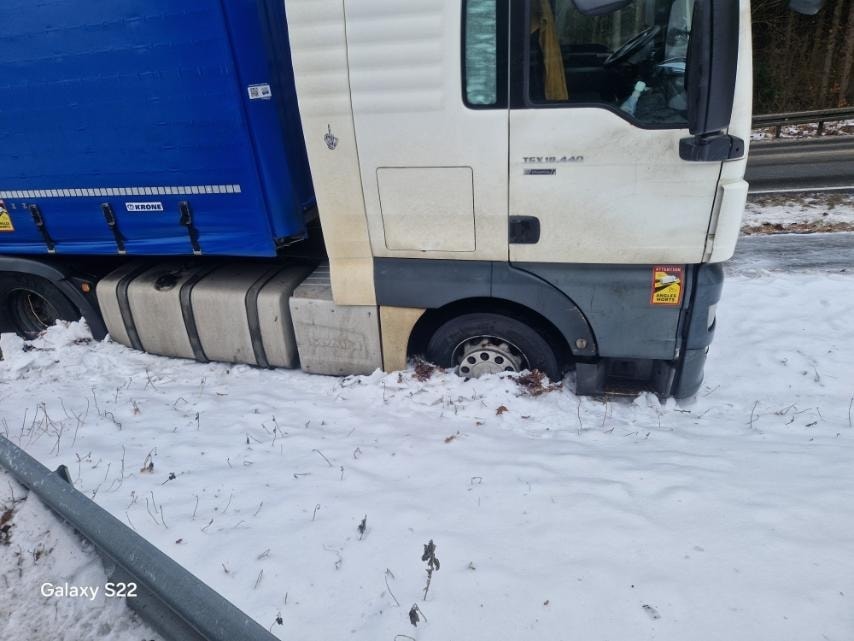
On 14 May 2024, at around 2:30 a.m., on the A2 motorway heading towards Hanover – between the Peine and Hämelerwald junctions – the engine suddenly lost power. The system displayed an SCR/AdBlue error message. The driver managed to pull onto the hard shoulder, but restarting the engine proved impossible.
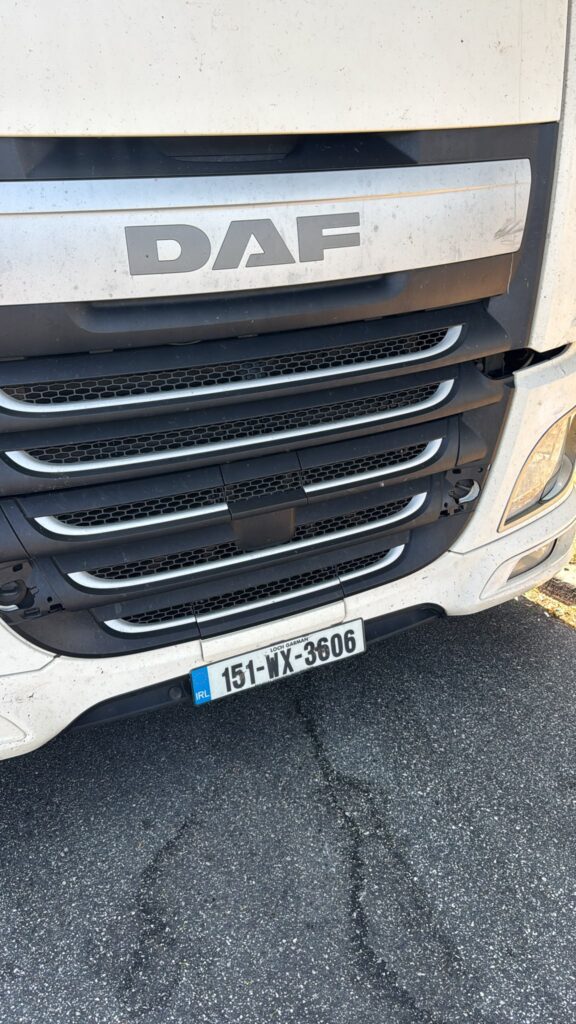
The vehicle was a DAF XF Euro 6 tractor unit with a refrigerated trailer – a combination with a maximum permitted weight of 40 tonnes. The driver, a Polish national, spoke only basic English and no German.
Why the situation was critical:
- Temperature-controlled cargo – every hour without power to the refrigeration unit increased the risk of losing the goods
- The middle of the night on an unfamiliar motorway – limited options for acting alone
- Contractual time pressure – a delayed delivery risked financial penalties
- Language barrier – no way to communicate effectively with German services
LKW Help 24’s immediate response
At 2:37 a.m., the driver called the 24-hour LKW Help 24 hotline directly from the cab. The call was answered immediately – no queue, no automated voice menu. Within the first few seconds, the call was transferred to a Polish-speaking dispatcher.
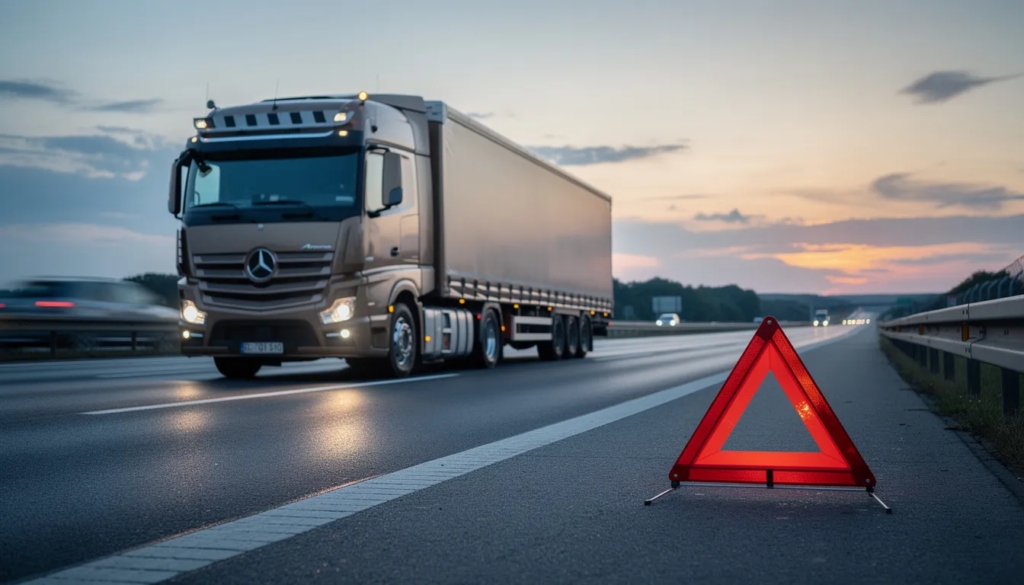
For a driver in a stressful situation on a foreign motorway, being able to communicate in his native language was crucial. Within the first five minutes, the LKW Help 24 dispatcher gathered all the necessary information: the exact location based on the kilometre marker and GPS data from the vehicle’s telematics, the type of tractor and trailer, the safety status (the vehicle was on the hard shoulder, marked with a warning triangle), and the state of the cargo – the temperature inside the refrigeration unit and the time remaining before a critical threshold would be crossed.
The dispatcher gave the driver detailed safety instructions in Polish, in line with German road traffic law: putting on a high-visibility vest, positioning the warning triangle at the correct distance, and staying behind the crash barriers until help arrived. In the event of a breakdown on an expressway or motorway, these procedures are critical for the safety of everyone on the road.
Within 10 minutes of ending the first call, LKW Help 24 had arranged a heavy tow truck from the Hanover region and confirmed the estimated arrival time. The driver received a text message confirming the job, including the ETA, the towing company’s name, and the tow truck’s registration number. At the same time, an email with the action plan was sent to the fleet manager in Poland.
Operation timeline:
- 2:37 a.m. – Call received by the LKW Help 24 hotline
- 2:42 a.m. – Data collection completed, coordination begins
- 2:47 a.m. – Job assigned to the local towing partner
- 3:25 a.m. – Heavy tow truck arrives at the scene
- 3:57 a.m. – Loading completed, transport to the workshop begins
Multilingual support for the driver and the fleet manager
The entire communication process was split into two parallel language tracks. The driver received all information in Polish – from the first contact through status updates to the vehicle’s handover at the workshop. The fleet manager at the company’s head office in Poland was kept informed in English about the progress of the operation, the expected downtime, and the options for next steps.
LKW Help 24 maintained constant phone and text contact with the driver, explaining step by step what would happen: what would occur once the tow truck arrived, where the vehicle would be taken, and how long the diagnostics at the workshop might take. For a driver working under regulated driving-time rules, this clarity of communication allowed him to plan his mandatory rest period accordingly.
At the same time, the fleet manager received the operational information needed to make decisions: whether it was worth arranging a replacement tractor unit to swap the trailer, what the estimated repair costs would be, and whether the workshop could take the vehicle in immediately. LKW Help 24 handled all technical communication with the German towing partner and the workshop, removing the language barrier on the customer’s side.
An example text message sent to the driver at 2:52 a.m.: “The tow truck from XYZ Abschleppdienst (registration H-XX 1234) will arrive at approx. 3:25 a.m. Stay in a safe place. We’ll call you before it arrives.”
Business benefits of multilingual support:
- Reduced driver stress – full communication in his native language
- Faster fleet decisions – the manager has a full, real-time picture of the situation
- No misunderstandings – LKW Help 24 translates every technical detail
- Time saved – no need to search for a translator or communicate through gestures
Professional coordination of the towing and recovery process
LKW Help 24 works exclusively with proven local towing partners specialising in heavy goods vehicles. On the A2 section between Peine and Hanover, it works with a company operating a fleet of heavy 6×4 tow trucks equipped with rotators – equipment that can lift and rotate vehicles weighing up to 40 tonnes.
The criteria for selecting a partner for this type of intervention include: round-the-clock availability, certified equipment for towing heavy goods vehicles, familiarity with procedures for working with the motorway police (Autobahnpolizei), and experience working with truck workshops in the region. In the event of a breakdown in good or poor visibility conditions – as in this case of a night-time call-out – the partner must have appropriate lighting and amber flashing beacons.
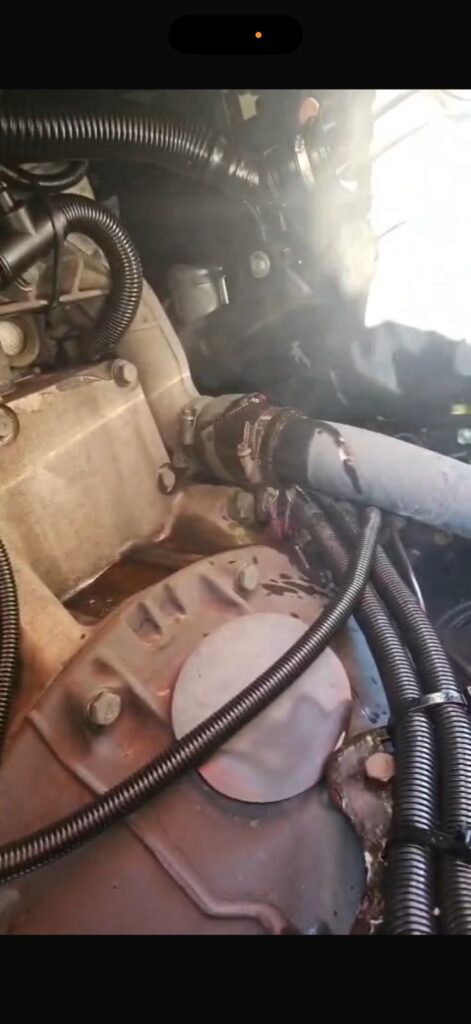
Once the heavy tow truck and the escort vehicle arrived, the crew secured the hard shoulder in line with German regulations. Initial computer diagnostics of the AdBlue system were then carried out directly on site. The diagnostics revealed a serious fault in the AdBlue pump, which could not be repaired on the roadside due to the risk of the problem recurring while driving.
It was decided to tow the vehicle to an authorised DAF service centre in the Hanover region, about 38 km from the scene. LKW Help 24 had already notified the workshop, which confirmed it could take the vehicle in overnight and provide a bay with a power connection (400V) for the refrigeration unit while the tractor unit was being repaired.
What LKW Help 24 coordinated:
- Selecting and dispatching the right tow truck with a rotator
- Arranging with the workshop to take the vehicle outside standard opening hours
- Securing a power supply for the refrigerated trailer at the workshop
- Cost communication with the customer and approval of the initial estimate
- Documentation of the operation for the customer’s assistance insurance
Technical aspects of towing a heavy combination
The operation involved towing a 3-axle tractor unit with a 3-axle refrigerated trailer, with an actual total weight of around 36 tonnes. In cases like this, towing the combination with another motor vehicle on its own is practically impossible – it requires specialised heavy-duty equipment.
The method used was to lift the tractor’s front axle onto the platform of the heavy tow truck’s rotator. It was essential to correctly secure the braking system’s pneumatic lines, the electrical cables, and the ABS/EBS cables connecting the tractor to the trailer. The braking system’s function depends on correct pressure in the pneumatic system – when towing a vehicle with a disabled engine, additional safeguards are required.
The trailer stayed attached to the tractor unit for the transport to the workshop – in this case, the short distance (38 km) did not require switching to a replacement tractor. Towing was carried out at a speed suited to the conditions – the maximum speed of the towing vehicle on the motorway with this kind of load is significantly lower than standard limits. Within built-up areas, a towed vehicle may not exceed 30 km/h, and 60 km/h outside built-up areas when using a flexible tow connection – though in this case professional equipment was used that ruled out any risk of detachment while still allowing easy release at the workshop.
All work was operationally supervised by LKW Help 24, and the driver received ongoing explanations in Polish – including the information that a towed vehicle must have its position lights on and be visible to other road users.
Working with proven local towing partners
LKW Help 24’s operating model is based on a network of vetted truck towing partners spread across Germany. Partners are selected based on their track record, service quality, and availability of equipment suited to towing heavy goods vehicles weighing up to 40 tonnes and beyond.
In this case, a local company from Lower Saxony was used, familiar with the specifics of the A2 section, knowing the location of the nearest service areas and emergency exits, and maintaining relationships with truck workshops in the region. This local knowledge made it possible to choose the optimal workshop – one with a free night-shift bay and the ability to connect the refrigeration unit.
Roles were clearly defined: the towing partner was responsible for physically towing and securing the vehicle at the scene, while LKW Help 24 handled all operational coordination, communication with the customer in their own language, translation of technical arrangements, and oversight of deadlines. The driver didn’t need to worry about setting up amber flashing beacons or handling any paperwork – everything was managed by professionals.
Criteria an LKW Help 24 local partner must meet:
- 24/7 readiness to deploy with a response time under 45 minutes
- Equipment: heavy tow trucks with rotators, axle dollies, lifting gear up to 50 tonnes
- Experience recovering vehicles from motorways and working with the Autobahnpolizei
- Knowledge of local truck workshops and their ability to take vehicles in overnight
Minimising vehicle downtime and the impact on the supply chain
The key timeframes in this case study demonstrate the effectiveness of professional coordination:
Stage of the operation | Time |
|---|---|
From breakdown to clearing the motorway | 1 hr 20 min |
Transport to the workshop | 40 min |
Diagnostics and repair | 6 hours |
Total downtime | approx. 8 hours |
Thanks to LKW Help 24’s fast response and the workshop taking the vehicle in outside standard hours, the final delivery delay to the distribution centre in Dortmund was only 4 hours compared with the original schedule. The refrigerated cargo arrived in perfect condition – the trailer was connected to power at the workshop for the entire duration of the tractor’s repair.
An alternative scenario – without LKW Help 24’s professional assistance – could have looked far worse. The driver would have had to look for help on his own, without knowing German. Waiting for chance assistance or a tow truck from a random company could have taken several hours. Towing heavy goods vehicles without the right equipment is not advisable, and improper towing can cause additional damage to the gearbox or braking system. The risk of losing the refrigerated cargo would have grown with every hour.
From a business perspective: the average cost of downtime for a refrigerated truck on an international route is €150–300 per hour (lost revenue, contractual penalties, driver costs). Professional towing and coordination, while generating a direct cost, minimise the transport company’s total losses.
Key performance indicators:
- Tow truck response time: 45 minutes
- Total vehicle downtime: 8 hours
- Delivery delay: 4 hours (instead of a potential 24+ hours)
Takeaways for fleet managers and international drivers
This case study shows the practical value of having a specialised partner for towing heavy goods vehicles in Germany. Standard car assistance insurance does not cover 40-tonne combinations. It’s prohibited to tow a vehicle with a defective steering system or defective brakes without professional equipment – a simple tow rope or rigid tow bar is not enough.
When towing with a flexible connection, strict speed limits apply – 30 km/h in built-up areas and 60 km/h outside them. However, for heavy goods vehicles with an automatic gearbox or a brake failure, towing with a flexible connection is often not possible at all. Equipment is needed that removes the need for the towed vehicle’s driver to steer and that ensures safe towing regardless of the state of the braking system.
Practical recommendations for transport companies:
- Before setting off on a route to Germany, check whether your policy covers towing for motorcycles, cars, or heavy goods vehicles – the differences are significant
- Give your drivers the LKW Help 24 number and have them keep it somewhere visible in the cab
- Make sure vehicle details (registration number, VIN, type) are easily accessible to the driver in case of a call-out
- Train drivers on basic motorway safety rules: vest, warning triangle, hazard lights on, staying behind the crash barriers
- Consider a framework partnership with LKW Help 24 for fleets that run regular routes to Germany
LKW Help 24 specialises in truck towing and roadside assistance for commercial vehicles throughout Germany, available 24/7. This covers tractor units, trailers, buses, coaches, and heavy construction machinery. Multilingual support (Polish, German, English, Romanian) removes the language barrier for international drivers.
German traffic law imposes specific requirements for towing on motorways – to the nearest exit or the nearest junction. Vehicles used to tow heavy combinations must meet ECE standards, and their drivers must hold the qualifications required to operate such equipment. LKW Help 24 works only with partners who meet these standards.
When driving on international routes, it’s worth taking extra care and knowing that help is available. Whether the towed vehicle is a car or a 40-tonne combination, professional support can minimise the consequences of a breakdown.
Frequently asked questions about truck towing in Germany:
How much does towing a truck cost in Germany? Costs depend on the distance and the type of vehicle. For trucks, this is typically €150–400 for the first 50 km, plus €3–5 for every additional kilometre. The towing method rules out the use of cheap equipment – professional flatbed trucks cost more but are safer.
Can I safely tow a truck myself? In most cases, no. A motor vehicle weighing over 3.5 tonnes requires specialised equipment. A quick-release connection isn’t sufficient at these weights. The towing vehicle’s speed must be adjusted accordingly, and articulated combinations are no exception – they require heavy-duty equipment.
What should you do safely on the motorway in case of a breakdown? Pull onto the hard shoulder, switch on your hazard lights (keep dipped headlights on even during the day), place the warning triangle 100–150 m behind the vehicle, put on a high-visibility vest, and stay behind the crash barriers. Then call for help – don’t attempt repairs in the middle of the road.
Save the LKW Help 24 contact before your next trip to Germany. In the event of a breakdown – day or night – professional help is available within minutes, not hours.