Skip to content
A Slovak-registered car-transporter combination broke down near Wismar in Mecklenburg-Vorpommern in the early hours of the morning, unable to couple its trailer safely after a fault developed in the drawbar coupling. LKWHelp24 dispatched a mobile commercial-vehicle service from the Wismar/West Mecklenburg area, diagnosed and repaired the coupling on site, and released the fully loaded combination in two hours and ten minutes.
A car-transporter drawbar combination is not a forgiving vehicle to have stranded at the roadside. Unlike a single rigid truck, it depends entirely on the coupling between tractor and trailer holding firm at every axle, every corner, and every gradient between the breakdown site and the destination. When that coupling develops a fault, the driver is left with a decision that has no good options: continue with a combination that cannot be locked safely, or park it and wait, uncoupled, for someone who actually knows what they are looking at.
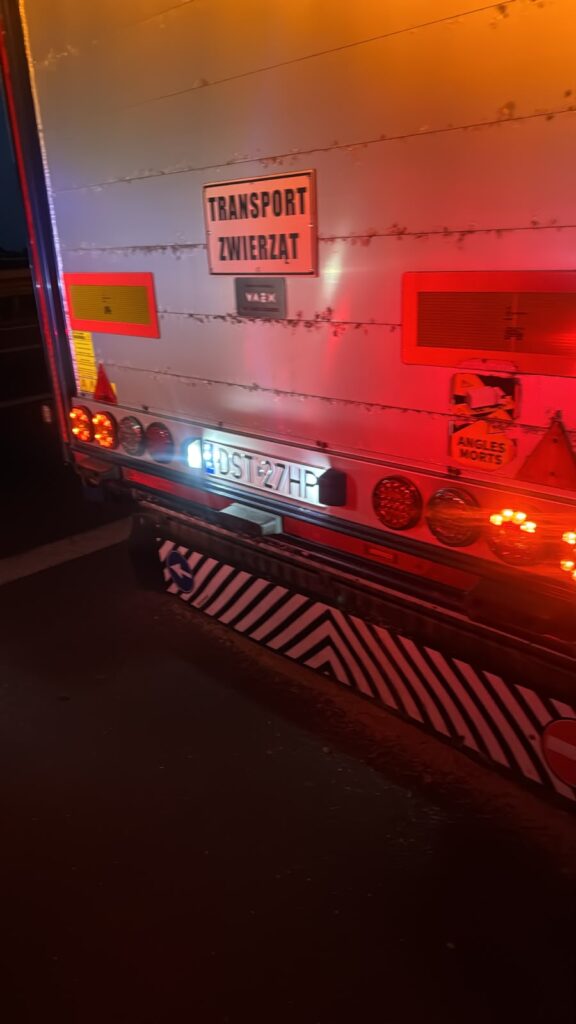
In this case the driver, whose sat-nav was set to Slovak and whose Scania tractor was towing an AA 575 GA-plated car-transporter trailer loaded with several vehicles, chose correctly. He stopped. A trailer coupling fault on a laden car-transporter is not something to work around with tape, hope, or a slower speed. The V. Orlandi GS900 coupling fitted to this combination is rated to a Dc value of 145 kN, engineered to hold a fully loaded trailer through braking, cornering, and crosswind on the autobahn. Once that mechanism starts to fail, the margin for error disappears.
A foreign driver in this position often has limited German and no idea which local workshop handles heavy-combination coupling repairs. What he needs is a breakdown assistance provider who can get a qualified technician to the roadside fast, in a language he understands, with the right parts already on the van. That is the mobile truck service LKWHelp24 provides around the clock, across Germany.
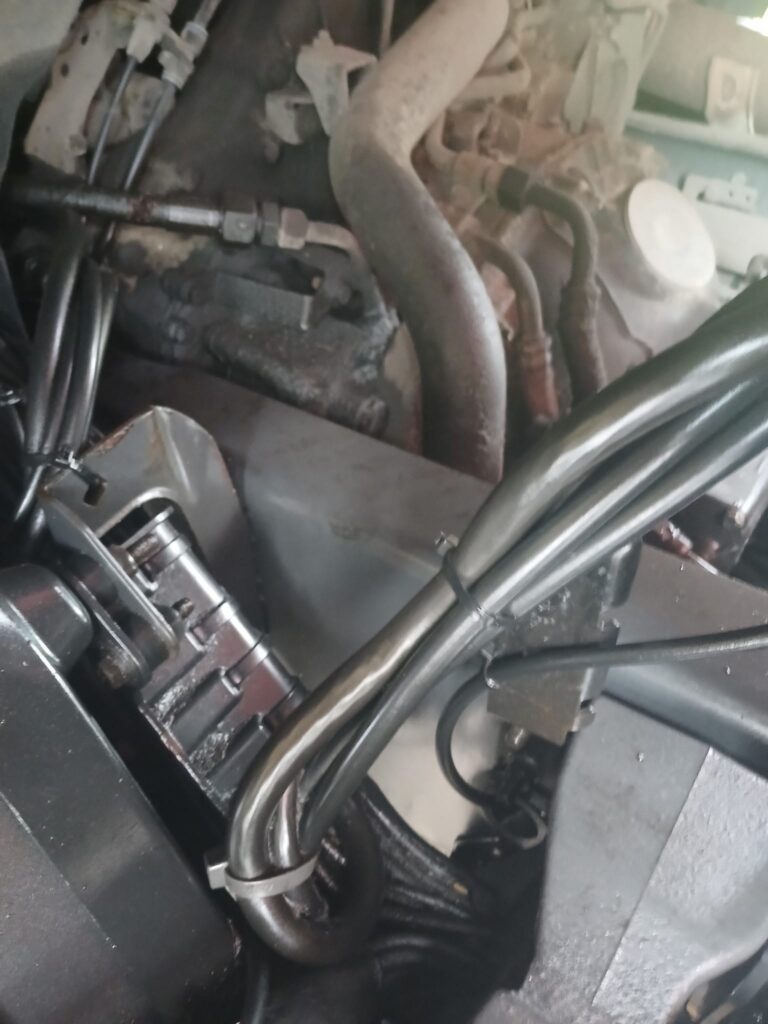
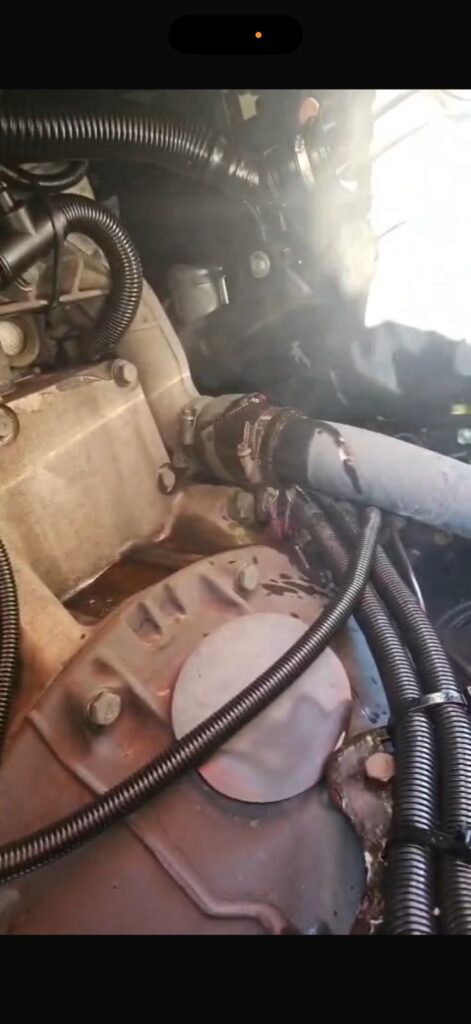
Photo caption: „Defekt an der Anhängerkupplung (V. Orlandi GS900) eines Autotransporter-Zuges (slowakischer Fahrer) – mobile Reparatur durch LKWHelp24 bei Wismar.\”
The Emergency
The call reached LKWHelp24\’s 24 hour breakdown service at 07:20 in the morning. The driver reported that his car-transporter trailer could no longer be coupled to the Scania tractor safely: the coupling mechanism was not locking or engaging as it should. Rather than risk continuing with a compromised connection under a fully loaded car deck, he had already separated tractor and trailer and parked the combination near Wismar, on the western side of Mecklenburg-Vorpommern.
This was the right call, and it is worth spelling out why. A car-transporter trailer, once loaded, can carry several tonnes of vehicles sitting well above axle height. The drawbar coupling is the single point that keeps that mass connected to a braked, steered tractor unit. If a coupling pin is worn, a locking mechanism has failed to engage fully, or the mechanical tolerances in a GS900-type coupling have drifted beyond safe limits, the trailer can detach or swing under load. Nobody wants to test that on a public road, let alone near a town like Wismar in early-morning traffic.
How Help Was Organised
LKWHelp24 operates a partner network of mobile commercial-vehicle mechanics stationed across Germany specifically so that a breakdown near a regional town such as Wismar does not mean a long wait for a technician who has to travel from a major city. Within the network, dispatch matched the case to a mobile commercial-vehicle service already covering the Wismar/West Mecklenburg area.
The dispatch process ran as follows:
● Call received at 07:20, driver\’s location and fault description logged (trailer coupling fault, drawbar disconnected, combination parked safely)
● Nearest available partner technician in the Wismar/West Mecklenburg area identified and briefed on the vehicle type and suspected coupling issue
● Technician dispatched at 07:35 with an estimated time of arrival based on the exact roadside location near Wismar
● Driver kept informed of the technician\’s progress so the wait was predictable rather than anonymous
A structured, partner-based dispatch like this is what separates a real breakdown assistance provider from simply handing a stranded driver a phone number and hoping for the best. For a Slovak driver in unfamiliar territory, having someone coordinate the process in a language he could follow, and having a technician arrive already briefed on the fault, cut the wait from what could have been half a day down to under an hour.

The Situation On-Site
The technician arrived on site near Wismar at 08:20, roughly an hour after the initial call. The combination was found exactly as the driver had described: Scania tractor and car-transporter trailer parked side by side, uncoupled, with the loaded vehicles on the trailer deck properly secured and showing no sign of secondary damage.
Diagnosis began immediately and confirmed the fault by 08:35: the trailer coupling, a V. Orlandi GS900 unit rated to 145 kN, had a defect in the coupling mechanism itself. The technician checked the coupling pin for wear, examined the locking mechanism for correct engagement, and inspected the hydraulic and pneumatic connections running to the car-transporter deck to rule out any related fault in the trailer\’s own systems.
The pin and associated wear parts inside the coupling head showed the kind of wear that, left unaddressed, would have prevented the coupling from locking fully. That explained why the driver had been unable to couple the trailer with confidence. This is a common failure pattern in drawbar couplings that see heavy, repeated use: the pin and its bushings wear gradually until the mechanism can no longer lock with the tolerance the manufacturer specifies, at which point coupling becomes unsafe rather than simply stiff or noisy. No secondary damage was found elsewhere in the combination, and the loaded vehicles on the deck remained properly secured throughout.
Step-by-Step
Step 1: Secure the combination. With tractor and trailer already parked separately by the driver, the technician confirmed both units were stable, the trailer\’s parking brake was engaged, and the loaded cars on the deck were still correctly secured before starting any work.
Step 2: Diagnose the coupling and drawbar. Full inspection of the V. Orlandi GS900 coupling: pin condition, wear tolerances, locking mechanism function, and the hydraulic/pneumatic connections serving the transporter deck.
Step 3: Repair the faulty coupling parts. The worn coupling pin and associated wear parts were replaced, and the coupling mechanism was reset to the manufacturer\’s specified tolerances. (For cases where on-site repair is not possible, LKWHelp24 also handles heavy-haulage recovery with a low-loader.)
Step 4: Couple the trailer and check locking. Trailer and tractor were brought together, the coupling engaged, and the locking mechanism, along with all hydraulic and pneumatic connections, was checked for correct function.
Step 5: Function check and release. A function check of the coupled combination confirmed the coupling was holding correctly under load before the driver was released to continue his journey.

Full Timeline
| Time | Phase | Action |
|---|---|---|
| 07:20 | Call received | Driver reports trailer coupling fault, combination parked uncoupled near Wismar |
| 07:35 | Technician dispatched | Mobile commercial-vehicle service from Wismar/West Mecklenburg area assigned, ETA given |
| 08:20 | On site | Technician arrives near Wismar, assesses combination |
| 08:35 | Diagnosis complete | Trailer coupling (V. Orlandi GS900) confirmed faulty: pin and locking mechanism worn |
| 09:15 | Coupling repaired | Worn coupling pin and wear parts replaced |
| 09:30 | Trailer coupled & secured | Combination coupled, locking and connections checked, function check passed |
| 09:30 | Released | Driver continues journey |
Total time from call to release: 2 hours 10 minutes. Time on site: 1 hour 10 minutes.
Cost
| Item | Price (EUR) |
|---|---|
| Call-out / 24-7 service | 190 |
| Diagnosis & labour on coupling | 220 |
| Spare part (coupling pin/wear parts) | 260 |
| Sundries / securing | 50 |
| TOTAL | 720 |
Three factors shaped the final cost in this case. First, the call came in early morning, which falls within round-the-clock service coverage but still requires a technician to be mobilised outside normal working hours. Second, drawbar coupling repairs on a rated 145 kN unit such as the V. Orlandi GS900 demand precision work. The pin and locking mechanism have to be restored to exact manufacturer tolerances, not simply patched, because the coupling is a structural safety component. Third, the correct wear parts for this specific coupling type needed to be sourced and fitted on site rather than approximated with generic parts.
Set against the alternative, the value of this outcome is clear. Had the fault not been resolved on site, the practical options would have been recovery of the tractor, a separate flatbed or low-loader for the trailer with its loaded vehicles, storage while replacement parts were sourced, and a significant delay before the combination could move again. Towing a loaded car-transporter trailer is itself a specialist and costly undertaking made even more complex by coupling systems such as those from SAF-Holland, and it does nothing to fix the underlying coupling fault. The same repair would still have been needed afterwards, at a workshop, with the trailer off the road for considerably longer than one hour and ten minutes. At 720 euros all-in, a mobile on-site repair that gets a loaded combination back on the road within two hours compares very favourably with days of downtime and a multi-leg recovery bill.

Why a Professional Service Is Essential
A drawbar coupling is not a component where \”good enough\” is an acceptable standard. It is the single mechanical link holding a multi-tonne, loaded trailer to a moving tractor unit, and every subsequent safety system on the combination, from braking balance to trailer stability to load security, depends on that link being correctly locked and within tolerance. A coupling that appears to close but has not fully engaged can fail under braking or on a bend, with consequences that are entirely disproportionate to how minor the original wear might have looked.
This is why trailer coupling repair on a laden car-transporter has to be treated as safety-critical work, carried out by a technician who understands the specific coupling type fitted, checks it against manufacturer tolerances, and does not release the vehicle until a function check has been carried out under coupled conditions. In this case, that discipline meant checking not only the pin and locking mechanism but also the hydraulic and pneumatic connections feeding the transporter deck, since a fault in one system can sometimes mask or mimic a fault in another. The loaded vehicles on the trailer deck also had to remain correctly secured throughout, since load security and coupling integrity are two sides of the same safety question on a combination like this.
Typical Breakdown Situations We Handle
LKWHelp24\’s mobile commercial-vehicle service regularly attends breakdowns involving:
- Trailer coupling and drawbar coupling faults on car-transporter and general cargo combinations
- Coupling pin wear, locking mechanism failure, and drawbar misalignment
- Hydraulic and pneumatic connection faults between tractor and trailer/transporter decks
- Car-transporter breakdowns involving loaded decks and load-securing checks
- Air, brake, and electrical system faults on tractor-trailer combinations, including components from suppliers such as Knorr-Bremse
- Tyre, wheel, and suspension breakdowns across the full range of commercial vehicles
- Breakdowns involving foreign-registered vehicles and non-German-speaking drivers

Prevention Tips
- Have the drawbar coupling and coupling pin inspected on a regular maintenance schedule, particularly for combinations in frequent heavy use such as car-transporter operations
- Check the coupling pin and bushings for wear before long routes, not just when a fault becomes noticeable
- Keep the coupling mechanism properly lubricated according to the manufacturer\’s schedule; a dry or under-lubricated coupling wears faster and can mask early signs of play
- Never attempt to couple a trailer if the locking mechanism does not engage cleanly and audibly; treat any resistance or incomplete lock as a stop-and-check situation
- Build a relationship with a breakdown assistance provider who covers the whole of Germany before you need one, so the call itself does not add delay when a fault does occur
Mobile Commercial Vehicle Service for Coupling and Drawbar Faults
Trailer coupling repair and coupling pin replacement are among the more specialised jobs a mobile commercial-vehicle service can be asked to carry out at the roadside, precisely because couplings such as the V. Orlandi GS900 are load-rated safety components rather than simple mechanical joints. Car-transporter combinations, in particular, place unusual demands on a drawbar coupling: the trailer deck sits at height, the load shifts with acceleration and braking, and the coupling has to hold that combination together through every manoeuvre from motorway cruising to tight loading-yard turns.
LKWHelp24 exists to put a technician capable of handling exactly this kind of drawbar coupling fault on site quickly, anywhere in Germany, at any hour. That matters as much for German-registered fleets as it does for help for foreign drivers such as the Slovak operator in this case, who may not know the region, the language, or which local workshop is qualified to touch a heavy-combination coupling. A fleet service relationship with a provider who understands these vehicle types, and who can mobilise a mobile on-site repair rather than defaulting straight to a tow, keeps combinations moving and keeps costs proportionate to the actual fault rather than to the logistics of getting the vehicle somewhere else.
For readers wanting to understand more about the coupling technology involved, V. Orlandi manufactures the GS900 coupling type referenced in this case, and Scania Germany provides further detail on the tractor unit involved in this combination.

Why LKWHelp24
LKWHelp24 combines round-the-clock dispatch with a partner network of mobile commercial-vehicle mechanics positioned across Germany, so a breakdown near a regional town such as Wismar is met with the same speed and technical depth as one on a major transit corridor. Drivers get support in a language they can follow, dispatch that understands the specific vehicle and fault involved, and a technician who arrives already briefed rather than starting from zero. For truck breakdown assistance involving specialised components such as drawbar couplings, that combination of speed, local coverage, and genuine technical competence is what keeps a stranded combination off a tow truck and back on the road.
Summary
- Location: near Wismar, Mecklenburg-Vorpommern
- Vehicle: Scania tractor + car-transporter trailer (AA 575 GA), Slovak driver
- Fault: trailer coupling failure (V. Orlandi GS900, Dc 145 kN), worn coupling pin and locking mechanism
- Total time: 2 hours 10 minutes (call to release)
- On-site time: 1 hour 10 minutes
- Total cost: 720 EUR
- Secondary damage: none, loaded vehicles remained secured throughout

Request Emergency Assistance Now
Stranded with a coupling, drawbar, or any other commercial-vehicle breakdown anywhere in Germany? Call +49 160 5753826, see our contact details, or visit lkwhelp24.com. Available 24/7 across all of Germany.