Skip to content
A trailer tyre blowout does more than strand a lorry on the hard shoulder. On 14 July, a curtainsider articulated lorry lost a rear trailer tyre on the A31 near Meppen, Emsland district, direction Emden, and the flying tread chunk ripped a hole clean through the curtain. This truck tyre service case study walks through what actually gets damaged when a tread comes apart at speed, why a torn curtain turns into an insurance claim far bigger than the tyre bill, and how our crew got the semi-trailer combination back on the road, dry and roadworthy, in under three hours.
What Happened on the A31 Near Meppen
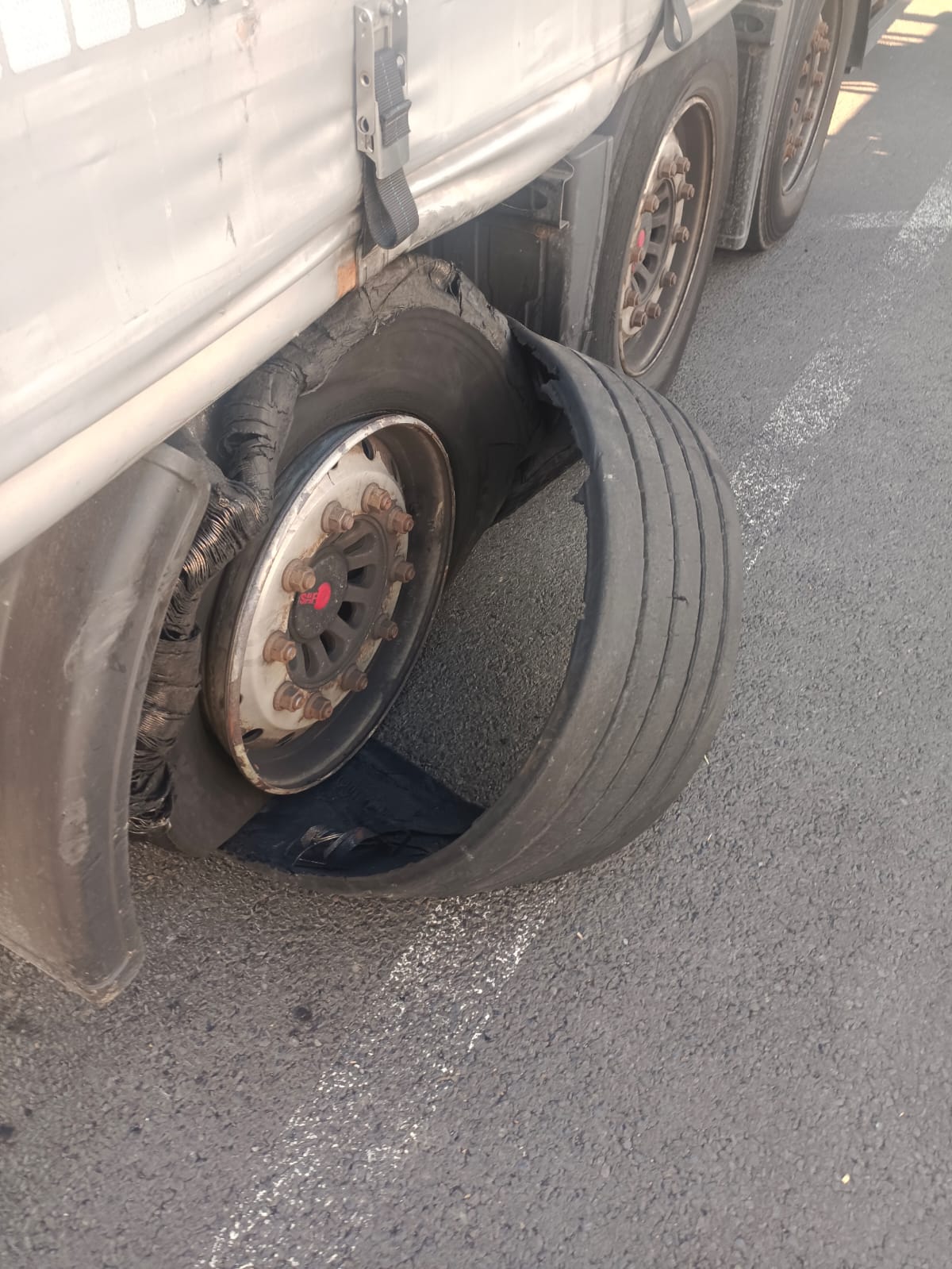
A rear trailer tyre on the semi-trailer, size 385/65 R22.5, blew out mid-afternoon while the articulated lorry was running the A31 toward Emden. The driver felt the vibration through the cab, heard the bang, and eased onto the hard shoulder as the trailer began to sway. A chunk of tread, weighing several kilograms by the crew’s later estimate, had already left the wheel and struck the trailer’s flank.
By the time the truck rolled to a stop, the curtain along that side carried a ragged tear roughly the width of a car door. This is the pattern our dispatchers see on almost every trailer blowout call: the damage is never just the wheel.
Why a Blown Tread Wrecks More Than the Tyre
A tread chunk flung off a rotating tyre at motorway speed behaves like a projectile, not debris. On a semi-trailer, it typically hits one or more of the following:
- Curtain (tilt/tarpaulin) — the flexible side panel that keeps rain and wind off the cargo bay
- Curtain rails and side pillars — the vertical posts and top track that hold the curtain taut
- Load-securing straps — ratchet straps running across or along the cargo
- Mudguards — the flap and bracket assembly meant to catch flung debris and spray
- Rear lights and wiring looms running near the axle group
On this call-out, the curtain took the direct hit, along with two side pillars and a mudguard bracket bent out of shape. The straps nearest the tear were frayed but still load-rated once checked. No wiring damage this time, though our technician inspected the loom regardless — a tread strike close to the axle can just as easily sever a cable run as tear fabric.
Why the Crew Checks the Whole Trailer Side, Not Just the Wheel
The direct answer: because the tyre is the cheapest part to fix and the curtain, cargo and structure are where the real cost sits. A tyre replacement takes under an hour. A soaked load or a bent side pillar that isn’t caught on site can cost a haulier a full day’s freight value or more.
Our field crews are trained to walk the entire flank of the trailer after any blowout — checking curtain tension, rail alignment, pillar straightness, mudguard condition and strap integrity — before they even start on the wheel. On the A31 job, that walk-round is what caught the second pillar bend, which wasn’t visible from where the driver had parked.
The Real Problem: Wet Cargo, Not a Flat Tyre
A hole in the curtain means rain gets to the load until the trailer reaches its destination, and that is the far more expensive part of a tyre blowout. It was dry on the A31 that afternoon — light cloud, no rain in the forecast for the Emsland region — but the driver couldn’t know that would hold for the remaining route, and neither could we. A curtain that isn’t sealed before departure is a gamble with someone else’s freight.
Cargo liability — under the CMR Convention (Convention on the Contract for the International Carriage of Goods by Road), the carrier is liable for loss or damage to goods between the moment they’re taken over and the moment they’re delivered, regardless of who caused the mechanical failure that led to it.
That is what makes curtain damage a different animal to a simple flat. A blown steer-axle tyre stops the truck. A torn curtain on a loaded semi-trailer, left unrepaired, can turn a €480 tyre replacement into a five- or six-figure cargo claim if the freight is moisture-sensitive — paper, electronics, packaged foodstuffs, textiles. We’ve seen consignments rejected outright by the receiving warehouse over water staining that traces back to twenty minutes of open curtain on the hard shoulder.
How Help Was Organised
Our Emsland-region dispatcher took the call at 13:05 and had a partner crew from our field network briefed and rolling within fifteen minutes. The A31 near Meppen sits well within our regional coverage, and having a crew already stationed in the area meant the drive to the breakdown point ran a shade under an hour rather than the two-plus hours a call routed from further afield might need.
While the crew was en route, the driver did what the situation called for: triangle out, hi-vis vest on, cab door locked, and a wait on the verge well clear of the carriageway. He used the time to photograph the tear from a distance and check the load manifest — useful groundwork, since photo documentation from the driver’s own phone often ends up in the insurer’s file alongside the crew’s.
Situation on Site
Traffic on the A31 was moving freely that afternoon; a light breeze off the Emsland flatlands kept the hard shoulder tolerable to work on, though the crew still logged it as a live-carriageway job and worked accordingly, with the warning triangle placed well back and hazard lights running throughout. The blown tyre had shredded almost completely, with fragments scattered across the shoulder and one sizeable chunk lodged against the mudguard bracket it had struck.
The curtain tear ran across two structural bays, exposing part of the palletised load underneath. No cargo had shifted, and the straps directly under the tear, though scuffed, held their tension. The crew’s first move, before touching a spanner, was a full photographic record — a step that matters as much as the repair itself.
Photo Documentation: What Gets Shot and Why
The direct answer: a claim without photos is a weak claim, so the crew shoots wide, close and contextual images before anything is touched or repaired. Insurers assessing a curtain-and-cargo claim want to see cause, extent and consequence, not just a hole in fabric.
On this job, and as standard on every blowout call, our technician photographed:
- A wide establishing shot of the whole trailer showing the tear’s position relative to the axle group
- Close-ups of the tyre remains and the point of impact on the curtain
- The exposed cargo underneath the tear, showing whether it was dry or already affected
- Debris on the carriageway and shoulder, timestamped
- The mudguard and pillar damage from multiple angles
- The completed repair, for the “after” record insurers ask for
Debris on the carriageway — responsibility for what flew onto the lane typically falls to the vehicle it came from, which is precisely why documenting the scattered tread fragments matters as much as documenting the curtain tear itself.
Step-by-Step Repair
- Scene security and inspection (14:15–14:25). Triangle placement checked, hazard lights confirmed, full visual sweep of the trailer’s damaged side including curtain, pillars, mudguard and wiring near the axle.
- Tyre replacement (14:25–15:15). Old tyre and rim removed, hub and wheel bolts checked for damage from the blowout, new 385/65 R22.5 tyre fitted and torqued, axle alignment confirmed by eye and by rolling test.
- Emergency curtain repair (15:15–15:40). The tear sealed with reinforced repair tape and patch material rated for outdoor use, bent pillar straightened enough to restore rail tension, mudguard bracket re-secured.
- Cargo check. Load re-inspected for shift or moisture once the curtain was sealed; straps re-tensioned across the repaired section.
- Final torque check and documentation (15:40–15:50). Wheel bolts re-torqued in a star pattern per manufacturer spec, full photo set completed, paperwork handed to the driver for the onward claim.
When Tape Repairs a Curtain, and When It Doesn’t
The direct answer: reinforced tape and patches are an emergency measure to get the load to its destination dry, not a permanent fix, and they only work when the tear is contained and the rail structure is intact. On the A31 job, the tear was large but the top rail hadn’t buckled, so a patch repair was sufficient to seal the bay and let the driver continue.
Where the rail itself is torn away, or where the tear spans multiple bays with the frame compromised, tape isn’t enough and the load needs transferring to a replacement trailer — a call our dispatchers make on the spot based on what the crew reports from the roadside. That didn’t apply here; the patched curtain held for the rest of the route without further intervention.
Timeline: Call to Departure in Two Hours 45 Minutes
| Time | Phase | Action |
|---|---|---|
| 13:05 | Call received | Emergency dispatch takes the call |
| 13:05–13:20 | Dispatch | Partner crew in the Emsland region found and briefed (15 min) |
| 13:20–14:15 | Drive to site | Journey to the A31 near Meppen (55 min) |
| 14:15–14:25 | Initial inspection | Scene secured, tyre/curtain/debris assessed (10 min) |
| 14:25–15:15 | Tyre replacement | Fitting 385/65 R22.5, rim and axle check (50 min) |
| 15:15–15:40 | Emergency curtain repair | Sealing with repair tape/patches, cargo check (25 min) |
| 15:40–15:50 | Final check | Torque check in star pattern, documentation/photos |
Total elapsed time, call to departure: 2 hours 45 minutes.
What It Cost, and What Downtime Would Have Cost Instead
| Item | Price (EUR) |
|---|---|
| Callout fee | 260 |
| Tyre-change labour | 150 |
| Truck tyre 385/65 R22.5 | 480 |
| Old tyre disposal | 20 |
| Emergency curtain repair (material + labour) | 140 |
| Total | 1050 |
A haulier loses roughly €800–1200 per day when an articulated lorry sits idle, a figure that matches what we typically see across our call-outs and lines up with wider industry estimates for HGV downtime. Against that backdrop, a €1,050 call-out that puts the truck back on the road in under three hours — cargo dry, tyre fitted, paperwork ready for the insurer — is close to break-even against a single lost day, before counting the far larger exposure of a rejected cargo claim.
Why This Needs a Professional Truck Tyre Service, Not a Roadside Guess
The direct answer: fitting a 385/65 R22.5 trailer tyre correctly requires the right jack rating, torque tools calibrated for HGV wheel bolts, and a working knowledge of what a blowout does to the axle, hub and surrounding structure — none of which a driver carries in the cab. Beyond the wheel, sealing a curtain tear so it survives motorway speeds for the rest of a route is its own skill, distinct from tyre fitting.
Our technicians carry patch kits, spare rail hardware and enough tape stock to seal a full bay on the spot, alongside the tyres and torque wrenches for the wheel side of the job. That combination — tyre service and curtain repair in one call-out — is what keeps a job like this to under three hours instead of stretching into a next-day fix with the trailer parked overnight.
Under § 36 StVZO, tyre condition and tread depth are a roadworthiness requirement, not a suggestion, and a trailer sent back out with a poorly fitted replacement or an unsealed curtain risks a second breakdown, or worse, further down the route.
Typical Truck Tyre Service Call-Outs Across Germany
Blowouts and curtain damage aren’t unique to the A31. Similar patterns turn up on motorways across the country — a trailer blowout near Berlin and a blowout with rim damage near Trier both followed the same core sequence: tread failure, secondary damage to the trailer, and a race against weather to keep the load dry. Both cases are covered in the related articles below.
Common call-out types our network handles nationwide include:
- Steer-axle and drive-axle blowouts on articulated lorries and rigid trucks
- Trailer tyre failures with curtain, strap or mudguard damage
- Slow punctures caught before they become full failures
- Wheel balancing and alignment checks after a tyre swap
- Recovery and towing when a wheel can’t be fitted roadside — for a bent rim, a seized hub, or damage beyond field repair
- Seasonal tyre and pressure checks ahead of winter conditions, covered in more depth in our guide to HGV winter tyre requirements, linked below
Nationwide coverage matters here: a fleet running Emsland to Emden today might be on the A38 or the A61 next week, and the same 24/7 response applies wherever the breakdown happens, as covered in our nationwide truck tyre service overview, also linked below.
Prevention: What Fleet Managers Can Check Before It Happens
Tyre pressure — checked cold, at intervals recommended by the manufacturer, since underinflation is one of the most common precursors to tread separation on long motorway runs, a point echoed in ADAC guidance on HGV tyre maintenance.
Tread depth — measured across the tyre’s width, not just at the centre, since uneven wear on a trailer axle often signals an alignment problem rather than simple age.
Carcass condition — visual checks for sidewall bulges, cracking or embedded debris, any of which can precede a sudden failure even on a tyre with plenty of tread left.
Mudguard condition — a mudguard in good repair absorbs part of the impact from a flying tread chunk and can be the difference between a scuffed panel and a torn curtain. On the A31 job, the mudguard bracket bent rather than shattered, which likely spared the rear lights and wiring behind it.
Curtain and strap inspection — rail tension, pillar straightness and strap wear checked on a rolling schedule, since a curtain already under strain tears further and faster when it takes a hit.
A periodic technical inspection through DEKRA or TÜV catches most of the above before it becomes a roadside call, and fleet managers running tight delivery windows are well served treating tyre and curtain checks as routine rather than reactive.
Tyre Brands and Fleet Maintenance: What Matters for HGV Trailers
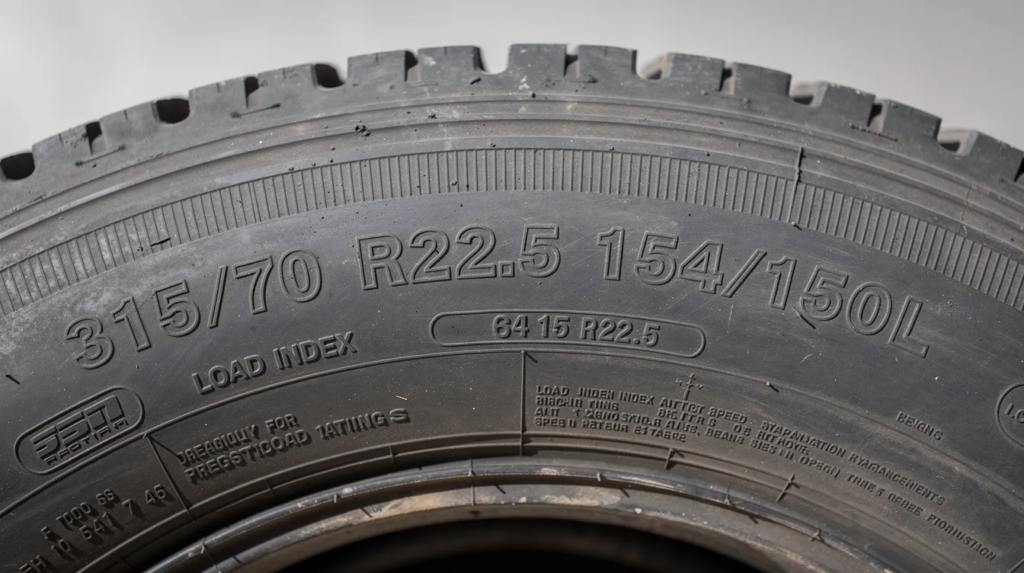
Trailer tyres in the 385/65 R22.5 size, along with common companion sizes like 315/80 R22.5, 245/70 R19.5 and 235/65 R16C, come from a handful of manufacturers that dominate the European HGV market: Michelin, Continental, Goodyear and Bridgestone. Each brand runs its own carcass construction and tread compound trade-offs between mileage, wet grip and heat resistance, and fleet managers often standardise on one brand across a yard purely to simplify stock and torque specs.
For a call-out like this one, brand availability on the day mattered more than brand preference — the priority was matching the exact 385/65 R22.5 size and load rating so the axle went back into service correctly balanced. Wheel balancing and correct torque, applied in a star pattern across the wheel bolts, matter as much as the tyre brand itself; a well-known tyre fitted with uneven torque will still vibrate loose faster than a lesser-known tyre fitted correctly.
Fleet maintenance programmes that rotate tyres, track tread depth by axle position and log pressure checks tend to see far fewer roadside blowouts than fleets running tyres to failure. It’s a cost trade-off every haulier weighs, but the A31 call-out is a fair illustration of what the other side of that trade-off costs when it goes wrong mid-route.
Why Choose Our Truck Tyre Service
Our field network covers Germany around the clock, with crews positioned regionally rather than dispatched from a single depot, which is what got a technician to the A31 near Meppen inside an hour of the call coming in. We carry both the tyre-fitting kit and the curtain repair materials on the same van, so a blowout that also tears the trailer’s side doesn’t need a second call-out or a second wait.
Every job closes with full photo documentation handed to the driver, built specifically for the insurance and CMR claims process that follows a curtain or cargo incident. That paperwork, done properly on site, is often the difference between a claim that settles quickly and one that drags on for weeks over disputed cause.
FAQ
What does a truck tyre blowout typically damage besides the tyre?
Beyond the tyre itself, a blowout commonly damages the curtain, curtain rails, side pillars, mudguards and occasionally rear lights or wiring near the axle, as the flying tread chunk — often several kilograms — strikes the trailer structure at speed. On the A31 case, the curtain, two pillars and a mudguard bracket all took hits.
Why is a torn curtain a bigger problem than the tyre itself?
A torn curtain exposes the cargo to rain for the remainder of the journey, and under the CMR Convention the carrier is liable for that cargo damage regardless of what caused the mechanical failure. A €480 tyre can sit behind a claim worth many multiples of that if the freight is moisture-sensitive.
Can a curtain be repaired on site, or does the trailer need replacing?
Reinforced tape and patch material seal most tears well enough to complete the route, provided the top rail and pillars aren’t structurally bent beyond straightening. When the frame itself is compromised across multiple bays, the load needs transferring to a replacement trailer instead.
How long does a typical truck tyre and curtain repair take?
On the A31 call-out, the full sequence — dispatch, drive to site, tyre fitting, curtain repair and final checks — took 2 hours 45 minutes from the initial call. Straightforward tyre-only jobs are often faster; combined tyre-and-curtain jobs typically run two to three hours depending on tear size.
What should a driver photograph before help arrives?
A wide shot of the whole trailer, close-ups of the tyre remains and the curtain tear, the exposed cargo, and any debris on the carriageway, all timestamped where possible. These images support the insurer’s assessment and back up the crew’s own documentation.
Does tyre brand matter more than correct fitting?
Correct torque, wheel balancing and matching the exact size and load rating matter more day-to-day than brand choice among the major manufacturers — Michelin, Continental, Goodyear and Bridgestone all produce serviceable HGV tyres, but a poorly torqued wheel bolt pattern undermines any of them.
Summary
A tyre blowout on a curtainsider articulated lorry rarely stops at the wheel. On the A31 near Meppen, Emsland, direction Emden, a 385/65 R22.5 tyre failure on the semi-trailer tore the curtain, bent two pillars and cracked a mudguard bracket — the kind of secondary damage that turns a tyre job into a cargo liability question. Our crew had the truck back on the road in 2 hours 45 minutes, tyre fitted, curtain sealed with reinforced patching, and full photo documentation ready for the insurance file, for a total of €1,050 against a downtime cost that would otherwise run €800–1,200 a day.
Call Us 24/7, Anywhere in Germany
Truck tyre blowouts and curtain damage don’t wait for convenient hours. Our field network runs around the clock across Germany, with regional crews ready to reach a breakdown on the motorway hard shoulder fast, fit the correct tyre, and seal the trailer for the road ahead.
Phone: +49 160 5753826
www.lkwhelp24.com
For planned service rather than an emergency, see our mobile truck service, our full workshop and truck service page, or our towing service for cases beyond roadside repair. Reach our team directly through our contacts page.
Keywords: truck tyre service, HGV tyre blowout, semi-trailer curtain repair, articulated lorry breakdown, A31 Meppen, 385/65 R22.5, CMR cargo liability, mobile truck service Germany, 24/7 breakdown assistance