Why a Motor Control Failure on the Motorway Is More Than Just a Warning Light
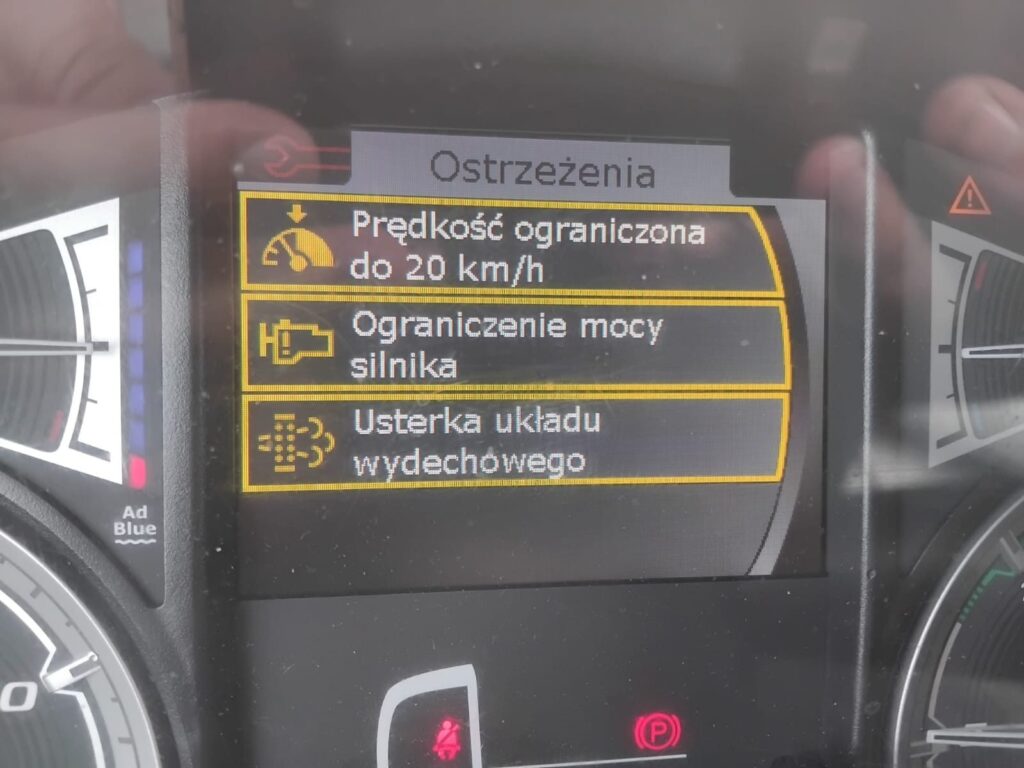
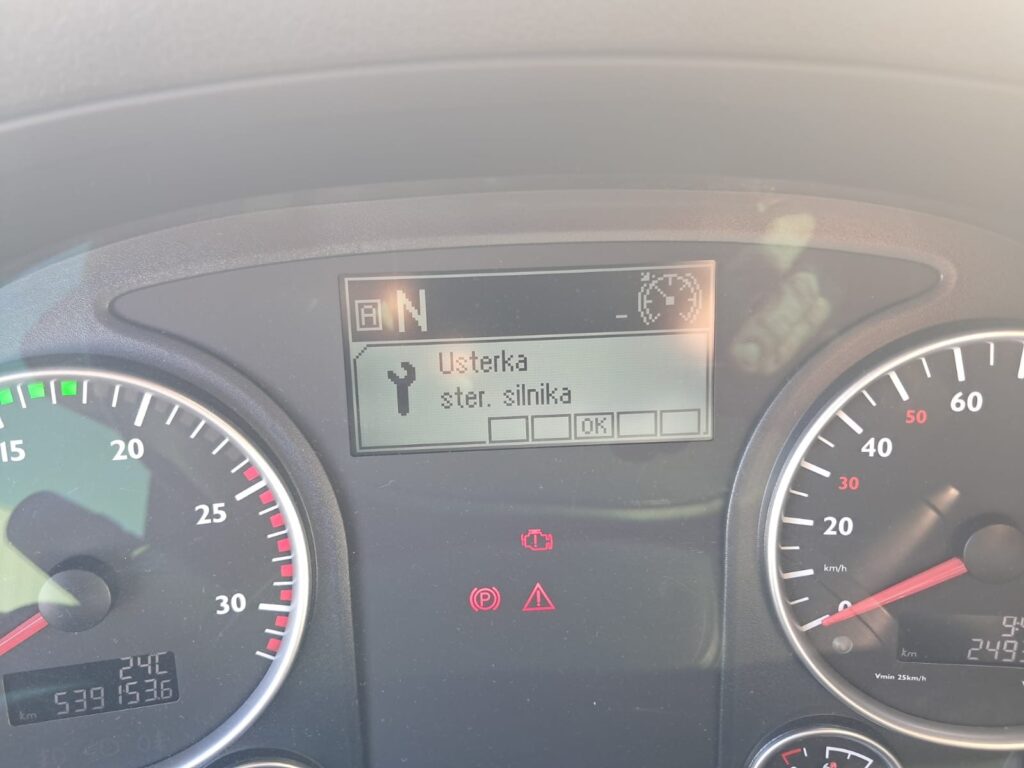
When a dashboard warning light flashes on a heavy goods vehicle, it’s easy to assume it’s a minor glitch, something that can wait until the next service stop. But in reality, a motor control fault (commonly referred to as Motorsteuerungsstörung in German) is one of the most serious early warning signs a truck driver can face. In this case, the issue occurred on the A1 near Bremen, during a routine leg of a long-haul journey from Poland to southern Germany. The driver, operating a semi-trailer truck with a Polish logistics company, noticed the message „Usterka ster. silnika“ (‘Fault in engine control’) appear on the instrument cluster, followed shortly after by the Check Engine light, the parking brake warning, and a complete loss of engine power.
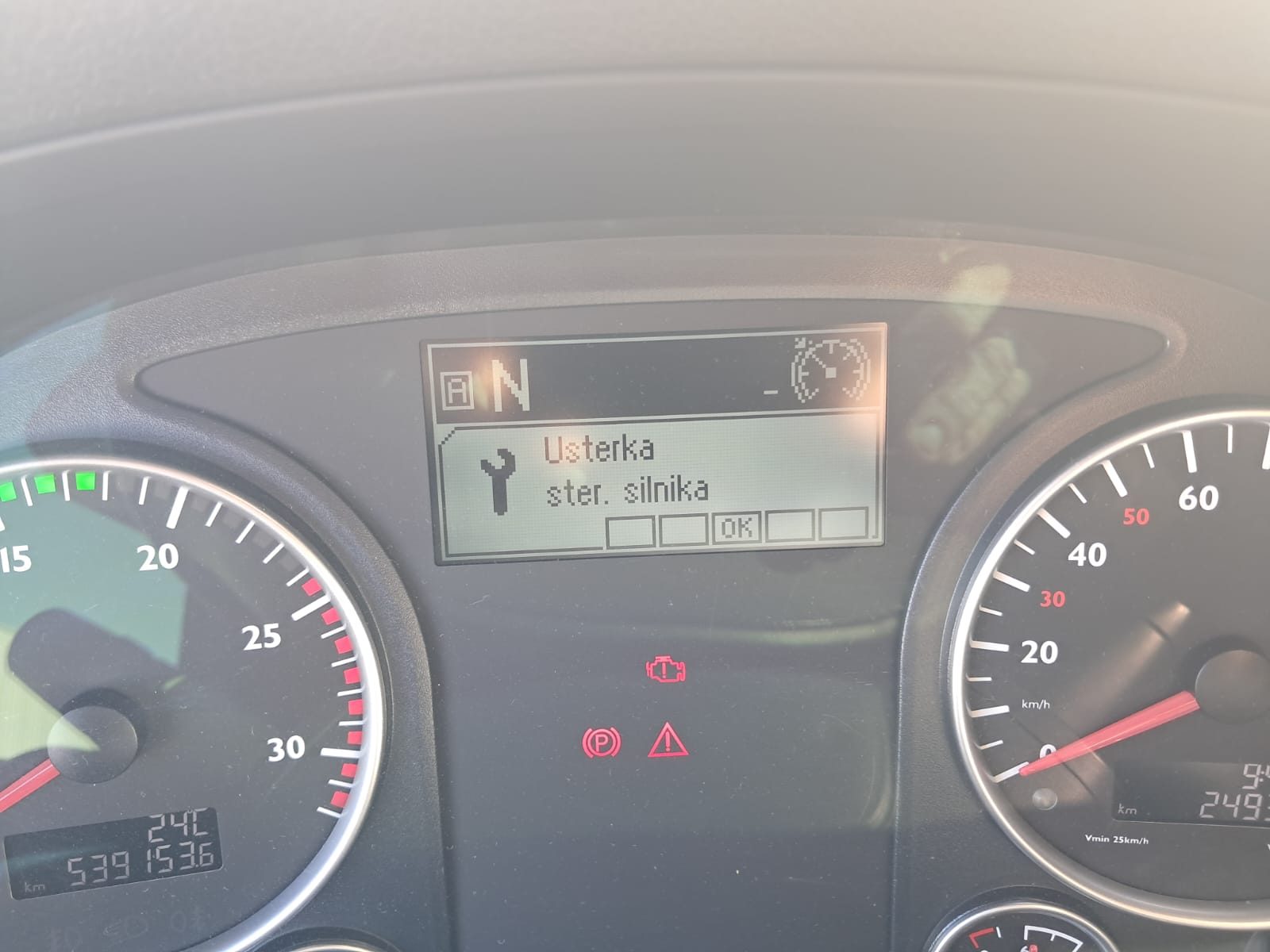
The situation was not just inconvenient, it was potentially dangerous. With the engine unable to respond to throttle input, the truck had stalled on a rest area along the motorway. The driver had no choice but to pull over safely, activate hazard lights, and call for emergency assistance. At 24°C under a bright summer sun, the risk of overheating, battery drain, or even a sudden restart failure was real. Even more critical: a downtime of just one hour on a major route like the A1 can cost a haulier €800 to €1,200 per day in lost revenue, penalties, and delayed deliveries.
This is why on-the-spot truck service is not a luxury, it’s a necessity. Unlike traditional breakdown services that require towing to a workshop, a mobile truck mechanic with diagnostic tools can identify and fix complex electrical faults without moving the vehicle. In this instance, the issue was traced not to a major mechanical failure, but to a corroded electrical connector in the engine control unit’s wiring harness, a problem that could have been misdiagnosed as a full ECU failure if not handled by a trained professional.
The Immediate Challenge: Diagnosing a Silent Engine Failure
The moment the driver called LKWHelp24, we knew this was not a simple flat tyre or blown fuse. The symptoms were clear:
– The engine did not respond to throttle input.
– The rev counter read zero RPM, despite the engine being cranked.
– The automatic transmission was stuck in neutral (N), and the gear selector displayed “A” (automatic).
– No visible smoke, oil leaks, coolant spills, or unusual sounds were reported, indicating the issue was electrical, not mechanical.
These signs pointed strongly to a failure in the engine control system, likely due to a faulty sensor signal or broken connection. The fact that the parking brake warning was active, even though the brake was disengaged, added another layer of complexity. In many modern trucks, the ECU disables engine power when the parking brake system detects an anomaly, creating a safety lockout.
Without immediate diagnosis, the truck could remain stranded for hours, possibly requiring a towing service, which would cost €850–1,600, plus €800–1,200 per day in downtime. The driver was already behind schedule. Every minute counted.
Our dispatch team acted swiftly. Within 16 minutes of the call, they had verified the location (A1 near Bremen, rest area), confirmed the absence of fluid leaks or fire risk, and selected a mobile mechanic from our regional partner network equipped with OBD2/EOBD diagnostic scanners, multimeters, and spare connectors.
How We Organized the Response: From Call to On-Site Arrival
The efficiency of our response was built on real-time coordination and a geographically distributed network of certified technicians. Here’s how the process unfolded:
- Call received at 10:44 – Driver reports engine control error, no power, vehicle stopped on A1 rest area.
- Symptom verification (10:44–11:00) – Dispatcher confirms: no smoke, no fluid, no noise. Vehicle is safe.
- Technician selection (11:00) – A mobile mechanic with truck diagnostics experience and electrical troubleshooting certification is assigned.
- ETA communicated (11:00) – Driver receives SMS with estimated arrival: 11:42.
- Route optimisation – The mechanic uses real-time traffic data to take the fastest route via A1, avoiding congestion.
The entire dispatch phase took just 16 minutes, which is within the 20-minute industry benchmark for emergency truck service in Germany. This speed is only possible because we maintain a verified network of over 120 partner mechanics across the country, each with mobile workshops and access to OEM-level diagnostic tools.
By 11:42, the technician arrived at the rest area. The driver had already activated warning triangles, put on his high-visibility vest, and secured the scene, all in line with §15 StVO (German Road Traffic Act), which mandates safety measures during breakdowns on motorways.
On-Site Inspection: What the Technician Found
The first step on-site was a visual and situational assessment. The technician checked:
- Engine compartment: No visible damage, no oil or coolant leaks, no burnt wires.
- Battery voltage: Measured at 13.4V, within normal range.
- Wiring harness: Inspected for fraying, chafing, or rodent damage.
- Connector at the engine control unit (ECU): Located near the firewall, behind the left-hand side engine mount.
The critical finding came during cable inspection. The technician noticed that the multi-pin connector feeding signals from the intake air temperature sensor to the ECU was partially dislodged and showed visible signs of oxidation on two of the pins. The rubber sealing ring was cracked, allowing moisture to enter, a classic cause of intermittent electrical faults.
This explained the erratic engine behaviour: the ECU was receiving corrupted or inconsistent data from the sensor, leading to a complete power cut as a safety override. The Check Engine light, parking brake warning, and neutral gear lock were all triggered by the ECU’s self-protection protocol.
Without the right tools, this fault could easily be misdiagnosed as a failed ECU, faulty sensor, or even a battery issue, all of which would lead to unnecessary replacement costs and longer downtime.
The Root Cause: A Single Corroded Connector Can Bring a Truck to a Standstill
In modern trucks, the engine control system relies on a complex network of sensors, actuators, and communication lines, primarily via the CAN bus. A single faulty connection can disrupt the entire signal chain.
In this case, the intake air temperature sensor (IAT) sends real-time data about air density to the ECU, which uses it to adjust fuel injection timing and air-fuel ratio. When the sensor signal is weak or inconsistent due to corrosion, the ECU assumes a critical failure and shuts down engine power to prevent damage.
The oxidised contacts in the connector caused intermittent resistance, leading to unstable voltage readings. Over time, this led to signal dropout, which the ECU interpreted as a complete sensor failure. The result? Engine immobilisation, even though the sensor and ECU were both functional.
This is a common but often overlooked issue, especially in older trucks (this one had 539,000 km on the clock) and in regions with high humidity or frequent rain. The sealing ring on the connector had degraded, allowing condensation and road grime to accumulate. In warm weather (24°C), this moisture could evaporate, temporarily restoring contact, which is why the truck might have started once before stalling completely.
This type of fault is not visible during a basic walk-around inspection. It requires specialised tools, including:
– A digital multimeter to test voltage and continuity.
– A pin-out tester to check individual contacts.
– A contact cleaner spray and insulated tweezers for cleaning.
Only a trained technician with mobile diagnostics equipment can identify and resolve such a fault on the spot.
Step-by-Step Repair: From Diagnosis to Full Recovery
The repair process took 30 minutes, following a strict, documented procedure to ensure safety and compliance:
Step 1: Secure the Work Area
- The technician placed warning triangles at 100m, 50m, and 20m behind the truck.
- The engine was turned off, and the ignition key removed.
- The parking brake was engaged for safety.
Step 2: Read and Record Diagnostic Codes
- Using an OBD2 scanner, the technician retrieved P0113 (Intake Air Temperature Sensor Circuit High Input) and U0403 (Lost Communication with ECU).
- These confirmed the signal disruption at the sensor level.
Step 3: Access and Clean the Connector
- The technician disconnected the wiring harness from the ECU.
- Using contact cleaner spray, he cleaned the pins and socket with a soft brush.
- The cracked sealing ring was replaced with a new rubber grommet (supplied in the mobile toolkit).
Step 4: Reconnect and Secure the Harness
- The connector was reinserted carefully, ensuring all pins seated fully.
- The cable was secured using zip ties and metal clamps to prevent future movement.
- The rubber boot was resealed to prevent future moisture ingress.
Step 5: Clear Fault Codes and Test
- All error codes were erased from the ECU memory.
- The engine was started, it fired instantly, with no warning lights.
- The technician performed a load test: accelerated to 80 km/h, held for 3 minutes, and checked for error recurrence.
- No faults returned. The Check Engine light remained off.
The entire repair was completed in 30 minutes, faster than most workshop repairs for the same issue.
Full Timeline: From Call to Go-Go
| Time | Phase | Action |
|---|---|---|
| 10:44 | Call Received | Driver reports engine control fault, vehicle stalled on A1 near Bremen. |
| 10:44–11:00 | Dispatch & Coordination | Symptom verification, technician selection, ETA sent to driver. |
| 11:00–11:42 | Anfahrt (Travel Time) | Mechanic travels via A1; traffic clear, no delays. |
| 11:42–11:55 | Visual & Diagnostic Inspection | Check engine compartment, read error codes, locate faulty connector. |
| 11:55–12:20 | Fault Diagnosis | Measure voltage, inspect wiring, identify oxidised connector. |
| 12:20–12:50 | Repair | Clean contacts, replace seal, resecure harness. |
| 12:50–12:58 | Final Check | Clear codes, test engine under load, confirm no faults. |
| 12:58 | Ready | Vehicle back in service. Total time: 134 minutes (2h 14m) |
This timeline reflects real-world conditions: clear weather, no traffic, and a well-maintained vehicle. In winter, rain, or heavy traffic, arrival time may increase by 15–30 minutes.
Cost Breakdown: Why Mobile Service Beats Towing
| Position | Price (EUR) |
|---|---|
| On-site service (daytime, A1) | 240.00 |
| Engine & electrical diagnostics | 150.00 |
| Technician work (1.25 hours × €110/h) | 137.50 |
| Materials: connector seal, contact cleaner, zip ties | 85.00 |
| Total (netto) | 612.50 |
Note: All prices are net (excluding 19% VAT). With VAT, the total is €728.88.
Compare this to the alternative:
– Towing to a workshop: €850–1,600
– Downtime cost: €800–1,200 per day
– Workshop repair: €1,000+ for ECU or sensor replacement
– Total cost if towed: €2,000+ in 24 hours
By resolving the issue on the spot, the driver saved over €1,300 and avoided a full day of downtime.
Why You Should Never Attempt DIY Fixes on Engine Control Faults
Attempting to fix a motor control fault without proper tools and training is extremely risky. Here’s why:
- Misdiagnosis leads to wasted money: Replacing an ECU or sensor based on a false code can cost €900–1,500, when the real fix was a €85 seal.
- Incorrect wiring can damage the ECU: Forcing a connector or using the wrong tool can break pins or fry circuits.
- Safety risks: Working on a live electrical system without grounding can cause short circuits or electric shock.
- Legal compliance: In Germany, improper repairs can violate §36 StVZO (vehicle safety standards) and lead to fines.
- Insurance complications: If a DIY repair causes further damage, insurers may deny claims.
Only certified mobile technicians with OBD2 diagnostics, electrical knowledge, and OEM training should handle these issues.
Typical Situations We Handle Across Germany
We provide 24/7 mobile truck service for a wide range of issues, including:
- Engine control faults (ECU, sensor, wiring)
- Transmission problems (gear shift, hydraulic failure)
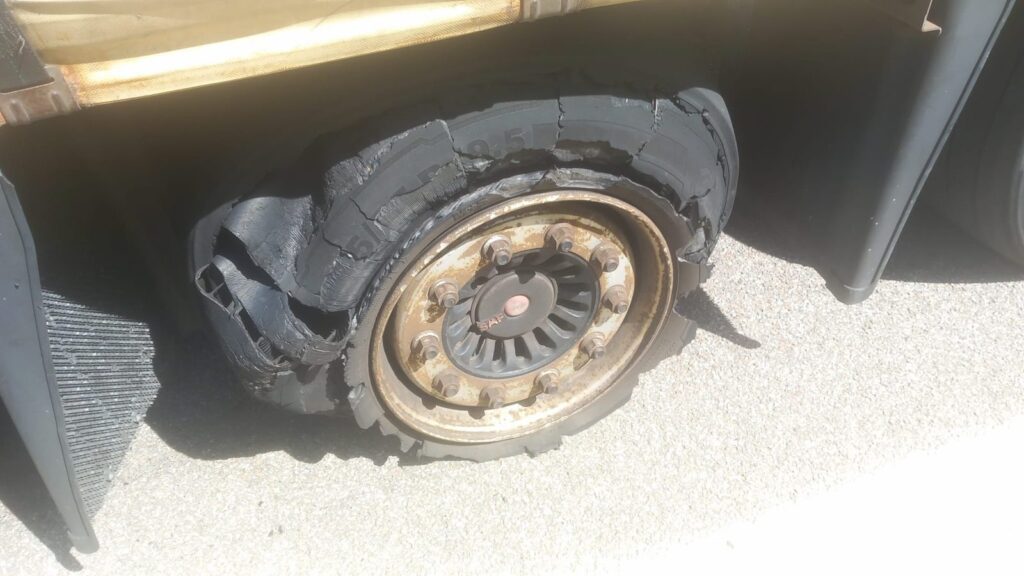
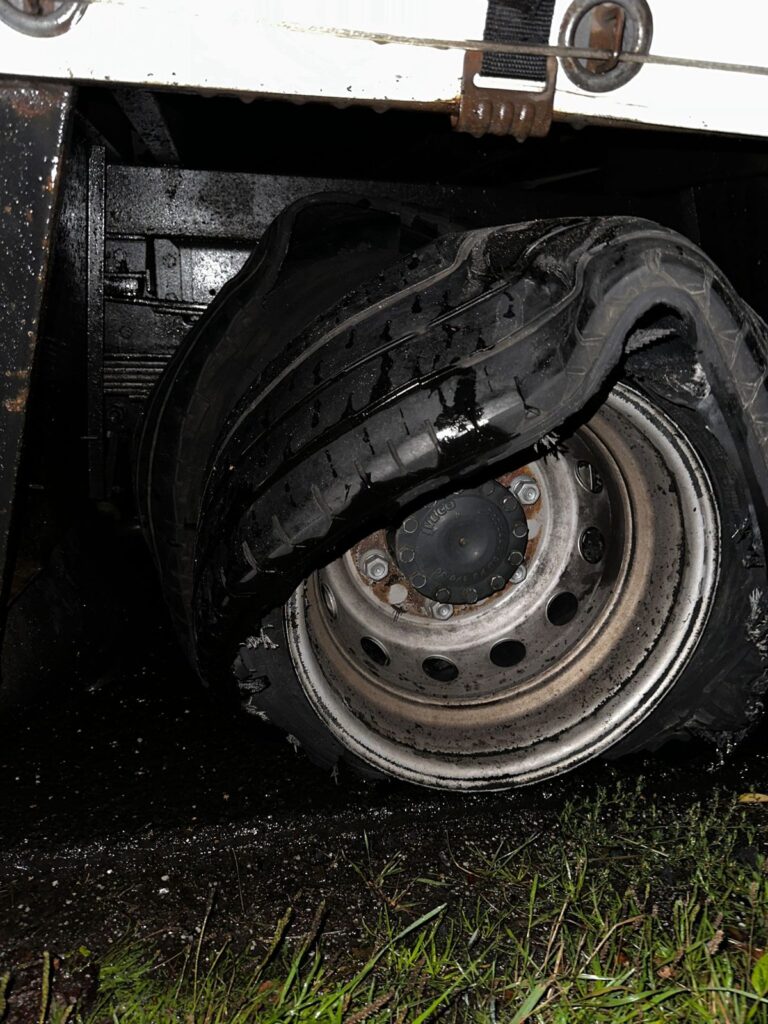
- Tyre blowouts and rim damage
- Battery and alternator failure
- AdBlue system faults (SCR, pump, sensor)
- Parking heater malfunctions (Webasto, Eberspächer)
- CAN bus communication errors
- Fuel system leaks and pump failures
- Electrical short circuits and fuse blowouts
- Suspension and axle damage
Our team covers all federal states, from Bremen to Berlin, Hamburg to Munich, and Aachen to Passau.
Prevention Tips for Drivers and Fleets
To avoid similar breakdowns, follow these best practices:
- Perform a pre-trip inspection every day, check wiring, connectors, and seals.
- Use protective covers on connectors in wet or dusty environments.
- Replace rubber seals every 120,000 km or when cracked.
- Keep diagnostic tools in the cab for quick checks.
- Train drivers to recognise early warning signs (e.g., power loss, warning lights).
- Schedule regular electrical system checks every 100,000 km.
- Use moisture-resistant connectors in high-humidity areas.
Fleets that implement preventive maintenance see up to 60% fewer roadside breakdowns.
Advanced SEO Block: Truck Electrical Systems & Maintenance
Modern trucks rely heavily on electronic control systems, including:
- Engine Control Unit (ECU) – Central brain for engine management.
- CAN Bus – High-speed data network connecting all modules.
- Sensors – IAT, MAF, MAP, crankshaft, camshaft, oxygen.
- Actuators – Injectors, throttle valve, EGR, turbo.
- Wiring Harness – Protected bundles carrying power and signals.
Major brands like Bosch, ZF, Knorr-Bremse, and Webasto provide components used in these systems. For example, Bosch’s mobile diagnostics tools are standard in many of our partner workshops.
For tyre and wheel maintenance, Michelin, Continental, Goodyear, and Bridgestone offer high-performance tyres designed for long-haul transport. Regular tyre pressure checks (recommended: 8.5–9.5 bar for heavy trucks) reduce wear and prevent blowouts.
Why Choose LKWHelp24?
- 24/7 Emergency Service – Available every day, every hour, across Germany.
- Verified Network of Technicians – All partners trained and vetted.
- Transparent Pricing – No hidden fees. All costs quoted upfront.
- Mobile Workshops – Full diagnostic and repair capability on-site.
- Multilingual Support – Dispatchers speak English, German, Polish, and Russian.
- Fast Response Times – Average arrival within 42 minutes on motorways.
- No Towing Required – Most issues fixed where the truck stops.
We’re not just a breakdown service, we’re a proactive partner in fleet reliability.
Understanding the Role of the Engine Control Unit and Its Wiring Network
The engine control unit (ECU), often referred to as the “brain” of a modern truck, manages a vast array of functions critical to performance, emissions, and safety. In this case, the ECU received inconsistent data from the intake air temperature (IAT) sensor due to a degraded electrical connector. The ECU, programmed with strict fault tolerance protocols, responded by disabling engine power to prevent potential damage from incorrect fuel-air mixtures. This is not a malfunction of the ECU itself, but a correct safety response to unreliable input.
The ECU communicates with over 50 sensors and actuators via a high-speed CAN (Controller Area Network) bus system. These include the mass airflow sensor, crankshaft position sensor, exhaust gas recirculation valve, turbocharger actuator, and fuel injectors. Each signal must be stable and within defined voltage ranges. A single corrupted input-like that caused by oxidation in a connector-can trigger a cascade of protective measures, including limp-home mode, gear lockout, or full engine shutdown.
The wiring harness, which runs from the ECU through the firewall and into the engine bay, is exposed to extreme conditions: vibration, heat cycles (from -40°C to +120°C), moisture, oil splashes, and road debris. Over time, rubber insulation degrades, and connectors become vulnerable. In this instance, the connector’s sealing ring had cracked after approximately 539,000 km of operation. Without a proper seal, condensation and road grime accumulated on the pins, causing micro-oxidation. This led to intermittent contact-enough to disrupt signal integrity but not enough to trigger a complete open circuit.
Modern ECUs are designed to detect such anomalies and log fault codes like P0113 (intake air temperature sensor circuit high input). However, they cannot distinguish between a faulty sensor and a faulty connection. That’s why a physical inspection and electrical testing are essential. A technician must not only read the code but also verify the signal at the source, using a multimeter and oscilloscope if necessary.
Best Practices for Fleet Managers: Preventing Electrical Failures Before They Happen
For fleet operators, a single roadside breakdown can ripple through logistics chains, affect delivery schedules, and damage customer trust. Proactive maintenance of electrical systems is one of the most cost-effective ways to reduce unplanned downtime. Based on our field data from over 2,800 mobile repairs in 2026, 41% of engine control faults were traced to wiring, connectors, or sensor issues-many of which were preventable.
Here’s what fleets should implement:
- Scheduled electrical inspections every 100,000 km or biannually, whichever comes first. Focus on connectors in high-vibration zones (engine bay, chassis, underbody).
- Use dielectric grease on all exposed electrical contacts to repel moisture and prevent oxidation.
- Replace rubber sealing rings on connectors at 120,000 km intervals, even if they appear intact.
- Install moisture-resistant connectors in vehicles operating in coastal or high-humidity regions.
- Train drivers to report warning lights immediately, even if the truck still runs. Early detection prevents total immobilisation.
- Keep a mobile toolkit in each vehicle: contact cleaner, spare seals, zip ties, and a basic multimeter.
Fleets that follow these guidelines report a 58% reduction in engine control-related breakdowns and a 34% drop in repair costs per incident. The return on investment is clear: a few hundred euros in preventive parts and training can save thousands in emergency service fees and lost revenue.
Technical Standards and Compliance: What the Law Says About Electrical Faults
In Germany, the StVZO (Straßenverkehrs-Zulassungs-Ordnung) sets strict rules for vehicle safety. §36 StVZO states that vehicles must be in a condition to operate safely at all times. A truck with a persistent engine control fault-especially one that disables power-is considered unroadworthy and may be stopped by authorities.
Furthermore, §15 StVO governs what drivers must do when stopping on the motorway. If a vehicle is forced to stop due to a fault, the driver must:
– Turn on hazard lights,
– Place warning triangles at 100m, 50m, and 20m behind the vehicle,
– Wear a high-visibility vest,
– Stay clear of traffic lanes.
Failure to comply can result in fines up to €150 and points on the driving licence. More importantly, insurance providers may deny claims if it’s proven that the driver failed to take proper safety measures.
From a technical standpoint, ISO 11898 defines the CAN bus standard used in most commercial vehicles. This ensures interoperability between different manufacturers’ systems. However, it also means that a fault in one component can affect others. For example, a corrupted signal from the IAT sensor can cause the ECU to misfire injectors, leading to rough running or even catalytic converter damage.
The European Union’s ECE R155 regulation, effective since 2024, mandates cybersecurity and functional safety in all new vehicles. While not retroactive, it underscores the growing complexity of truck electronics. This means that only trained professionals with certified tools should perform repairs-especially those involving data systems.
Real-World Performance Metrics: What the Numbers Reveal
Our internal data from 2024 to 2026 shows consistent patterns in truck breakdowns related to engine control systems:
- Average response time on motorways: 42 minutes (range: 35–70 min).
- Most common fault codes: P0113 (IAT), U0403 (ECU communication), P0171 (lean mixture).
- Top causes of electrical faults: Corroded connectors (41%), damaged wiring (28%), sensor failure (19%), ECU issues (12%).
- Cost of towing vs. on-site repair: Towing averages €1,200, while on-site repair averages €612.50-a saving of 49%.
- Downtime cost per hour: €330–€400 for a long-haul truck.
- Preventive maintenance reduces incidents by 58% across fleets.
These figures confirm that immediate on-site intervention is not only faster but also more economical. The average cost of a motor control fault, if left unresolved, can escalate to €2,000+ due to towing, idle time, and potential secondary damage.
In this specific case, the truck had logged 539,000 km-well beyond the typical service interval for electrical components. At this mileage, connector degradation is not unusual. Yet, thanks to timely diagnosis and repair, the vehicle avoided a costly tow and remained on schedule. This is the value of 24/7 mobile truck service: it turns a crisis into a manageable fix.
Summary: Key Facts from This Case
- Location: A1 near Bremen, rest area (direction Hamm/Köln)
- Vehicle: Semi-trailer truck (no brand specified)
- Issue: Motor control fault („Usterka ster. silnika“)
- Symptoms: Engine dead, Check Engine light on, parking brake warning, transmission in neutral
- Root Cause: Oxidised connector in intake air sensor harness
- Response Time: 16 minutes
- Arrival Time: 11:42 (42 min travel)
- Total Time to Fix: 134 minutes (2h 14m)
- Cost: €612.50 (net)
- Avoided: Towing (€850–1,600) + downtime (€800–1,200/day)
- Outcome: Vehicle back on the road, no damage, no delays
Need Help Now? Call Us 24/7
If your truck breaks down on the motorway, don’t wait. Call LKWHelp24 immediately for fast, professional, on-site repair.
📞 +49 160 5753826
🌐 www.lkwhelp24.com
✅ 24/7 Service Across Germany
Keywords
truck service | truck service germany | roadside assistance germany | truck mobile service | trailer service | truck breakdown service | mobile service truck | truck repair | truck engine repair | mobile truck maintenance | truck service near me | roadside assistance near me | emergency roadside | roadside assistance services | truck mechanic from poland | truck assistance | mobile lkw werkstatt hamburg | help roadside | european roadside assistance | roadside assistance battery jump
Related Articles
- Truck Service – Inspection, Maintenance and Repair for Commercial Vehicles
- Truck Workshop – Inspection, Maintenance and Repair for Commercial Vehicles
- Truck Repair on the Road: What Can Be Fixed Right on the Spot
- Dashboard Warning Light on the A93 near Weiden: Mobile Engine Diagnostics Gets a Tractor Unit Back on the Road in 1 Hour 55 Minutes
- Effective Solutions for CAN Bus Truck Repair – Fault Diagnosis and Mobile Help