Skip to content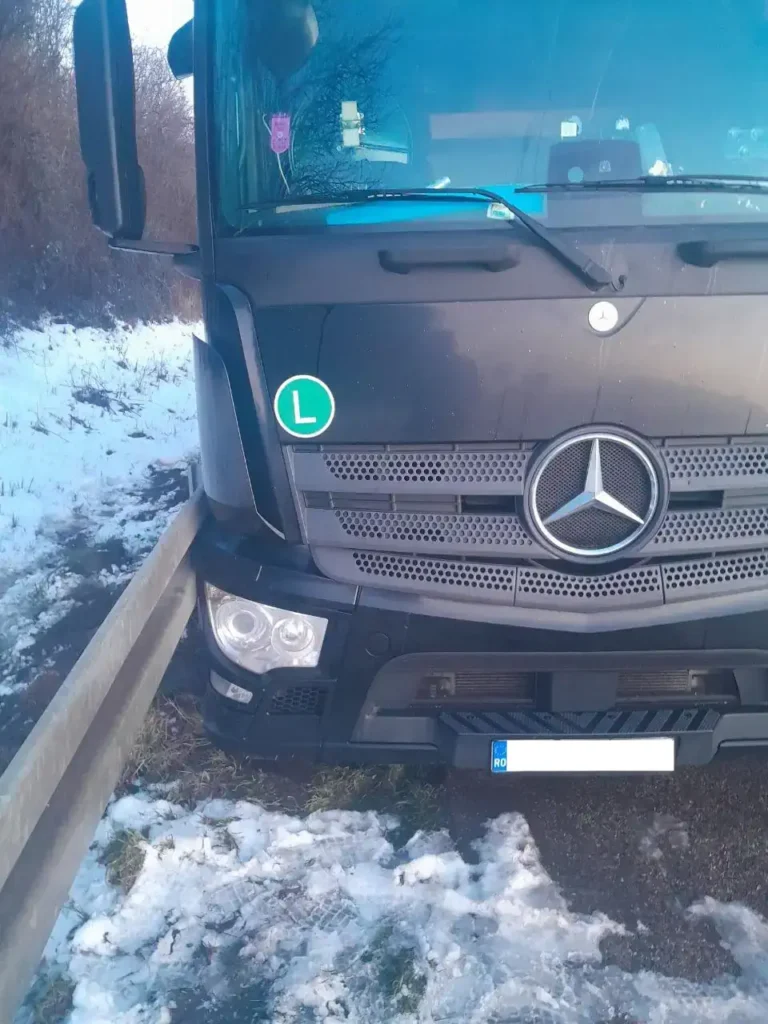
REAL CASE STUDY | Germany, Cologne area (A59) | AutoHelp / LKWHelp24
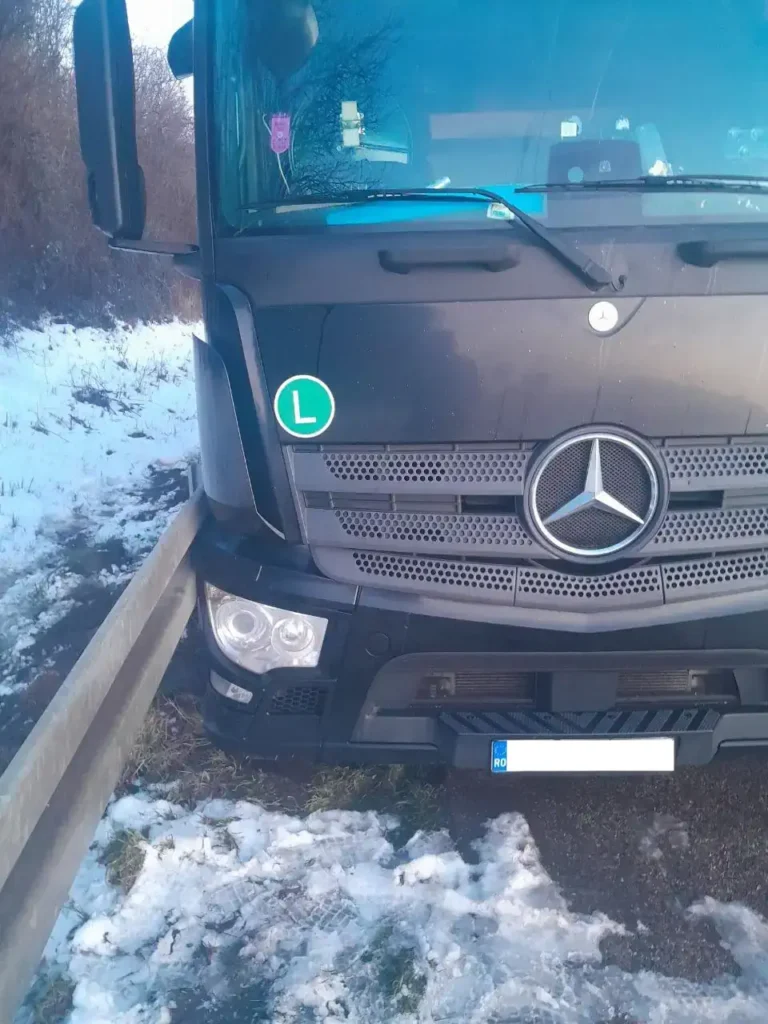
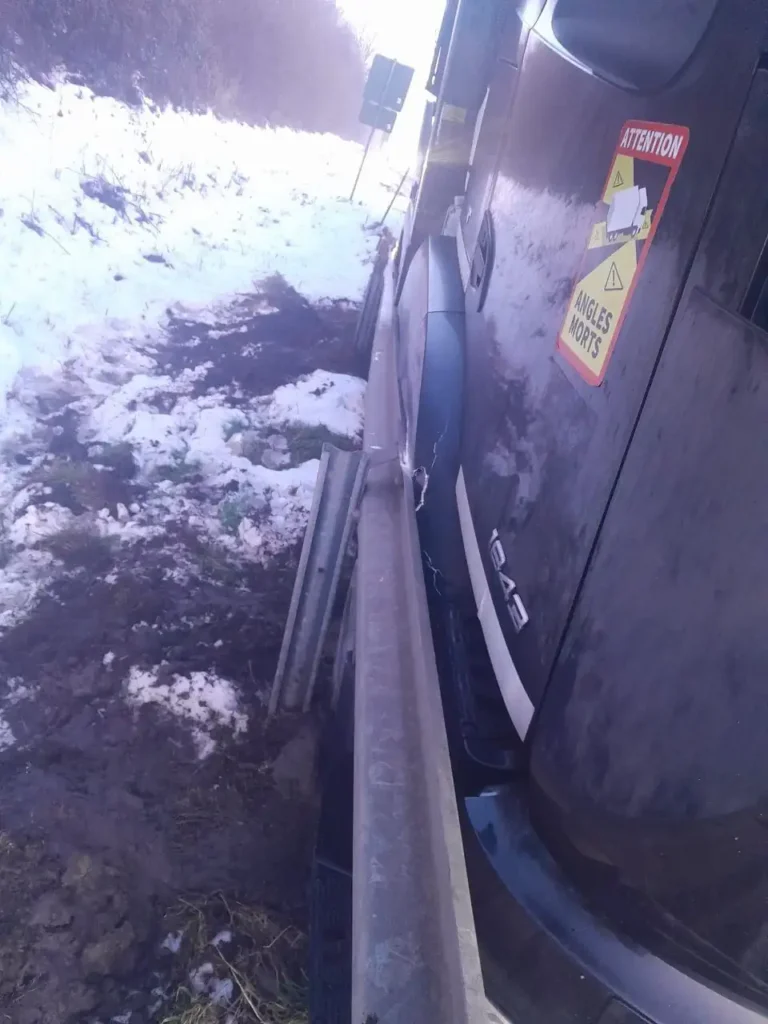
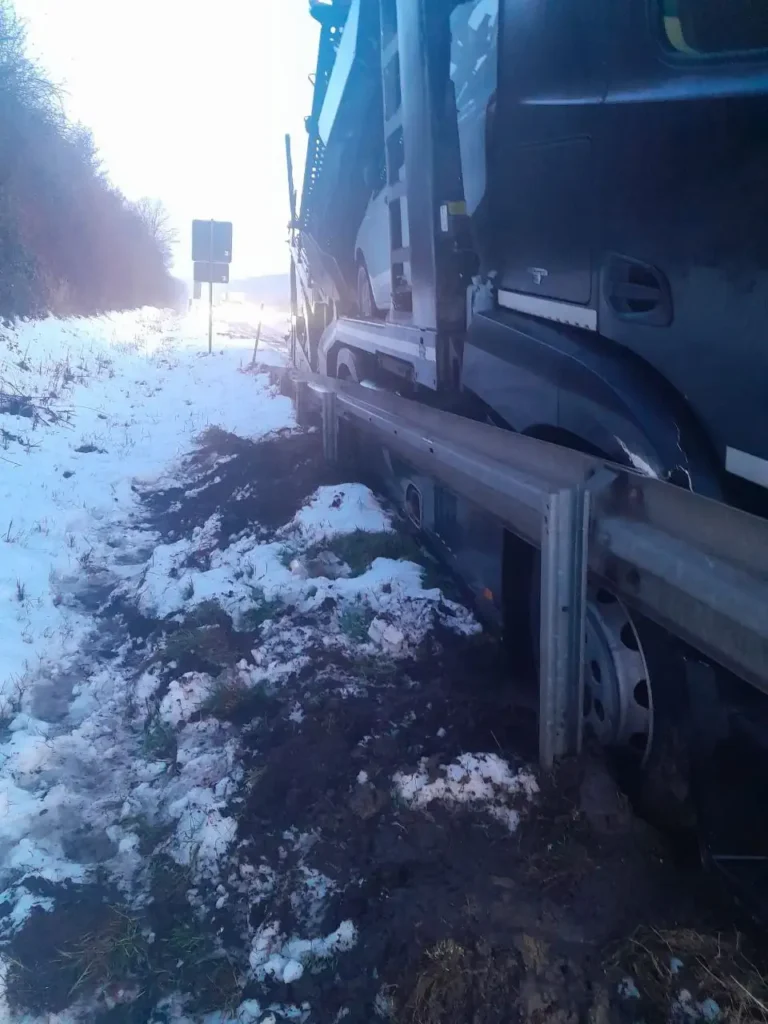
A fully loaded car transporter stuck against a crash barrier on a snow-covered verge. A 40-tonne Mercedes-Benz Actros tilted at a dangerous angle. A Romanian driver alone, at night, on the outskirts of Cologne — unable to move. This is the kind of scenario that can escalate into a full rollover within minutes if handled incorrectly.
The advantages of using a professional trucks towing service include rapid response times, high efficiency, and comprehensive support that ensures both safety and minimal downtime for commercial vehicles.
Situations like this are exactly why professional truck roadside assistance in Germany must be available around the clock. Self-recovery attempts with a fully laden car transporter are not just futile — they can trigger the very accident you are trying to prevent. In this case, the incident occurred within the city limits of Cologne, demonstrating the provider’s ability to deliver quick assistance and towing services in urban environments. This case study documents how AutoHelp (operating as LKWHelp24) managed the Bergung of this vehicle on the A59, PLZ 51147, from the first call to the driver clearing the scene.
Whether you are a long-haul driver or a transport company dispatcher, understanding what a professional heavy truck recovery operation looks like — step by step, with real timelines and real costs — will help you make the right decision fast when it matters most. Professional truck recovery services also include breakdown assistance as part of their comprehensive support, ensuring help is available for a wide range of roadside emergencies.
The Incident: What Happened and Why It Was Serious
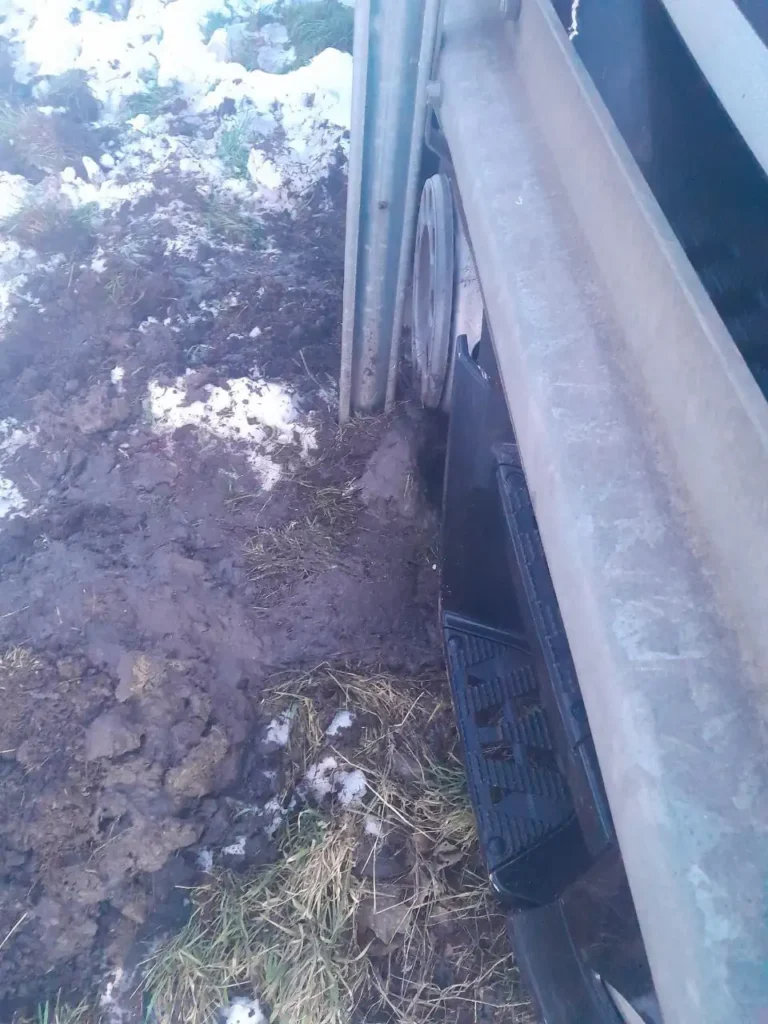
The call came in during adverse weather conditions: a mix of slush, compacted snow and mud on the verge of the A59 near Cologne (Köln), postal code 51147. The driver, operating a Mercedes-Benz Actros in car-transporter configuration, had drifted partially onto the soft shoulder while manoeuvring at reduced speed. The rear axle group lost traction on the frozen mud, and forward momentum carried the combination into the safety barrier.
Vehicle: Mercedes-Benz Actros, full car-carrier (Autotransporter)
Gross train weight: ~40 tonnes (full load of passenger vehicles)
Position: Partial off-road, right side against barrier; high rollover risk
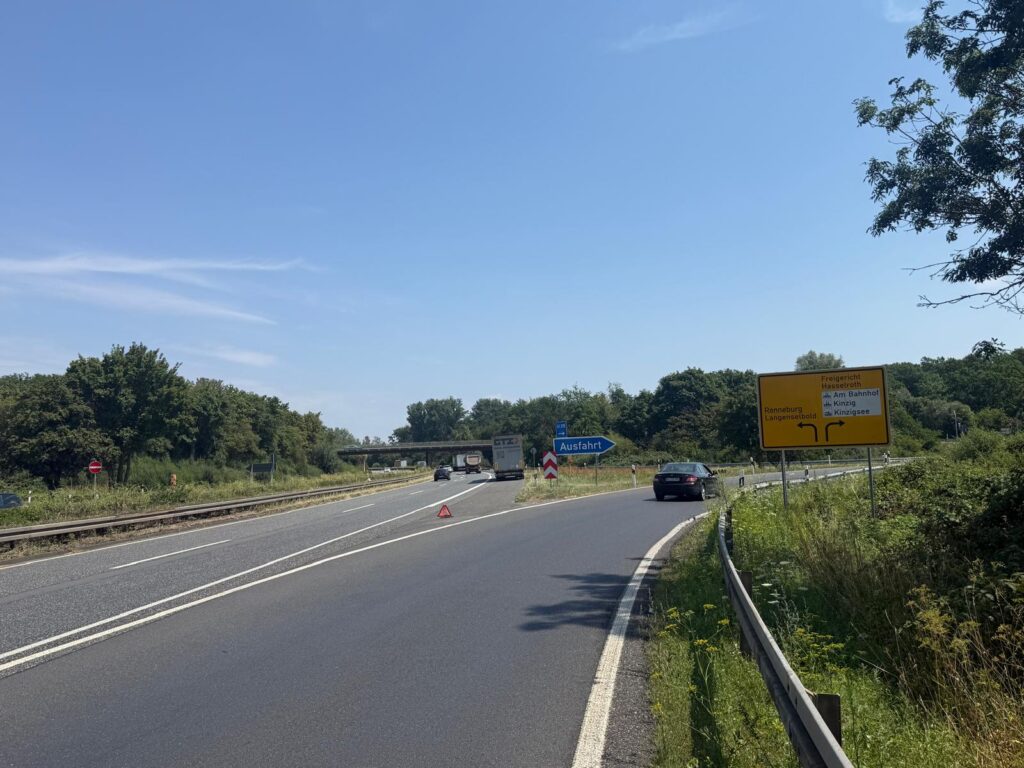
Road: Autobahn A59, PLZ 51147, Cologne region
Truck recovery on the highway presents unique challenges due to strict regulations and the need for rapid, safe clearance to minimize traffic disruption and ensure compliance with highway safety protocols.
The centre of gravity of a fully loaded multi-deck car carrier sits considerably higher than a standard curtainsider. Any lateral shift of even a few degrees increases rollover torque dramatically. The driver made the correct call: he stopped all wheel movement immediately and contacted AutoHelp. Emergency services were also notified to ensure safety and proper coordination during the recovery.
Organising the Response: From the First Call to Arrival on Scene
The LKWHelp24 dispatch team assessed the situation in under four minutes. Key questions covered: axle positions, lean angle, ground conditions, cargo type, and whether any vehicles on the carrier had shifted. Based on the answers, a two-truck heavy recovery operation was immediately authorised — a single unit would have been insufficient for the load and the rollover risk.
• Call received and risk level classified (high — loaded car transporter against barrier)
• Two heavy-duty Schwerlast-Abschlepper dispatched simultaneously
• Driver advised: engine off, park brake on, no wheel movement, hazard lights on
• Estimated arrival communicated: 45 minutes
• Motorway police (Autobahnpolizei) notified to coordinate lane management
• Both units arrived on site in 43 minutes
LKW truck breakdown assistance in Germany response speed varies by region and provider. A 45-minute window for a heavy unit in the Cologne area is achievable — but only with a provider that keeps vehicles and qualified Bergungs-Techniker ready around the clock. Delays in high-risk situations like this one compound danger exponentially.
Situation on Site: Why the Driver Could Not Self-Recover
When the first recovery truck arrived, the technician immediately confirmed what the driver had described. The right-rear bogie was sunk approximately 18 cm into the soft, waterlogged verge. The barrier contact point was at the right-front corner of the trailer chassis. Any attempt to reverse would have rotated the rear further into soft ground while pushing the nose of the trailer harder against the barrier — a classic pivot trap.
Attempting to drive forward would have pulled the sinking bogie sideways along the trailer’s longitudinal axis, creating a shear load that the barrier cannot absorb. In a worst-case scenario, this shear force pops the trailer wheels over the barrier edge, initiating a rollover sequence.
Recovering heavy-duty vehicles like trucks and trailers from such situations requires special equipment, such as cranes or high-capacity platforms, to ensure safe and efficient truck towing service in Germany. Trailers often need to be detached from the truck before towing to prevent damage during transport. It is also necessary to remove any attached equipment from the evacuated truck to avoid further damage during transportation.
The additional hazard was the cargo itself. Passenger cars on upper decks of a fully loaded Autotransporter are secured at each corner with wheel straps, but they add to the rotational inertia in any tipping motion. One of the technicians confirmed that three of the upper-deck vehicles showed visible slack in their straps — a direct result of the lateral lean. This was logged and addressed during the Sicherung phase before any winching began.
Step-by-Step: The Bergung Operation
Step 1 – Assessment and Planning (Lagebeurteilung)
Both technicians conducted a full walk-around. They measured the lean angle (approximately 9 degrees off vertical), probed the ground hardness along the intended pull vector, and identified a load-bearing anchor point on the solid tarmac surface approximately 35 metres ahead of the truck. The pull direction was calculated to bring the rear axle group back onto firm ground before any lateral correction was attempted.
Step 2 – Securing the Load and Setting Anchor Points (Sicherung und Verankerung)
Before any Winden (winching) equipment was deployed, the three slack wheel straps on the upper-deck vehicles were re-tensioned manually. This added approximately 15 minutes to the timeline but eliminated the risk of a cascade failure during recovery. Ground anchors (Erdanker) were driven at two positions to create a stable tri-point pulling geometry. This setup distributes the recovery load and prevents the rear of the truck from swinging into the live lane.
Step 3 – Dual Winch Operation (Synchrones Winden)
Both recovery trucks deployed their main winch lines. The primary line ran forward along the truck’s centreline; the secondary line was angled at approximately 15 degrees to the right to counteract the lateral lean. Line tension was built up slowly — no sudden jerk loads — with both winch operators communicating via radio. The Actros moved back onto firm ground over a period of roughly 35 minutes. At no point did wheel spin occur; the tyre contact patches were maintained throughout.
Step 4 – Barrier Clear and Final Checks (Freimachen und Endkontrolle)
Once all axles were confirmed on solid ground, a final stability check was carried out: visual inspection of all tyres, a brake function test, re-checking of all cargo securing points, and a chassis geometry visual. The driver was walked through the findings. No mechanical damage was identified that would have prohibited the continuation of the journey. The technicians documented the recovery for insurance and fleet management purposes.
Timeline: From Call to Completion
Time | Phase | Action |
|---|---|---|
00:00 | Incoming call | Driver reports the incident; risk assessment initiated |
00:05 | Dispatch | Two heavy-duty recovery trucks assigned and en route |
00:45 | Arrival on site | Both units arrive at A59, PLZ 51147 |
01:00 | Site assessment | Ground survey, load check, anchor point selection |
01:20 | Rigging | Dual winch lines secured, traffic management in place |
01:45 | Recovery operation | Synchronised winching begins; truck repositioned gradually |
02:30 | Clear of barrier | Actros fully back on firm ground; immediate stability check |
03:00 | Job closed | Final inspection complete; driver cleared to proceed |
Total time from first call to job closed: approximately 3 hours. For a loaded car transporter in a high-risk position, this is a well-managed outcome. Every minute that passes in a situation like this increases the probability of further ground subsidence and load shift.
Cost Breakdown: What Does Truck Recovery Near Cologne Cost?
The following breakdown reflects the actual cost structure for a dual-unit heavy recovery of a 40-tonne combination on the A59. All figures are net, excluding VAT. Costs will vary depending on location, time of day, number of units required, and duration of the operation. Transparent price information and clear cost estimates are essential—trustworthy trucks towing service providers should always offer an upfront, itemized quote including the hookup fee, per-mile charges, and any optional service charges, with no hidden costs.
Service Item | Cost (net) |
|---|---|
Heavy recovery truck × 2 (callout + mileage) | € 580 |
Winch operation – dual winch setup | € 420 |
On-site labour (2 technicians × 2 hrs) | € 340 |
Equipment: shackles, strops, ground anchors | € 180 |
Traffic safety / lane management | € 160 |
Service & administration fee | € 120 |
Stabilisation check & final inspection | € 180 |
TOTAL (net) | € 1,980 |
Factors that influence the final price of heavy truck recovery in Germany:
• Number of recovery vehicles required (single unit vs. multi-unit operation)
• Time of day and day of week (night and weekend surcharges apply)
• Distance from the nearest base to the incident location
• Ground conditions and whether specialised equipment is required
• Duration of on-site work and traffic management requirements
• Whether load re-securing or partial unloading is necessary
• Condition of the vehicle, type of breakdown, complexity of loading, and severity of damage
The price of calling a 24/7 truck towing service in Germany depends on several factors, such as the vehicle’s condition, the type of breakdown, the complexity of the approach, and the distance to the destination. The cost of towing a vehicle can vary significantly based on the weight of the vehicle, the distance to the destination, and the complexity of loading. Standard fees for towing services can range between 70€ to 120€ for shorter distances, but these costs may increase for longer hauls. Towing services in Germany are not limited to a specific area—coverage can extend to neighboring countries such as Czechia, Poland, and Austria. Vehicles can be transported to any desired location, including repair shops or parking lots, according to customer needs.
For transport companies, these costs should be weighed against the alternative: a rollover event with full load damage, third-party liability, motorway closure penalties, and vehicle write-off. In that context, a professional Bergung LKW Germany operation in the €1,850–€2,200 range represents straightforward risk management, not an expense.
Why Attempting Self-Recovery Is the Costliest Decision You Can Make
Every year, vehicle recovery incidents in Germany are worsened by premature self-recovery attempts. For a 40-tonne car transporter against a barrier, the risk scenarios are concrete:
• Spinning the drive wheels digs the axle deeper into soft ground within seconds, removing the possibility of a simple pull-out
• Rocking the combination can shift unsecured or partially secured cargo on upper decks, altering the centre of gravity unpredictably
• Engaging a tow from a passing HGV without professional rigging risks snapped cables, barrier puncture, and secondary accidents in the live lane
• Fuel issues are a common cause of breakdowns, and improper handling can lead to further vehicle damage or safety hazards. Such situations should always be managed by professionals.
• Each failed attempt typically adds €400–€800 to the final recovery cost through increased extraction complexity
A professional truck towing company deploys calibrated winch systems, uses load-rated ground anchors, and — critically — has the experience to read ground conditions and load geometry before applying any force. This is the difference between a 2-hour recovery and a 6-hour recovery with a crane. Mobile truck service in Germany and breakdown assistance services provide a safer and more effective alternative to self-recovery attempts, ensuring proper handling of all breakdown scenarios.
Typical Situations Where LKWHelp24 Is Called
• Loaded HGV drifted onto soft verge on Autobahn or B-road, unable to self-recover
• Articulated truck jackknifed after braking on wet or icy surface
• Car transporter or double-deck trailer with rollover risk after tyre failure
• Refrigerated trailer broken down with perishable cargo — time-critical recovery
• Flatbed with heavy machinery partially off the road requiring multi-point stabilisation
• Bus or coach stranded on a gradient or narrow road in urban or rural Germany
• Post-accident Bergung: vehicle undriveable, requiring secure loading and transport. Emergency services may be involved to ensure safety and proper handling. Secure storage facilities are used to safeguard vehicles involved in accidents and preserve evidence.
• Recovery after blown tyre on a fully loaded tanker or chemical carrier
• Roadside assistance services can help with various issues, including tire changes and loading assistance.
• Emergency roadside assistance services can transport vehicles to any desired location, such as repair shops or parking lots.
Prevention: What Every Professional HGV Driver Should Know
No recovery operation is as efficient as the accident that did not happen. The following practices, based on patterns seen in real callouts across Germany, directly reduce the probability of needing emergency truck recovery:
• Check verge conditions before stopping — in wet or icy weather, soft shoulders can be deceptive from the cab. Where possible, stop only on hard-surfaced emergency stopping areas
• Adjust tyre pressures for road conditions. Under-inflated tyres on a laden car transporter lose lateral stiffness rapidly on soft ground, accelerating axle sink
• Distribute axle loads correctly. An overloaded rear bogie group on a car carrier is a primary driver of verge sinking incidents
• Know your combination’s centre of gravity. Fully loaded upper decks on a multi-deck transporter shift the CoG significantly higher than drivers used to curtainsiders expect
• Carry basic recovery data with you: gross train weight, number of axles, cargo description, tyre size. Recovery dispatchers will ask for this immediately — having it ready cuts response time
• If the truck is moving and you feel traction loss on a soft shoulder, do not accelerate. Lift off, apply gentle steering correction, and stop — spinning the drive wheels makes extraction far more complex
Rental Car Services: Keeping Drivers Moving After a Breakdown
A breakdown on the road doesn’t have to mean your journey comes to a halt. At LKWHelp24, we understand that time is critical—whether you’re managing a commercial fleet or driving independently. That’s why our roadside assistance and recovery service goes beyond just towing: we offer reliable rental car solutions to keep you moving, no matter the situation.
When your truck, bus, or special vehicle is sidelined due to a breakdown or accident, our team can quickly arrange a rental car or replacement vehicle through trusted third party providers. We maintain strong partnerships to ensure a wide selection of vehicles is available, from standard cars to special vehicles capable of handling heavy loads or unique transport requirements. This means you can choose the right vehicle for your needs and get back on the road with minimal disruption.
Our process is designed for speed and convenience. Once you request a rental car—whether by phone or through our website—our dispatch team uses Google Maps and real-time data to pinpoint your location and assess various factors such as distance, current workload, and the type of vehicle required. We then coordinate the safe transport of your rental car directly to your desired location, ensuring you’re not left waiting in challenging road conditions or emergency situations.
As an ADAC mobility partner, we’re committed to providing 24 hour, 365 days a year support. Our fleet is equipped with specialized equipment to handle all types of vehicles and breakdown scenarios, and our multilingual team is ready to assist drivers from across Europe. If your vehicle needs to be towed, our tow truck and truck towing services will safely transport it to a repair shop or another destination of your choice, while you continue your journey in a rental car.
Transparency and reliability are at the core of our service. We offer clear, competitive pricing with no hidden fees, and accept multiple payment methods for your convenience. Our team will provide all necessary documentation and instructions, making the transition to your rental vehicle as smooth as possible.
Whether you’re facing a sudden breakdown, require emergency recovery, or need to arrange return transport for following vehicles or drivers, LKWHelp24 is your trusted partner with a dedicated mobile truck service across Germany and Europe. Our comprehensive assistance covers everything from heavy-duty truck towing and recovery to arranging a rental car and ensuring your cargo and team reach their destination safely.
Contact us anytime—day or night—by phone or via our website to request assistance. With LKWHelp24, you’re always in good hands, with a reliable team ready to help you overcome any roadside challenge and keep your business moving forward.
LKWHelp24: Heavy Truck Recovery Across Germany, 24 Hours a Day
LKWHelp24 specialises in heavy vehicle recovery and roadside assistance for trucks, buses, and specialist transport across Germany, regularly sharing insights and case studies in its LKW Help 24 news section. The company operates a network of heavy recovery units positioned to reach most Autobahn and federal road locations within 45 to 60 minutes.
Services cover the full spectrum of truck recovery Germany requirements: single-unit winch recoveries, multi-truck Bergung operations for high-risk situations, post-accident secured transport, emergency load transfer, and re-securing of shifted or damaged cargo, complemented by a specialised workshop service for trucks in Germany. The team holds the certifications and equipment required for tanker, chemical carrier, and specialist heavy goods vehicles.
For transport companies, LKWHelp24 provides fleet-specific service agreements that include priority dispatch, direct billing, incident reporting formatted for insurance and logistics management systems, and access to a nationwide 24/7 truck tire service in Germany. For individual drivers, the priority is simple: one call, confirmed ETA, professional team on site.
• Available 24/7, 365 days a year
• Dual and multi-unit operations dispatched as standard for high-risk scenarios
• Certified Bergung-Techniker for all vehicle categories
• Transparent cost structure — no hidden charges
• Incident documentation provided for insurance and fleet reporting
Summary: What This Case Tells Us
A loaded Mercedes-Benz Actros car transporter, 40 tonnes gross, partially on a saturated verge against a crash barrier on the A59 near Cologne. High rollover risk. A Romanian driver, alone, in adverse weather. The right decision: immediate call to a professional truck towing service. The outcome: full recovery in three hours, no cargo damage, no barrier damage, driver back on the road.
The total cost was €1,980 net — a figure that looks very different next to the alternative of a rollover, cargo loss, and motorway closure. For transport companies, this case makes the business case for having a trusted heavy recovery partner on standby straightforward. For drivers, it confirms that the correct first move in a high-risk stuck-truck situation is always to stop, secure, and call a professional. The advantages of using a professional trucks towing service are clear: rapid response, minimized downtime, expert handling, and prevention of further damage or costly delays.
Contact AutoHelp / LKWHelp24 — 24/7 Truck Recovery Across Germany
Emergency line (24/7):
+49 160 5753826
Website:
lkwhelp24.com
Available around the clock. Heavy recovery dispatched across all German federal states. One call is all it takes.