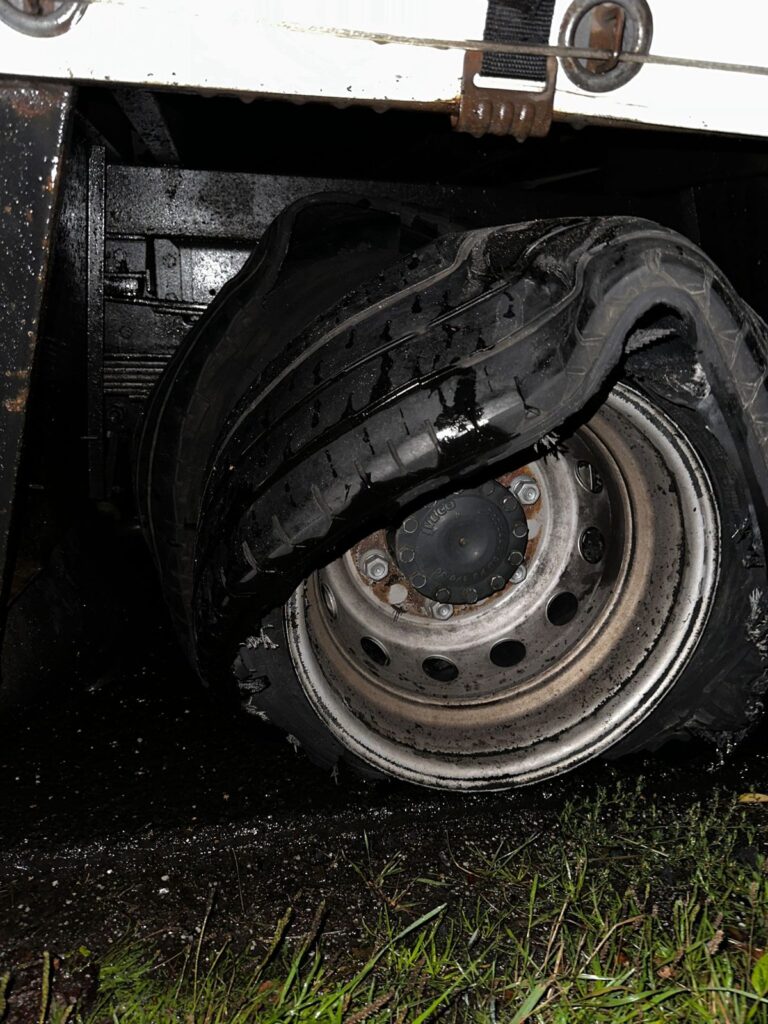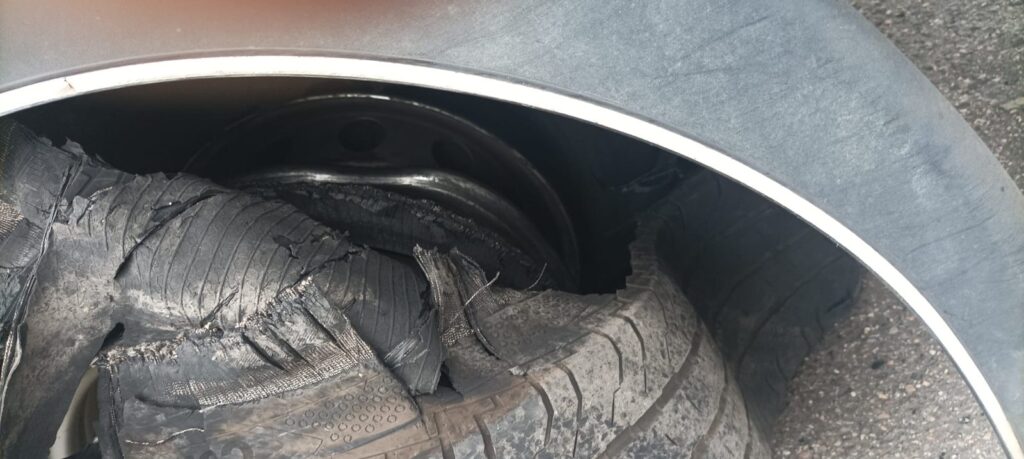
A 7.5-tonne box lorry lost a rear tyre on the A61 near Frankenthal (Pfalz) on a dry Wednesday afternoon. The driver called at 14:00, our dispatch found a crew within 12 minutes, the crew arrived at 14:55 and the new wheel was on and torqued by 15:28. The lorry rolled again at 15:30, exactly 90 minutes after the call, for a net total of 760 EUR (plus VAT).
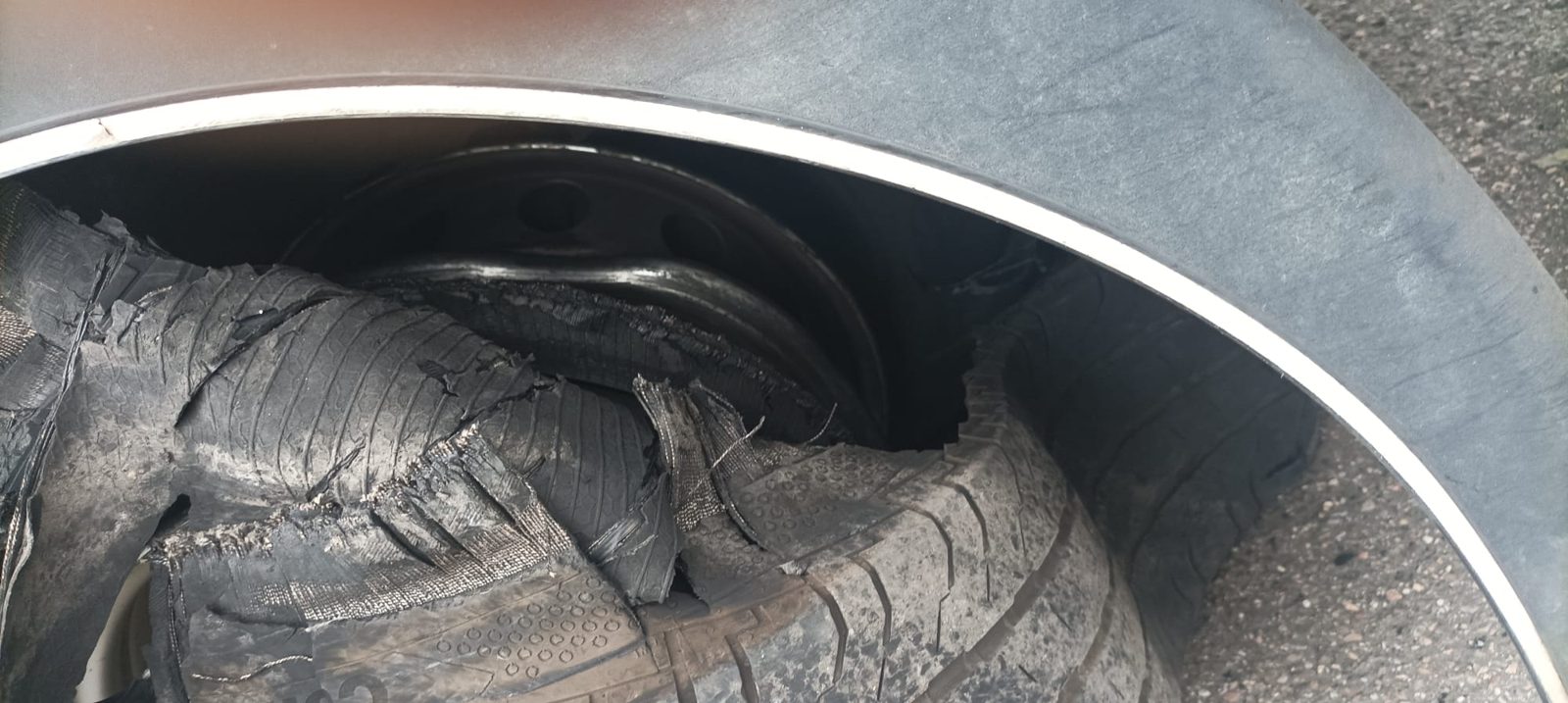
That is the short version. The long version is more useful, because a burst rear tyre on a lorry of this class looks harmless from the cab and is anything but. In this article we walk through what the driver saw, how we organised truck tyre service on a hard shoulder, what each step of the wheel change involved, what it cost line by line, and what a fleet can do so that the next call never has to be made.
Why a burst tyre on a 7.5-tonne lorry is never “just a puncture”
A blown rear tyre on a 7.5-tonne truck is a safety problem first and a logistics problem second. The vehicle sits on a hard shoulder with traffic passing at 80 to 90 km/h, the driver is standing next to a wheel arch full of steel cord, and every hour of standstill costs the haulier real money.
The driver on this job did several things right. He felt the rear of the lorry go light and start to wander, took his foot off the accelerator, did not brake hard, and steered onto the hard shoulder before stopping. He switched on the hazards, put on a high-visibility vest, placed the warning triangle at a safe distance and stayed behind the crash barrier. Then he rang us instead of trying to limp to the next exit on a destroyed tyre.
That last decision is the one that saved the wheel. A rim that rolls on bare steel cord for even a few hundred metres can crack, deform or lose its bead seat, and then a 340 EUR tyre job turns into a rim replacement and a hub inspection. We come back to this below.
The emergency: what happened on the A61
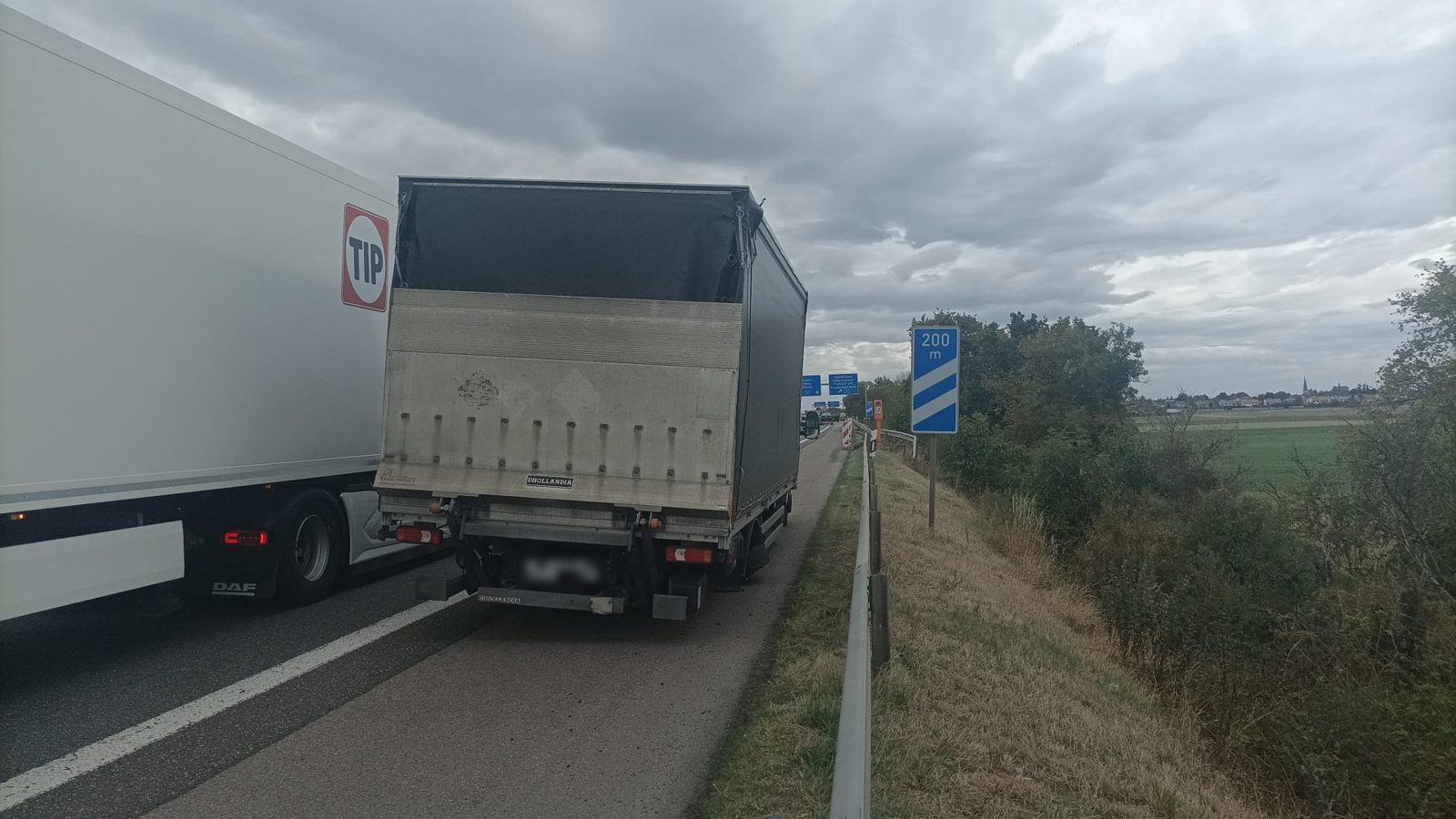
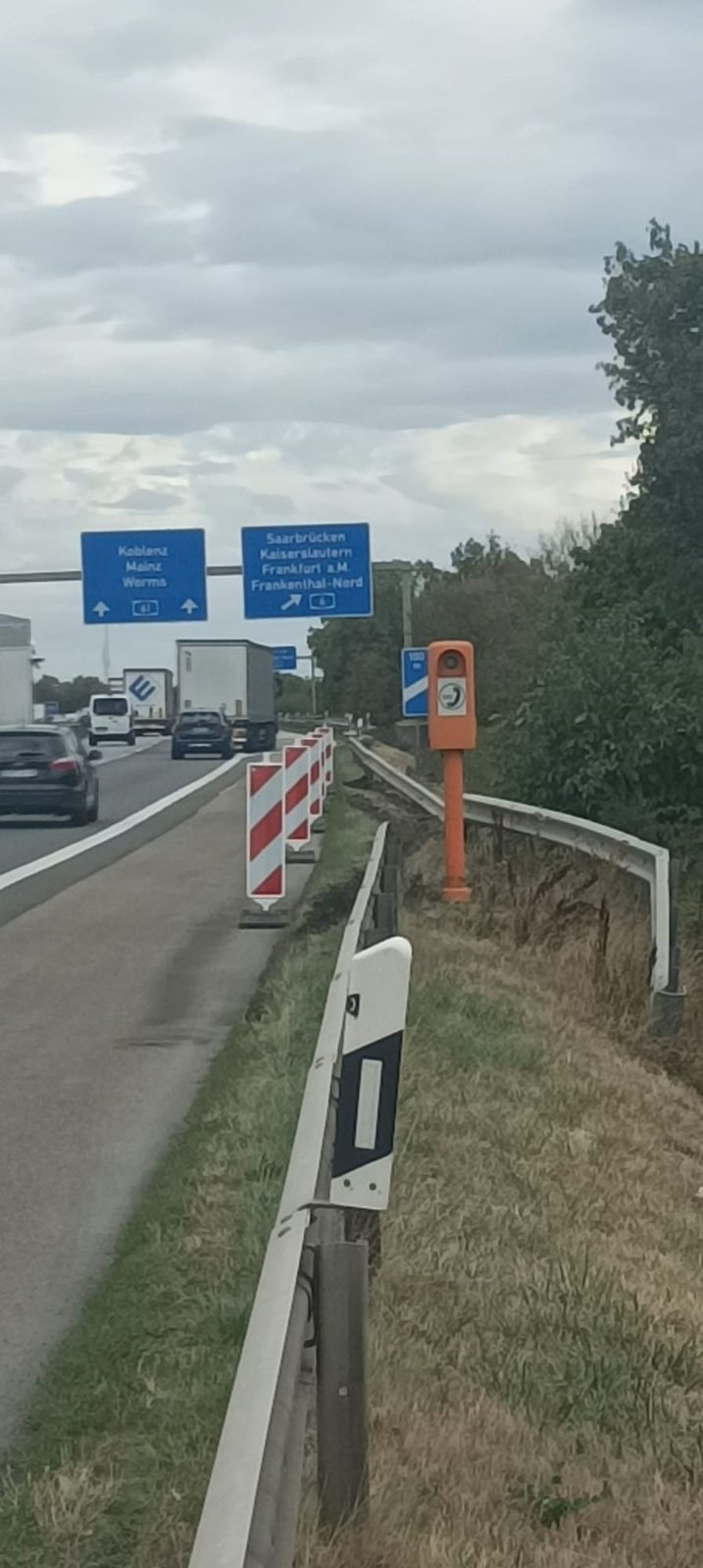
The short answer: a rear tyre on a lorry of about 7.5 tonnes came apart on the hard shoulder of the A61, 200 metres before the junction with the A6, heading towards Worms.
The lorry was a light truck with a curtain-sided body and a tail lift, the kind that does parcel distribution, trade deliveries and beverage rounds all over Germany. Alongside it, a white refrigerated artic thundered past in the left lane. The sky was overcast, the road dry, visibility good.
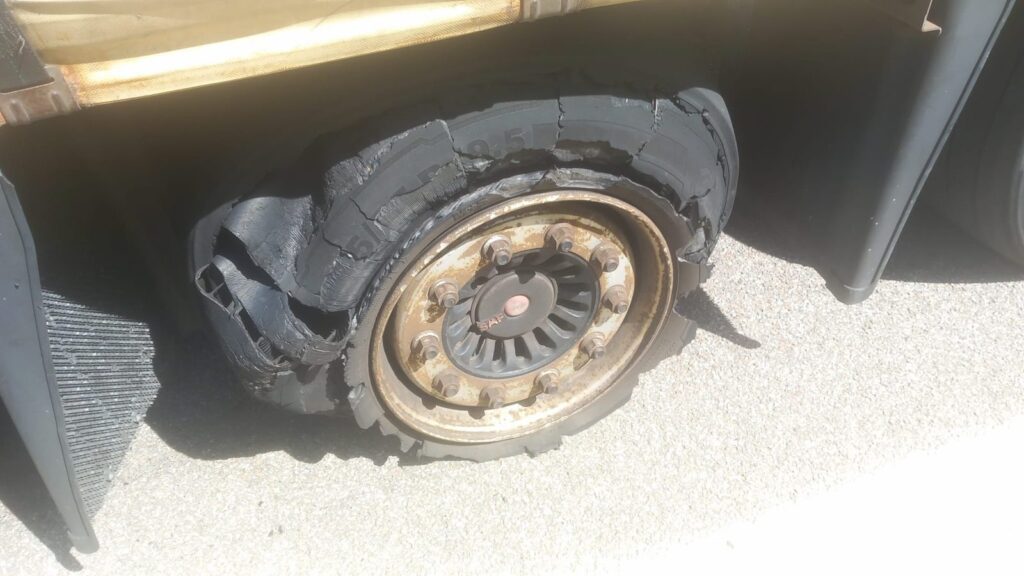
On the photos you can see the damage clearly. The tread had delaminated and split, steel belts stuck out in loops, and the carcass was shredded into strips that lay wrapped around the inside of the wheel arch. This is typical of a tyre that either ran for some distance seriously under-inflated or lost a section of tread suddenly. The wheel size was not legible on the sidewall in the pictures. For a lorry in this class the likely fitment is 235/75 R17.5, and we quote it as such in the estimate.
The driver gave us the motorway, the direction and two landmarks: a blue “200 m” sign before the exit and the signposts to Worms and the A6. That was enough. We do not need a kilometre marker when the caller can describe what he sees, and we deliberately do not publish one.
How we organised the help: dispatch in 12 minutes
The short answer: the phone rang at 14:00, and by 14:12 a crew was assigned, the tyre was confirmed and the price was agreed with the driver.
Our dispatch desk works around the clock and speaks German, English, Polish and Russian, which matters because a good half of the drivers who call us are not native German speakers. This one was dispatched in German, with the price confirmed in writing by message before the crew left.
This is the sequence we followed:
- Take the location from the driver: motorway, direction, junction, visible landmarks.
- Check that he is safe: behind the barrier, triangle out, hazards on, nobody under the lorry.
- Ask about the damage: which wheel, what the tyre looks like, whether the rim is bent, whether he drove on it.
- Confirm the size from the tyre sidewall or the vehicle registration (and write down “ca. 235/75 R17.5” when the sidewall is destroyed).
- Pick the nearest mobile crew of our partner network that carries this size on the van.
- Agree the net price with the driver before anyone drives, so that nobody is surprised afterwards.
The quote was 760 EUR net, built from four lines you will see in the cost table. Nothing was added on site. If you want to know how we think about call-out work in general, our mobile truck service page describes the model, and our tyre service page lists what a roadside crew carries.
The wait: 43 minutes on the road
The crew left at 14:12 with a matching tyre, a hydraulic jack rated for the axle, an impact wrench, a calibrated torque wrench, a compressor and the safety kit. The A61 was busy but moving, and they reached the lorry at 14:55, after 43 minutes.
Forty-three minutes is a realistic number for a motorway callout in the Rhine-Neckar region on a weekday afternoon. At night or in heavy rain, or when a crew is already on another job, it can stretch to 60 or 70 minutes. We say so up front, because a promise of “20 minutes everywhere” is the kind of thing drivers stop believing after the first time it fails.
While the crew was on the way, the driver stayed behind the barrier with his phone and the paperwork. We asked him to remain out of the lorry cab on the traffic side and to keep the hazards running. He also took the first photos of the tyre, which helped later with the delivery note.
On site: inspect, secure, then touch the wheel
The short answer: the first nine minutes go to safety and inspection, not to the wheel.
At 14:55 the crew parked the service van behind the lorry in a way that shields the working area, switched on the amber beacon and placed the warning triangle further back than the driver had. Only then did anyone go near the wheel. This is how it works on a hard shoulder, and it is also the legal standard, in line with § 15 StVO on breakdowns and securing the vehicle.
The inspection took until 15:04 and answered the question that decides the price:
- The steel rim was intact, with no cracks, no flat spots on the flange and no deformation on the bead seat.
- The hub and the brake drum showed no damage and no heat marks.
- The wheel studs and nuts were undamaged and the threads were clean.
- The remains of the tyre lay inside the arch; no brake line or ABS sensor cable was cut.
The driver had stopped early enough. That is why the job ended at 760 EUR and not at 1,100 or more with a replacement rim.
Step by step: how the wheel was changed
The short answer: five steps, 35 minutes on site, one new wheel and a torque wrench at the end.
Step 1. Inspection (14:55 to 15:04)
The crew checked the rim, hub, drum, brake lines and sensor cables as described above. They also noted the tread depth and condition of the other rear tyre, because on a twin rear axle or a single wheel position a worn partner shortens the life of the new one.
Step 2. Securing the site and the vehicle
Wheel chocks went under the front wheels, the parking brake was set, the gearbox put in gear, and the jack was placed on the manufacturer’s jacking point under the axle. Nobody lifts a loaded or half-loaded lorry on a soft verge, and here the asphalt of the hard shoulder gave a firm base.
Step 3. Removing the wheel (15:04 to 15:16)
The crew loosened the wheel nuts while the wheel was still on the ground, raised the axle, took off the nuts and pulled the wheel. Twelve minutes covers all of it, including the cleaning of the wheel arch. The strips of cord and rubber were cut out and removed by hand, because left in place they wrap around the axle or brake components, rattle, and in the worst case start to smoulder when they touch hot parts.
Step 4. Mounting the new wheel (15:16 to 15:28)
The replacement wheel, a new tyre ready-mounted on a clean rim, went on the hub. Mating faces were wiped, the nuts were run on by hand first to avoid cross-threading and then tightened in a star pattern, in stages. The tyre was inflated to the working pressure for the axle load. Mounting took 12 minutes.
Step 5. Final check and handover (15:28 to 15:30)
The crew re-checked the pressure with a calibrated gauge, tightened every nut to the specified torque with the torque wrench, wrote the job protocol and handed the old tyre remains to be taken away. At 15:30 the lorry drove off. For the record, torque and pressure rules for this wheel class come from the vehicle manufacturer, and after the first 50 to 100 kilometres a driver should have the nuts re-checked.
Complete timeline: call to departure
| Time | Phase | Action |
|---|---|---|
| 14:00 | Call | Driver rings from the hard shoulder, reports a burst rear tyre, gives the motorway and landmarks (200 m sign, signposts to Worms) |
| 14:00 to 14:12 | Dispatch | Size and rim condition clarified, nearest mobile crew of the partner network chosen, price agreed (12 min) |
| 14:12 to 14:55 | Drive | Crew travels along the A61 with a matching tyre and tools (43 min) |
| 14:55 to 15:04 | Inspection and securing | Arrival, warning triangle and beacons, check: rim intact, hub and brake drum undamaged, tyre remains in the arch (9 min) |
| 15:04 to 15:16 | Removal | Wheel removed, cord and rubber cleared from the arch, damage photographed (12 min) |
| 15:16 to 15:28 | Fitting | New wheel mounted on the hard shoulder, inflated to working pressure, nuts torqued in a star pattern (12 min) |
| 15:28 to 15:30 | Finish | Pressure check, protocol, driver continues his trip (2 min) |
Total: 90 minutes from call to departure: 12 minutes of dispatch, 43 minutes of driving and 35 minutes on site.
What does a truck tyre replacement cost on the motorway?
The short answer: this job cost 760 EUR net (zzgl. MwSt.), made up of call-out, labour, the tyre and disposal.
| Item | Price (EUR, net) |
|---|---|
| Call-out (Anfahrt, daytime rate) | 250 |
| Labour: wheel removal and fitting, 1.25 h × 120 EUR | 150 |
| New tyre, approx. 235/75 R17.5 for a 7.5-tonne lorry | 340 |
| Disposal of the old tyre | 20 |
| TOTAL | 760 |
All prices are net, plus value-added tax. There were no night or weekend surcharges, because this was a Wednesday afternoon.
What moves the price up or down
Four things decide the final figure on any roadside truck tyre replacement:
- Time of day. Nights, Sundays and bank holidays carry a surcharge of 25 to 50 % on the call-out.
- Distance. A crew from 20 km away is cheaper than one from 90 km away.
- Tyre size and brand. A tyre for a trailer axle in 385/65 R22.5 costs more than a light-truck size, and premium brands cost more than budget lines.
- Rim condition. A bent or cracked rim has to be replaced, which adds a few hundred euro.
The comparison that matters
A lorry that stands still costs between 800 and 1,200 EUR per day in missed deliveries, driver wages that run regardless, contract penalties and a delayed return load. Measured against that, 760 EUR and a lorry that is moving again within 90 minutes is the cheaper option by a wide margin. Waiting for the next working day at a workshop would have cost more than the whole roadside job, before you count the tyre.
Why you should not change a lorry wheel yourself
The short answer: because a truck wheel is heavy, the tyre is under high pressure, and the hard shoulder of a German autobahn is the most dangerous workplace you can pick.
Truck tyres run at much higher pressures than car tyres, in the range of roughly 8.5 to 9.5 bar for heavy trucks, and lighter delivery lorries sit lower but still far above a car. A damaged tyre or an incorrectly seated bead can fail violently. Here are the main risks of doing it yourself:
- A standard vehicle jack is not designed for a 7.5-tonne axle, and lorries have fallen off jacks.
- A wheel of this class weighs a good 50 kg, and lifting it from kneeling height injures backs.
- Without a torque wrench the nuts are either too loose or over-tightened, and either can end with a wheel coming off at speed.
- Standing next to live traffic with a jack and a wheel invites exactly the accident nobody wants to read about.
- Most drivers have no spare of the right size, and a spare that is five years old with a cracked sidewall is not a spare.
- Insurance and the haulier’s own rules often forbid wheel changes by the driver on a motorway.
Our crews work with proper equipment, protective clothing and the right to stand where the traffic will not reach them. The driver stays safe behind the barrier, which is where he belongs.
Why a destroyed tyre damages more than the tyre
A tyre that falls apart does not stop at rubber. Steel cord whips around inside the wheel arch at wheel speed and can cut the brake hose or the ABS cable, tear the wheel arch liner, and score the rim edge. Drivers who keep rolling “just to the next car park” often discover afterwards that they have swapped a 340 EUR tyre problem for a 1,500 EUR problem.
Here is what we check every time on a tyre blowout:
- Rim: flange cracks, a bent edge, a damaged bead seat.
- Hub and studs: heat marks from running on a flat, stretched threads.
- Brake components: hoses, drum or disc, cables and the ABS sensor.
- Mudguard and body: torn parts that could come loose on the autobahn.
- The other tyres: a second tyre on the axle with a cut or low pressure.
On this job all five checks came out clean. That is the whole story behind the low final figure.
Tyre blowout or slow leak: how truck tyres actually fail
Blowout – sudden loss of pressure and often of tread, usually caused by impact damage, severe under-inflation or heat. Slow leak – gradual loss through a nail, a faulty valve or a damaged bead, which the driver may not notice until the tyre is low.
Both end the same way if the driver ignores the warning signs. The tyre overheats, the sidewall flexes beyond its limit and the structure of steel belts and carcass separates from the tread. We see this often enough that we can describe the pattern in the pictures from this job: split tread, exposed steel belts and shredded rubber. It is almost never a sudden miracle, it is the end of a process that started earlier.
For more on what a damaged tyre can and cannot take, our guide to truck tyre repair explains when a puncture can be repaired and when only a replacement is safe.
Typical situations we attend across Germany
Our crews are called to the same few types of problems week after week. If you recognise yours, the principle is always the same: stay safe first, call us second.
- Blowout on a drive axle or steering axle at motorway speed, often with damage to the wheel arch and cables.
- Flat trailer tyre on a curtainsider, tipper or reefer, where a spare is rarely carried.
- Nail or screw in the tread that is discovered on a rest area or at a loading ramp.
- Sidewall cut or kerb damage after a manoeuvre in a tight yard.
- Valve failure that lets the pressure drop overnight.
- Rim damage after driving on a flat tyre.
- Seasonal wheel change for a distribution fleet that cannot spare the vehicles during working hours.
- Tyre check after a long standstill, before a holiday weekend or a long haul.
We also work with fleets that want a single phone number for all of this. Our tow and recovery service covers the cases where a lorry cannot be repaired on the spot, for example after severe wheel and axle damage.
Prevention: how drivers and fleets avoid the call
The short answer: check pressure, tread and sidewalls on a schedule, and replace tyres before they fail on the road.
Most blowouts have a history. A few habits from the workshop floor make the difference:
- Check pressure cold, every week. Use a calibrated gauge, not the dashboard guess. A tyre 20 % under-inflated heats up fast and loses a lot of its life.
- Look at the sidewalls and tread at every stop. Cuts, bulges, exposed cord and stones in the tread are all warning signs.
- Respect the minimum tread depth. For trucks, the legal minimum is set in § 36 StVZO, and many fleets replace earlier for safety margin.
- Match the load and the speed rating to the tyre. Overloading a 7.5-tonner with a tail lift full of goods quickly turns into a heat problem.
- Do not mix tyre types on one axle. Different diameters or constructions overload the larger tyre.
- Keep records. Mileage per tyre, rotation dates and repairs let you plan the replacement before the failure.
- Carry the right paperwork and a phone with our number. In an emergency, nobody wants to search.
If you want to read more on the subject, our article on the emergency wheel change after a blowout, listed below, goes through the driver’s checklist in more detail.
Truck tyres in a fleet: brands, sizes and maintenance
The market for truck tyres in Germany is dominated by a handful of manufacturers. Continental supplies a large share of the regional and distribution segment, Michelin, Goodyear and Bridgestone are the other names you see most on fleet vehicles, and each has lines tuned for steer, drive and trailer positions. For size standards, the ETRTO publishes the technical norms that make a 235/75 R17.5 from one brand fit a rim from another.
A few practical points for the fleet manager:
- Light trucks of 7.5 tonnes commonly use sizes such as 235/75 R17.5, while heavy tractor units and trailers use 315/80 R22.5, 385/65 R22.5 and 295/80 R22.5.
- Steer axle tyres should be the best you can afford, because a steer axle failure is the most dangerous.
- Retreads on the drive and trailer axles are an accepted way to cut costs, provided the casing is sound.
- Matched pairs on twin axles wear evenly and extend the life of both tyres.
- Regular alignment checks save a surprising amount of tread over a year.
Fleets that plan their tyre work, with weekly pressure checks and a monthly inspection, reduce unplanned callouts to a small fraction. When one does happen, a single number to call is worth more than a long list of workshops.
Frequently asked questions
How much does a truck tyre change on the autobahn cost?
A roadside truck tyre change for a 7.5-tonne lorry cost 760 EUR net in this case: 250 EUR call-out, 150 EUR labour, 340 EUR for the tyre and 20 EUR for disposal. Heavier trucks with 315/80 R22.5 tyres cost more, typically between 750 and 1,400 EUR net.
How long does a truck tyre callout take?
From the call to departure this job took 90 minutes: 12 minutes for dispatch, 43 minutes for the crew to arrive and 35 minutes of work. Expect 1.5 to 3 hours as a rule, and longer at night or in bad weather.
Can I drive on to the next exit after a tyre burst?
No. Driving on a destroyed tyre damages the rim, the hub, the brake lines and the cables, and it endangers other road users. Stop on the hard shoulder, secure the vehicle and call for truck tyre roadside assistance. The saved few hundred metres cost far more later.
What should I do first when my lorry tyre blows out?
Hold the steering wheel firmly, ease off the throttle, do not brake hard, and steer onto the hard shoulder. Switch on the hazards, put on a vest, set up the warning triangle and wait behind the crash barrier. Then phone for help and give your location.
Does a rim have to be replaced after a blowout?
Not always. If the rim has no cracks, the flange is straight and the bead seat is undamaged, it can be reused with a new tyre. This was the case here. If the lorry rolled on the rim, replacement is usually necessary.
Who pays for a roadside truck tyre repair?
The vehicle operator pays, or the haulier’s fleet card or insurer does where the contract covers it. We quote a net price before the crew leaves, so you can approve it with your office or customer before work starts.
Why drivers and fleets call us
The short answer: because we answer at any hour, send a nearby crew, quote the price before the work and handle the whole job in one call.
- 24/7, all of Germany. The phone is answered by a human at 03:00 on a Sunday, too.
- A tested partner network. Crews are chosen by distance and by the tyre sizes they carry, so we do not send a van that cannot do the job.
- Transparent pricing. A net quote before departure, and the same figures on the invoice.
- A multilingual dispatch desk. German, English, Polish and Russian, so a driver can explain a breakdown in the language he thinks in.
- Everything from tyres to recovery. If the damage turns out to be more than a wheel, we pass the lorry to our workshop and truck service without a new search.
We do not promise miracles. We promise that someone competent will pick up, tell you honestly how long it will take, and tell you what it will cost.
Summary: the key numbers
| Parameter | Value |
|---|---|
| Vehicle | Light lorry of approx. 7.5 t, curtain-sided body with tail lift |
| Damage | Rear tyre destroyed, rim intact |
| Tyre size | Approx. 235/75 R17.5 |
| Location | A61 near Frankenthal (Pfalz), direction Worms, 200 m before the A6 junction |
| Dispatch time | 12 minutes |
| Crew arrival | 43 minutes of driving, on site at 14:55 |
| Work on site | 35 minutes |
| Call to departure | 90 minutes |
| Cost | 760 EUR net, plus VAT |
| Secondary damage | None |
Need help with a truck tyre? Call now
If you are standing on a hard shoulder with a destroyed tyre, or you manage a fleet and want a number to keep in every cab, save this one.
Call +49 160 5753826, visit www.lkwhelp24.com or see our contact page. Open around the clock, anywhere in Germany.
Keywords: truck tyre service | truck tyre replacement | truck tyre change | truck tyre callout | truck tyre roadside assistance | truck tyre repair | truck tyre burst | mobile truck tyre service | truck tyre breakdown Germany | trailer tyre service
Related articles
- Mobile Truck Tyre Service on the A19 near Malchin: Scania Artic Back on the Road in 2 Hours 16 Minutes After a Blowout
- Tyre Blowout on a Mega-Trailer on the A8 near Rosenheim: Why the Hard Shoulder Is the Most Dangerous Place to Work
- Truck Wheel Nut Torque: Table and Correct Mounting Procedure
- Truck Tyre Pressure: Correct Values, How to Measure and Mobile Help
- Tire Blowout on the Autobahn: The Immediate Action Checklist for Truck Drivers