Skip to content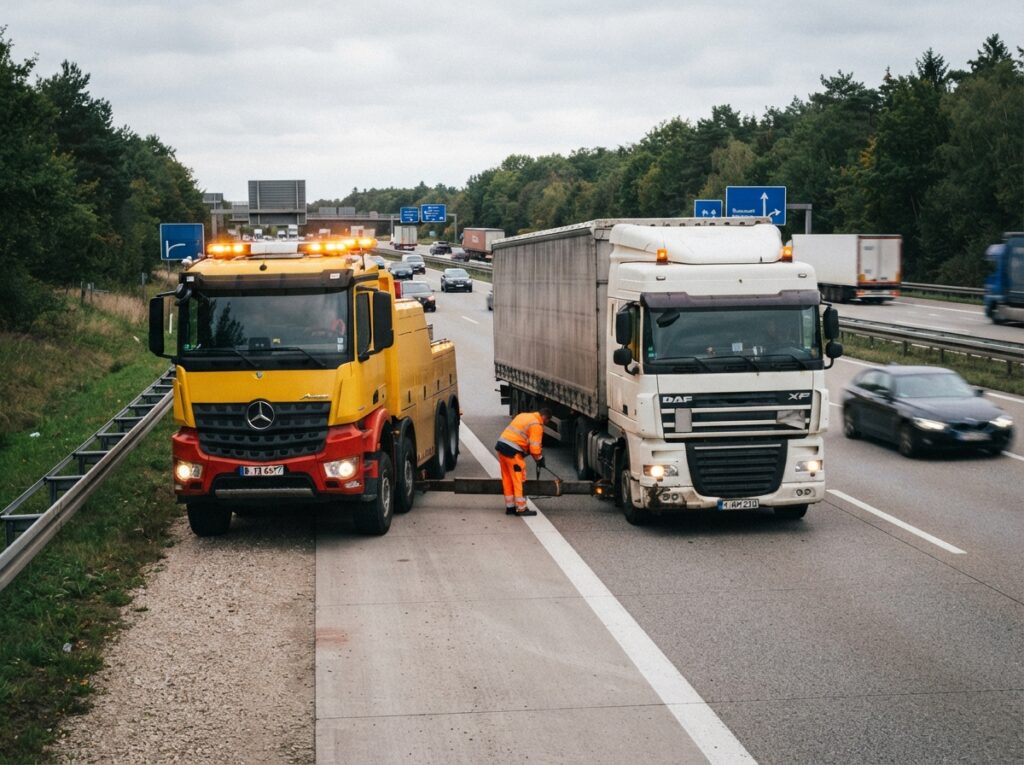
ADAC or a specialized truck service: what actually stands behind the two models
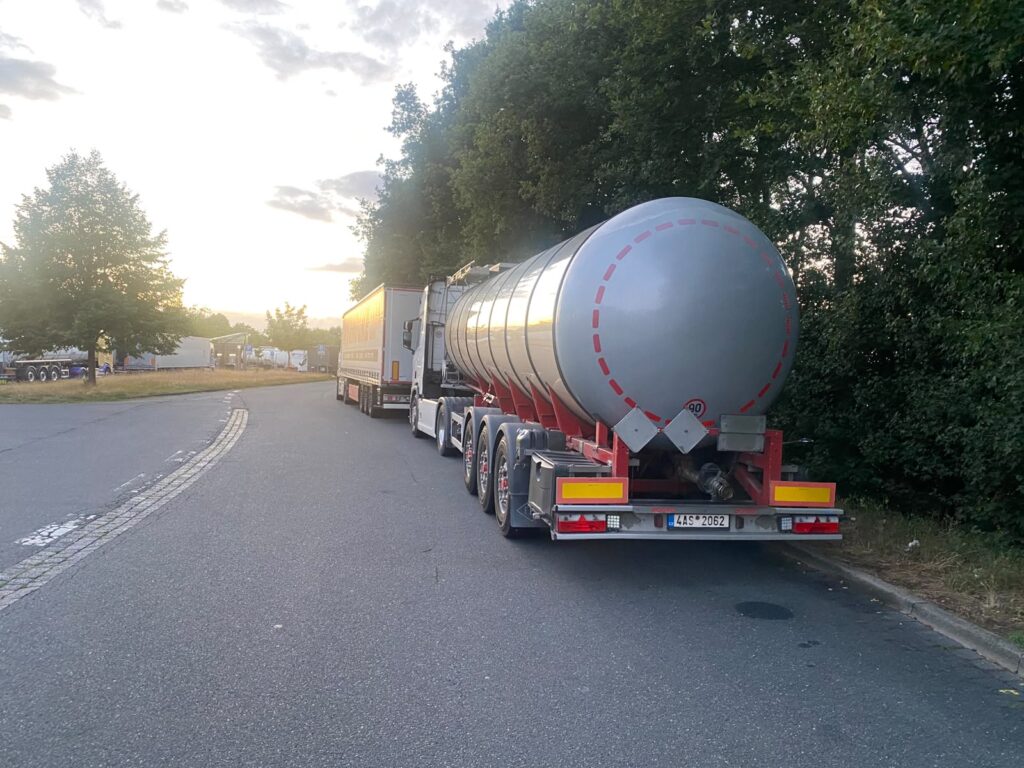
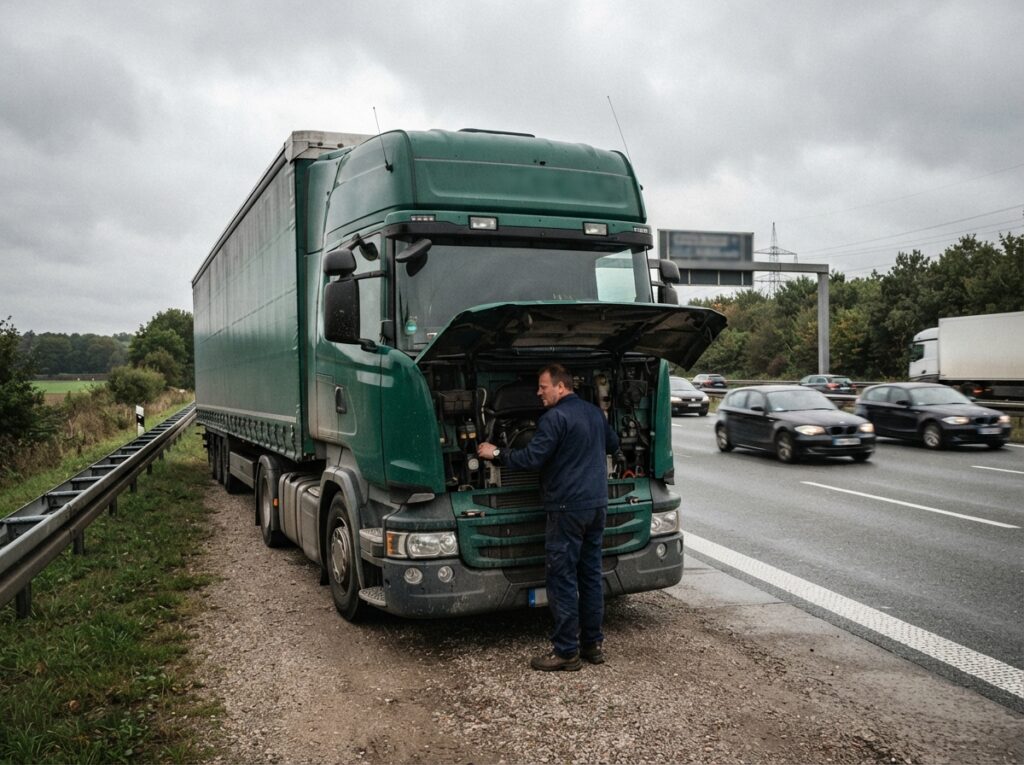
A 26 tonne truck comes to a stop on the hard shoulder of the A7. The driver reaches for his phone and faces a decision he has rarely had to make before. Does he call ADAC, a name everyone in Germany recognizes? Or does he dial the number of a regional specialist he perhaps found through a freight forwarder or a search engine?
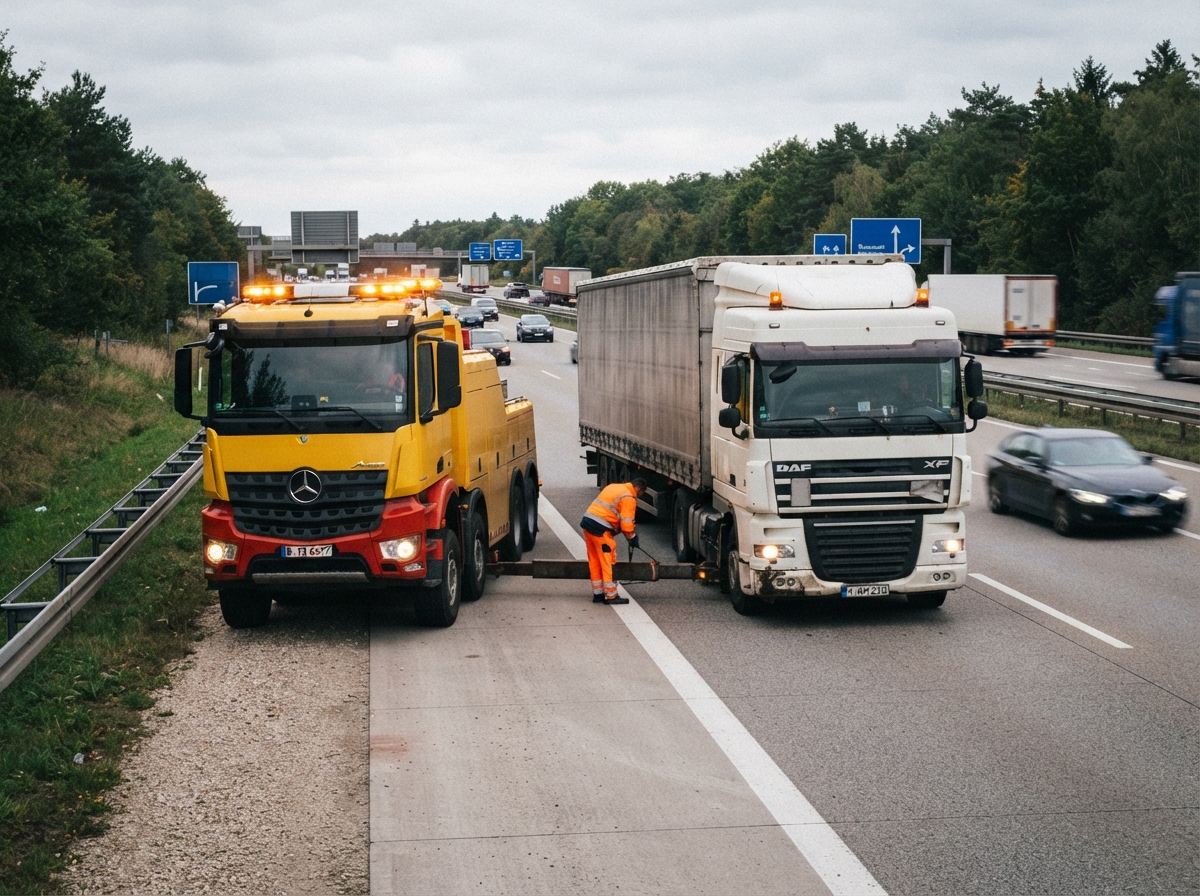
Both paths eventually lead to a tow truck arriving. But the structure behind each option differs quite a bit, and that structure often decides how long the driver stands on the shoulder, what ends up on the invoice, and how smooth the communication turns out to be. This article compares both models factually, without talking either one down.
ADAC: a club with a huge partner network
With well over 20 million members, ADAC is the largest automobile club in Europe. For commercial vehicles it runs its own division, ADAC Truckservice, described as “Europe’s fast breakdown assistance for commercial vehicles.” According to the organization itself, it has access to more than 6,000 workshops across Germany and Europe and roughly 3,000 breakdown assistants, coordinated by a staff of over 70 at its headquarters in Laichingen.
Reachability is organized on two tracks: a toll free number within Germany and an international number for drivers calling from abroad in Europe. That is an important detail, because a significant share of truck drivers on German motorways come from Poland, Romania, the Baltic states, or Ukraine and are not registered in Germany at all.
ADAC itself quotes an average figure worth noting: on average a truck can continue its trip after 2.5 hours. That is a mean value across a very large and varied service area, from congested urban motorways to rural roads in sparsely populated regions. The number says nothing about how much it varies from region to region or by time of day.
On pricing, ADAC Truckservice works with a protection plan model similar to the classic ADAC membership concept, but tailored to company fleets. There are tiered vehicle protection packages that freight companies purchase in advance, with different scopes of coverage and different annual caps on towing costs per vehicle. Anyone without an active package still gets help, though on different terms than an existing contract customer. Anyone who has ever been an ADAC member for their car recognizes this logic: the value comes from being covered in an emergency, but payment happens regardless of whether the emergency ever occurs.
That is not a drawback in itself. For a haulage company with fifty vehicles that has ten or twenty breakdowns spread across a year, such a protection package can make solid financial sense, because costs become predictable and are capped per incident. It is a model built around repetition and fleet size, not primarily around the single, rare event.
Specialized regional services: a direct call instead of a contract
Services such as LKWHelp24 work on a different principle. There is no membership, no annual contract, and no protection plan that has to be signed in advance. The driver or dispatcher calls, sends a WhatsApp message, or fills out a form the moment the emergency happens, and is given a price for that exact trip before the truck sets off.
LKWHelp24 itself covers vehicles from 7.5 tonnes and works with a fixed regional network of tow trucks specialized in heavy commercial vehicles, not passenger cars towing a trailer on the side. It is reachable around the clock by phone and WhatsApp at +49 160 5753826, and communication runs in four languages: German, English, Polish, and Russian.
The pricing model is deliberately kept simple: standard call outs start at 290 euros, more complex recoveries requiring a crane or heavy recovery equipment start at 429 euros, depending on vehicle size, condition on site, and distance. The price is quoted on the phone before the driver agrees, not discovered on an invoice afterward. Anyone who wants to understand typical cost ranges in advance can find a detailed breakdown in the article on truck towing costs.
The downside of this model is obvious: a regional service cannot naturally cover every corner of Europe as evenly as a nationwide club with thousands of partners. Its strength lies where its own network is dense, and there the response time is often shorter, because there is no dispatching step through a central club hotline that first has to find a suitable partner in the region.
Structural comparison at a glance
| Criterion | ADAC Truckservice | Specialized service (e.g. LKWHelp24) |
|---|---|---|
| Access | Protection package/contract usually arranged in advance | Direct call, no contract required |
| Coverage | Nationwide and across Europe, over 6,000 partner workshops | Regional, with a flexible own vehicle network |
| Pricing | Annual package with capped costs per incident | Fixed price per call out, quoted in advance |
| Response | Roughly 2.5 hours on average until the trip continues (ADAC figure) | Often faster within the provider’s own core area, no central dispatch |
| Languages | Primarily German, an international number exists | German, English, Polish, Russian |
| Target group | Large fleets with predictable, recurring needs | Solo drivers, hauliers without a contract, foreign drivers |
| Availability | 24/7 through the central hotline | 24/7 by phone and WhatsApp |
Why response times can differ
With a large club, a call typically goes through a central dispatch center that first determines the location, then selects a suitable partner workshop from the network, and assigns the job to it. That partner has not been involved in the case before and must plan the dispatch and then drive out. It is a proven process that has to work across a network of more than 6,000 workshops and thousands of helpers spread across the country, precisely because the network is so large.
A regional specialist with its own, smaller fleet often skips that dispatching step. The dispatcher taking the call knows the company’s own vehicles, their current position, and their workload, and can assign directly. Where the regional network is dense, the vehicle can be on the road faster because no additional loop through a nationwide central office is needed. In areas where the specialist has no vehicles of its own, that advantage naturally disappears.
Honesty matters here. The 2.5 hours ADAC quotes as an average is a mean value across the whole of Germany and Europe, not a guarantee for every single case. In the same way, a faster response from a regional service is not a law of nature but depends on the actual vehicle density in that particular area. Anyone comparing options should ask specifically about coverage along their own route, not rely on general marketing claims.
Language as an underrated factor
One aspect that rarely shows up in price comparisons but matters enormously in an emergency is the language in which communication happens. A considerable share of the traffic on German motorways is made up of drivers from Poland, Romania, Lithuania, Bulgaria, or Ukraine whose German or English is often limited. For a stressed driver standing on the hard shoulder while traffic rushes past at 100 km/h, it makes a real difference whether he can describe the emergency in his own language or has to struggle through with basic school English.
ADAC provides a dedicated international number for calls from abroad, but in practice communication mostly happens in German, with English as a backup. Specialized services aimed specifically at eastern European truck traffic, such as LKWHelp24 with German, English, Polish, and Russian, close a gap that is very real in everyday life on German motorways. Anyone interested in the broader situation of foreign drivers and the legal framework around breakdowns can find more in the article on truck models, drive types, and breakdown assistance from 7.5 tonnes.
What the law says about towing
Regardless of which service is called, the same legal framework applies. German traffic regulations govern how a stranded vehicle must behave on the road, which warning equipment is mandatory, and how a towing operation may proceed in moving traffic. These rules can be read in the text of the StVO and apply no matter which provider is chosen.
Anyone who has looked into the costs of a truck towing service beforehand can judge more quickly on the day whether a quoted price is realistic.
For the driver this means, in practice: hazard lights on, a warning triangle placed at a sufficient distance, a high visibility vest worn, and, depending on the situation, leaving the cab and moving behind the crash barrier. These steps are identical whether an ADAC partner workshop or a LKWHelp24 vehicle eventually arrives. A detailed overview of what to keep in mind when towing is available in the article what to consider when towing a truck.
Two cases that show the difference
Case one: a large German haulage company with its own fleet of sixty vehicles has averaged twelve breakdown incidents per year over the past three years, spread across Germany and neighboring countries. For this company, an annual protection package with ADAC makes financial sense, because costs stay predictable and coverage applies everywhere in the network, regardless of where in the country the incident happens. The contractual commitment is not a downside here, it is the price of nationwide predictability.
Anyone who wants to check which region LKWHelp24 currently covers best can find the up to date overview directly on the homepage.
Case two: a Polish solo driver transporting goods for a subcontractor through southern Germany has neither an ADAC protection plan nor a contract with any German breakdown service. His semi-trailer stalls at night on the A8 near Munich. In that moment, one thing matters above all: reaching someone quickly who understands the situation, can communicate in a language the driver actually speaks, and quotes a price before the tow truck sets off. This is precisely the situation a service like LKWHelp24 is designed for, with direct WhatsApp contact in Polish and a fixed price starting at 290 euros, no prior contract required.
Both cases are real, and both models solve their respective problem well. The mistake would be to declare one model universally better without knowing the actual situation.
When it is about more than just towing: recovery and tyres
Not every case is a simple tow from the road to a workshop. Overturned semi-trailers, vehicles stuck in a ditch, or vehicles on rough terrain require heavy recovery equipment with a crane, which both ADAC, within its protection packages, and specialized services list as a separate service category priced accordingly higher. Details on this service area are covered in the article on heavy truck recovery with crane.
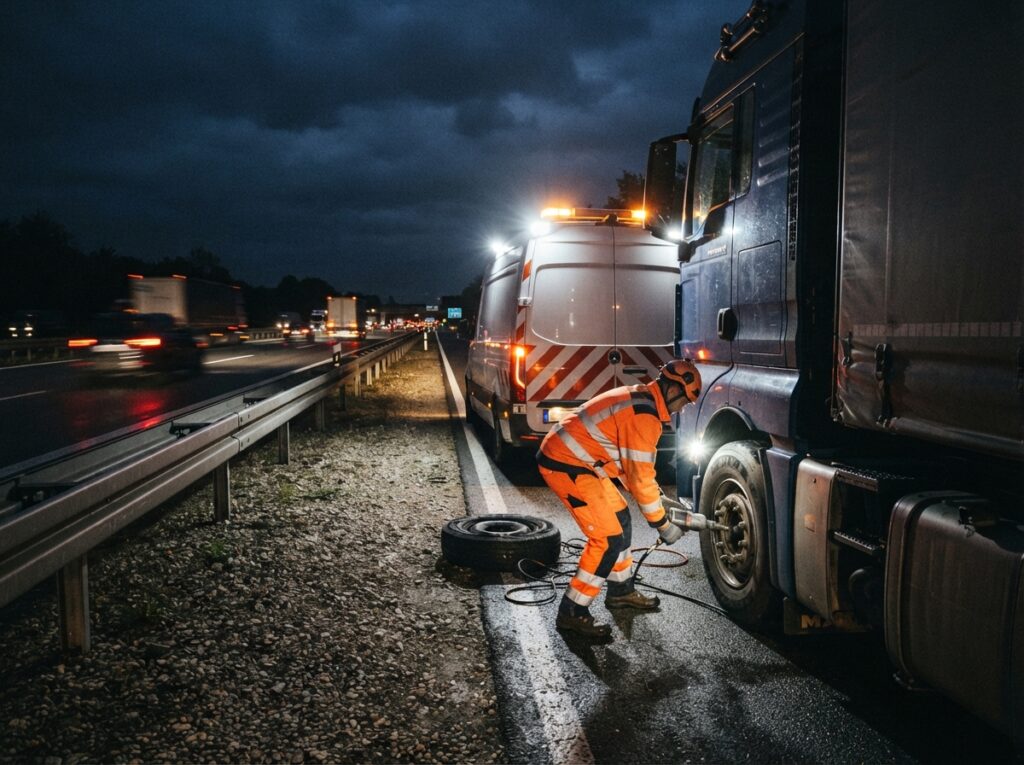
Another common case is a simple tyre failure that does not require a tow truck at night at all, just a mobile tyre service that changes the tyre on site. Here too the models differ: with the club, a flat tyre goes through the same central dispatch as any other breakdown, while a specialized service can directly assign the appropriate tyre technician. Anyone wanting to know how such a mobile tyre service works in practice can read the article on emergency tyre service nearby.
Everything is different at night
A point that often gets overlooked in theory: breakdowns cluster in the early morning hours and deep in the night, when drivers are exhausted after long hours at the wheel or vehicles reach their limits after long operating hours. At night, workshop availability is generally more limited regardless of the chosen service, and how quickly anyone responds depends more than during the day on actual on call readiness in the area. Practical notes on night time towing services are available in the article 24 hour truck towing at night.
What ends up on the invoice
A question that concerns hauliers and solo drivers alike is what actually needs to be paid in the end. With ADAC Truckservice, that depends heavily on whether an active vehicle protection package exists. Within the annual cap, which varies depending on the package tier, the club covers the cost of breakdown assistance and towing. If that cap is exceeded, or if there is no contract at all, the customer pays the actual cost charged by the relevant partner workshop, which can vary by region, time of day, and effort involved.
With a specialized service such as LKWHelp24, there is no such distinction between contract and non contract customers, because there is fundamentally no contract. Every caller goes through the same process: description of the situation, vehicle size, and location, followed by a concrete price quote based on distance, effort, and time of day. A standard case starts at 290 euros, a more demanding recovery with a crane or heavy equipment starts at 429 euros, with night surcharges and long distances able to push the price higher. That quote happens on the phone, before the driver agrees to anything.
For a haulage company that rarely has breakdowns, this transparency can even work out cheaper than an annual package, since there are no ongoing contract costs for something that, ideally, is never needed. For a company with frequent incidents, the opposite may hold true. A simple look at how often a breakdown actually occurs in a year helps more with this decision than any general recommendation.
The role of the workshop after towing
Both ADAC and specialized services generally bring a stranded vehicle to the nearest suitable workshop, not just any workshop. For commercial vehicles this is a critical difference from the passenger car world, because not every garage has the lift, the specialized tools, or the parts needed for a 40 tonne truck. ADAC relies here on its large network of over 6,000 partner workshops geared toward commercial vehicles. A regional specialist typically knows the few genuinely suitable truck workshops in its own area from direct experience and can head straight there, skipping the detour through a central database.
This is a detail rarely mentioned in marketing material, but one that can save or cost significant time in practice. A workshop that is nearby but lacks the right spare parts inventory for the affected axle or gearbox extends downtime considerably, regardless of how quickly the tow truck itself arrived.
Digital reachability and communication channels
Another difference shows up in how first contact happens. ADAC traditionally relies on the phone hotline as its central channel, supplemented by digital extras for members. Specialized services such as LKWHelp24 also lean heavily on WhatsApp, because many foreign drivers already communicate through that channel anyway, and because photos of the damage, the location, or a damaged tyre can be shared easily before the tow truck has even set off.
This kind of advance information through photos can speed up planning considerably, because the dispatcher can assess before departure whether a normal tow truck is enough or whether heavier equipment needs to be sent right away. For a driver under stress who may not want to make a phone call in a foreign language, a written WhatsApp message with photos is often simply more comfortable than a long phone conversation.
Which model is the better choice, and when
A protection package with ADAC Truckservice mainly pays off for companies with a larger, predictable fleet that value a nationwide and pan European network, want to smooth out costs across the year, and operate mostly within Germany and German speaking regions. Anyone who is already a member or holds a vehicle protection package should use that contract first in an emergency, since it was paid for exactly for this purpose.
A specialized service like LKWHelp24 is the more obvious choice for solo drivers and smaller hauliers without an existing contract, for foreign drivers who depend on their native language, for anyone who wants a transparent fixed price before the trip starts, and for situations where the provider’s own region is involved, making a shorter response realistic.
Neither option is superior in every situation. Anyone regularly moving between several European countries and rarely breaking down in the same region benefits more from a large, established network. Anyone mostly operating in a specific region, or needing spontaneous help without a contract, benefits more from the directness and language flexibility of a regional specialist.
Frequently asked questions
Can I use both services in parallel if I already have an ADAC protection plan?
Yes, an existing protection plan does not rule out that a regional service is faster or more suitable in a specific situation, for example when the caller does not speak German or needs a very short term solution. Financially, though, it usually makes sense to use an existing contract first, since it has already been paid for.
Does LKWHelp24 also cover vehicles under 7.5 tonnes?
No, LKWHelp24 deliberately specializes in trucks from 7.5 tonnes, because that requires different vehicles, different equipment, and different experience than passenger cars or light vans.
How fast is a specialized service compared to ADAC in reality?
It depends heavily on the region. Within its own core area, a specialized service tends to be faster because central dispatch is skipped. Outside that area, a large, established network like ADAC’s can have the advantage. General time figures should always be understood as averages, not guarantees.
Do I have to accept a price immediately when calling LKWHelp24?
The price is quoted before agreement, so the driver or dispatcher knows in advance what to expect. There are no hidden line items that only appear on the final invoice.
Is ADAC Truckservice only reachable for members?
ADAC Truckservice is mainly aimed at vehicles with a vehicle protection package, but is generally reachable even without an existing contract, though on different terms than for contract customers.
Which languages does LKWHelp24 specifically cover?
German, English, Polish, and Russian, both by phone and WhatsApp, which is particularly relevant for drivers from eastern Europe and the CIS states who make up a significant share of truck traffic on German motorways.
In the end there is no simple answer to which of the two paths is better. Both have proven themselves over years, both serve real needs, and both have their limits. Anyone who finds out beforehand which model fits their own situation saves valuable minutes on the hard shoulder when it actually matters.
A final practical note for dispatchers and drivers: it pays to have the contact details of both providers ready before a breakdown ever happens. A saved phone number or a saved WhatsApp contact costs nothing and saves exactly the minutes that would otherwise be lost searching the internet on the hard shoulder while traffic rushes past at full speed. A haulier operating several vehicles across different regions of Europe can well keep both models in reserve at once, a protection package for broad coverage and a regional contact for the areas where, based on experience, most incidents actually happen.