Skip to content
TL;DR: A Megatrailer blew a rare 445/45 R19.5 tyre on the A5 near Offenburg on 30 July. Because the driver named the exact size at 10:40, dispatch found a partner workshop holding stock, and the trailer was rolling again by 13:15 — 2 hours 35 minutes total, net cost €1,140.
A tyre blowout on the motorway is never a good moment, but some are worse than others. A Megatrailer or Jumbo semi-trailer running on 445/45 R19.5 rubber sits in a narrow niche: low-profile, small-diameter, wide tyres that most roadside services simply don’t stock. When one of these lets go at speed, the difference between a two-hour delay and a lost day often comes down to a single sentence on the phone.
That is exactly what happened on 30 July. A driver hauling a lightweight, high-volume load reported a blowout on the A5 heading towards Freiburg, and within 25 minutes our control room had located a partner workshop carrying the correct size. The trailer was cleared to continue at 13:15, less than three hours after the call came in. This case study walks through why that size matters, what went wrong, and how the fix was managed step by step.
What Happened: The Emergency on the A5
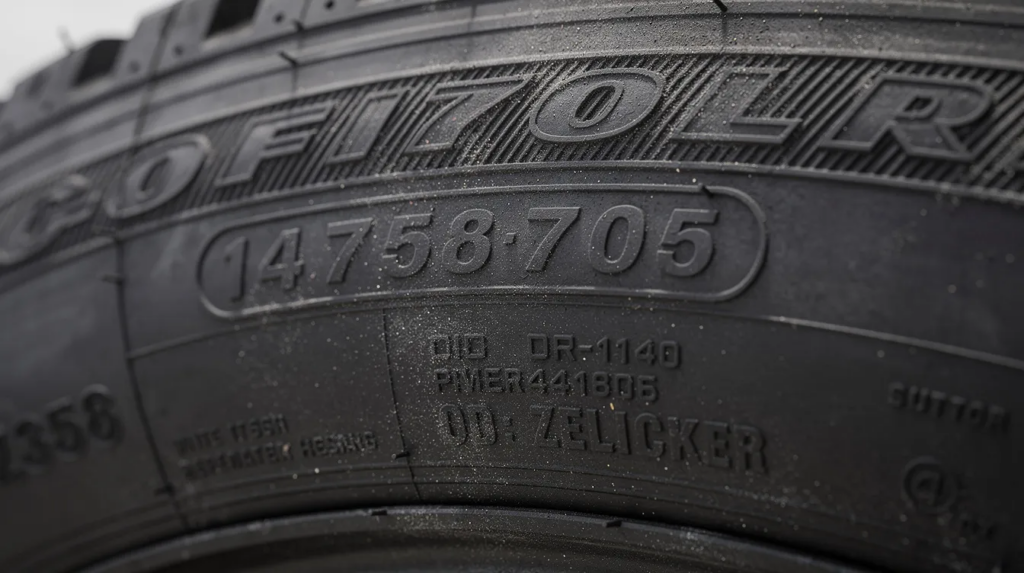
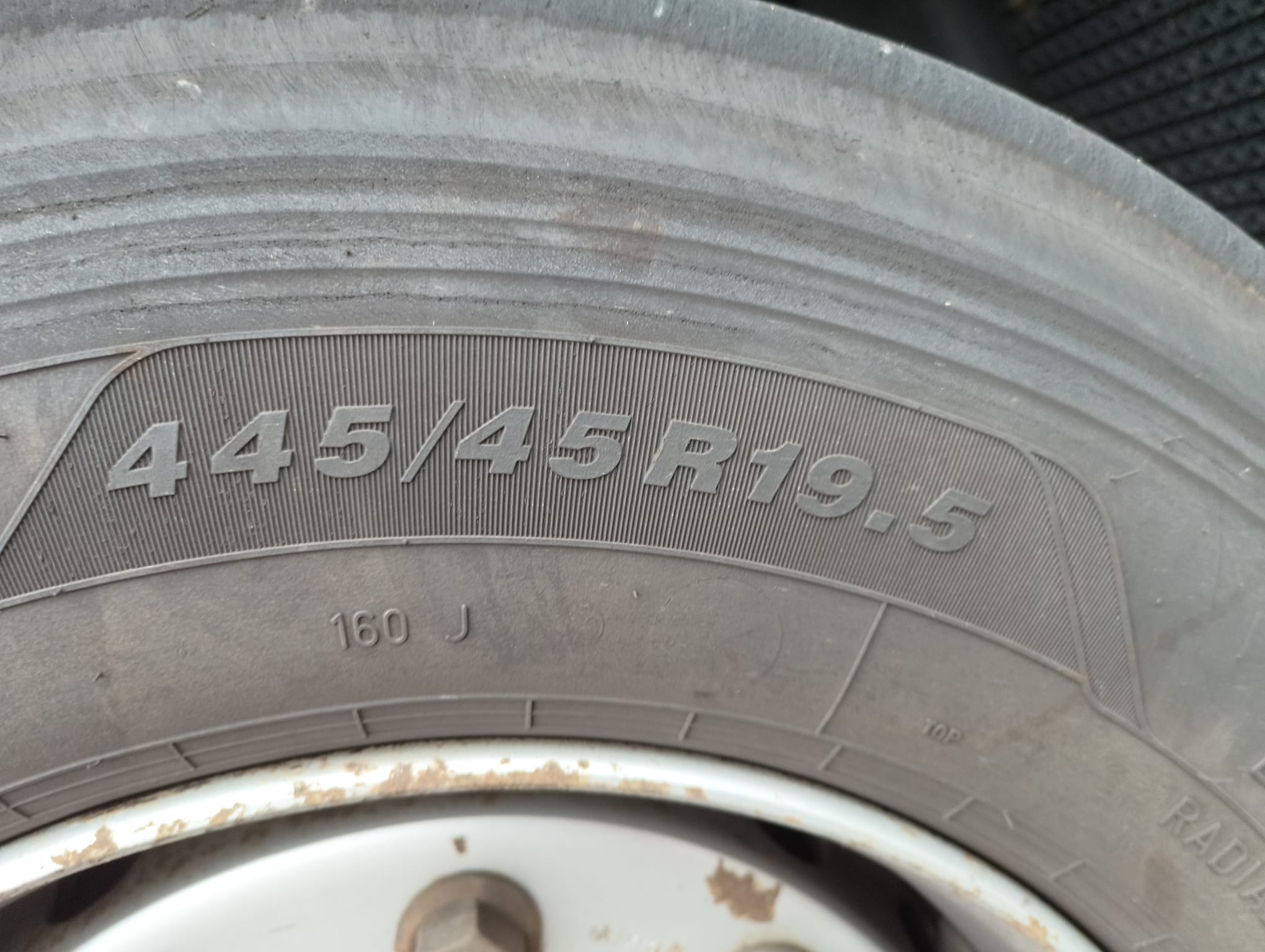
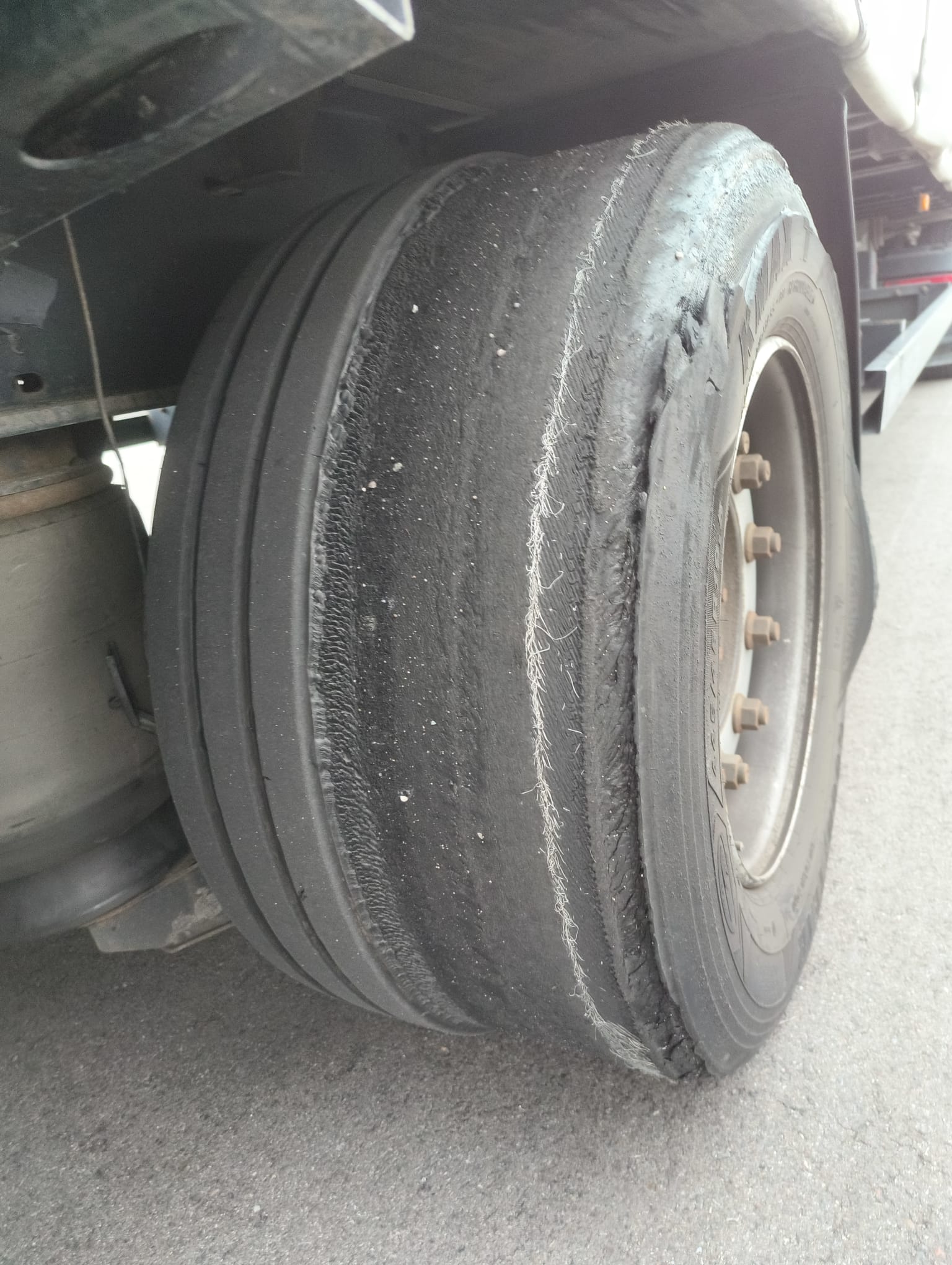
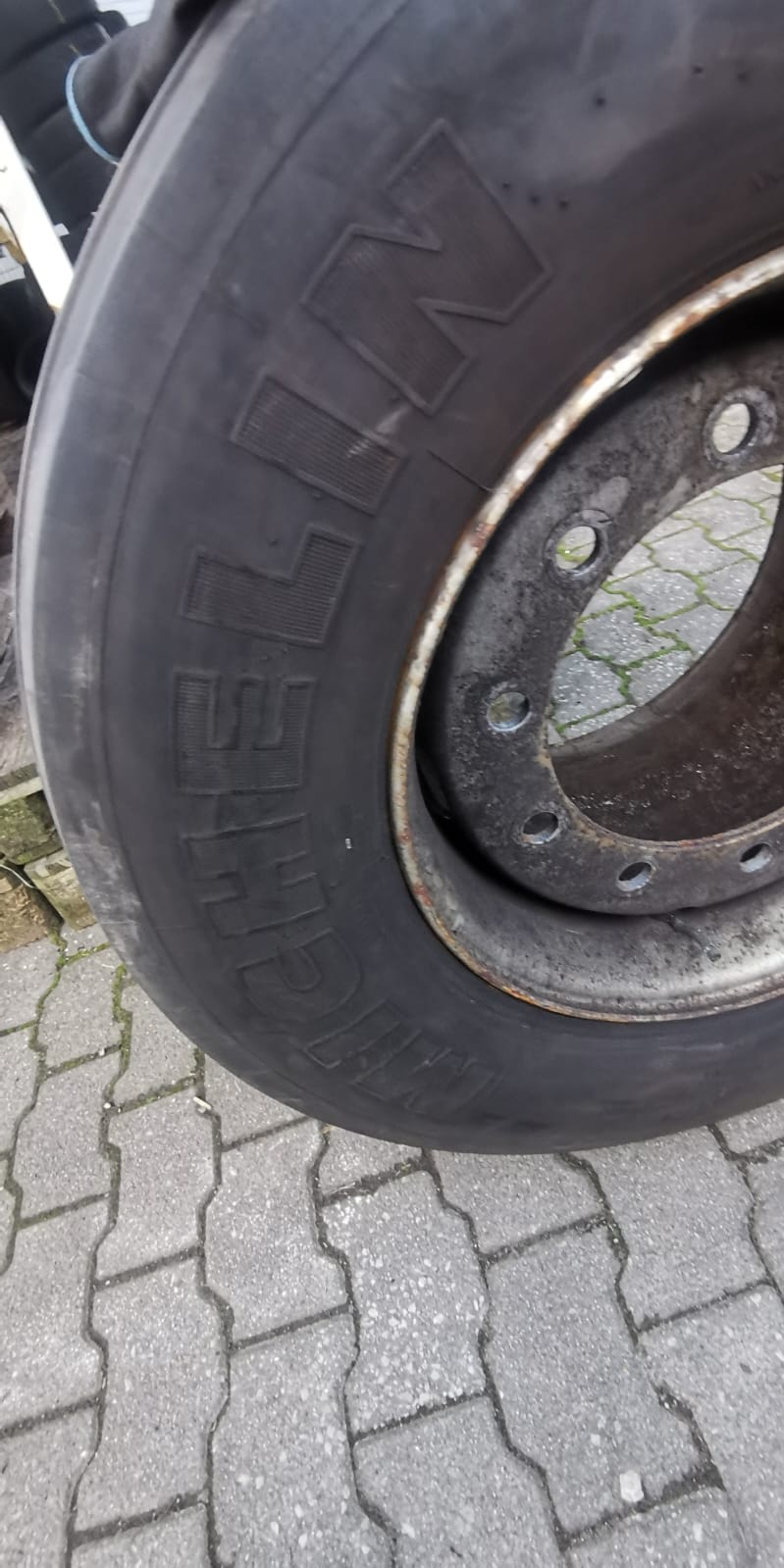
A Megatrailer suffered a sudden tyre blowout on the A5 near Offenburg, direction Freiburg, in daylight hours on 30 July. The driver pulled onto the hard shoulder and called for help at 10:40, giving the tyre size — 445/45 R19.5 — straight away.
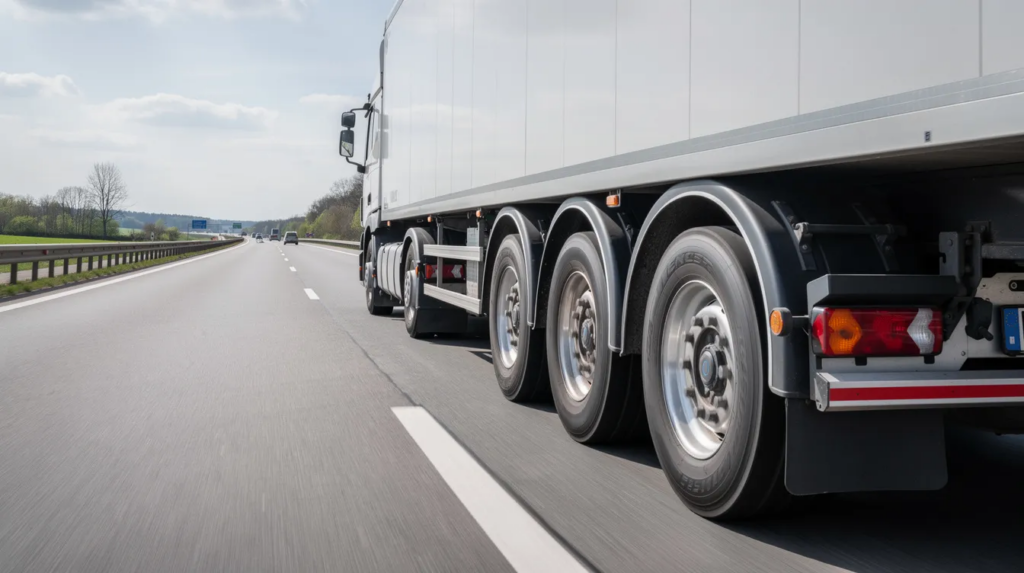
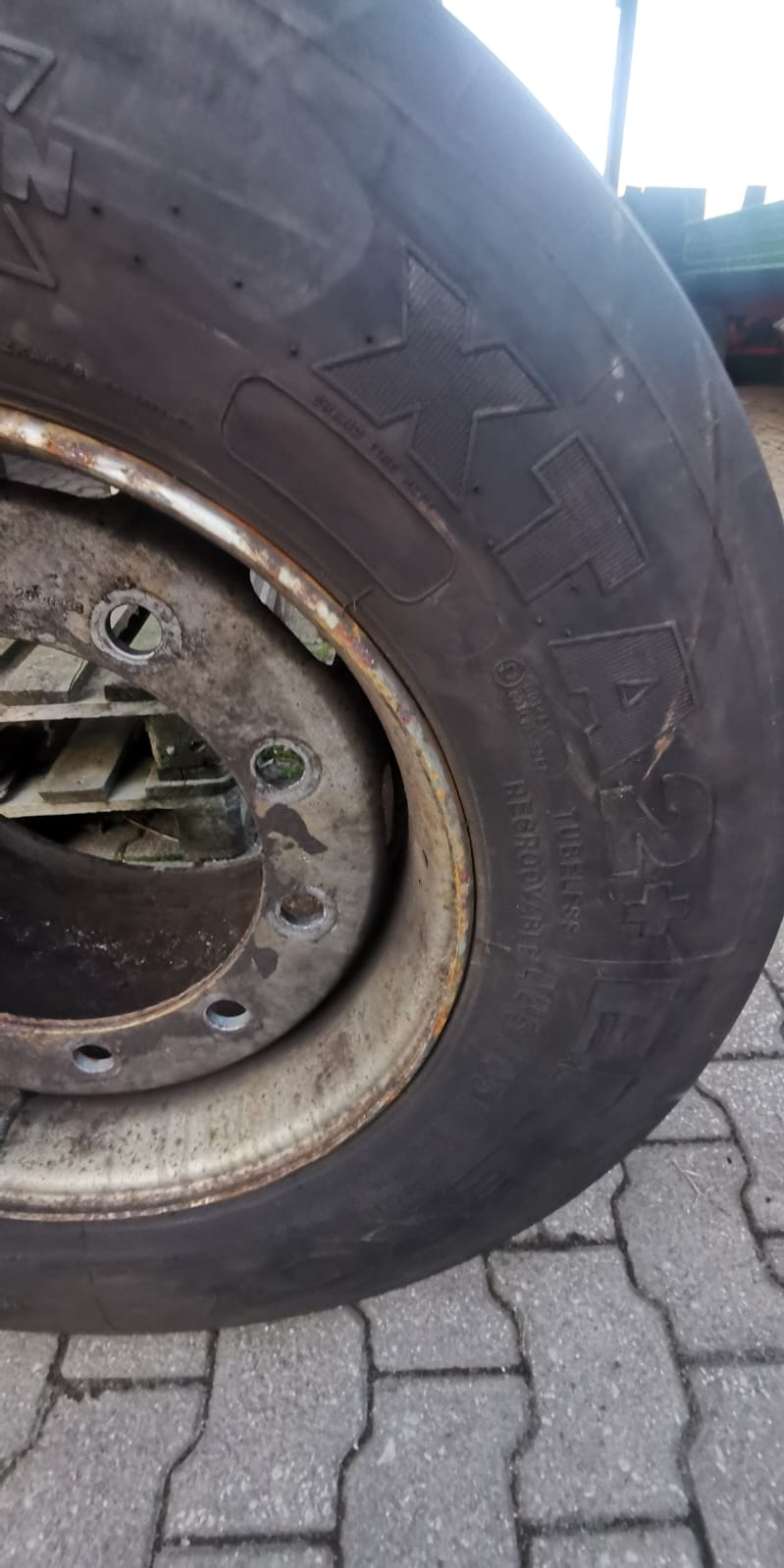
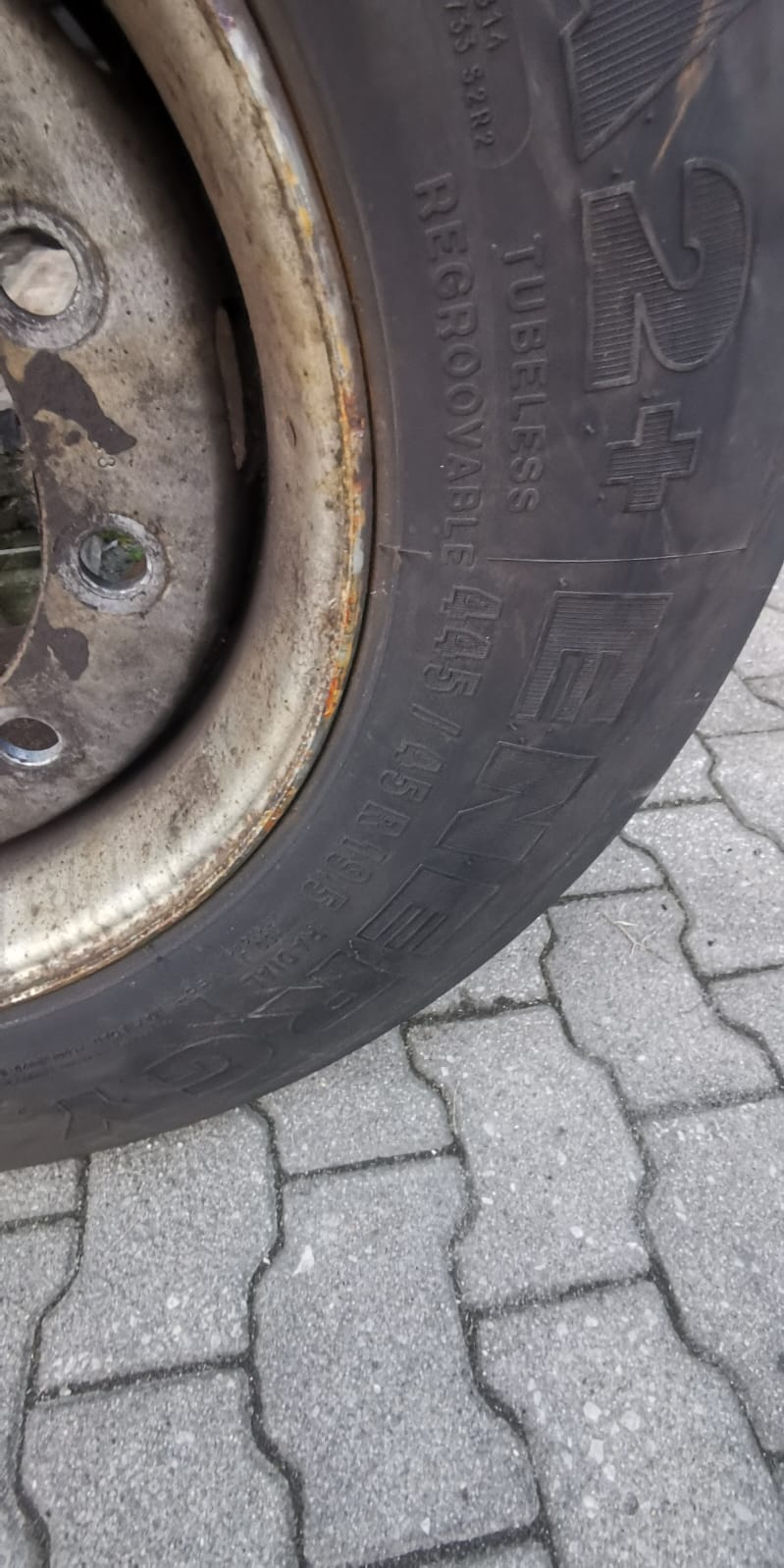
That detail mattered more than it might sound. A Megatrailer, sometimes called a Jumbo trailer, is built with a lowered chassis and small-diameter wheels so the cargo floor sits closer to the road. That design frees up roughly 3 metres of internal loading height, which is why these trailers are popular for bulky but light freight such as car parts, packaging, insulation, or furniture components. The trade-off is the wheel: 445/45 R19.5 is a specialist size, wide in section but short in sidewall, and it is nowhere near as common in roadside stock as the tyres fitted to a standard tractor unit or box trailer.
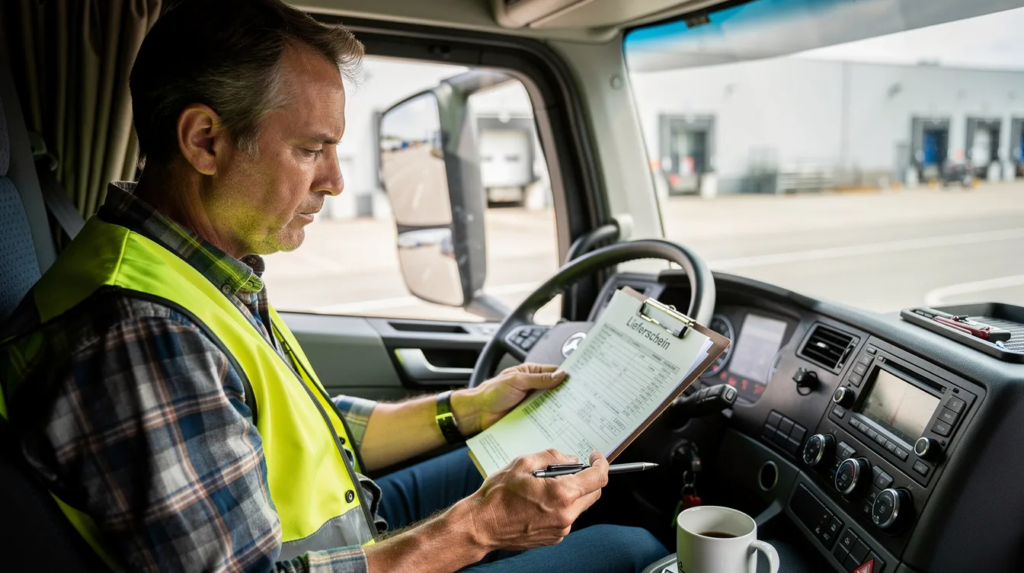
The driver described a loud bang followed by vibration, pulled over safely, and set out warning triangles before the call was even answered. That single detail — naming the size immediately — is what let dispatch start searching for stock the moment the call ended, rather than after a technician arrived and confirmed it on site.
How the Assistance Was Organised
Once the size was known, dispatch worked the problem in parallel rather than in sequence: locating stock and preparing a technician at the same time, instead of waiting for one step to finish before starting the next.
- 10:40 — call logged, GPS location on the A5 confirmed, tyre size recorded exactly as given by the driver
- 10:40–11:05 — control room contacts nearby partner workshops, checking specifically for 445/45 R19.5 in stock, since a generic 19.5-inch truck tyre would not fit the load-index or width requirement
- A match is found at a local partner workshop; the tyre and a technician are dispatched together in one vehicle
- Driver is advised to stay behind the barrier, hazard lights on, and to avoid standing between the trailer and passing traffic
- Estimated arrival time is communicated back to the driver so the wait itself feels manageable
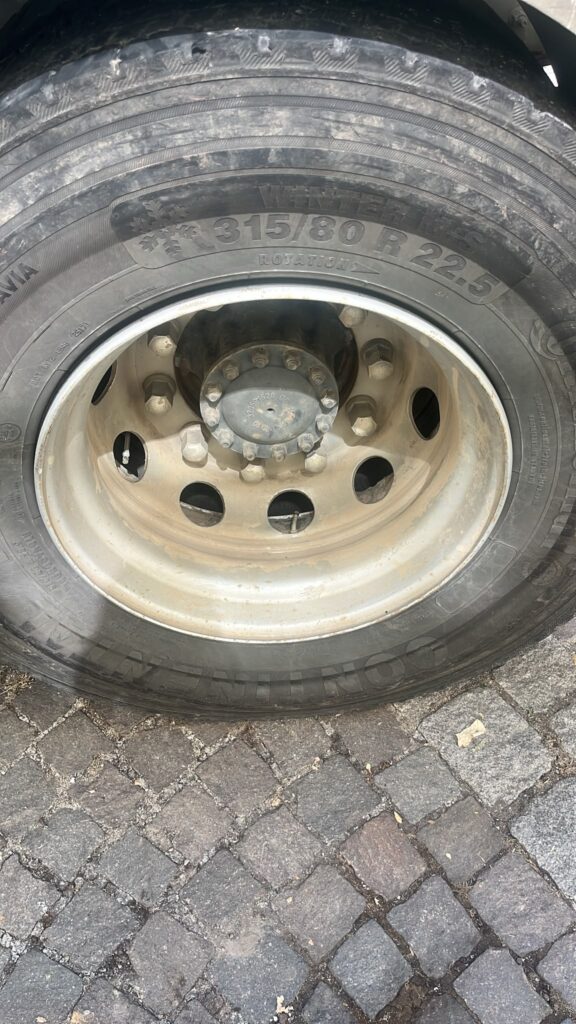
This is the point where rarity becomes the real story. A standard mobile tyre service carrying a typical range of 22.5-inch truck and trailer tyres is very unlikely to have 445/45 R19.5 sitting in the van. Being upfront about that: response times on this size will usually run longer than a routine 315/80 R22.5 callout, and any operator running Megatrailers should expect it.
Why the Situation Couldn’t Wait
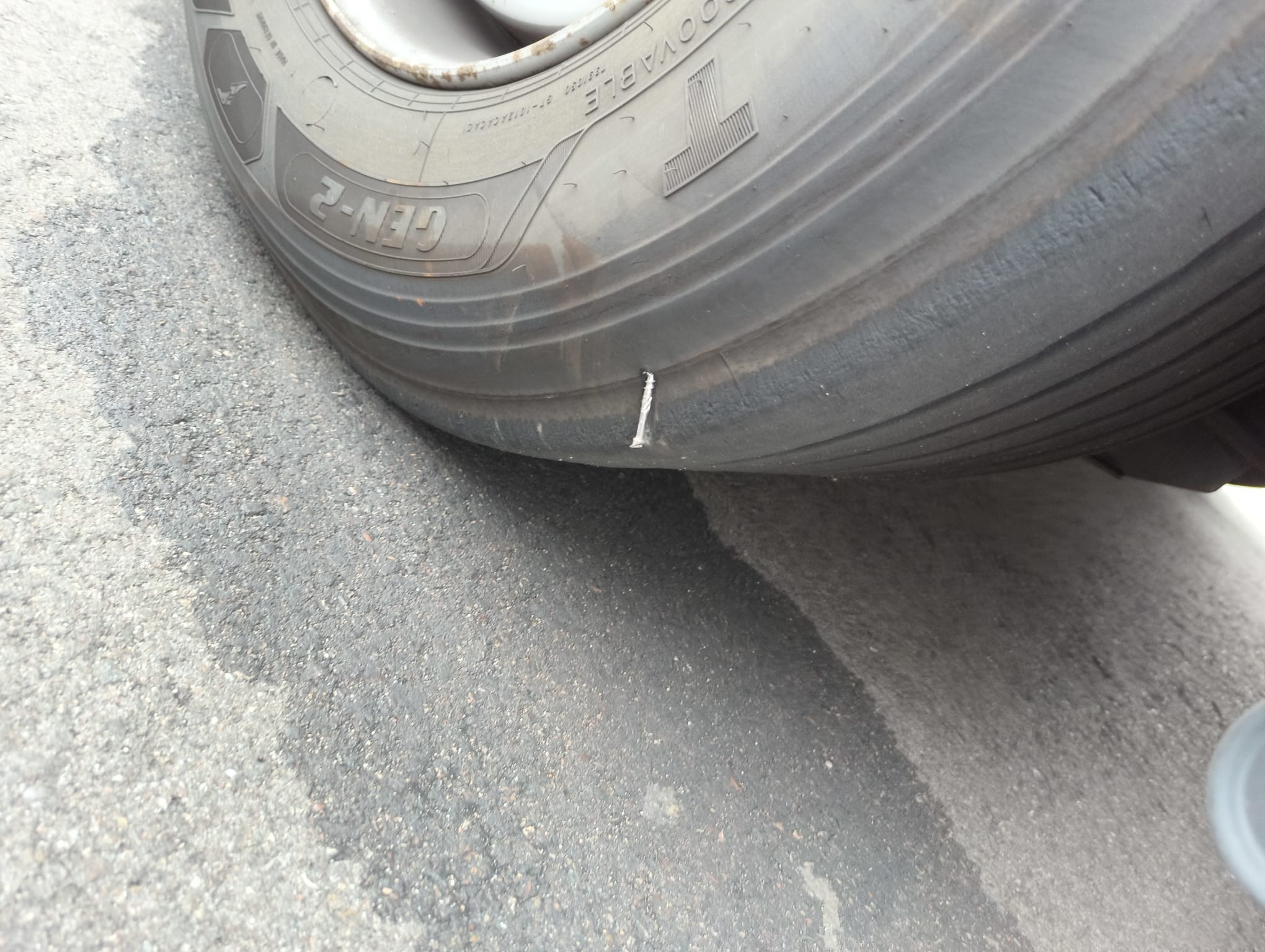
A blown low-profile tyre on a loaded semi-trailer is not something to leave until the next scheduled stop, because the short sidewall gives almost no cushioning between the road and the rim.
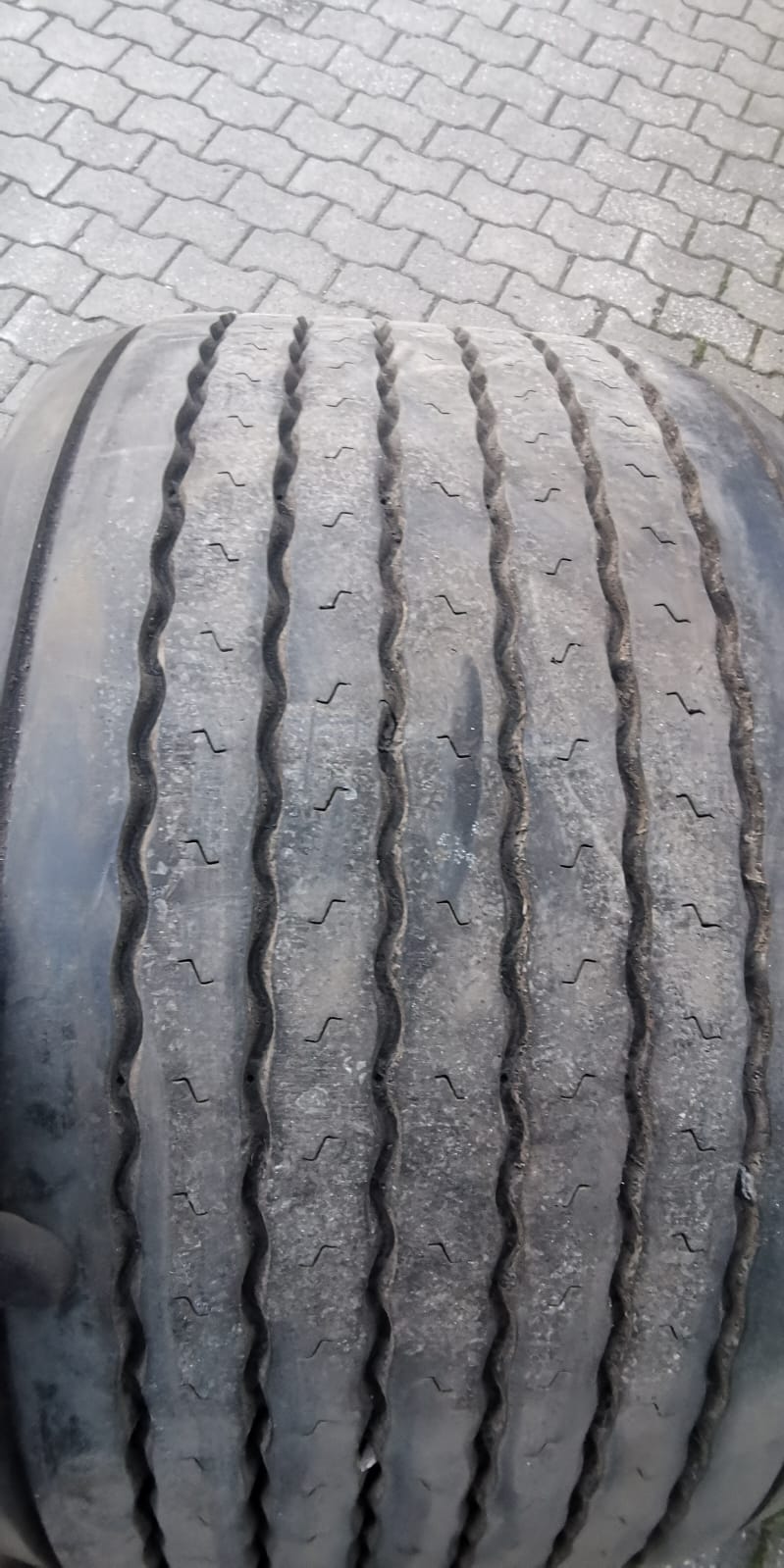
On a standard truck tyre, some sidewall flex absorbs minor impacts. On a 445/45 R19.5, the profile is so shallow that a pothole, kerb, or ridge in the road surface can strike the rim directly, and a trailer already running on a damaged tyre has no margin left for a second hit. Continuing on a flat or partially inflated low-profile tyre for even a short distance risks bending the rim, damaging the bead seat, and in the worst case cracking the carcass beyond repair — turning a €620 tyre replacement into a much larger bill.
There is also an axle-load consideration. Megatrailers are loaded for volume rather than weight, but the tyre still has to carry its rated load index at the correct pressure. Running under-inflated, even briefly, generates heat inside the tyre structure that a low-profile casing dissipates poorly. According to the ADAC, under-inflation is one of the most common preventable causes of heavy-vehicle tyre failure on German motorways, and low-profile tyres are less forgiving of it than standard ones.
Repair Step by Step
The fix followed five clear stages once the technician reached the trailer.
- Secure the scene. Warning triangle and hazard lights confirmed, technician parks the service vehicle to shield the work area from passing traffic on the A5 shoulder.
- Diagnose. Rim checked for deformation, carcass inspected for sidewall damage or bead separation, wheel bolts and hub checked before touching the tyre.
- Remove the old tyre. Damaged 445/45 R19.5 taken off the rim; rim surface cleaned and inspected once bare.
- Fit and balance. New 445/45 R19.5 mounted, balanced on the machine, wheel bolts torqued in a star pattern to the correct spec — critical on a trailer axle where uneven torque can cause vibration at speed.
- Final check. Tyre pressure set to the manufacturer’s figure for the load, visual check of the whole wheel assembly, driver briefed before pulling away.
The whole on-site sequence, from parking the van to the final pressure check, took under an hour once the technician arrived — the bulk of the total time was the drive to reach the trailer with the correct tyre already loaded.
Full Timeline: Call to Departure
| Time | Phase | Action |
|---|---|---|
| 10:40 | Emergency call | Driver reports a blowout, A5 near Offenburg, direction Freiburg, gives the size 445/45 R19.5 immediately |
| 10:40–11:05 | Dispatch | Control room locates a partner workshop holding the matching tyre size in stock |
| 11:05–12:05 | Travel | Technician drives to the scene with the tyre (60 min) |
| 12:05–12:20 | Securing & diagnosis | Warning triangle/lights set, rim and carcass checked |
| 12:20–13:05 | Fitting | Old tyre removed, new tyre fitted, balanced, wheel bolts torqued in a star pattern |
| 13:05–13:15 | Final check | Tyre pressure, visual check, cleared to continue |
| 13:15 | Done | Semi-trailer back on the road |
Total time: 2 hours 35 minutes (155 minutes) from call to departure.
For a size this rare, that is a good result. It only worked because the driver gave the exact tyre designation in the first sentence of the call, and because our tyre service network includes partner workshops that specifically stock low-profile Megatrailer sizes rather than only the common 22.5-inch range.
Cost Breakdown
| Item | Price (EUR) |
|---|---|
| Callout fee (daytime) | 260 |
| On-site labour (1.5 hrs at €120/hr) | 180 |
| Truck tyre 445/45 R19.5 (Megatrailer specialist size) | 620 |
| Fitting & balancing | 60 |
| Old tyre disposal | 20 |
| TOTAL (net) | 1140 |
Prices are net, plus statutory VAT. The tyre itself accounts for well over half the bill — that is the reality of specialist stock. A common trailer tyre in the 385/65 R22.5 range typically costs a fraction of that; a 445/45 R19.5 is manufactured in far smaller volumes, fitted almost exclusively to Megatrailers and similar low-loaders, and priced accordingly.
Set against that, a stranded tractor unit and load typically costs an operator somewhere around €800 to €1,200 per day in lost time, missed delivery windows, and driver hours — a figure widely cited across German road haulage. At €1,140 for a same-day fix, and the trailer moving again inside three hours, the callout roughly pays for itself against a single lost day. Wait until the next depot instead, and the maths flips: a day or more off the road, plus recovery costs if the wheel is driven on and the rim or carcass fails completely.
Why You Need a Professional, Not a DIY Fix
Changing a Megatrailer’s low-profile tyre on the hard shoulder is not a job for the driver’s own toolkit, and attempting it introduces real risk.
- No spare of this size is normally carried in the cab — even if one were, jacking a loaded trailer safely on a motorway shoulder without proper stands is dangerous
- Wheel bolts on a trailer axle need a star-pattern torque sequence; get it wrong and the wheel can work loose at speed
- A rim or bead that looks fine to the eye can be cracked or deformed in a way only a trained inspection catches
- Standing beside a live carriageway to change a wheel is one of the highest-risk tasks in road haulage — Section 36 StVZO sets out the equipment and warning obligations for exactly this situation
Calling a mobile truck service with the right stock and trained technicians is the only realistic option once a low-profile tyre has failed on the road.
Typical Callouts Across Germany
Blowouts and pressure loss on Megatrailer and low-loader tyres turn up wherever these trailers run: on the A5 corridor through Baden-Württemberg, on the A61 and A3 around the Rhine-Ruhr logistics hubs, and on regional roads feeding automotive plants where car-parts freight is common. Poor access roads at industrial sites are a frequent trigger, since low ground clearance means kerbs, ramp edges, and rough yard surfaces make direct contact with the tyre sidewall far more often than on a standard trailer.
Speed bumps and level crossings cause a similar pattern of damage over time — not always an instant blowout, but slow bead or sidewall wear that eventually fails on the motorway, often at the worst possible moment.
Prevention: Advice for Drivers and Fleets
The single biggest lesson from this case is that stock, not speed, is the bottleneck for rare tyre sizes.
For drivers: know your tyre size and have it ready before you call. Check pressures at every stop, since a low-profile carcass shows less visible sag when it’s losing air than a standard tyre does. Avoid kerbs and rough yard surfaces at low speed where possible — the ground clearance margin on a Megatrailer is smaller than most drivers expect.
For fleets: if you run Megatrailers regularly, keep at least one spare 445/45 R19.5 tyre at base or with your regular service partner. Given that sourcing time is the main delay in a case like this one, a spare on the shelf can turn a three-hour roadside job into a one-hour wheel swap. It typically pays for itself the first time it’s needed, given what a day of downtime costs against the price of holding stock.
Tyres and Fleet Maintenance: What Matters for Low-Profile Sizes
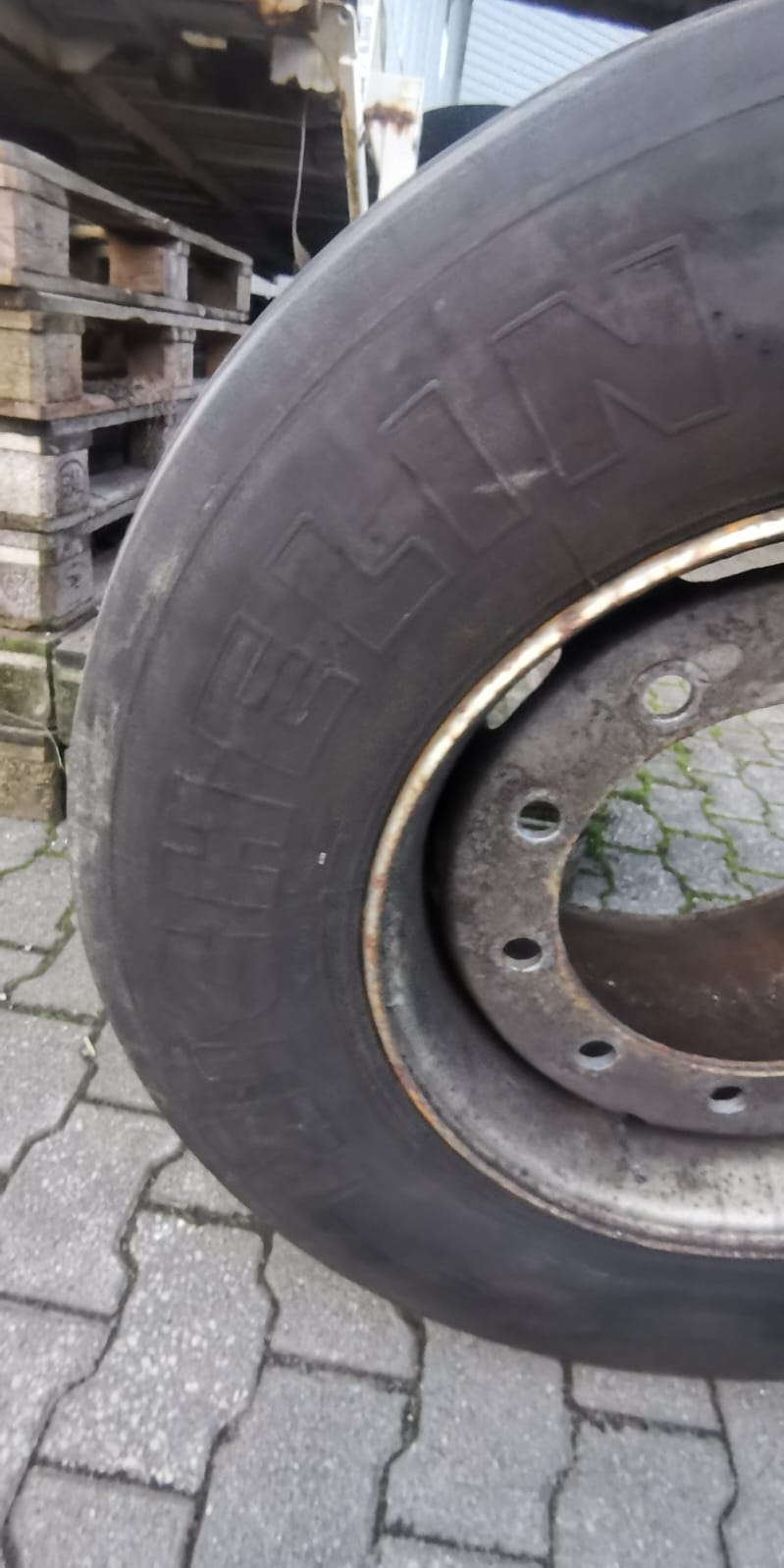
Low-profile trailer tyres from manufacturers such as Michelin are built to tighter load-index tolerances than standard truck tyres, precisely because the shorter sidewall gives less room for error. Continental, Goodyear, and Bridgestone also produce 19.5-inch specialist ranges for Megatrailer and low-loader applications, though availability varies by region and by workshop.
A few points worth knowing if you operate this type of trailer:
- Load index and speed rating on a 445/45 R19.5 are not interchangeable with a similarly sized 22.5-inch tyre — the numbers look close but the engineering behind them is not the same
- Recommended pressures run higher than on a standard trailer tyre, and should be checked more often given how much less sidewall flex there is to warn of a slow leak
- Trailer axle geometry and suspension components are engineered around the tyre’s rolling radius — mismatched tyres can throw off ride height and wear patterns across the axle
- Rotating and inspecting tyres on a fixed schedule catches uneven wear before it becomes a roadside failure
None of this replaces a proper truck service inspection at regular intervals, but it does explain why “any 19.5-inch tyre will do” is not good advice for a Megatrailer.
Why Choose LKWHelp24
We run a 24/7 dispatch network across Germany with vetted partner workshops, including several that specifically stock low-profile and specialist sizes like 445/45 R19.5. Pricing is transparent and quoted before work starts — no surprises on the invoice. Dispatch is multilingual, so drivers can report the problem, including the exact tyre size, in the language they’re most comfortable with. That last point is not a small thing: on a rare size like this one, a precise size given clearly in the first call is what saves the extra hour of searching later.
Frequently Asked Questions
Why is 445/45 R19.5 so hard to find compared with a standard truck tyre?
It’s a specialist size fitted almost exclusively to Megatrailer and Jumbo low-loaders, produced in far smaller volumes than common 22.5-inch tyres. Most general roadside services don’t carry it as standard stock, so sourcing takes longer.
How long does a roadside fix on this size usually take?
In this case, 2 hours 35 minutes from call to departure, including a 60-minute drive to bring the correct tyre to the scene. Response time depends heavily on whether a nearby partner workshop already holds the size in stock.
Can a driver just fit a similar-sized tyre temporarily?
No. Load index and pressure requirements on a Megatrailer are strict, and a mismatched tyre affects ride height, wear, and safety. A temporary tow or delivery of the correct size is safer than substituting a similar tyre.
Why does a Megatrailer sit lower than a standard trailer?
The small-diameter, low-profile wheels lower the chassis, which frees up roughly 3 metres of internal loading height — useful for bulky, lightweight freight such as car parts or packaging.
Should fleets keep a spare of this tyre size?
Yes, if they run Megatrailers regularly. Given that sourcing time is the main delay, holding one spare at base or with a service partner can cut a roadside repair from hours to a simple wheel swap.
What does a callout like this typically cost?
In this case, €1,140 net, plus VAT, covering the callout fee, labour, the tyre itself, fitting and balancing, and disposal of the old tyre. The tyre is the largest line item due to its specialist nature.
Summary
A Megatrailer blew a 445/45 R19.5 tyre on the A5 near Offenburg on 30 July. The driver named the exact size at the first call, 10:40, which let dispatch locate a partner workshop with matching stock within 25 minutes. Total time from call to departure: 2 hours 35 minutes. Net cost: €1,140. Against a typical downtime cost of €800–1,200 per day, the fast turnaround kept the load — and the driver’s schedule — on track.
Need Help Now?
Call +49 160 5753826 or visit www.lkwhelp24.com — 24/7, anywhere in Germany.
Keywords: Megatrailer tyre blowout | 445/45 R19.5 truck tyre | mobile truck tyre service A5 | low-profile trailer tyre Germany | Jumbo trailer tyre replacement | truck tyre service Offenburg | semi-trailer tyre breakdown A5 Freiburg | 24/7 truck tyre service Germany | rare truck tyre size stock | fleet spare tyre strategy