Skip to content
TL;DR: On 29 July, in the early afternoon, the rear tyre of a loaded 12-tonne distribution/parcel truck (MAN TGL 12.220, generic parcel-service livery) blew out on the A5 near Homberg (Efze), direction Kassel, at kilometre 468.5. Tyre size 245/70 R17.5. From diagnosis to departure, 1 hour 36 minutes passed, with a total cost of 625 euros net (290 euros daytime call-out + 315 euros tyre R17.5 + 20 euros old tyre disposal). The case shows a pattern that occurs more often with distribution trucks in parcel operations than in classic long-haul trucking: tyres in delivery service wear faster because hundreds of starts and stops per day act on a carcass designed for full payload but rarely driven with reserve capacity.
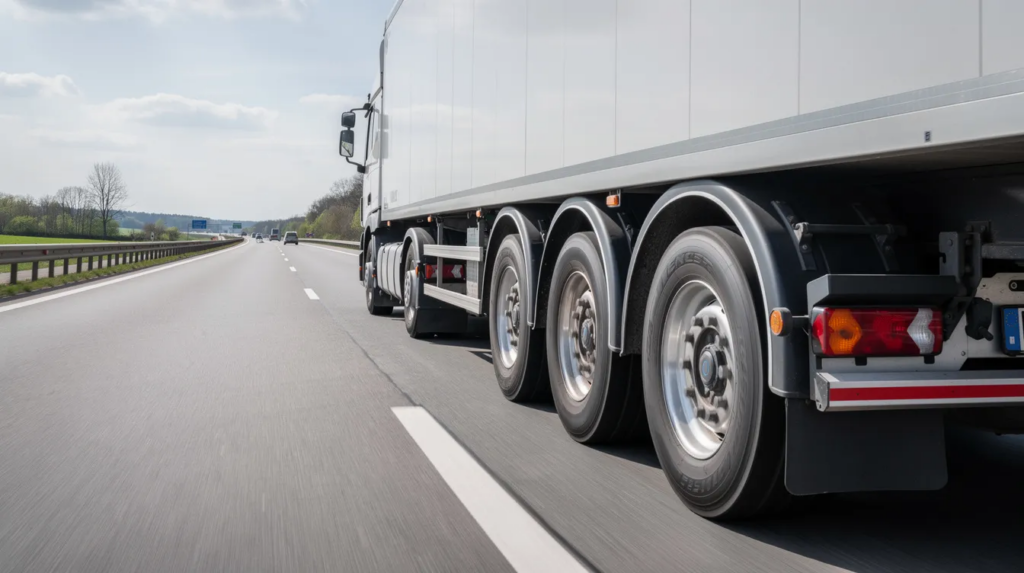
A tyre blowout at full load is a serious problem for parcel services. Tyres on a 12-tonne distribution truck run at much higher internal pressure than a car or van tyre, and at full load the margin to the tyre’s rated capacity is often small. If the carcass tears, the vehicle loses control over an axle within a fraction of a second – a serious situation on the motorway for a tall, wind-sensitive distribution truck.
For parcel services, a second dimension comes into play that barely matters for classic long-haul trucking: the schedule. A distribution truck on the last mile often has 60 to 100 stops fixed per shift, with tight delivery windows and contractual SLA requirements toward the client. Every hour of downtime affects not just one trip but an entire route plan. That is exactly why fast, professional help was decisive here.
What happened on the A5 near Homberg (Efze)?
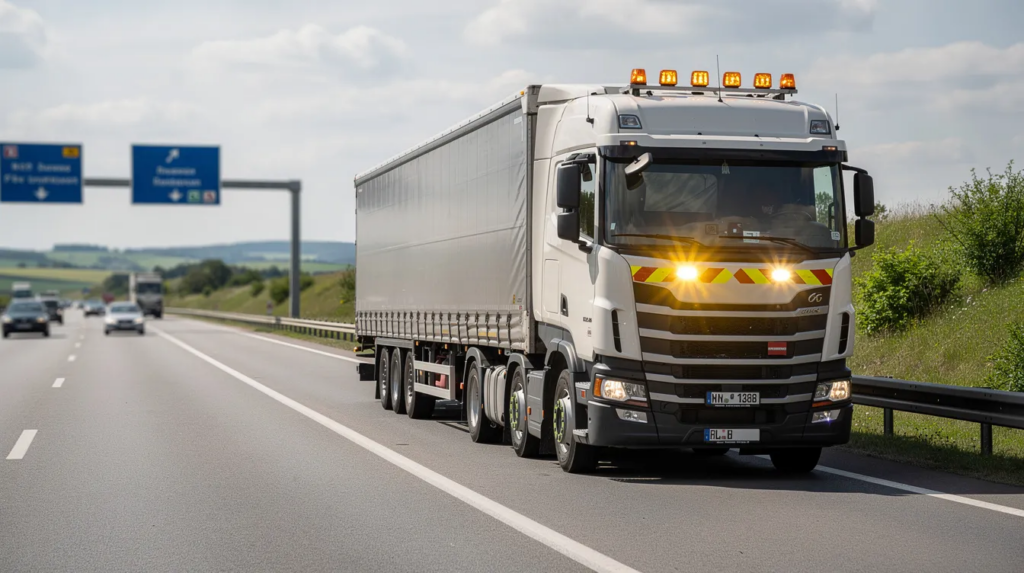
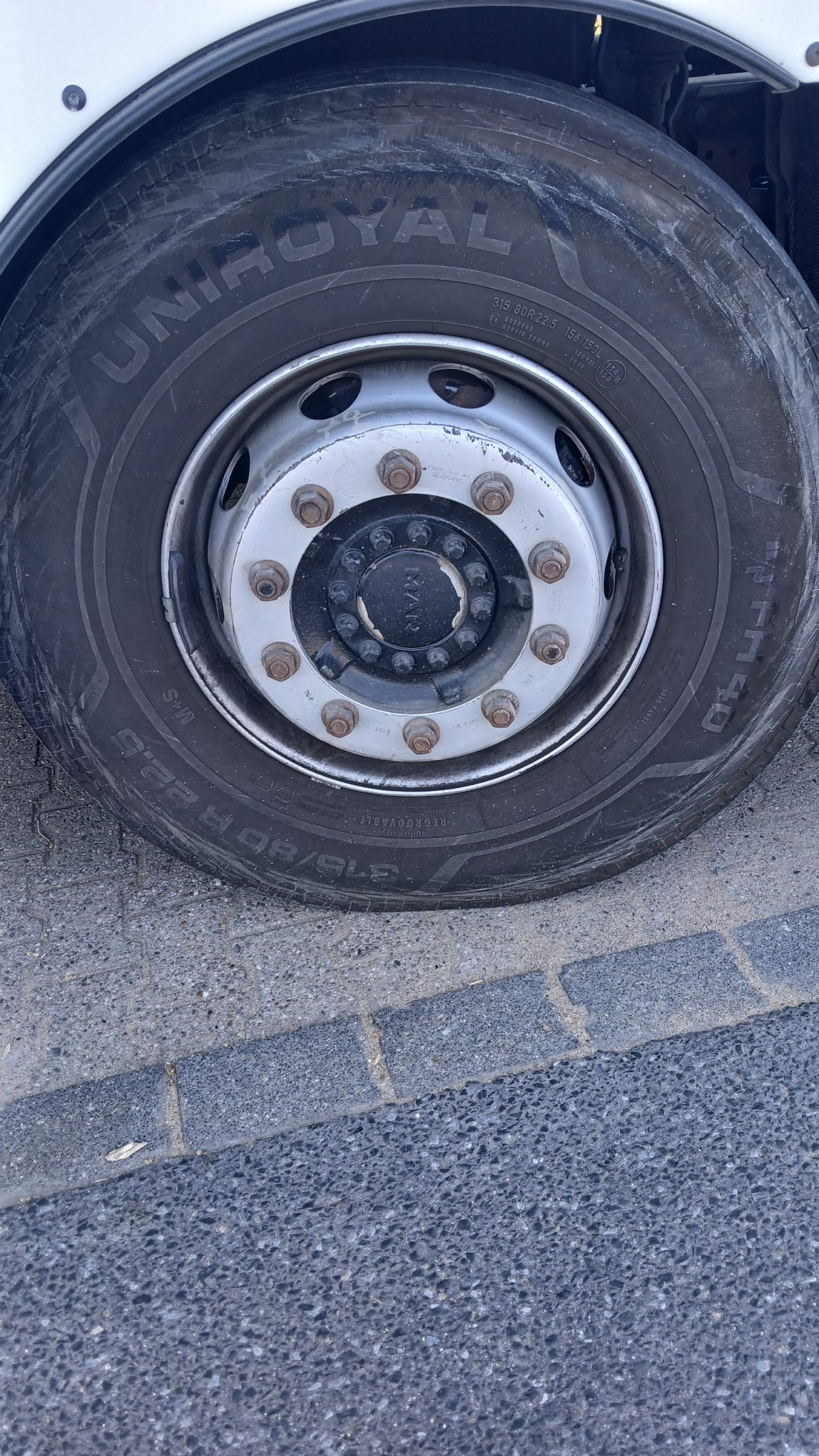
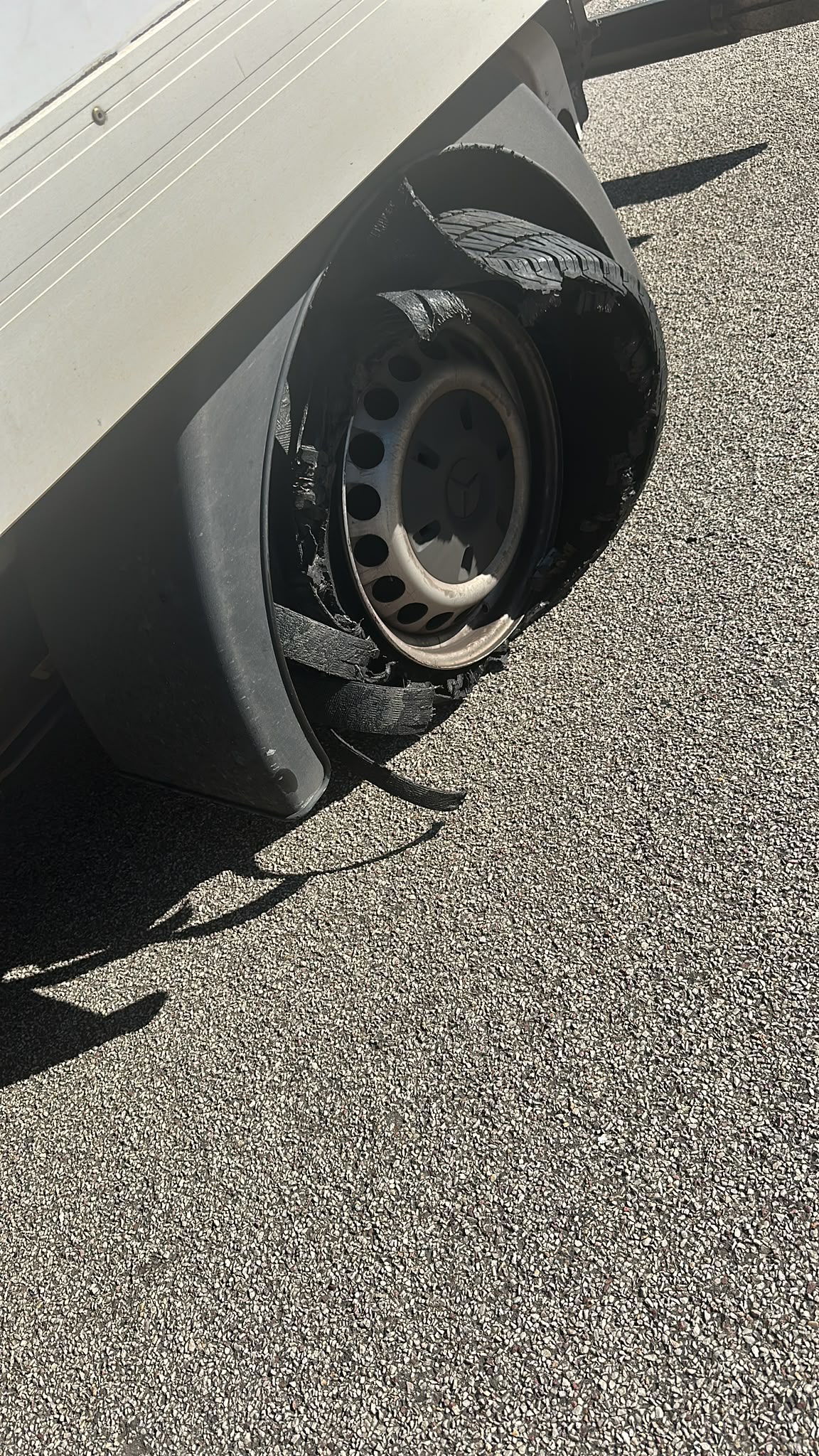
On 29 July, in the early afternoon, the rear tyre of a loaded parcel distribution truck (MAN TGL 12.220, 12-tonne gross weight) tore apart on the A5 heading towards Kassel, at kilometre 468.5 near Homberg (Efze) in northern Hesse. The rubber carcass had come away completely from the rim, and the bare rim was visible beneath the wheel arch.
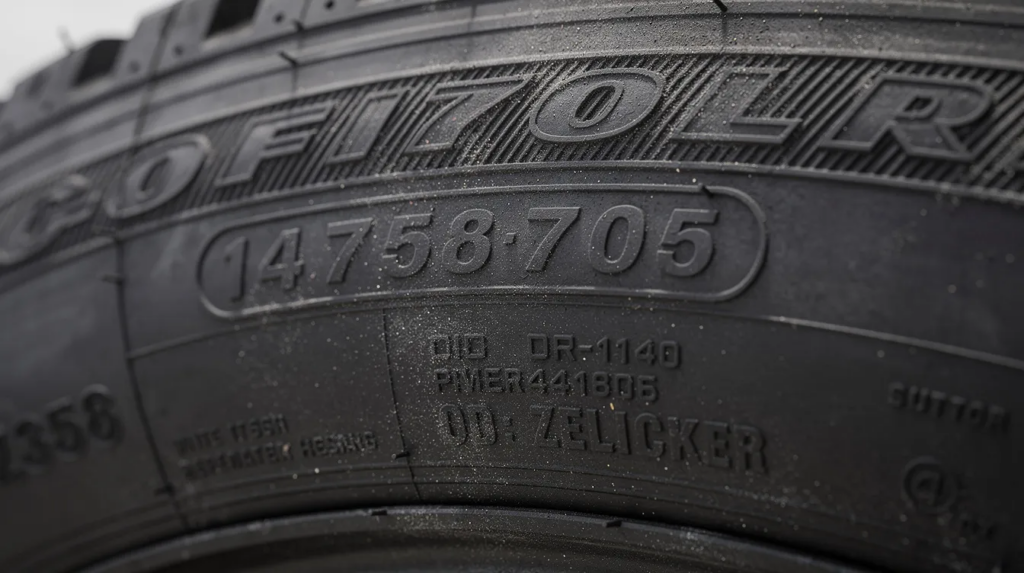
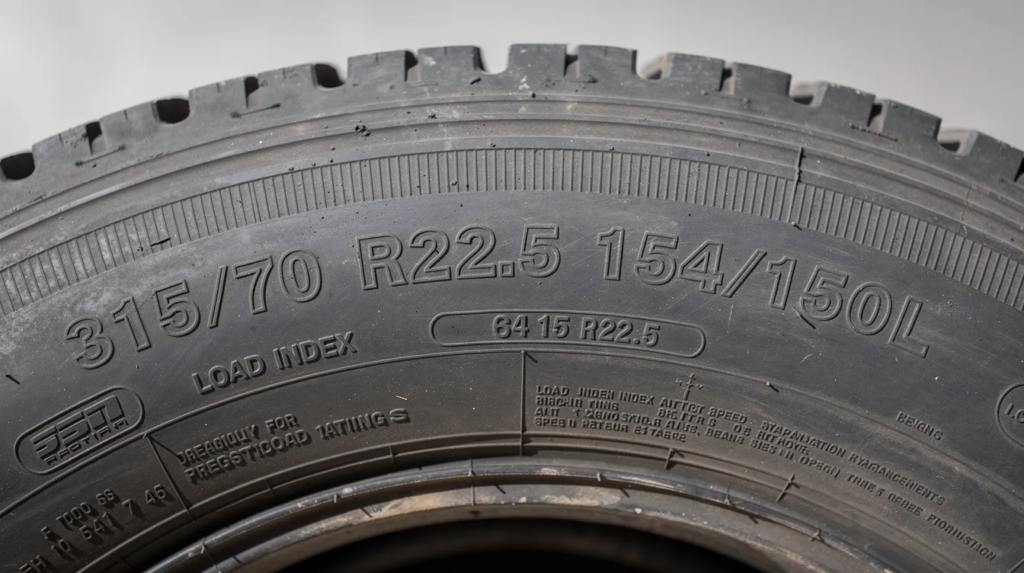
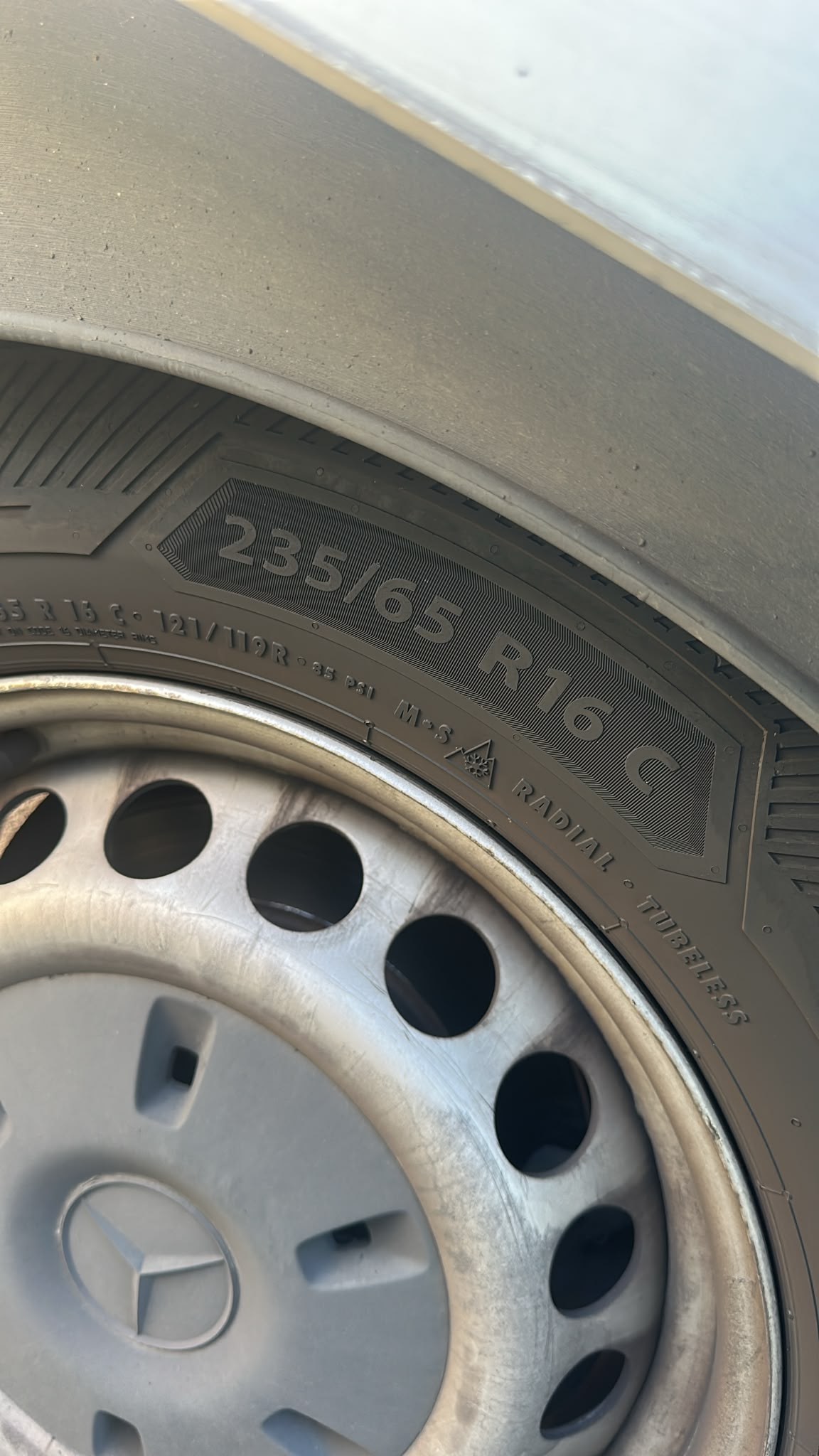
The driver heard a loud bang and felt the vehicle pull sideways immediately – the typical behaviour of a sudden pressure loss on the rear axle. He was able to steer the truck onto the hard shoulder in a controlled way, without touching the crash barrier or causing a collision with other vehicles. The affected tyre was size 245/70 R17.5 – a common commercial vehicle size for distribution trucks in the 7.5 to 12-tonne range, rated at load index 136/134 M.
The road at this point on the A5 has two lanes plus a continuous hard shoulder, which made securing the scene easier. Still, every stop on the motorway carries risk: passing trucks create slipstream and gusts of wind that can destabilise a vehicle on the hard shoulder while technicians work at the open wheel arch.
Why do tyres on distribution trucks in parcel operations wear out faster than other commercial tyres?
Tyres on parcel distribution trucks carry, on average, a higher load per kilometre than tyres on long-haul articulated trucks, because the driving pattern consists of constant starting, braking and tight steering manoeuvres rather than steady motorway driving. A typical distribution driver makes 60 to 100 stops in a working day, often with close kerb contact while parking and pulling out in the city.
This driving pattern stresses the tyre sidewall mechanically in a different way than long-distance driving. Every contact with a kerb puts a localised shock on the carcass, which can add up over weeks into micro-cracks – invisible from outside until the tyre fails under full load on the motorway. In addition, a 12-tonne distribution truck runs at delivery loads almost constantly close to its rated payload, while its unladen weight is comparatively low. Tyre load therefore sits closer to the upper limit more often than for an articulated truck, which frequently runs empty or partly loaded on the return leg.
According to manufacturer data, for example from Continental, commercial tyres in size 245/70 R17.5 are built specifically for this load profile – with a reinforced steel belt and a carcass designed for repeated load changes. The precondition, however, is that pressure and condition are checked regularly, which often gets neglected in the hectic daily operations of a parcel service.
What load index applies to 245/70 R17.5 – and why is choosing the right tyre so critical?
The 245/70 R17.5 size is most commonly fitted to distribution and parcel trucks with load index 136/134 M, corresponding to roughly 2,360 kg rated capacity per tyre in single fitment and around 2,180 kg per tyre in twin fitment. On a fully loaded 12-tonne vehicle, the actual axle load often sits just below this limit.
If a tyre with the wrong load index, or an already heavily worn tyre, keeps being used to save cost, the actual axle load frequently exceeds the tyre’s rated capacity – often without the driver noticing, because the tyre size looks identical from the outside. The result is an overheated, overloaded carcass that can tear apart at motorway speed. In practice, this mix-up is one of the most common and dangerous cost-cutting mistakes among smaller fleets that buy replacement tyres without expert advice.
Another point: distribution trucks of this class are frequently delivered with twin tyres on the rear axle. Twin fitment comes with its own requirements for load index and tyre pairing – both tyres on one side must be nearly identical in tread and pressure, or the load shifts onto one of the two tyres and accelerates its wear further.
What tyre pressure does a 12-tonne distribution truck run – and why is a blowout so dangerous here?
A loaded distribution truck on 245/70 R17.5 tyres runs, depending on axle load, at roughly 8.0 to 9.0 bar internal pressure, compared with about 2.2 to 2.5 bar for a normal car tyre. Drivers used to lighter vehicles systematically underestimate this difference.
When pressure is lost, this high starting pressure releases far more energy than in a car or van tyre. The bang is louder, the carcass often tears away from the rim over a larger area, as seen in this case, and the vehicle reacts more abruptly to the sudden loss of control on the affected axle.
Vehicle geometry adds to the risk: a 12-tonne distribution truck has a higher centre of gravity than a car or small van and is considerably more sensitive to crosswind, especially on an open motorway stretch. A sudden pressure loss on the rear axle combined with crosswind can pull the vehicle off line more forcefully than the pure physics of a car tyre blowout would suggest.
What to do when the distribution truck has no spare wheel?
Many parcel distribution trucks run without a full-size spare wheel, because the load area is optimised for parcel volume – in this situation, the only safe solution is an on-site mobile tyre service, not an attempt to keep driving on an improvised fix. Tyre sealant kits do not help with a complete carcass tear – they can only seal small punctures in the tread, not structural damage to the tyre body.
Without a spare wheel, the only option in such a situation is to secure the scene with a warning triangle and hi-vis vest and call roadside assistance. Continuing to drive on the rim, even just to the next exit, additionally damages brake lines, wheel bearings and, in the worst case, the suspension – follow-up costs that quickly exceed the original tyre damage many times over. If the tyre damage is severe enough that driving on is impossible, our towing service handles transport to the nearest workshop.
How was the assistance organised?
After the emergency call came in, dispatch at our 24/7 control centre ran through a few steps:
- Call received and location established via motorway kilometre marker and direction of travel.
- Tyre size and axle confirmed (245/70 R17.5, rear axle) to prepare the correct replacement tyre.
- Check that the location was safely secured, with instructions to the driver on hi-vis vest and warning triangle.
- Assignment to a team from our partner workshop network in the northern Hesse region with the matching tyre in stock.
- Vehicle type and location transmitted to the service team via GPS coordinates.
- Continuous status updates to the driver until the team arrived on site.
This process is standard for us, regardless of whether it is a 40-tonne articulated truck or a 12-tonne distribution truck – the main difference lies in the tyre stock held ready, which covers sizes like 245/70 R17.5 just as reliably as articulated truck tyres. Details on our process and scope of service are on our mobile truck tyre service page.
On-site repair: the individual steps
- Visual inspection. The technician checks the rim, wheel hub and wheel bolts for damage before starting the replacement – a bent rim edge would have extended the process.
- Securing the work area. Warning cones and additional hazard lighting secure the area against flowing motorway traffic before the jack is applied.
- Removal. The damaged tyre is separated from the rim, and the rim is checked for cracks and imbalance.
- Fitting the replacement tyre. A new 245/70 R17.5 is mounted, balanced and inflated to the correct pressure of around 8.5 bar for full load.
- Tightening with a torque wrench. The wheel bolts are tightened in a star pattern to the torque specified for this truck type – a crucial step that an improvised roadside fix can barely deliver.
- Final check. Tyre pressure, tread depth of the fitted tyre and rim seating are checked one last time before the vehicle is released.
Full timeline
| Time | Phase | Action |
|---|---|---|
| 14:12 | Emergency call | Call received at the 24/7 control centre, location and tyre size recorded |
| 14:12–14:25 | Dispatch | Team located, 245/70 R17.5 tyre reserved, driver given safety instructions |
| 14:25–15:05 | Drive to site | Service team travels to the A5, kilometre 468.5, towards Kassel |
| 15:05–15:48 | On-site work | Visual inspection, removal, fitting, torquing, final check |
| 15:48 | Completion | Truck roadworthy again, continuing towards Kassel |
Total time from call to departure: 1 hour 36 minutes. Our response time is typically 30 to 60 minutes, anywhere in Germany, 24/7.
What does a tyre change on a distribution truck cost on the motorway?
The tyre change on this 12-tonne parcel distribution truck on the motorway cost 625 euros net in this case, made up of our transparent flat rates for a daytime call-out.
| Item | Price (EUR, net) |
|---|---|
| Daytime call-out (travel & labour) | from 290 |
| Tyre from R17.5 (245/70 R17.5) | from 315 |
| Old tyre disposal | 20 |
| Total | 625 |
All amounts are net, plus VAT. The fixed price is always agreed with you before the call-out. At night and on Sundays and public holidays, our night/Sunday/holiday rate applies, from 549 euros for the call-out, reflecting higher availability and staffing requirements. Our rates apply to commercial vehicles from 7.5 tonnes upward, anywhere in Germany, through our partner workshop network.
What does downtime cost a parcel service economically?
A distribution truck out of service on the last mile costs a parcel company more than the pure repair bill, because undelivered parcels trigger SLA penalties, route replanning and, in the worst case, an extra delivery day. With 60 to 100 planned stops per shift, a two-to-three-hour breakdown often means 15 to 30 shipments miss the agreed delivery window.
Many clients in the parcel business work with contractually fixed delivery quotas; falling short of these risks contractual penalties that can quickly reach three figures per day depending on volume. On top of that comes reputational damage from end customers who publicly review a late shipment. Compared with these indirect costs, a fast, professional tyre repair for 625 euros is clearly the cheaper option – an extra day of downtime from improvised fixes or a delayed workshop appointment typically costs several times more.
Why does the problem intensify in the pre-Christmas period?
In the peak season between November and December, parcel volumes rise by 30 to 50 percent, while fleet size usually stays constant – the result is higher payload per vehicle and more trips per tyre. This combination of more weight and more kilometres in less time seasonally increases the rate of tyre damage among distribution fleets.
Fleet managers who know that load rises in the fourth quarter should tighten tyre checks during this period rather than neglecting them amid daily stress. One additional visual check per week during peak season is a small effort compared with a breakdown in the middle of the year’s busiest revenue phase.
Why is professional help important for tyre damage on a truck?
A tyre change looks simple but carries several risks at the roadside that amateurs and inexperienced drivers underestimate:
- Missing torque when tightening. Without a torque wrench, wheel bolts end up too loose or too tight – both can cause the wheel to come loose while driving.
- Wrong load index. A tyre with too low a load index on a loaded axle quickly exceeds the rated capacity.
- Missing protection in flowing traffic. A change without warning cones and reflective clothing is life-threatening on the motorway, especially in poor visibility.
- Imbalance and rim damage. An unbalanced fit or an overlooked rim deformation causes vibrations that stress wheel bearings and steering knuckles over time.
- Missing documentation. For fleet vehicles, a traceable invoice with tyre identification matters for maintenance records and insurance claims.
Typical call-outs for distribution and parcel trucks we respond to
- Rear axle blowout at full load, as in this case.
- Slow pressure loss from a damaged valve, unnoticed until failure.
- Sidewall damage from kerb contact in the city that shows up later on the motorway.
- Tyre wear from misaligned axle geometry on high-mileage vehicles.
- Twin tyres wearing unevenly due to unequal pressure between the two tyres.
- Emergencies on vehicles without a full-size spare wheel.
Prevention for distribution trucks and fleets
- Weekly pressure checks on all vehicles, ideally before the first route of the week, at full load.
- Visual check of tyre sidewalls after every shift, especially after routes with many kerb manoeuvres.
- Tyre rotation per manufacturer guidance to balance uneven wear between front and rear axles.
- Stepped-up checks in the pre-Christmas season, when payload and mileage rise together.
- Documented tyre inspection as part of vehicle handover between shifts, particularly with multiple drivers.
- Use of branded tyres with the correct load index instead of budget tyres without verified approval.
Tyres, brands and fleet service
For distribution trucks, we recommend certified branded tyres from established manufacturers such as Michelin, Continental, Goodyear or Bridgestone, who offer commercial tyres specifically designed for the 245/70 R17.5 range. These tyres are matched to the load profile of distribution trucks and offer a more even wear curve than tyres without specific commercial approval. For larger fleets, a fixed service partner with a framework agreement is worthwhile, enabling planned maintenance intervals instead of emergency call-outs – this also includes regular checks of tread depth under German road traffic regulations. For maintenance beyond tyres, such as brakes or suspension, our truck workshop is available, and our mobile on-site service also covers other technical breakdowns directly on the route.
What does an emergency tyre change for trucks cost in general?
An emergency tyre change for a truck from 7.5 tonnes on the motorway costs, with us, from 290 euros net daytime call-out plus tyre from 315 euros net for the R17.5 size, so typically 600 to 700 euros net in total for a standard case. At night and on Sundays and public holidays, our rate from 549 euros net applies for the call-out. The fixed price is always confirmed with you before the call-out.
How long does a tyre change on a truck take on the motorway?
Our response time is typically 30 to 60 minutes, anywhere in Germany, around the clock. From the call to departure, a well-organised call-out usually takes 1.5 to 3 hours; in this case it was 1 hour 36 minutes. The actual time depends on traffic conditions, time of day and the distance to the nearest available tyre in the matching size.
Frequently asked questions
What does a tyre change for a truck on the motorway cost?
Our daytime call-out starts from 290 euros net, a tyre from R17.5 from 315 euros net. In this case, the total was 625 euros net for call-out, tyre and disposal. At night and on Sundays and public holidays, the rate from 549 euros net applies for the call-out. We always confirm the exact fixed price with you before the call-out.
How long does help take before the truck can continue?
Our response time is typically 30 to 60 minutes. In this case it was 1 hour 36 minutes from the alert to the vehicle being released, including travel and the on-site repair.
What should you do if the truck has no spare wheel?
Put out a warning triangle and hi-vis vest, secure the vehicle and call the mobile tyre service. Tyre sealant does not help with a complete carcass tear.
What languages does your dispatch team speak?
Our team speaks German, English, Polish and Russian, and is reachable around the clock, every day of the week.
Summary
- Location: A5, kilometre 468.5, towards Kassel, near Homberg (Efze), northern Hesse
- Vehicle: Parcel distribution truck, MAN TGL 12.220, 12 tonnes, loaded
- Tyre size: 245/70 R17.5, rear axle
- Response time: within our typical 30 to 60 minutes
- Total time to departure: 1 hour 36 minutes
- Cost: 625 euros net (290 call-out + 315 tyre R17.5 + 20 disposal)
- Follow-on damage: none, the vehicle was steered onto the hard shoulder in a controlled manner
Get help now
With tyre damage on a truck or distribution vehicle from 7.5 tonnes, every minute counts for your delivery rate. Call us around the clock on +49 160 575 3826 (also on WhatsApp) or visit www.lkwhelp24.com – our multilingual dispatch team (DE/EN/PL/RU) coordinates your call-out immediately, anywhere in Germany, 24 hours a day, 7 days a week, through our partner workshop network. All contact options are bundled on our contact page.
Keywords: mobile truck tyre service | distribution truck tyre blowout | parcel truck tyre breakdown A5 | truck tyre change from 7.5 tonnes | tyre service Kassel | truck tyre pressure | commercial tyre | 245/70 R17.5
Related articles
- Truck tyre service: mobile tyre service for car transporters on the A5 near Freiburg
- Emergency tyre service nearby – fast help with tyre breakdowns
- Load index for truck and commercial vehicle tyres
- Winter tyres for trucks in Germany – obligations, safety & service
- Mobile truck tyre service near Berlin – roadside assistance 24/7
For further information on tyre safety, we also recommend the independent testing body DEKRA, which regularly publish tyre tests for commercial vehicles.
Further reading: For more on how a mobile truck tyre change works, see our truck tyre repair guide, our emergency tyre service overview and our service page. Technical background on commercial vehicles is available from MAN Truck & Bus.