Skip to content
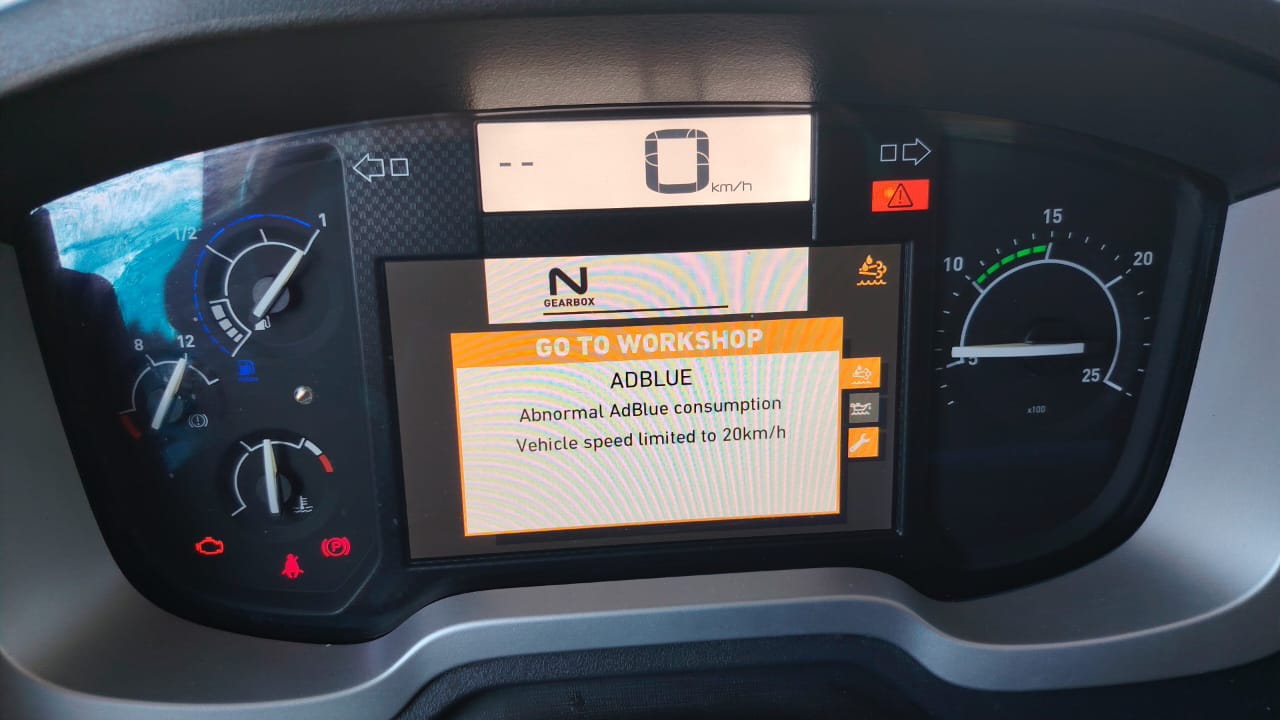
TL;DR: On 29 July 2026, a Renault tractor unit went into AdBlue limp-home mode on the A44 near Kassel, heading towards Dortmund — speed capped at 20 km/h, dashboard warning “GO TO WORKSHOP – ADBLUE.” The cause: poor-quality AdBlue from an unverified source. Our technician was on site in 49 minutes, drained and flushed the tank, replaced the filter, and refilled with certified ISO 22241 AdBlue. Total time from call to departure: 3 hours 23 minutes. Net cost: €830.
A speed-limit fault on the SCR system sounds like a minor software glitch. It isn’t. A lorry crawling at 20 km/h on a motorway with a 100 km/h or higher limit sits like a rolling obstacle in fast-moving traffic — a genuine hazard to the driver and everyone behind. And more often than not, the real trigger isn’t a mechanical fault at all. It’s diluted or counterfeit AdBlue, bought cheap from an unmarked canister at a random layby.
This case covers a topic the haulage industry rarely talks about directly: it isn’t the SCR catalyst itself that fails first, it’s the quality of what goes into it. A clogged catalyst runs into several thousand euros. A cheap canister at the roadside might save a driver a fiver. The maths never works out.
What happened on the A44 near Kassel?
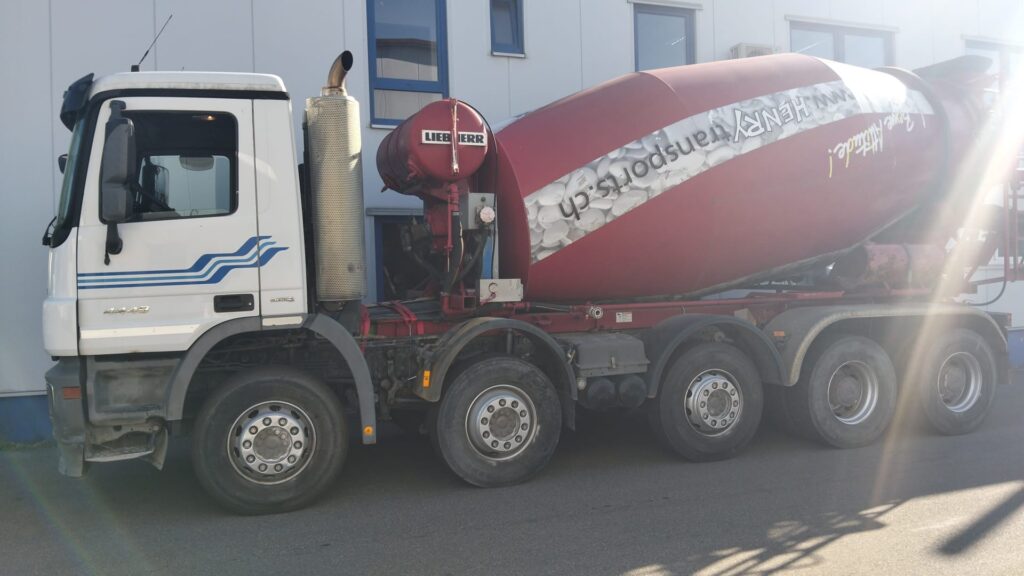
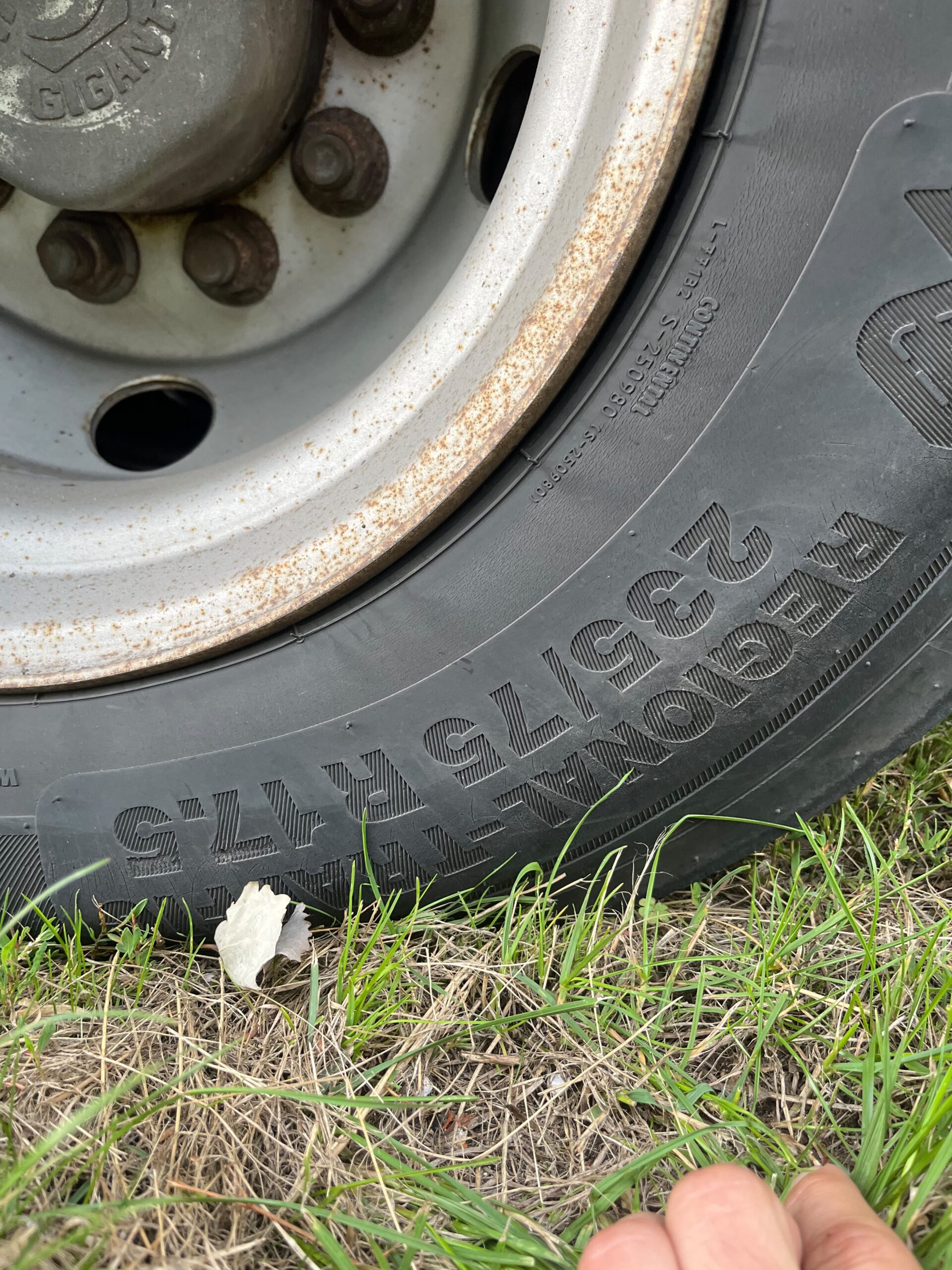
On the afternoon of 29 July 2026, the dashboard of a Renault tractor unit travelling on the A44 near Kassel, direction Dortmund, showed an abnormal AdBlue consumption warning and automatically limited road speed to 20 km/h. The driver of a semi-trailer combination with foreign plates managed to pull safely onto the hard shoulder and secure the vehicle.
On-site diagnostics confirmed what the pattern already suggested: no mechanical fault in the SCR system, but a quality problem with the fluid that had been topped up. According to the driver, he had recently refilled from an unbranded, unpressurised canister at a rest stop — no ISO marking, no manufacturer name, and noticeably cheaper than the pump.
What is AdBlue by standard, and why does concentration matter so much?
AdBlue is an aqueous urea solution with an exact 32.5% urea concentration, standardised under ISO 22241. That figure isn’t a rough guideline — it’s a physical requirement. At 32.5%, the urea-water mixture reaches its lowest possible freezing point (around -11°C), and only at that exact ratio does the fluid convert correctly to ammonia inside the SCR catalyst, which then reduces nitrogen oxides into water and nitrogen.
Any deviation disrupts that chemistry. Too much water lowers the reduction efficiency; the quality sensor picks up the drop and the ECU triggers limp-home mode. Too much urea, or contamination from other substances, encourages crystallisation and deposits inside the dosing system, which can permanently clog injectors and catalyst channels.
Why do drivers buy cheap AdBlue, and what does it actually cost them?
Unbranded, uncertified AdBlue canisters sold at truck stops or off-brand fuel stations look tempting when the tank runs dry far from a proper pump. The price gap is usually only a few euros per canister — and that’s exactly where the risk starts.
Diluted or contaminated AdBlue causes deposits inside the SCR catalyst, blocked injector nozzles, and lasting damage to the whole exhaust after-treatment system. A replacement SCR catalyst on a heavy truck runs into several thousand euros, plus downtime, towing, and lost freight revenue. The saving on a cheap canister — typically €3 to €8 versus a branded product — never comes close to covering the potential damage.
How can you spot bad-quality AdBlue?
Poor AdBlue is often identifiable before it ever goes near the tank, once a driver knows the warning signs:
- Cloudiness or visible sediment — genuine AdBlue is clear and colourless, like water.
- Sediment sitting at the bottom of the canister — a sign of contamination or breakdown.
- No ISO 22241 marking printed on the label.
- No expiry date, or a smudged, unreadable one.
- Suspiciously low price compared with branded product at the same stop.
- Loose or bulk product poured from drums with no manufacturer documentation.
Any single sign on its own isn’t conclusive, but each additional one raises the risk sharply. In this case, the canister carried neither the ISO marking nor a legible expiry date.
How long does AdBlue last, and how should it be stored?
AdBlue measurably degrades above 30°C and in direct sunlight, because urea slowly breaks down into ammonia and carbon dioxide. Kept sealed and cool, a canister typically has a shelf life of 12 to 18 months according to manufacturer data.
The practical point most drivers underestimate: a spare canister left open in the cab, or on a sun-baked footwell, can lose measurable concentration within a single week during summer, when cab interior temperatures regularly hit 40°C or more. A spare canister belongs in a shaded, ventilated storage box, never on the dashboard or behind the windscreen.
How does water and dirt get into the AdBlue tank?
One overlooked route to contamination is the filler neck itself. Topping up in the rain without cover lets rainwater run into the tank and dilute the fluid. Equally risky are dirty funnels that were previously used for diesel or other liquids — even trace amounts of diesel or oil in the AdBlue system will destroy dosing valves.
Most trucks deliberately fit a narrower AdBlue filler neck than the diesel one, precisely to prevent mix-ups. Even so, the cap should go back on quickly after filling, particularly in rain or dusty, windy conditions.
How does the vehicle detect bad AdBlue, and why does the fault often appear only after hundreds of kilometres?
Modern lorries carry an AdBlue quality sensor inside the tank, usually combining ultrasonic measurement with temperature compensation to determine fluid density. From that density the control unit calculates urea concentration, since pure water, over-concentrated solution, and the correct 32.5% mix all produce distinct acoustic signatures. Component manufacturers such as Bosch build these combined sensors precisely because a simple level sensor can’t detect fluid quality.
That approach has one drawback: it reacts to the average mixture across the whole tank, not to whatever was just poured in. A small volume of diluted AdBlue added to an otherwise full tank barely shifts the overall reading — the warning threshold is only crossed once enough bad fluid has been added, or the original stock has been used down further. That’s exactly why the fault so often surfaces well after the actual refuelling stop, sometimes hundreds of kilometres down the road.
What should you do if bad AdBlue has been put in the tank?
Suspecting contaminated or diluted AdBlue calls for a clear sequence of steps:
- Stop as soon as it’s safe — hard shoulder or a proper lay-by, never mid-lane.
- Don’t keep driving, even though limp-home mode still allows 20 km/h — every kilometre run on bad fluid raises the risk of permanent catalyst damage.
- Drain and flush the tank fully to clear out any residue of the wrong fluid.
- Replace the filter in the AdBlue dosing module, since deposits settle there first.
- Refill with certified ISO 22241 AdBlue and have the technician reset the fault codes.
The cost comparison tells the story: a tank flush with filter replacement and fresh fluid sits in the low four figures. A replacement SCR catalyst adds several thousand euros on top of downtime. Acting early is always cheaper than driving on.
How was the assistance organised?
The driver reported the fault through our central emergency line. From that moment, the sequence ran as follows:
- Call logged, capturing location, vehicle type, and fault description.
- Nearest available technician from our partner network near Kassel identified.
- Job dispatched with fault details and exact position.
- Technician drove to the location and secured the site with a warning triangle and hi-vis.
- On-site diagnostics, tank flush, filter replacement, refill, and system reset.
Why can’t the limp-home mode simply be ignored?
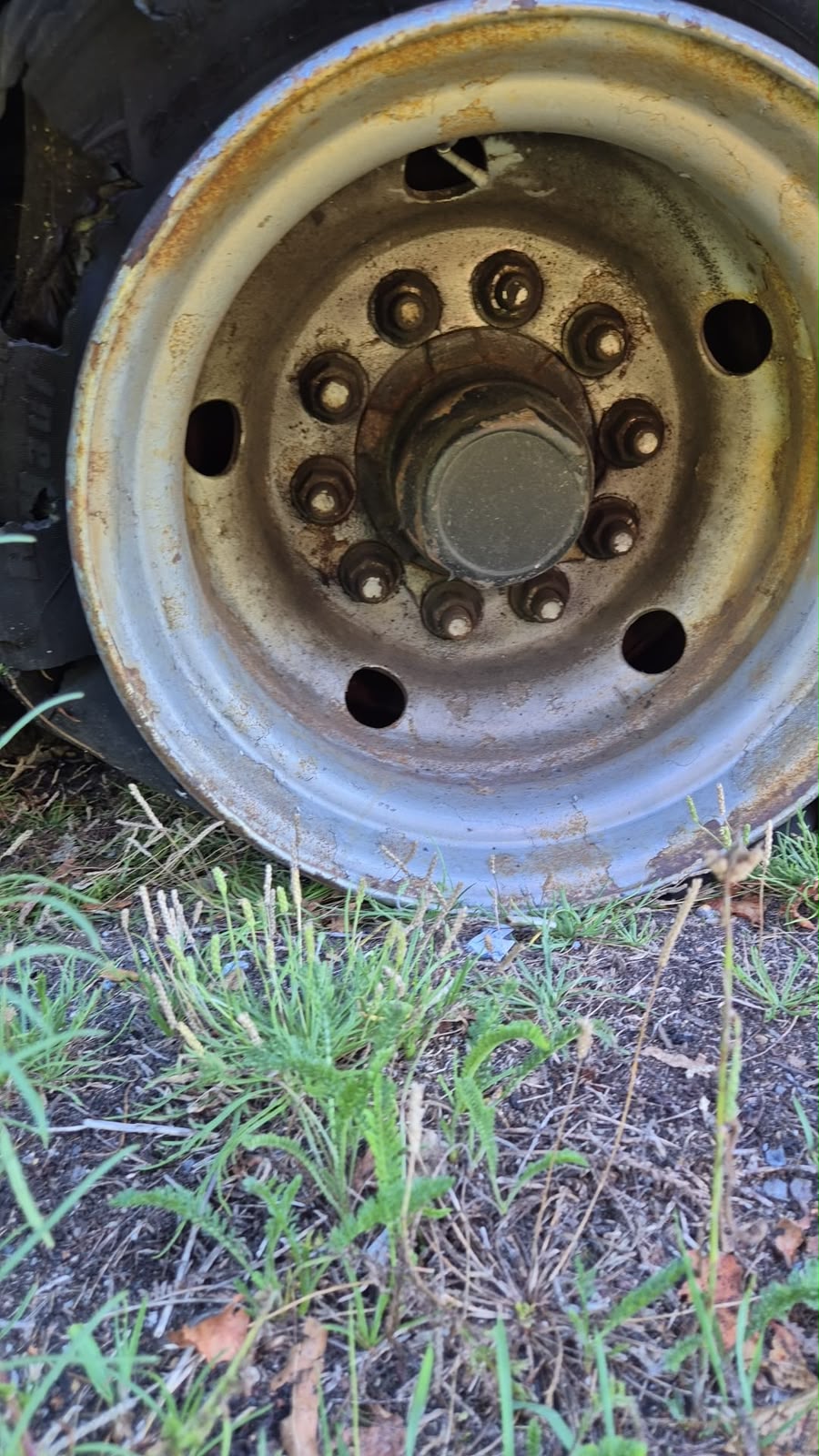
A lorry running at 20 km/h on a motorway is a hazard in its own right, regardless of the underlying technical cause. Stopping distances for traffic behind it, travelling at 100 or 120 km/h, shrink dramatically when a heavy artic is suddenly almost stationary in the lane. On top of that, continuing to drive on faulty AdBlue risks irreversible catalyst damage, turning what should be a few hours of downtime into several days while replacement parts are sourced.
Full timeline
| Time | Phase | Action |
|---|---|---|
| 11:42 | Call | Fault reported via the emergency line, location logged |
| 11:58 | Dispatch | Partner-network technician assigned (16 min) |
| 12:47 | Arrival | Technician reaches the A44 near Kassel (49 min transit) |
| 13:35 | Diagnostics | Fault codes read, AdBlue quality deviation confirmed |
| 14:20 | Repair | Tank drained, flushed, dosing-module filter replaced |
| 14:50 | Refill | Refilled with certified ISO 22241 AdBlue |
| 15:05 | Completion | System reset, test drive, fault cleared, cleared to continue |
Total time from call to departure: 3 hours 23 minutes. On-site working time: 2 hours 18 minutes.
What did the job cost?
| Item | Price (EUR, net) |
|---|---|
| Callout fee | 220 |
| Diagnostics (electrics/AdBlue system) | 150 |
| Tank drain and flush | 260 |
| New certified ISO 22241 AdBlue | 60 |
| Dosing-module filter replacement | 140 |
| Total | 830 |
All prices are net, plus VAT, and vary by time of day, day of the week, and site accessibility. For comparison, a day off the road costs a tractor unit roughly €800 to €1,200 in lost freight revenue depending on the load. The repair paid for itself the same day compared with a multi-day workshop job for an advanced catalyst failure.
Where should you refuel safely on the road?
The safest option is AdBlue pumps at major Autohöfe and branded fuel stations, which turn over large volumes and are inspected regularly. Any canister should carry the ISO 22241 mark along with the manufacturer’s name and an expiry date. Hang on to the receipt — if something goes wrong later, it’s the only proof of exactly what product was actually used, which matters for warranty or liability claims.
Why professional help beats a DIY fix?
Trying to drain or reset the AdBlue system without the right kit carries several risks at once: incomplete flushing that leaves residual contamination, damaged dosing-module seals from the wrong tools, and a fault code that simply won’t clear without a diagnostic reader — meaning the limp-home mode persists even after the underlying problem has been fixed. A proper truck breakdown assistance service carries the right diagnostic equipment and certified replacement fluid.
Typical AdBlue and SCR callouts across Germany
Beyond contaminated AdBlue, several related faults come up regularly on the road:
- Crystallised AdBlue in the dosing valve after extended cold-weather standing time.
- Damaged AdBlue lines from stone chips or corrosion.
- A failed quality sensor itself, independent of the fluid.
- A frozen filler neck in winter that makes topping up physically impossible.
Our mobile truck service covers all of these across the country, alongside our towing service for cases where the fault can’t be fixed roadside and the vehicle has to be recovered.
Prevention tips for drivers and fleets
- Buy AdBlue only from recognised branded pumps or sealed, certified canisters.
- Store spare canisters cool and shaded, never left in direct sun for long periods.
- Cover the filler neck when topping up in the rain, or use a proper rain guard.
- Never reuse a funnel that has previously handled diesel or oil.
- Keep AdBlue receipts for at least six months.
- React to the first dashboard warning instead of waiting for full limp-home mode.
Background: AdBlue, SCR, and the Euro VI standard
The SCR process (Selective Catalytic Reduction) has been mandatory for heavy goods vehicles across the EU since the Euro VI emissions standard came into force, in order to meet nitrogen oxide limits. Without a working AdBlue system and correct fluid quality, a lorry simply cannot meet those limits — which is why the limp-home mode is legally mandated and cannot be disabled. Related fleet topics such as winter tyre requirements for HGVs and maintenance scheduling tie directly into overall fleet reliability — a well-maintained SCR system visibly cuts unplanned downtime.
Why choose LKWHelp24?
We’re reachable around the clock, run a nationwide partner network with short response times even outside major cities, work with transparent fixed pricing and no hidden surcharges, and dispatch in multiple languages for international drivers.
FAQ — common questions about AdBlue limp-home mode and quality
What does it cost to fix an AdBlue limp-home fault caused by bad fluid?
On average around €830 net for callout, diagnostics, tank flush, filter replacement, and fresh AdBlue — far cheaper than a damaged catalyst, which runs into several thousand euros.
How long does the on-site repair take?
From the technician’s arrival to clearance to continue driving, expect roughly two hours; in this case it was 2 hours 18 minutes of on-site work.
Can I keep driving with AdBlue limp-home mode active?
Technically yes, capped at 20 km/h, but it’s strongly discouraged — every kilometre on bad fluid raises the risk of expensive, permanent catalyst damage.
How do I recognise counterfeit or diluted AdBlue?
Look for cloudiness, sediment, missing ISO 22241 marking, no expiry date, and a price noticeably lower than branded product at the same location.
Who’s liable if bad AdBlue damages the catalyst?
It depends on the case and whether the product can be traced — the receipt is the key piece of evidence against the seller or for an insurance claim.
How can fleets protect themselves from this problem?
Buy only ISO 22241-marked AdBlue from recognised pumps, store canisters cool, and brief drivers to act on the first dashboard warning rather than waiting.
Summary
- Vehicle: Renault tractor unit, fault: AdBlue quality deviation, limp-home 20 km/h
- Location: A44 near Kassel, direction Dortmund, 29 July 2026
- Response time: 49 minutes to technician arrival
- Total time: 3 hours 23 minutes from call to departure
- Cost: €830 net
- Secondary damage: none, thanks to stopping in time and repairing on site
Get help now
Every minute counts with an AdBlue limp-home fault, an SCR error, or any other motorway breakdown. Call us on +49 160 5753826 or visit www.lkwhelp24.com — available around the clock, across Germany. You’ll find more on our services on our contacts page.
Keywords: AdBlue limp-home mode | AdBlue quality | truck SCR system | diluted AdBlue | counterfeit AdBlue | mobile truck breakdown assistance | AdBlue tank flush | Euro VI emissions standard | AdBlue ISO 22241 | A44 Kassel roadside assistance