Skip to content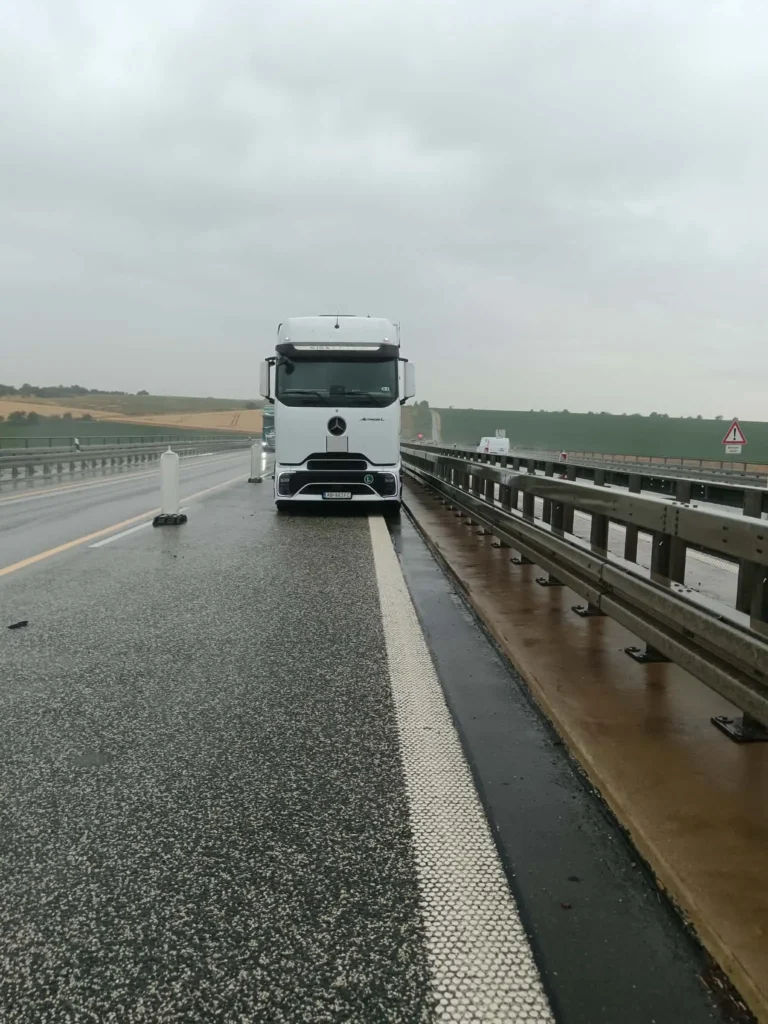
When a lorry loses drivetrain integrity on a country road outside Regensburg, the driver\’s options shrink to almost nothing. There is no roadside fix for a chassis or drivetrain fault. The vehicle has to be secured, assessed by a competent technician, and then moved — safely, and on a proper flatbed or heavy-duty tow rig — to a workshop that can actually repair it. This is the story of exactly that towing job: a mid-weight delivery lorry stranded on the edge of an industrial estate near Regensburg, Bavaria, and how LKWHelp24\’s partner network had it collected, secured and delivered to a workshop in under two and a half hours.
For hauliers and fleet managers, breakdowns like this are the ones that separate a well-run logistics operation from a chaotic one. A tyre blowout is inconvenient but usually fixable roadside within the hour. A drivetrain or chassis defect is different — the truck simply cannot move under its own power, and every extra minute it sits on a live carriageway or a poorly lit industrial road is a minute of exposure to secondary collisions, fines, and lost delivery windows. Getting a properly equipped recovery partner on site fast, with the right paperwork and the right equipment, is the only thing that turns a bad day into a manageable one.
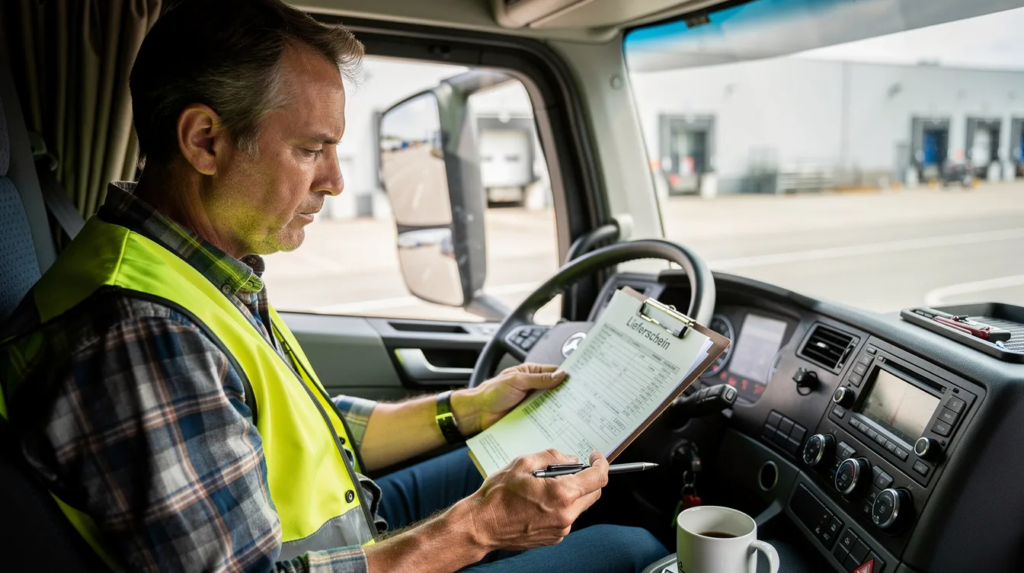
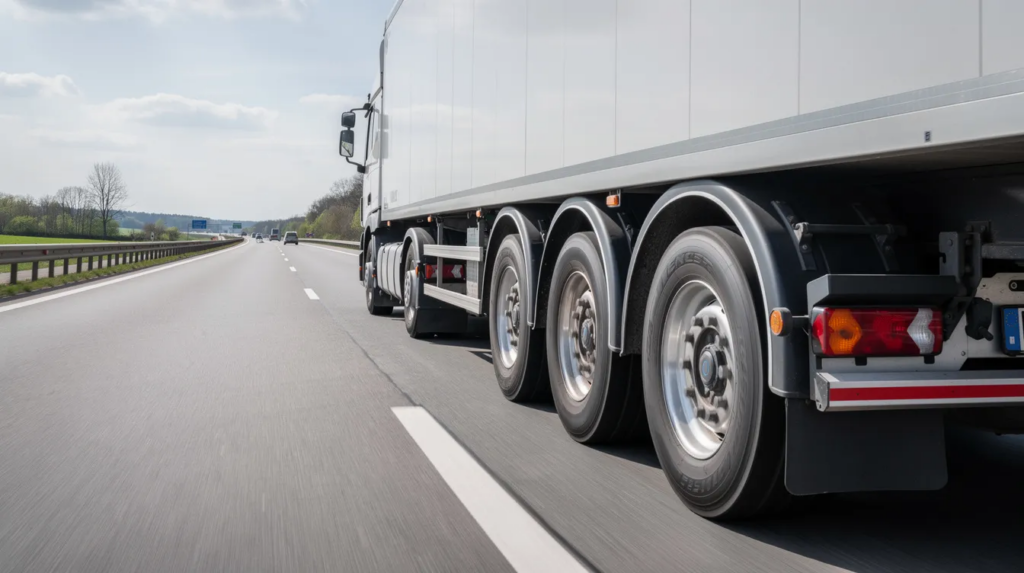
Truck with a technical fault near Regensburg – towed to the workshop by LKWHelp24.
The Emergency
The call came in just after eleven in the morning. A regional distribution lorry — a mid-weight truck running local delivery routes around the Regensburg area — had developed a serious mechanical fault somewhere in the drivetrain or running gear. The vehicle was no longer safe or possible to drive under its own power. The driver had done everything right: pulled the truck off the carriageway onto a section of road near a commercial estate outside the city, switched on the hazard lights, and put out a warning triangle.
This is the point where many drivers, especially under pressure to hit a delivery slot, are tempted to try something themselves — check a fluid level, kick a tyre, poke around under the vehicle to see if there\’s an obvious fix. With a drivetrain fault, this is close to pointless and can be genuinely dangerous. Drivetrain and chassis faults are frequently invisible from a quick visual check: a failing component under load can look completely normal at a standstill, only to fail catastrophically the moment the truck moves again. The correct call, and the one this driver made, was to stop, secure the vehicle, and get a professional assessment before anyone touched anything mechanical.
How Help Was Organised
LKWHelp24 operates a nationwide network of certified breakdown and recovery partners across Germany, which means that wherever a truck goes down — motorway, rural road, industrial estate, or town centre — there is usually a qualified team within a manageable radius. For this case near Regensburg, the dispatch process ran as follows:
● Driver calls the LKWHelp24 emergency line and describes the fault: truck immobile, suspected drivetrain or running-gear defect, location details given
● Dispatcher identifies the nearest available recovery and towing partner for the Regensburg area and confirms vehicle type, weight class, and access conditions at the scene
● Partner technician is briefed and dispatched with an estimated time of arrival communicated back to the driver
● Driver is talked through securing the vehicle correctly while waiting — hazard lights, warning triangle, wheel chocks if the vehicle is on any kind of incline
● On arrival, the technician carries out an on-site diagnostic check to confirm the fault is not something that can be resolved roadside
● Once confirmed as a workshop repair, the vehicle is prepared and loaded for towing to the nearest suitable partner workshop
● Paperwork, handover and confirmation of drop-off location communicated to the driver and dispatch throughout
This structured approach is precisely why professional recovery services outperform ad-hoc solutions. A driver ringing round local garages independently, hoping one of them happens to have towing capacity and available staff, can easily lose hours. A dispatched network, by contrast, already knows which partners are available, what equipment they run, and how far away they are — which is how this case moved from first call to workshop handover in under two and a half hours total.
The Situation On-Site
By the time the recovery technician arrived at around noon, the truck had been sitting immobile for roughly fifty minutes. The location — a stretch of road bordering a commercial/industrial zone outside Regensburg — was not a live motorway carriageway, which reduced the immediate collision risk, but it still carried real hazards: limited visibility for oncoming traffic, no hard shoulder to speak of, and a heavy vehicle blocking part of the usable road width.
The technician\’s first job on arrival was not to start diagnosing the fault, but to make the scene safe. That meant confirming the hazard lights and triangle were correctly positioned, checking the wheel chocks were properly set so the lorry could not roll, and assessing whether additional warning measures were needed given the road\’s traffic flow. Only once the immediate safety picture was under control did the diagnostic work begin.
The on-site check confirmed what the symptoms had already suggested: this was not a roadside-repairable fault. Drivetrain and running-gear problems on a commercial lorry typically involve components rated for very high loads and torque, and attempting any kind of temporary fix without full workshop diagnostic equipment, a lift, and the correct parts on hand is not something a competent technician will do — not because it is impossible in theory, but because doing it wrong on a vehicle of this weight class risks a far more serious failure once it\’s back on the road. The only sound decision, and the one made here, was to prepare the truck for towing.
Step-by-Step: How the Recovery Was Carried Out
Step 1 — Site assessment and safety check. The technician confirmed warning measures were adequate, checked the ground conditions around the vehicle, and planned the safest angle and method for hitching or loading the truck.
Step 2 — Diagnostic confirmation. A structured check ruled out anything that could realistically be fixed on the spot, confirming the fault sat in the drivetrain or chassis system and required full workshop attention.
Step 3 — Vehicle preparation for towing. Depending on the specific fault, this involves releasing or securing the affected axle or drive components so the truck can be towed or loaded without causing further mechanical damage — a step that matters enormously, since towing a vehicle incorrectly can turn a repairable fault into a written-off drivetrain.
Step 4 — Loading and securing. The lorry was loaded onto the recovery equipment and properly secured with rated straps and chains, following the same load-securing standards that apply to any heavy cargo on German roads.
Step 5 — Transport and handover. The truck was driven to the nearest suitable partner workshop equipped to diagnose and repair the specific fault, with a full handover of the vehicle and the technician\’s findings so the workshop could begin work without duplicating the initial diagnostic effort.
Full Timeline
| Time | Phase | Action |
|---|---|---|
| 11:10 | Call received | Driver contacts LKWHelp24 emergency line, reports immobile lorry |
| 11:22 | Partner dispatched | Recovery partner for Regensburg area confirmed, ETA given |
| 12:00 | On site | Recovery technician arrives at the scene |
| 12:12 | Secured & diagnosed | Vehicle safety-checked, fault confirmed as not roadside-repairable |
| 12:35 | Prepared for towing | Drivetrain/chassis secured for safe transport |
| 12:55 | Loaded | Vehicle loaded and strapped down, departs scene |
| 13:30 | Handover | Truck delivered to partner workshop |
Total elapsed time: approximately 2 hours 20 minutes from first call to workshop handover, with roughly 55 minutes spent on-site securing and preparing the vehicle.

Cost Breakdown
| Item | Price (EUR) |
|---|---|
| Call-out fee, 24/7 recovery service | 170 |
| Towing of lorry to workshop | 520 |
| Securing and preparation works | 130 |
| TOTAL | 820 EUR |
Recovery pricing for commercial vehicles depends on several variables: distance to the nearest suitable workshop, the vehicle\’s weight class, how long the standing time at the scene runs, and whether any special preparation work (like releasing a locked axle) is required before the truck can move at all. A short local tow with straightforward loading will sit at the lower end of the range; a heavy vehicle requiring extended preparation and a longer transport distance will cost more. What stayed constant here, as with all LKWHelp24 jobs, is that the price was communicated up front — no surprises on the invoice at handover.
Compare this to the alternative: a driver trying to arrange independent towing by phoning around local garages, many of which do not carry heavy-recovery equipment for commercial vehicles at all. Beyond the wasted hours, there is a real risk of ending up with an operator who under-secures the load or lacks the correct rated equipment for a lorry of this weight — a mistake that can cause additional chassis or bodywork damage during transport, adding cost rather than saving it.
Why a Professional Recovery Service Is Essential
Trying to manage a drivetrain or chassis breakdown without a properly equipped partner carries several distinct risks:
- Structural damage during improvised towing. Towing a lorry incorrectly — wrong attachment points, wrong angle, unreleased drive components — can convert a repairable fault into a total drivetrain failure.
- Legal exposure. An improperly secured or improperly warned breakdown vehicle on German roads can result in fines, and in the event of a secondary collision, liability questions get considerably more complicated.
- Load and cargo risk. If the lorry was carrying goods, an unsecured or improperly handled recovery increases the chance of cargo shift or damage during transport.
- Wasted time. Ringing round independently for a garage with the right heavy-recovery capacity routinely costs hours that a dispatched partner network avoids entirely.
- Safety of the driver and other road users. A stranded lorry on a road with limited visibility is a hazard until it is properly secured and, ideally, cleared.
A certified recovery partner brings the right equipment, the right documentation, and — critically — the judgement to know when a fault is workshop-only rather than something to fiddle with by the roadside.
Typical Breakdown Situations We Handle
LKWHelp24\’s partner network across Germany covers the full range of commercial vehicle breakdowns, not just towing after a drivetrain fault:
- Tyre blowouts and punctures on motorways and rural roads
- Battery failure and jump-start assistance
- Diesel system faults, including fuel line bleeding after running dry
- Charge air hose and turbo system failures
- Engine overheating and coolant system faults
- Electrical faults preventing the vehicle from starting or running safely
- Heavy recovery after accidents, including car-transporter and multi-axle lorries
- Full towing and recovery to a workshop, as in this case, when a fault cannot be resolved roadside
Because the network spans the whole country, response times stay reasonable whether the breakdown happens on a major autobahn corridor or, as here, on a quieter road near a regional city like Regensburg.
Prevention Tips for Drivers and Fleet Managers
While a sudden drivetrain fault is not always foreseeable, a number of habits reduce both the frequency and the severity of breakdowns like this one:
- Stick to manufacturer-recommended service intervals for drivetrain and running-gear inspection, not just oil changes
- Log and act on early warning signs — unusual noises, vibration under load, or dashboard warning lights — rather than waiting for a full failure
- Keep a breakdown emergency kit in the cab: warning triangle, hazard vest, wheel chocks, torch
- Save the LKWHelp24 emergency number in the cab and in the fleet\’s driver handbook so there is no delay finding help under stress
- For fleet operators, track recurring fault patterns across vehicles of the same model — a repeated drivetrain issue across a fleet often points to a maintenance interval that needs tightening

Fleet Maintenance and Tyre Options: The Bigger Picture
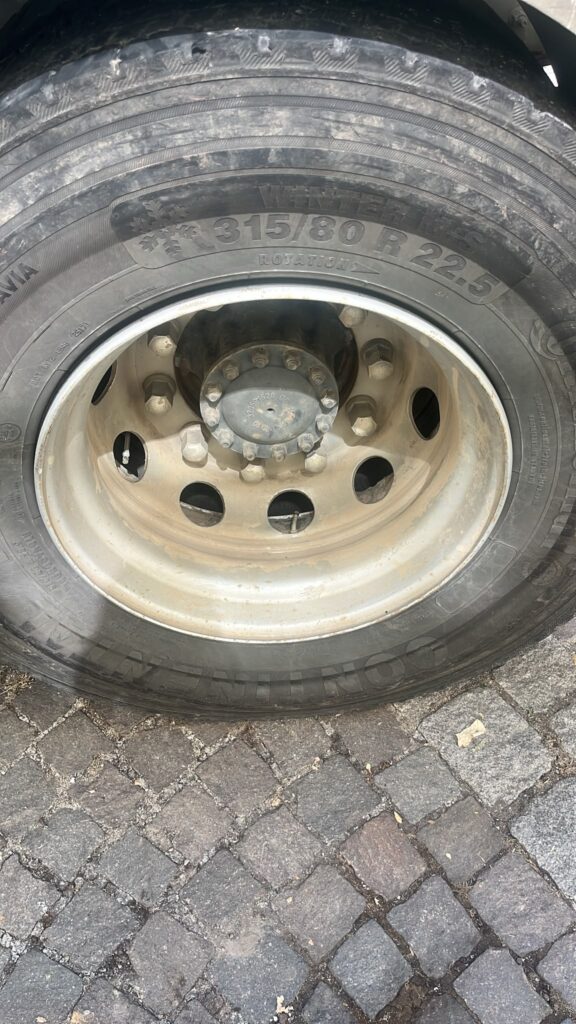
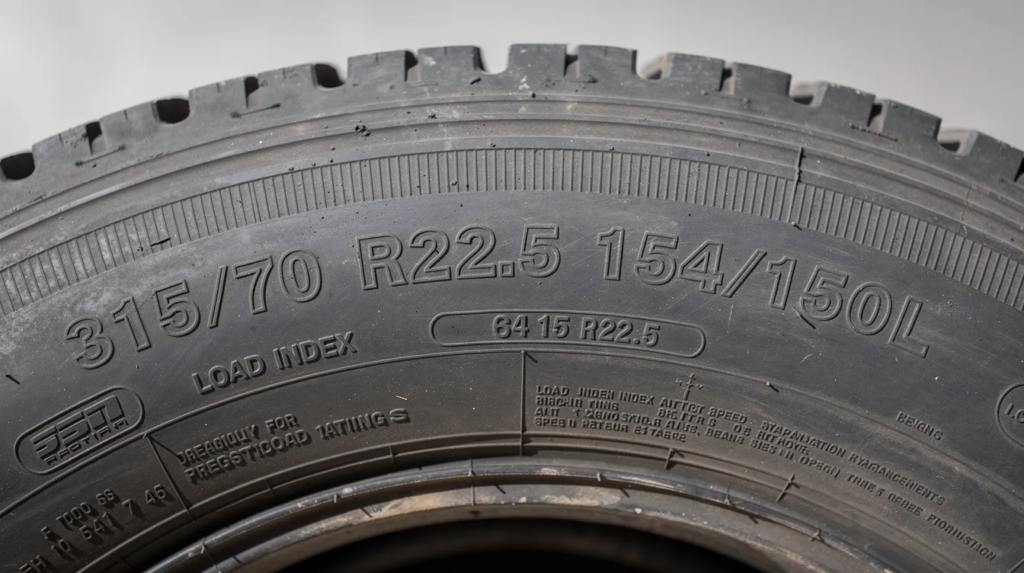
While this particular case involved a drivetrain fault rather than a tyre, fleet managers reading this will know that tyre-related breakdowns remain, statistically, the single most common roadside call-out for commercial vehicles. Choosing the right tyre brand for a fleet\’s duty cycle — Michelin for long-haul mileage efficiency, Continental for a strong balance of wet-grip and wear life, Goodyear for regional and mixed-use fleets — has a measurable effect on breakdown frequency over the life of a vehicle. A fleet that standardises on a single, well-matched tyre brand across its lorries also simplifies stock-holding for mobile tyre service, meaning faster roadside replacement when a blowout does happen.
The same logic applies more broadly to fleet maintenance: a lorry with a documented, consistent service history is statistically far less likely to suffer the kind of sudden drivetrain failure seen in this case. Preventive maintenance costs money and downtime in the short term, but it is reliably cheaper than an unplanned recovery call-out plus workshop diagnostic time plus a missed delivery window. For fleets running dozens of vehicles, even a modest reduction in breakdown frequency through better maintenance discipline pays for itself within a year.
LKWHelp24: Your Truck Emergency Partner
LKWHelp24 exists for exactly this kind of situation — the moment a lorry stops being driveable and a driver or fleet manager needs a fast, reliable answer, not a long list of garages to call one by one.
- 24/7 availability, every day of the year, across all of Germany — a breakdown at 11 a.m. on a Tuesday gets the same response as one at 3 a.m. on a Sunday
- A certified partner network, meaning every technician dispatched is qualified and properly equipped for commercial vehicle recovery, not a generic car-towing operator out of their depth
- Transparent, up-front pricing, with costs confirmed before work begins — no surprise line items on the final invoice
- Multilingual dispatch and support, reflecting the reality that international hauliers and drivers cross German roads every day
- Nationwide coverage, from major motorway corridors to regional roads near cities like Regensburg, so response times stay realistic wherever the breakdown happens
- A single point of contact from first call through to workshop handover, removing the burden of coordinating recovery, paperwork, and communication from an already stressed driver
Summary
- Location: Commercial/rural road near Regensburg, Bavaria
- Vehicle: Mid-weight regional delivery lorry
- Fault: Technical drivetrain/chassis defect, vehicle not driveable
- Response time (call to arrival): 50 minutes
- Total time (call to workshop handover): approximately 2 hours 20 minutes
- On-site time: approximately 55 minutes
- Total cost: 820 EUR
- Secondary damage: None
Request Emergency Assistance Now
If your lorry breaks down anywhere in Germany, don\’t waste time phoning round local garages. Call the team that already knows which certified partner is closest to you.
Call +49 160 5753826 or visit lkwhelp24.com
Available 24/7 across all of Germany
You might also be interested in
- Heavy Recovery on the A8 Near Stuttgart: Scania Loaded onto a Car Transporter
- Truck Recovery on the A7 Near Kassel After a Charge Air Hose Failure
- Emergency Diesel Delivery for a MAN Lorry: Bleeding the Fuel System on the Motorway
- ADAC Guide to Truck Breakdown Assistance in Germany
- ADAC Guide to Towing and Recovery