Skip to content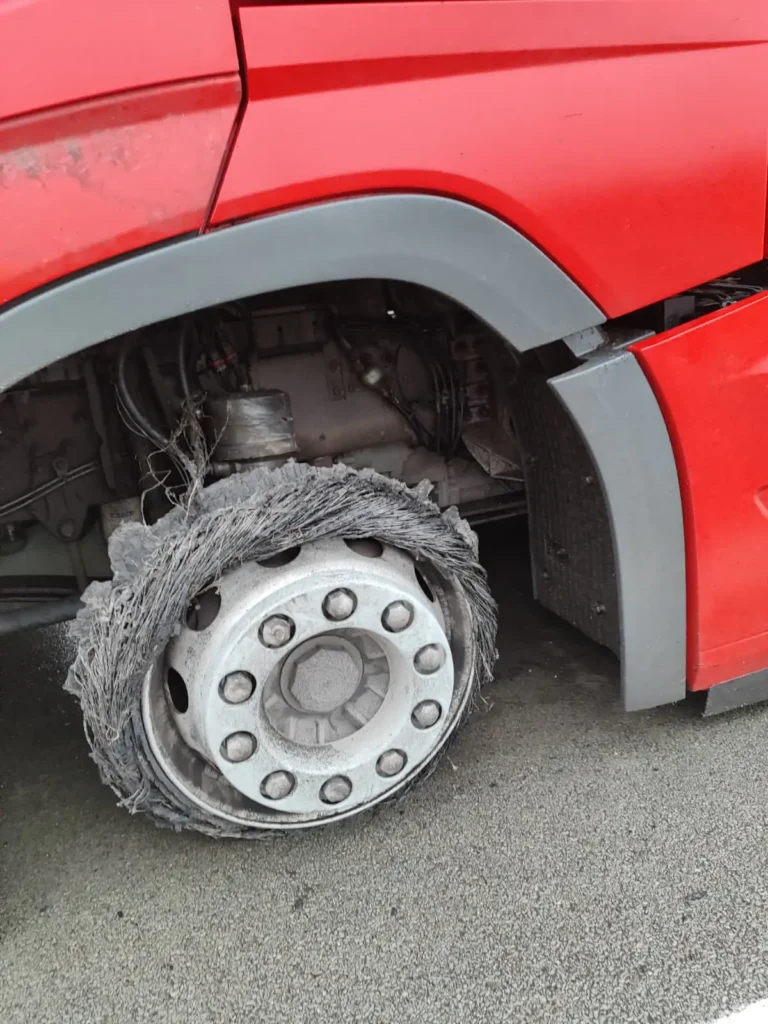
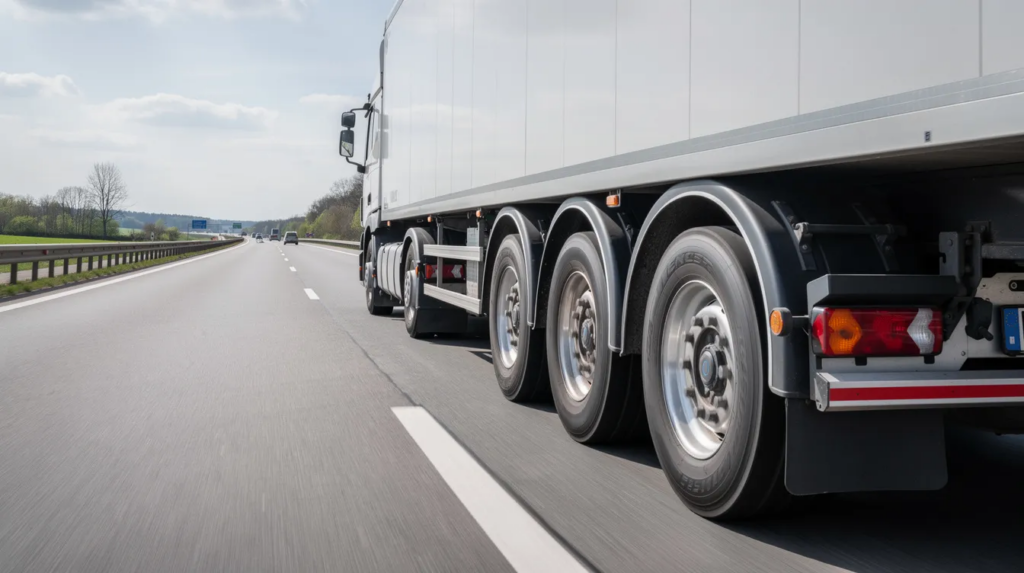
When a steering-axle tyre lets go on a laden 40-tonne artic doing motorway speed, there is no such thing as a minor inconvenience. The driver loses a chunk of directional control at the exact moment he needs it most, the vehicle has to be brought to a stop on a hard shoulder with lorries thundering past at 130 km/h, and every minute spent standing there waiting for help is a minute lost against a delivery window that someone, somewhere, is watching on a screen. This is the story of one such breakdown: a Volvo FH 460 I-Save tractor unit, running international long-haul with a fully loaded semi-trailer, brought to a standstill on the A9 near Nuremberg by a catastrophic steering-axle blowout.
n\\n
It is also a story about what a well-run breakdown network can do when it works properly. From the driver\’s first phone call to the moment his lorry was cleared to rejoin the carriageway, less than two hours passed. No secondary damage, no towing, no overnight delay in a lay-by wondering when — or whether — anyone was coming. That is the standard LKWHelp24 sets for itself on every call-out across Germany, and this case shows exactly how it gets delivered in practice.
n\\n
If you are a fleet manager, an owner-driver, or a dispatcher reading this because you are trying to work out what happens when one of your trucks suffers a tyre failure on a German motorway, this article walks through the whole job in detail: what went wrong, how the response was organised, what the repair actually involved, what it cost, and what you can do to reduce the odds of it happening to you.
n\\n
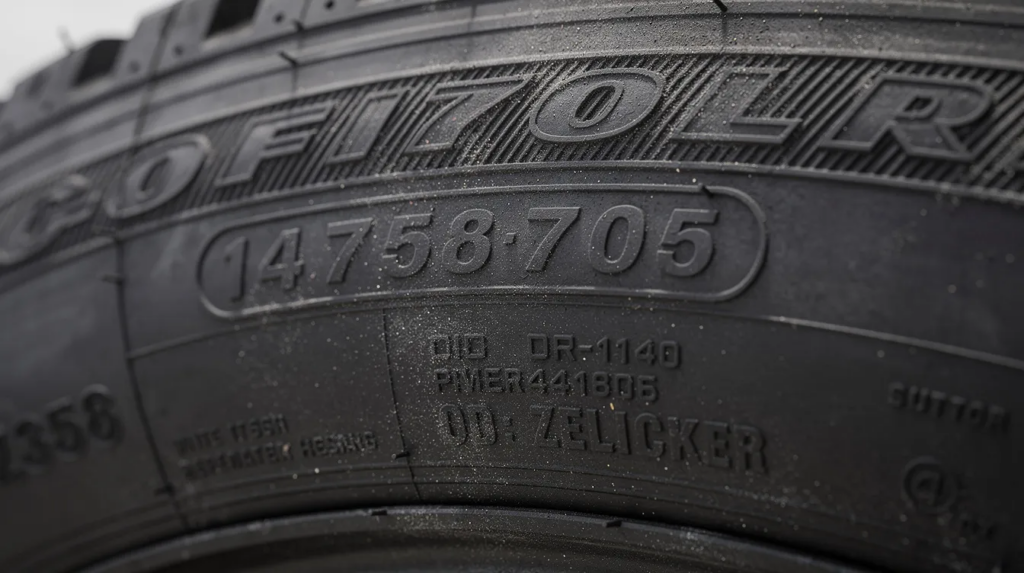
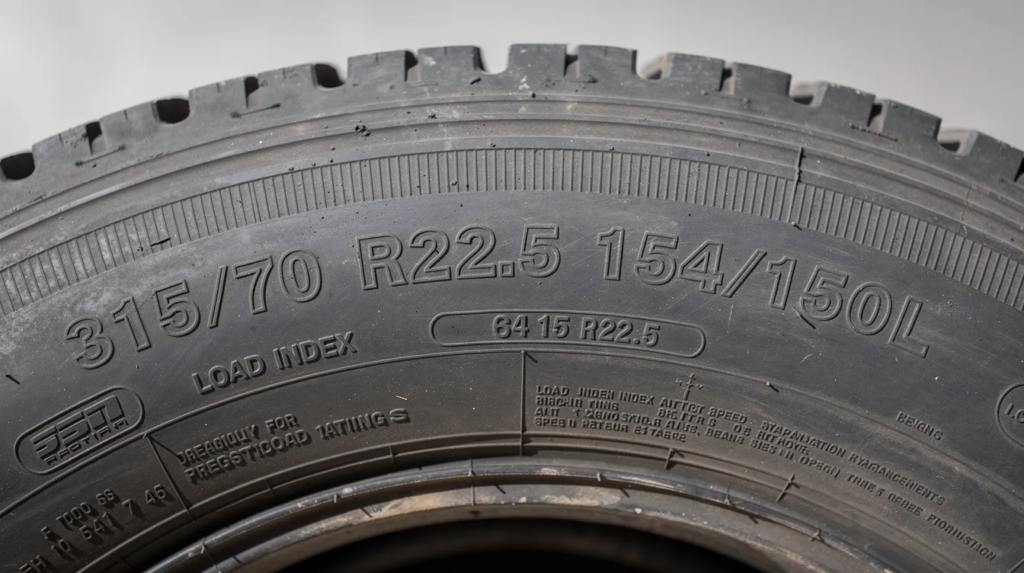
n\\nTruck tyre service on the A9 near Nuremberg – destroyed steer-axle tyre 315/70 R22.5 on a Volvo FH 460.
n\\n
The Emergency: A Steering-Axle Blowout at Speed
n\\n
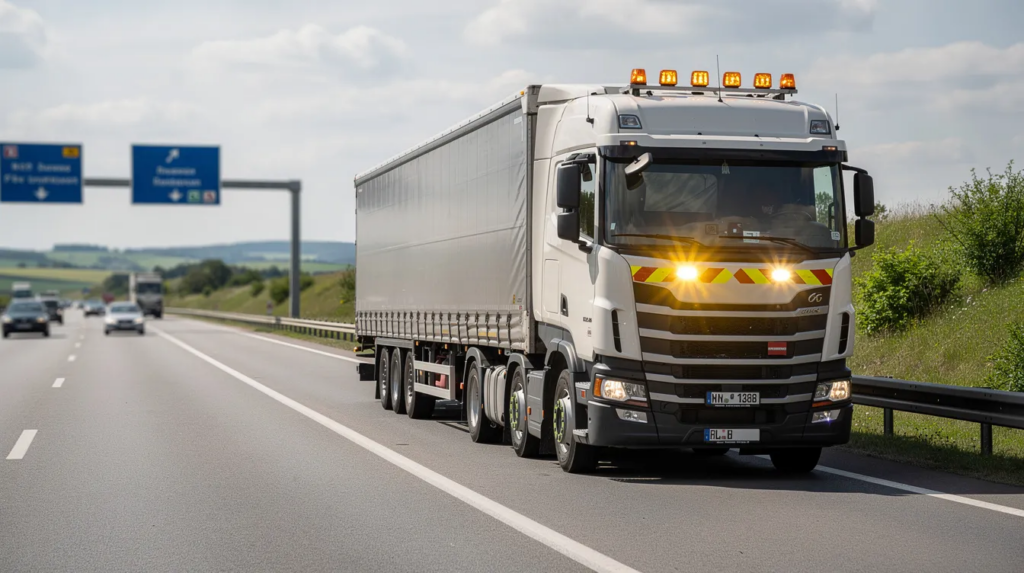
The vehicle involved was a Volvo FH 460, a workhorse of European long-distance haulage and one of the most common tractor units you will see on German autobahns. This particular truck was running an international route, pulling a fully laden semi-trailer with a combined weight in the region of 40 tonnes — right at the legal limit for standard combinations. That detail matters, because the forces acting on a steering-axle tyre carrying that kind of load, at motorway speed, are not trivial.
n\\n
The failure happened on the A9, on the hard shoulder near Nuremberg, heading in the direction of Munich. The tyre in question was a 315/70 R22.5 154/150L — a standard steering-axle fitment for a tractor unit of this size, but one that does an enormous amount of work: it steers the vehicle, it carries a disproportionate share of the front-end load, and unlike a drive-axle or trailer tyre, there is no twin fitted alongside it to share the burden if something goes wrong. When a steering tyre fails, it fails alone.
n\\n
And this one failed badly. The tread had separated completely from the carcass, and the carcass itself was shredded — the kind of destruction typically associated with a rapid, high-energy blowout rather than a slow puncture or gradual wear-out. The driver did the right thing: he felt the vehicle pull, recognised what was happening, and got the Volvo safely onto the hard shoulder before the tyre could do any further damage to the wheel arch, brake lines, or bodywork. The truck was, at that point, completely immobile. A tractor unit cannot legally or safely continue on a destroyed steering tyre, not even at reduced speed for a short distance to the next services. It was going nowhere until a new tyre was fitted.
n\\n
This is precisely the kind of scenario that separates roadside assistance done properly from roadside assistance done as an afterthought. A driver stranded on a live motorway hard shoulder, next to a heavy vehicle, in the flow of high-speed traffic, is in a genuinely dangerous position. Every minute matters — not just commercially, but for basic safety.
n\\n
How Help Was Organised
n\\n
The driver\’s first move was to call LKWHelp24. What happened next is the part most people never see, but it is the part that determines whether a breakdown becomes a fifteen-minute headache or an eight-hour nightmare.
n\\n
- n\\n
- The call was logged and the driver\’s location, vehicle type, and tyre specification were confirmed immediately, so the right partner with the right stock could be dispatched — no wasted trips with the wrong tyre size.
- LKWHelp24\’s network was checked for the nearest qualified truck tyre partner actually able to handle a steering-axle repair on a 40-tonne artic, not just any van with a compressor in the back.
- A regional LKW tyre partner covering the Nuremberg area was assigned and given the exact location, vehicle details, and tyre specification (315/70 R22.5) before setting off.
- An estimated time of arrival was communicated back to the driver straight away, so he was not sitting on the hard shoulder with no idea whether help was five minutes or five hours out.
- The partner was dispatched with the correct replacement tyre already loaded, avoiding a second trip back to the depot — a detail that, on its own, regularly saves an hour or more on jobs like this.
n\\n
n\\n
n\\n
n\\n
n\\n
n\\n
This is the whole point of running a partner network rather than a single fleet of vans: coverage. LKWHelp24 does not try to keep a truck tyre technician sitting idle in every town in Germany. Instead, it maintains relationships with certified regional partners across the country, so that whichever motorway a driver breaks down on, there is someone qualified and equipped within a realistic driving distance. For a case like this — steering axle, 315/70 R22.5, Nuremberg — that meant a partner who already had the right tyre on the van before they even left their yard.
n\\n

n\\n
The Situation On-Site: Why This Couldn\’t Wait
n\\n
By the time the service vehicle arrived, the picture was clear. This was not a job that could be talked down over the phone or deferred until the driver reached a workshop later in the week.
n\\n
A steering-axle tyre operates under sustained pressure, typically in the region of 8.5 to 9.5 bar for a heavy tractor unit, and it is the only thing standing between the driver\’s steering inputs and the road surface at the front of the vehicle. Unlike drive-axle or trailer positions, which are almost always fitted in pairs, a blown steering tyre leaves the front corner of the truck with zero support on that side. Continuing to drive — even slowly, even for a short distance — risks:
n\\n
- n\\n
- Total loss of steering control, particularly under braking or in a crosswind, both of which are common on open motorway sections like the A9.
- Damage to the wheel rim from running on a destroyed tyre carcass, turning a tyre replacement into a far more expensive wheel replacement.
- Damage to the wheel hub, brake components, or suspension linkage from an unbalanced or dragging wheel.
- A genuinely serious accident risk to the driver and to other motorists sharing that stretch of the A9.
n\\n
n\\n
n\\n
n\\n
n\\n
The technician\’s first task, before touching the tyre itself, was to properly secure the vehicle: hazard triangles and warning measures set out to protect the crew and the stranded lorry from passing traffic, and the tractor unit stabilised and jacked so the front axle could be worked on safely. Only once that was done could the actual repair begin.
n\\n
Step-by-Step: How the Repair Was Carried Out
n\\n
Step 1 — Assessment and securing the vehicle. The technician inspected the damage, confirmed the tyre was beyond any form of repair (there was, frankly, very little tyre left to assess), and set up the work area safely on the hard shoulder before anything else happened.
n\\n
Step 2 — Stabilising and jacking the vehicle. With warning measures in place, the Volvo was properly stabilised and the front axle jacked up so the wheel could be removed without risk of the vehicle shifting.
n\\n
Step 3 — Removing the destroyed tyre. The wrecked 315/70 R22.5 was demounted from the rim. This is where a lot of steering-axle blowouts turn expensive: if the impact has bent or cracked the wheel, the whole job changes scope. Here, the alloy rim was carefully inspected and found to be fully intact, and the wheel hub was checked and confirmed sound too — no secondary damage at all, which is genuinely the best-case outcome for a failure this severe.
n\\n
Step 4 — Fitting the new tyre. A new 315/70 R22.5 steering-axle tyre — a Continental Conti Hybrid HS3, chosen for its steering-axle durability and mileage — was mounted onto the existing rim, balanced, and inflated to the correct 8.5 bar operating pressure for this axle position and load.
n\\n
Step 5 — Torquing and final checks. Wheel nuts were tightened in the correct cross (star) pattern, to roughly 600–650 Nm, to ensure even clamping force across the hub — skipping this step, or tightening in a simple circular sequence, is one of the more common causes of wheel-related problems further down the line. A final inspection and documentation of the work completed the job, confirming the Volvo was safe and roadworthy again.
n\\n

n\\n
Full Timeline
n\\n
| Time | Phase | Action |
|---|---|---|
| 07:05 | Call received | Driver contacts LKWHelp24 |
| 07:16 | Dispatch | Regional partner assigned, ETA sent to driver |
| 07:52 | Arrival | Service vehicle reaches the A9 hard shoulder |
| 08:00 | Securing | Vehicle stabilised, wheel jacked up |
| 08:22 | Removal | Destroyed tyre demounted, rim inspected |
| 08:40 | Fitting | New tyre mounted, balanced, inflated to 8.5 bar |
| 08:52 | Verification | Torque checked in star pattern, final inspection and documentation |
| 08:55 | Completion | Vehicle roadworthy and cleared to depart |
n\\n
Total time from call to roadworthy: approximately 1 hour 50 minutes. Time on-site, from arrival to departure: roughly 55 minutes.
n\\n
For context, a steering-axle failure this severe, without a properly organised partner network, could easily mean several hours of waiting for the right technician and the right tyre size to be located — before any repair work even begins. Getting a laden 40-tonne artic back on the road inside two hours, from the first phone call, is the difference a proper dispatch system makes.
n\\n
Cost of the Call-Out
n\\n
| Item | Price (EUR) |
|---|---|
| Call-out / 24/7 motorway emergency service | 190 |
| Steering-axle tyre 315/70 R22.5 (Continental Conti Hybrid HS3) | 340 |
| On-site fitting and balancing | 90 |
| Old tyre disposal | 20 |
| TOTAL | 640 |
n\\n
A few things shape the final figure on a job like this. First, the axle position: steering-axle tyres carry a premium over trailer or drive-axle tyres because they are built to a higher specification for load-bearing and stability under steering forces — the Continental Conti Hybrid HS3 fitted here sits in that category, alongside comparable premium options such as the Michelin X Line Energy Z or the Goodyear KMAX S, both of which LKWHelp24\’s partners can also source depending on availability and brand preference. Second, motorway call-outs carry a genuine cost of their own: safely positioning a service vehicle on a live hard shoulder, with warning equipment and trained personnel, is not the same job as a routine fitment in a workshop yard. Third, time of day and location influence partner availability, though in this case the early-morning timing and the Nuremberg partner\’s proximity kept things moving quickly.
n\\n
Set against the alternative — a tow to the nearest workshop, a wait for a slot, storage or demurrage charges on the trailer, and a missed delivery window — €640 to get a fully loaded artic back on the road in under two hours is, in the overwhelming majority of cases, the cheaper outcome by a wide margin. It\’s also worth putting a number on what standing time actually costs a fleet: a stationary 40-tonne combination on a driver\’s paid clock, missing a delivery slot, frequently costs more per hour in lost productivity and penalty clauses than the entire repair invoice in this case.
n\\n

n\\n
Why a Professional Service Is Essential
n\\n
It might be tempting, especially for an experienced driver, to think about tackling a wheel change alone at the roadside. On a steering axle of a 40-tonne tractor unit, that is a genuinely bad idea, and here\’s why:
n\\n
- n\\n
- Weight and jacking risk. A loaded artic\’s front axle carries several tonnes even before you account for the trailer weight behind it. Jacking a vehicle this heavy without the right equipment, on a hard shoulder that may not be perfectly level, is dangerous.
- Wheel and hub inspection. A layperson cannot reliably assess whether a rim has been compromised by a violent blowout. Fitting a new tyre onto a cracked or bent rim is a serious safety risk that only becomes obvious once it\’s too late.
- Torque accuracy. Correct wheel-nut torque, applied in the right sequence, is not guesswork. Under-tightened or unevenly tightened wheel nuts are a leading cause of wheels working loose — sometimes not immediately, but days or weeks later, at speed.
- Live-traffic exposure. Working on a hard shoulder of a busy German motorway without proper warning equipment, hi-vis presence, and positioning experience puts the driver directly in the path of passing HGVs.
- Legal and insurance considerations. An improperly executed roadside repair can affect liability in the event of a subsequent incident, and may not satisfy the documentation requirements some fleet insurers expect after a tyre failure.
n\\n
n\\n
n\\n
n\\n
n\\n
n\\n
A steering-axle blowout is one of the clearest cases where calling a qualified truck tyre service, rather than attempting a DIY fix, is not just sensible — it\’s the only responsible option.
n\\n
Typical Breakdown Situations We Handle
n\\n
This Nuremberg case is one example of a call-out type that LKWHelp24\’s partner network handles across the whole of Germany, every day, around the clock. Common scenarios include:
n\\n
- n\\n
- Steering-axle and drive-axle tyre blowouts on motorways and trunk roads
- Trailer tyre failures on semi-trailers and drawbar combinations
- Mobile tyre replacement and wheel changes for tractor units, buses, and coaches
- Puncture repair and tyre pressure emergencies discovered at rest stops
- Battery replacement and jump-starts for stranded commercial vehicles
- Recovery and towing coordination when a repair on-site is not possible
- Emergency dispatch for international drivers unfamiliar with the local network
- Fleet-wide breakdown cover for logistics operators running multiple routes across Germany
n\\n
n\\n
n\\n
n\\n
n\\n
n\\n
n\\n
n\\n
n\\n
Whatever the vehicle and whatever the location — an autobahn hard shoulder, a Raststätte, an industrial estate car park — the same principle applies: fast diagnosis, the right partner with the right parts, and a repair carried out to a standard that keeps the vehicle safe for the rest of its journey.
n\\n

n\\n
Prevention Tips for Drivers and Fleets
n\\n
No amount of good breakdown response replaces prevention, and there is a genuine amount fleets and drivers can do to reduce the odds of a steering-axle failure like this one:
n\\n
- n\\n
- Check tyre pressure before every long haul, and ideally at every fuel stop on multi-day routes. Steering-axle tyres running at 8.5–9.5 bar are unforgiving of under-inflation, which builds up heat and accelerates carcass failure long before the tread visibly shows it.
- Inspect tread and sidewalls visually at every stop, looking specifically for cuts, bulges, or uneven wear patterns that hint at alignment or pressure issues.
- Don\’t ignore vibration or pulling. A subtle steering pull or unusual vibration at speed is very often the early warning sign of a tyre that is about to fail, not a random quirk of the road surface.
- Replace steering-axle tyres proactively, not reactively. Given the consequences of a steering-tyre failure, most professional fleets replace these tyres on a tighter mileage or age schedule than trailer or drive-axle tyres, even if there\’s tread depth remaining.
- Keep documentation of tyre age and fitment dates. A tyre that looks fine visually can still be past a safe service life, particularly on vehicles covering high annual mileages on German and European motorway networks.
- Know your breakdown provider\’s number before you need it. In the moment a tyre blows on a live carriageway, the last thing a driver wants to be doing is searching for a phone number. Saving LKWHelp24\’s emergency contact in advance means help is one call away, day or night.
n\\n
n\\n
n\\n
n\\n
n\\n
n\\n
n\\n
Fleet Maintenance and Tyre Brand Considerations
n\\n
For fleet operators managing multiple Volvo, Mercedes, MAN, DAF, or Scania tractor units across long-haul European routes, tyre strategy is a genuine line item worth taking seriously rather than treating as an afterthought. Steering-axle tyres in the 315/70 R22.5 size, as fitted here, sit at the premium end of the market for good reason — brands like Continental, Michelin, and Goodyear invest heavily in carcass construction specifically to resist the kind of catastrophic separation seen in this case.
n\\n
The Continental Conti Hybrid HS3 fitted to this Volvo FH 460 is designed as a dual-purpose steering and trailer tyre with a focus on mileage and even wear across mixed motorway and regional routes — a sensible choice for an international haulier covering varied terrain. Fleets that prefer to standardise on a single brand across their steering axles often weigh it against the Michelin X Line Energy Z, known for low rolling resistance and fuel economy over very high annual mileages, or the Goodyear KMAX S, which tends to be favoured by operators prioritising wet-grip performance and steering precision on mixed European road surfaces. None of these is objectively \”correct\” — the right choice depends on route profile, average load, and how a fleet balances upfront tyre cost against total cost of ownership over the tyre\’s working life.
n\\n
What matters more than brand loyalty, in practice, is consistency of inspection and a proactive replacement policy specifically for steering-axle positions, given how disproportionately dangerous a failure there is compared with a trailer or drive-axle blowout.
n\\n

n\\n
LKWHelp24: Your Truck Emergency Partner Across Germany
n\\n
Cases like this Nuremberg call-out are exactly why LKWHelp24 exists. A driver stranded on a hard shoulder with a destroyed steering tyre needs three things fast: someone who picks up the phone immediately, a genuinely nearby partner who is actually equipped for the job, and a repair carried out to a standard that holds up for the rest of the journey. Here\’s what that looks like in practice:
n\\n
- n\\n
- 24/7 availability, every day of the year, across the whole of Germany — motorways, trunk roads, industrial estates, and everywhere in between.
- A certified partner network, not a single overstretched fleet, meaning genuinely fast response times regardless of which region of the country a breakdown happens in.
- Correct tyre specifications sourced before dispatch, minimising wasted return trips and cutting overall downtime.
- Full transparency on pricing, with itemised costs agreed before work begins — no surprises on the invoice.
- Multilingual support, recognising that a large share of drivers on German motorways are international hauliers who may not speak German or English fluently.
- Documentation of every repair, giving fleet operators and insurers a clear record of what was done, when, and to what standard.
n\\n
n\\n
n\\n
n\\n
n\\n
n\\n
n\\n
Whether it\’s a Volvo FH 460 on the A9, a Mercedes Actros on the A2, or any other combination on any other route across the country, the same standard applies: get the driver moving again, safely, as quickly as possible.
n\\n
Summary
n\\n
- n\\n
- Vehicle: Volvo FH 460 I-Save tractor unit, laden semi-trailer, approx. 40 tonnes
- Tyre: 315/70 R22.5 154/150L, steering axle
- Location: A9 hard shoulder near Nuremberg, direction Munich
- Response time: call at 07:05, partner on-site by 07:52 (47 minutes)
- Total time, call to roadworthy: approximately 1 hour 50 minutes
- On-site repair time: approximately 55 minutes
- Total cost: €640, fully itemised
- Secondary damage: none — rim and wheel hub confirmed intact
- New tyre fitted: Continental Conti Hybrid HS3, 315/70 R22.5, inflated to 8.5 bar, torqued in star pattern
n\\n
n\\n
n\\n
n\\n
n\\n
n\\n
n\\n
n\\n
n\\n
n\\n

n\\n
Request Emergency Assistance Now
n\\n
If you\’re facing a truck breakdown anywhere in Germany — a tyre blowout, a battery failure, or any other roadside emergency — don\’t wait it out on the hard shoulder wondering what to do next.
n\\n
Call LKWHelp24: +49 160 5753826n\\nlkwhelp24.comn\\nAvailable 24/7 across all of Germany
n\\nn\\n
You Might Also Be Interested In
n\\n
- n\\n
- Truck Tyre Blowout on the Steering Axle: How Our Mobile Roadside Team Responds
- Mobile Truck Tyre Service: Trailer Blowout and Wheel Change Across Germany
- Mobile Truck Tyre Service on the Autobahn: Actros 2543 Wheel Change
- Truck Tyre Service Near Me: How LKWHelp24 Fixed a Semi-Truck Blowout on the A2 Near Hannover in 1 Hour 42 Minutes
n\\n
n\\n
n\\n
n\\n
n\\n
n\\n
Sources and related reading: Volvo Trucks Deutschland for full specifications on the Volvo FH range, and Continental Truck Tyres for technical details on steering-axle tyre options including the Conti Hybrid HS3 fitted in this case.