Skip to content
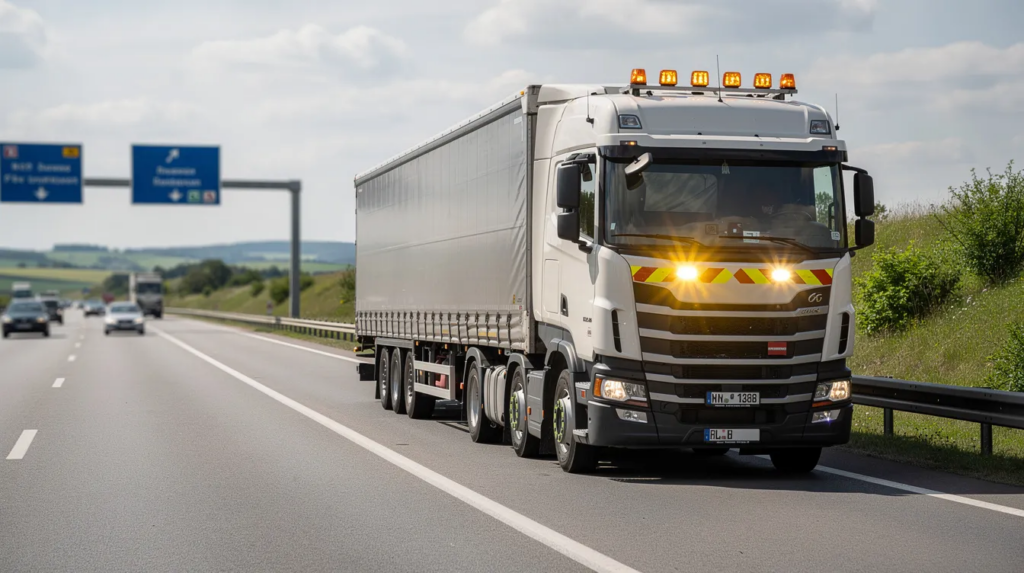
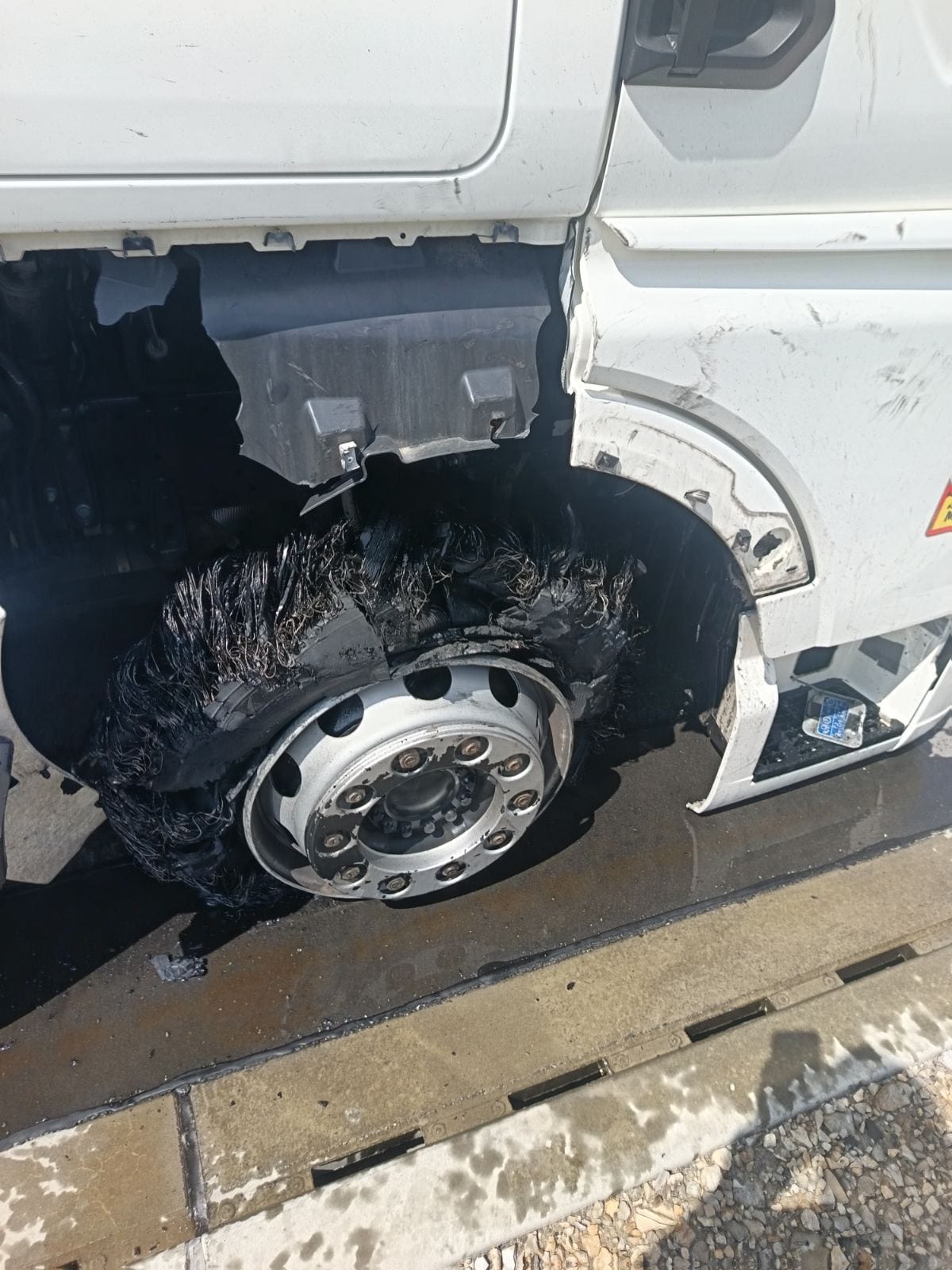
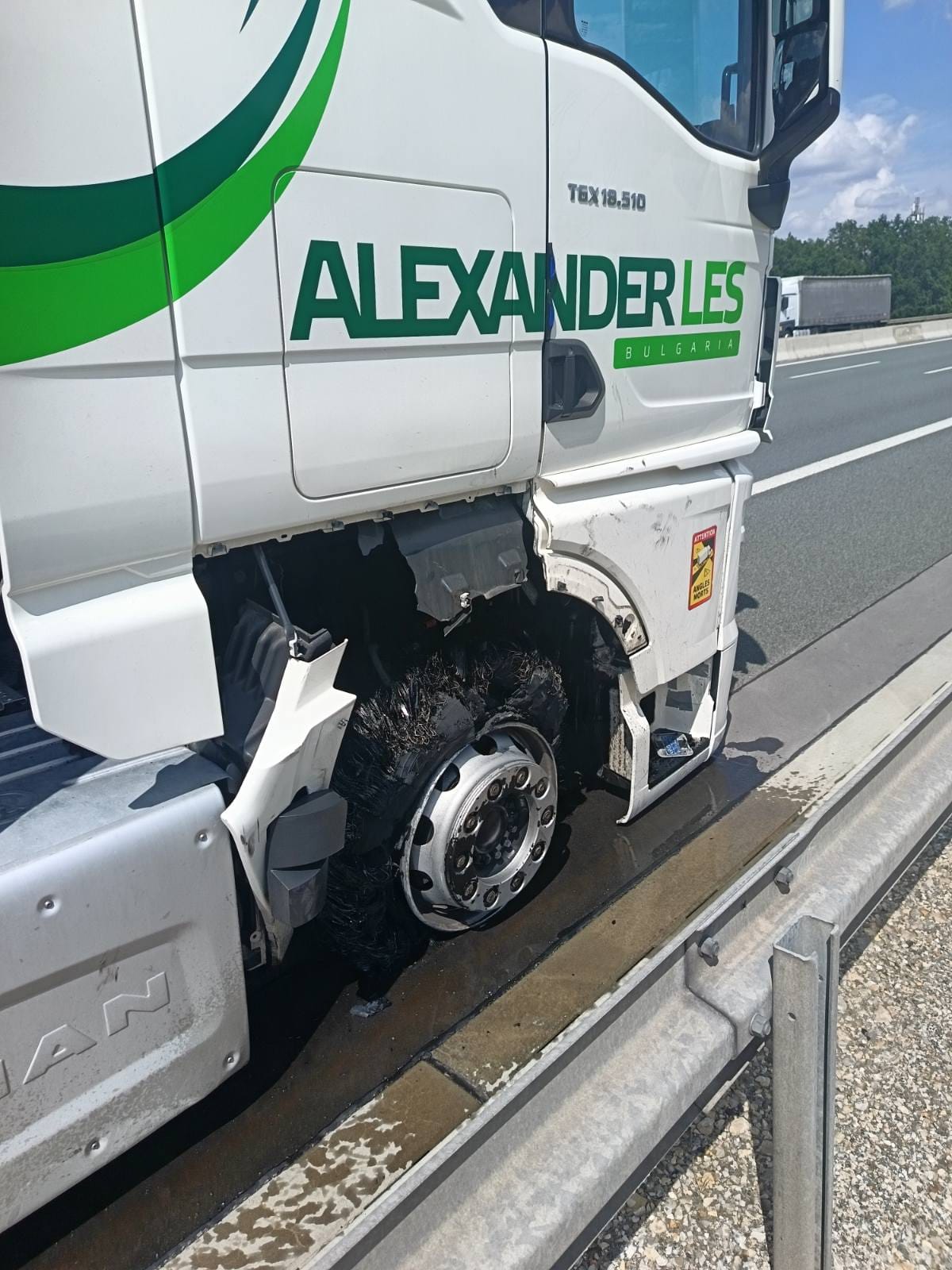
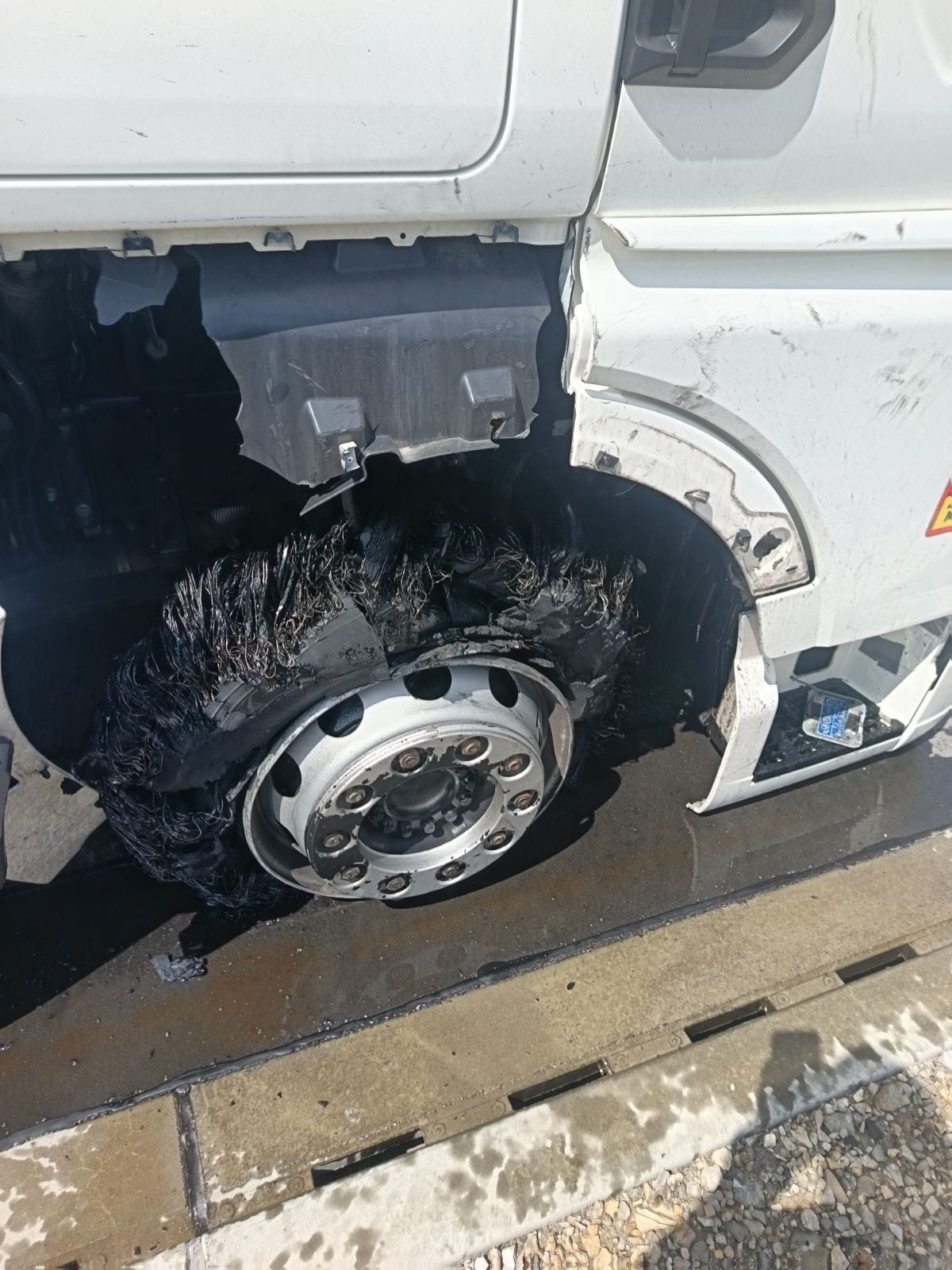
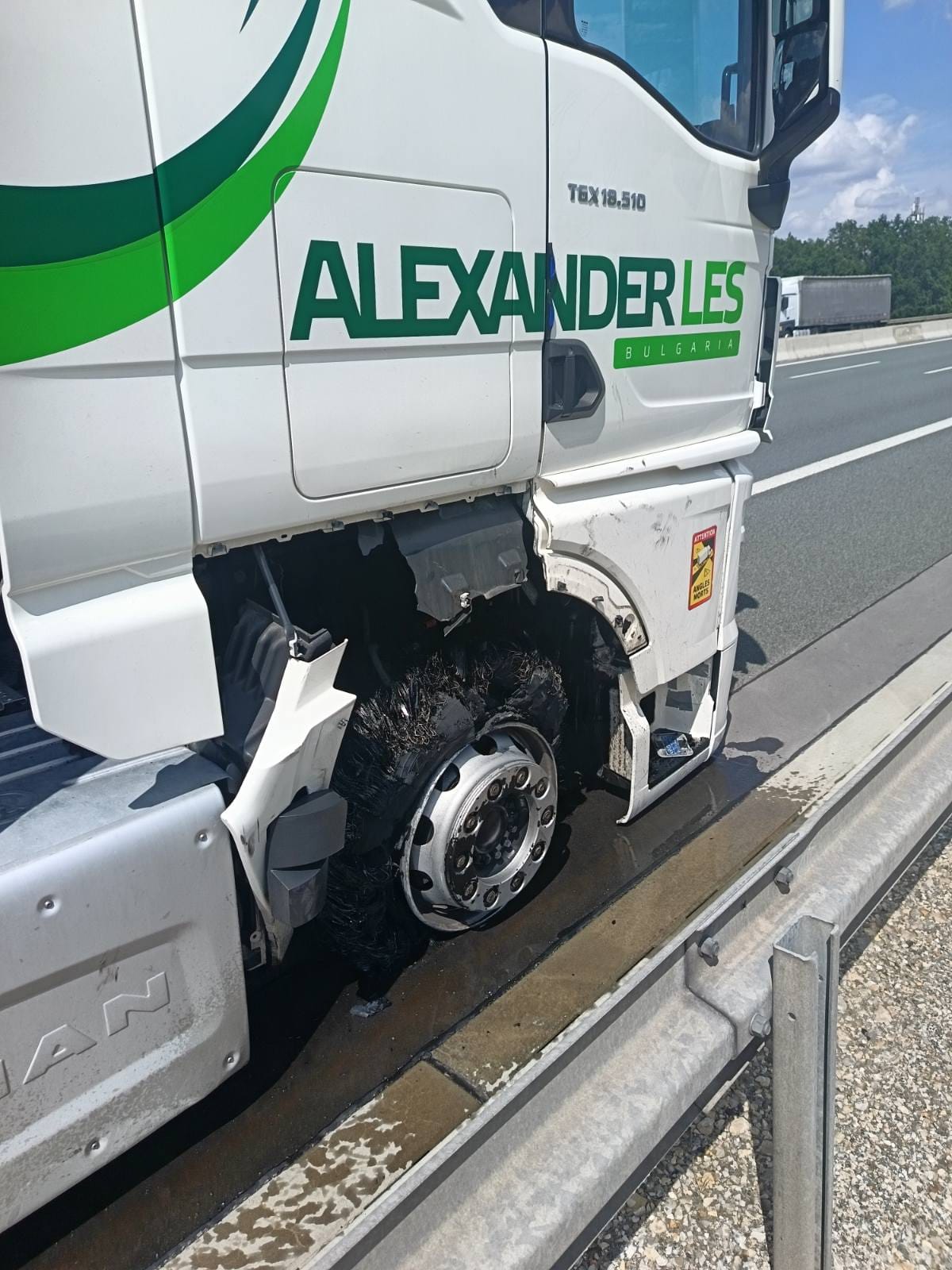
A Bulgarian international haulier was heading south on the A5 motorway near Müllheim, in South Baden, not far from the French border, when the driver noticed smoke coming from behind the cab. Within seconds it was clear that a drive-axle tyre on the MAN TGX articulated tractor unit had caught fire. The driver reacted correctly: he stopped, moved the vehicle as far from other traffic as the hard shoulder allowed, and used the onboard extinguisher to put the flames out before they could spread further.
By the time our team arrived, the fire was already extinguished, but the damage to the wheel, the wheel arch and the surrounding lines meant the lorry could not continue under its own power. This case illustrates a scenario that is more common on German motorways than many hauliers realise, and one that carries real risk if handled incorrectly in the first minutes after ignition.
This article covers what happened on the A5, why HGV tyres catch fire in the first place, why extinguishing the flames does not mean the danger is over, and what a professional recovery from a tyre fire actually involves — including our full timeline and cost breakdown for this specific job.
Emergency situation on the A5 near Müllheim
The call came in at 13:40. The driver reported a tyre fire on the drive axle of his MAN TGX, already extinguished with the vehicle’s own extinguisher, but the wheel and adjacent components were visibly damaged. The location was the A5 motorway near Müllheim, a stretch that carries heavy volumes of international transit traffic between the Rhine valley and the French border, and is a well-known bottleneck for breakdown response given its distance from major workshop hubs.
A tyre fire on a loaded articulated lorry is not a routine flat. Even once flames are out, the tyre carcass, the rim, the brake components and nearby air or fuel lines can be damaged or still hot enough to reignite. The driver had done the right thing by moving away from other vehicles and keeping people clear, which meant our team could focus immediately on assessment and safe recovery rather than on managing an active fire.
How the help was organised
Dispatch was handled through our regional partner network rather than a single fixed workshop, which lets us match the nearest available recovery unit to the exact type of damage reported. For a drive-axle tyre fire on a 40-tonne combination, that means sending a team equipped for wheel removal, cooling and heavy recovery, not just a standard tyre service callout.
Because the vehicle belonged to a Bulgarian carrier operating far from its home base, coordination also had to account for cross-border paperwork from the outset: insurance documentation, vehicle registration and CMR consignment details all needed to be checked before recovery could proceed to a workshop. This is a routine part of international HGV towing, but it adds a step that domestic breakdowns do not require.
Situation on site
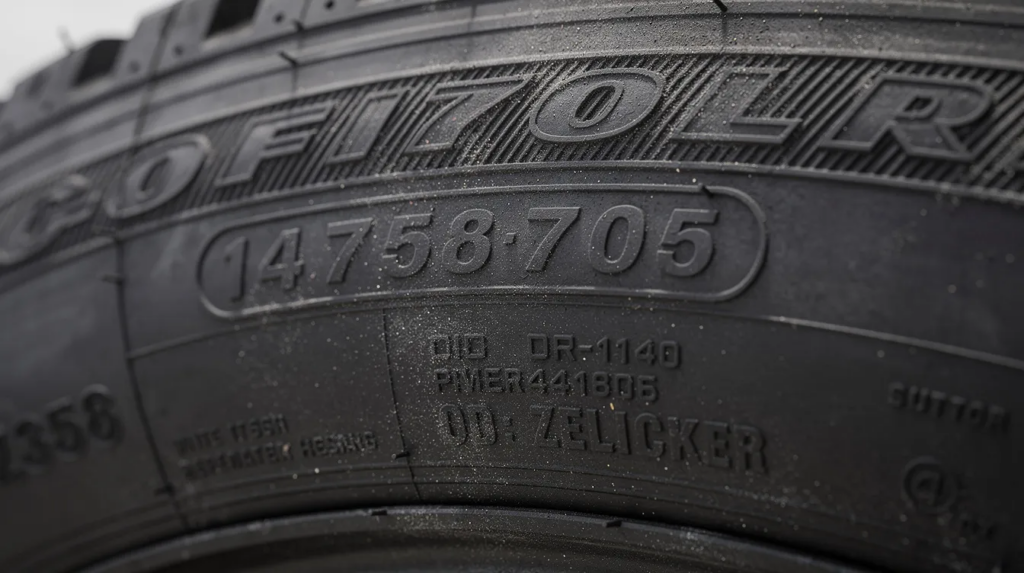
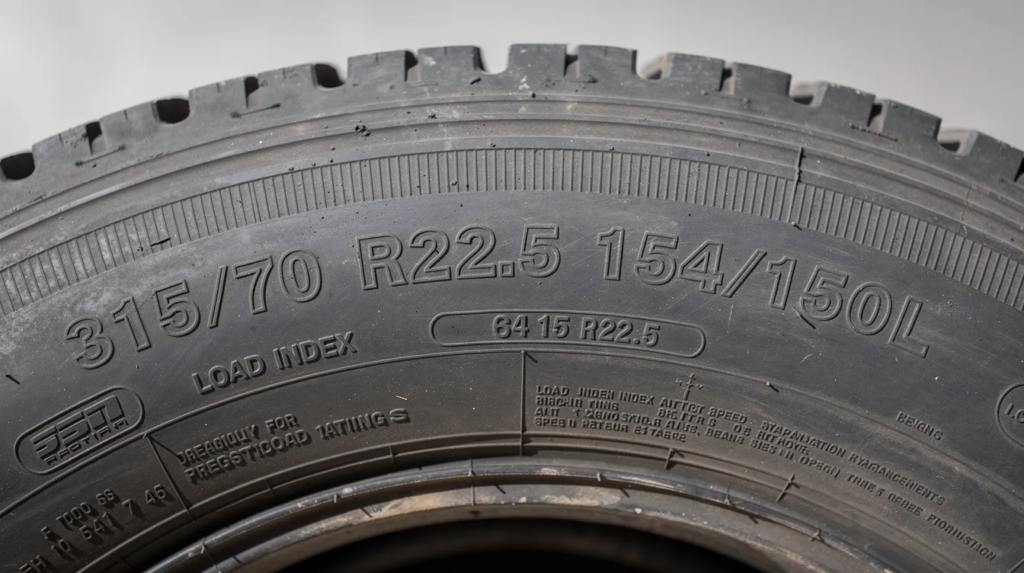
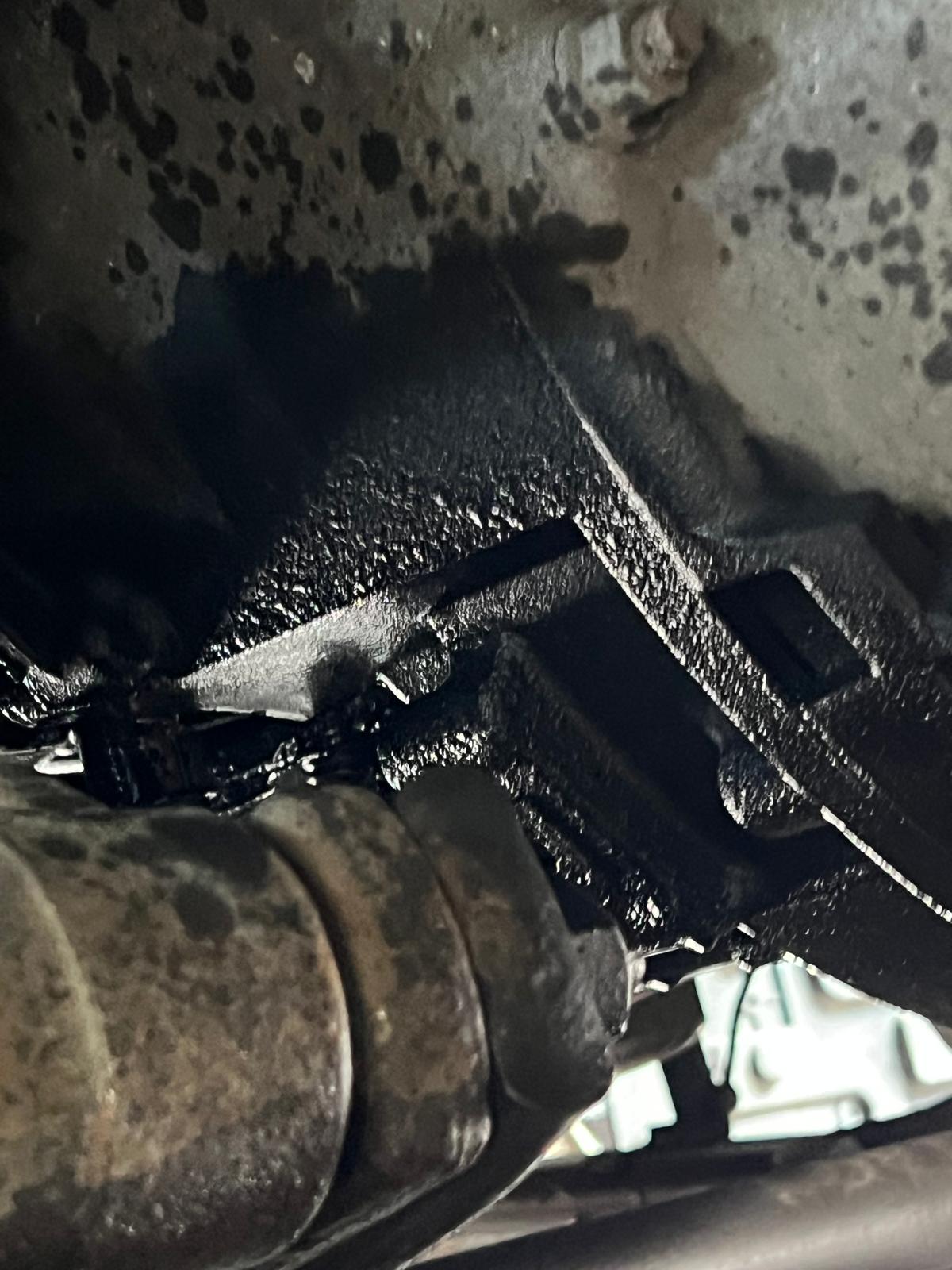
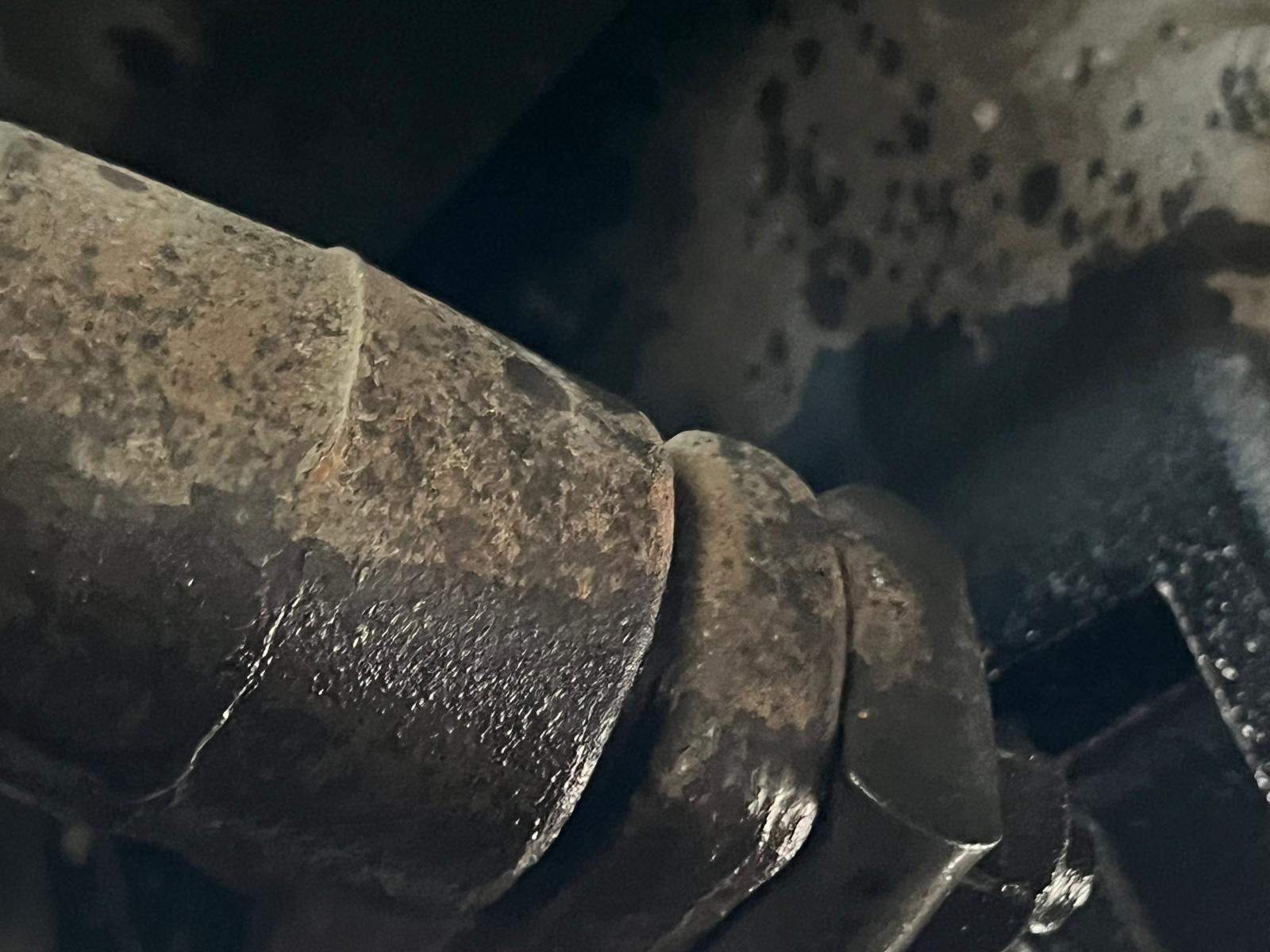
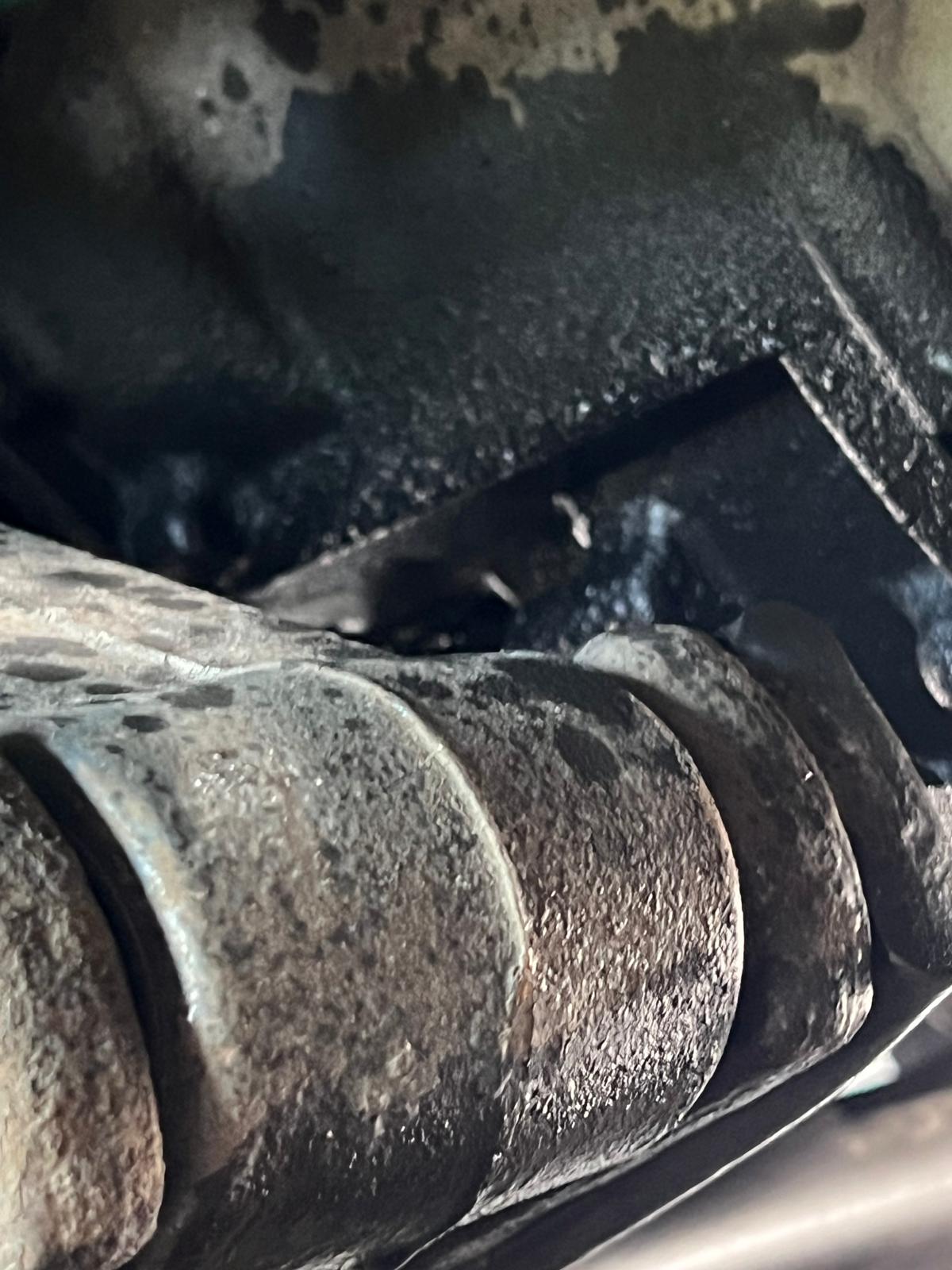
On arrival, the technician found the drive-axle tyre, a 315/80 R22.5, extinguished but badly damaged: charred sidewall, deformed bead area and visible heat damage to the rim. For context, HGV tyres of this size normally run at 8.5–9.5 bar depending on axle load, and a sustained pressure loss or a stuck brake component generating friction against the tyre is one of the most common root causes of this kind of failure.
The wheel arch and the mudguard bracket nearby had scorch marks, and the air lines running close to the axle needed checking for heat damage before the vehicle could be moved. Cooling and a careful physical check of the wheel end were carried out before touching the assembly, since a tyre that has recently burned can still be dangerously hot at the core even when no visible flame remains.
Step-by-step process
- Confirm the fire was fully out and the vehicle was in a safe position away from traffic and other flammable material
- Cool the affected wheel and check surrounding components (wiring, air lines, mudguard, chassis) for heat damage
- Secure the site and set up warning measures appropriate to a motorway hard shoulder
- Assess whether the wheel could be safely removed on site or whether the vehicle needed to be loaded whole
- Prepare the tractor unit for recovery, since driving on a damaged drive-axle wheel was not an option
- Load and transport the unit to a workshop equipped to replace the wheel assembly and inspect axle components
Timeline
| Time | Phase | Action |
|---|---|---|
| 13:40 | Call received | Driver reports a tyre fire, already extinguished |
| 13:40–13:55 (15 min) | Dispatch | Coordination with the regional partner network |
| 13:55–14:45 (50 min) | Travel | Travel to the scene |
| 14:45–15:15 (30 min) | On-site assessment | Securing the scene, cooling/condition check |
| 15:15–16:00 (45 min) | Preparation | Preparing for recovery/loading |
| 16:00 | Departure | Departure to the workshop |
Total time from call to departure: 2 hours 20 minutes (140 minutes).
Cost breakdown
| Item | Price (EUR, net) |
|---|---|
| Callout fee | €260 |
| On-site work (securing, inspection, cooling, approx. 1 hr) | €140 |
| Recovery/towing to workshop | €1,350 |
| Disposal of tyre/damaged parts | €20 |
| TOTAL | €1,770 net (plus VAT) |
A 40-tonne combination standing idle typically costs a haulier somewhere between €800 and €1,200 per day in lost revenue, driver time and contractual penalties for late delivery. Against that backdrop, a recovery cost of €1,770 that gets the vehicle to a qualified workshop within 2 hours 20 minutes of the initial call is a modest price for limiting downtime on a cross-border job.
Why you need a professional for a tyre fire
A burnt tyre is not simply a puncture that needs swapping. It requires judgement calls that a driver, however experienced, should not be making alone: whether the wheel is safe to touch, whether nearby lines are compromised, and whether the vehicle can be moved at all without further risk. Our truck service teams are trained specifically for post-fire assessment, not just standard breakdowns.
There is also a legal and safety dimension. German road traffic regulations set clear requirements for securing a broken-down vehicle and for the technical condition of running gear, as outlined under § 36 StVZO. A vehicle that has suffered a tyre fire cannot simply continue after the flames are out; it needs a proper technical check before it is fit to drive again, which in practice means a controlled recovery rather than a quick fix at the roadside.
Typical call-outs of this kind
- Overheated tyres on long descents or after prolonged underinflated running
- Tyre fires caused by a dragging or seized brake caliper
- Tyre debris from a blowout smouldering against the chassis or wiring loom
- Fires that spread from one tyre to its twin partner on a dual-wheel axle
- Post-fire recovery where the wheel, rim and adjacent air lines need replacing
Our mobile truck service covers straightforward tyre failures on the spot, but once fire is involved, recovery to a workshop is almost always the only safe outcome.
Why tyres catch fire in the first place
A tyre fire is very rarely spontaneous. Prolonged running on an underinflated tyre generates internal friction that raises the rubber compound’s temperature well beyond its normal operating range, and past a certain threshold the compound can reach its ignition point. A brake caliper that sticks or drags against a nearby tyre produces the same effect from the outside in, gradually heating the sidewall until it smoulders. A shredded carcass after a partial blowout can also rub continuously against suspension or chassis components, generating enough friction heat to ignite loose rubber debris. In all three cases, the fire is the end point of a heat build-up that started well before the driver noticed anything.
The smouldering-core danger
The most dangerous aspect of a tyre fire is that it does not always end when the visible flame goes out. A tyre carcass can keep smouldering deep inside the rubber and steel structure for a considerable time after it appears extinguished, and it can flare up again once conditions change, for instance when fresh air reaches the core after a vehicle has been parked for a while. This is precisely why a driver should never pull into a layby after a tyre fire and simply go to sleep in the cab. The wheel needs to be monitored, cooled properly and, ideally, assessed by a professional before the vehicle is left unattended for any length of time.
What the driver should do immediately
The correct sequence in the first minute matters more than anything that follows:
- Stop the vehicle in a position away from other traffic and any flammable material
- Move people out of the vehicle and to a safe distance
- Call the emergency number 112
- Use an extinguisher only if the fire is still in its very early stage, and never attempt to fight an established fire on a loaded lorry
An onboard extinguisher can be effective in the first seconds of ignition, as it was in this case near Müllheim, but once a tyre is properly alight, waiting for the fire service is the only safe option.
Why dousing a burning tyre with water is dangerous
It might seem intuitive to pour water on a burning tyre, but this carries specific risks that most drivers are not aware of. A red-hot steel rim can crack on rapid contact with cold water, throwing off fragments. Steam and splashing rubber can cause burns at close range. Most critically, as a tyre burns the air trapped inside it heats up and pressure inside the casing rises, which increases the risk of the wheel bursting violently. This is exactly why professional fire crews keep their distance and cool a burning wheel from afar rather than approaching and dousing it directly, according to standard ADAC roadside safety guidance.
Dual wheels make things worse
On a drive axle fitted with twin wheels, fire spreads easily from one tyre to its neighbour. The two tyres sit in close contact, and heat and flame from one casing can ignite the adjacent tyre within minutes. This is one reason why assessment on site always includes both tyres on an affected dual-wheel position, even if only one showed visible fire damage, and why recovery rather than a same-day repair is almost always the outcome once a dual-wheel fire has occurred.
What else can catch fire
Once a tyre ignites, the fire rarely stays contained to the rubber. Air lines running near the axle can melt or burn through, compromising the braking system. Electrical wiring for lights and sensors runs close to the wheel arch on most axle configurations and is vulnerable to the same heat. On a laden trailer, the tarpaulin and cargo itself are within reach of flame and smoke if the fire is not brought under control quickly. Damage escalates fast in these scenarios, which is another reason why a rapid, competent response matters more than in an ordinary flat tyre call.
Why only recovery is possible after a fire
Even once the flame is fully out, a vehicle that has suffered a tyre fire cannot simply have the wheel swapped and drive on. The wheel assembly itself typically needs replacing rather than repairing. Wiring and air lines near the affected axle are often damaged and need proper diagnostic checking before the vehicle is deemed roadworthy again. The rim is usually deformed by the heat, even where it looks intact at first glance, and a deformed rim will not seal a new tyre correctly. For all these reasons, our towing service is the standard response to any confirmed tyre fire, taking the vehicle to a workshop equipped to inspect and repair it properly rather than attempting a roadside fix.
Cross-border haulage: the added layer
This vehicle belonged to a Bulgarian carrier, operating a route that runs it well outside its home country and its usual service network. In a cross-border breakdown case like this, a few extra points of documentation matter on site: proof of insurance valid for operation in Germany, vehicle registration papers, and the CMR consignment note covering the cargo, all of which the recovery team and the receiving workshop will need before work can proceed. Having these documents ready in the cab, rather than needing to be requested from a head office abroad, noticeably shortens the process for international hauliers.
Prevention: what fleets can do
Most tyre fires are preventable with basic discipline around pressure and temperature monitoring. Regular pressure checks before and during a route catch slow leaks before they turn into sustained underinflated running, which is the single biggest contributor to heat-related tyre failure. Drivers should be trained to react immediately to any smell of burning rubber rather than continuing for “just a few more kilometres.” A quick check of wheel temperature at every stop, by hand or with an infrared thermometer, takes seconds and reliably flags a developing problem before it becomes a fire.
Tyres and fleet maintenance: the wider picture
Tyre quality and maintenance discipline go hand in hand. Major manufacturers such as Michelin, Continental, Goodyear and Bridgestone all publish detailed guidance on correct HGV tyre pressures, load ratings and inspection intervals, and following these specifications closely reduces the risk of the kind of overheating failure seen in this case. Vehicle manufacturers including MAN also build in axle and brake monitoring systems designed to flag a dragging caliper before it generates enough heat to ignite a tyre, though these systems only help if fleets keep them properly serviced. Periodic technical inspections through bodies such as DEKRA or TÜV also catch developing brake and wheel-bearing issues before they reach the point of causing a fire on the road. For international carriers, keeping up with these inspection cycles across borders is part of standard BAG compliance as well as good practice.
Why choose LKWHelp24
- 24/7 availability across the whole of Germany, including remote motorway stretches like the A5 near the French border
- A regional partner network that gets a properly equipped recovery team to the scene quickly, rather than a single distant depot
- Experience specifically with post-fire wheel and axle assessment, not just routine tyre changes
- Direct handling of cross-border documentation for international hauliers
- Transparent, itemised pricing agreed before work begins
Frequently asked questions
Can a tyre reignite after it has been put out?
Yes. The core of a tyre can keep smouldering after the visible flame is gone, and it can flare up again once fresh air reaches it, which is why the wheel should be monitored and professionally assessed rather than left unattended.
Is it safe to pour water on a burning HGV tyre?
No. Rising internal pressure as the tyre burns increases the risk of the wheel bursting, and a hot rim can crack on contact with cold water. This is why professional responders cool from a distance rather than dousing directly.
Can a lorry continue driving after a tyre fire is extinguished?
No. The wheel assembly, rim and nearby lines almost always need inspection and, typically, replacement before the vehicle is roadworthy again, so recovery to a workshop is the standard outcome.
What should a driver do in the first minute after a tyre catches fire?
Stop away from traffic and flammable material, get everyone clear of the vehicle, call 112, and only use an extinguisher if the fire is still in its earliest stage.
Why do dual wheels make a tyre fire worse?
The two tyres on a dual-wheel position sit in close contact, so fire spreads from one casing to the other quickly, often requiring both tyres to be replaced.
What documentation does a Bulgarian or other foreign haulier need on site?
Valid German-recognised insurance proof, vehicle registration and the CMR consignment note for the cargo are the key documents needed before recovery and workshop handover can proceed smoothly.
Summary
A tyre fire on the A5 near Müllheim left a Bulgarian haulier’s MAN TGX with a damaged drive-axle wheel, wheel arch and surrounding lines. The driver’s quick action with an onboard extinguisher prevented the fire from spreading further, and our team completed dispatch, on-site assessment and recovery to a workshop within 2 hours 20 minutes of the initial call, at a total cost of €1,770 net. The case is a clear reminder that a tyre fire, even once extinguished, is never a simple roadside fix: the smouldering core, rising internal pressure and potential damage to wiring and lines mean professional recovery is the only safe path forward.
Need help now?
If your drive-axle tyre is overheating, smoking, or has caught fire anywhere in Germany, call us immediately: +49 160 5753826, available 24/7. More information at www.lkwhelp24.com or via our contacts page.
Keywords: HGV tyre fire, truck tyre fire Germany, A5 motorway breakdown, MAN TGX recovery, drive axle tyre overheating, 315/80 R22.5, international truck towing, 24/7 truck recovery Germany
Related articles
- DAF Articulated Blowout Recovery Near Hof
- Truck Tyre Service on the A5 Near Freiburg: Car Transporter
- Truck Tyre Blowout and Rim Damage on the Motorway Near Trier
- Winter Tyres for HGVs in Germany: Requirements and Safety
- Truck Tyre Service Near Hamburg: 24/7 Motorway Assistance