Skip to content
 Truck tyre pressure decides your braking distance, fuel consumption and tyre lifespan – a deviation of just a few tenths of a bar already changes how the vehicle handles. This article explains what the correct tyre pressure for a truck actually depends on, how to measure it properly, and what to do if a tyre loses pressure or blows out on the motorway. It’s written for drivers and fleet managers of trucks and commercial vehicles from 7.5 tonnes – exactly where wrong tyre pressure on the highway can turn dangerous fast.
Key Points at a Glance
- There is no single “correct” tyre pressure for every truck. The right value depends on axle load, tyre size, load index and payload, and is found in the tyre manufacturer’s inflation table or manufacturer specifications.
- Always check tyre pressure when the tyres are cold – ideally before departure or after several hours standing still.
- LKWHelp24 helps trucks and commercial vehicles from 7.5 tonnes with tyre blowouts, low pressure and roadside tyre replacement – 24/7 across Germany.
- Send your location via WhatsApp to +49 160 575 3826: motorway number, direction of travel, kilometre marker or GPS pin. Response time is usually 30-60 minutes.
- Fixed call-out price from €290 during the day. Truck tyres from size R17.5 from €315. Night, Sunday and public holiday call-outs from €549. The fixed price is always quoted before the technician sets off.
Losing pressure or dealing with a blowout right now? Contact LKWHelp24’s mobile truck tyre service directly via WhatsApp – full contact details and the process are further down this article.
Why Truck Tyre Pressure Matters So Much
A heavy articulated truck rests on relatively small rubber contact patches. Tyre pressure determines how that load is distributed. If pressure is too low or too high, the contact patch changes shape, wear becomes uneven, fuel consumption rises, and in the worst case a tyre blowout follows.
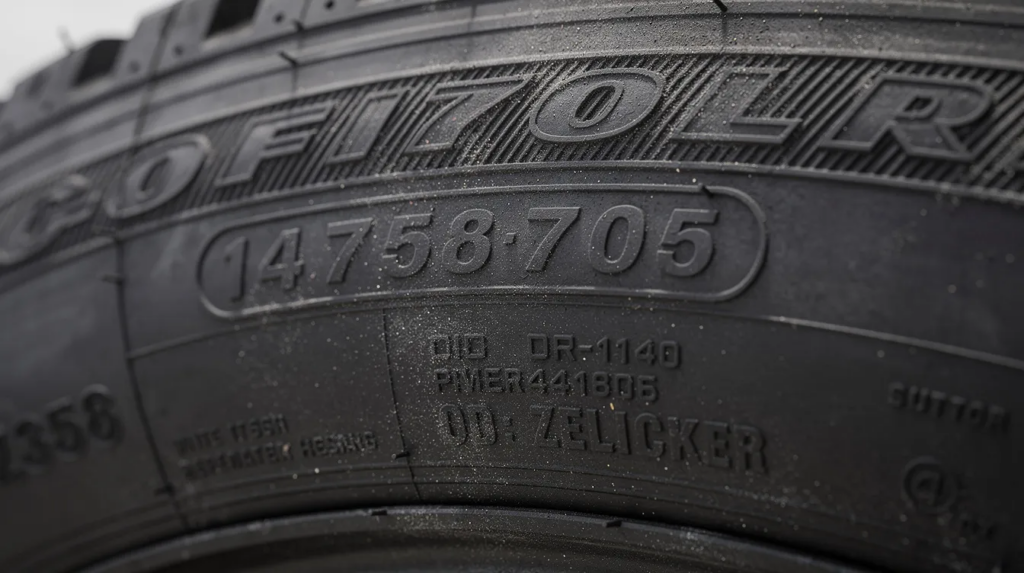
Unlike a car, truck tyre pressure is never one fixed number you simply remember. It always depends on the actual axle load, tyre size, load index and whether the tyre is fitted as a single or as a twin (dual) setup. Only the vehicle or tyre manufacturer’s figures are authoritative – found in the vehicle handbook, on the data plate, or in the tyre manufacturer’s inflation table.
What the Correct Tyre Pressure Depends On
- Axle load: A more heavily loaded axle generally needs more air pressure than a lightly loaded one.
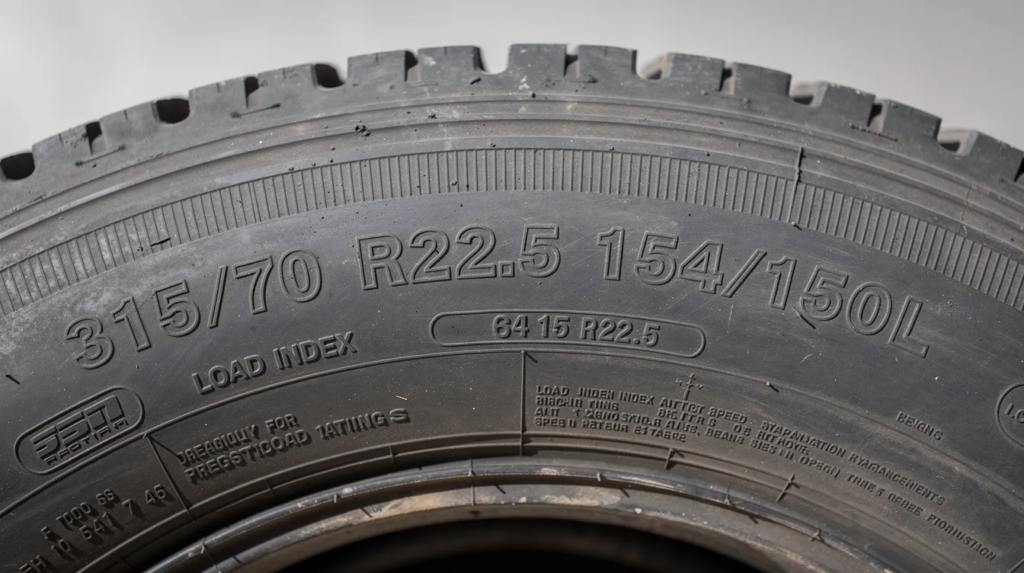
- Tyre size: Different dimensions (e.g. 295/60 R22.5 or 315/70 R22.5) carry different pressure recommendations at the same load.
- Load index: Indicates how much load a tyre can carry at a given pressure – different for single and twin fitment.
- Payload: A fully loaded trailer needs different pressure than an empty one.
- Application: Long-haul, construction site or regional delivery each place different demands on tyres and pressure.
The correct pressure, as stated by the manufacturer, can only be determined from the tyre manufacturer’s inflation table matched to the actual axle load – generic figures from the internet cannot replace that table.
How to Measure Tyre Pressure Correctly
Pressure rises while driving as the tyre heats up. That’s why tyre pressure is always checked and set cold – a warm tyre shows a higher reading that doesn’t match the target value.
- Let the vehicle stand for several hours, or drive only a very short distance beforehand.
- Use a calibrated pressure gauge.
- Remove the valve cap, place the gauge straight onto the valve.
- Compare the reading with the manufacturer’s inflation table for the current axle load.
- Correct any deviation, and have the cause checked (valve, rim, foreign object) if pressure loss repeats.
Common mistake: letting air out of a warm tyre because the reading looks higher than the target – this almost always leaves the tyre underinflated once it cools down. Alongside the pressure check, always inspect the tyre visually for damage: sidewall cracks, embedded objects or tread deformation. The legal minimum tread depth for truck tyres in Germany is 1.6 mm in the main grooves.
What Happens With the Wrong Tyre Pressure
| Condition | Typical consequences |
|---|---|
| Pressure too low | Larger contact patch, more flexing and heat build-up, higher fuel consumption, increased risk of carcass damage and blowouts, longer braking distance |
| Pressure too high | Smaller contact patch, uneven wear concentrated in the tread centre, worse traction and wet grip, harsher handling |
Either way, breakdown risk increases. A truck tyre running well under pressure can blow out on the motorway without warning – exactly the moment fast mobile help matters most.
Temperature, Season and Tyre Pressure
Air expands when warm and contracts when cold, so the measured tyre pressure naturally shifts with outside temperature and season, even without any actual leak. That’s why pressure should be rechecked against the inflation table at the start of autumn and before winter operation. A TPMS (tyre pressure monitoring system) warns of gradual pressure loss but never replaces regular manual checks with a gauge.
Tyre Pressure Routine for Fleets and Fleet Managers
- Check cold pressure regularly – before each shift or weekly, depending on mileage and duty cycle.
- Log readings per vehicle and axle and compare them to the tyre manufacturer’s inflation table.
- Take TPMS warnings seriously and verify them manually without delay.
- Train drivers to recognise early signs of pressure loss (altered handling, vibration, TPMS alerts).
LKWHelp24 also supports fleet managers and dispatchers beyond their own workshop: when a tyre loses pressure or blows out en route, we organise fast help right at the vehicle’s location through our nationwide network of service partners.
Emergency: Wrong Tyre Pressure or a Blowout on the Motorway
- Switch on hazard lights, don’t brake hard, let the vehicle roll to a stop gradually.
- Pull as far right as possible onto the hard shoulder, a rest area or a car park.
- Put on a high-visibility vest, set up the warning triangle (about 150 m on a motorway), exit via the passenger side and wait behind the barrier.
- Contact LKWHelp24 via WhatsApp at +49 160 575 3826: share your location (motorway number, direction, kilometre marker or GPS pin), vehicle type and tyre size.
- The fixed price is quoted before the technician sets off. Response time is usually 30-60 minutes. If the vehicle can’t be repaired on site, our towing service takes over.
LKWHelp24: Mobile Tyre Service and Breakdown Help for Trucks From 7.5t
LKWHelp24 is a dispatch service for mobile truck tyre service and breakdown assistance for trucks and commercial vehicles from 7.5 tonnes – 24/7 across Germany, through a network of local service partners.
- Mobile truck tyre service – tyre replacement and fitting on site, from tyre size R17.5.
- Breakdown assistance – help with tyre issues, jump starts, minor technical faults.
- Towing and recovery – when on-site repair isn’t enough.
- Languages: German, English, Polish, Russian – for international drivers passing through Germany.
| Service | Price |
|---|---|
| Daytime call-out | from €290 |
| Truck tyres from R17.5 | from €315 |
| Night, Sunday and holiday call-out | from €549 |
The fixed price is always quoted before the technician sets off – no hidden costs. Contact: WhatsApp/phone +49 160 575 3826 (WhatsApp is our main channel), email info@lkwhelp24.com, website lkwhelp24.com.
Further Reading and Sources
More related topics on the LKWHelp24 blog:
- Emergency Truck Tyre Service Near You
- Mobile Truck Tyre Service in Germany
- Truck Tyre Repair: When It Works and When You Need a Replacement
- TPMS Warning: a Real Case From a Rest Area on the A1
- Truck Towing and Recovery Service
Official inflation tables and further information are available directly from tyre manufacturers and relevant bodies:
- StVZO § 36 (Tyres) – gesetze-im-internet.de
- Michelin Truck: Tyre Basics and Regulations for Trucks
- Goodyear Truck Tyres
- Bridgestone EMEA (Commercial Tyres)
- WdK – German Rubber Industry Association
- TÜV – Vehicle Safety and Inspections
FAQ on Truck Tyre Pressure
How often should I check my truck’s tyre pressure?
Regularly, and always cold – many fleets check weekly or before every longer trip. Never ignore a TPMS warning; always verify it with a gauge.
What tyre pressure should my truck tyres have?
There’s no single answer. The correct value is set by the tyre manufacturer’s inflation table and depends on axle load, tyre size, load index and payload. When in doubt, always follow the manufacturer’s figure on the data plate or in the vehicle handbook.
Why must tyre pressure always be measured cold?
Because the air inside the tyre heats up and expands while driving. A warm tyre reads higher than its actual target pressure – releasing air based on that reading leaves the tyre underinflated once it cools.
What do I do if my truck tyre suddenly loses pressure on the motorway?
Hazard lights on, don’t brake hard, pull over safely to the hard shoulder or a rest area, put on a hi-vis vest and set up the warning triangle, then contact LKWHelp24 via WhatsApp at +49 160 575 3826 with your exact location. Response time is usually 30-60 minutes.
Does a TPMS replace manual tyre pressure checks?
No. A tyre pressure monitoring system warns of pressure loss, but it’s an extra safety layer, not a replacement for regular manual checks with a calibrated gauge.
Whether it’s a pressure problem, a blowout or a roadside tyre change: LKWHelp24 is available 24/7 across Germany for trucks and commercial vehicles from 7.5 tonnes. Message us on WhatsApp at +49 160 575 3826 or email info@lkwhelp24.com.
You might also be interested in
- Mobile Truck Tyre Service in Germany: 24/7 Emergency Help from 7.5t
- Mobile Truck Tyre Service on the A70 near Bamberg: How a Driver Caught a Carcass Separation Before It Became a Blowout
- Truck Tyre Service Near Me: How LKWHelp24 Fixed a Semi-Truck Blowout on the A2 Near Hannover in 1 Hour 42 Minutes
- Truck Tire Service Near Me: Emergency Response to Mobile Crane Tyre Blowout on Autobahn A46 in Under 2 Hours
- Mobile Truck Tyre Service A6 Near Schwäbisch Hall: Unnoticed Dual-Wheel Blowout Fixed in 2h30