Skip to content
TL;DR: On 13 August, mid-morning, a semi-trailer at a logistics depot near Aachen (North Rhine-Westphalia) reported a tyre worn through to the cord in size 385/65 R22.5. While removing the tyre, our technician also found corrosion and white staining on the alloy rim, hub by BPW. Call to roadworthy: 2 hours 16 minutes, total cost €955 net.
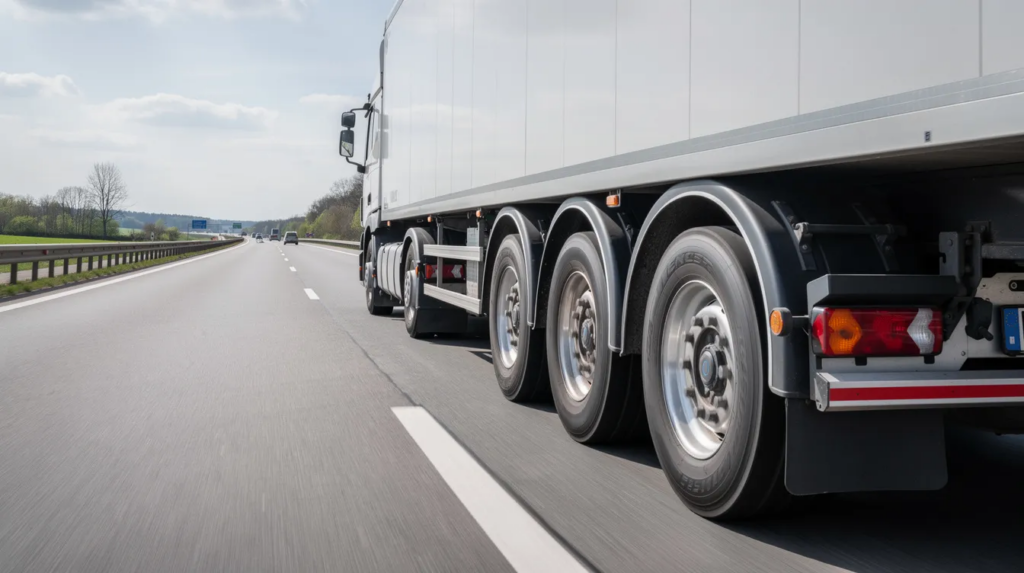
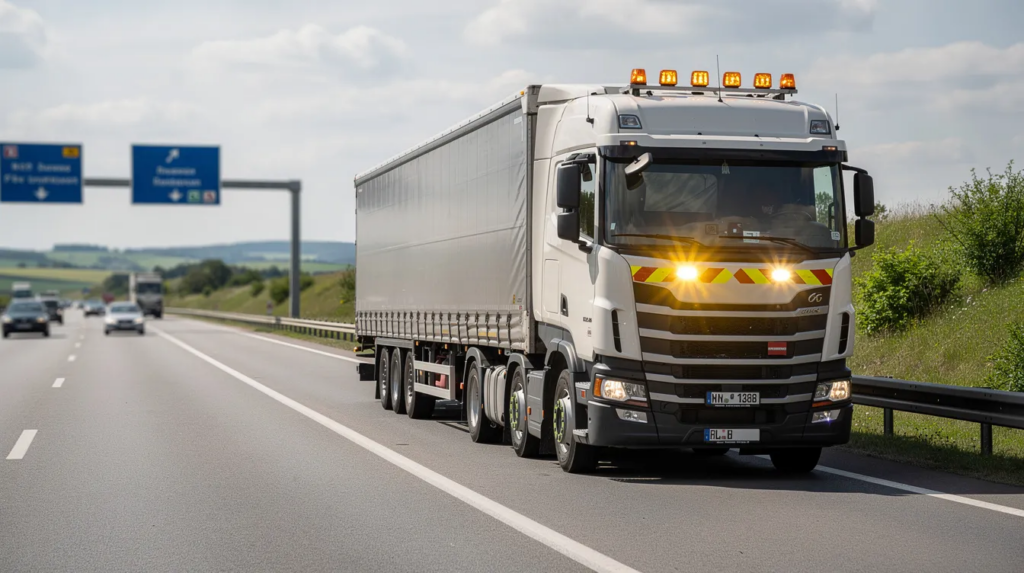
A semi-trailer riding on alloy wheels looks like any other lorry at first glance. Look closer and the maintenance logic is a different story altogether. The Aachen case is a textbook example: a visible tyre fault led to a discovery that could easily have been missed by a less thorough inspection.
The trailer stood on a company yard, not on an autobahn, no hard shoulder involved. Cases like this differ from the classic roadside breakdown: no traffic hazard, but a vehicle that cannot be loaded again until the fault is fixed. The depot’s dispatcher spotted the damage during the morning visual check before loading and rang our emergency line.
What actually happened near Aachen?
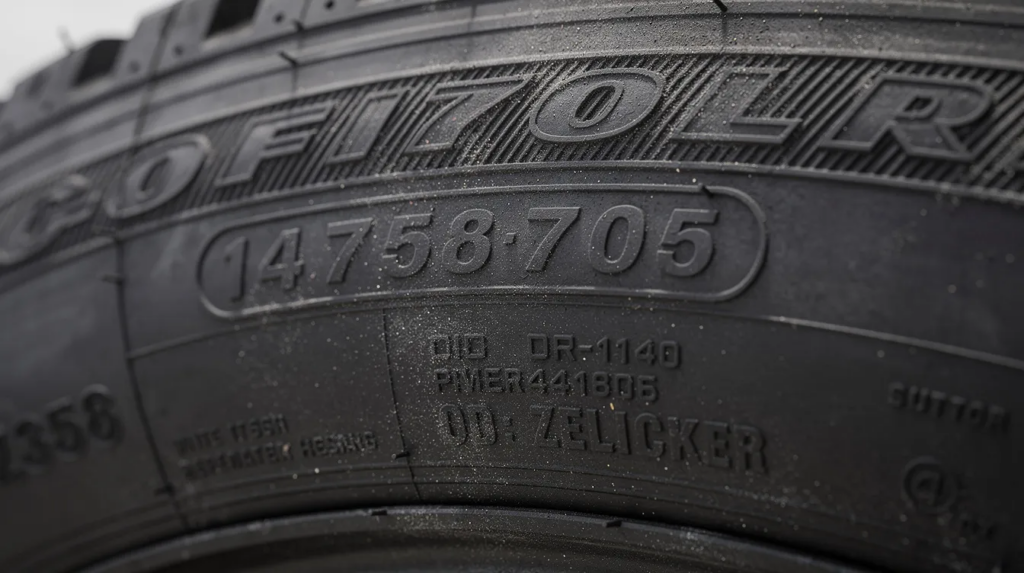
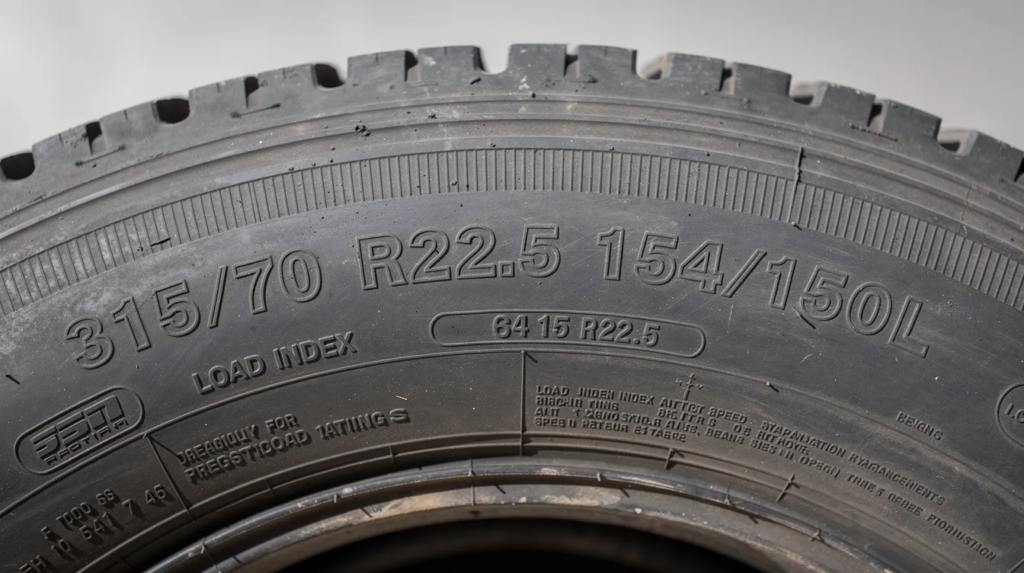
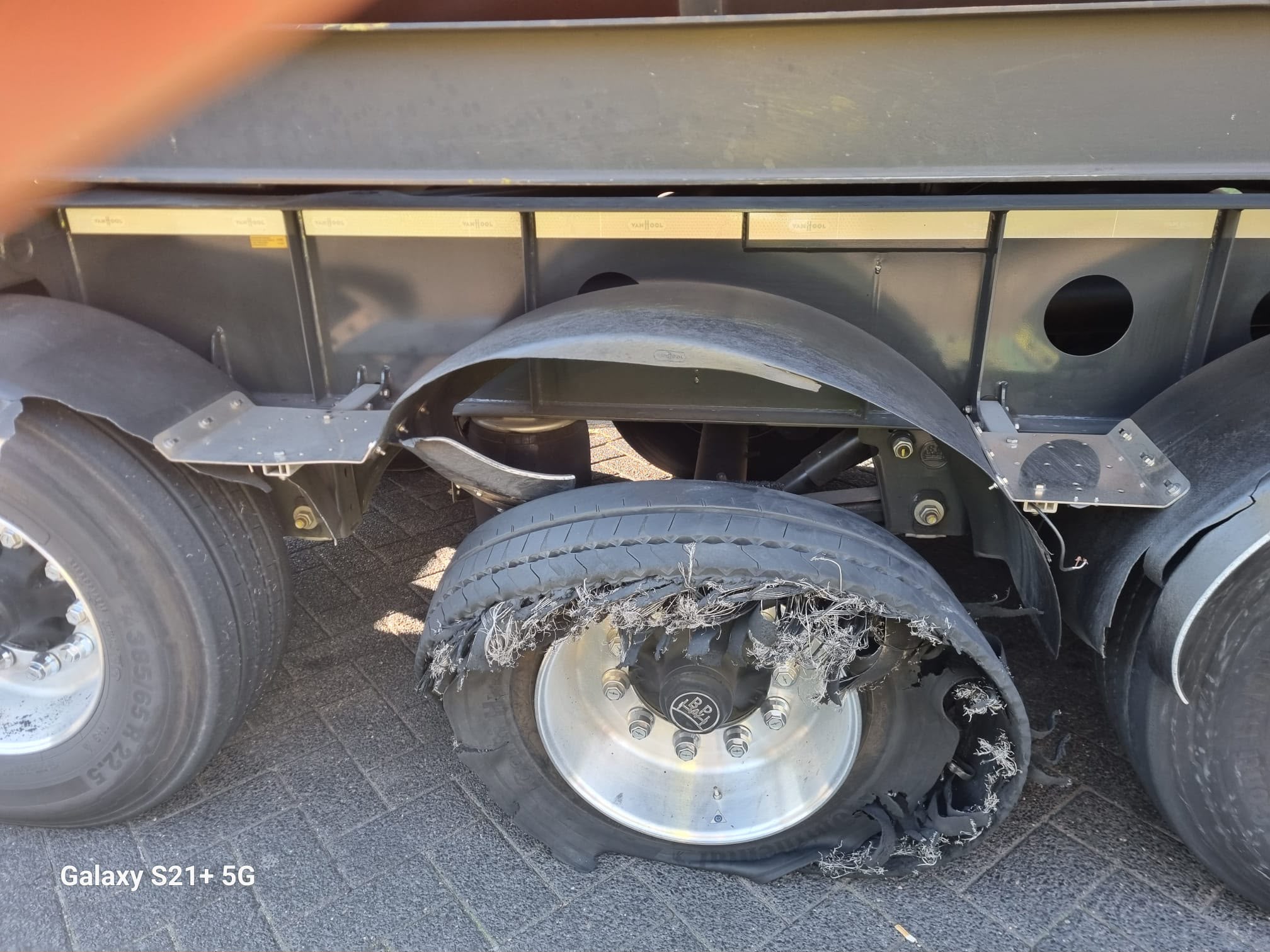
A tyre in size 385/65 R22.5 on one of the semi-trailer’s axles was worn through to the cord, a clear case for immediate replacement with no room to delay. While removing the tyre, the technician found whitish deposits and material loss on the alloy rim around the wheel bolts.
The trailer ran on aluminium alloy wheels, increasingly common fitment on modern semi-trailers. The hub was manufactured by BPW, one of the leading axle makers for commercial vehicles. That exact interface, alloy rim against steel hub and steel bolts, is where moisture and residual road salt cause the problem the technician found.
The tyre itself showed no sign of a sudden blowout; instead the wear pattern was a progressive cut, likely from contact with a sharp edge on the paved yard surface. Tread depth on the remaining tyres was within legal limits; only the one wheel was affected.
Why fit alloy rims: weight saving against maintenance demands
A single alloy rim weighs roughly 20 kg less than a comparable steel rim. Across a full articulated combination with ten or more wheels, that adds up to over 100 kg of extra payload, real money for any haulier who charges by weight.
The benefit isn’t limited to payload. Aluminium conducts heat considerably better than steel, which keeps brake discs cooler during sustained downhill braking and reduces the risk of brake fade. For fleets running long-haul routes through mountain passes, that’s a tangible safety argument, not marketing talk.
The downside: aluminium is softer than steel and more sensitive to mechanical stress. Overtighten the wheel bolts and the bolt holes on an alloy rim deform faster than they would on steel. Aluminium is also more electrochemically reactive, exactly the mechanism behind the corrosion found in this case.
Weight saving per axle varies with wheel size and count, but on a full alloy-equipped articulated combination the cumulative saving, calculated carefully, can run to several hundred kilograms.
What is galvanic corrosion on a rim?
Galvanic corrosion happens when two dissimilar metals, here an aluminium rim and a steel hub with steel wheel bolts, sit in electrical contact and an electrolyte such as salty water joins the mix. The less noble metal, aluminium in this pairing, gets attacked.
On German roads, winter road salt is the main culprit. But summer moisture from condensation or an aggressive wheel cleaner at a wash bay is enough to start the same process. The result is the characteristic white, powdery build-up at the contact surfaces between rim and hub.
That build-up isn’t just cosmetic. Material loss slightly changes the fit between rim and hub, and over time that produces play in the assembly. Left unattended, the bolt-hole clearance can widen, and in unfavourable cases fine cracks develop around the bolt holes.
On the trailer near Aachen the finding was still at an early stage: visible white staining and a slightly rough contact surface, but no structural damage severe enough to require scrapping the rim. After proper cleaning, the rim went back into service.
How was the callout organised?
The response followed our standard dispatch process:
- Take the call, record the location and vehicle type (semi-trailer, no autobahn, yard access suitable for a service van).
- Confirm tyre size, 385/65 R22.5, so the correct tyre and fitting tools travel with the technician.
- Identify the nearest available service partner covering the Aachen area.
- Confirm tyre stock in the required size and calculate travel time.
- Notify the customer of estimated arrival, keep the vehicle off the loading schedule for the duration of the repair.
Because this was a company yard rather than an autobahn, the usual traffic-safety measures, warning triangle and hard-shoulder closure, weren’t required. That shortened on-site set-up noticeably, though it didn’t change the scope of the repair itself.
Why a tyre worn through to the cord can’t wait
A tyre worn through to the cord has no load-bearing structure left in that zone. Lorry tyres run at an inflation pressure of 8.5 to 9.5 bar, considerably higher than passenger cars. At that pressure a weakened carcass can give way even while stationary, particularly with temperature swings or added load during loading.
A semi-trailer on 385/65 R22.5 tyres carries several tonnes per axle depending on load. If a tyre fails completely during loading or driving, the load shifts abruptly onto the paired tyre on that axle, overloading it in turn and risking a second failure.
Under § 36 StVZO, tyres and rims must meet the applicable requirements and must not carry safety-relevant damage. A tyre worn through to the cord fails that test outright, continuing to drive without repair is not permitted.
Roadside repair on a semi-trailer: step by step
Step 1 – Visual inspection and diagnosis. The technician checks the whole tyre, the neighbouring tyre on the same axle, and any visible parts of the rim and hub for secondary damage.
Step 2 – Secure the vehicle. On a company yard, wheel chocks and a clear working perimeter are enough, though hi-vis gear stays mandatory for everyone involved.
Step 3 – Removal. The damaged tyre comes off the rim. This is exactly where the corrosion at the contact surface became visible, something that wouldn’t have shown from outside with the tyre still mounted.
Step 4 – Rim cleaning. The contact surfaces between rim and hub are mechanically cleared of corrosion deposits, then finished dry and grease-free. On alloy rims, only the mounting paste approved by the manufacturer belongs on the specified surfaces, never a general-purpose grease on the mating face.
Step 5 – Fit the new tyre in size 385/65 R22.5, balance it, and check inflation pressure against the target value.
Step 6 – Torque the bolts correctly. The specified torque on alloy rims differs from steel rims and has to be followed exactly. Bolts go on in a star pattern, in stages, using a calibrated torque wrench.
Step 7 – Final check. Visual inspection of every wheel bolt, a written note of the finding for the fleet manager, and a reminder about the mandatory re-torque check.
Why torque matters more on alloy rims
Steel rims forgive small deviations from the target torque more readily than aluminium does. Overtighten an alloy rim and the bolt hole deforms, bleeding off clamping force over the following kilometres. Undertighten it and micro-movement develops between rim and hub, exactly the mechanism that drives fretting corrosion and eventually cracks.
Both over- and under-torque end at the same place: play around the wheel bolts, and in the worst case a wheel failure. That’s why fitting an alloy rim always calls for a calibrated torque wrench, never an impact gun with no follow-up check.
The mandatory 50-kilometre re-torque
After every wheel fitment, and this matters even more on alloy rims than on steel, the wheel bolts need re-torquing after roughly 50 kilometres of driving. The reason is bedding-in: under real driving loads, tiny irregularities on the contact surfaces settle, and clamping force drops slightly as a result.
Steel rims show this effect too, but less markedly. Aluminium, being softer, beds in more noticeably, so skipping the 50-km check carries a higher risk on alloy wheels. We flagged this appointment explicitly to the fleet manager near Aachen.
Winter road-salt chemistry and rim care
Alloy rims should be washed thoroughly after every winter to remove residual road salt before it turns into the kind of staining found in this case. Aggressive rim cleaners with a strongly acidic or alkaline pH attack the protective oxide layer on aluminium and speed up corrosion rather than preventing it.
pH-neutral cleaners are the safer choice, and fleets that log high winter mileage benefit from a fixed routine: check the rims every few weeks, paying particular attention to the contact surfaces against the hub, where moisture lingers longest.
Why repairing the alloy rim was never on the table
A cracked or structurally damaged alloy rim must never be welded or cold-straightened. Unlike some steel rims, where straightening is possible within narrow limits, any heat applied during welding locally alters the aluminium’s material structure and weakens it unpredictably. A cracked alloy rim leaves only one option: replacement.
In this case the rim itself wasn’t cracked, only surface-corroded, so it went back into service after cleaning. Had a crack been found, the job would have needed a matching replacement rim, adding meaningfully to both time and cost.
The full timeline
| Time | Phase | Action |
|---|---|---|
| 08:42 | Call | Tyre damage reported at the logistics yard near Aachen |
| 08:42–08:58 | Dispatch | Service partner in the Aachen area identified, tyre 385/65 R22.5 confirmed |
| 08:58–09:43 | Travel | Drive to the depot (45 minutes) |
| 09:43–10:58 | Repair | Removal, rim inspection, cleaning, fitting, torque check (75 minutes) |
| 10:58 | Complete | Vehicle roadworthy, total time 2 hours 16 minutes |
What did the job cost?
| Item | Price (EUR, net) |
|---|---|
| Call-out | 220 |
| Labour (75 min) | 150 |
| Tyre 385/65 R22.5 | 480 |
| Old tyre disposal | 20 |
| Rim cleaning / corrosion treatment | 85 |
| Total | 955 |
All figures are net, plus statutory VAT. The price difference between this job and a plain tyre fitment with no rim finding comes to around €85, a modest sum next to a stranded trailer, which typically costs a mid-sized fleet €800 to €1,200 a day in lost loading capacity.
Why alloy rims still pay off financially
A rough example: 100 kg of extra payload per articulated combination, at roughly 100,000 km a year and freight charged by weight, can pay back the extra purchase cost of alloy rims over their service life, provided maintenance stays disciplined. A full set of alloy rims costs more up front than steel, but the premium gets recovered through added payload over the years, as long as care is kept up. Neglect the maintenance, as very nearly happened here, and a single corrosion incident eats into that saving.
Why a professional needs to handle this, not a DIY fix
- Without a calibrated torque wrench, hitting the exact torque spec for alloy rims reliably isn’t realistic.
- The wrong cleaning agent or an unsuitable mounting paste can accelerate corrosion instead of stopping it.
- A missed crack in the rim, not properly identified, can lead to sudden failure later.
- Judging whether a corroded rim is safe to reuse or needs replacing takes experience with this exact failure pattern.
Typical call-outs we handle around tyres and rims across Germany
Beyond cases like this one, we regularly handle truck tyre service for blowout and rim damage on the autobahn, rim straightening after mechanical damage, and standard tyre failures on tractor units and trailers right across the country. Every call-out starts with the same question: is it just the tyre, or is there more to it?
Prevention for drivers and fleets
- Wash alloy rims thoroughly after every winter, paying special attention to the hub contact surfaces.
- Stick to the 50-km re-torque check after every wheel fitment, and log it.
- During the daily visual check, look specifically for white deposits on the rim, not just tyre condition.
- Use only mounting paste approved by the rim manufacturer.
- Check inflation pressure regularly: 8.5 to 9.5 bar is standard for lorry tyres, deviations encourage uneven wear and susceptibility to cuts.
What the technician noticed on site
The technician on site noted that the corrosion appeared only on the one rim, matching the damaged tyre, not on the neighbouring wheels of the same axle. That points to a localised moisture source, perhaps a small seal defect or standing water on the paved yard surface, rather than a fleet-wide maintenance gap. A look at the remaining wheels showed no comparable finding, suggesting a one-off cause rather than a systemic problem across the whole trailer fleet.
Even so, we recommended the fleet manager check the trailer’s other alloy rims for similar signs at the next scheduled inspection. A single finding isn’t proof of a systemic issue, but it’s a solid reason to sharpen the inspection routine. Older trailers that have been through several winter seasons in particular benefit from an extra look at the contact surfaces before the next road-salt season begins.
A broader look at tyres and rims across a fleet
Tyre brands such as Michelin, Continental, Goodyear and Bridgestone all offer different tread patterns for 385/65 R22.5, some favouring mileage, others traction. Fleets doing frequent wheel changes benefit from a fixed maintenance routine covering tyre pressure, tread depth and rim condition together, looking at the tyre alone misses damage like the corrosion found near Aachen.
Why choose LKW Help 24
We’re reachable around the clock across Germany, backed by a vetted network of service partners specialising in truck, bus and commercial vehicle work. Our dispatch team operates in multiple languages, and pricing is communicated transparently before work starts, no hidden line items on the invoice.
Frequently asked questions
What does a truck tyre change with a rim finding cost? In this job, the total came to €955 net: call-out, labour, one new tyre in size 385/65 R22.5, old tyre disposal, and rim cleaning. A comparable wheel change without any rim issue typically runs €80 to €100 lower.
How long does a tyre change with a rim check take? From the call to roadworthy took 2 hours 16 minutes, of which 75 minutes was hands-on work at the depot.
Who pays for the call-out? In practice it’s usually the fleet operator or haulier, sometimes through vehicle insurance, often billed directly. We issue a detailed invoice suitable for internal accounting.
Does a corroded alloy rim always need replacing? Not necessarily. Surface staining without structural damage can be cleaned and treated. Cracks or deep material loss make replacement mandatory, since welding or straightening alloy rims isn’t permitted.
Why are alloy rims more prone to corrosion than steel rims? Contact between aluminium and the hub’s steel components, combined with moisture and road salt, forms a galvanic cell in which aluminium, the less noble metal, gets attacked.
How often should wheel bolts be re-torqued after a change? As a rule, after roughly 50 kilometres of driving, and this matters even more on alloy rims because of their more pronounced bedding-in behaviour.
Summary
- Vehicle: Semi-trailer on alloy rims, BPW hub
- Location: Logistics depot near Aachen, North Rhine-Westphalia
- Tyre size: 385/65 R22.5
- Response time: 16 minutes to confirmed dispatch, 45 minutes travel
- Total time: 2 hours 16 minutes
- Total cost: €955 net
- Secondary finding: Corrosion on the alloy rim, returned to service after cleaning
Get help now
Tyre damage or suspected rim corrosion in your fleet? Call us on +49 160 5753826 or visit www.lkwhelp24.com, we’re available around the clock, all across Germany.
Keywords: truck tyre service | alloy rim corrosion | semi-trailer blowout | 385/65 R22.5 | BPW hub | roadside assistance Aachen | truck tyre pressure | wheel bolt torque | rim cleaning HGV | 24/7 truck breakdown North Rhine-Westphalia
Related articles
- Truck Tyre Service Near Me: Tyre Change with New Goodyear Tyre and Rim Straightening on Krone Trailer
- Truck Tyre Service for Blowout and Rim Damage on the Motorway near Trier
- Winter Tyres for HGVs in Germany – Legal Requirements, Safety & Service
- Case Report | Truck Towing: Trailer with Brake Disc Damage Recovered near Münster
- Truck Tire Service Near Me
Commercial pages: Tire Service · Mobile Truck Service · Truck Service Workshop · Contacts