Skip to content
TL;DR: On 10 August, a Volvo FH tractor unit suffered a front-axle wheel rim fracture on the A2 near Braunschweig, direction Berlin. The rim itself cracked under load, not just the tyre, damaging the wing and cab step. Our regional partner workshop reached the scene, uncoupled the trailer, and had both the tractor unit and trailer moving to the workshop in 2 hours 58 minutes from the first call.
A truck wheel rim rarely fails without warning. When it does, the consequences reach further than a blown tyre ever could. The wheel loses its structural anchor, the tyre can no longer hold air even if it is undamaged, and metal fragments can scatter across live lanes.
On a motorway carrying constant HGV traffic, that combination turns a routine breakdown into a hazard for everyone nearby. A driver doing 80 km/h with a cracked rim has seconds, not minutes, to react before the wheel starts shedding parts or digging into the road surface.
This case from the A2 near Braunschweig shows what happens when a fatigue crack in a steel rim finally lets go under full axle load, and what an organised recovery response looks like from the first phone call to departure for the workshop.
Emergency Situation on the A2 near Braunschweig
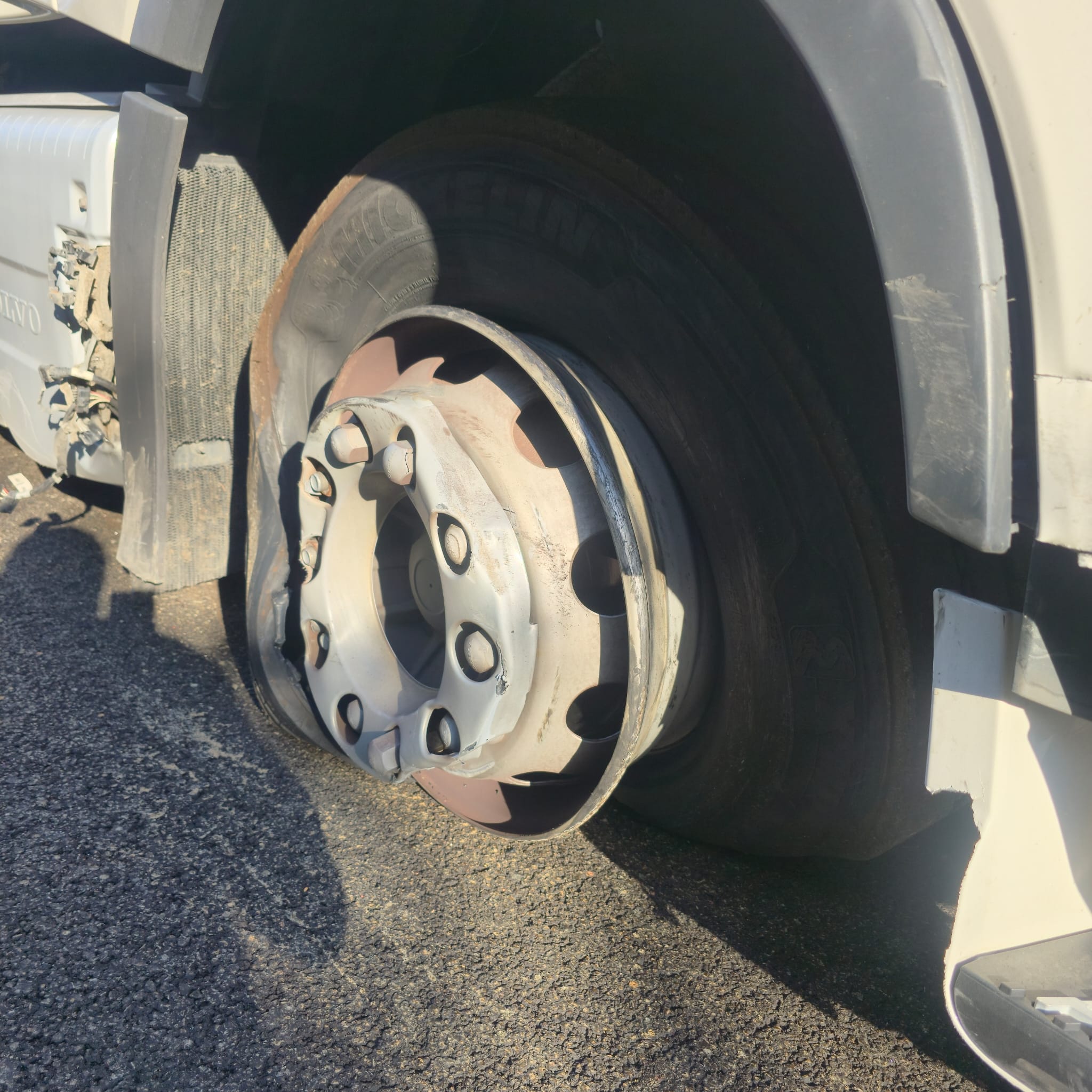
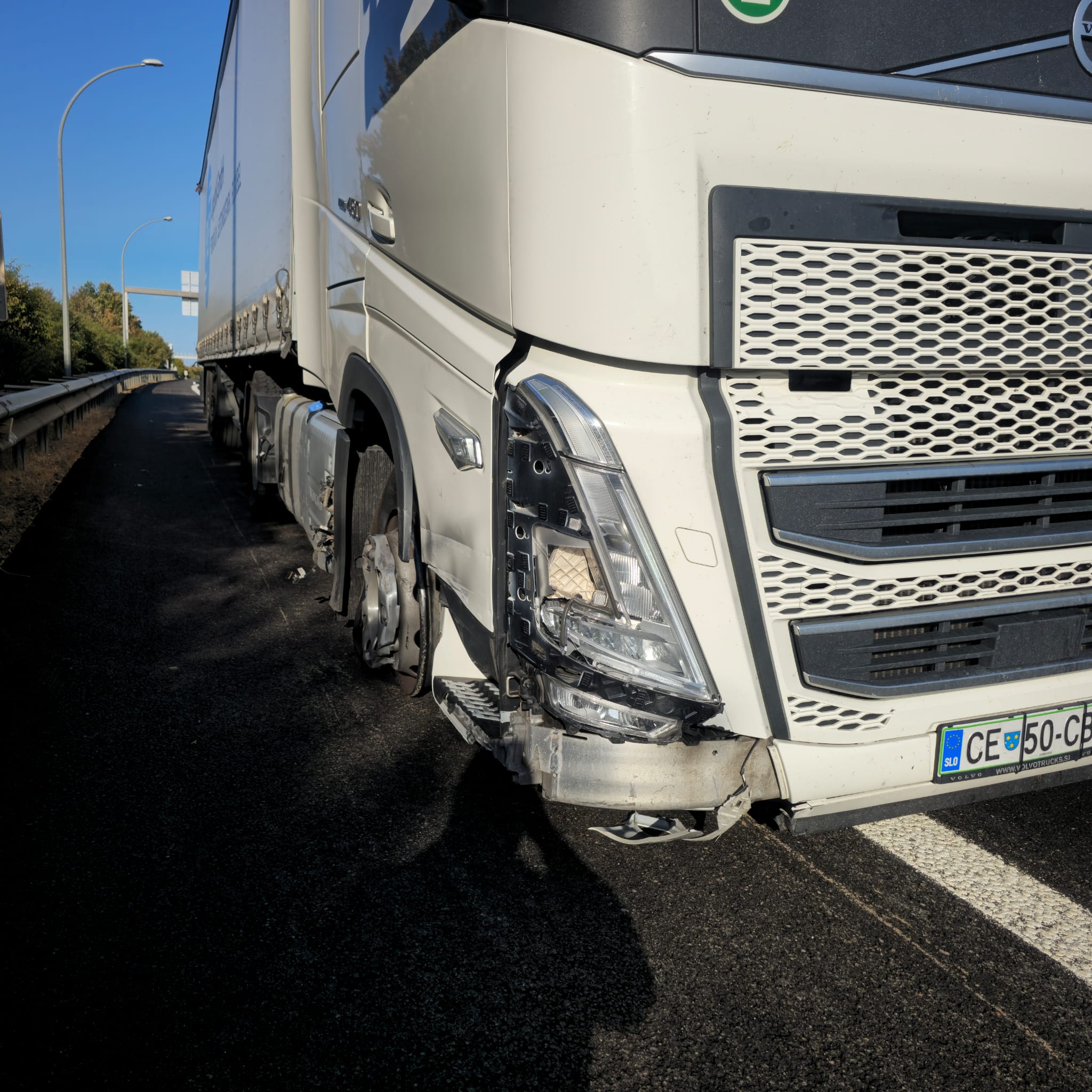
The incident happened during the day on 10 August on the A2, in the direction of Berlin, close to Braunschweig. The vehicle was a Volvo FH articulated tractor unit pulling a semi-trailer.
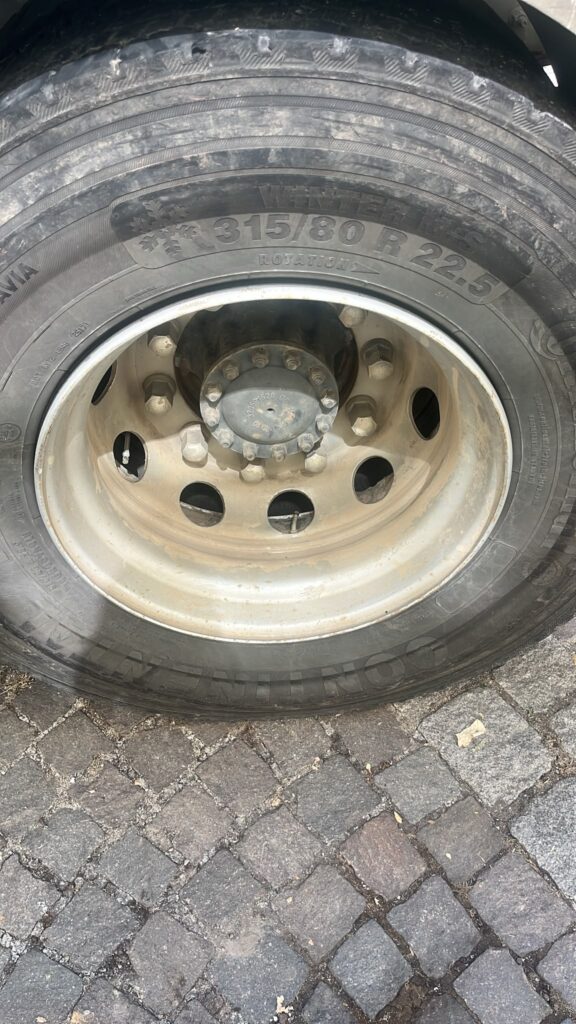
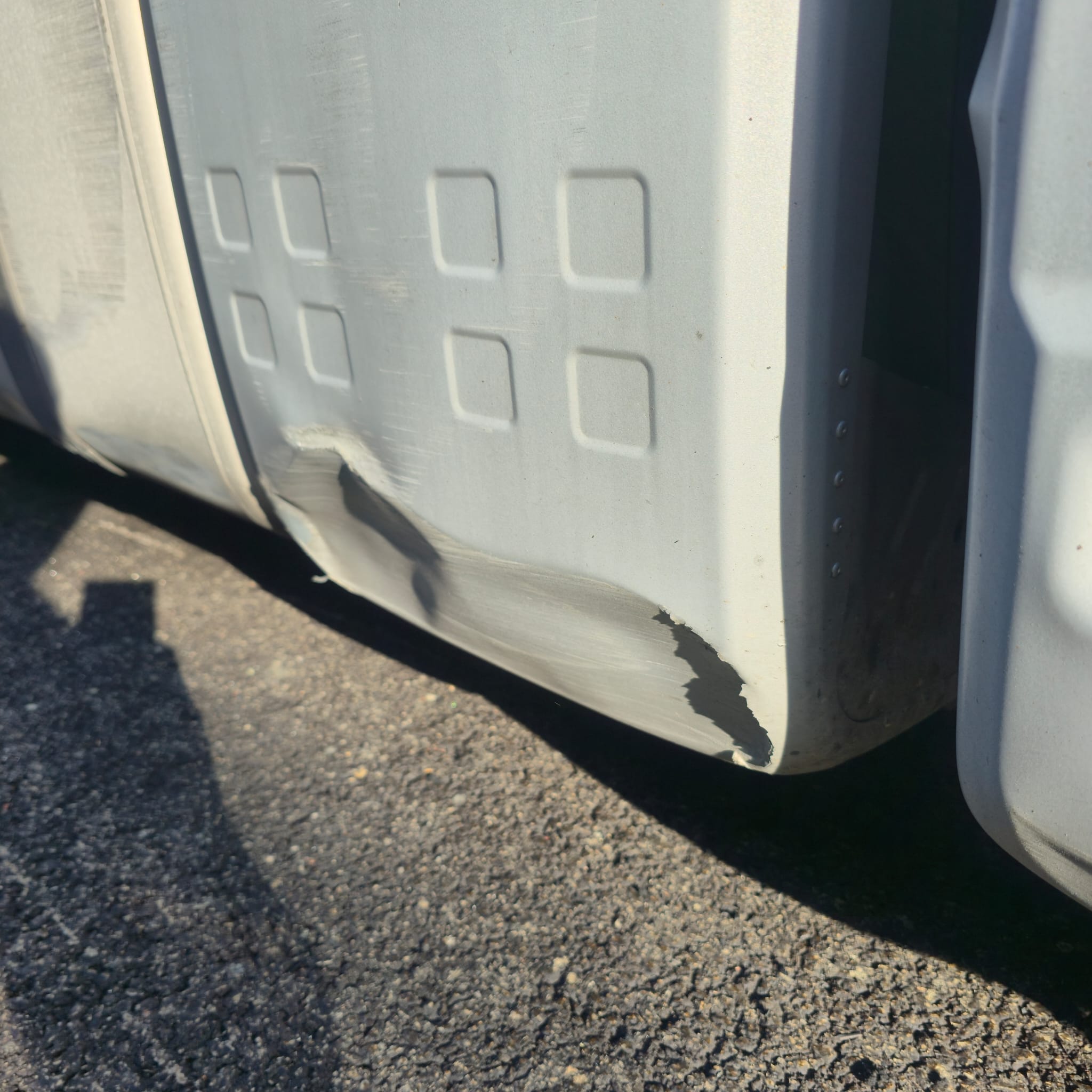
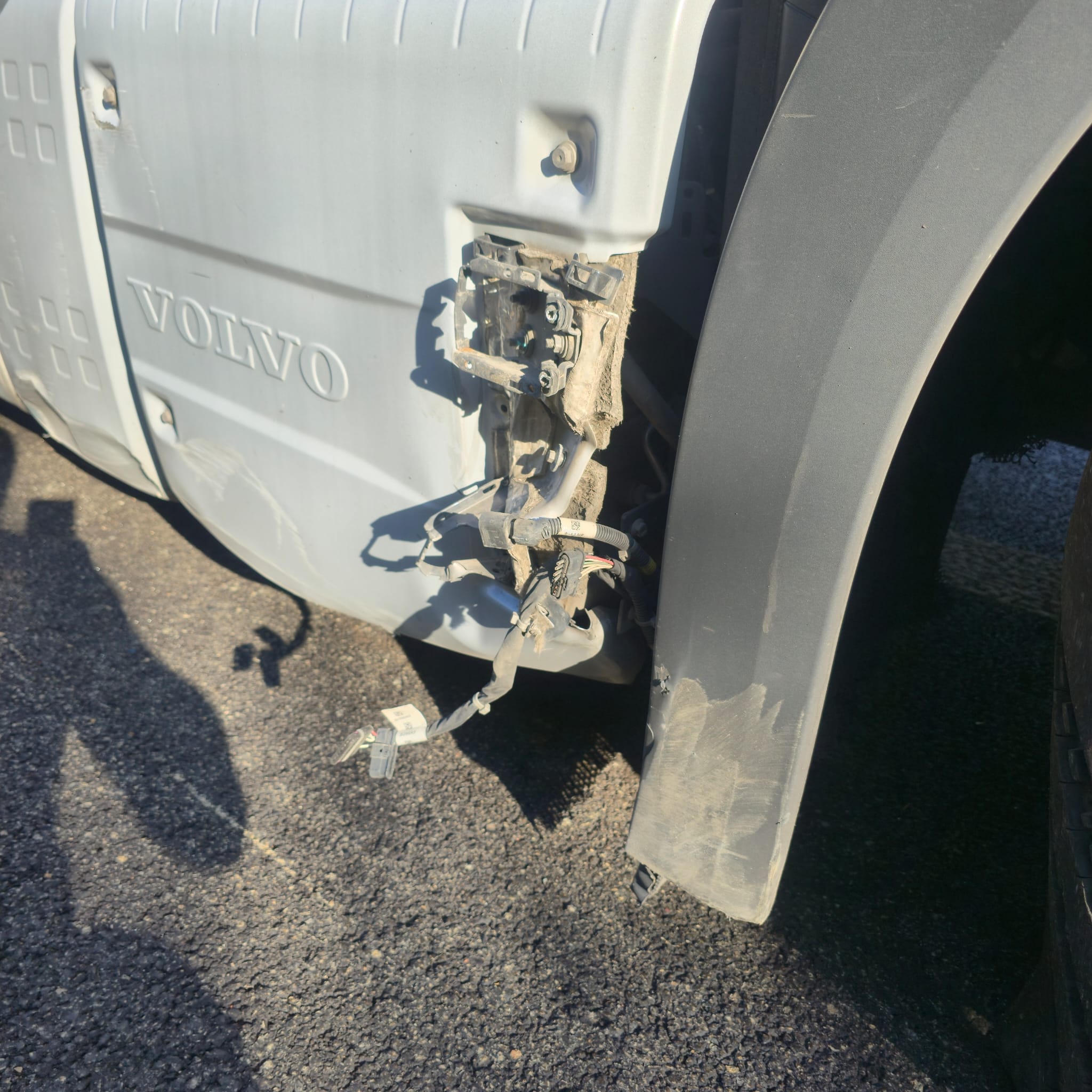
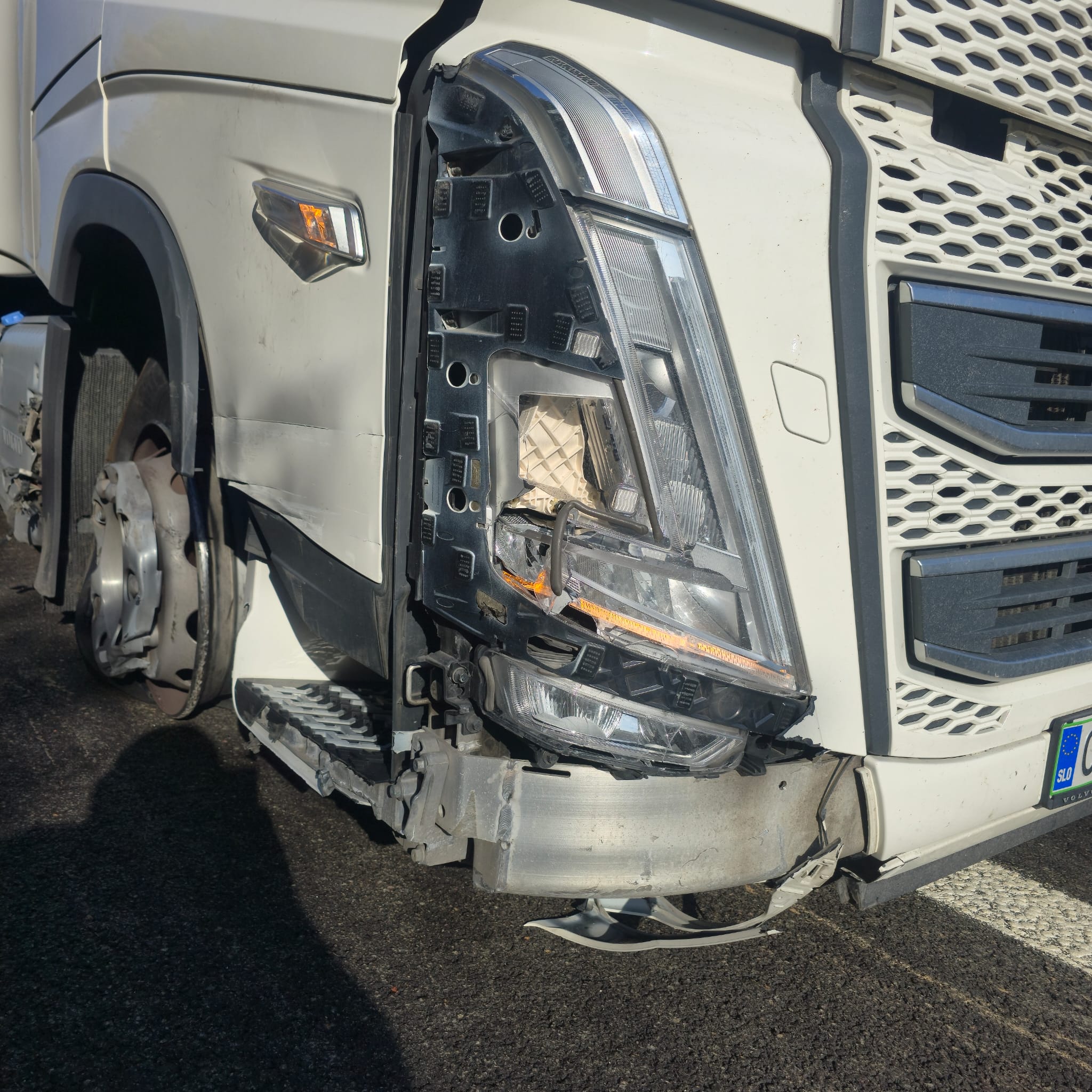
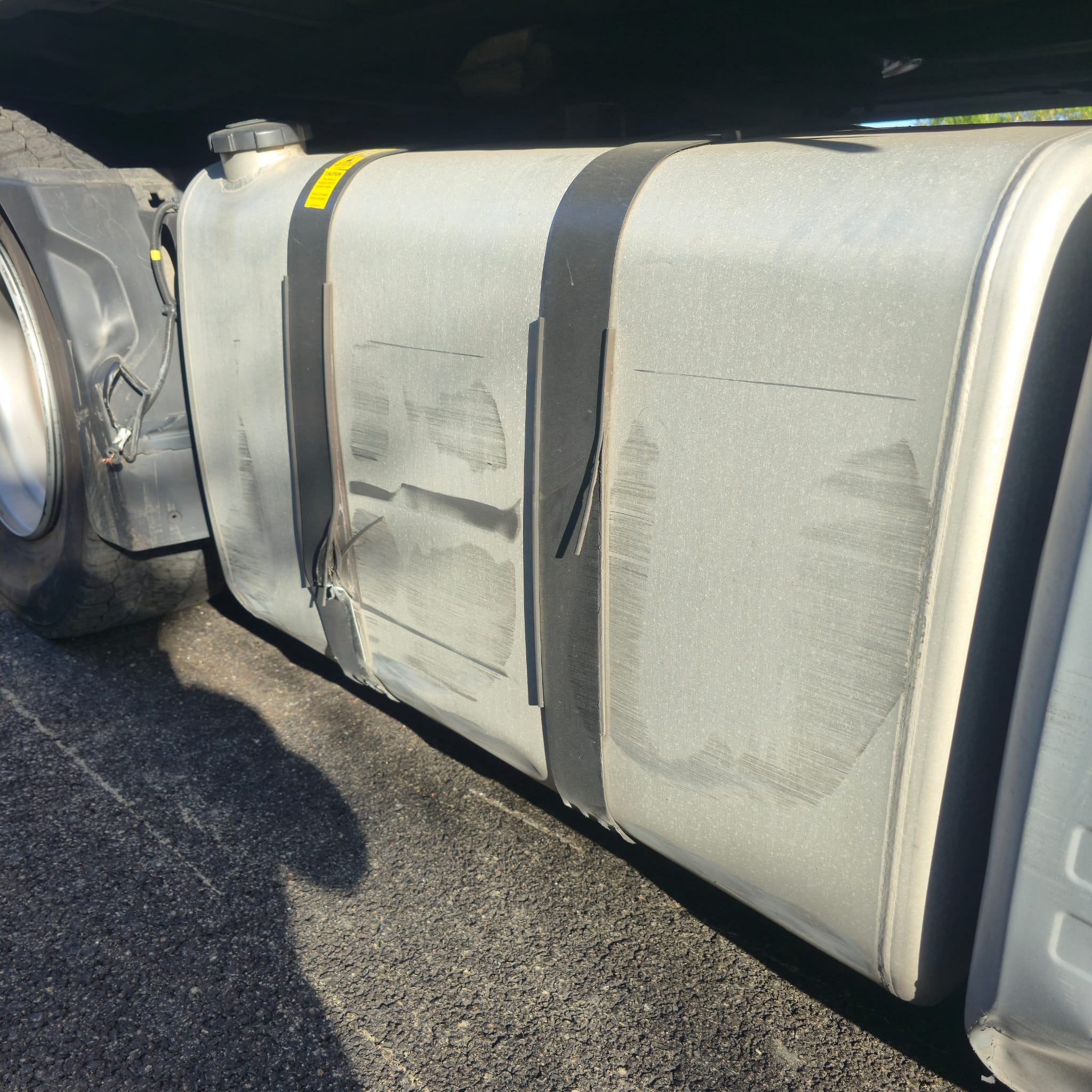
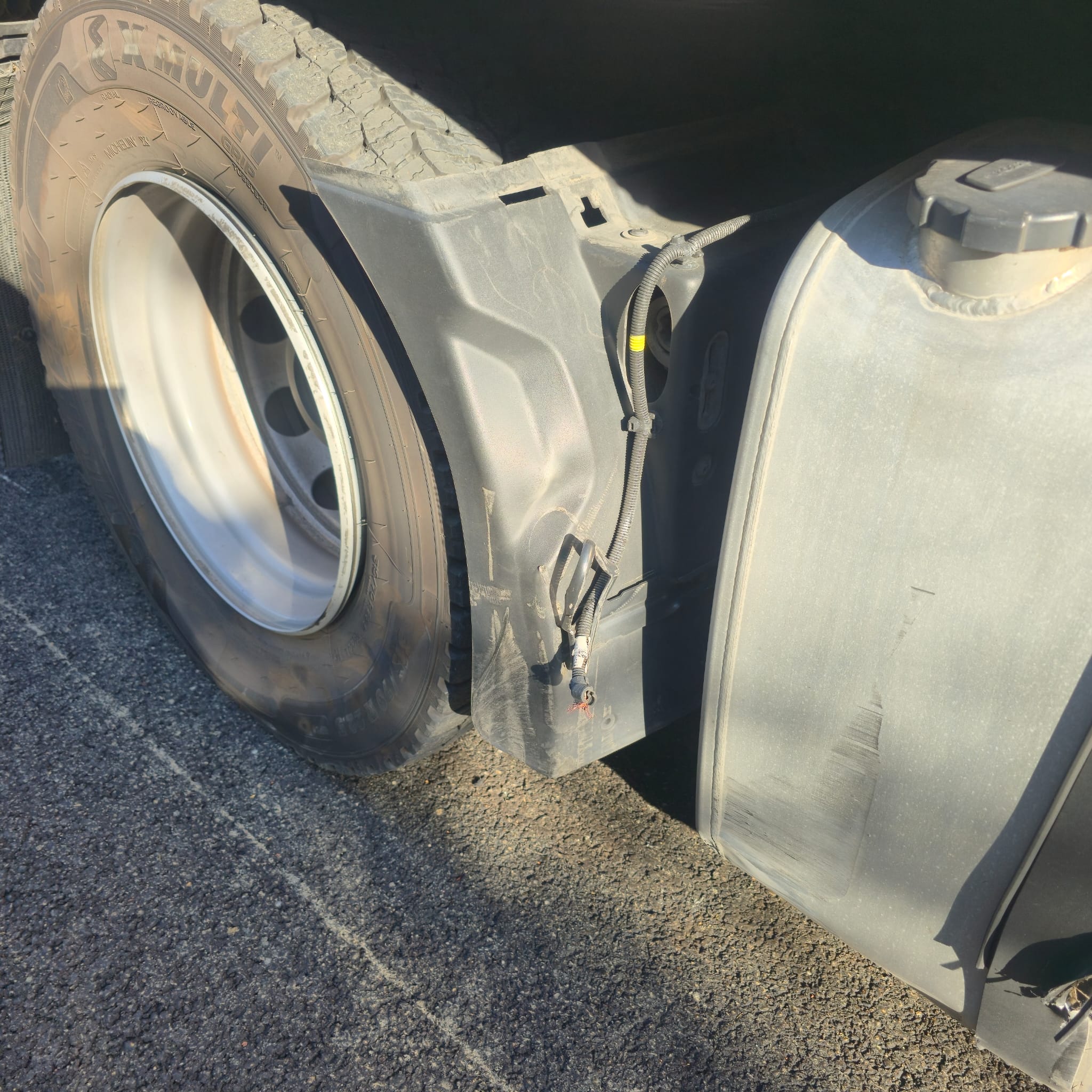
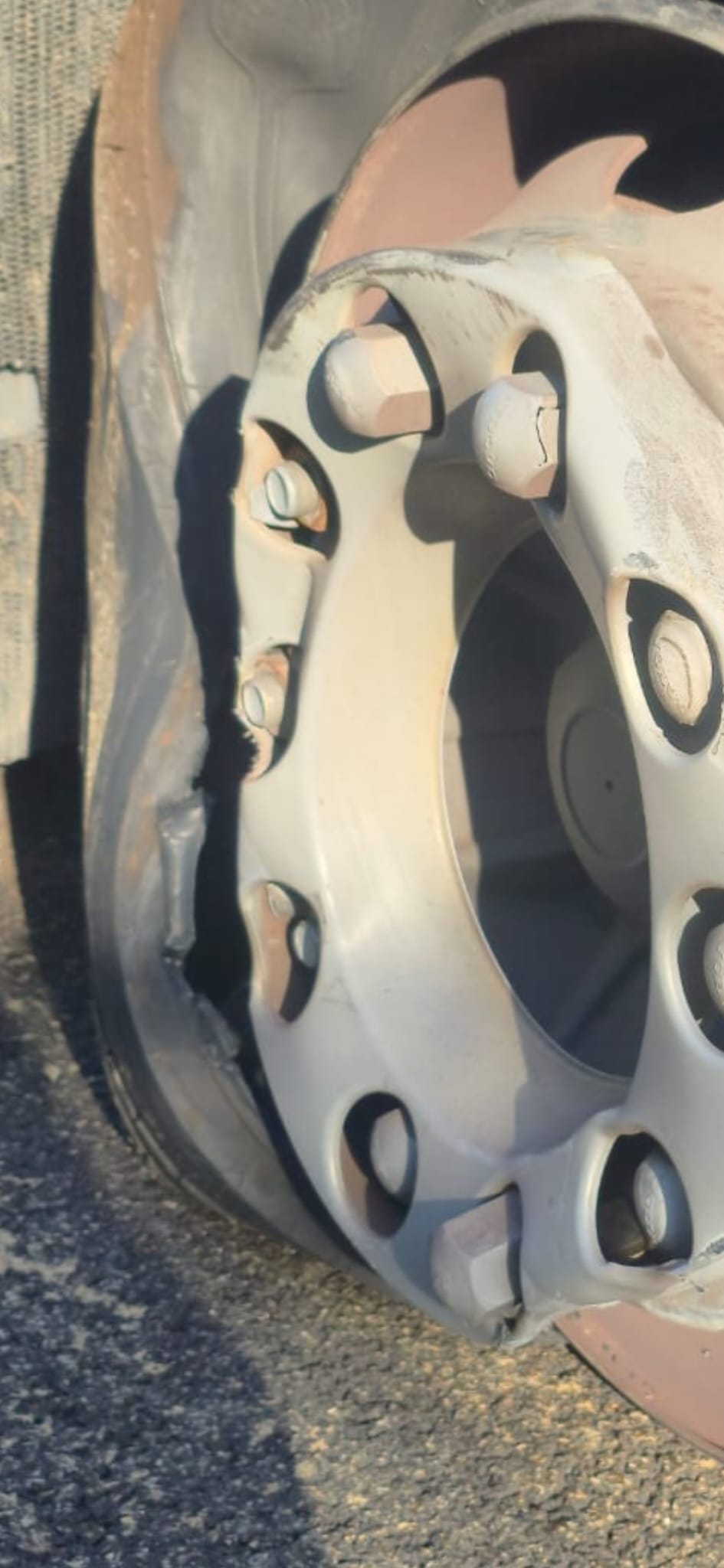
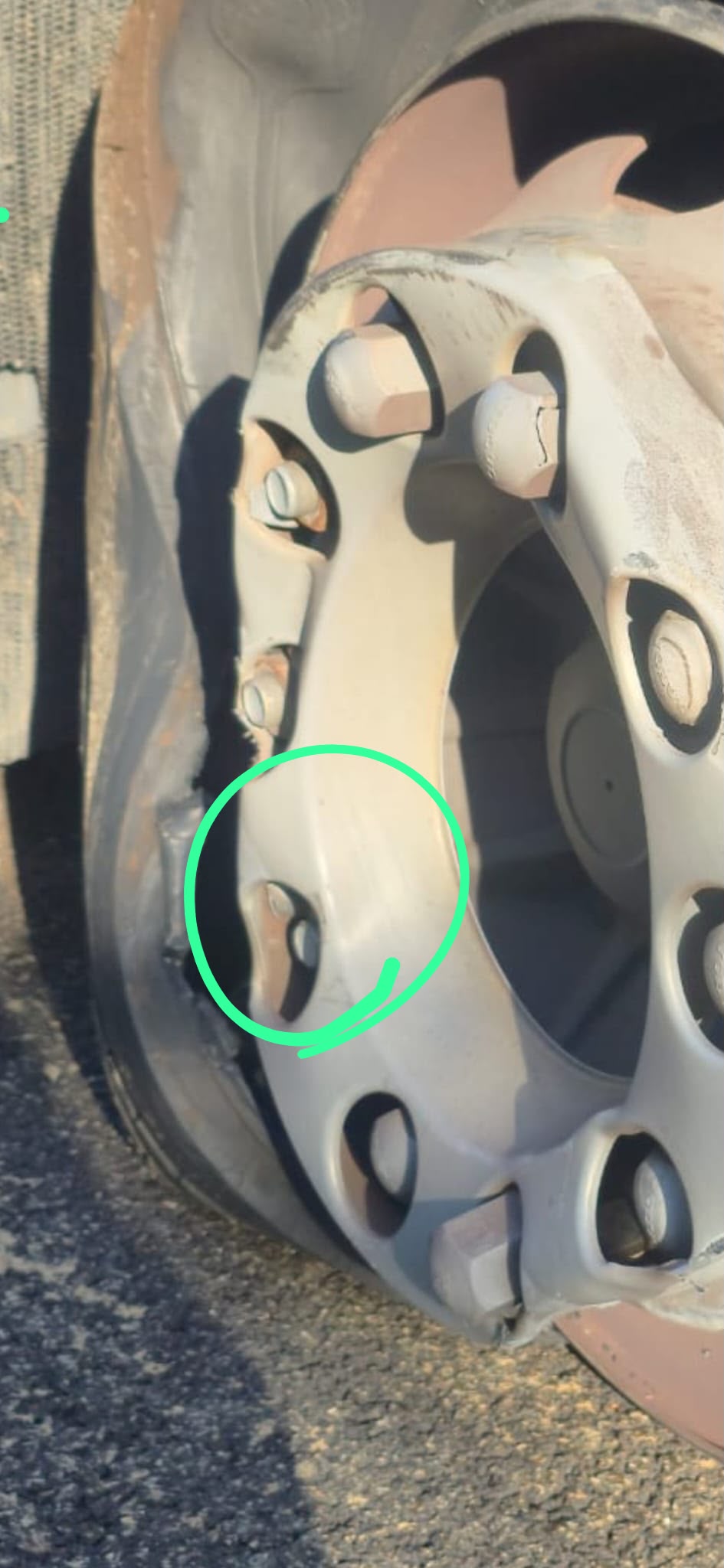
This was not a straightforward tyre blowout. The front-axle wheel had a rim that had developed a fatigue crack over time, and under the combined weight and cornering load of the loaded rig, the rim fractured. The failure damaged the front wing, the cab entry step, and surrounding trim panels as debris and the deforming wheel made contact with the bodywork.
With a cracked front rim, the tractor unit was not driveable even at low speed. Steering precision depends on both front wheels holding their geometry, and a fractured rim cannot be trusted to hold a tyre bead, let alone carry axle load reliably. The only safe option was a full recovery of the tractor unit, plus separate handling of the semi-trailer once it was uncoupled.
How Help Was Organised
Our dispatch team took the call at 10:42 and began coordinating the response immediately. The driver described a front wheel that had failed structurally, not a simple puncture, which changed the plan from the outset — a rim fracture calls for careful uncoupling and loading, not a quick tyre swap.
Steps taken by dispatch:
- Logged the exact motorway section, direction of travel, and hazard status from the driver’s report
- Identified the nearest available regional partner workshop with a recovery vehicle suited to a tractor unit
- Assigned the job and confirmed travel time to the scene
- Put a second vehicle on standby for the semi-trailer, since uncoupling would be required
- Briefed both crews on the front-axle rim failure so they arrived prepared with the right straps and loading equipment
The whole dispatch phase, from call to job assignment, took 16 minutes. That included finding a vehicle capable of loading a tractor unit rather than sending a standard flatbed that would need to be swapped out later.
Situation on Site: Why This Can’t Be Ignored
Why does a rim failure on a loaded truck demand immediate action? Because the tyre pressures and axle loads involved leave no margin once the rim itself is compromised. Truck tyres run at 8.5 to 9.5 bar, far higher than a car tyre, and that pressure is entirely dependent on the rim holding its shape.
A front axle on a tractor unit like the Volvo FH typically carries several tonnes, concentrated on two wheel positions. When one rim cracks, the remaining structure has to carry that load unevenly, which accelerates further deformation. Under the periodic HGV inspection standards applied by DEKRA and TÜV, a compromised rim is grounds for an immediate roadworthiness failure, not a “monitor and continue” situation.
Leaving a truck with a fractured rim stationary on the hard shoulder also creates its own risk. The A2 near Braunschweig carries heavy long-distance freight traffic, and a partially obstructed shoulder next to a live carriageway is exactly the kind of secondary-accident scenario that motorway safety guidance from ADAC repeatedly warns about. Securing the scene fast and clearing the vehicle is not optional caution — it is the only way to remove that risk.
The Causes of Rim Failure
What Causes a Truck Rim to Crack or Fracture?
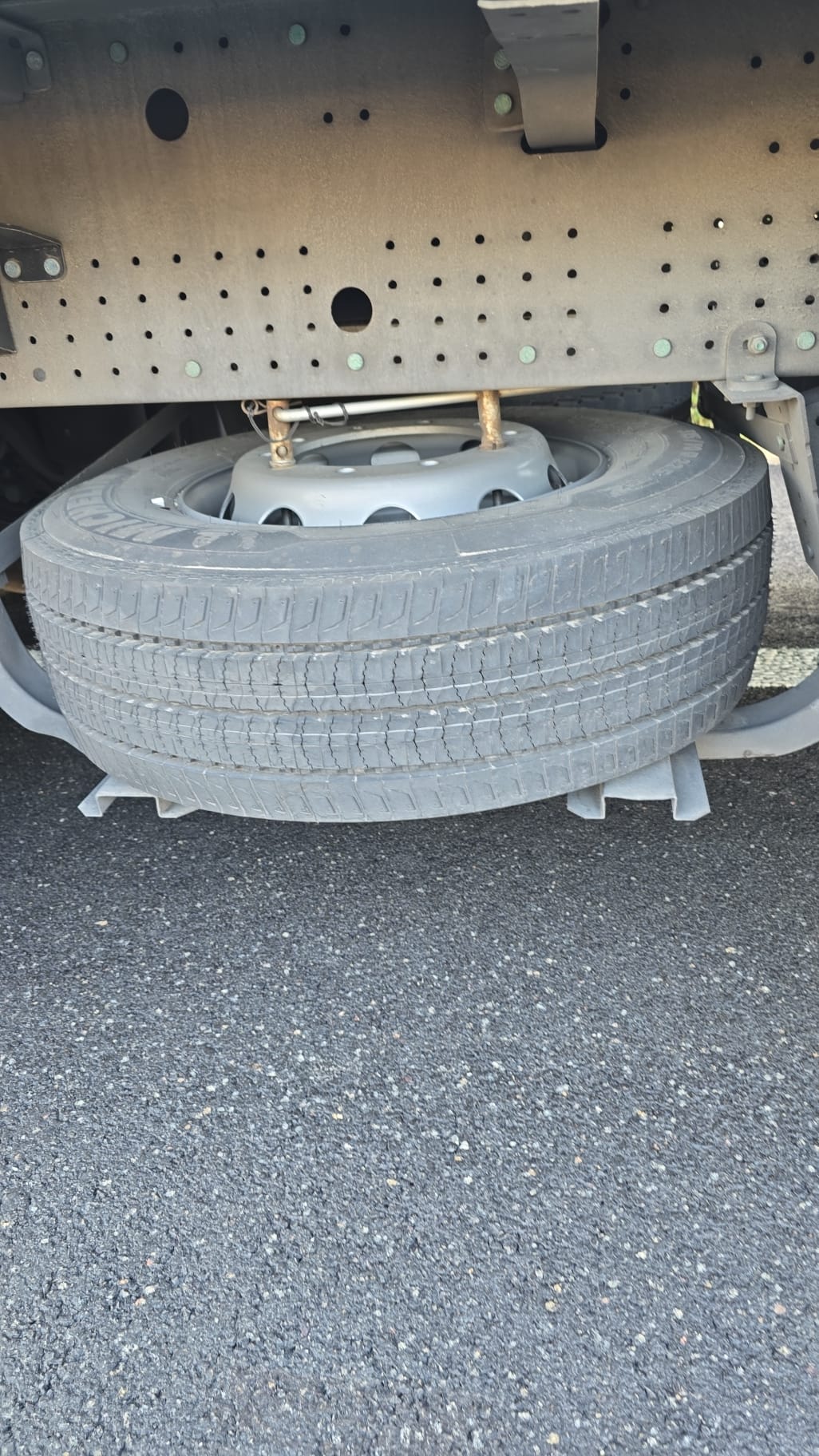
A truck rim cracks or fractures for a handful of well-documented reasons, and fatigue at the stud holes is the most common. Wheel nuts torqued incorrectly — either too loose or over-tightened — create uneven stress around the mounting holes every time the wheel rotates under load. Over months, this repeated flexing starts a crack that spreads outward from the hole.
Corrosion is the second major cause, particularly on steel rims exposed to road salt and moisture over a German winter. Rust pits weaken the metal from the inside out, often invisibly, until the rim can no longer take the stress of a loaded axle.
Hidden damage after striking a kerb, pothole, or debris at speed is a third path to failure. The impact may not crack the rim outright but can leave a micro-fracture that grows under the fatigue of thousands of subsequent load cycles. Improper welding repairs and mismatched rim-to-tyre combinations round out the list — both introduce stress points the rim was never designed to handle.
How Does a Rim Crack Grow Unnoticed?
A rim crack typically starts small at a stud hole or the wheel’s mounting face, and it produces no obvious symptoms for weeks or months. The truck drives normally, the tyre holds pressure, and nothing at a routine visual check stands out unless someone looks closely at the mounting area.
Under repeated load cycles — every rotation of a loaded axle adds a small amount of stress — the crack extends millimetre by millimetre. There is no vibration, no pressure loss, no warning light. The failure point is reached suddenly, often during normal driving rather than under any unusual load, which is exactly what happened on the A2 near Braunschweig on 10 August. The truck was driving normally; the rim simply reached the end of its fatigue life.
What Gets Checked During Fitting?
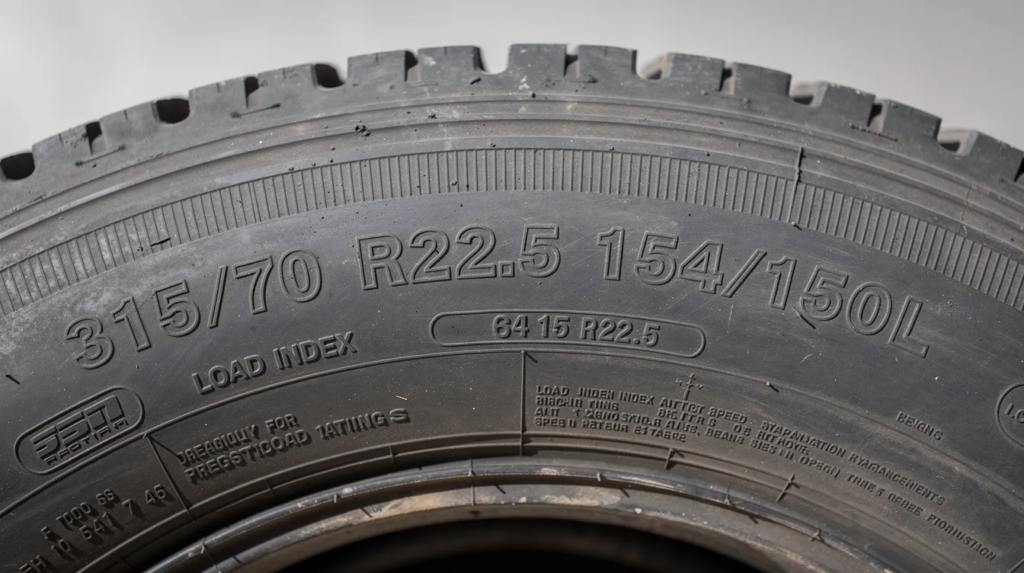
A proper tyre and wheel fitting includes a specific inspection of the rim itself, not just the tyre. Technicians check for hairline cracks radiating from the stud holes and around the bead seat, where the tyre meets the rim edge. Runout — how true the wheel spins — is measured, since a bent or warped rim throws vibration into the steering and accelerates tyre wear.
The mating surface, where the wheel meets the hub, needs to be clean and flat; debris or corrosion here prevents even clamping force and reintroduces the stress-cycling problem described above. Corrosion across the rim body, especially around weld seams on steel wheels, is also checked, since surface rust can mask deeper pitting underneath. This inspection takes a few minutes and is the main defence against exactly the kind of failure seen in this case.
Why Must Truck Rims Never Be Welded or Straightened?
Truck rims must never be welded or straightened because both processes change the metal’s structure at exactly the point where it needs to be strongest. Welding introduces localised heat that alters the grain structure of the steel or aluminium around the repair, creating a weak zone that behaves unpredictably under cyclic load.
Straightening a bent rim removes the work-hardening the metal gained during manufacturing, leaving it softer and more prone to renewed deformation at the same spot. Commercial vehicle wheel manufacturers, including those supplying axle and wheel systems referenced by BPW, explicitly prohibit both repairs on load-bearing truck rims. A repaired rim might look fine and hold air for months, then fail exactly like the one on this Volvo FH — without warning, under normal driving load.
Aluminium versus Steel: How Does Fatigue Behaviour Differ?
Aluminium and steel rims fail differently under fatigue, and that difference matters for maintenance schedules. Steel rims tend to develop cracks gradually at stress points like stud holes and can sometimes show early warning signs such as surface rust lines tracing the crack path. Aluminium rims are lighter and resist corrosion better, but they can propagate cracks faster once one starts, since aluminium has a lower fatigue limit than steel in some alloy grades.
Aluminium wheels also demand stricter torque control. Overtightening aluminium wheel nuts crushes the hub contact area faster than it would on steel, while undertightening lets the wheel micro-move against the hub, which is one of the fastest routes to a stress crack. Fleets running mixed steel and aluminium wheels need separate torque checks and separate replacement intervals for each.
What Happens When a Rim Fails at Speed?
A rim failure at speed causes an abrupt loss of steering control on the affected axle, since the wheel can no longer hold its geometry or the tyre’s air pressure reliably. On a front axle, as in this case, that translates directly into reduced steering precision at the exact moment the driver needs it most.
Fragments from the fracturing rim, and any part of the tyre that comes apart with it, can strike the vehicle’s own bodywork — which is why this Volvo FH sustained wing, step, and trim damage alongside the wheel failure itself — and can also become debris on the carriageway, a hazard for following traffic. Under §36 StVZO, the technical regulation governing tyres and wheels on German roads, a wheel and rim must be maintained in a condition that guarantees safe operation at all times; a fractured rim falls well outside that requirement the moment it happens.
Step-by-Step Recovery
- Inspection. The crew examined the wheel, hub, and surrounding bodywork to confirm the rim had fractured rather than the tyre simply deflating, and checked whether the front axle could bear any load at all for a short controlled move.
- Securing the scene. Warning triangle and hazard lights went out first, establishing a safe working area on the motorway shoulder before anyone approached the wheel.
- Uncoupling the trailer. The semi-trailer was detached from the tractor unit so each part of the rig could be handled and loaded separately.
- Loading the tractor unit. With the front wheel unable to roll safely, the tractor unit was winched and secured onto the low-loader rather than driven up under its own power.
- Final check and handover. Straps, load balance, and the trailer handover to the second vehicle were confirmed before both vehicles departed for the workshop.
Full Timeline
| Time | Phase | Action |
|---|---|---|
| 10:42 | Emergency call | Report: Volvo FH with rim failure on the front axle, A2 towards Berlin near Braunschweig, not driveable |
| 10:42–10:58 (16 min) | Dispatch | Job assigned to regional partner workshop, second vehicle for the trailer put on standby |
| 10:58–11:47 (49 min) | Approach | Travel time to the incident site on the motorway |
| 11:47–12:15 (28 min) | Securing the scene & assessment | Warning triangle, hazard lights, inspection of wheel, hub, bodywork |
| 12:15–12:50 (35 min) | Uncoupling | Semi-trailer detached from the tractor unit |
| 12:50–13:22 (32 min) | Loading | Tractor unit secured onto the low-loader |
| 13:22–13:40 (18 min) | Trailer handover | Second vehicle takes over the semi-trailer |
| 13:40 | Departure | Both vehicles head to the workshop |
Total from call to departure: 2 hours 58 minutes (178 minutes).
Cost of the Recovery
| Item | Price (EUR, net, plus VAT) |
|---|---|
| Call-out fee | 260 |
| Recovery/towing of the tractor unit | 1250 |
| Securing the accident scene | 180 |
| Uncoupling the trailer | 150 |
| Second vehicle for trailer transport | 480 |
| Total | 2320 |
Prices are net figures, plus statutory VAT. Several factors drove the total here: the need for a second vehicle to handle the trailer separately, the extra time required to secure and assess a structural rim failure rather than a routine tyre change, and the low-loader capacity needed to move a tractor unit with a wheel that could not be trusted to roll.
For comparison, according to typical fleet downtime figures, a stranded truck costs its operator roughly 800 to 1200 € per day in lost freight time, driver hours, and missed delivery windows. A 2320 € recovery bill that gets the vehicle to a workshop within three hours is, in that context, a fraction of what a full day of downtime would cost, before any repair work is even counted.
Why the Vehicle Goes to a Workshop, Not a Roadside Repair
A fractured rim is not something to patch on the hard shoulder, and the reasons go beyond convenience:
- A cracked or fractured rim cannot be safely repaired with roadside tools; proper repair requires assessment equipment a mobile crew does not carry
- Welding or straightening a load-bearing rim in the field would create exactly the weak point described above, setting up a repeat failure
- Bodywork damage to the wing and step needs proper alignment checks, not just cosmetic patching, to confirm nothing is fouling the wheel arch or steering components
- A vehicle driven any distance on a compromised front axle risks turning a wheel failure into a steering or suspension failure
- Insurance and roadworthiness documentation for this kind of structural failure needs a workshop assessment, not a field note
Typical Situations We Respond To Across Germany
Our partner network handles a range of HGV wheel and axle emergencies on German motorways, including:
- Front or rear rim fractures like this Volvo FH case on the A2
- Tyre blowouts requiring full wheel replacement roadside
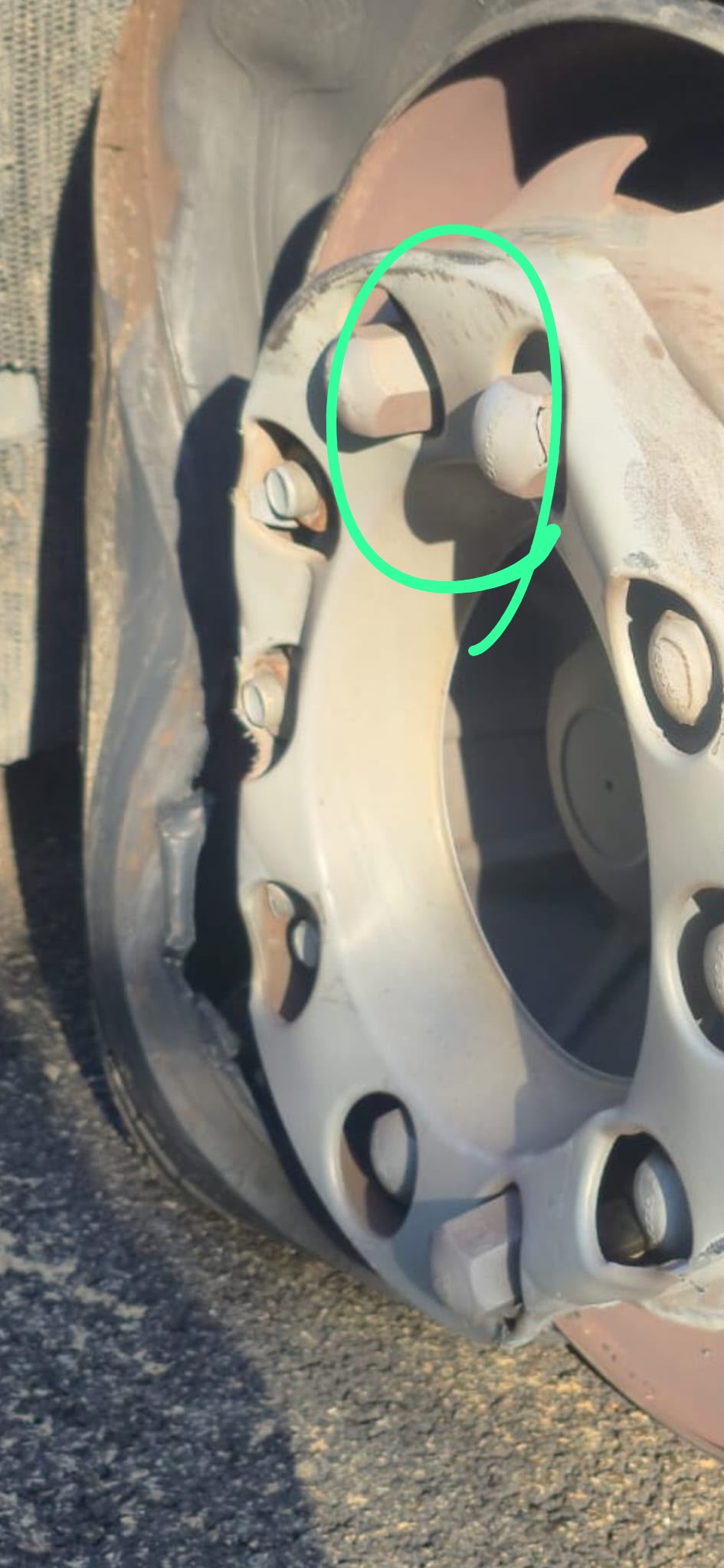
- Sheared wheel bolts causing a wheel to work loose in transit
- Combined bodywork and wheel damage after striking road debris or a kerb
- Trailer-only breakdowns requiring uncoupling and separate transport
Prevention: Rim Inspection Advice for Drivers and Fleets
Regular visual checks of the stud holes and bead seat area, ideally at every tyre pressure check, catch most fatigue cracks before they reach the point of sudden failure. A rim showing rust streaks radiating from a mounting hole is telling you something specific — that is where the crack usually starts.
Fleets running scheduled maintenance should treat wheel torque checks as a fixed interval item, not an as-needed task, particularly after any tyre change. A wheel that has been off and back on is at its highest risk of uneven torque in the following weeks. After hitting a pothole or kerb hard enough to notice, a rim inspection is worth the ten minutes it takes, even if the tyre still holds air.
Tyres, Rims, and Fleet Maintenance
Wheel and rim condition sits alongside tyre brand and tread as a core part of HGV safety, and the two are often checked in the same visit. Fleets running Michelin, Continental, Goodyear, or Bridgestone tyres still need rim-specific inspection, since tyre quality does nothing to prevent a fatigue crack in the wheel underneath it.
Wheel rim — the metal structure that holds the tyre bead and transfers axle load to the road; a HGV rim typically sees pressures of 8.5–9.5 bar and multiple tonnes of load per axle position, according to the wheel rim overview on Wikipedia.
A fleet’s tyre supplier relationship matters for more than price. A supplier who flags mismatched rim-tyre combinations or unusual wear patterns during a routine change is doing part of the prevention work described above, and that kind of attentiveness is worth factoring into which workshop a fleet uses for its tyre service.
Why Choose Us
We run recovery and mobile truck service across Germany, 24 hours a day, seven days a week. Every job goes through a vetted partner network — workshops and recovery crews we know can handle a structural failure like a fractured rim, not just a routine tyre swap.
Pricing is transparent from the first call: the driver on the A2 knew the call-out fee and recovery structure before the recovery vehicle even arrived. Dispatch works in German, English, and Polish, which matters on a motorway corridor used by international haulage as much as domestic fleets.
Our towing service covers exactly this kind of full-vehicle recovery, while our tyre service handles the more routine end of wheel and tyre emergencies before they become a rim failure.
FAQ
What does truck recovery cost on the motorway?
Costs depend on distance, vehicle type, and whether a trailer needs separate handling. In this case, the full recovery — call-out, towing, scene security, uncoupling, and a second vehicle for the trailer — totalled 2320 € net.
How long does recovery take after a rim failure?
In this A2 case, 2 hours 58 minutes passed from the emergency call to both vehicles departing for the workshop. Times vary with traffic and how far the nearest suitable recovery vehicle has to travel.
Who pays for the recovery?
Payment arrangements depend on the haulage company’s insurance and fleet policy. Our dispatch confirms pricing upfront on the call, before any vehicle is sent, so the driver or fleet manager knows the cost structure in advance.
Can a cracked rim be repaired?
No, not safely. Welding or straightening a load-bearing truck rim removes the metal’s original strength at the repair point and risks a repeat failure. A cracked rim needs full replacement, assessed at a workshop.
Does the trailer need to be collected separately?
Often, yes. When the tractor unit can’t be driven, the trailer has to be uncoupled and transported by a second vehicle, as happened here — the trailer left the scene 18 minutes after the tractor unit was loaded.
What’s the difference between a tyre blowout and a rim failure?
A tyre blowout is sudden air loss from the tyre itself; a rim failure is a structural crack in the metal wheel. Rim failures are more serious because they compromise the wheel’s ability to carry load at all, not just hold air.
Summary
A Volvo FH tractor unit suffered a front-axle rim fracture on the A2 near Braunschweig on 10 August, with accompanying bodywork damage. From the 10:42 emergency call to departure for the workshop at 13:40, the full recovery — including trailer uncoupling and a second vehicle — took 2 hours 58 minutes and cost 2320 € net. The rim was not repaired roadside; it went to a workshop for proper assessment, in line with standard practice for structural wheel failures.
Need Help Now?
Call +49 160 5753826 — available 24/7 across Germany. More at www.lkwhelp24.com.
Keywords: truck rim failure recovery | HGV wheel rim breakage towing | A2 Braunschweig truck breakdown | Volvo FH recovery Germany | truck wheel fatigue crack | motorway HGV towing service | truck tyre and rim service Germany | 24/7 truck recovery A2